Hodges' Model: Welcome to the QUAD

Hodges' model is a conceptual framework to support reflection and critical thinking. Situated, the model can help integrate all disciplines (academic and professional). Amid news items, are posts that illustrate the scope and application of the model. A bibliography and A4 template are provided in the sidebar. Welcome to the QUAD ...

Friday, March 07, 2014

Living with Practical Realities, 1978: Courtesy the Artist © Stephen Willats

Within Intermediate Support, Older Adults we are short-staffed at present. I was asked to work this Saturday - tomorrow - but was able to take Wednesday off. This helpfully coincided with a half-day event in Liverpool - Developing (research) proposals for Research for Patient Benefit (RfPB).

In the afternoon I took two hours (with reading to do also) at the Tate, this included:

Keywords: Art, Culture and Society in 1980s Britain

The exhibition included the three photographs displayed below by Stephen Willats. They are usually presented side-by-side. Since the 1970s and 80s the photographs made me wonder about social policy, social care, change and progress.

I was also prompted to recall a visit to a pensioner's club with my nan (maternal grandmother as we called her) in Liverpool in 1969-70.
[Clicking on the photos provides a more legible copy, or see collection link below ].

INTERPERSONAL : SCIENCES
humanistic ------------------------------------------- mechanistic
SOCIOLOGY : POLITICAL
individual
© Stephen Willats
© Stephen Willats
© Stephen Willats

?

group - population

Image source:
Stephen Willats
Living with Practical Realities, 1978
Photographs
Letraset, gouache and ink on card
3 panels, each 109 x 76 cm

Collection: Tate London

Courtesy the Artist
© Stephen Willats

Monday, March 03, 2014

The limitations of the healthcare sector


4
many
decades there 
have been recurring 
issues, austerity measures, 
requirements, policy challenges, 
policy initiatives, gaps between theory 
and practice, a crisis in compassionate care, 
rising waiting times and a plethora of other concerns.

All these then and much more 
affect the
 healthcare
 sector

Clearly, there is no 'magic wand', but there must be a way to address some of the difficulties? 
Within health and social care, locally, nationally and globally we need a tool to help improve interprofessional reflective practice, to support person-centered, holistic care across physical, emotional, social, political and spiritual domains of care. 

The future demands a resource (free, open, easy to learn) that can also facilitate self-care, health literacy and the many carers within families and communities.
So, how big is your picture?


Sector_of_Circle.jpg Wikimedia Commons

Saturday, March 01, 2014

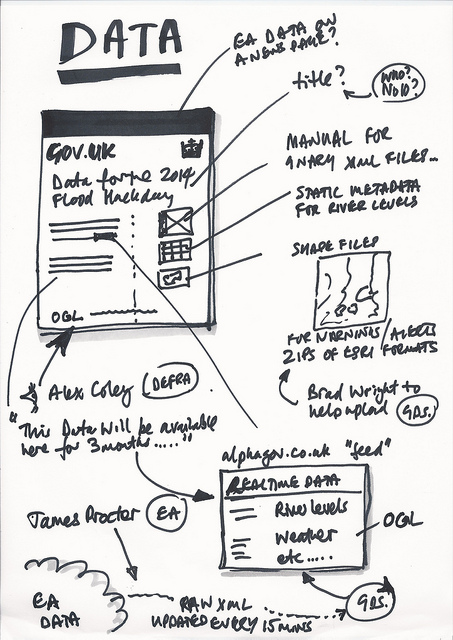
Drupalcamp London 2014: The Government Digital Service, Drupal 8 Multilingual features, Twig

https://gds.blog.gov.uk/2014/02/23/flood-hack-developing-solutions/
Flood hack
DrupalCamp London today got underway with a keynote Delivering User-centred Digital Services by Mark O'Neill from the UK Government Digital Service.

Given the record of public and private sector led IT projects it was refreshing to hear of the GDS's approach being user-centred, the extension of 7 design principles and Mark's previous experience. It's clearly too late for the health care sector to coin and create the Needotron - GDS beat us to it.

Drupal 8 is looking formidable both in its potential and the (learning) stack it presents. Another great session to pick out was - A whole new world for multilingual sites in Drupal 8 by Gábor Hojtsy. The progress here is phenomenal and even though incomplete it is a major achievement and a credit to the Drupal community.

It's humbling as it reminds me to post some introductions to Hodges' model on W2tQ in several languages.

As to being user-centred, the Harmony Forum is a real tease. I know a forum will not moderate itself (is that the new Sorcerer's Apprentice?) and yet time is of the essence. Harmony is one for me to watch - so I'm signed up for the newsletter. Two sessions on Twig and Entities rounded up a busy few days.

This began on Thursday with Cutty Sark, the Royal Greenwich Observatory (learned much from their interactive designs) Turner and the Sea, The British Library - Beautiful Science (60-90 mins ample), and Ibsen's Ghosts at Trafalgar Studios.

I was also able to visit a university yesterday and meet a member of faculty who used Hodges' model many years ago. Here's hoping that some of the materials can be retrieved even though it seems unlikely. I hope to keep in touch with this nursing contact (and not just for the dinner!). I've met several other people here, the Drupal community is another great asset - and with thanks to the sponsors who make these events feasible for many of us.

Output from Needotron

I'll end this post back with Mr O'Neill and the GDS.

I wonder to what extent healthcare figured in the flood deliberations?

It seems that an output from the Needotron may not be so far removed from h2cm?

Happy St David's Day too - in the closing minutes here!

Friday, February 28, 2014

Rare Disease Day 28 February 2014

INTERPERSONAL : SCIENCES
humanistic ------------------------------------------- mechanistic
SOCIOLOGY : POLITICAL
individual

Source: http://www.rarediseaseday.org/
I am honored to stand, in her graceful place, and shine a light on a delicate group of individuals who, nevertheless, in sheer numbers are a force to be reckoned with.
Thank you,

Sean Hepburn Ferrer
A disease or disorder is defined as rare in Europe when it affects fewer than 1 in 2000.
A disease or disorder is defined as rare in the USA when it affects fewer than 200,000 Americans at any given time. One rare disease may affect only a handful of patients in the EU (European Union), and another touch as many as 245,000. In the EU, as many as 30 million people alone may be affected by one of over 6000 rare diseases existing.
  • 80% of rare diseases have identified genetic origins whilst others are the result of infections (bacterial or viral), allergies and environmental causes, or are degenerative and proliferative.
  • 50% of rare diseases touch children.
In the words of Audrey Hepburn,

“We cannot save everyone… but the knowledge that someone is coming to their rescue… that we care as a society is ultimately as important…”.

It is in this spirit that we invite you, alongside Sean Hepburn Ferrer, to Join Together for Better Care.
group - population

Thursday, February 27, 2014

Book: The Last Asylum

INTERPERSONAL : SCIENCES
humanistic ------------------------------------------- mechanistic
SOCIOLOGY : POLITICAL
individual

The Last Asylum
 -sociology
-medicine

medical-
social-


group - population

Winwick Hospital remembered

Image source: Wordery

Tuesday, February 25, 2014

NW England: Pathways to Health and Wealth 31st March 2014 (4-7pm)

Dear all

As discussed in our meeting, here is the website for the LU Cross Faculty KE event Pathways to Health and Wealth taking place on 31st March 2014 (4-7pm):

http://www.lancaster.ac.uk/healthandwealth/

Please let me or Becky Gordon b.gordon AT lancaster.ac.uk know if you have any queries and please pass on to any of your industry connections who you think might be interested to find out what we do, how we do it and how we can help them do it too!

Thanks, Karen

Dr Karen L Wright
Peel Trust Lecturer in Biomedicine
Faculty of Health and Medicine
Division of Biomedical and Life Sciences
Furness College
Lancaster University
Lancaster LA1 4YG
Email: karen.wright AT lancaster.ac.uk

[ Just to note I have not attended these meetings, the post is copied here to help in a small way with local publicity. PJ ]

Monday, February 24, 2014

Drupal in Education: Richer experiences with Drupal 7 and H5P (HTML5 Package)

The H5P module is finally available for Drupal 7! Now you can download H5P and H5P content types empowering you to create great rich experiences for your users to enjoy. Content like interactive videos, presentations, drag and drop, fill in the blanks questions and more are available from h5p.org.

We have received many enthusiastic requests for an H5P D7 module and we are proud to present the newly released version. You can find it available on the H5P project page.

You create the content with your web-browser and the content will work just as great on smartphones and tablets, as on you desktop computer.

Below is a summary of the H5P content types that are currently available for Drupal 7 (and all other platforms we support).

Interactive video
Perhaps the most powerful tool in the H5P toolbox. Upload videos and animations, and make them interactive by adding quizzes, images and text along the way.

Presentation
Create a presentation slideshow with interactions along the way. Add text, images, video and various quiz tasks to your presentation.

Boardgame
A level based board game where the user must complete tasks in various levels to win. Depending on whether the user completes or fails, a video is shown at the end of each level. The game is fully customizable.

Flashcards
An image is displayed and the user has to insert a corresponding text by using the keyboard. The card turns to display the solution. Several cards can be added in a sequence.

Fill in the blanks
Create sentences and leave out words, adjectives, conjugations etc. for the user to complete by typing the missing text on the keyboard.

Question set
Your staple quiz question tool. Add a mix of multiple choice questions, fill in the blanks & drag and drop tasks.

Contact button
A simple widget that allows users of your website to get in touch with you using their preferred channel, such as email, Facebook or Twitter.

For those that are new to H5P, H5P is short for HTML5 Package, and is a simple way to create and share rich and interactive web content. H5P is modular and consists of several content types and applications, perfect for use in e-learning and advertising.

See all the content types in action on H5P.org

With H5P you can:

  • Export and import content types and applications between sites, e.g. from a Joomla site to a Drupal site.
  • Use existing content types and applications, and build on these to create your own content.
  • Create and edit rich web content directly in your browser. No technical skills are needed.
  • As a developer, build upon existing content types and applications, or create you own from scratch. Share your work with the rest of the world on the h5p.org!

Looking forward this next weekend and London for DrupalCamp.

Sunday, February 23, 2014

18th Annual International Philosophy of Nursing Conference

in association with the International Philosophy of Nursing Society
(IPONS)

September 8th, 9th and 10th, 2014

Hosted by the School of Health Sciences, University of Nottingham, England, UK

Brave new world?
Health, technology and evidence based practice

Nurses have seen some fundamental changes in the way that healthcare is delivered. Body care is at the centre of nursing practice but the nature of that care has been extended beyond the personal, human-to-human contact, and is increasingly refracted through the medium of technological/scientific interventions. The way that these technologies interact with the human dimension does, and should, require critical analysis.This is particularly the case for nurses who are increasingly expected to adopt methods and approaches that change the nature of the nurse patient relationship.  Added to this is the way that clinicians/academics/researchers interact with health care issues, locally as well as globally.

There is an established debate and tension within the evidence based practice literature that illustrates a deep ambivalence about how a holistic approach to clinical practice relates to, enhances, or is undermined by the new health technologies. These include care pathways, systematic reviews of knowledge, the enabling/disabling effects of technology and the putative implication that there is an empiricist and dehumanising process involved in these developments. For example, what happens to the complexity of ethical debates when they are shaped in the form of arguments based on literature reviews? These may wittingly or unwittingly serve as a means of translating complex moral issues into usable clinical regimes that partially mimic meta-analyses. Furthermore we may ask what place narrative knowledge and qualitative experiences may have in this new world of implementation technologies? And how do the new interventions of telemedicine and other policy drivers that emphasise the “hospital-at-home” impact on the ways that nurses carry out health care?

This conference intends to examine these and other issues related to ‘Health, technology, and evidence-based practice’.

CONFERENCE DETAILS

Details of the Conference can now be found at the following link: ...

These details include the list of Keynote speakers; the venue; a Call for Abstracts; conference registration and accommodation, and transportation. Abstracts of the Keynote speakers and the full Conference Programme will be available soon on the above link.

Any specific queries should be addressed to Dr Stuart Nairn ...


other IPONS posts on W2tQ