Hodges' Model: Welcome to the QUAD

Hodges' model is a conceptual framework to support reflection and critical thinking. Situated, the model can help integrate all disciplines (academic and professional). Amid news items, are posts that illustrate the scope and application of the model. A bibliography and A4 template are provided in the sidebar. Welcome to the QUAD ...

Wednesday, July 09, 2014

ERCIM News No. 98 Special theme: "Smart Cities"
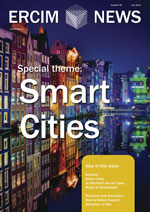
http://ercim-news.ercim.eu/en98
ERCIM NEWS #98
Dear ERCIM News Reader,

ERCIM News No. 98 has just been published at:
http://ercim-news.ercim.eu/en98

Special Theme: "Smart Cities"
http://ercim-news.ercim.eu/en98/special/

featuring a keynote by Eberhard van der Laan, Mayor of Amsterdam
http://ercim-news.ercim.eu/en98/keynote-smart-cities

Guest editors:
- Ioannis Askoxylakis, ICS-FORTH, Greece
- Theo Tryfonas, Faculty of Engineering, University of Bristol, UK

This issue is also available for download as:
pdf:  http://ercim-news.ercim.eu/images/stories/EN98/EN98-web.pdf
epub: http://ercim-news.ercim.eu/images/stories/EN98/EN98.epub

Next issue: No. 99, October 2014 - Special Theme: "Quality Software"
(see Call at http://ercim-news.ercim.eu/call)

Thank you for your interest in ERCIM News.
Feel free to forward this message to others who might be interested.

Best regards,
Peter Kunz
ERCIM News central editor

Includes:
Urban Civics - Democratizing Urban Data for Healthy Smart Cities
CityLab@Inria - A Lab on Smart Cities fostering Environmental and Social Sustainability
‘U-Sense’, A Cooperative Sensing System for Monitoring Air Quality in Urban Areas 
---------------------------------
ERCIM News
is published quarterly by ERCIM, the European Research Consortium for Informatics and Mathematics.
The printed edition will reach about 6000 readers.
This email alert reaches over 7500 subscribers.
-------------------------------------------------------
About ERCIM
ERCIM - the European Research Consortium for Informatics and Mathematics - aims to foster collaborative work within the European research community and to increase co-operation with European industry. Leading European research institutes are members of ERCIM. ERCIM is the European host of W3C.
http://www.ercim.eu/

Follow us on twitter http://twitter.com/#!/ercim_news
and join the open ERCIM LinkedIn Group
http://www.linkedin.com/groups/ERCIM-81390

Monday, July 07, 2014

Book: The social atlas of Europe

See Europe as never before!


The social atlas of Europe
Dimitris Ballas, University of Sheffield
Danny Dorling, University of Oxford
Benjamin Hennig, University of Oxford

"An insightful look at today's Europe - through the underlying realities that Europeans live every day, all brought to life in charts and maps that reveal the human geography of this vitally important area of the world." Robert B. Reich, University of California at Berkeley.

The social atlas of Europe is the first human geography atlas to consider the European economy, culture, history, human and physical geography as a single land mass and a more unified European people. It provides an accessible overview of Europe and a human geography contribution to debates about a wide range of topics. It includes:

- Maps on over 80 topics ranging from life expectancy, greenhouse gas emissions to Eurovision Song Contest voting patterns
- Uses innovative full colour visualisation methods
- Explores Europe's society, culture, economy, politics and the environment
- State-of-the-art Geographical Information Systems (GIS) and new human cartography techniques

More information about the book is available on its website www.europemapper.org

Available at the special price of £19.99 (plus p&p) at
https://policy.bristoluniversitypress.co.uk/the-social-atlas-of-europe
Kathryn King
Marketing Manager
Policy Press, University of Bristol
www.policypress.co.uk


My source: EUROPEAN-SOCIOLOGIST list at JISCMAIL.AC.UK

Sunday, July 06, 2014

Excuses found: "premature definition of variables"

Currently reading:

MURPHY E., DINGWALL R., GREATBATCH D., PARKER S., WATSON P. (1999). Qualitative research methods in health technology assessment: a review of the literature. Health Technology Assessment. 2(16), p.84.
Marshall (1985) presented the flexibility of qualitative research as one of its strengths. She argued that, in qualitative research, the researcher does not assume that (s)he knows, at the outset, the exact nature of the research question. Rather, qualitative research offers the opportunity of discovery. In fact, researchers vary considerably in the extent to which they formulate the precise nature of the research question in advance of the study. Most seek to avoid what Silverman (1993) referred to as “premature definition of variables”.

Ah, so this is what I've doing!

Yes, but for how long with h2cm, with Drupal...?

1997... 2007...  and counting... :-(

Wednesday, June 25, 2014

"For portals, speak patients' language" c/o Healthcare IT News

Mike Miliard's 

in Healthcare IT News is a reminder of accessibility and engagement at the level of a communities languages.

This is one of the reasons why I am committed to using Drupal, to try to make use of its Internationalization capabilities amongst others. 

Thanks to Mike's post I'm now familiar with a 'full court press' as a hospital - enterprise wide no less - seeks to achieve defined patient engagement levels by accessing their electronic health record.

This begs the question of what constitutes the patients' language? I don't just mean the purely linguistic forms of Chinese, Korean, Russian and Greek mentioned in the article. The effort is driven by the statutory demands of meaningful use, but what of the patient's general literacy, IT and health literacies? How do patients make sense of their own health (or another in the role of a carer) not just in a given language, but culturally from a medical sociological and public health perspective? What is the community's vocabulary when it comes to health?

How can we assure that meaningfulness? How can we affirm that use and critically translate use into patient benefits and self-efficacy?

You could also entitle Mike's article as

4 portals speak patients' language

individual
INTERPERSONAL : SCIENCES
humanistic ------------------------------------------- mechanistic
SOCIOLOGY : POLITICAL
group
Health Literacy, Accessibility
Measures (health literacy, patient engagement, health and well-being, clinical outcomes)


Cultural Diversity, Languages, Carer

Internationalization
'Meaningful Use', Standards, Legislation, Policy


When we focus on languages we must remember that listening is a great gift. Whether as health and IT professionals, educators, patients and carers, listening to the care domains can help us integrate diverse social, clinical, policy and technical objectives.

What do these portals say to you?
https://twitter.com/MikeMiliardHITN
https://www.healthcareitnews.com/author/mike-miliard

Saturday, June 21, 2014

disABLED: What's behind a symbol?

individual
INTERPERSONAL : SCIENCES
humanistic ------------------------------------------- mechanistic
SOCIOLOGY : POLITICAL
group

NY State

Well done NY excellent MOVE!
(and hope to visit next year)


My source: James Moore, Clash of Symbols, The Independent 20 June 2014, p.35.
 
Image source from upper right:
http://in-abled.com/blog/2014/04/would-martin-luther-king-jr-care-about-disabilities/
http://en.wikipedia.org/wiki/Disability

Friday, June 20, 2014

after Mondrian: Journey with Hodges through Politics, Sciences and Intrapersonal ...

Prompt: Tate email

Subject: "Journey with Mondrian through Paris, London and New York"


individual
INTERPERSONAL : SCIENCES
humanistic ------------------------------------------- mechanistic
SOCIOLOGY : POLITICAL
group

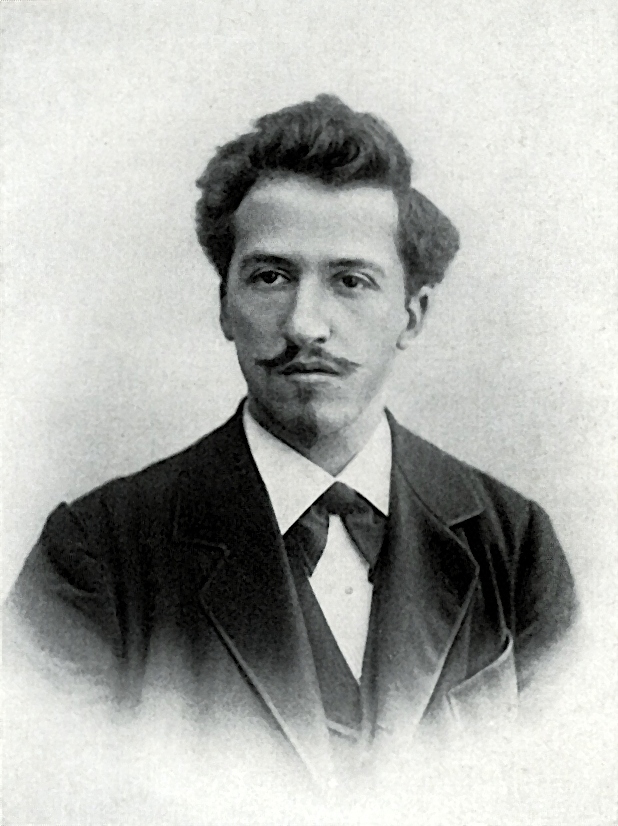
Piet_Mondriaan
Cubo Grande
Photograph by Dominique Mulhem.
https://www.reddit.com/user/sverdrupian/


Image sources (from top left clockwise):
https://upload.wikimedia.org/wikipedia/commons/8/83/Piet_Mondriaan.jpg
https://www.pinterest.co.uk/ordep13/
http://www.fondationtanagra.com/en/article/mily-doll-by-gege/page/but-darling 
https://www.reddit.com/r/MapPorn/comments/2ocwh3/world_map_in_the_manner_of_piet_mondrian_948730/

Tuesday, June 17, 2014

Book: The Empathy Exams & Michel Serres Institute

individual
INTERPERSONAL : SCIENCES
humanistic ------------------------------------------- mechanistic
SOCIOLOGY : POLITICAL
group
The Empathy Exams
Interpersonal Skills

The Natural Sciences
Local, Society & Socio-

-Economics
Law


As recent posts reveal I'm overwhelmed with reading at present. Material that is essential for the TEL course and reading more tangential and yet potentially enjoyable titles. It will be a busy summer as all this is brought together(!?). Especially as I've a literature search in mind as a module submission - progress permitting.

The publication of Jamison's book this (N) spring sits well after the findings last year about the benefits of reading fiction in increasing empathy.

Since 2008-2009 I've lost touch with the work of Michel Serres:

Jones, Peter, Exploring Serres’ Atlas, Hodges’ Knowledge Domains and the Fusion of Informatics and Cultural Horizons (Aug 15, 2007). SOCIAL INFORMATION TECHNOLOGY CONNECTING SOCIETY AND CULTURAL ISSUES. Available at SSRN: http://ssrn.com/abstract=1842504 or http://dx.doi.org/10.2139/ssrn.1842504

I only scratched the surface of Serres' oeuvre in the above paper and when time permits will revisit this work having just learnt of the Institute:

The resource-systems approach

"Reframing the conceptual and operational field of natural resources requires deep interdisciplinarity across fields encompassing legal and socio-economic studies, and life-sciences. And, it goes without saying, philosophy. The priorities at present are the aid to decision-making and a participative, pro-active civil society acting to (1) manage human activities while meeting the specific territorial potential and resource capacities and (2) ensure a fair re-allocation of such resources according to vital human needs and coherent public goods policies. Who are the members, what are the missions and the activities of the (...)."

Book cover image: c/o Author.

My source: The Empathy Exams
FT Weekend, June 7-8, 2014.

Monday, June 16, 2014

Book: Mapping It Out An - Alternative Atlas of Contemporary Cartographies

Published today [UK ]

Mapping It Out

An Alternative Atlas of Contemporary Cartographies

https://thamesandhudson.com/catalog/product/view/id/3005/s/mapping-it-out-9780500239186/category/2/
Mapping It Out


http://89plus.com/

My source:
Jobey, J.  The Shape of Things, FT Weekend Magazine, May 31 / June 1 2014,26-29.

Image source:
www.fastcodesign.com
