Hodges' Model: Welcome to the QUAD

Hodges' model is a conceptual framework to support reflection and critical thinking. Situated, the model can help integrate all disciplines (academic and professional). Amid news items, are posts that illustrate the scope and application of the model. A bibliography and A4 template are provided in the sidebar. Welcome to the QUAD ...

Sunday, August 30, 2020

How many APPGs does your Garden Grow?

APPGs - All Party Parliamentary Groups
 
 
individual
|
INTERPERSONAL : SCIENCES
humanistic ----------------------------------------------- mechanistic
SOCIOLOGY : POLITICAL
|
group - population


APPG on Autism
APPG on Learning Disability
APPG on Ageing and Older People
APPG on Carers
APPG on Parkinson's
APPG on Terminal Illness
APPG on Dementia and Adult Social Care
APPG on Dementia
APPG on Multiple Sclerosis
APPG on Disability

How do you integrate their 'outputs'?

I am not disputing the need for APPGs and their number, but highlighting a 'fact of care and governance' and what remain legacy problems of holistic, integrated, person-centred and reflective care.

My source:

Better social care, Letters to the Editor, The Times, Saturday, July 25, 2020, p.28.


Saturday, August 29, 2020

Reflecting in the Garden: c/o Anish Kapoor

individual
|
INTERPERSONAL : SCIENCES
humanistic ----------------------------------------------- mechanistic
SOCIOLOGY : POLITICAL
|
group - population
Anish Kapoor, Installation view, 2020
Houghton Hall, Norfolk, UK


See also: https://hodges-model.blogspot.com/search?q=kapoor

 My sources:

Campbell-Johnston, R. (2020) As maddening as it is mesmerising, The Times, Visual Art, Friday, July 10, p.10. 

Revely-Calder, C. (2020) The pomposity's still there, but so are the moments of magic, The Daily Telegraph, Friday, July 10, p.25.


Thursday, August 27, 2020

IF there is a 'medical model' THEN ...

IF there is a 'MEDICAL MODEL'

(Google: about 1,770,000 results)

AND

there exists a 'MULTIDISCIPLINARY TEAM'


(about 57,200,000 results)

AND

respective disciplines have produced distinct 'MODELS OF CARE'

(about 1,790,000,000 results) 

AND

a key aim of healthcare delivery is 'INTEGRATED CARE'

(about 673,000,000 results)

THEN

- where is the RESEARCH EVIDENCE for a generic model / conceptual framework to center and integrate said care*?


If there are any philosophers of science, of nursing, logicians ... willing to critique my thinking I would greatly appreciate your advice.

*self, health and social care.

McGivern, P. (2008). Reductive Levels and Multi-Scale Structure. Synthese, 165(1), 53-75. Retrieved August 23, 2020, from http://www.jstor.org/stable/40271111 

Wednesday, August 26, 2020

Book Review: v Mathematics and Art: A Cultural History

Mathematics + Art
Mathematics + Art

Running since May, I need to wrap this review up. As already noted this is a marvellous read and not just as a supportive friend through lockdown. Conscious of more reading and a new part-time clinical role, I could write so much more and read so much more into the text.

 Gestalt and patterns are described and illustrated, which prompt me to 'see' fields of knowledge, care domains and blank/blanc space (p.263). Amid this physical and psychological data can assume their simplest forms? Piaget is significant too in the thought on whole-part distinction and our preoccupation (science's) with a unified world view. This fits with future reading on Hodges' model and how learners categorise and develop their disciplinary and professional vocabularies.

If the mathematics might deter further reading on group theory, perhaps symmetry in art and sociology might be persuasive (chap. 7)? Does chapter 8, 'Utopian Visions after World War I mean that introspection and with it reflection are futile (p.288)? There could be another model/theory of nursing here: with Psi waves, Bohr Kierkegaard (p.281 Either-Or 1843), ideas, observation and competition in physics interpreting physics the uncertain times continue. I do get a (vague?) sense that the notion of consistency is very important and of use here too (p.322). As in healthcare and science the search for evidence is relentless, it is sobering to read (again) of the limits of language and hence mathematics (p.326, Wittgenstein's tower of meaning, Figure 9.3). The book is multicultural yet reminded me of the feats of navigation, observation and collective memory across Oceania.

In my notes, I picked out Karl Gerstner's, Aperspective 1: The Endless Spiral of a Right Angle and looking for an image to post here found an Aeon post:

How physics and maths helped create modernist painting

If you visit the post above the relevance of Aperspective 1 to me is not necessarily obvious, yet Hodges' model is full of axes, right-angles, symmetries and asymmetries. Recently, working through a little angst, I've been writing about Hodges' model from a definitive perspective. If there was a manual what would it 'say'? The center of the model is a fusion of right angles and disciplinary domains. What is involved, implied, communicated in the many forms of crossings (p.386)?


A.R. Penck: 'The Crossing' (1963)

Michel Serres is quoted:

"The ordered structure blew up." p.410.

With a long-standing interest in visualisation in the humanities, I had written Levi Strauss - maths in social sciences in my notes.

Bourbaki, Sontag the names come thick-and-fast - more reading.


This is an amazing book, the content, quality, index, references. I'm going to close here, but may return in future (there's 556 pages and the end notes are excellent too). As I pick up another book, a great find is another disciplinary bridge (Fechner, Psychophysics, 1860) more recently rediscovered in Buddhism and neuroscience?

individual
|
INTERPERSONAL : SCIENCES
humanistic ----------------------------------------------- mechanistic
SOCIOLOGY : POLITICAL
|
group - population
Psycho-
-Physics


The Crossing image: 
https://www.dw.com/en/exhibition-utopia-and-demise-shows-tensions-in-east-german-art/a-50303887

Lynn Gamwell (2016) Mathematics and Art: A Cultural History. Princeton, New Jersey: Princeton University Press. ISBN: 9780691165288. p.283.

(Sincere thanks to PUP and John Wiley for the review copy.)

Sunday, August 23, 2020

Social Determinants of Health: The Canada Facts

SDoH: The Canadian Facts


Ten years ago we made available Social Determinants of Health: The Canada Facts to fill the vacuum created by Canadian governments and public health agencies on the social causes of illness and health.  In contrast these issues of health inequalities and their causes are front and centre in the European Union. 

Despite virtually no media coverage the document was downloaded over 1,200,000 times over the decade, 85% of which were by Canadians. It penetrated into just about every civil society and public health agency documents and gets 7560 hits in a google search.


https://www.google.com/search?q=%22social+determinants+of+Health:+the+canadian+facts%22&rlz=1C1CHBD_en-GBCA750CA750&ei=xos2X8ahJMSeytMP-Iab8As&start=0&sa=N&ved=2ahUKEwjGnLzy4JrrAhVEj3IEHXjDBr44ChDy0wN6BAgMECw&biw=1097&bih=541

We have now produced a second edition, available here https://thecanadianfacts.org/

Of special interest to you may be the Epilogue that places all of the disturbing information into a political economy perspective that examines the imbalance in power between the corporate and business sectors and the rest of us and how this skews public policymaking.

Best wishes,

Dennis

https://yfile.news.yorku.ca/2020/08/12/york-professor-continues-to-shift-conversation-on-factors-shaping-health-in-canada/


My source:

Politics of Health Group Mail List Messages

Visit the PoHG website for lots of interesting links and publications: http://www.pohg.org.uk/

Visit PoHG on Facebook: https://www.facebook.com/282761111845400

Follow us on Twitter: @pohguk

Friday, August 21, 2020

Allport's Scale of Prejudice - 1 to 5

individual
|
INTERPERSONAL : SCIENCES
humanistic ----------------------------------------------- mechanistic
SOCIOLOGY : POLITICAL
|
group - population
? ?
?
  1. Antilocution: Antilocution occurs when an in-group freely purports negative images of an out-group. Hate speech is included in this stage. Although antilocution itself may not be harmful, it could set the stage for more severe outlets for prejudice (see also ethnic joke).
  2. Avoidance: Members of the in-group actively avoid people in the out-group. No direct harm may be intended, but psychological harm often results through isolation (see also social exclusion).
  3. Discrimination: The out-group is discriminated against by denying them opportunities and services, putting prejudice into action. Behaviors have the intention of disadvantaging the out-group by preventing them from achieving goals, getting education or jobs, etc. Examples include Jim Crow laws in the US, the Statute of Kilkenny in British Ireland, Apartheid in South Africa, the Nuremberg Laws in 1930's Germany and antisemitic laws in the Middle East.
  4. Physical Attack: The in-group vandalizes, burns, or otherwise destroys out-group property and carries out violent attacks on individuals or groups. Physical harm is done to members of the out-group. Examples include pogroms against Jews in Europe, the lynchings of blacks and Italians in the US, ongoing violence against Hindus in Pakistan and Muslims in India.
  5. Extermination: The in-group seeks extermination or removal of the out-group. They attempt to eliminate either the entirety or a large fraction of the undesired group of people. Examples include the Cambodian genocide, the Final Solution in Nazi Germany, the Rwandan genocide, the Armenian Genocide, the Genocide of the Hellenes and ethnic cleansing in the Bosnian War. 
Source: https://en.wikipedia.org/wiki/Allport%27s_Scale


Gravells, A., Simpson, S. (2009) Equality and Diversity in the Lifelong Learning Sector, Exeter: Learning Matters Ltd. pp.65-66.

See also: 

IMPACT: Prejudice and Discrimination i

Allport, Gordon (1954). The Nature of Prejudice. Cambridge, Mass. Addison-Wesley.


Wednesday, August 19, 2020

IMPACT: Prejudice and Discrimination i

individual
|
INTERPERSONAL : SCIENCES
humanistic ----------------------------------------------- mechanistic
SOCIOLOGY : POLITICAL
|
group - population
PREJUDICE
thoughts
DISCRIMINATION
actions
DISCRIMINATION
actions
 DISCRIMINATION
actions


IMPACT - it's not just a font.

 Prejudice - beware amplification by the media

Gravells, A., Simpson, S. (2009) Equality and Diversity in the Lifelong Learning Sector, Exeter: Learning Matters Ltd. p.50.


Monday, August 17, 2020

Expression of Interest to Join the Global Planning Committee


Expression of Interest to Join the Global Planning Committee

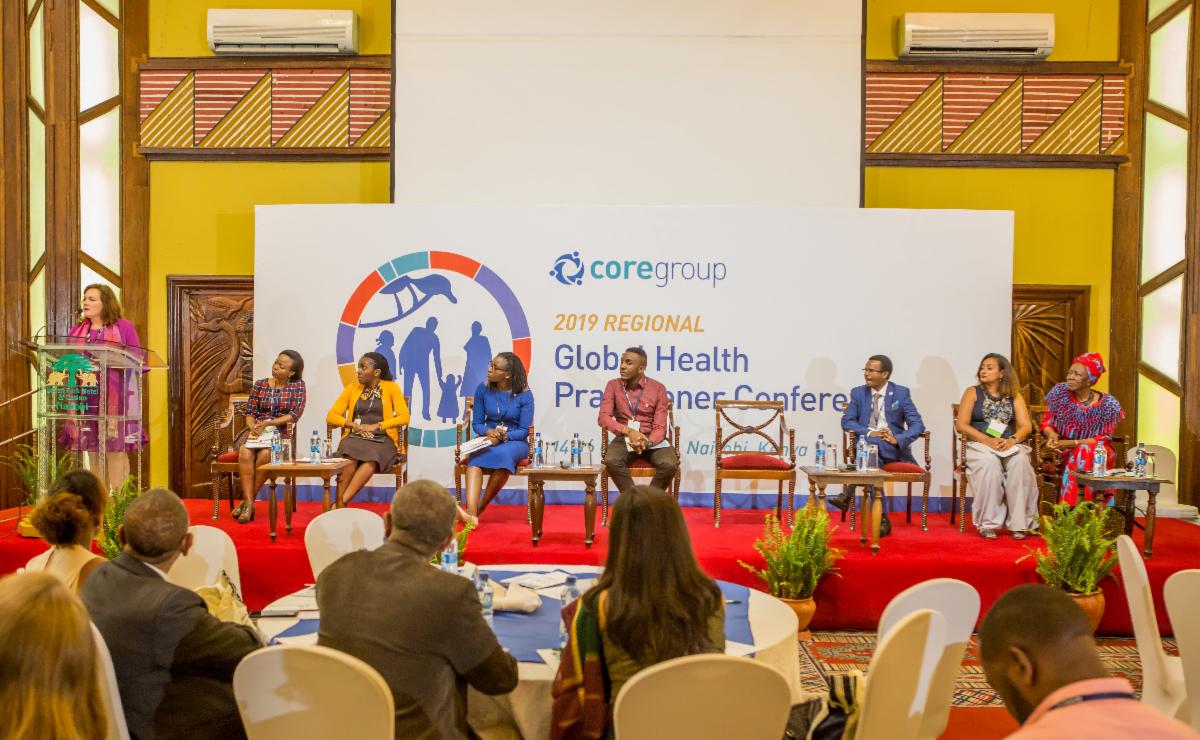
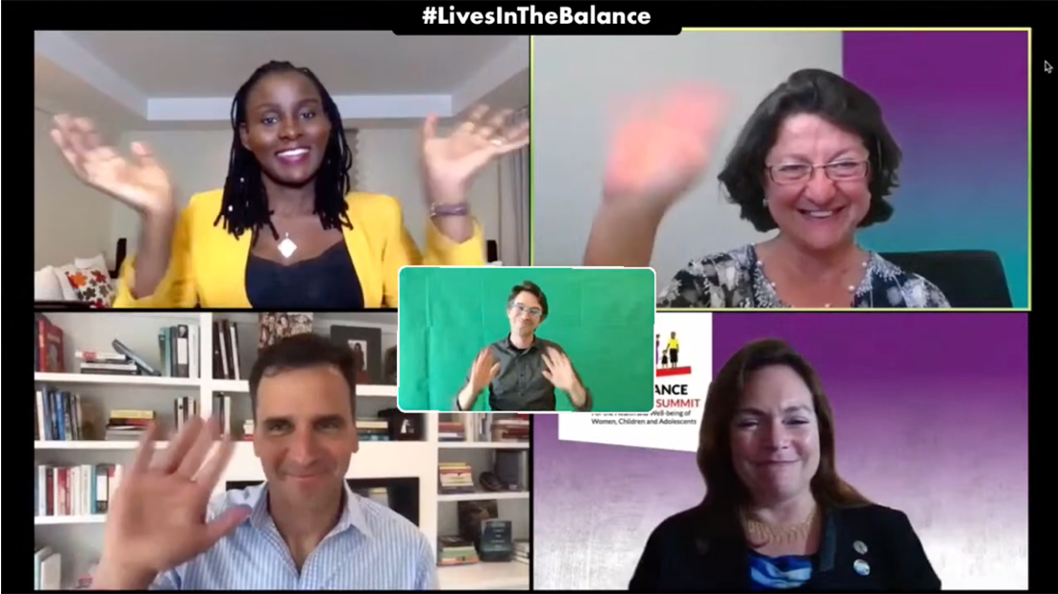
Unlocking Potential: Prioritizing Child & Adolescent Health and Well-Being in the New Decade

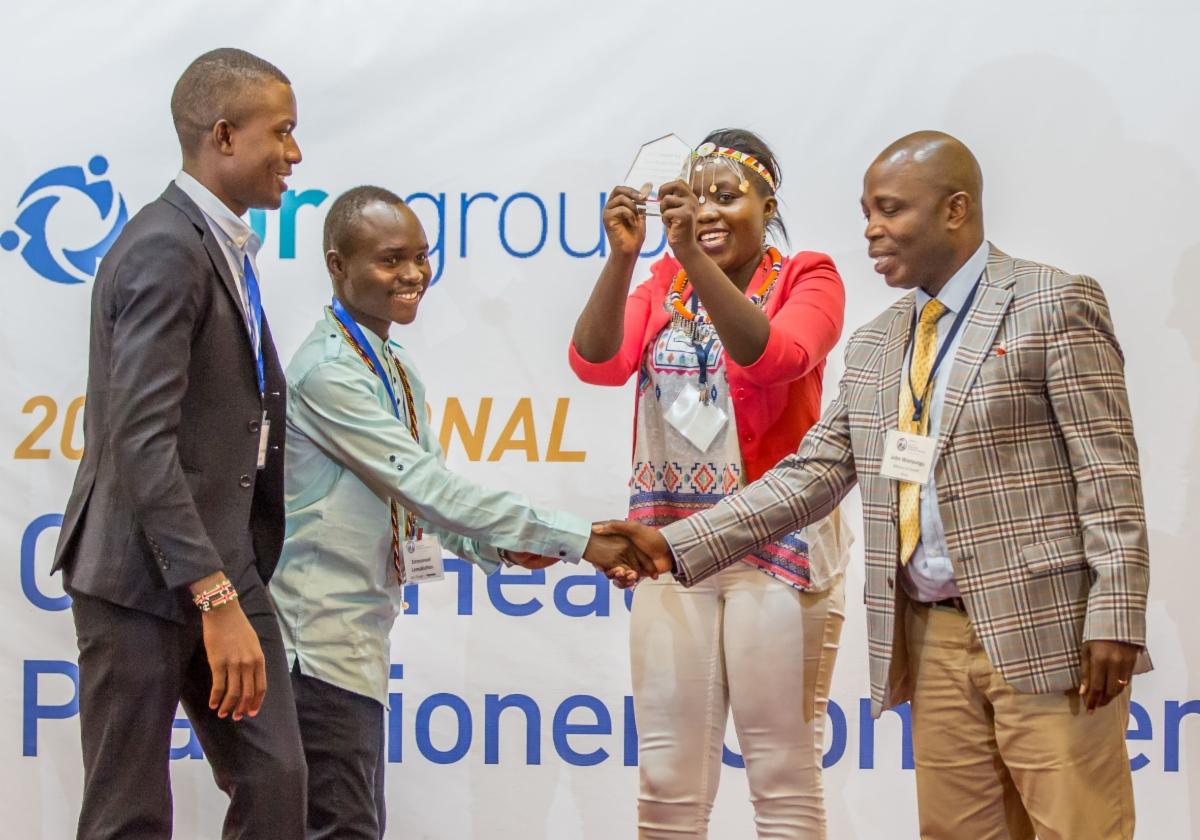
CORE Group Global Health Practitioner Conference (GHPC)

For over two decades, CORE Group has hosted a Global Health Practitioner Conference featuring skills-building sessions, recent evidence on cross-sectoral technical areas, and dialogue on community health. We have a unique opportunity this year to connect even more organizations and professionals around the world with our new digital format, and this year is particularly important as we set the stage for future investment and innovation in child and adolescent health and well-being.

CORE Group and its membership will engage government, ministries of health, policymakers, practitioners, academia, civil society, private sector, global and local organizations in this virtual conference on December 8-10, 2020.

This Conference positions itself as a sharing platform for promising practices and innovations, ongoing challenges, and lessons learned in child and adolescent health and well-being worldwide; and as a convening space for various stakeholders - from community health workers who perform work on the ground to government policymakers who draft national policies - to discuss current opportunities and challenges for policy making, implementation, and partnership and draw consensus on key steps to move the needle forward.

CORE Group is convening a Global Planning Committee with various interested stakeholders to provide input on conference themes and objectives and to support the creation of a multi-day, interactive agenda. Being a committee member is a volunteer position* and will require up to 6 hours per month in planning calls and agenda input, outreach to speakers, and more.

If interested in participating in the Global Planning Committee, please complete the form below by Friday, August 21, 2020, COB.

*A stipend will be provided to young people in the committee, CORE Group is committed to meaningful youth engagement and aims to include 50% of young leaders in this committee. 


My source: Ados May, hss AT lists.coregroup.org