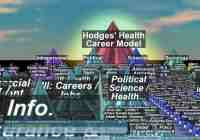
Hodges' Model: Welcome to the QUAD

Hodges' model is a conceptual framework to support reflection and critical thinking. Situated, the model can help integrate all disciplines (academic and professional). Amid news items, are posts that illustrate the scope and application of the model. A bibliography and A4 template are provided in the sidebar. Welcome to the QUAD ...

Sunday, January 31, 2010

International Leprosy Day


Fighting for a Just Cause
Sunday 31 January 2010

How would you respond if, because of a disease,
your family no longer wanted you to live at home?
How would you feel if, because of a disease,
your husband or wife wanted a divorce?
What would you say if you lost your job
because of an illness that had no impact on your ability to carry out your work?
What would you do if your children were no longer allowed to go to school
because of your ill health or disability?

These situations may sound remarkable, unbelievable even, and yet these are real situations, faced by real people everyday. They happen just because the person has leprosy.

TLM-UK: In 2010 The Leprosy Mission is focusing on Nepal to celebrate World Leprosy Day. At Anandaban hospital, patients not only receive medical care, but staff also help them begin the slow process of emotional healing and release. The hospital's projects include medical treatment and surgery, counselling, education support, housing support and small business loans.

Saturday, January 30, 2010

Kiva: Money isn't everything, but it helps - especially in health

In health care we readily appreciate, but still need reminding of the link between wealth - health and poverty. The Black Report and the review some 25 years later is writ large in many student essays, reports and policy aspirations including the latest Labour government.

What we do forget is economics as a problem not just in peoples health, but in establishing a business. Despite the creativity and innovation an entrepreneur can demonstrate, venture capital companies will say "Great idea! Come back when you've got your first sales". This was noted on this week's The Bottom Line on BBC Radio 4.

If it's a real chicken and egg dilemma for innovators in the UK and developed nations, then imagine how difficult it is in countries like Somalia, Uganda, The Democratic Republic of the Congo, Tajikistan, Senegal, and Tanzania, ...?

For people with the aspirations of starting a business that initial, start-up finance is critical not to developing some 21st century technology prototype, but business ventures that we often take for granted in our developed towns and cities clothes, consmetics, food production and sales.

Kiva.org is a great idea. David my old boss brought them to my attention, but now it's time to hop on board.


If you are new to Kiva there is a short video about how a small loan from people like us can help entrepreneurs gain an opportunity they might not otherwise have.


A Fistful Of Dollars: The Story of a Kiva.org Loan from Kieran Ball on Vimeo.
Kivaworld provides a world map so you can readily understand the scope of Kiva and the basics of the way it operates: fund raising, funded, in repayment, paid.

Health and medicine feature in the projects and in the groups of lending teams which you can also join. There are other agencies who ally microfinance with health protection. Health and microfinance already boast a prolonged debate and literature.

I am joining the Kiva community this weekend. Microfinance can make a huge difference to individual lives and now Kiva and its worldwide supporters are creating their own records as revealed on the Kiva blog.

Sometimes it is not enough to just 'maintain a link' as always it's about making a difference. ...
https://www.freedomfromhunger.org/
Matt Flannery, Kiva and the Birth of Person-to-Person Microfinance, Innovations, Winter/Spring 2007, 2, 1-2, 31-56. (doi:10.1162/itgg.2007.2.1-2.31).

http://www.mitpressjournals.org/loi/itgg

Wednesday, January 27, 2010

ERCIM News No. 80 Special Theme: "Digital Preservation"

Dear ERCIM News Reader,
ERCIM News No. 80 has just been published at http://ercim-news.ercim.eu/
Special Theme: "Digital Preservation"
- coordinated by Ingeborg Solvberg, Norwegian University of Science and Technology; and Andreas Rauber, Vienna Technical University
- featuring a keynote by Pat Manson, Head of Unit "Cultural Heritage & Technology Enhanced Learning"; European Commission Information Society and Media Directorate-General
Next issue: April 2010 - Special Theme:
"Computational Science/ Scientific Computing: Modelling and Simulation for Research and Industry"
(see call for articles)
Thank you for your interest in ERCIM News.
Feel free to forward this message to others who might be interested.

Best regards,
Peter Kunz

This issue includes:

  • The CARA Approach for Long-Term Preservation and Exploitation of Medical Images and Reports by Hanan Bouzid, et al..
  • Designing a Trusted Distributed Long-Term Archive for Health Records by Frej Drejhammar
  • Providing Web Accessibility for the Visually Impaired by Barbara Leporini, et al..
  • ICASE Project: New Challenges in Computer-Based Assessment by Thibaud Latour and Sandrine Sarre.


ERCIM News

is published quarterly by ERCIM, the European Research Consortium for Informatics and Mathematics.
The printed edition will reach about 10,000 readers.
This email alert reaches over 5,000 subscribers.


Advertising in ERCIM News
By advertising in the ERCIM News printed edition, your company or institution will be able to speak to a highly qualified audience: You can reach over 10,000 researchers, scientists and decision makers in the field of information and communication technologies.
For rates and conditions, see http://ercim-news.ercim.eu/advertise


About ERCIM
ERCIM - the European Research Consortium for Informatics and Mathematics - aims to foster collaborative work within the European research community and to increase co-operation with European industry. Leading research institutes from twenty European countries are members of ERCIM. ERCIM is the European host of W3C.
http://www.ercim.eu/

Tuesday, January 26, 2010

Midwifery Materials for Haiti - in French/Creole - NEEDED

My source as posted to the GANM and on HIFA 2015 lists:

I am writing the (GANM) community to ask for assistance in gathering online midwifery and nursing materials - in the French or Creole language, for Haiti.

The National Nurse School University and Faculty of Medicine in Haiti has collapsed and they have lost most of their training materials. Dr. Larouche was killed in that collapse - he was teaching an OB course to the midwifery class at the time. I do not know the fate of the nursing/midwifery students, but one can imagine that the outcome is probably not a good one. Dr. Larouche was filling the void left by the untimely death of Madame G.Francoeur last year (she died in an auto accident).

Midwifery in Haiti was just recovering after the sadness of the loss of Mme Francoeur - and the earthquake has now destroyed most everything that they had.

Agnes Jacobs, UNFPA survived and has been emailing from Haiti. She and her colleagues are working to pick up the pieces and try to reconstruct materials for training midwives and nurses in life saving skills.

I am writing to members of the GANM asking for support in finding DIGITAL materials that we can provide to Agnes for the time being. It is VERY hard to get shipments of books and things to Haiti right now, but in the future, I suspect that Agnes will be able to use books, and guides, and computers to rebuild midwifery in Haiti. So eventually we will ask for books and things, but right now it is very hard to get these types of things to her. I know she is not alone, I know that COHI, PAHO, and many others are on the ground. I think the GANM can work with all these others to help in whatever way we can.

Johns Hopkins is sending a team to Haiti, including Dr. Beth Sloand who has been travelling to Haiti with students for over a decade. Beth does not have room to take printed materials, but she can maybe take a packed hard drive or CDs/DVDs that we load with teaching materials. Agnes does have a computer and internet (sporadically) - so I have been discussing with her the potential of sending digital materials which she can start to use right away until printed materials can be provided.

She welcomes health materials in French and or Creole primarily. They should be materials that can *instantly be used to teach midwives and community health workers* - so scientific articles that require interpretation and reconstruction into teaching materials are not what I am asking for at the moment. Right now there are no resources to turn scientific literature into teaching materials. Do you have teaching materials that you would be willing to share?

I would like to ask that people send either direct links to online resources that we can copy down to a CD or send useful teaching materials that we can put on a CD.

Please email them to the GANM or to me (pabbott2 @ son.jhmi.edu)

Regine Marton wrote already directing us to look at Hesperian and the
WHO Reproductive Library (in French). We have the Hesperian material now. The WHO library is helpful.

If you have any quality materials for training of midwives that you would like to donate or direct us to find, please let us know. Please send scientifically sound materials - the last thing that Haiti needs are questionable methods or what we call in the US "hocus-pocus" (unproven claims or "magic").

I hope this makes sense and that the GANM community will come together to help Haiti in a “different” way. I think what we are doing is unique – while of course there are huge needs for emergency care and the like we are looking one step ahead to helping Haiti rebuild its educational infrastructure.

Best Regards,
Patti Abbott
GANM Moderator and "Electronic Midwife"

Nursing and care homes: the new schools 4 basic nursing care?

I do not wish to denigrate the quality of care in nursing homes, as I've blogged previously there are others better placed to do that when needed. In some the nursing care is exemplary and this is evident not just in their inspection rating, but the morale of staff, the reports of relatives and local community plus other indicators - especially when you visit and use your senses. As a nurse you are duty bound to assess the quality of care wherever your practice takes you. In the homes where the care is very poor, there is no escape from that reality. The reality of poor care first hits visitors when they smell the home they have entered. If there is no escape for them - well what then of the residents and staff?

Now an extended and dedicated role for nursing home liaison within community mental health nursing has arrived* and taken root, this must say something about the quality of care in this sector (and not merely suggest a shortage of Consultant Psychiatrists)? Nurse, service managers and commissioners recognise that if they do not preempt the referral torrent (or trickle from some care homes!) then community teams will grind to a stand-still. Care homes need assistance even as private businesses in assuring their holistic competency.

If services do not stem that referral flow as a wave or otherwise, they will in turn become second rate first-aiders with no primary purpose. They will be forced to respond repeatedly to the same client RE-referrals, the same set of disjointed, fractured physical:mental:social health problems presenting in a series of unique individuals. And this is not person-centred care.

What the nursing home liaison role says is that here is one place we can locate the theory-practice gap, a skills gap and a lack of integrated, holistic person-centered care. Mash-ups may be desirable in the virtual world, but in care delivery - is that safe? Too frequently the mash-up of combined physical and mental health problems pass staff by. The problems go unrecognized, they are there: evident, but disguised; due to lack of comprehensive observation, life histories and despite the question and answer sessions at the gates (service interface). However it is described (e.g. single point), the specialisation of community mental health teams into memory assessment, intermediate, community mental health, ... depends on the vibrant management and quality of referrals.

Much is made of nursing homes registered as EMI (Elderly Mentally Ill) and their need for or access to a registered mental health nurse (RMN); but RMNs in turn rely on the ability of more junior staff to observe and accurately report the basic aspects of the resident's physical and mental state. If equity for older people in care is to be achieved, then although the care - nursing home sector is 'private' and a 'business' there must be an accommodation, a partnership when it comes to education and valuing time invested in these homes.

Original image source: Neo - The Matrix http://www.dailygalaxy.com/my_weblog/psychology/

Sunday, January 24, 2010

Hodges' model links in 3D with Topicscape

Roy Grubb (Hong Kong) got in touch recently regards his appreciation of the links resource I have compiled, organise and maintain using Hodges' model. Roy's intention to create a Topicscape in 3-D has now borne fruit. Unfortunately, on my Macbook Firefox fell over trying the link below. I then learned Topicscape runs on Windows PCs only. I look f/w to trying on my (aged) PC, but despite that limitation - this is a great development. Many thanks Roy!!

Here is Roy's post from his site (the larger image below with link is from his initial post):

I wrote about this a couple of weeks ago. Now that I have permission from Peter Jones to use the lists on his pages of links organized according to Hodges’ Health Career Model, I can announce that it is on-line and live in the form of a read-only Topicscape. You can search (just type) and visit the pages (links are in the details panel – just click). Links to the four main pages of links in the Hodges’ Health Career Model site are in the four main topic cones: Intrapersonal, Political, Science, Sociology.

Topicscape image
Give it time to load the Topicscape software first time. Subsequent visits will be much quicker.

For you to fly around and explore this you will need a PC with 3D graphics hardware with an up-to-date graphics driver (requirements here).


There’s a wiki page with some helpful pictures that explain the few things you need to know to get you flying and zooming with the best of them. If you need any help, email me at r dot g at topicscape dot com.

Roy

Additional links:


Topicscape - Roy's initial post 'Hodges’ Health Career Model'

Science domain: H2CM (Visualization I & II, VR, Diagrams)

Friday, January 22, 2010

Putting 'care' in a holistic frame


How many frames do you need?


*infocare: care demographics, directories, media, literacies...


care communication,
self care,
care ethics, care philosophy,
emotional care, pastoral (green) care,
therapeutic care, care beliefs,
interpersonal care,
MENTAL HEALTH CARE
cognitive care, holistic care,
care responsibility, care ecology

emergency care, physical care,
care model, theory, plan,
care assessment, evaluation,
care curricula, intervention,
care process, evidenced care,
BASIC NURSING CARE
intensive care, coronary care,
special care baby unit, *infocare,
nursing care, medical care, health care,
e-care, surgical care

collaborative care,
child care,
personal care, older adult care,
informal care, SOCIAL CARE,
family care, care education,
community care, care community,
residential care,
care dependency,
abusive care, care risks

duty of care, care policy,
care provision, inspection, standards,
care economics, care outcomes,
care legislation, care home,
care contract, care advocacy,
care quality, CARE AID,
care qualification, regulation,
State care, private care,
care insurance, CARE RIGHTS,
care service engagement, prison care


Don't forget the 5th, virtual, spiritual frame?

Where is that?
It is wherever you need it to be. ...

Additional suggestions welcome: h2cmng at yahoo.co.uk

Wednesday, January 20, 2010

Currencies and travel in health and social care

Before the advent of the euro, holidays in Europe were that bit more exotic. Having to buy and adjust to another currency - and not just one - was part of the novelty and fascination of travel.

Health and social care have their own currencies (and yes, read that as there being integration here too!). Most of the currencies are national given the efforts to standardise, with examples such as, length of stay, referral to treatment and more recently in residential care and elsewhere continuing care and its occasionally truculent neighbour 1-to-1. Unfortunately, like land masses, these currencies can also suffer from continental drift.

Dissemination (use in the wild) lack of review and ongoing attention to standards, benchmarks and definitions can see a currency drift in its application and subsequent reporting (affecting perceived utility, value and impact). The value of a currency can be diminished over time as it no longer acts as a unit of difference.

So enjoy your travels, but beware the risks while you vive la difference, especially in your work!

Image source: http://www.artlebedev.com/mandership/77/