Hodges' Model: Welcome to the QUAD: short term

Hodges' model is a conceptual framework to support reflection and critical thinking. Situated, the model can help integrate all disciplines (academic and professional). Amid news items, are posts that illustrate the scope and application of the model. A bibliography and A4 template are provided in the sidebar. Welcome to the QUAD ...

Showing posts with label short term. Show all posts

Wednesday, February 25, 2026

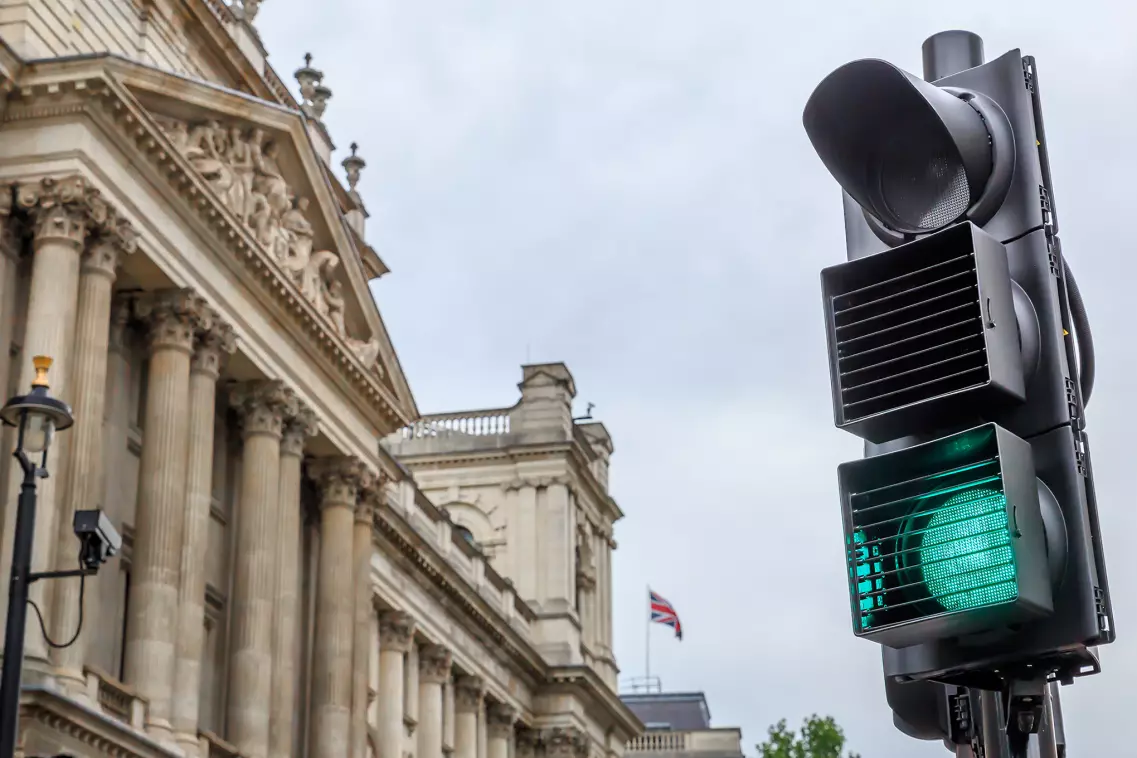
IFS Report: 'From fiscal rules to fiscal traffic lights: rethinking the UK fiscal framework'

'In other words, the current framework means that macroeconomic volatility is mainlined into policy volatility, which adds unnecessarily to economic uncertainty and makes good policymaking less likely. There is also a problem of asymmetry: when the forecast improves, any additional ‘headroom’ is typically treated as free money and happily spent. Yet when the forecast worsens, the rules tend to get changed or ‘gamed’: Chancellors of all political stripes have proved adept at promising future tax rises or spending cuts which are unlikely to be delivered, but which allow them to meet the letter of their rolling fiscal targets. 

All this is to say, the current framework is not delivering good outcomes. It is not achieving sustainable public finances, it has limited credibility with financial markets, and it is not creating the conditions for good policymaking or for a high-quality public debate about the important issues at play. It seems likely that any framework, left in place for long enough, will start to create problems in practice, as unhelpful norms emerge and actors find ways to game the system. Just as the tendency of HM Treasury to fudge its forecasts in the 2000s was one reason for the creation of the OBR as a corrective mechanism, the dysfunction around the current framework necessitates a change in thinking and approach.'

INDIVIDUAL
|
    INTERPERSONAL    :     SCIENCES               
HUMANISTIC --------------------------------------  MECHANISTIC      
SOCIOLOGY  :   POLITICAL 
|
GROUP
'Fixation upon -

lived
[ equilibrium ]
experience


'RAG'
assessment of patients in mental health services - caseload management


 fiscal headroom'
GOOD - BAD
PASS - FAIL
Equilibrium
Outcomes 
Public Policy
 
Interviews
 
sustainable public finances
 
good policymaking
(here)

high-quality public debate

Cost of Living


Report: IFS

Policy
Office for Budget Responsibility


My source: Valentina Romei, IFS urges end to fixation on fiscal 'headroom', Financial Times, 19 February, 2026, p.3.

Images: IFS

Saturday, February 10, 2018

Courage: One of the 6Cs - for Individual & Governments? [i]

individual
|
INTERPERSONAL : SCIENCES
humanistic --------------------------------------- mechanistic
SOCIOLOGY : POLITICAL
|
group

Courage is perhaps one of the more challenging of the 6Cs for learners to grasp and even for experienced staff  to exercise. As a concept a definition is easy to find. Courage is often associated with whistleblowing. Over the decades whistleblowing has proved critical and vexed to both an individual's career and organizations.  Hodges' model encourages us to expand on this ...

The courage of seeking
data,
information,
knowledge,
diagnosis and prognosis
Address:
assumptions : misinformation : disinformation
["Dr Google", fake news, drugs online..?]
Disclosure or withholding information

||||||||||||||| LONG GRASS |||||||||||||||
Husbands, wives, partners, sons and daughters with many friends find courage every moment of everyday (and many nights) when caring for someone living with dementia and other chronic illnesses. Practitioners may need courage to challenge promises made by family members that - "A nursing home? Never!" But, is the patient still at the centre of concern in these cases? Care at home at any cost? This can be the 'record' that matters to families.


Governments of all hues and globally are vested with courage, but how they exercise this quality depends vitally on governance. This is same reason, constraint that operates on the individual. "Do I? Don't I?" becomes "Do we? Don't we?" But then that individual practitioner is (must be) supported (governed) by supervision and the deliberations of the multidisciplinary team.
What is the governments' record? Do governments have the courage to address the problems sustainable health and social care presents? Or, do they just kick the  problem...


Courage [ii]: One of the 6Cs - for Individual & Governments?