Hodges' Model: Welcome to the QUAD: global

Hodges' model is a conceptual framework to support reflection and critical thinking. Situated, the model can help integrate all disciplines (academic and professional). Amid news items, are posts that illustrate the scope and application of the model. A bibliography and A4 template are provided in the sidebar. Welcome to the QUAD ...

Showing posts with label global. Show all posts

Saturday, October 17, 2026

The International Day for the Eradication of Poverty

While the world has had enormous success in reducing poverty in recent years, new findings from UNDP and the Oxford Poverty and Human Development Initiative show that progress cannot be taken for granted.

The 2026 Multidimensional Poverty Index (MPI) reveals that the number of people living in multidimensional poverty has increased for the first time since the index was launched in 2010.

At the same time, many countries continue to make progress against poverty, indicating that eliminating poverty in all its forms—the first Sustainable Development Goal—is possible.

Read more ...

Saturday, October 03, 2026

World Health Congress 2027 Prague - 20-22 August

Dear Friends,

The World Health Congress 2027 Prague is a global professional gathering focused on traditional, complementary, and integrative medicine (TCIM/CAM) and evidence-based medicine (EBM).

Under the motto “Health Knows No Boundaries – Let Us Seek a Common Path,” the congress provides a platform for professionals to come together, share knowledge and experience, engage in professional dialogue, and foster international cooperation in healthcare.

The previous congress attracted more than 1,000 participants from 50 countries worldwide and brought together prominent experts and organizations.

If you are considering actively participating in the 5th World Health Congress 2027 Prague, to be held from 20–22 August 2027, and are planning to submit an abstract for your presentation, please give some thought to the following four questions. They reflect the direction envisioned for the upcoming Congress. This direction will also be embodied in the Congress’s concluding document, the Prague Declaration.

  1. How can we build bridges between TCIM and EBM in healthcare?
  2. How does your contribution help advance TCIM?
  3. If you have participated in one of our previous congresses, what new perspectives does your presentation offer compared with your previous presentation?
  4. What is the future of TCIM, and what strategies would you propose for the way forward?

Abstract submissions are now open. You can submit your abstract here:

ABSTRACTS

Warm greetings from Prague,

Tomas Pfeiffer
President of the 5th World Health Congress 2027 Prague
Soukenicka 21, 110 00 Prague 1
Czech Republic
www.whc2027prague.com 

Director
Institute for TCIM/CAM 

e-mail: info AT itcim.org
www.itcim.org

n.b. I have had some problems accessing the site - 'new domain'.

Friday, October 02, 2026

Gaps and Legacy Issues in Health and Education

 ... and across the Professions and Disciplines

I've just revised what may be table 1 of an exploratory paper. The table's role is to inform the motivation, scope and overall purpose within the introduction. The aim is to outline the gaps and legacies in health and education. Is this the combined inheritance of life chances, health and work career: gaps?

  1. Theory-Practice gap

    A. Research in Practice – Translational Research;
     B. Education/Training: University – Apprenticeship (see 4.B);

  1. There is no research-based conceptual framework taught and applied across health and social care systems and services.

  2. Individual – Collective (Population) Health

  3. Legacies of:
      A. Integrated care (global: funding / philosophy / location / disciplines / academic …);
      B. Parity of Esteem
           i   Mind - Body – Cartesian dualism;
           ii  Funding of Health Services [mental health - general];
           iii Research funding; Policy & Education);

C. Person-Centred Care – Service-Centred Care;

D. NHS - Social care;

  1. (Ill-Health-Disease, see 4.B.ii) Treatment versus Prevention first 

  2. Long-term policy Vs Short-termism

  3. Personal, Local, Global: Developed – Developing Health Systems & Services 

  4. Determinants of Health (Schrecker and Bambra, 2025)

Any thoughts, key sources ... are most welcome, e.g. should there be a place for sustainability, self-care, the literacies and the basis of funding public, private, or charitable (mixed)? h2cmng AT yahoo.co.uk
 

Schrecker, T., Bambra, C. (2025). ‘Lethal But Legal’: The Corporate Connections (Commercial Determinants of Health). In: How Politics Makes Us Sick. Palgrave Macmillan, London. 
https://doi.org/10.1057/978-1-349-96127-6_7

Saturday, September 05, 2026

UN votes to adopt new world map to reflect Africa's true size | BBC News

UN tells the world: Stop making Africa look small

'By 164 votes to one, Member States on Friday endorsed a resolution promoting map projections that more accurately reflect the true size of continents – the culmination of an African-led campaign against the 16th-century Mercator projection, still the most widely used map in the world. 

The United States cast the sole vote against, dismissing the initiative as part of a “radical ideological project.” 

Six countries – Estonia, Georgia, Lithuania, Moldova, Serbia and Ukraine – abstained. 

The resolution does not ban the Mercator projection or impose a replacement. Instead, it encourages governments, schools, international organizations and technology companies to use the Equal Earth projection and other so-called equal-area maps when relative size matters, and to teach the limitations of any flat map in representing a spherical planet.'

Continued ... UN


Previously: 'cartography'

Friday, August 14, 2026

Sometimes it can take an old model ...


'Sometimes it can take an old model, 
to build a new one, 
that makes the existing model obsolete.'

To borrow from Buckminster Fuller.                         

 
Resurgence & Ecologist, Sept/Oct 2020, Issue 322, p.33.

Friday, June 05, 2026

'Moved to Care' amid the Boxes - RCN

A Balikbayan Box for Nursing: artists and writers in residence

'Our new Arts Council National Lottery funded project takes the Filipino custom of the Balikbayan Box as its central theme, inspired by Romalyn Ante's poem Notes Inside a Balikbayan Box. The Balikbayan Box is a long-standing Filipino cultural practice through which we are exploring the spirit of nursing across borders and boundaries. 

Visit our exhibition to explore the installation ‘Inside Home’ by Haleema Aziz and meet our writers in residence – Romalyn Ante, Jennifer Wong and Christie Watson – to explore the art of nursing with a difference.

Our writers will each be running a writing workshop for a different audience to help them engage with the exhibition themes, and develop their own writing skills: refugees, schoolchildren and young adults.

Writing residencies run in the RCN Library and Museum (20 Cavendish Square) from April – June 2026. Find our what our writers have been working on at this public celebration of art and migration panel event in July.

Our writers will be based in the Moved to Care exhibition space in the England Library from 11am-4pm during their residency week. Anybody can drop in and chat to them between 3-4pm, or if you're a member you can book a free half-hour 121 slot. Discuss your own writing, ask questions about publication or the role of art and creativity in nursing with our writers in residence.'

Previously: 'box' : 'creativity' 

My source RCN Congress 2026

Friday, May 15, 2026

Tanzania Health Summit (THS)

Hello Peter Jones,

Warm greetings from the Tanzania Health Summit (THS).

As we prepare for the 13th Tanzania Health Summit, scheduled for 5th–7th October 2026 at Mlimani City Conference Center, Dar es Salaam, we are excited to share key opportunities and updates for your participation.

Abstracts Submission is underway, submit before 1st June.

We invite researchers, innovators, and professionals to submit abstracts aligned with this year’s theme:

“Building Health Sovereignty and Strengthening
Health Systems in a Changing Global Order.”

This is your opportunity to showcase impactful work and contribute to national and global health conversations.

Elizabeth & her Colleagues story about their wish to present at THS: 

SUBMIT YOUR ABSTRACT NOW!!!

Early Bird Registration is Still Open

Secure your spot at a discounted rate by registering early. Take advantage of this limited-time offer and be part of Tanzania’s largest healthcare gathering.

My source: Email - THS

Wednesday, May 13, 2026

WPA/IACAPAP Global Curriculum Survey

Dear Neil et al.,

Would it be possible to recirculate this invitation to complete this ~5minute survey.

We recevied a good response (~200 with 72% expressing interest to join future steps) from the last round but we could have had more representation from Oceana, the Carribean, the Mediteranean, Central Asia, Russia, and perhaps more from any areas as emphasized in line 3 below.

Thank you in advance for your consideration, David
---------------------------------------------------------------------

Dear Colleagues, Families, Relatives, Young Adults, Adults, and Friends!

Anyone affected or who knows someone who is affect by a mental health problem.

We need your help, especially from those living in remote urban or rural areas, or otherwise underserved regions anywhere in this wide world!

HELP US DESIGN A GLOBAL CHILD AND ADOLESCENT MENTAL HEALTH, PSYCHIATRY AND ALLIED PROFESSIONS TRAINING CURRICULUM FRAMEWORK IN SUPPORT OF LOCALLY INTEGRATED COMMUNITY AND FAMILY-CENTERED EDUCATION AND ACTION.

The International Association for Child and Adolescent Psychiatry and Allied Professions (IACAPAP)

and

The World Psychiatric Association (WPA) Child and Adolescent Section are developing the Global Child and Adolescent Psychiatry and Mental Health Training curriculum FRAMEWORK.

To complete a short DESIGN feedback and ENGAGEMENT survey (~5 Minutes)

Click or Copy and Paste the following URL: https://forms.cloud.microsoft/r/x4MyX0MkYt

Here is A SHORT INFORMATIONAL VIDEO: https://www.youtube.com/shorts/NdMRqb1LVVM


HIFA profile: David Cawthorpe is Adjunct Professor, Cumming School of Medicine, Department of Community Health Sciences; Adjunct Professor, Cumming School of Medicine, Department of Psychiatry | Child and Adolescent Psychiatry; and Child Health & Wellness Researcher, Alberta Children's Hospital Research Institute, Canada. 
https://profiles.ucalgary.ca/david-cawthorpe cawthordATucalgary.ca

My source: HIFA.

Saturday, May 09, 2026

v WCCS26: World Conference on Complex Systems 20-22nd April

Day 2 Tuesday 21st April (Revisiting) Keynote Speaker: Abderrazak El Albani - 
Emergence of Intercellular Cooperation: At the Origins of Eukaryotic Complexity
Session Chair: Khawla Tadist

This keynote was fasacinating. As I begin this post on the 100th birthday of Sir David Attenborough, who would have us all see life in the broadest terms, value life and diverse habits, and Earth as our collective and shared home.

Abderrazak El Albani explained the search for LUCA the last universal common ancestor - 3.8 billion years ago. Many dates in the emergence story of humanity, have been progressively pushed back. The first fire, art, languages, our co-habitation and intimate relationships with Neanderthals.

In healthcare, as a practitioner you have to be aware of your scope of practice. At WCCS, scale (as in iv) was ever present across research in complexity, and complex systems. Not just physical size nano-to-mega but temporal too, as we journeyed billions of years. Several of the slides are presented here:

https://www.synchrotron-soleil.fr/en/news/discovery-oldest-macroscopic-planktonic-eukaryotes-contribution-nanoscopium-beamline (with a reference).

There is a video (French): https://www.youtube.com/watch?v=bh3t26cU7xc

I asked a question, which may have been psychological preparation for own presentation to follow. Listening, I could see how the work Abderrazak El Albani and his team are doing, could be readily translated to the search for life on Mars. There has been a 'routine' interchange of planetary material between Earth and Mars over the aeons. Fitting surely that the sedimentary rocks sought lie in  A key lesson, is that light helps us see, but not all lights are equal. Light sources brighter than the sun become incredible scientific instruments. The longevity of the dinosaurs was highlighted, at least 140 million years. There is no comparison with homo sapiens then, even as those dates have been pushed further back in time. Time defeated me as I tried to make the observation that even the dinosaurs did not make it to their first galactic birthday (c.250 million years - and what a carousel). I like the thought (slide) of 'Earth as Memory'. 

What really counted was the expressed concern about what is happening now: in the Anthropocene.

The second keynote:
Nigel Gilbert - Policy in a Complex World: Towards Complexity-Aware Policymaking
Session Chair: Ali Idri 

Was helpful to me, as the dated conundrum of benefits realisation from our technologies, and evidence-based policy still leaves a gap (for me) within the POLITICAL care/knowledge domain of Hodges' model. The illustration/graphic elements of Prof. Gilbert's slides were a brilliant complement to the content:

Prof. Nigel Gilbert - WCCS26 21st April

I wonder if within policy the constant in the equation is continuity and as a quantity it is an unknown? This seems to the case in health policy, across successive governments. You may (also) find this chart informative: https://www.cecan.ac.uk/news/the-visual-representation-of-complexity/

Perhaps, a key factor in complexity is the fact that nothing stays the same, so continuity is nuanced? Michael Quinn Patton's book Developmental Evaluation was noted re. learning while doing. Now I wish I'd held on to Qualitative Research & Evaluation Methods (4th ed.). The discussion of 'obesity system map' and 'whole systems analysis' was appreciated here.*

Since Marrakech and WCCS, I've noticed acknowledgement in the literature that 'research' is currently flooded with AI tools. I'm sure PRSM - Participatory System Mapper is a welcome addition, (as noted in iv) tools to facilitate participation are much needed:

Collaborative Creativity

The Participatory System Mapper (PRSM) is an app that makes it easy to draw networks (or 'maps') of systems, working together collaboratively.'

I will definitely check this resource out; and CECAN. After Prof. Gilbert, the next Track included my contribution, which I will return to. Rather distracted, I have a somewhat blurred slide, with: 'The global tensor of educational research is' then headed 'Learning poverty. Being unable to read and understsand a simple text; with points 1-4.'. I'm not sure which presentation this was, but zeroed in on the literacy theme, and the word tensor. Another slide refers to '6. Topological substitution for Success'. I think it is (writing this is helping recall!):

Harvey Spencer Sánchez-Restrepo, Jorge Louçã, Martha Belén Carmona-Soto and Sofialeticia Morales-Garza
Topological Patterns of Academic Success: Insights from Complex Network Analysis

'Always Label Your Axes' - Zazzle.

Before that there was another model, as the next keynote speaker: Chris Bauch demonstrated during the conference wearing a t-shirt:

Critical Transitions in Coupled Human-and-Natural Systems and their Early Warning Signals
Session Chair: Mohamed Essaaidi  

Previously: 'nexus'


*Jones P, Wirnitzer K. Hodges’ model: the Sustainable Development Goals and public health – universal health coverage demands a universal framework. BMJ Nutrition, Prevention & Health 2022;5: doi:10.1136/bmjnph-2021-000254

Wirnitzer, KC. et al. (2025) Toward a roadmap for addressing today's health dilemma – The 101-statement consensus report. Frontiers in Nutrition. Volume 12.
https://frontiersin.org/journals/nutrition/articles/10.3389/fnut.2025.1676080 DOI:10.3389/fnut.2025.1676080

S. Bettiol, P. Jones, H. A. Onyedikachi, and W. G. Kernohan, (2026) Bridging Gaps in Oral Health Frameworks: Mapping With Hodges' Health Career - Care Domains - Model, Journal of Public Health Dentistry. 1–14, https://doi.org/10.1111/jphd.70034

Friday, May 08, 2026

iv WCCS26: World Conference on Complex Systems 20-22nd April

Day 1: Panel 2 - Rethinking Knowledge in the Age of Complexity

  • Helena Knyazeva - Dancing with Complexity: How the World Thinks Through Us
  • Carlos Gershenson - The Implications of Complexity
  • Leonardo Rodríguez Zoya - Can Statistics Think? Complexity, Future, and Freedom in the Age of Large Language Models
    Panel Chair: Nigel Gilbert 

Courage is one of the 6Cs in nursing, and was on display at WCCS26.

Carlos Gershon began by offering two references, the first:

De Domenico, et al., (2019). Complexity explained: A grassroot collaborative initiative to create a set of essential concepts of complex systems. https://complexityexplained.github.io

This is a brief 20 pages, larger text, and provides a helpful primer to complexity and related concepts covering:

Interactions
Emergence 
Dynamics 
Self-organization
Adaptation
Interdisciplinarity
Methods

For each concept, the authors explain:

Definition/Description
Examples
Relevant Concepts
References

Plus, secondly:

Gershenson, C. The Implications of Interactions for Science and Philosophy. Found Sci 18, 781–790 (2013). https://doi.org/10.1007/s10699-012-9305-8

I liked the practical feel here, the encouragement to think anew, and perhaps taste the "flavors of emergence": synchronic - space; diachronic - time, weak and strong feedback, transversal of scale - upwards and downwards.

There is further conference on complexity later this year (and also online!):

CCS 2026:
The 2026 Conference on Complex Systems
OCTOBER 9 - 16, 2026 BINGHAMTON, NY, USA & ONLINE

In my search I also found:

Carlos Gershenson; Complexity, Artificial Life, and Artificial Intelligence. Artif Life 2025; 31 (3): 289–303. doi:https://doi.org/10.1162/artl_a_00462

Gershenson, C. Self-organizing systems: what, how, and why?. npj Complex 2, 10 (2025). https://doi.org/10.1038/s44260-025-00031-5

Leonardo Rodríguez Zoya's presentation helpfully connected social practice, interdisciplinary bridges, statistical rationality, complex (human) rationality and the future(s): desirable, possible, latent and probable.

individual
|
INTERPERSONAL : SCIENCES
humanistic ------------------------------- mechanistic
SOCIOLOGY : POLITICAL
|
group
COMPLEX (HUMAN) RATIONALITY
 
cognition

STATISTICAL RATIONALITY
Techopraxis
LLMs - technology

socio-
HUMAN PROBLEMS
SOCIAL PRACTICE
PRACTICE (one of the 4Ps)

ELECTION - CAMPAIGN SPENDING
PEACE NEGOTIATIONS
ISLAND ECONOMY
CRYPTOCURRENCY

To answer the prompt - 

"Give me a less likely but more fruitful interpretation of this [concept]*."

*Replace with a significant concept in your practice

Would it might help to have a simple, and yet complexity (and simplicity!) primed conceptual framework to assist reflection, argumentation, and progress?
 
I missed the poster at the afternoon break, and followed track 1. I greatly enjoyed Julian Arevalo's - Adaptive Readiness: an Agent-Based Model of Peace Negotiations. Perhaps this accounts for my having no notes or photos for this track except for one. I realise now we did speak, sitting together for the conference dinner. I'm sure I remember Negotiation Lab 1.0 - 

https://www.comses.net/codebases/1256dc74-9ae4-4f49-a235-1ec129be1930/releases/1.0.0/
 
This past week I heard discussion (BBC Radio 4) of the 'income' Norway obtains from its expertise and engagement in peace negotiations.
 
Nicholas Roxburgh, and colleagues Rachel Creaney, Mindi Premarathne and Ruth Wilson through 
Exploring Interdependencies in an Island Economy, reminded me of public engagement in research. Especially when it involves their community; and that community is somewhat rural, or remote.
 
Remah Dahdoul, with Jan Korbel and Stefan Thurner presented -
Campaign-Spending Driven Polarization Transition in a Double-Random Field Model of Elections. The following paper brings home the mathematics in complex systems. The reference is:
 
Jan Korbel and Remah Dahdoul and Stefan Thurner. (2026) Empirical validation of the polarization transition in a double-random field model of elections. arXiv. https://arxiv.org/abs/2510.00612.  doi.org/10.1103/9gjj-1df6.
 
The paper by Saida Hachimi El Idrissi and Mohamed Nemiche is not open access, but the abstract follows. 
 
S. H. El Idrissi and M. Nemiche, "Formation of Complex Societies: An Agent-Based Model Inspired by Freudian Theory," 2024 World Conference on Complex Systems (WCCS), Mohammedia, Morocco, 2024, pp.1-6, doi: 10.1109/WCCS62745.2024.10765573.
Abstract: The rise and emergence of complex societies in the Old World mark a pivotal chapter in human history, characterized by the transition from small, kin-based communities to large, hierarchical states. This transformation raises fundamental questions: How did human societies progress from small, cohesive groups characterized by face-to-face cooperation to the expansive, anonymous societies of today, often organized as states? What factors account for the significant variation in different human populations' capacity to construct stable and functional state structures? To address these questions, we developed an agent-based model grounded in Freud's hypothesis, which posits that civilization could neither emerge nor evolve without the repression of human desires. In the context of social evolution, this repression of desires can be interpreted as the repression of intra-societal competition, ultimately strengthening the society and facilitating the formation of complex social structures. We implemented this model within a realistic representation of the Afroeurasian landmass, incorporating various geographical factors. To validate our model, we compared our simulated results with historical data. The model-predicted pattern of expansion of complex societies demonstrated remarkable congruence with the observed historical patterns in the Old World. The emergence, growth, and distribution of large-scale societies predicted by our computational model showed remarkable consistency with the archaeological and historical record.

keywords: {Analytical models; Computational modeling; Predictive models; Data models; Agriculture; Rivers; History; Complex systems; component; Agent-based Modeling; Repression of satisfaction; cooperation; competition; Social Simulation},
URL: https://ieeexplore.ieee.org/stamp/stamp.jsp?tp=&arnumber=10765573&isnumber=10765499 
Unless you are a microsurgeon (increasingly with robotic co-workers), is the word practice, more likely to manifest what is larger, the big picture, a sense of space, even at a societal or continental scale? In reading, I came across four forms of attractors. For me, how they fit into the question of scale makes this paper worthy of seeking out. 

M. Nemiche was unable to attend the conference, and was greatly missed.

Monday, May 04, 2026

iii WCCS26: World Conference on Complex Systems 20-22nd April

Chaos
Making a New Science 
by James Gleick


When I first learned of WCCS26, I saw a connection, an affinity across the conference themes. This was reinforced when I read the final program for WCCS. Here was a home for the model, a way-point for Hodges' model. For an independent scholar, it was quite a trip to Ben Guerir, to the north of Marrakech; 13 hours (brief by global standards). It was a place to wave wildly, making use of the opportunity to present Hodges' model, to say - "Dear All, can you do anything with this?".


It is almost 40 years since I read James Gleik's, Chaos: Making a New Science. That was in Cornwall I think? Now, something more than book - a complexity conference.  

 After the first two keynotes - two panels: 

 Panel 1 - Complexity, Society & Global Challenges

▪ Carlos Álvarez Pereira - No Limits to Hope: Escaping from the unreasonable effectiveness of Modernity
▪ David Chavalarias - The Artificialization of Cultural Evolution: the Impact of Very Large Digital Infrastructures on Individuals and Society
▪ Louis Klein - Noospheric Singularity and the Mirror of Tamkeen
Panel Chair: Karima Kadaoui

These confirmed I was in the right place. Well, it was bit late if I wasn't! I was reminded of the slow movement, and how in healthcare, specifically client-nurse intereactions you had time to manage your time, that is your caseload to deliver person-centred care. I don't mean time-wasting, as in social chat, tea and custard creams either. This is what being professional is about, truly trying to make a difference - that lasts. So we worked through: What is; (science) what we understand; and (tech and law) what should be. Ecologically, we often refer to the size of our footprints. Panel one considered this individually and collectively - institutionally. Fascinating to reflect upon these themes and how modernity is stamping about in a rather chaotic way? We are seemingly power-less to stop this.

c/o Carlos Álvarez Pereira
No Limits to Hope: Escaping from the unreasonable effectiveness of Modernity

Three reports to the Club of Rome were displayed, spanning 'NO LIMITS TO LEARNING - Bridging the human gap' 1979; 'Limits and Beyond' 2022; 'NO LIMITS TO HOPE - Liberate the potential for Collective Learning' 2026. Should we be troubled, worried even, that the latest followed after a mere four years? There are of course, many reports as per the link above.

David Chavalarias - The Artificialization of Cultural Evolution: the Impact of Very Large Digital Infrastructures on Individuals and Society spoke about the beneficial and malign impacts of social media AI tools. Covid featured as might be expected. Within the sciences, what was worrying, was an innovation slowdown associated with AI, non-AI use, chartered around a central point (centroid). I believe the slide referred to:

Qianyue Hao & Fengli Xu & Yong Li & James Evans, 2026. "Artificial intelligence tools expand scientists’ impact but contract science’s focus," Nature, vol. 649(8099), pages 1237-1243, January. 

There was one slide:


Is this the demise of any efforts to achieve SOCIO-technical synergy? Even to the extent of realising benefits for the human in socio-technical systems? Did Covid not teach us anything about the informational difference technology can make? When so many technologies are muted by a virus? This is what we need: things to think about, question and critique. 

There used to be a series of A3 step-by-step oil painting magazines in the 1970s. One presented a desert campfire, clearly set in the east. I did try it, though not sure were the result is now. ... Such a scenario was presented by Louis Kleinand the Noospheric Singularity and the Tamkeen Process - Regenerative Hermeneutics, with the following reference provided:

Klein, L., & Kadaoui, K. (2024). Realising metamorphic transformation in the mirror of Tamkeen: Growing a shared understanding from co-reflected lived experiences. Systems Research and Behavioral Science, 41(5), 738–749. https://doi.org/10.1002/sres.3058 

There was much I could identify with. And, once again, I cannot continue at this pace. We have only covered (touched!) panel one. Hopefully you now have an idea of the depth of the conference programme. More however, will follow.

See also: thefifthelement.earth

Chaos - cover: https://www.goodreads.com/book/show/826080.Chaos

Tuesday, April 28, 2026

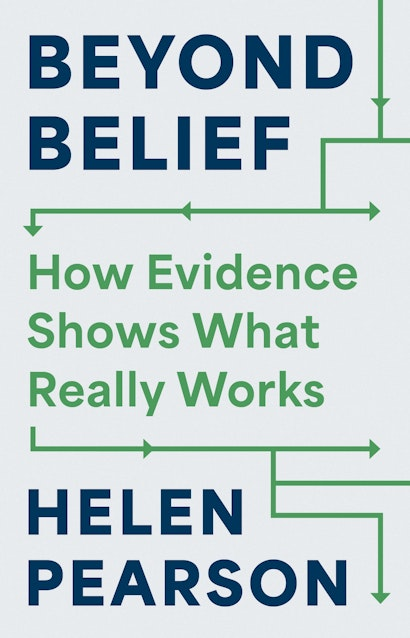
Book: "Beyond Belief - How Evidence Shows What Really Works"

Beyond Belief: How Evidence Shows What Really Works – out April 2026
Beyond Belief

INDIVIDUAL
|
     INTERPERSONAL    :     SCIENCES               
HUMANISTIC --------------------------------------  MECHANISTIC      
SOCIOLOGY  :   POLITICAL 
|
GROUP
BEYOND BELIEF

How Evidence Shows
What Really Works


Beyond Belief: How Evidence Shows What Really Works is a book by science journalist Helen Pearson, published by Princeton University Press.
 
My source: 
Pearson, H. Trials that quietly changed our lives, Life&Arts, FTWeekend, 18-19 April, 2026. p.2 

Previously: 'belief' : 'evidence' : 'information disorder' 

Tuesday, April 14, 2026

The 8th International Conference on Law Enforcement & Public Health

Vulnerability, policing and public health

6 - 9 September 2026
University of Leeds, UK

About the Conference

The Global Law Enforcement and Public Health Association (GLEPHA) and the ESRC Vulnerability & Policing Futures Research Centre will jointly host the 8th International Law Enforcement and Public Health Conference, LEPH2026 in Leeds, West Yorkshire, UK from 6-9 September 2026.

Following highly successful conferences in North America, Africa and Europe, the 2026 global event in Leeds presents a unique opportunity to spotlight global research and world-leading practice across law enforcement and public health. The 2026 overarching theme will be vulnerability, policing and public health.

The conference will be open to law enforcement and public health agencies, national and local governments, relevant research bodies, academic institutes, policy makers as well as the commercial sector and other partner organisations. Bringing these diverse communities and perspectives together, the conference presents an ideal space for sharing and learning about new approaches, instigating and developing real change in practice, based on the best available evidence internationally.

Full details - conference website ...

My source: Culling followers on Twitter '0 posts', last post years ago ...X may have been accepted legally as a signature, but it might denote injury, illness, or illiteracy. Twitter diehards really are in a 'graveyard'. And yet, amidst the tombstones, I found a POLITICAL care domain gem in @LEPH2026, which led me to @GLEPHAssoc. I will follow when allowed.

Previously: 'law' : 'vulnerability' : 'public health'

Tuesday, March 31, 2026

Global health is ... c/o King & Koski (2020)

Use of the word 'global' in health care is common: from global assessment; global as in a pandemic, as per Covid which for a time closed down most human activity across the world; the global health workforce; and global health crises, that must include the climate crisis and pollution. Universal health coverage, allied with universal healthcare access, refers to (national and aspirational ...) global access to quality health services. 

Above, 'global health' has itself already occurred several times. I've posted about global health on a great many occasions on behalf of other parties.

Defining global health in the context of public health, King and Koski (2020) write:

'We propose the following definition:
global health is public health somewhere else.'

More specifically, they add: 

'Global health as a field is not distinguished by its aspirations, methods of research and practice, intervention strategies or even geographical area per se, but rather by a particular relationship between its practitioners and its recipients: a person engages in global health when they practise public health somewhere—a community, a political entity, a geographical space—that they do not call home.'


To apply Hodges' model to global health, there must be another definition.

King NB, Koski A. Defining global health as public health somewhere else. BMJ Global Health
2020;5:e002172. doi:10.1136/bmjgh-2019-002172

Friday, March 20, 2026

Florence Nightingale Commemoration Service

Supporting nurses and midwives to promote health, improve care and save lives Florence Nightingale Commemoration Service

The second group of public tickets for the Florence Nightingale Commemoration Service will be available at 13:00 GMT on 24 March. Click the button below as soon as possible after this time, to complete the form to apply. 

You will be able to request a maximum of 2 tickets and you will need to complete the form with your name and email address. If you are requesting two tickets you will also need to give the name and email address of the second person. 

Please note that if you provide guest details they will then receive an email with an invitation and will need to RSVP themselves in order to secure their ticket. 

If you have further queries please visit our Frequently Asked Question page.

🔷

INDIVIDUAL
|
    INTERPERSONAL    :     SCIENCES               
HUMANISTIC --------------------------------------  MECHANISTIC      
SOCIOLOGY  :   POLITICAL 
|
GROUP
On Wednesday in Waterstones, Deansgate, Manchester, I spotted this book. Opening it randomly - I kid you not - it fell to pp.204-205, and Florence Nightingale's contribution.


'At that time, the idea of visualizing data in order to make its messages clearer to non-mathematicians (including politicians) in order to change minds and inform opinions had started to gain traction in Europe but was not common in England. Nightingale continued to use statistical diagrams to communicate stories hidden in data, and while this clearly contributed to improvements in health and mortality in British military encampments at home and abroad (and by extension in the population in general), it is also undoubtedly the case that she helped to popularize the use of appropriate data visualization methods to expand the reach of statistical information beyond specialist audiences. A testament to the influence of her work is that the Royal Statistical Society had the honour of accepting Florence Nightingale as their first female member in 1859.' p.204.


Thomas K. Briggs. (2025) The Mathematicians' Library The books that unlocked the power of numbers Hardback. Part of the Libri Historici series. Ivy Press.
 
Previously: 'Nightingale' : 'math' 

My source: Waterstone, Deansgate, Manchester and email Florence Nightingale Foundation.

Thursday, March 12, 2026

John Gerrard's "Western Flag" 2017

INDIVIDUAL
|
    INTERPERSONAL    :     SCIENCES               
HUMANISTIC --------------------------------------  MECHANISTIC      
SOCIOLOGY  :   POLITICAL 
|
GROUP


http://westernflag.johngerrard.net

John Gerrard - Western Flag (Spindletop, Texas), 2017

My source: Twitter

Sunday, March 08, 2026

Women Reading Deleuze c/o Edinburgh University Press

Celebrating Women in Philosophy

This International Women's Day, we're amplifying the work of women philosophers.


Our Women Reading Deleuze virtual issue pulls out articles from the Deleuze and Guattari Studies journal, chapters from the Deleuze Connections series and blog posts from our Deleuze Centenary celebrations, all written by women.


20 articles, chapters and blog essays by women

Browse the virtual issue


I have now read Bill Ross's 'Order and the Virtual - The Philosophy and Science of Deleuzian Cosmology'. A challenging and yet rewarding experience, further post to follow.

Friday, February 27, 2026

Rare Disease Day 2026 Official Video

28 February is 
Rare Disease Day


'Raising awareness and generating change for the 300 million people worldwide living with a rare disease, their families and carers.'

Manchester, UK https://www.rarediseaseday.org/event/light-up-for-rare-2/

Continued ... https://www.rarediseaseday.org/

Tuesday, February 24, 2026

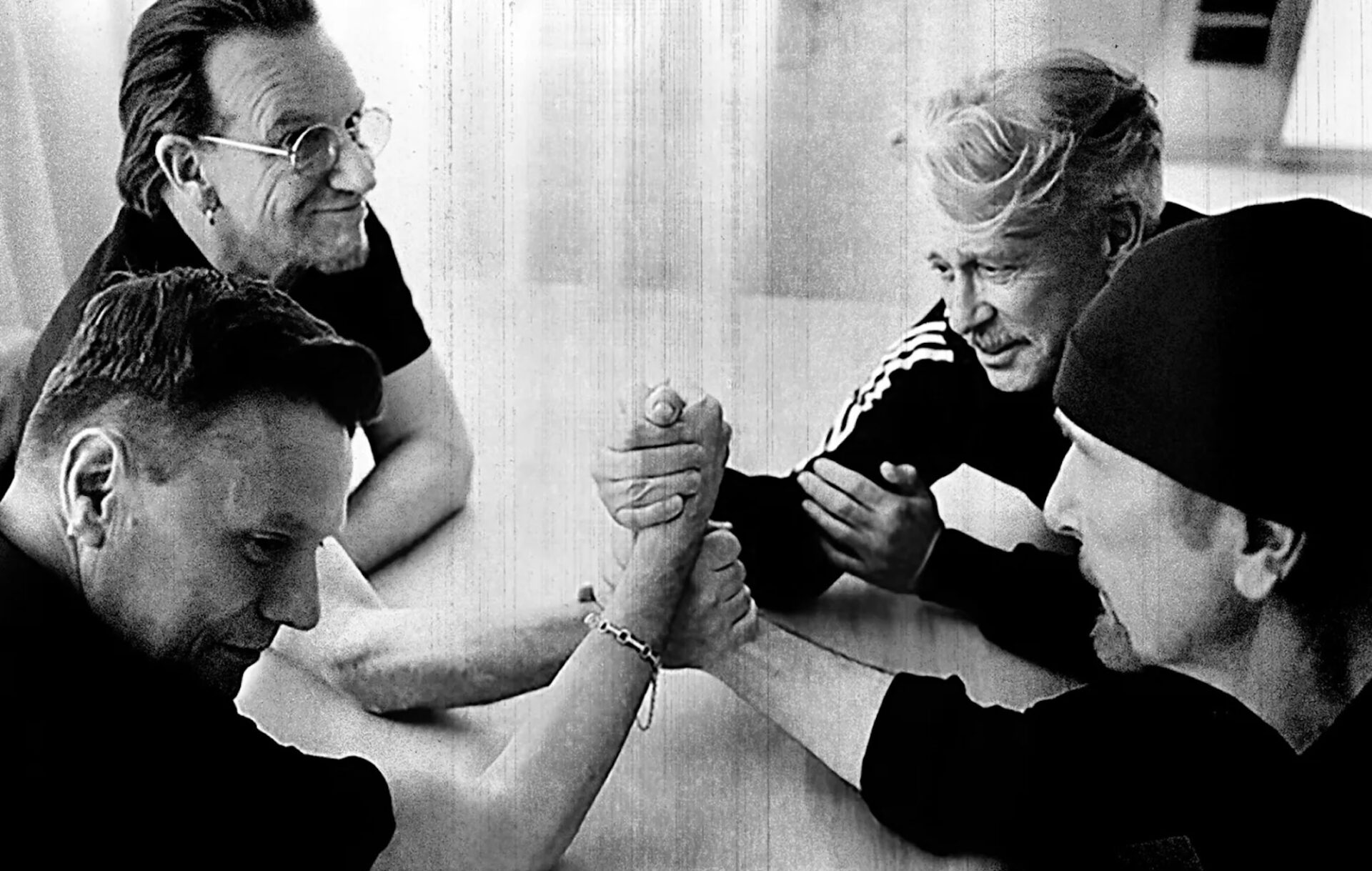
c/o RollingStone UK - "U2 surprise-drop politically charged ‘Days of Ash’ EP with six new songs"

The collection delves into ICE, Israel, the West Bank, Ukraine, Iran — and features a guest vocal by Ed Sheeran

U2 (RollingStone UK - Picture: Anton Corbijn) 

By Andy Greene

'U2 have emerged from a long hiatus with a surprise six-song EP, Days of Ash, available now, in which they address political flashpoints around the world, including ICE raids in the US, the Iranian uprisings, the war in Ukraine, and Israeli settlements in the West Bank.

The six songs — ‘American Obituary’, ‘The Tears of Things’, ‘Song of the Future’, ‘Wildpeace’, ‘One Life at a Time’ and ‘Yours Eternally’ (featuring Ed Sheeran and Taras Topolia) — are all on streaming platforms. They’ve also created lyric videos for each one.' 

Continued ...


Previously: conflict : war : hope : peace