Hodges' Model: Welcome to the QUAD: movement

Hodges' model is a conceptual framework to support reflection and critical thinking. Situated, the model can help integrate all disciplines (academic and professional). Amid news items, are posts that illustrate the scope and application of the model. A bibliography and A4 template are provided in the sidebar. Welcome to the QUAD ...

Showing posts with label movement. Show all posts

Friday, June 05, 2026

'Moved to Care' amid the Boxes - RCN

A Balikbayan Box for Nursing: artists and writers in residence

'Our new Arts Council National Lottery funded project takes the Filipino custom of the Balikbayan Box as its central theme, inspired by Romalyn Ante's poem Notes Inside a Balikbayan Box. The Balikbayan Box is a long-standing Filipino cultural practice through which we are exploring the spirit of nursing across borders and boundaries. 

Visit our exhibition to explore the installation ‘Inside Home’ by Haleema Aziz and meet our writers in residence – Romalyn Ante, Jennifer Wong and Christie Watson – to explore the art of nursing with a difference.

Our writers will each be running a writing workshop for a different audience to help them engage with the exhibition themes, and develop their own writing skills: refugees, schoolchildren and young adults.

Writing residencies run in the RCN Library and Museum (20 Cavendish Square) from April – June 2026. Find our what our writers have been working on at this public celebration of art and migration panel event in July.

Our writers will be based in the Moved to Care exhibition space in the England Library from 11am-4pm during their residency week. Anybody can drop in and chat to them between 3-4pm, or if you're a member you can book a free half-hour 121 slot. Discuss your own writing, ask questions about publication or the role of art and creativity in nursing with our writers in residence.'

Previously: 'box' : 'creativity' 

My source RCN Congress 2026

Friday, April 17, 2026

Ann Hutchinson Guest (Obit.), 'Authority on dance notation ... '

'Although there are many forms of dance notation going back to Pierre Beauchamp's system for Baroque dance in the 1680s, Nijinsky had developed his own cryptic version. Ann Hutchinson Guest first tried to reconstruct his work in 1956 after the choreogapher's widow, Romola, gave her his notes. "I spent years trying to work it out," she said, adding with a laugh: And I'm supposed to be the leading authority on dance notation in the world. She told how Nijinsky had revised his notes many times, often contradicting himself. 'We couldn't get anywhere. Romolo was furious. She said it was taking much too long."
    Hutchinson Guest studied dozens of different dance notation systems, translating many of them into Labanotation, a system developed in the 1920s by Rudolf von Laban who was a central figure in European modern dance. According to a  press report in 1954: "The printed Labanotation page looks like a combination of hieroglyphs, pictographs, Morse dots-and-dashes, đoodles, and a musie score turned on edge" 
    It was not until 1980 that she and Claudia Jeschke, a dance historian, succeeded in cracking Nijinsky's code after finding a copy of his annotated score in the British Library.'
Register, The Times.

My source: Ann Hutchinson Guest (Obit.), 'Authority on dance notation known for reconstructing Vaslav Nijinsky's scandalous ballet, L'Après-midi d'un faune'. Register, The Times. 20 April, 2022, p.48.
https://www.thetimes.com/uk/obituaries/article/ann-hutchinson-guest-obituary-hkw8z88ns


INDIVIDUAL
|
     INTERPERSONAL    :     SCIENCES               
HUMANISTIC --------------------------------------  MECHANISTIC      
SOCIOLOGY  :   POLITICAL 
|
GROUP
abstraction
representation
interpretation
observation - translation
code - formalism

body (bodies)
symbols - forms
dance
choreography
movement - 4D - time

group
ensemble
'anthropological composition?'
'diagnostic grouping'?
social - cultural category . . .

'collective power & attention 
evinced as time'
'The stage: the space for health'^

Hutchinson Guest in 1956
 Source: The Times.


'Dance has been called moving architecture, a truth which the complexities of contemporary choreography may mask. Not only does the dancer's body form shapes and groups of dancers form moving or static designs, but also group arrangements carve up the stage space, establishing areas of open as well as enclosed space which are significant in their changes and contrasting effects.

While the rccording of movement on paper-dance notation-does not look like movement (disregarding primitive stick figure drawings), there is an "architecture" in the sequence of graphic symbols used to record dance patterns. Over the centuries many different devices have been used to capture dance steps on paper. What are the elements that have to be represented?

The process of dance notation requires reducing four-dimensional movement (time being the fourth dimension) to a two-dimensional surface. The parts of the body in action have to be defined, as does the form of movement involved (flexion, extension, rotation, directional placement) and the duration of each in relation to the overall time structure. In group dances the relationship of dancers to one another must be determined and recorded, as well as their location on stage and their paths of travel. In a dance score each performer is like a small orchestra-arms, legs, head, torso, etc. in motion-this is then multiplied by the number of dancers who are performing individual sequences.'


Guest, A. H. (1990). Dance Notation. Perspecta, 26, 203–214. https://doi.org/10.2307/1567163

^Health is always performed in the political domain, make no mistake (excuses, or exceptions). It is not:
  1. Acknowledged, masked - covered by the 'set design' (see #2 below);
  2. Implied in the medical, biomedical, bio-psycho-social model;
  3. The intermission is neither the time, or place, to reflect upon and critique the political in health :: health in politics.

Previously: 'dance' : 'architecture' : 'movement' 
 : 'notation'

Sunday, February 08, 2026

Intelligence - mechanistically speaking^

INDIVIDUAL
|
    INTERPERSONAL    :     SCIENCES               
HUMANISTIC --------------------------------------  MECHANISTIC      
SOCIOLOGY  :   POLITICAL 
|
GROUP
Mental
Intelligence


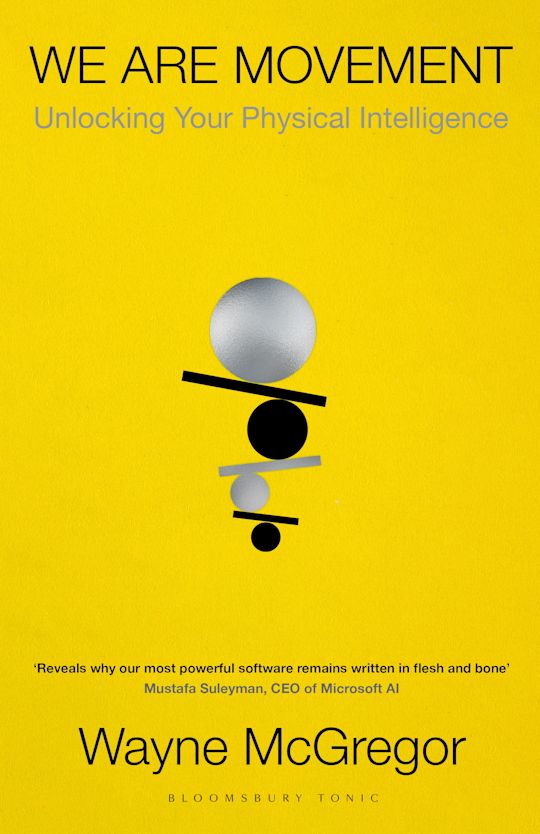
We Are Movement - Unlocking Your
Physical Intelligence

... ever increasing

'artificial' intelligence
 
here . . .?

"We?

 Yes... We! 

   We are  
a                       MOVEMENT!"


Wayne McGregor (2026) We are Movement: Unlocking Your Physical Intelligence. London: Bloomsbury. (Book cover) https://www.bloomsbury.com/uk/we-are-movement-9781526629531/

My source: Nadia Beard, Our bodies, ourselves. Life&Arts, FTWeekend, 17-18 January, 2026. p.9. 

Previously: 'movement' : 'dance' : 'intelligence' : 'art' : 'body' : 'AI'

^. . . help me find (a) the notation? 

Sunday, December 07, 2025

AI - World Models

'What Is a World Model?

World models are neural networks that understand the dynamics of the real world, including physics and spatial properties. They can use input data, including text, image, video, and movement, to generate videos that simulate realistic physical environments. Physical AI developers use world models to generate custom synthetic data or downstream AI models for training robots and autonomous vehicles.'

https://www.nvidia.com/en-us/glossary/world-models/

In healthcare a 'world model' is slightly more expansive, hence the importance of experienced humans. We call these - nurses, doctors, physiotherapists, occupational therapists, social workers and many other professions, support workers and disciplines. They learn and train for many years and must continue to learn and unlearn throughout their careers. Their work and engagement is shaped and directed by human values, which are in turn informed by social change, evidence-based research, professional guidance, policy and law.

individual
|
INTERPERSONAL : SCIENCES
humanistic -------------------------------------------  mechanistic
SOCIOLOGY : POLITICAL
|
group-population


WORLD MODEL


Wednesday, October 08, 2025

11th Living Knowledge Conference 2026 – Call for proposal now open

Dear all,

we are excited to announce the Call for Proposals for the -

11th Living Knowledge Conference

in Gdańsk, Poland, from July 7-10, 2026!

Taking place in the birth of the Solidarity Movement, the theme of the conference is "Research and Solidarity" which will appeal to everyone interested in supporting, facilitating, or doing community-driven, collaborative research, thereby fostering a ‘community of practice’ that welcomes both old and new friends.

We look forward to hearing from both experienced and new, early-career researchers and practitioners working with community-based research, engaged research, or citizen science.

Deadline for submissions is Dec. 15 / Jan. 10 for poster submission.

Conference Info:

📅 Key Dates & Deadlines
📢 Call for Proposal
💻 Session Formats

More information about the venue and registration will be announced soon.

Attached please find a communication kit that can help to amplify this Call For Proposals. Please share with your networks, community partners, students and faculty.


With thanks,

The Living Knowledge Conference team

Wednesday, July 02, 2025

Did 'to a T' find its inspiration in Rio de Janeiro?

... or somewhere else?

to a T

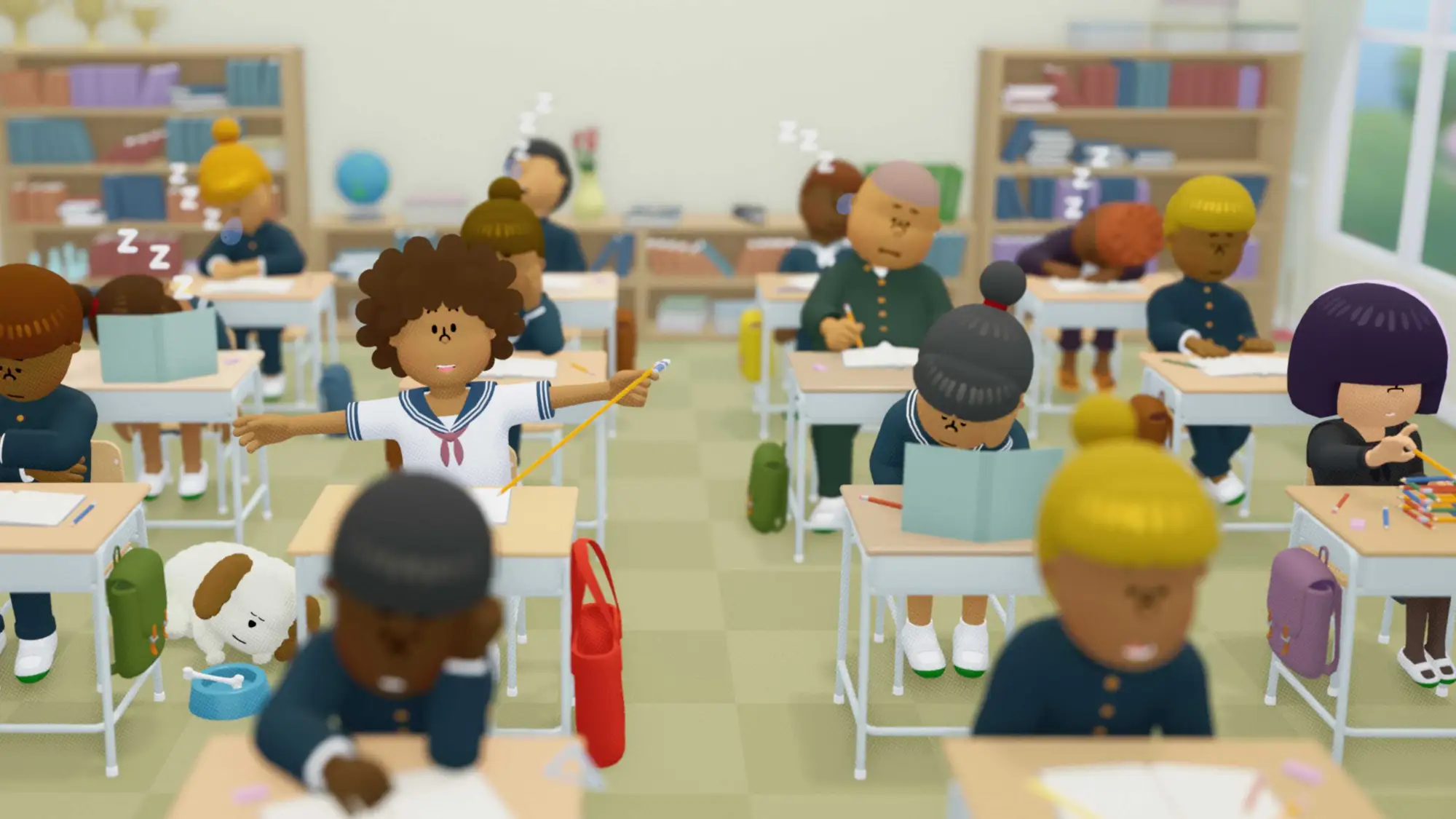
A new game from Keita Takahashi
"'to a T' is an episodic 3D adventure game developed by Keita Takahashi and the uvula team, with a strong focus on character, interaction, story and exploration. Play as a teenager (Teen), with a unique posture just trying to live a normal life in a small coastal town. Explore the town along with the help of Teen’s loyal dog and loving mother. While going to school and contending with bullies, Teen discovers a new ability granted to them by their extraordinary posture, and they start to uncover more about their mysterious lineage."
'to a T' - image https://annapurnainteractive.com/en/games/to-a-t

Developer - https://uvula.jp/

I have never been as far south as Rio de Janeiro. It would be marvellous to visit Tijuca National Park - Alto da Boa Vista, Rio de Janeiro - RJ.

But then ... 🌍🌎🌏🌐

My source: Tom Faber, In praise of gaming's auteurs. Financial Times, 11 June, 2025, p.18.

Thursday, March 20, 2025

Book 'Your Life Is Manufactured: How We Make Things, Why It Matters and How We Can Do It Better'

Individual
|
      INTERPERSONAL    :     SCIENCES               
HUMANISTIC  --------------------------------------  MECHANISTIC      
 SOCIOLOGY  :    POLITICAL 
|
Group

My choices
  My vote

Your Life Is Manufactured

freedom
citizenry

lawful government
legitimate government

elections
Yes, you can vote -
does it 'count'?


My source: Book
Crabtree, J. Chain reactions, Books, Life&Arts, FTWeekend, 22-23 February 2025, p.11.

Video: Choreographic painting "Labor Day". Igor Moiseyev Ballet
 https://www.youtube.com/watch?v=ogLGpMH3u1w

Thursday, December 26, 2024

Moving Online Symposium: 30th Jan 2025 - Coventry University, UK

In recent years, there has been increased attention paid to the ownership of dance. There has been important work done in the area of dance and copyright1 as well as the examination of the way ownership is managed via social norms through the ‘commons’2 and as a form of ‘gift’.3  The increased circulation of dance online through archives, video platforms and social media sites has led to multiple debates about the copying and re-embodiment of dances,4 reigniting important conversations about appropriation, acknowledgment and credit.5 At the same time, there has been a flourishing of work on dance and performance ontology. For example, long-standing debates about the ephemerality of dance and performance have been reframed through discussions about the ‘post-ephemeral’6and materiality.7 There have also been new perspectives offered on questions about the nature of dances and the way in which they exist.8,9


The Moving Online symposium explores how these two areas intersect in the context of online dance and performance. The event builds on and shares the findings from Moving Online: Ontology and Ownership of Internet Dance (the project and event is funded by the Arts and Humanities Research Council [grant number AH/W01002X/1]).

The register for this event please complete this form. The draft schedule is available here.

The event is free to attend. We are offering limited number of £150 bursaries to support travel and participation by freelance artists. More information is available here. Deadline for applications 8th January 2025.

The symposium is taking place in-person at Coventry University. We plan to live stream some of the panels. If you would like to join the live stream, please select this option on the registration form.

For more information about Moving Online please see here and follow the project on X: @MovingOnlineCU and/or Instagram: @movingonlinecu

Please contact Hetty Blades with any questions: hetty.blades AT coventry.ac.uk

For notes and references please see here

Previously: 'dance' : 'movement' : 'ownership'

My source: 

Philos-L "The Liverpool List" is run by the Department of Philosophy, University of Liverpool https://www.liverpool.ac.uk/philosophy/philos-l/ Messages to the list are archived at http://listserv.liv.ac.uk/archives/philos-l.html. Follow the list on Twitter @PhilosL.

Follow the Department of Philosophy @LiverpoolPhilos 


Tuesday, June 25, 2024

Book for review: iii "Philosophy of Care - New Approaches to Vulnerability, Otherness and Therapy"


Before moving beyond Pierron's 1st chapter (the whole book is very worth reading), there is much that reminds me of institutional care:

https://winwickremembered.org.uk/

Recognition of the sub-standard cockroach 'co-habiting' environment away from the entrance corridor, quality of life, task oriented, de-personalising, stagnant, passive, pervasive sense of hopelessness and helplessness. There was a chink of light. 

As registered mental health student's we were on a crusade. Carrying a torch, lit outside in the community to help open the doors to community care.

 On trips outside, gradually the institutional skin sloughed off, to reveal the person - the individual came alive (even through medication). 

'Bill' had a sense of humour, a lovely smile. He'd had the prospect of another life. So many people there for so long: too long. Potential unrealised?

"To be in contact with the other in care is not to exercise a hold over them." p.16. 

The problem is - within institutions this can be forgotten and lost:
"To suspect a substituting mode of solicitude (cf. Heidegger) of being a highhanded charitable hold over someone invites one to consider the ethical and political fecundity of a solicitude which looks ahead. To think through this alternative would amount to unmasking the mechanisms of domination, whether voluntary and involuntary - naturalisation of roles, masculine domination, organisational violence, etc, - at work in care. Doing so politicizes care, enabling it to overcome that democratic optimism which doesn't want to recognize that violence is part of human history (Merleau-Ponty 1996: 124-125), that violence insinuates^ itself into care relations, and, as such, comes under the sway of what Merleau-Ponty called the 'maleficence of living among many' (maléfice de la vie à plusieurs)." p.16. 

^The need to be aware of subtle abuse? 

My notes for chapter 2 'From an Anthropology of Vulnerability to the Ethics of Care' by João Maria André, reflects a lot on relationality, and maps which I've drawn: "(identity is always dialogical identity)" and "how we map ourselves". Again this helps my (other) current reading and draft work. There's time here, plus "there is no such thing as abstract vulnerability - vulnerability is necessarily concrete". p.25. I don't think André mentions future generations but I've added a note; 'I-we' too. There's a triple axis, and more encouragement as Tronto and Gilligan feature. Heidegger's reference to Hyginus' Fable 220 (in which Care moulds man out of clay, Jove grants it spirit, and Earth gives him body, with Care being assigned the task of keeping him alive." (Gaia?) p.26.

As in chapter 1, and previously reviewed text 'General Psychotherapy', the term 'constellation' appears. In chapter 2 it is expanded (with reference to Corine Pelluchon); leading us to "appreciation of the world, and self-care as care for the world" p.29. So, planetary health too. With Hodges' model purposed (1/4) to help bridge the theory - practice gap; this perennial problem exhibits existential relevance here (p.27). We by-passed biopolitics on page 17, but  the interrelation of psychosocial and other examples informs the text (philosophy). As I scribbled, Hodges' model is simultaneously a space for resonance and unconditional positive regard (pp.30-31). Authors inevitably find themselves deliberating upon dualisms, Descartes of course, plus Spinoza and others. Entralgo is nails the duality: "the aim of caring is to lead the I from being 'a body that says I' to a learning how to progressively become, and define itself as, 'a body that says we'". p.35.

Braga, J. & Santiago de Carvalho, M. (Eds.), Philosophy of care: New approaches to vulnerability, otherness therapy. Springer. 

Many thanks again to Springer for my copy.

Individual
|
      INTERPERSONAL    :     SCIENCES                   
HUMANISTIC  --------------------------------------  MECHANISTIC      
 SOCIOLOGY  :    POLITICAL 
|
Group

relational

'I' - mind 

individual vulnerability

intention

affection - as movement


climate change

'I' - body

maps - cartography

Planetary Health

action - movement


We

context

equity - equality

social vulnerability


We

policy

bio-POLITICS

accountability of government(s)


See also:
body & soul - Book: Philosophy of care: New approaches to vulnerability, otherness therapy

Sunday, June 16, 2024

Occupational therapist Joël inspires elderly to get in motion ...

Or, "Excuse me. How many movements are there in that watch?"*

"Joël Kruisselbrink’s creativity in designing exercises and games inspires elderly people to keep moving and live life to the fullest.

Nursing home residents are often understimulated and have little motivation to exercise. As an exercise instructor, Joël Kruisselbrink knows better than anyone how important exercise is for the elderly. His passion for creating exercises and games enables older people to continue enjoying life while keeping them moving."
Individual
|
      INTERPERSONAL    :     SCIENCES                   
HUMANISTIC  --------------------------------------  MECHANISTIC      
 SOCIOLOGY  :    POLITICAL 
|
Group


What do
you think
the impact
is upon
the resident's mental
health
and
emotional
well-being?


Psycho-
-Social?


Standards & Quality of Care
Policy


*Hodges' model: A tool to watch the complications of Care

My source: https://x.com/Rainmaker1973/status/1802268229361967404

Saturday, September 09, 2023

The 'quantum ballerina' - Dr Merritt Moore


INDIVIDUAL
|
     INTERPERSONAL    :     SCIENCES               
HUMANISTIC --------------------------------------  MECHANISTIC      
SOCIOLOGY  :   POLITICAL 
|
GROUP


"Her life to date reads like something dreamt up during a Disney story conference: pretty American teen fulfils a life-long dream of a career in quantum physics at both Harvard and Oxford. And the fantasy cash register goes right on ringing because our heroine has not one career, but two. Between all-night stints in the lab she leads a double life as a professional ballet dancer.
At this point one the grown-ups in our imaginary brainstorm might lean in and suggest that maybe the two-career thing was a mite, er, far-fetched? But Dr Merritt Moore, quantum physicist and alumna of four major-league ballet companies (Zurich, Boston, Norwegian, and English National), is living proof that this crazy scenario can be lived in real time by anyone with the ability to devote themselves body and soul to the dreams that devour them." p.12.

Skjalg Bøhmer Vold, Courtesy Merritt Moore


Dr Merritt Moore

Levene, L. (2021) The 'quantum ballerina' and her robot pas de deux", FTWeekend, Life&Arts, 27-28 March, p.12.

See also:
https://pointemagazine.com/merritt-moore-ballet/

Previously:
https://hodges-model.blogspot.com/2021/12/raymonda-ballet.html


Thursday, December 01, 2022

Threshold Concepts 2023: "Roads Less Travelled"

Call for Papers 2023

Date 4-6th July 2023

Location: Charles Sturt University, Port Macquarie Campus, NSW, Australia (google map link)

Theme: Threshold Concepts: Roads Less Travelled

The 2023 Threshold Concepts Biannual International Conference is a special one. It marks twenty years since the original 2003 Threshold Concepts paper by Eric Meyer and Ray Land. In the intervening time, Threshold Concepts have become an accessible way of conceptualising learning, and the barriers to mastery that learners encounter. We are taking inspiration from Julie Timmerman’s (2023) provocative question, “Do thresholds always propel us outward, forward, and towards an identified threshold, or might they reveal alternative and unanticipated landscapes for transformation?” 

We propose an exploration of movement “outward, forward, and towards” threshold concepts, and the journeys we undertake as learners and researchers. These pathways may be known or unknown, familiar or alien, hidden or exposed. We have identified a number of subthemes, which you may interpret according to your context.

  • Inter(tidal)disciplinary Zones
  • Learning Spaces and Places 
  • Cultures of Engagement and Connectivity
  • UnOthering 
  • Liminality 

We invite you to submit proposals under one of the subthemes and we look forward to seeing you in Port Macquarie in July 2023 to celebrate twenty years of Threshold Concepts. #9BiTCC2023

.... https://thresholdconcepts.home.blog/

Sunday, October 30, 2022

An observational record and learning from 30,000 years ago

"A fascinating example is the shoulder blade of an ox unearthed in the 1980s (Figure 1) by archaeologists investigating a stone age encampment in the south of France. Carbon dating showed this to be approximately 30,000 years old. The bone was marked with inscriptions that the archaeologist couldn't decipher. It was clear they were neither a tally, nor a pattern, nor any recognisable form of writing. Late one night one of the archaeologists noticed the moon, and something in its shape caught his curiosity.

Aurignacian Lunar Calendar / diagram, drawing after Marshack, A. 1970; Notation dans les Gravures du Paléolithique Supérieur, Bordeaux, Delmas / Don’s Maps
Figure 1 my source: https://sservi.nasa.gov/articles/oldest-lunar-calendars/

Then it struck him. Here, on this fragment of bone, was a lunar calendar complete with 72 observations ... something like 1,600 generations ago. One of our common ancestors (statistically, all of us can claim a relationship to this thoughtful person) 30,000 years ago had the intellectual curiosity to watch the moon, night after night, and then transcribe these movements, at scale, onto the stone age equivalent of the back of an envelope, as he (or she) attempted to "think it through". What makes us human is our ability to think, learn and adapt to our changing environment. The story of the stone age learner gets even better when you imagine a small community of people (adults, adolescents, children on their laps) sitting around a campfire every night working out the meaning of the lunar phases together." pp.72-73.

Abbott, J. & Ryan, T. (2000). Chapter 4, How mass education eclipsed apprenticeship, The Unfinished Revolution: Learning, Human Behavior, Community, and Political Paradox, Stafford, UK: Network Educational Press. (The figure in the book does not include the bone.)

Previously: 'diagrams' , 'archaeology'

[I am also still trying to clear papers and books, as some posts will suggest.]

Saturday, July 23, 2022

The mechanics of Continental and Policy Drift


INDIVIDUAL

|
 INTERPERSONAL    :     SCIENCES               
HUMANISTIC --------------------------------------  MECHANISTIC      
SOCIOLOGY  :   POLITICAL 
|
GROUP


continental drift


... slow movement ...


Thanks to Prof Linda Gask who Retweeted LiLong.

Monday, May 02, 2022

Review ii - "Brainscapes: The Warped, Wondrous Maps Written in Your Brain―And How They Guide You"

Brainscapes

Now I know how Umami (p.87) an "example food magazine website to demonstrate some of the features of Drupal core" - got its name. I'm sure this was explained at a Drupal Meetup. Savoury indeed!

There had to be two! The brain has two strategies: brain maps and distributed codes.

"Representing information with a distributed code is entirely different from representing it with brain maps. In a brain map, neighboring neurons represent neighboring regions in space, frequency, time, and so forth. And brain maps essentially represent information using location, or where in the brain area the neurons are most active. In contrast, there is no consistent relationship between neighboring neurons in brain areas that use distributed codes. These areas represent information through the distributed pattern of activity across that entire region of the brain, rather than through the location of activity within it. This pattern of activity is a kind of code." pp.93-94.

This distinction is significant for Hodges' model, as the distributed codes act to deal with novelty, what is new - ongoing (lifelong) learning (p.95). Hodges' model can help distinguish between subjective and objective concerns. Schwarzlose unifies the two - via a catfish (also a goal here - but not necessarily with such an assistant).

"The map in the olfactory bulb is organised into odor zones based on molecular structure, an objective property of these compounds in the physical world. But the second map is organized into zones based on the significance of the odors to the animal." p.100.

Chapter 6 'On the Move: Brain Maps for Action' would have been useful as a student nurse at Winwick Hospital, the history in the book brings back many reminders - late 1970s. Epilepsy, then was less well understood, and managed. In describing the M1 brain map and movement I wondered about consent, but can see that is a distraction. Chapters -

6. On the Move: Brain Maps for Action | 107
7. Maps in the Making: How Brain Maps Develop and Adapt | 131
8. Knowing Again: Brain Maps for Recognition | 151
- offer much to relate to clinical encounters: movement, reaching, infant versus the brain in adults, the senses and catastrophic events such as cerebrovascular accident - stroke. Morphologically there is much still to learn (brain maps are 'primed' before birth), which perhaps is why we recognise the remarkable nature of gestation and birth. 'Maps in the Making' provides wondrous insights, including the need in hospitals to rethink the sensory environment and experience for premature infants.

While reading - I was struck at the experience of the newborn and mothers in Ukraine. The 'health career' model concerns life chances - from birth to later life...

As a community mental health nurse I have found subtle and less-subtle impacts on a person affected by semantic dementia (p.204) and their family. Given the ongoing invasion and war, I also thought about people living with dementia and having to flee their homes. The multiple contexts that pertain in such a crisis situation when considering 'maps' and sense-making. Especially, when the need for action is preemptive - preventive and so must be explained and justified, not once but perhaps repeatedly?

We are all innate mathematicians even if we feel we have no ability. 

https://www.google.com/search?client=firefox-b-d&q=mathematics+in+catching+a+ball

I take some succor in this (p.127).

There's a hodgepodge in here too (p.161 hb). The myriad of objects we encounter and their recognition calls for the combination of brain maps and distributed codes. Chapter 8 is more psychological, touching :-) how we categorise objects, dimensions and scales, size and animacy. Galton's contribution is discussed, his ideas on eugenics also acknowledged. Visual perception, mental imagery and visual learning style remain subjects of note for researchers. I'm not sure why figure 32 stood out ( :-) - please pardon the quality of the photo. Paul Kim's illustrations are an excellent support for the prose.):

FIGURE 32 A comparison of visual perception and mental imagery in
the V1 visual map. Paul Kim

Somewhere I've saved an article on mental imagery from New Scientist I think, about this ability - the mind's eye and how it is missing for some 'brilliant' people (p.182) and posted previously:

In my mind's eye I can picture care: Frame by Frame

I might read Chapter 9 again, attention, action and perception in combination. 

Chapter 10 had me thinking again about 'Conceptual Spaces' (quality dimensions) and threshold concepts (not in the book - but this is a positive!):

"Many of the concepts that rule our financial, social, and emotional well-being have no shape, no color, no odor or weight. How do we grasp these intangible concepts? As it turns out, we often do so by aligning abstract concepts with physical dimensions and then putting our brain maps to work." p.191.

There is a 'mental number line', vertical too, and culture is a factor in how we learn and the brain associates space and quantities, in which L-R, low-high are also brought into play. The question remains here: Is Hodges' model culturally neutral? 

Still with h2cm - mind reading, writing and 'drawing' perhaps? p.236. In "Fortune-Telling with the Brain" we read about how fMRI is allowing us to learn how the brain maps employ teamwork. There is an architecture whose stability can inform predictions of future abilities - reading is described. Reading this you see ethical implications (as Schwarzlose warns p.238), but it may help to target personalised learning, as an adjunct to personalised medicine? I double checked (index) and the connectome is not mentioned, but the benefits of this research is still to be realised. In 'prison health' here in the UK (and globally?) it is long overdue but it is encouraging to hear about the focus on investigation for previous brain injury within the prison population. Remember - lead in fuel and the socio-economic impacts of pollution (ongoing - air and plastic pollution)?

Corporations have literally only 'scratched the surface' of the future potential to 'read' us individually. Through Hodges' model I can qualify and justify the model's increasing relevance. Technology and science not only call for SOCIO-technical approaches. The brain-computer interface and AI (p.239) demands we also consider the several forms of literacy and informatics that are needed in the 21st century: bio-informatics, bio-political, psycho-political and more.

This is very informative and timely read - the diagrams too. This is a book for all. For student nurses specifically, it will enable them to maximize learning in their practical placements and throughout their course of study.

Writing this review I can also see the important messages in chapter 12 - recognition of infancy and the opportunities this affords.

Many thanks to Rebecca Schwarzlose and Profile Books for my review copy.

Schwarzlose, R. (2021) Brainscapes: The Warped, Wondrous Maps Written in Your Brain―And How They Guide You". London: Profile Books.

Thursday, April 28, 2022

Review i - "Brainscapes: The Warped, Wondrous Maps Written in Your Brain―And How They Guide You"

Brainscapes


A marvellous cover (US too), a fascinating, clearly written and hence readable book. As expected today the layout, print size and design add enjoyment to the time invested.

As a nurse with an interest in science you are aware of much of the content in broad terms but 'Brainscapes' provides more detail and made me wonder about the prospects to follow from improvements in brain imaging, The Connectome, new technologies and techniques. Rebecca maintains the focus throughout.

I'm pleased to add this to my CPD reading list.

Nature and science are humbling. It is still quite recent that we realised the milky way is one of billions of galaxies. Now we can appreciate not only the complexity of the brain, but how it is embodied in mind, body and our experience of reality.

There is history here to begin. Russia and Japan were at war in 1904. Russia had a new high-velocity rifle with smaller bullets, 7.6mm reaching speeds of 620 meters per second. Whether co-incidence, and/or ironic, there are of course many brains trying to make sense of the current conflict in Eastern Europe. A change in injuries followed with these bullets capable of passing straight through the skull, sparing the life of the soldier and yet with life altering injuries. 

As triage was founded on the battle-ground. So aftercare is grounded in the journey back 'home' for those who can make it and the extent to which 'veterans' and their families are recognised.* This lead to investigations (Inouye, see below) as soldiers experienced localised damage to the brain. Soldiers suffered scotomas affecting their vision, stimulating research and new approaches, devices 'cranio-coordinometer'. There are illustrations and some photographs throughout, the illustrator Paul Kim, adding to the text.

In 'Maps of You' maps are everywhere especially on screens, and yet as Schwarzlose notes the map's materials matter little. On p.17 "All I need is a pen and a scrap paper" I smiled - given the 'map' that Hodges' model provides, on paper, sand, black/whiteboard and mind's eye. Mental imagery is there too. Salience, figures early p.19 and with brain maps, visual maps and where we direct our gaze prompts more detailed consideration of context. The explanations of the sensory brain maps is fascinating, especially how the brain has evolved to deal with constraints of space, energy, distance and organisation. At the fovea in the eye, the map is magnified. 

Perhaps in Hodges' model there are two fovea? One is the center of the model, the person-centred nexus an assurance function/correction as the fovea that is context shifts and jumps in response to the dynamics of the situation. Reading about the audio map, p.73 I thought about the 'timbre of care' (Yes, I've a bad case of h2cm-meme-mapitis). As a further sign of the times, chapter 5 (A Body Under Siege) on taste and smell and the protective function of what we do or don't ingest, I travelled from the individual to the national and the binary choices (yes or no) being exercised right now.

More to follow ...

Alexander P. Leff (2015) Tatsuji Inouye (1881–1976), Discovery UCL.
https://discovery.ucl.ac.uk/id/eprint/1491645/1/Leff_tatsuji_inouye_1881-1976.pdf

Many thanks to Rebecca Schwarzlose and Profile Books for my review copy.

*Apologies for digression...

Saturday, December 18, 2021

Raymonda ...

... Care Aesthetics :: Care Architecture :: 

Care Choreography :: Care Design :: Care Journeys ...


"An epic journey of love and courage.

Taking inspiration from the ground-breaking spirit of Florence Nightingale and the women who supported the war effort in Crimea, Tamara Rojo, Artistic Director of English National Ballet, creates a new version of the classic story ballet, Raymonda.

England, 1854. Raymonda runs away from her comfortable life to become a nurse in the Crimean War. There, she becomes engaged to a soldier, John, but soon develops feelings for his friend Abdur, a leader of the Ottoman army. As turmoil grows around and inside her, who will she give her heart to?

Starring a huge cast of dancers and a full orchestra, this lavish adaptation keeps the best of the 19th-century original – its glorious and sensuous score by Alexander Glazunov and the classical choreography of ballet genius Marius Petipa – and updates it with a dramatic new story.

Introducing a heroine in command of her own destiny, and celebrating the courage of nurses and women who fought for emancipation, this beautiful production is guaranteed to thrill, move and inspire.

The original Raymonda is very rarely performed in the UK, where no dance company performs it in its entirety. This highly-anticipated version marks Tamara Rojo’s debut in directing and choreographing, building on her illustrious career as dancer and artistic director.

..."


The Trailblazing Nurses of the Crimean War


My source: RCN Bulletin 394: Winter 2021, p.26.


Saturday, June 06, 2020

Kirigami: Engineering in a World of Friction


individual
|
INTERPERSONAL : SCIENCES
humanistic ----------------------------------------------- mechanistic
SOCIOLOGY : POLITICAL
|
group - population


Bioinspired kirigami metasurfaces as assistive shoe grips

Abstract

Falls and subsequent complications are major contributors to morbidity and mortality, especially in older adults. Here, by taking inspiration from claws and scales found in nature, we show that buckling kirigami structures applied to footwear outsoles generate higher friction forces in the forefoot and transversally to the direction of movement. We identified optimal kirigami designs capable of modulating friction for a range of surfaces, including ice, by evaluating the performance of the dynamic kirigami outsoles through numerical simulations and in vitro friction testing, as well as via human-gait force-plate measurements. We anticipate that lightweight kirigami metasurfaces applied to footwear outsoles could help mitigate the risk of slips and falls in a range of environments.

Babaee, S., Pajovic, S., Rafsanjani, A. et al. Bioinspired kirigami metasurfaces as assistive shoe grips. Nat Biomed Eng (2020). https://doi.org/10.1038/s41551-020-0564-3


See also on W2tQ:
RA of Eng - Healthcare challenges needing engineering expertise


My source:
Kirigami keeps your feet on the ground. The Times, News, 2 June, 2020, p.16 and 27.

Thursday, April 23, 2020

c/o Boccioni - "Empty and Full Abstract of a Head"

"The destruction, in 1927, of a number of plaster and mixed-media sculptures by the Futurist artist Umberto Boccioni (1882-1916) was a tragic loss for avant-garde art. Of the many ground-breaking sculptures he created between c.1913 and 1915, only a handful remain in existence today. Now, using a combination of vintage photographic material and cutting-edge 3D printing techniques, digital artists Matt Smith and Anders Rådén have recreated four of Boccioni’s destroyed works: a volumetric study of a human face titled Empty and Full Abstracts of a Head, and three of the artist’s iconic striding figures. This ground-breaking display enables modern audiences to ‘see’ these lost masterpieces for the very first time."

https://www.estorickcollection.com/exhibitions/boccioni-recreating-the-lost-sculptures

individual
|
INTERPERSONAL : SCIENCES
humanistic ----------------------------------------------- mechanistic
SOCIOLOGY : POLITICAL
|
group - population
Umberto Boccioni
Study for ‘Empty and Full Abstracts of a Head’, 1912
Matt Smith and Anders Rådén
Digital rendering (contour) of
Empty and Full Abstracts of a Head


Coin - Boccioni


See also:

https://www.ardi.se/ 

https://www.uniqueforms.net/


Art Images:
https://www.widewalls.ch/boccioni-recreated-sculptures-estorick-collection/

Coin:
https://twitter.com/CorriereQ/status/1252646124898398209?s=20

Cuttings, Back to the Futurism, Printmaking Today, 2019, 28: 112, p.6.