Hodges' Model: Welcome to the QUAD: memory

Hodges' model is a conceptual framework to support reflection and critical thinking. Situated, the model can help integrate all disciplines (academic and professional). Amid news items, are posts that illustrate the scope and application of the model. A bibliography and A4 template are provided in the sidebar. Welcome to the QUAD ...

Showing posts with label memory. Show all posts

Sunday, October 04, 2026

Living and Loving Dangerously

individual
|
INTERPERSONAL
: SCIENCES             
humanistic ------------------------------- mechanistic
SOCIOLOGY : POLITICAL   
|
group

identity - choices
 
Memory - Cognition
DEMENTIA - Early onset

Inability to consent
 
inhibition-disinhibition 

mental capacity


My liberty, my choices

"What! I'm married to you? Oh!"

Treatment - medication 

'Secure (safe)' environment

'Holistic assessment'?


Marital/Initimate Relationships
Social (our) identity

Existing relational behaviours

Interrelational needs
Interpersonal grief

Social identity/expectations

Yes, but we're married ... had 40 years together ...

Family bias, prejudices..
A 'new' step-parent ...

Access to support: 
relational - mutual vulnerability


Informed consent
Assumed consent

Rape, Sexual abuse, crime

Capacity to give consent

Consistency in decisions

Lasting power of attorney -
finance; health

External safeguards

Human rights

Access to supervision -
clinical & management


Prompts:

Previously post: Living and Caring Dangerously

Danny Leigh. Critic's choice - Films on release: Queen at Sea. Life&Arts, FTWeekend, 19/20 September, 2026, p.18.

https://depijp.rialtofilm.nl/en/films/queen-at-sea

So many difficult conversations. All on their own unique continuum in terms of sense-making for all concerned. 

A 'new' diagnosis at age 60; versus one at 44. Families seeking to control disclosure of the diagnosis from the patient. Clinical and family debate about this.

Finding a person locked-in the house, while their partner 'nips' to the shops. A person having their freedom to go out, on their regular walk  -despite acknowledged risks. (When they are known by people on their route - community care in action. Receiving a call from a neighbour; or the neighbour who knows where you park and can intercept you, on arrival or departure to express concerns. Or, even as you venture out for a walk with their neighbour of many a year. Categorise them as you will: [nosey, caring, concerned, public spirited, neighbourly, or (healthily) curious]?

Other discussions of grief at the loss of a person they have loved - in every way. A grief that presents new dark dimensions to what has gone before. Complicated by a state of early onset of memory loss. An ongoing disintegration of personhood and identity. An inability to consistently express thoughts, wishes, and choices. An inability to give informed consent. A loss taunted by retained physical desirability. What does love, sex, compassion mean now? What is the sum now, of love expressed over 'x' years? Hearts hollowed out, of what can be so important to a couple. Not vital to all. But for others, a source of conjoined affirmation, joy, warmth, companionship, a celebration of life and being human.

How to share that grief even amid close friends and family, who cannot cope themselves and withdraw? What of the preparedness of professions to manage such situations? What structures are in-place for team meetings, clinical supervision and inclusion in training, especially safeguarding?

From the bibliography (lower sidebar):

Hodges, B.E. (1989) The Health Career Model, IN, Hinchcliffe, S.M. (et al.) 1989 Nursing Practice and Health Care, 1st Edition only, London, Edward Arnold.

Adams, T. (1987) Dementia is a family affair. Community Outlook, Feb, 7-8.

Merritt MK, Procter N. Conceptualising the functional role of mental health consultation-liaison nurse in multi-morbidity, using Peplau's nursing theory. Contemp Nurse. 2010 Feb-Mar;34(2):158-66. doi: 10.5172/conu.2010.34.2.158. PMID: 20509800.

Murphy, K., Welford C. (2012) Agenda for the future: enhancing autonomy for older people in residential care.International Journal of Older People Nursing. 7, 75–80.

Kernohan, W. G., & Jones, P. (2023). Hodges’ Health Care Model as a Framework for Quality. Paper presented at Interprofessional work: developing oral care and the health workforce for the future, Brescia, Italy.
https://pure.ulster.ac.uk/en/publications/hodges-health-care-model-as-a-framework-for-quality

Jones, P. (2025). A Conceptual Mapping Exercise of Deprivation of Liberty Safeguards in Residential & Community Care Using Hodges' Model and Threshold Concepts. Journal of Evaluation in Clinical Practice, 31: e70085. https://doi.org/10.1111/jep.70085

Jones, P. (2025), A Generic Model and Conceptual Framework to Prime Curiosity Across Health and Social Care Disciplines to Facilitate Lifelong Learning. Journal of Evaluation in Clinical Practice, 31: e70252. https://doi.org/10.1111/jep.70252

Previously: 'capacity' : 'consent' : 'law' : 'safeguarding'


Sunday, August 23, 2026

Measuring Behavior 2027

The next Measuring Behavior conference will take place from 28 to 30 April, 2027, in Düsseldorf, Germany. Düsseldorf is in a region with a high concentration of behavioral research across a variety of fields both in universities and industry. It is easy to reach by international trains and flights. It is a city combining innovative modern architecture with a historic city centre. The conference will take place in the Clayton Hotel, which is in the Little Tokyo region of Düsseldorf, with its distinctive Japanese flavor. We will be hosted by the Heinrich Heine Medical University and the location is within easy walking distance of the central station.

The Scientific Program Committee invites you to submit proposals for oral presentations and posters at Measuring Behavior 2027 (Düsseldorf, 28-30 April).

All papers will be refereed through double-blind peer review and the proceedings will be published by the conference (with ISBN and DOI) and available online after the conference. In addition, selected papers will be invited to submit for a special edition of a journal.

Submissions for oral presentations and posters must be written in English following the style guide for Measuring Behavior 2027 publications. Due to the multidisciplinary nature of the conference, we are flexible about the submission length. We accept submissions from at least one to maximum seven pages long for oral papers and about one page for posters. You also need to prepare a short (maximum 1000 characters, preferably shorter) abstract for the website.  
You can submit from the Submission page of the website. The deadline is 6th November 2026.

Tutorials and Demonstration Showcase submissions are free format and also have a later deadline (4 February 2027).

The
Call for Symposia is open until October 9th should you want to organise a series of presentations or an interactive workshop.

If you think a colleague might be interested in this Call for Symposia, you can also send them this PDF.

On behalf of the Measuring Behavior 2027 conference chairs,


Sabine Bischoff, Irena Krüger and Antonella Pomè (Heinrich-Heine-University), Gernot Riedel (University of Aberdeen) & Andrew Spink (Noldus Information Technology).

n.b. Early days, but I hope to attend and participate with a co-presenter.
Please do visit their site for full details. PJ

Sunday, February 08, 2026

Intelligence - mechanistically speaking^

INDIVIDUAL
|
    INTERPERSONAL    :     SCIENCES               
HUMANISTIC --------------------------------------  MECHANISTIC      
SOCIOLOGY  :   POLITICAL 
|
GROUP
Mental
Intelligence


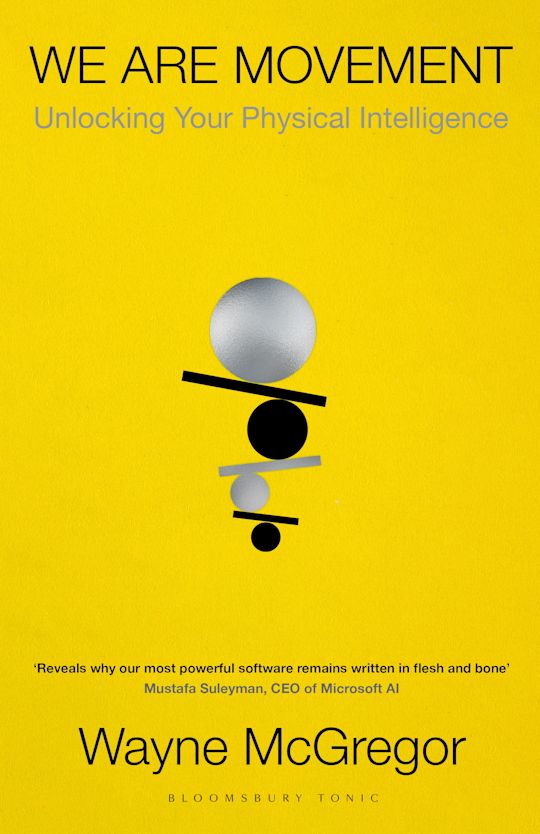
We Are Movement - Unlocking Your
Physical Intelligence

... ever increasing

'artificial' intelligence
 
here . . .?

"We?

 Yes... We! 

   We are  
a                       MOVEMENT!"


Wayne McGregor (2026) We are Movement: Unlocking Your Physical Intelligence. London: Bloomsbury. (Book cover) https://www.bloomsbury.com/uk/we-are-movement-9781526629531/

My source: Nadia Beard, Our bodies, ourselves. Life&Arts, FTWeekend, 17-18 January, 2026. p.9. 

Previously: 'movement' : 'dance' : 'intelligence' : 'art' : 'body' : 'AI'

^. . . help me find (a) the notation? 

Monday, September 29, 2025

Raven Chacon - graphical musical scores

Individual
|
      INTERPERSONAL    :     SCIENCES               
HUMANISTIC  --------------------------------------  MECHANISTIC      
 SOCIOLOGY  :    POLITICAL 
|
Group
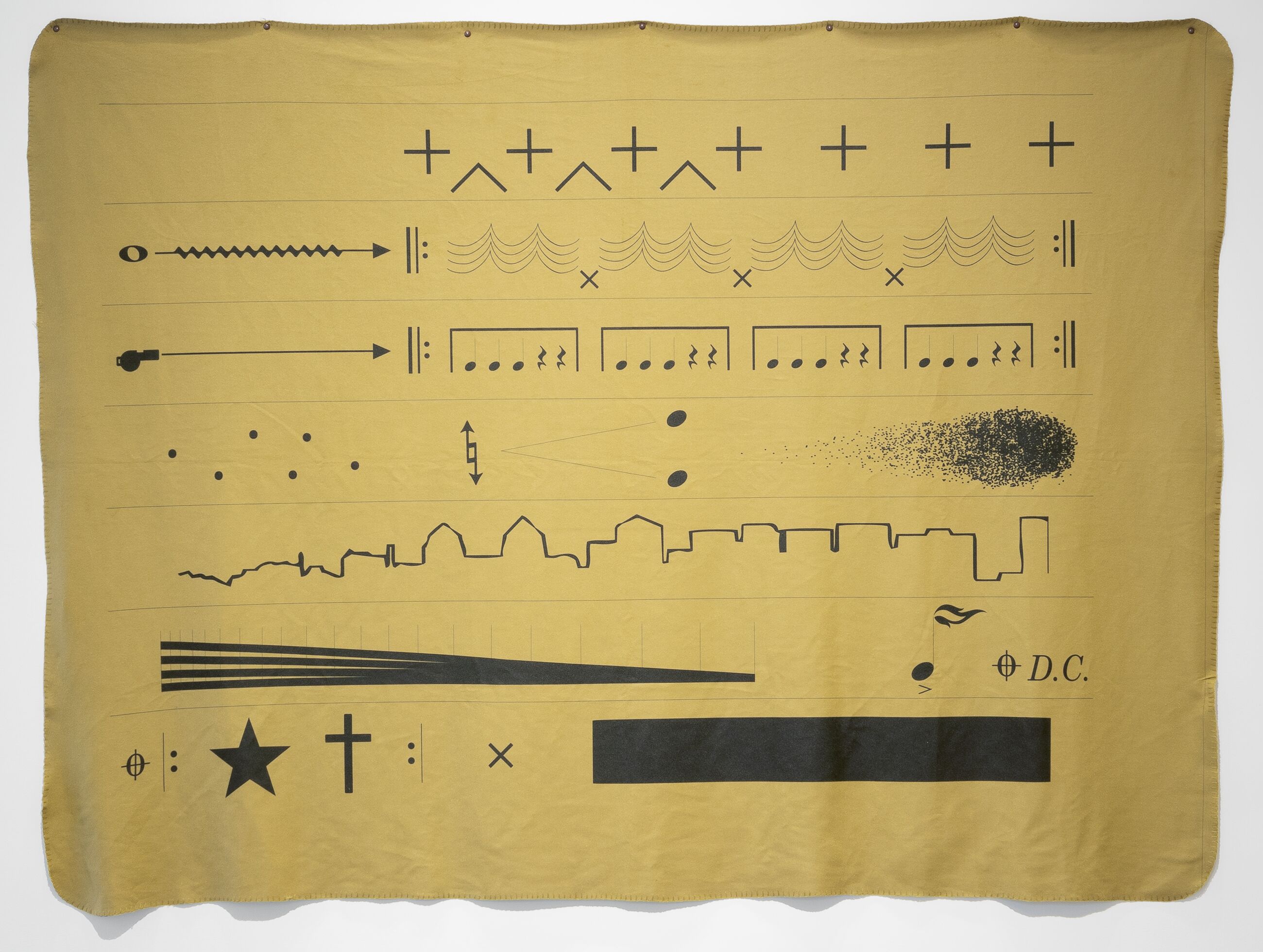
'The artist and composer Raven Chacon, 46, who grew up in Albuquerque and now divides his time between the city and upstate New York, used to explore these lava fields as a youngster, ingesting psychoactive plants such as jimson weed and searching for petroglyphs on the sides of rocks. Some - spirals, zigzags and dotted lines, for example - have found their way into the graphic musical scores for which he is now known. When I visited him in Albuquerque, he drove me out to see them.'
Raven Chacon, American Ledger No. 1 (Army Blanket), 2020. Graphic score


My source: Griffin, J. Sound of a different music. Life&Arts. FT Weekend. 24/25 February 2024. p.17.

Image: ECHOES OF A PLACE - Raven Chacon on transforming land, memory and political resistance into sound: https://www.hauserwirth.com/ursula/echoes-of-a-place-raven-chacon/

See also: RAVEN CHACON - https://spiderwebsinthesky.com/

https://en.wikipedia.org/wiki/Raven_Chacon

Previously: 'music'

Wednesday, September 24, 2025

Book: SNÖ

'Snow. A single word, for an infinite variety of water formulations, frozen in air. The study of snow is physics, chemistry, meteorology, anthropology, geography, poetry and art. It is hope – annually renewed. And it is history, too.

Earth saw its first snowfall 2.4 billion years ago. The world's oldest skis, made by hand five thousand four hundred years old, pre-date the pyramids of ancient Egypt. To humanity, snow has variously been an ally and an adversary; an inspiration to countless artists and a place of breathtaking tragedy and survival. But it’s always been there. And now it is melting. 
In 1927, the snow was already more than nine metres deep on Japan's Mount Ibuki when a remarkable 230cm fell in 24 hours, bringing about the greatest depth of snow - 11.82m - ever recorded. Yet it is a fact today that, ironically not only has this mountain's resort been forced to close due to lack of snow, most people in the world have never been near snow: never felt the soft crunch of snow underfoot, never held snow to see it melt in their hands, let alone stood on a pair of skis.'  continued ...
Individual
|
      INTERPERSONAL    :     SCIENCES               
HUMANISTIC  --------------------------------------  MECHANISTIC      
 SOCIOLOGY  :    POLITICAL 
|
Group


compass defined

compass unified

mental expanse

beauty

memory

lived experience

signature of change

sadness

signifier
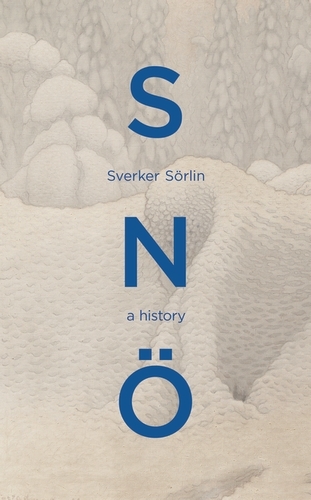
SNÖ by Sverker Sörlin

culture

poetry - arts

social history

shared loss

recreation - leisure

Two kids.
Uncles! In car, drenching
us driving through slush in the gutter 😎


Sverker Sörlin, Elizabeth DeNoma (Translator) (2025). SNÖ - A History. London: Doubleday.
https://www.penguin.co.uk/books/467833/sno-by-sorlin-sverker/9781529947878


My source: Clark, P. A gear shift to adapt to a warming world. Books. Genre Round-Up, Environment.  Life&Arts. FT Weekend. 23/24 August 2025. p.10.

John Denver - Season Suite (Full) The Suite is in this order:
  1. Summer
  2. Fall
  3. Winter
  4. Late Winter, Early Spring (When Everybody Goes to Mexico)
  5. Spring

Friday, September 19, 2025

'Recall Me Maybe' | FT Drama

Stephen Fry and Gemma Whelan star in a new FT drama written by David Baddiel, exploring AI, memory and truth. Fry plays a grandfather with dementia who uses AI to fill in gaps in his memory. While reviewing the archive of his life his family makes a shocking discovery. Which memories are really true? And how AI is defining who we are?

See also: FT Standpoint unveils David Baddiel digital-first drama about AI and dementia -https://www.dropmedia.co.uk/ft-standpoint-unveils-david-baddiel-digital-first-drama-about-ai-and-dementia/

My source: Times Radio. Dom Joly in for Ayesha Hazarika. 1300-1600 BST From 1405-21.
https://www.thetimes.com/radio/show/20250919-32052/2025-09-19

I still need to catch up with last weekend's FT.
https://www.ft.com/video/a4d2ba19-051e-47c5-98ae-c27c59f1b3f0

Friday, August 29, 2025

Winner of Wrecsam National Eisteddfod crown - 4th Aug.

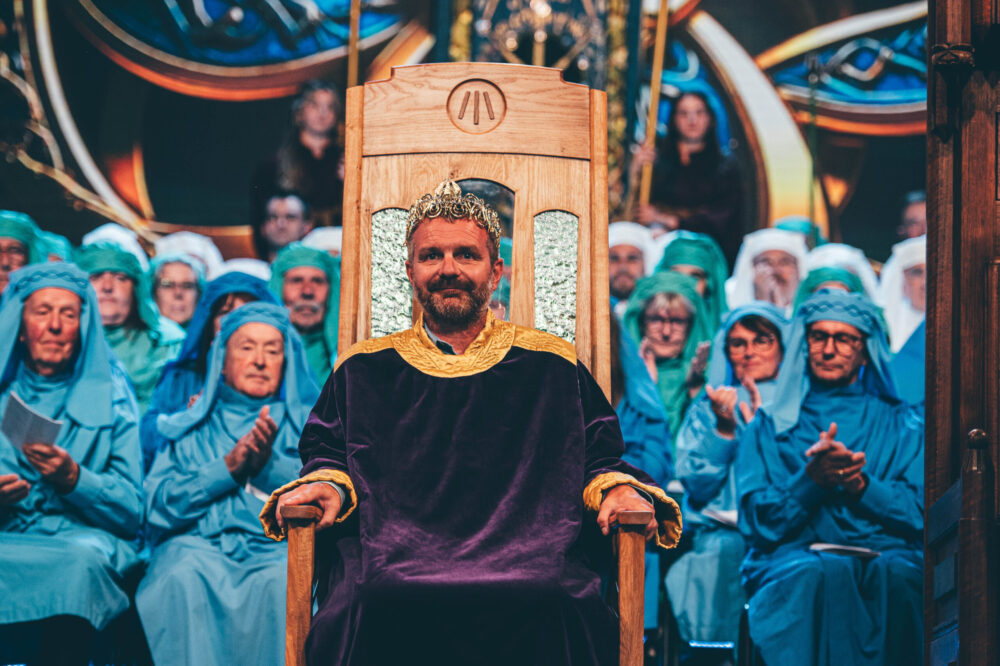
Crown winner Owain Rhys
Image: 
https://nation.cymru/culture/winner-of-wrecsam-national-eisteddfod-crown-announced/

Owain Rhys is the winner of the Wrecsam National Eisteddfod crown for his poems about living with a loved one who is suffering with dementia.

The crown – sponsored by Elin Haf Davies – and a cash prize of £750 was presented to Owain in north Wales on Monday (August 4) by Prydwen Elfed Owens.

The prize was awarded for a “pryddest” or collection of poems not in the traditional Welsh style cynghanedd, of no more than 250 lines, on the theme of “Adfeilion” or ruins.

The adjudicators were Ifor ap Glyn, Gwyneth Lewis and Siôn Aled.

The crown was designed and produced by Neil Rayment and Elan Rowlands.

The pair previously created the impressive crown for the Rhondda Cynon Taf Eisteddfod in 2024 – won by Gwynfor Dafydd for his series of poems on “Atgof” – or remembrance.

Head judge Ifor ap Glyn said: “Llif 2 opens with the simple couplet ‘When you forget / every day as you wake’ – and it discusses living with someone suffering from dementia, namely the poet’s mother.

“It’s a quiet and sensitive treatment of what must be done to help the mother continue to live with dignity as her memory deteriorates.

“The collection presents a tender picture of a difficult situation faced by so many families today, and we sense the depth of the poet’s feelings toward his mother and her former strength.”

Text: https://nation.cymru/culture/winner-of-wrecsam-national-eisteddfod-crown-announced/

See also: https://eisteddfod.wales

My Source: BBC Four Episode 1 - 15mins
https://www.bbc.co.uk/iplayer/episode/m002gwyq/eisteddfod-eisteddfod-2025-with-huw-stephens-episode-1

Tuesday, August 19, 2025

Dementia in 4x5 by Katherine Hubbard

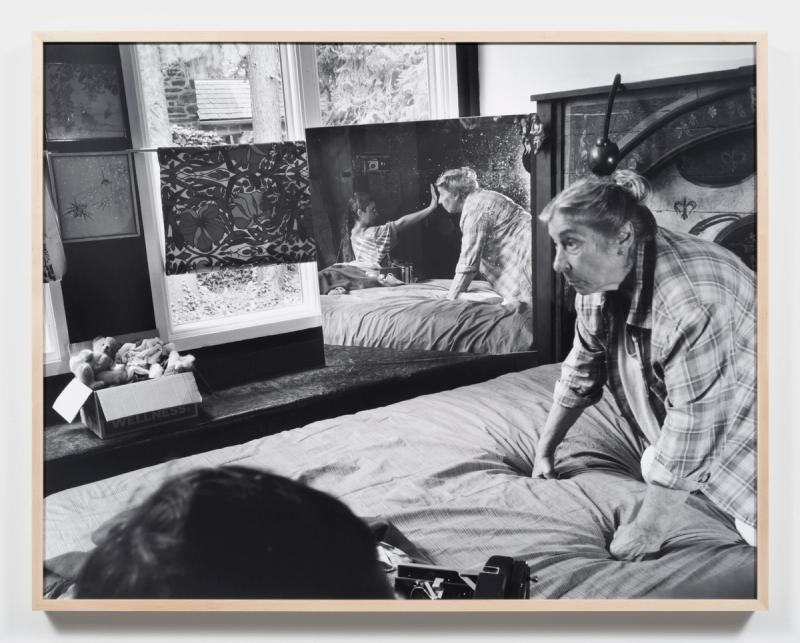
"The American interdisciplinary artist Katherine Hubbard has spent the past five years documenting her relationship with her ageing mother, Antonette Berger, who in 2020 began exhibiting the first signs of memory loss. Her book The Great Room, set between the four walls of Berger's home in Philadelphia, is a culmination of grief and intimacy, as Hubbard steps into her role as caregiver. Using two large- format 4x5 cameras (which she is both behind and in front of) and drawing on her background n performance art, Hubbard transforms the once safe, domestic space into a psychological playground as the pair navigate their new reality. ...
In this portrait, Hubbard sits with her mother on her bed. Their bodies are reflected in a square nirror offset by a series of other square and rectangular objects (picture frames, windows, the headboard) which fragment the viewer's gaze. "This photograph was taken before she had a diagnosis,' Hubbard tells me. "It was a very confusing time, with a lot of uncertainty and frustration between us. ... 
"І am using the camera as а means of creating time with my mom apart from the brutal task of managing her," Hubbard writes. And to the woman who gave her life: "You might like to know that, when І think of you and see you, it's as a whole person."  
Inès Cross. FTMagazine. 

Individual
|
      INTERPERSONAL    :     SCIENCES               
HUMANISTIC  --------------------------------------  MECHANISTIC      
 SOCIOLOGY  :    POLITICAL 
|
Group
one fifty one (hand to face), 2021. Silver gelatin photograph

'The
Great
Room'


Collaboration

Care in the Community

Direction

Gaze


Book: 
h290 x w219 mm. 88 pages
Text by Katherine Hubbard. Hardback. £46.00

https://loosejoints.biz/collections/current-titles/products/the-great-room

Photograph: https://companygallery.us/ - https://companygallery.us/exhibitions/the-great-room

Book cover: Amazon
https://www.amazon.co.uk/Katherine-Hubbard-Great-Room/dp/191271969X


My source:
Inès Cross. Katherine Hubbard, FTMagazine. August 9th 2025, #1137. pp.10-11.
Ack. Antonette Berger (mother ...).

Wednesday, August 13, 2025

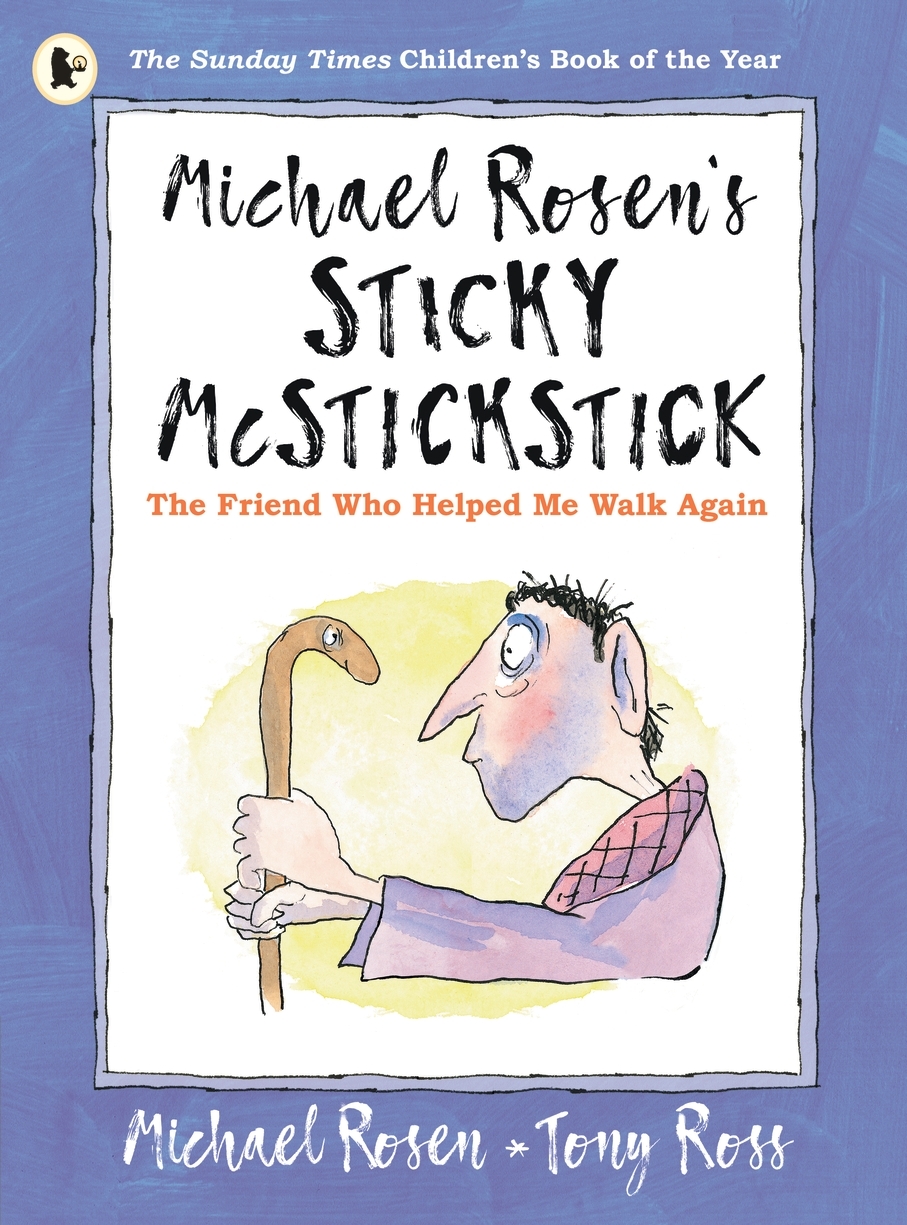
Jackanory: Parity of Esteem 'read' c/o Mr Rosen

Individual
|
      INTERPERSONAL    :     SCIENCES               
HUMANISTIC  --------------------------------------  MECHANISTIC      
 SOCIOLOGY  :    POLITICAL 
|


My source: 
Shop window of The Addyman Annexe - bookshop, Castle St, Hay-on-Wye, 12th August 2025.

Images: 
'STICKY McSTICKSTICK' - https://www.walker.co.uk/
Illustration - https://www.walker.co.uk/author/tony-ross/

Illustration - https://www.walker.co.uk/author/quentin-blake/

Previously: 'parity'

Sunday, June 08, 2025

Why in the World do I have to walk this way?

individual
|
INTERPERSONAL : SCIENCES
humanistic ------------------------------- mechanistic
SOCIOLOGY : POLITICAL
|
group

my childhood - memories

my family, community, home, role models, friends from the neibourhood

Why?


Image: https://x.com/Lowkey0nline

Wednesday, April 30, 2025

Global South - Global Perspectives

As mentioned before, I try to keep grounded, in terms of my parochial perspective on the world, even as technology brings this world, and many others to so many screens.

 BBC Radio 4 'PM' 1700-1800 UT today mentioned this news and an event to follow:

Mākereti "Maggie" Papakura was an internationally renowned Whakarewarewa guide.

  • 'Oxford University will award a posthumous Master of Philosophy degree to pioneering Māori scholar Mākereti Papakura.
  • Papakura, known as Guide Maggie, was the first indigenous woman to study at Oxford.
  • Her work, published posthumously, was the first ethnographic study by a Māori author.
Pioneering Maori scholar and famed Whakarewarewa guide Mākereti Papakura will be honoured with a posthumous degree more than 100 years after she began her studies, Oxford University has announced.

Her family and iwi say they are grateful for the tribute to her memory, and it is testament to her determination to ensure Māori stories would not be forgotten.

Born in 1873 at Matatā, Papakura is believed to be the first indigenous woman to study at the university, Oxford’s School of Anthropology and Museum Ethnography said in a statement.

She made her name as the pre-eminent guide at Whakarewarewa in the early 1900s and was known as Guide Maggie'. . . .

...  I will watch for further news. 

The above stood out as last evening I greatly enjoyed listening to Discovery on the BBC World Service:

'Dr Julia Ravey and Dr Ella Hubber are both scientists, but it turns out there’s a lot they don’t know about the women that came before them. In Unstoppable, Julia and Ella tell each other the hidden, world-shaping stories of the scientists, engineers and innovators that they wish they’d known about when they were starting out in science. This week, a Māori marine scientist is combining indigenous knowledge with marine science to save the oceans that are so integral to her heritage. ...'

Image and text:
https://www.nzherald.co.nz/rotorua-daily-post/news/te-arawas-makereti-papakura-to-receive-posthumous-degree-from-oxford-university/SBI3TR733RHZBOAS3BLDAZPMTU/

Previously: 'Oceania'

Monday, March 17, 2025

1st Seminar Series: "Violence, Memory, Networks" - Interdisciplinary Connections

Dear colleagues,

The first session of the seminar "Violence, Memory, Networks" will take place on 19th March, 2025, at 2.30 pm (GMT), exclusively online.

In this session, Caroline Elkins (Harvard University, USA) will speak about "Legalized Lawlessness: Violence and the End of the British Empire" and Max Silverman (University of Leeds, UK) will bring us a communication on "Concentrationary violence and the everyday: the Zone of Interest (Jonathan Glazer, 2023)".

Registration is free but mandatory: https://forms.gle/brgNcR6hk6dxf7gu7

Event website: https://www.uc.pt/fluc/seminarvmn/

We would be very grateful if you could publicise the event through your channels.

Looking forward to see you soon,

The organising committee.

My source: https://www.uc.pt/fluc/ief/

Wednesday, March 12, 2025

Ambulances, Bikes, Cars and Dennis

There are many rites of passage. Some are universal, others culture specific, or a facet of religious identity. Perhaps there are rites of passage that change over time, or are as yet unclear. When should a young person have their own mobile phone, especially when that phone is 'smart'? Perhaps that is a step too far, to see a phone as a rite of passage? Or, perhaps it signifies an erosion of the human experience of growing-up. 

Mastering a bicycle is, if not a rite of passage, an experience I remember so well. An experience revisited and enjoyed even more as an adult with my own children. It really is something when the hand-lets-go, a signifier of more transitions to follow. 

I learned to ride on two-wheels, in the cobbled backs that ran behind and between the rows of terraced houses. When I was aged 9-10, out on my bike I skidded and came off, trying to stop for a car. It was my fault, the driver was pretty upset too and carried me home. An X-Ray revealed I had hairline fractured of my tibia. I can remember being up so late 'The Untouchables' were on B&W TV. Back then a full-length 'pop' and crutches were required. After the pain subsided, a knitting needle was very useful. The plaster was well-scribed too. I had to attend the fracture clinic at Walton Hospital, Liverpool and still recall Dennis the ambulance gent. He was a great laugh.

I was reminded of this on BBC Radio 4's Today programme, 07:24:35 & 08:55:25, 11 March. Two guests recounted the start of their cycling careers, as adult and a child. British Cycling has started a campaign having found:

Apparently, 97% of children from the richest backgrounds can ride a bike.

While only 86% of children from the poorest backgrounds are able.

This equates to 350,000 children, who would like to ride a bike but can not.


Individual
|
      INTERPERSONAL    :     SCIENCES               
HUMANISTIC  --------------------------------------  MECHANISTIC      
 SOCIOLOGY  :    POLITICAL 
|
Group
Experiences, skills
MENTAL HEALTH
Memory - of 'taking flight'
Life skill: "It's like riding a bike!"
Healthcare role model
Ambulance staff 'Dennis'

Sustainability
PHYSICAL HEALTH
Accessibility
350,000 children
would like to ride a bike.

Fracture clinic Tibia

Childhood - Friends
Adult - Parenthood
Cycling clubs
Socialisation
Social Justice
Engagement - Play


Inequality
97% of children
richest backgrounds can ride a bike.

Only 86% of children from
the poorest backgrounds


When there is a new link I will add it here. In the meantime, can you get on your bike!


Previously: APPG : Cycling : Sport

Thursday, February 06, 2025

Last Word by Ann Williams

LAST WORD

In Africa, one word for now,

Another word for tomorrow,

But forty words for the past.

The elephants do not forget.

They stand close in a circle,

Turn the heaped pile of bones

This way and that, stroke

Leg-bone, thigh and skull,

Rub dust into their faces.


Sighing, they understand

The weight of grief,

How memory is carried.

by Ann Williams

Poetry, edited by Peter Abbs (RIP 2020), Small Epiphanies, Resurgence & Ecologist, Sept/Oct 2013, Issue 280: p.52-53. I cannot locate a web presence for Ann Williams, if anyone can assist please get in touch. Resurgence & Ecologist is a marvellous read. I do not subscribe but enjoy a copy when visiting a city.

P.S. I feel bad not subscribing, but you have to 'cut your cloth'. That's not the only pain factor. An online subscription may be greener, and cheaper? As with book reviews (Ethics and AI - to follow), I need a physical copy, spending enough time on-screen already. The publication is much more than a magazine. The magazine represents a change of mindset and ironically reflects former and for many 'new' ways of life.

Tuesday, November 05, 2024

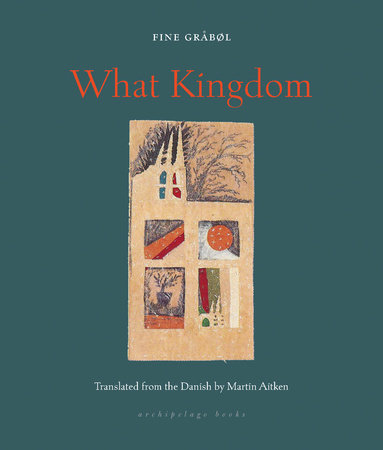
'What Kingdom' by Fine Gråbøl

client - person - individual - self - patient
|
INTERPERSONAL : SCIENCES
humanistic ------------------------------- mechanistic
SOCIOLOGY : POLITICAL
|
group
What Kingdom

'Gråbøl was lucky. Eventually she started seeing a new psychiatrist, who looked at that record "and was like, "Wow, you receive So much more medicine than all the other people who live there. Why is that?'" She didn't know. Gradually, though, she was able to come off the drugs; and two doctors decided that
she didn't, in fact, have borderline personality and bipolar disorders, removing the diagnoses that had shaped her sense of her self. In time, she left the unit and rebuilt her life.

She's no longer on medication today, but the ghosts of her past diagnoses haunt her. She wonders whether the conditions are merely in hibernation and she'll wake up one day and enter another depressive episode. She doesn't wish she'd never been diagnosed, but does feel that her doctors underestimated the effect those labels would have on her development.

At 17, she points out - the age she was diagnosed as bipolar - most teenagers don't yet know who they are. "You want to find a box or language to define yourself, so that you can close yourself in. And one way of getting that sense is getting into the psychiatric system." Since returning to "normal" life, she has also struggled with survivor's guilt: the feeling that while she made it out of the system, others did not.


'Above all, she wishes that the emphasis would shift away from the suffering individual and onto their broader context. We need to become better, as a society, at making room for people who aren't fully functional citizens. Gråbøl's narrator phrases it as a question: "Could we not imagine treatments that are instead externally directed involving the outside world gearing itself towards a wider and more comprehensive emotional spectrum?" Gråbøl's answer, though, is the same as my own: "I don't know."'

the system

citizens?


My source:
Leaf Arbuthnot, Interview. We need to make room for the mentally ill. Review, The Daily Telegraph, 21 September 2024, pp.8-9.

Image:
https://images3.penguinrandomhouse.com/cover/9781953861849

Monday, October 07, 2024

“Violência, Memória, Redes” :: "Violence, Memory, Networks” - Monthly online seminar March 2025


Caros colegas,

A partir de Março de 2025 realizar-se-á, mensalmente, um seminário online sobre a tríade “Violência, Memória, Redes”.

Este é organizado pela nossa equipa de um dos grupos de investigação interdisciplinar do CEIS20, um centro ligado à Universidade de Coimbra (Portugal) dedicado a temas de memória, entre outros tópicos multidisciplinares. Esta nova série de seminários dará continuidade ao sucesso do anterior trabalho sobre “Memória, Trauma e Narrativas sobre Si” (2021-22).

Desta forma, pedimos que seja divulgada pelos vossos canais a Call for Papers com a data limite em Janeiro de 2025.

Toda a informação adicional pode ser encontrada na página do seminário (https://www.uc.pt/fluc/seminarvmn/) e no anexo. Os pedidos de esclarecimento devem ser endereçados para: vmn AT uc.pt.

Disponíveis para qualquer esclarecimento adicional.

Cumprimentos,

A Comissão científica:

Edmundo Balsemão Pires (CEIS20/UC)
Joana Ricarte (CEIS20/UC)
Cláudio Carvalho (UCP/FFCS / IF/UP)
Giovanni Zanotti (CEIS20/UC)

-------------------

Dear colleagues, 

From March 2025 onwards, an online seminar will be held monthly on the triad “Violence, Memory, Networks”. 

This is organized by our team from one of the interdisciplinary research groups at CEIS20, a center linked to the University of Coimbra (Portugal) dedicated to memory themes, among other multidisciplinary topics. This new series of seminars will continue the success of the previous work on “Memory, Trauma and Narratives about the Self” (2021-22). 

Therefore, we ask that the Call for Papers be published through your channels with a deadline of January 2025. 

All additional information can be found on the seminar page (https://www.uc.pt/fluc/seminarvmn/) and in the annex. Requests for clarification should be addressed to: vmn AT uc.pt. Available for any additional clarification. 

Compliments, ...

My source: IEF

Saturday, July 06, 2024

Take II? Fit for Government . . ?

As a community nurse, driving is obviously pretty essential to your being able to work. I have come across non-driving community nurses (earlier this year) but they are still few(?). As a boy going to work with my father you could see how dependent he and workmates were upon a string of vans, cars and be able to drive both being on the 'right-side' of the law and his health. It was always an 'event' a new van, fitting out with racks, shelves, nooks, hooks and crannies for all sorts.*

Then as a community nurse older adults you come across individuals who still have their driving license, still have their car on the drive / front, and still have the car keys. Perhaps family have suggested to mum, dad, brother, sister, aunt: "Look, isn't it time to call it a day and give up driving?" Ouch! There's a crash - in itself.

Re-working the two-part draft paper on deprivation of liberty safeguarding, threshold concepts, Hodges' model within residential care, some thresholds are difficult, challenging to call. But some are safety critical, and perhaps need a more 'proactive' stance, without giving way to ageism. Is it the local community's job - the public's job to proffer a diagnosis: and what about persons on the world stage? Diagnosis by social media?

I quickly admired those people who, though reticent, gave up the literal fast-lane. Inevitably you wonder how you will react when the time comes. Will you have the humility, the goodness of grace to hand over the keys? To call it a day. With an ageing population, I've warned the children when driving to expect the unexpected. Cars going the wrong way. It was a struggle for my father: but safety as it so often does - did the trick - with the impetus of physical illness.

Sometimes, at work, after a family trying, and a fracas, when they've tried to hide / remove the car keys, suddenly a near-miss has upped-the-ratchet. Neighbours have seen the 'driver' reversing out into the road, with numerous car horns announcing the event. Then perhaps you are intercepted outside, a call comes to the day center (the transport is also going), the community team, or the GP's surgery (the neighbours have helped with medication).

I've had to speak to GPs for them to visit, meeting them on occasion. Do GPs - family physicians still have the same gravitas today?

This is a care transition: what can be a difficult one. A helpful point (diplomatic argument) that often gets through is the matter of car insurance and the status of the existing policy?

Does a political leader carry insurance?

It is difficult for all, a person's human rights, choices, freedom; their life story, former career perhaps, their health career - most definitely.

With events in the USA and the Democrat Party, and seeing the cover of The Economist I had to TAKE II.

Individual
|
      INTERPERSONAL    :     SCIENCES                   
HUMANISTIC  --------------------------------------  MECHANISTIC      
 SOCIOLOGY  :    POLITICAL 
|
Group

cognitive state

memory

insight

Fitness for Office:
Mentally & Physically
Legally
The Economist


safety of Others

community - duty of care -
safeguarding
 (however realised)

This is global problem that is set to increase and not just for reasons of health.

Ack. The Economist

Owen, D. (2009) In Sickness and in Power: Illnesses in Heads of Government during the Last 100 Years, London: Methuen Ltd. ISBN: 978-0-413-77689-1

Listen also ... BBC Radio 4 Moral Maze 

'The Morality of Stepping Down'

Previously:

*I suspect he's still driving around somewhere. x

Friday, April 26, 2024

Buses, Eddie Stobart, Lego and Laughing Boy

Individual
|
   INTERPERSONAL   :     SCIENCES               
HUMANISTIC  --------------------------------------  MECHANISTIC      
 SOCIOLOGY  :    POLITICAL 
|
Group

person - personality
personal duty of care
emotional care
experience

buses - Eddie Stobart - Lego
space - time
1-day Physical care  Another day
the sound of laughter


Source: Twi/X + image:

Friday, March 01, 2024

'Writing Samer'

Molly Fairhurst
 

... across the domains

"Diagnosed with a terminal cancer, Samer Iskandar couldn't find the words to describe what he was living through. Instead, he proposed an unusual collaboration." p.33.


Individual
   |
      INTERPERSONAL    :     SCIENCES               
HUMANISTIC  --------------------------------------  MECHANISTIC      
 SOCIOLOGY  :   POLITICAL 
|
Group

"Samer's cancer^ is like all cancers in that it pitches the self into a battle against the non-self, - *


"Memory, language, attention and cognition all erode to ultimately leave you somewhere east of your prior self and west of someone new." p.34.


- atavistic alien cells invading their host from within. But it is unlike most cancers in how directly this cellular plunder correlates to the personal one." 

It is like all cancers in that its lexical field is that of topography, malignancies spreading, diffusing and gaining ground. It is unlike them in that these movements are finally technical, gears cramped within the clock of a terminal diagnosis." p.34.


^glioblastoma
*discuss

Youmna Melham Chamieh, Writing Samer, FT Weekend Magazine, 24/25 February, 2024, Issue 1,062, pp.32-37.

Illustrations by Molly Fairhurst
https://mollyfairhurst.com/Financial-Times (above source).

Thursday, December 28, 2023

'Geography of Hope' & 'The Great Conversation'

c/o Resurgence & Ecologist

INDIVIDUAL
  |
     INTERPERSONAL    :     SCIENCES               
HUMANISTIC --------------------------------------  MECHANISTIC      
SOCIOLOGY  :   POLITICAL 
|
GROUP

hope

geography

peoples - places


value / values


"... Stegner explained - we need such [wilderness] places because they remind us of a world beyond the human and also because they allow us to see ourselves as part of the 'environment of trees and rocks and soil ... part of the natural world and competent to belong to it". Taken together, he concluded, such places constitute a 'geography of hope'. ...

There are, as Stegner knew, certain thoughts and feelings that can had only in certain places: cognition is site-specific as well as motion-sensitive. It has long seemed to me that we might imagine landscapes as holding specific ideas and experiences just as they hold certain stones, minerals or species; that we might even talk of landscapes as growing ideas as they grow plants. And that, by extension, when we lose certain places - when they are destroyed incidentally, or deliberately - we lose not only the life that they held but also the thoughts that they enabled." p.38.

Mcfarlane, Robert., The Geography of Hope, Resurgence & Ecologist, Nov/Dec 2012, 275:pp.38-39.

https://www.20-20-vision.org/

Elia T. Ben-Ari, Defender of the Voiceless: Wallace Stegner's Conservation Legacy, BioScience, Volume 50, Issue 3, March 2000, Pages 253–257, https://doi.org/10.1641/0006-3568(2000)050[0253:DOTVWS]2.3.CO;2

INDIVIDUAL
  |
     INTERPERSONAL    :     SCIENCES               
HUMANISTIC --------------------------------------  MECHANISTIC      
SOCIOLOGY  :   POLITICAL 
|
GROUP

intrinsic elements

PERIODIC table

we are elements too -
part of nature


value / values

"We have broken the great conversation."


"But does the natural world need our writing? Paul Evans, in his Country Diary in The Guardian, wrote of the importance of observing and describing the world with passion; that communicating 'the significance of ephemeral and overlooked things to a world which couldn't care less' is a political and spiritual act." p.41.

Reason, Peter., The Great Conversation, Resurgence & Ecologist, Nov/Dec 2012, 275:pp.40-41.

In the media and many Resurgence & Ecologist issues, there is a stress on our taking time to be slow. I'd written in the margin of Mcfarlane's article; "Relativistic care: The faster we run (travel) the more mass we consume". While by Reason's text I'd scribbled; "H2CM is a statement of intent, in idealised care. In practice it is an outcome."