Hodges' Model: Welcome to the QUAD: study

Hodges' model is a conceptual framework to support reflection and critical thinking. Situated, the model can help integrate all disciplines (academic and professional). Amid news items, are posts that illustrate the scope and application of the model. A bibliography and A4 template are provided in the sidebar. Welcome to the QUAD ...

Showing posts with label study. Show all posts

Tuesday, June 02, 2026

Call for Participants: Survey on Trauma-Informed Archival Practice

Dear all,

My name is Emily Hill, I am a current master's student at the University of Glasgow completing my dissertation titled: 
 
To what extent is Trauma-Informed Archival Practice understood and used within the Archival Sector? How effective are the methods of support available to Archivists? 

The aim of this dissertation is to explore the breadth of knowledge within the Archival sector surrounding Trauma-Informed Archival Practice, where professionals have learned about Trauma theory and if the mental health and secondary trauma support available is accessible and effective. There is no prior knowledge of Trauma-Informed Practice needed to participate, as these concepts are explained within the Participant information forms. 

Participation in this survey will take approximately 15 minutes, including the Participant Information and Agreement forms which should be viewed and signed before participation in the survey questions. 

All survey responses are received anonymised, with the data being analysed in correlation with other respondent data on a question-by-question basis. 

I would be very grateful for your participation in this survey, and if you have any questions or concerns you wish to address prior to participating, please email me at 2650467H AT student.gla.ac.uk. 

You can access the survey here. 

Thank you in advance for your participation!

Best wishes, 
Emily Hill.

My source:
To view the list archives go to: https://www.jiscmail.ac.uk/cgi-bin/webadmin?A0=RECORDS-MANAGEMENT-UK

Monday, February 02, 2026

Bridging Gaps in Oral Health Frameworks: Mapping With Hodges' Health Career - Care Domains - Model

 ABSTRACT

Objectives

Despite decades of national and global strategies, persistent inequities in oral health outcomes, access, and service provision remain. Existing frameworks often fail to integrate clinical and behavioral factors with social, cultural, and political determinants. This study aimed to map and evaluate oral health frameworks using Hodges' Health Career—Care Domains-Model (HCM), a meta-framework that spans clinical, behavioral, sociological, and political domains. The goal was to identify conceptual gaps and opportunities for greater integration.

Methods

A structured scoping review was conducted using MEDLINE, CINAHL, EBSCO, and search engine Google Scholar (1995–2025) to identify oral health-related conceptual frameworks. Frameworks were eligible if they addressed oral health determinants, behaviors, policies, or interventions. Two reviewers independently screened records and analyzed full-text articles. Frameworks were categorized by theoretical orientation and mapped against the four HCM domains to identify patterns of emphasis or omission.

Results

Of 226 identified records, 21 frameworks met inclusion criteria. These were classified into three thematic groups: balanced (addressing all domains), clinically led (focused on clinical/behavioral aspects), and policy/public health-focused (emphasizing sociological/political factors). Seven cross cutting themes emerged, including health promotion, systems integration, social justice, and cultural safety. While many frameworks promoted equity and policy reform, few offered implementation guidance or had been empirically validated.

Conclusions

HCM proved useful for systematically comparing frameworks and revealed consistent underrepresentation of political and structural domains. It offers a practical tool for oral health professionals, educators, and policymakers developing integrated oral health models that align with equity, sustainability, and universal health coverage goals.

S. Bettiol, P. Jones, H. A. Onyedikachi, and W. G. Kernohan, “ Bridging Gaps in Oral Health Frameworks: Mapping With Hodges' Health Career - Care Domains - Model,” Journal of Public Health Dentistry (2026): 1–14, 
https://doi.org/10.1111/jphd.70034

Thursday, October 23, 2025

Free online mindfulness programme & ¥3800 (≈ £20) reward - research study

Dear all,

My name is Francesco Saldarini. I am a postdoctoral fellow at Waseda University (Japan) and a visiting researcher at the University of Surrey. My research focuses on investigating the (potential) effects of mind-body practices (e.g., mindfulness and martial arts) on psychology.

I am running a longitudinal intervention study investigating the effects of a digital mindfulness-based programme on a variety of health and cognitive outcomes and I would like to invite you to participate.

The study takes place entirely online and will require you to participate in two or three main experimental sessions, when you will be asked to complete a task and answer some questions. Each session will take approximately 40 minutes to complete. Moreover, you will get to participate in an online NHS-approved mindfulness-based programme! The programme is pre-recorded and you can flexibly choose when to attend a session. I will also reward you ¥3800 (≈ £20) for your participation.

This study was approved by the Waseda University research ethics committee (REF : 2024 - 314).

If you are interested in participating in the study and wish to know more about it, please contact me at:
w.iac23317 AT kurenai.waseda.jp.

Basic inclusion criteria:

- Currently feeling stressed
- Between 18 and 65 years of age
- Willing to complete a screening questionnaire
- No previous mindfulness experience
- Willing to practice mindfulness for minimum 2 hours per week for 4 weeks

Thank you,

Francesco Saldarini

My source: https://www.jiscmail.ac.uk/cgi-bin/webadmin?A0=VIRTUAL-METHODS

Friday, September 12, 2025

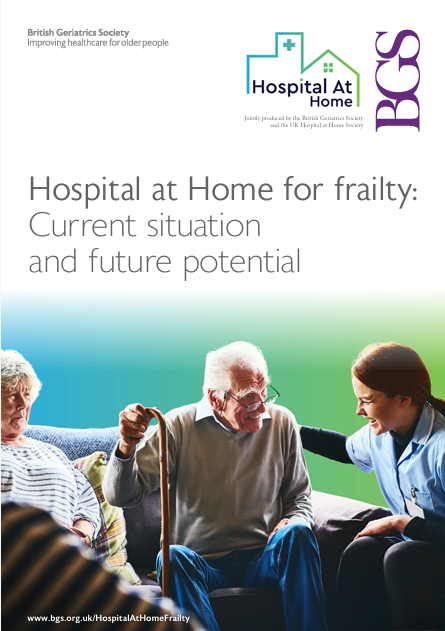
Report: Hospital at Home for frailty ...

 .... Current situation and future potential

Report: Hospital at Home for frailty
The BGS has produced report on Hospital at Home services for older people. This explains how they are currently provided and how they might develop in the future as a key part of community-based healthcare. The report is endorsed by the UK Hospital at Home Society.

Hospital at Home is a safe and effective alternative to acute hospital bedded care for people who are sick enough to be in hospital.

Hospital-level care provided at home means people living with frailty are not exposed to some of the risks arising from long stays in hospital, such as infections and deconditioning.

There is mounting evidence for the effectiveness of Hospital at Home services, which are greatly valued by those who use them. With 35,000 people a year benefiting from this alternative to hospital in England, further development of Hospital at Home should be encouraged as a key part of the Government’s ‘left shift’ from hospital to community.

continued ...

My source:
https://x.com/GeriSoc/status/1965676874111037547

Wednesday, September 03, 2025

TEL us a story ... Hard, Soft and being Smart

Sorting papers I'd saved I came across -

David Mossley and Clare Saunders: A revolution in philosophy teaching? from the The Philosophy Magazine. 3rd quarter. 2013. pp. 40-45. 

Checking back, I see I posted and cited this item in 2013:


In the decade-plus since, how things have changed in tech, education and philosophy!

The story is ... that around this time I needed a new website and in the past I practised computer aided learning. Or should I say mCAL, microcomputer aided learning on the ZX81 and BBC Micro (related citations below). In 2013-2014, I started a PhD (as noted elsewhere) thinking I could recover and update some IT skills. Could I recapture the CAL days, by picking up TEL - technology enhanced learning? I stepped outside healthcare, and nursing specifically. I see now this was an error, but of course I still venture off-piste. The latest detour is even more extreme? On a personal - psychological level I'm visiting a subject maths - formal methods that simultaneously fills me with wonder (recognising its power and utility) and yet terrifies me with its complexity, made me feel sick at school, as a pre-teen and after.

My 'research question' was poorly formulated - which I did recognise. Two years were not wasted, far from it. The journey then was also driven by personal circumstances, married with events in 2007, 2010 and then 2015. 
 
Sticking with the current conference theme, I noticed a call for the 7th International Soft Computing and Engineering Applications Conference. Selected themes from track #4 include:


Track 4: Soft Computing for Smart Sustainable World

Smart agriculture and aquaculture
Smart cities
Smart communication
Smart disaster monitoring and management
Smart earth system
Smart education
Smart elderly care
Smart environment and ecosystems
Smart governance
Smart healthcare
Smart homes and buildings
Smart learning
Smart living
Smart machines and robots
Smart materials and fabric
Smart medicine
Smart social services
Smart villages
Smart wearables and implants

Amid all the (understandable) emphasis on 'smart' we need to retain a place for the human. That's the challenge in simultaneously considering the hard and soft of today's and tomorrow's world.

Citations

1982 CAPA: COMPUTER AIDED PATIENT ASSESSMENT, Sinclair ZX81, advertised in Nursing Mirror (see below) provided on audio cassette tape.

1983 THE NURSING PROCESS – Computer Aided Learning program, BBC Micro, published by Open Software Limited (OSL)

1984 HAEM. Blood Groups Computer Aided Learning program, BBC Micro – (OSL).

1989 SHADES OF GREY, Computer Aided Learning program, BBC Micro. Simulation of nuclear weapons, Based on Fanchi, J. Local effects of nuclear weapons, BYTE, Volume 11. Issue 13. Dec., pp. 143–155. Computer Aided Learning program, BBC Micro, published by Open Software Limited..

Jones, P. (1986) Computing in Nursing NEWS. Computerised Patient Assessment. Nursing Times. 85: 5. Sep 3-9;82(36):63-5. PMID: 3532039 (Describes 'CAPA', a BBC microcomputer program for student nurses.)

Jones P. 1988 Thunderbirds are Go? (Impact of technology in society, disasters, macro-engineering). Popular Computing Weekly.

Jones, P. (1989) Computers in Nursing NEWS. Creating a Program. Nursing Times. Feb 1-7;85(5):66-8. PMID: 2648342 (Describes 'HAEM', a BBC microcomputer program for student nurses on blood and blood groups.)

Jones, P. (1989) Information Technology is Good For You! (Effects of information technology) IT in Nursing, BCS-Nurs. Specialist Group. 1,1

Jones, P. (1990) Creating a Community Mental Health IS (Creation of a community mental health resource centre - a multidisciplinary research project). IT in Nursing and Paper at BCS NSG Conference. 2,4.

Jones, P., & Beckingham, D. (1991) The Ins and Outs of a small mental health Information System. Healthcare Computing 91 Conference Paper.

Jones, P. (1992) Nursing: All in the mind and machine? (Models of nursing and computing). British Computer Society -Nursing Specialist Group Conference Paper

Friday, August 01, 2025

Paper: "A generic model and conceptual framework to prime curiosity across health and social care disciplines to facilitate lifelong learning"

 What seems a long time ago now (a decade!) I started writing a paper on:

  • Threshold concepts
  • Deprivation of Liberty Safeguards (DoLS)
  • and Hodges' model

This ended up as a two part work, which after review ended up as two separate papers:

One appeared in April:

Jones, P. (2025). A Conceptual Mapping Exercise of Deprivation of Liberty Safeguards in Residential & Community Care Using Hodges' Model and Threshold Concepts. Journal of Evaluation in Clinical Practice, 31: e70085. https://doi.org/10.1111/jep.70085

The other should be published soon - same journal. I appreciate the editor's patience and team's support:

"A generic model and conceptual framework to prime curiosity across health and social care disciplines to facilitate lifelong learning"

Unfortunately, I've no funds to pay for open access. I will bear this in mind, as I resurrect another project - with two versions of 13,000 and 6,000 words. This is on (and began during) COVID-19, society, information and technology.

Wednesday, July 09, 2025

'Thinking outside the box: alternatives to standard inpatient mental health care' by Amber Jarvis

c/o The Mental Elf on 'X' I came across a blog post by Amber Jarvis:

Thinking outside the box: alternatives to standard inpatient mental health care

Amber's post considers a study by:

Griffiths, J. L., Baldwin, H., Vasikaran, J., Jarvis, R., Pillutla, R., Saunders, K. R., … & Johnson, S. (2025). Alternative approaches to standard inpatient mental health care: development of a typology of service models. International Journal of Mental Health Systems, 19(1), 1-13: https://pubmed.ncbi.nlm.nih.gov/40247283/

At an online meeting this evening, near the close the discussion loosened and alighted on AI. The ability of AI to summarise a large text file, a *.pdf and create discrete web HTML pages. The racial bias 'built-in' by human coders, reflected in outputs; that point to structural racism. 

Finding this paper on X, boxes are the bread and butter of Hodges' model. Not just thinking outside a box, or inside one, but several and with a final twist - to follow. Amber begins:

'Inpatient mental health care involves staying in a hospital or specialised facility to receive intensive, round-the-clock support for serious mental health needs (Staniszewska et al., 2019). Whereas acute inpatient services typically respond to immediate crises, longer-term wards support individuals with more complex needs and a higher level of ongoing risk.

Inpatient services are a core component of our mental health system — whether someone stays for a night, weeks, or even several years. However, inpatient care has recently come under growing scrutiny – and for good reason.'

A Community Mental Health Nurse since 1985, my in-patient experience is a tad misty, but not misty-eyed. As the wards: psychogeriatrics, long-stay, female acute admission were simultaneously challenging, rewarding - in the sense of being able to make a positive difference, changing what were institutionalised practices, no personal clothes, lockers, tea urn, no banking, few visitors (admission wards excepted). It was all very quotidian: check the bath book. Then tell, confirm, assure the patient, 'yes!'. It is your bath day. I've posted previously about critical mental health. You do (should?) quickly learn you are part of a system, a machine; and the distinction between person- patient-centred and service-centred care. The need to do my 'general' quickly emerged too. 

As ever, two words, across Amber's post and Griffith et al's title, stand out; 'map' and 'typology'. I must revisit and post about:

Macduff C. (2007). Typologies in nursing: a review of the literature. Nurse researcher, 14(2), 40–50. https://doi.org/10.7748/nr2007.01.14.2.40.c6020

Part-time work since 2020, in two adult CMHTs and a recovery team, has provided an update. The first as COVID emerged, was a bit of a shock in terms of diagnoses, caseness, the proximity to the law and forensic psychiatry, thresholds for referral, changes to mental health law (that were now more practical) and the management of patient's finances. 

So, to return to last night's brief online discussion, the observation of how racism is ongoing, brought up the fact of racism being structural and institutional (Dean & Thorpe, 2022). The change needed is an intergenerational break, which doesn't bear thinking about. The National HEALTH Service faces the same challenges in the shift to prevention, and addressing racism. Where is the workforce, going to come from, to help recovery, health and related literacies (media, emotional, financial)?

It is easy in boxes like Hodges' model (and others) to be idealistic. Ideally as I learned of Community Psychiatric Nurses being recruited, six of us, we all should have asked:

What is the plan?
What is the model of care?
What characterises 'care in the community'?
How do we prevent relapse, readmission?
Is there a 'halfway house'*?

We did, to an extent. There was great enthusiasm, motivation, idealism, co-ordination, collaboration  (Tyrer & Gelder, 1990) and leadership. 'We' had an association,^ and a journal. Back then the Royal College of Psychiatry produced a report on CPNs. Is there a message in this? Progress was and has been made, but the promise has not been delivered. With care in the community having regressed, an incomplete 'project'.

I will read more and revise this post, or more likely add another: with less 'history' ...

Individual
|
      INTERPERSONAL    :     SCIENCES               
HUMANISTIC  --------------------------------------  MECHANISTIC      
 SOCIOLOGY  :    POLITICAL 
|
Group
Model of Care

Model of care

Model of Care
Care in Community
Children - Schools - Education

Model of care
'Care Leavers'


*'Cross-settings' in Griffith et al.

^https://www.unitetheunion.org/what-we-do/unite-in-your-sector/health-sector/mental-health-nurses-association

Lorraine T Dean, Roland J Thorpe, What Structural Racism Is (or Is Not) and How to Measure It: Clarity for Public Health and Medical Researchers, American Journal of Epidemiology, Volume 191, Issue 9, September 2022, Pages 1521–1526, https://doi.org/10.1093/aje/kwac112

Tyrer P, Gelder M. The future of community psychiatric nursing: some research findings. Psychiatric Bulletin. 1990;14(9):550-551. doi:10.1192/pb.14.9.550

Wednesday, April 30, 2025

Global South - Global Perspectives

As mentioned before, I try to keep grounded, in terms of my parochial perspective on the world, even as technology brings this world, and many others to so many screens.

 BBC Radio 4 'PM' 1700-1800 UT today mentioned this news and an event to follow:

Mākereti "Maggie" Papakura was an internationally renowned Whakarewarewa guide.

  • 'Oxford University will award a posthumous Master of Philosophy degree to pioneering Māori scholar Mākereti Papakura.
  • Papakura, known as Guide Maggie, was the first indigenous woman to study at Oxford.
  • Her work, published posthumously, was the first ethnographic study by a Māori author.
Pioneering Maori scholar and famed Whakarewarewa guide Mākereti Papakura will be honoured with a posthumous degree more than 100 years after she began her studies, Oxford University has announced.

Her family and iwi say they are grateful for the tribute to her memory, and it is testament to her determination to ensure Māori stories would not be forgotten.

Born in 1873 at Matatā, Papakura is believed to be the first indigenous woman to study at the university, Oxford’s School of Anthropology and Museum Ethnography said in a statement.

She made her name as the pre-eminent guide at Whakarewarewa in the early 1900s and was known as Guide Maggie'. . . .

...  I will watch for further news. 

The above stood out as last evening I greatly enjoyed listening to Discovery on the BBC World Service:

'Dr Julia Ravey and Dr Ella Hubber are both scientists, but it turns out there’s a lot they don’t know about the women that came before them. In Unstoppable, Julia and Ella tell each other the hidden, world-shaping stories of the scientists, engineers and innovators that they wish they’d known about when they were starting out in science. This week, a Māori marine scientist is combining indigenous knowledge with marine science to save the oceans that are so integral to her heritage. ...'

Image and text:
https://www.nzherald.co.nz/rotorua-daily-post/news/te-arawas-makereti-papakura-to-receive-posthumous-degree-from-oxford-university/SBI3TR733RHZBOAS3BLDAZPMTU/

Previously: 'Oceania'

Saturday, February 01, 2025

New citation for Hodges' model

It was a struggle obtaining a copy, as the paper is not open access, but more good news with Doyle & Jones (2013) being cited in:

Yasemin Güner, Bilge Delibalta, Melek Üçüncüoğlu, Sinan Paslı, Challenges encountered by emergency nurses in forensic case management: A qualitative study, Journal of Forensic and Legal Medicine, Volume 109, 2025, 102807, ISSN 1752-928X, https://doi.org/10.1016/j.jflm.2025.102807.(https://www.sciencedirect.com/science/article/pii/S1752928X25000083)

The above has been added to the blog's bibliography. 

The abstract reads:

Purpose/Aims: This study aimed to reveal the opinions of emergency room nurses regarding crime victims and the challenges they experience.
Design: This study was a qualitative descriptive study.
Methods: A convenience sampling method was used in the study. Data were collected through individual in-depth interviews using semi-structured questions lasting approximately 45 min. The interviews were audio recorded. In total, nine nurses individual interviews were held.
Results: The study was completed with nine nurses with approximately twelve years of experience in the emergency department. Four themes were identified: duties and responsibilities of nurses in crime victims management; maintaining well-being in challenging crime victims; education needs of emergency nurses for crime victims; and challenges experienced by nurses in crime victims management.
Conclusions: When contextualizing the findings of our study within forensic nursing theory, it becomes evident that nurses play a pivotal role in continuously informing, influencing, and advancing forensic nursing care to improve patient health, forensic evidence collection, and criminal justice outcomes. A key finding of our study was the impact of interaction with crime victims in the emergency department on nurses’ well-being. In this regard, implementing institution-supported education policies, establishing units dedicated to supporting wellbeing, and fostering a supportive organizational culture are essential measures to promote the resilience and effectiveness of nurses in this critical field.

I will read again, and reflect later in the month.

Friday, January 31, 2025

Saving 'a' School of Nursing ... Cardiff, et al. (2025 ...)?

Individual
|
      INTERPERSONAL    :     SCIENCES               
HUMANISTIC  --------------------------------------  MECHANISTIC      
 SOCIOLOGY  :    POLITICAL 
|
Group

Nursing has provided many models and theories and (even as some have scoffed), we could be on the cusp of new things; with the ideal model - for reflection, reflective practice, and critical thinking. Surely this is worthy of ongoing undergraduate and post-graduate study?

What message does closing a SoN send to:
  • the public;
  • other universities, colleges and schools;
  • to students (and alumni) selecting subjects for study;
  • to highlighting the mental health impacts on campus for students, faculty and researchers;
  • other disciplines;
  • the policy makers (APPGs ...);~
  • other nations?
You know: students and families know -  #MentalHealthMatters!

Ethics too - with the need for self-care, sustainable services, recognition of ALL the literacies.

Nursing isn't Philosophy (and others..) with dept.s globally also under threat, but you can find it there - in uniform and civilian dress with all the -isms to be negotiated.

Nursing has moved on from its past, but still calls on giving of self, a certain character, self-awareness. ... Closure!? And, just as it was getting all transdisciplinary!

You've exposed here the literal primacy of an individual's 'health career' : how this is impacted by life chances.^

If you hadn't noticed, the robots & AI are coming.  Ah! But of course, you do know that's were the £££ is. Indeed they are already here.

Nursing is an art and science, but in terms of data, the future workforce requirements are stark.

We need to act today - 4 tomorrow!

Each nation needs its own nurses.

Here is a way to contribute to global health; (there must be a way to achieve equity).

Parity of esteem too: health is mental AND physical.

This misses the continuum that touches so many curricula from the SELF to PLANETARY health.

How will we pursue (confirm?):
  • Models of Care & Nursing Theory still has a place?
  • Nursing & Nurses can deliver much a-Cross curricula, and as collaborators in research.
Nursing can contribute so much to the community of lifelong learning.

No! No! Nursing is much more than bio-psycho-social. It is BIOPSYCHOSOCIOPOLITICAL:
- pardon the irony, but thank you for the evidence.

Nursing has much to offer in education, EdTech, informatics, living in the 21st Century.
What about history?
 
What would Betsi and Florence say?

What about the future health of society: improved nutrition, air quality, climate change, emergency preparedness and the true Nat. Health & Care Services?

Especially, as so much is incomplete: 
consider - Social care, Community Care, Older Adults - demographic change, Prevention and Health Education, Public Health & Public Mental Health.

A measure of a culture - society isn't merely how it looks after the sick and disabled, it is also (must be) how it educates its populace. 'Teach your children well.'*

^Nursing knows (really) that it is not merely a case of the social determinants of health. It is all - political, economic, education ...

Does this mean Project 2K is a mistake? Was Project 2K a waste of time, effort and resources? 

What of the students to date: the fees, COVID ..? What was promised to this Profession - these Professionals? Or is this LIFO at work?

How do Nursing's leaders respond - in light of the frequency Nursing is poorly, or not represented at the 'table'?~

Nursing is dynamic, not only shoe leather and mental gymnastics, but the demands placed on curricula, call for a curriculum design, planning, development and evaluation resource.

Nursing can help inform the National Care Services, and provide part of an incredible career pathway.

- wither a Duty of Care - Social Responsibility?

Sorry, what are the reserves? Saving for a lunar campus, no doubt? Well, healthcare will be needed in space too.


Will you switch off the lights, or will the nurse have to return with the keys to 24/7/365 care?

*https://www.youtube.com/watch?v=dQOaUnSmJr8

https://en.wikipedia.org/wiki/Space_Nursing_Society (resurrected?)

Thursday, January 30, 2025

Save Cardiff University School of Nursing - Sign the Petition

Cardiff University have announced that the School of Nursing is set to close with cuts to staffing because of a funding shortfall. 

We condemn this action and urge the university to find another solution that does not involve closing the School of Nursing. 

This awful decision will have a direct impact on the number of nurses available to work in health boards across the country . At a time where there is a significant number of nursing vacancies within the NHS this action will undermine an already depleted workforce. 

With well over a 1,000 students within the department, Cardiff University School of Nursing contributes a very important number of nurses which are employed within the NHS each year. 

The school of nursing is ranked 1st in Wales and is an centre of excellence. It is a dynamic, innovative and forward looking school. They are recognised for their excellence in learning, teaching and research. They pride themselves on pursuing research of the highest quality, and are one of the leading healthcare departments in the UK.

As well as this, the staff  work incredibly hard, have invaluable diverse expertise and put their hearts and souls into making the school a vibrant and welcoming place. The nursing department is full of warm, intelligent, passionate people with a wealth of knowledge, who are at danger of losing their livelihoods. We stand in solidarity with the university staff affected by this decision. 

Please sign this petition in the hope that Cardiff University reconsider its decision to close the School of Nursing. 

https://t.co/HU5Cyn8j8p

QR code also available.

Previous posts: 

Nursing, history and (future) travels

Wales

It would be marvellous to be able to deliver a lecture on Hodges' model to new nursing course entrants. Vital though to secure the future of all.

Saturday, January 11, 2025

Are you planning a health* study in 2025?

New Year - new project perhaps?

*nursing, mental health, theory, practice, management, workforce, medicine, allied health professions, social work, psychology, labs, diagnosis, palliative, end of life, diseases, public health, public MENTAL health, -isms, prevention, protection, education, learning disability, parity in care, informatics, information, literacIES, AI, arts, policy, leadership, migration, history, future, women, children, men, LGBTQ+, ethics, rights, health economics, social care, systems, services, climate change, refugees, conflict, law, leadership, resources, commerce, fraud, self-care, UN, WHO, UNESCO, regional, national, global, or planetary ..., ...

Is there a 'space' for Hodges' model in your study?

IF NOT, IMHO YOUR STUDY MAY BE INCOMPLETE!

Is this statement ...?

INDIVIDUAL
|
   INTERPERSONAL : SCIENCES              
humanistic ------------------------------- mechanistic
 SOCIOLOGY : POLITICAL   
|
GROUP

utter nonsense and arrogance

a psychological threat^

it's either a great joke, or a grand delusion

look - get real, we can't cover all the bases

calling attention to the high-degree of subjectivism in academia and health research

no, actually it is blatant evidence of bias and a lack of objectivity! Who is Hodges?

shamefully egotistical

our project does not need to consider:
reflection - reflective practice
critical thinking
holistic - integrated care: parity of esteem
person-centredness
the curricula (however 'expressed')

methods - methodology - philosophy

a sign we've found the true 'meta-' tool
(Yes, this is interesting!)

to the Nth degree!

a physical threat^

a fact - when critiqued using Hodges' model

limited apprehension of 'HEALTH'..

sheer ignorance

proof of an incomplete (grey) literature search

proof that 'not invented here' prevails

identification of relations and relationships is catered for, as are ...

safety, situational awareness, scoping, mapping, evaluation, analysis, synthesis, diagrams - graphical approaches, project mangement

potentially supporting inter- multi- transdisciplinarity

a sign that ('fashion') science, evidence have moved on: get over it!


a soul in search of a community of practice?

demonstrating much effort is falling on deaf ears?

time to listen, with all that's going in the world

Hodges, did you say? Sorry not here!

not commissioned/funded by a 'us'. 

what? No Doctorate? Go away: please!

who does that person think they are!

   fao project/research management group/committee?


^No threat is implied, on the contrary frustration ... If Hodges' model may be of use, please do get in touch. Thanks to all for your visits and best wishes with your respective projects, studies and careers.

Saturday, December 28, 2024

Master Philosophy in Biology and Medicine (for Sept 1, 2025)

The Master Philosophy in Biology and Medicine at Bordeaux is looking for interested candidates for the next academic year (starting September 1, 2025).

This program (presented here: www.philinbiomed.org/teaching) is aimed at philosophy students who have a strong interest in working with scientists, or scientists who have a strong interest in working with philosophers, especially - but not exclusively - in the fields of cancer, immunology, microbiota, systems biology, nutrition, neuroscience and aging. Students will have the opportunity to be involved in research in scientific labs and to be integrated into a very dynamic international community of philosophers and scientists.

Please keep in mind that the Master's program is exceptionally inexpensive but very competitive (as we only recruit 5 students per year). The program is 100% in English.

A letter of motivation, CV, and a writing sample (~10 pages) concerning a relevant topic should be sent to mael.lemoine AT u-bordeaux.fr by March 24, 2025. Late applications may be accepted but will not be eligible for regular consideration.

Shortlisted candidates will be offered Zoom interviews during the month after the deadline.

Candidates will be informed of their acceptance by May 28th 2025 at the latest.

Interested students can contact us from now on or at their earliest convenience, using the following address: mael.lemoine AT u-bordeaux.fr.

Thanks for forwarding this information to anyone you think might be interested, and thanks again to those who have already done so!

Best wishes,

Université de Bordeaux

Fridolin GROSS
fridolin.gross AT u-bordeaux.fr
Maître de conférences (associate professor)
Laboratoire IMMUNOCONCEPT
Bâtiment Bordeaux Biologie Santé
2, Rue Dr Hoffmann Martinot

https://www.u-bordeaux.fr

My source:
Philos-L "The Liverpool List" is run by the Department of Philosophy, University of Liverpool https://www.liverpool.ac.uk/philosophy/philos-l/ Messages to the list are archived at http://listserv.liv.ac.uk/archives/philos-l.html.

Follow the list on Twitter @PhilosL. Follow the Department of Philosophy @LiverpoolPhilos 

Thursday, December 19, 2024

Just one library ... A world of difference

Born in Walton.

 'good prose is like a windowpane'

George Orwell, WHY I WRITE

<>

Walton, Liverpool, UK 12th December 2024
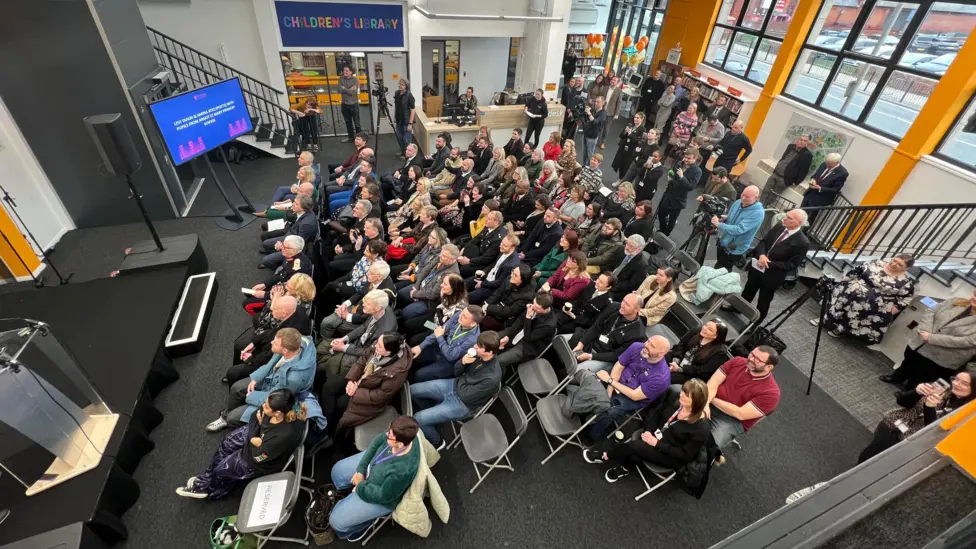
'Spellow Library, in Walton, Liverpool, was forced to close when it was set alight on 3 August amid unrest which swept across the country after the stabbings in Southport.

The city was determined to not let hatred win, with £250,000 raised and books being donated from the Queen and a host of celebrities.

An official ceremony marked the re-opening, including readings from Liverpool poet Levi Tafari while a letter from Queen Camilla was also read aloud.' ..


Claire Hamilton/BBC: An official ceremony marked the re-opening on Thursday morning


Break the Windows on Learning and
New Ones Will be Found to Look Out on the World.


INDIVIDUAL
|
INTERPERSONAL : SCIENCES              
humanistic ------------------------------- mechanistic
SOCIOLOGY : POLITICAL   
|
GROUP

My Learning
My Literacies


'The World(s) of Learning'

Society - Community
Social Justice

Justice
Social/Public Services


Previously:

Related post: 'forms of Hygiene'

literature : window

Sunday, September 15, 2024

Interview study: Exploring psychological safety in inpatient mental health settings


Wednesday, August 28, 2024

Call for Participation in NHS Survey

ARE YOU WORKING IN THE NHS? IF SO, HELP NEEDED URGENTLY! Please read this email. 

Glasgow Caledonian University is inviting NHS Staff across the UK to participate in this doctoral research survey to analyse the impact of responsible leadership on improving well-being and organisational trust among NHS Staff members. 


To be eligible, you must be an NHS staff member from any area of the UK in any job role. The survey collects no recognisable information and is wholly anonymised to protect participant privacy and confidentiality. It has received full ethical approval, will take around 10 minutes and will help provide an improved understanding of the area of well-being in the profession.


Please forward this survey link to everyone in your contacts working for NHS. This will help gain more responses, increasing the study's reach and validity. Your help is highly appreciated, and we thank you in advance.


Here's the link for the participant information sheet and survey: 

https://app.onlinesurveys.jisc.ac.uk/s/caledonian/impact-of-responsible-leadership-on-employee-well-being-and-org


Warm wishes
Umm E Habiba Tariq (Chief Investigator)


Umm E Habiba Tariq (she/her) | PhD Candidate, MSc, BBA (Hons)

Occasional Lecturer | Department of HRM | Glasgow School for Business and Society (GSBS)


Glasgow Caledonian University is a registered Scottish charity, number SC021474

My source: Nurse-Philosophy List.

Wednesday, July 31, 2024

WHO online survey on maternal well-being framework - ENG, FR and SPA translations available

 ------- ENGLISH ------

Dear colleague,

You are invited to participate in the development of the World Health Organization (WHO) maternal well-being framework through an online survey. 

This consultation is one step in a broader process led by the WHO Department of Maternal, Newborn, Child and Adolescent Health and Ageing (MCA) towards creating a comprehensive framework that supports maternal well-being across diverse environments and cultures. Based on the results of a scoping review of the literature and an expert consultation held in May 2023, a preliminary framework has been developed including a definition, domains and subdomains. WHO/MCA is now organizing multiple consultations which objectives are listed below. 

What is the purpose of the survey?

  • Ensure comprehensive coverage of all critical elements of the framework and identify potential gaps in the definition, domains and framework of maternal well-being.
  • Evaluate the framework’s applicability across various settings and cultures.
  • Foster collective agreement and consensus among key stakeholders.

Who can take part to this survey?

Any individual or organization who has interest in maternal health and well-being. This includes, but is not limited to:

  • Representatives of women's groups
  • Health workers (midwives, OBGYN, nurses, neonatal nurses, paediatricians, psychiatrists, psychologists, community health workers...)
  • Experts in human and sexual and reproductive rights, public health, health promotion, gender, mental health, economics, humanitarian, etc.
  • Academics and researchers 
  • Government organizations
  • National civil society organizations / NGOs
  • International agencies / UN agencies
  • Private sector

How to participate in this survey?

Please click on the following link: Survey Link

We expect this survey will not take longer than 15 minutes to complete. It is available in English. 

The survey will be open until 17 August 2024. 

We would be grateful for your response to this survey and your kind help in circulating to your colleagues and networks.

Please reach out to Justine Le Lez - lejus AT who.int with any further questions. 

Best regards,

On the behalf of the Department of Maternal, Newborn, Child and Adolescent Health and Ageing (WHO/MCA)


------- FRENCH / FRANCAIS ------


Bonjour,

Vous êtes invité·e à participer à l'élaboration du cadre conceptuel du bien-être maternel de l'Organisation mondiale de la santé (OMS). 

Cette enquête est une étape d'un processus plus large dirigé par le Département de la santé maternelle, néonatale, infantile et de l'adolescent et du vieillissement (MCA) de l'OMS, visant à créer un cadre conceptuel exhaustif soutenant le bien-être maternel dans divers environnements et cultures.

Sur la base des résultats d’une revue de la littérature et d’une consultation d’experts tenue en mai 2023, un cadre conceptuel préliminaire a été élaboré, comprenant une définition, des domaines et sous-domaines. L’OMS/MCA organise actuellement plusieurs consultations, dont les objectifs sont énumérés ci-dessous.

Quel est l’objectif de l’enquête ? 

  • Assurer une couverture exhaustive et identifier d'éventuelles lacunes dans le cadre actuellement proposé.
  • Évaluer l'applicabilité universelle et l'adaptation du cadre conceptuel à divers contextes et cultures.
  • Favoriser un consensus collectif afin que le cadre conceptuel reflète reflètent une large gamme de perspectives et d'idées

Qui peut participer à cette enquête ? 

Toute personne ou organisation intéressée par la santé maternelle et le bien-être. Cela inclut, sans s’y limiter :

  • Des représentants de groupes de femmes
  • Des professionnels de santé (sages-femmes, gynécologues-obstétriciens, infirmières, infirmières puéricultrices, pédiatres, psychiatres, psychologues, agents de santé communautaires…)
  • Des experts en droits humains, droits sexuels et reproductifs, santé publique, promotion de la santé, genre, santé mentale, économie, santé humanitaire, etc.
  • Des universitaires et chercheurs
  • Des organismes gouvernementaux
  • Des organisations nationales de la société civile / des ONG
  • Des agences internationales / agences des Nations unies
  • Le secteur privé

Comment participer à cette enquête ? 

Veuillez cliquer sur le lien suivant : Lien vers l’enquête

Nous estimons que cette enquête ne prendra pas plus de 15 minutes à compléter.  

L’enquête sera ouverte jusqu’au 25 août 2024.

Nous vous serions reconnaissants de bien vouloir y répondre et de la diffuser auprès de vos collègues et réseaux.

Pour toute question, n'hésitez pas à contacter Justine Le Lez.


Cordialement,

Au nom du Département de la santé maternelle, néonatale, infantile et des adolescents et du vieillissement (OMS/MCA)


------- SPANISH / ESPANOL -----

Está invitado a participar en la elaboración del marco conceptual del bienestar materno de la Organización Mundial de la Salud (OMS). 


Se le invita a participar en el desarrollo del marco de bienestar materno de la Organización Mundial de la Salud (OMS). Esta encuesta es un paso en un proceso más amplio liderado por el Departamento de Salud Materna, del Recién Nacido, del Niño, del Adolescente y del Envejecimiento (MCA) de la OMS hacia la creación de un marco integral que apoye el bienestar materno en diversos entornos y culturas.

Con base en los resultados de una revisión de la literatura y una consulta de expertos realizada en 2023, se ha desarrollado un marco preliminar que incluye una definición, dominios y subdominios del bienestar materno.  La OMS/MCA está organizando actualmente varias consultas, cuyos objetivos se enumeran a continuación. 


¿Cuál es el objetivo de la encuesta? 

· Garantizar una cobertura exhaustiva e identificar posibles brechas en el marco propuesto actualmente. 

· Evaluar la aplicabilidad universal y la adaptación del marco conceptual a diversos contextos y culturas. 

· Fomentar un acuerdo colectivo para que el marco conceptual refleje una amplia gama de perspectivas e conocimientos. 

¿Quién puede participar en esta encuesta? 


Cualquier persona u organización interesada en la salud materna y el bienestar. Esto incluye, sin limitarse a: 

·  Representantes de grupos de mujeres

· Profesionales de la salud: matronas (parteras profesionales/obstetras/obstetricias/comadronas), ginecólogos-obstetras, enfermeras, enfermeras pediátricas, pediatras, psiquiatras, psicólogos, agentes de salud comunitarios…

· Expertos en derechos humanos, derechos sexuales y reproductivos, salud pública, promoción de la salud, género, salud mental, economía, salud humanitaria, etc.

· Académicos e investigadores

· Organismos gubernamentales

· Organizaciones nacionales de la sociedad civil / ONGs

· Agencias internacionales / agencias de las Naciones Unidas

·  El sector privado

¿Cómo participar en esta encuesta?

 Por favor, haga clic en el siguiente enlace: enlace a la encuesta

Estimamos que esta encuesta no tomará más de 15 minutos para completar. 

La encuesta estará abierta hasta el 25 de agosto de 2024.


Le agradeceríamos que respondiera y difundiera la encuesta entre sus colegas y redes.

Para cualquier pregunta, no dude en ponerse en contacto con Justine Le Lez.


Atentamente, 

En nombre del Departamento de Salud Materna, Neonatal, Infantil y del Adolescente y del Envejecimiento (OMS/MCA)