Hodges' Model: Welcome to the QUAD: mind

Hodges' model is a conceptual framework to support reflection and critical thinking. Situated, the model can help integrate all disciplines (academic and professional). Amid news items, are posts that illustrate the scope and application of the model. A bibliography and A4 template are provided in the sidebar. Welcome to the QUAD ...

Showing posts with label mind. Show all posts

Monday, September 21, 2026

Violence is a . . .

individual
|
INTERPERSONAL
: SCIENCES             
humanistic ------------------------------- mechanistic
SOCIOLOGY : POLITICAL   
|
group

violence
is a
STATE of mind:
and ...?


Photo: Nidal Eshtayeh


My source: Financial Times. 9 September, 2026, p.1.

Previously: 'violence' : 'law' : 'power'

Friday, September 18, 2026

Euclidean or Projective Care?

How many dimensions does a written - narrative record have?

Sketching out some ideas, I asked the question on Google and as usual an AI Overview response followed - snippet:
AI Overview

A physical written record has two primary spatial dimensions (length and breadth/width) as a flat document, or three dimensions (including thickness or depth/height) when considering its physical form or binding. [1, 2]

In archival and Records Continuum theory, a written record exists dynamically across four conceptual dimensions: [1, 2].

I put the question to the Records Management list with the above snippet and received several useful suggestions and sources. Perhaps I can share that at a future point? 

Acutely aware of not pursuing maths and category theory for its own sake, the query was driven by an attempt to look at Hodges' model in mathematical terms. Starting, rather obviously with the models structure and axes. When the model is assembled, as per many posts, the vertical axis:

INDIVIDUAL
|
GROUP

- shouts out the issue of parity and the distinction between mind and body. It does this at the individual and collective level. If we were to draw a silo, a cylinder springs to mind, and there are specific reasons for silos adopting this shape. Descartes gives us the perfect excuse, in the ongoing legacy. 

     Mathematical Visions

The question above came up from Joan L. Richards book 'Mathematical Visions' (c/o Lancaster Univ. library). Euclidean and the emergence of projective geometry is described. There is an interplay between 2D and 3D representation, that made me think about the health record and its dimensions. Not in a dataset sense (multi-dimensional), more generally and concretely(?). A patient's record on paper has physical dimensions (A4), there is a flow. An EHR has its virtual dimensions (discuss!). Abstractly the content is a time machine. At some point in a health encounter it is a literal 'history', the level of detail in accord with the context. The record might present the problem, premorbid situation, diagnosis, current state, observations and prognosis and much more.

I can revisit this, Richards provides a series of figures. We progress from two distinct circles (my silos) through to examples with a discussion of continuity and projection that sees the circles touching, then intersecting. This is a radical axis.

Richards, Joan L. (1988), Mathematical Visions: The Pursuit of Geometry in Victorian England, Boston: Academic Press, ISBN0-12-587445

Book cover: Amazon.

Monday, August 31, 2026

Reflection: Turn it over ...

individual
|
INTERPERSONAL
: SCIENCES             
humanistic ------------------------------- mechanistic
SOCIOLOGY : POLITICAL   
|
group
In your mind


in your hands

with-in your community


in your (cold) warm collective heart, wealth, or technology?


Previously: 'wealth' : 'poverty' : 'justice'

Tuesday, August 25, 2026

Medicine - Mathematics & History

'We now come to the input of mathematics into medical history, and to the related questions of arithmetic and quantification, ratio and proportion, geometrical argument and diagrams, and probability. Mathematics (consisting in arithmetic, geometry, astrology and music) had an established place in the quadrivium of the medieval arts course; its application to medicine is demonstrated in such textbooks as the Articella, which include treatises on weights and measures, and in studies of proportion and ratio such as those of the medieval Oxford calculators which Italian doctors among others caused to be revived at the beginning of our period. In the sixteenth century, it was a vigorously debated subject; there is a well-documented discussion of the certainty of mathematics, concerning its status in respect to the logical adequacy of its proofs, in which some natural philosophers and doctors (notably Cardano) take part. It will come therefore as no surprise that it was prescribed for doctors by most Renaissance pedagogical writers;  this prescription is often specifically linked to Galen's geometrical (axiomatic) method whose operations are the constitution of objects from elements, the comparison of existing objects and their reduction into their constitutive elements.

Associated with mathematics are diagrams, that is, abstract quantified spatial representations. There is a modern debate about the contribution of technical innovations in illustration in the Renaissance (most notably perspective) to the scientific revolution: this is only relevant here insofar as some participants in this debate argue for the importance of diagrammatic symbolisation of mental abstractions above those, like perspective, which are still representations of the real world, and see the former as a step on the path to full algebraic notation of geometry. Not all Renaissance thinkers were persuaded of their usefulness: Argenterio describes the diagrams of Manardo and Akakia reproduced below as 'vain and false tables and figures'; but I shall argue here that they were related to the uptake of doctors from the arts course insofar as well-known logical diagrams reproduced above (4.3:3) were adapted by them for their own purposes.' pp.171-172.

Maclean, Ian. 2002. Chapter 5, Beyond logic: geometry, proportion, quantity. In Logic, Signs, and Nature in the Renaissance: The Case of Learned Medicine. Cambridge/New York: Cambridge University Press.

Related to ongoing reading, Maclean provides two (among several) historical illustrations (with apologies for the quality) on pp.174-175, the first is from the Wellcome Collection:

Dubois, Jacques, 1478-1555 (Boe͏̈, Jacques, Bois, J. d., Boë, J., del, Boë, J., Del Boë, J., DelBoe͏̈, J., . . . Sylvius/de Bois). (1548). Methodus sex librorum galeni in differentiis et causis morborum et symptomatum in tabellas sex ordine suo conjecta paulo fusius ne brevitas obscura lectorem remoretur & fallat. de signis omnibus medicis, hoc est salubribus, insalubribus, & neutris, commentarius / ... per jacobum sylvium ..Paris: Retrieved from https://www.proquest.com/books/methodus-sex-librorum-galeni-differentiis-et/docview/2090356749/se-2

Jacobus Sylvius, 1539

Which Maclean then translates / interprets (p.174):

Maclean. Figure 5.1, p.174.

'Manardo goes further, and causes and symptoms adapts the square of contraries to represent not only all the possible combinations of temperaments (combinations of cold and hot and wet and dry are cleverly excluded) but also inserts a mediate point to represent the absolutely temperate body: see fig. 5.2.
This adaptation of the square of contraries (which has precedents in the medieval period) shows the appropriation for their own use by doctors of the logical instruments at their disposal.

As we have seen, it is a feature of medical thinking to take into account many circumstantiae or variables, and, over time, the numbers of variables taken into consideration increases.' p.174-175.

Figure 5.2 Giovanni Manardo, p.175.

individual
|
INTERPERSONAL
: SCIENCES             
humanistic ------------------------------- mechanistic
SOCIOLOGY : POLITICAL   
|
group

quality

logic

quantity
past - present - future
diagrams

symptoms - signs


subjective

objective

Previously: 'medicine' : 'history' : 'diagram'

Sunday, March 15, 2026

ii 'GlobalMinds' - NHS study severe mental health problems

GlobalMinds has clearly stated goals and objectives. Three challenges that are highlighted:

  1. Diagnosis can take years
  2. Treatments target symptoms, not underlying causes
  3. Half of the prescribed drugs cause severe side effects

These are, to put it mildly, highly contested issues. Diagnosis in mental health/illness is problematic in several respects, for example:

INDIVIDUAL
|
    INTERPERSONAL    :     SCIENCES               
HUMANISTIC --------------------------------------  MECHANISTIC      
SOCIOLOGY  :   POLITICAL 
|
GROUP
a) Lack of Theoretical, Practical and Philosophical(?) agreement between: 
  • Psychology
  • Psychiatry
b) Individuals are self diagnosing
c) Access to mental health services can be highly structure - single-point entry
d) The evidence-base for treatment of mental illness is growing,but remains contested.
e) Perhaps there is a phenomena of people getting stuck, with not just a label, but a mindset?

a) Loss of trust in classification/coding schemes:
  • DSM
b) Proposed alternatives in -
c) Data defined scientifically:
  • existing diagnosis
  • biomarker

a) Increased awareness of mental illness, ADHD..
b) Behavioural explanations for mental illness
c) The determinants of mental illness (unlike, health?) are poorly researched (hence understood)
d) The vocabulary of mental illness (psychiatry) is more widely disseminated, hence used; not necessarily with full contextual understanding
e) Stigma associated with mental illness is nevertheless ongoing.


a) Reduced economic productivity
b) The socio-economic phenomena of NEETs
c) Increased demand on welfare benefits
d) The role of primary care - GPs
     - fit / sick notes
     - 'functional assessors' (Who is best placed?)
e) Loss of mental health beds, community compensations incomplete.


This will be a space to watch: and related (global) initiatives? 

Viewed from Hodges' health career - care domains - model, it appears an individual's life chances and expectations (family, and educational experience?) can result in their life chances being frozen?

Wednesday, February 18, 2026

Move Over LLMS! AI Legends Yann LeCun and Alex LeBrun Debut AMI Labs' Bold Ambitions for World Models in Healthcare


My source: https://x.com/OffCallDotCom/status/2022708074105242035?s=20

Sunday, February 08, 2026

Intelligence - mechanistically speaking^

INDIVIDUAL
|
    INTERPERSONAL    :     SCIENCES               
HUMANISTIC --------------------------------------  MECHANISTIC      
SOCIOLOGY  :   POLITICAL 
|
GROUP
Mental
Intelligence


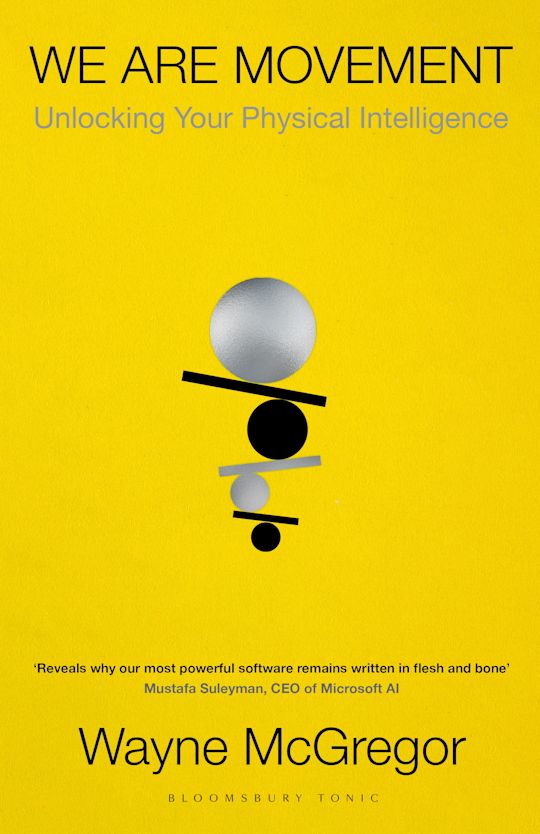
We Are Movement - Unlocking Your
Physical Intelligence

... ever increasing

'artificial' intelligence
 
here . . .?

"We?

 Yes... We! 

   We are  
a                       MOVEMENT!"


Wayne McGregor (2026) We are Movement: Unlocking Your Physical Intelligence. London: Bloomsbury. (Book cover) https://www.bloomsbury.com/uk/we-are-movement-9781526629531/

My source: Nadia Beard, Our bodies, ourselves. Life&Arts, FTWeekend, 17-18 January, 2026. p.9. 

Previously: 'movement' : 'dance' : 'intelligence' : 'art' : 'body' : 'AI'

^. . . help me find (a) the notation? 

Thursday, February 05, 2026

c/o Jayne Wilton: Reflex-ive :: Reflection - Breathe : DO - REPEAT - WHILE

INDIVIDUAL
|
    INTERPERSONAL    :     SCIENCES               
HUMANISTIC --------------------------------------  MECHANISTIC      
SOCIOLOGY  :   POLITICAL 
|
GROUP

'Many of us will have experienced playing with the interaction of our breath on shiny surfaces such as windows and mirrors, allowing us temporary fields of condensation in which to doodle thoughts or messages. In emergency situations a mirror or shiny surface is held in front of the mouth of a subject to confirm whether or not they are breathing. The Breathe series makes use of these dynamics.

The breath of a series of  individuals was captured on a shiny copper surface and then etched to create a negative of the breath where it sat on the copper plate. The result is a series of evocative landscapes. This work employs and yet subverts traditional printing processes. The inscription of spent breath onto precious metal immortalises a discharge and presents an alternative to portraiture.'

Jayne
Reflection - Reflexive
 
Resuscitation 

 
mirror
Wilton

- is a visual artist who explores the breath as a unit of exchange between people and their environments. Her practice uses darkroom processes with drawing, photography, video and sound to capture the usually invisible trace of breath as it moves across a surface. www.jaynewilton.com


My source and thanks to Jayne Wilton: 

Jayne Wilton. Breathe, Artist's Statement. Resurgence & Ecologist, July/August2023: 339: p.47 & (p.49 image).

Previously: 'breathing' : 'reflex' : 'reflection' : 'art'

Wednesday, December 24, 2025

Person-centredness, Holistic approach, Prevention c/o Hippocrates

“It is more important to know what sort of person 
has a disease than to know 
what sort of disease a person has.” 
Hippocrates

 
Individual
|
      INTERPERSONAL    :     SCIENCES               
HUMANISTIC  --------------------------------------  MECHANISTIC      
 SOCIOLOGY  :    POLITICAL 
|
Group
To say that Hippocrates was ahead of his time is a gross understatement. Hippocrates recognised the importance of person-centredness and prevention, and contributed to the emergence of several medical specialties. (Kostakopoulos, et al., 2024). 


'Holistic Approach

One of the most significant innovations of the founding father of clinical medicine was the holistic approach for the diagnosis and treatment of disease. This approach is based on the assumption that the human body is a sum of many parts that function in harmony and that if one part is ill, the balance will be affected and the whole person will suffer. Hippocrates considered that patients consisted of body, mind, and spirit and this is also the modern physicians' approach when treating a disease [2].'
 

Health and social care are still playing catch-up. The vitriolic 'debate' on X over psychiatry - anti-psychiatry and DSM-X. The total inability now to shift to preventive healthcare due to the perverse, entrenched economic incentives, which facilitate increasing inequity, inequality.

Whichever Government does switch to preventive medicine, perhaps other governments had better take note? 

I think Hippocrates would have approved - wholeheartedly - of Hodges' model. 


'Prevention of Disease

Another important aspect of Hippocrates' works that is widely applied in 21st-century medicine is the prevention of disease. The phrase “Κάλλιον το προλαμβάνειν του θεραπεύειν,” which means that it is better to prevent than to treat a disease, was the cornerstone of his teachings and is based on the observation that healthy Mediterranean diet and daily moderate physical activity can prevent disease. The ancient Greeks believed that all maladies started from the gut and that walking was the best available medicine [2].'


Kostakopoulos NA, Bellos TC, Katsimperis S, Tzelves L. Hippocrates of Kos (460-377 BC): The Founder and Pioneer of Clinical Medicine. Cureus. 2024 Oct 1;16(10):e70602. doi: 10.7759/cureus.70602. PMID: 39483540; PMCID: PMC11526839.

Gabbard, G. The Person with the Diagnosis. Psychiatric News. 49;6. 19 March 2014. 
https://doi.org/10.1176/appi.pn.2014.3b19.

Brigić, A., Hasanović, M., Pajević, I., Aljukić, N., Hamidović, J., & Jakovljević, M. (2021). Principles of Hippocratic Medicine from the Perspective of Modern Medicine. Psychiatria Danubina, 33(Suppl 4), 1210–1217. 

See also: 'medicine' : 'person' : 'diagnosis' : 'prevention'

Friday, November 14, 2025

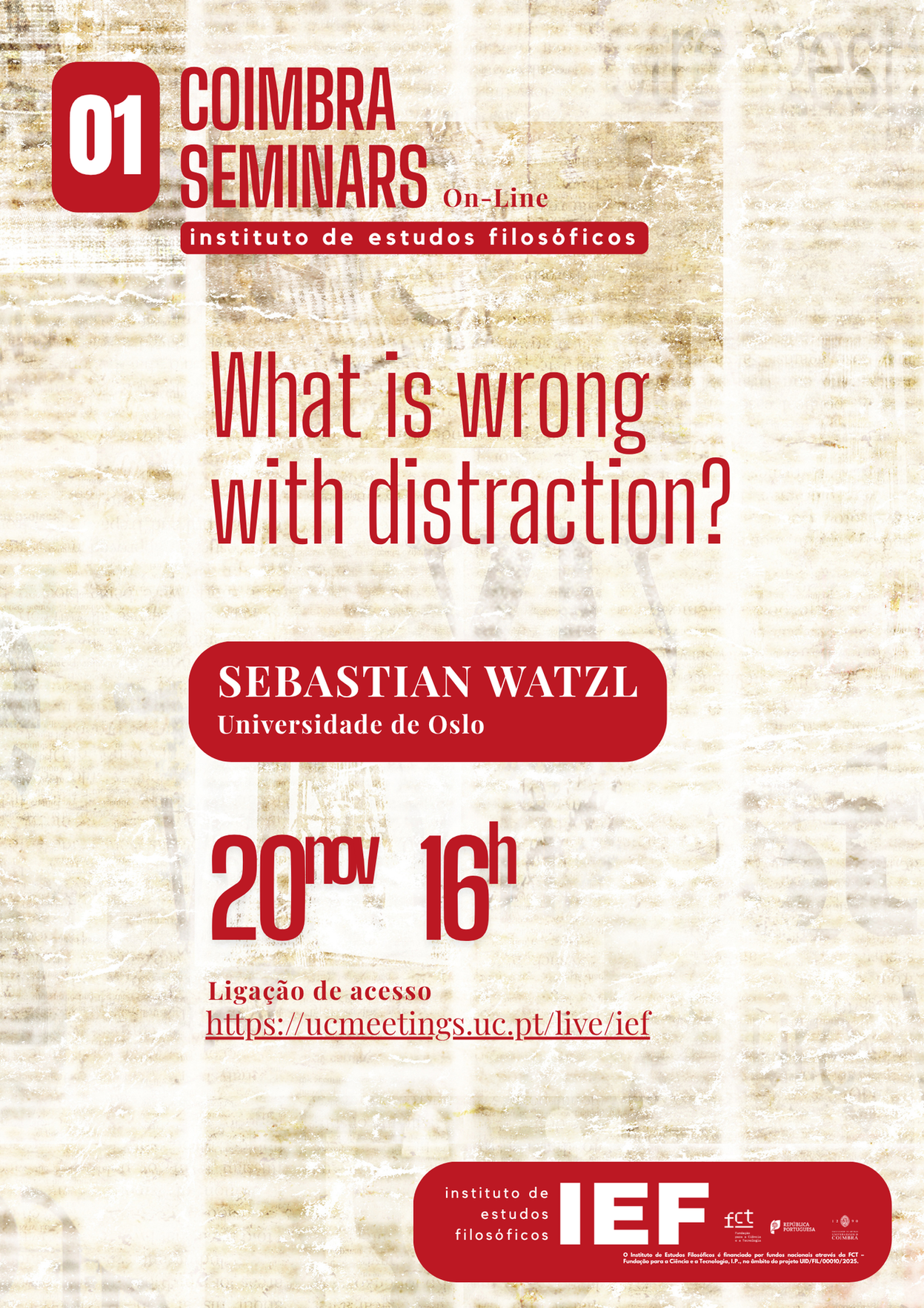
Filosofia - What is wrong with distraction? Sebastian Watzl c/o IEF


'Sebastian Watzl is a professor of philosophy at the University of Oslo (Norway). He specializes in philosophical issues about attention. He is the author of Structuring Mind (OUP), and recipient of an ERC grant on GoodAttention.

His research investigates the nature of attention, how it shapes consciousness, and the normative role and assessment of attention. Some of his current work is on the ethics of attention, the commodification of attention and its ethical assessment, the epistemic role of attention, and the use of attention as a political weapon.'

Sebastian Watzl - UoO Norway


Website: https://www.uc.pt/fluc/ief/agenda/coimbra-seminars-01/
LinkedIn: https://www.linkedin.com/posts/iestudosfilosoficos_ief-filosofia-philosophy-activity-7394448924947779584-fLSV
Instagram: https://www.instagram.com/p/DQ96aNVka0A/?igsh=MXJsejg0ZWE4bnBvZw==
Facebook: https://www.facebook.com/share/p/16uSVu9mNK/?mibextid=wwXIfr


individual
|
INTERPERSONAL : SCIENCES
humanistic -------------------------------------------  mechanistic
SOCIOLOGY : POLITICAL
|
group-population

My Mind
My Attention
My choice(s)?

Sources of distraction
Devices - access
Exposure - time
Social media
Assessment of attention
Children's education

Corporate Ethics of Attention
'Attention economy'
Policymakers & Policy
Attention as a political weapon


C/o IEF and thanks to Marta Santos (Secretariat).

Tuesday, November 04, 2025

Descartes - alive and well ...

... within the Incident Reporting System

'Policy guidance on recording patient safety events and levels of harm 
This guidance is for users of the new Learn from Patient Safety Events (LFPSE) service, to provide context and guidance on selection of appropriate categories when recording incidents. It focuses on which Event Type is appropriate for different circumstances, and how to select the most appropriate options for the Levels of Harm categorisation required within Patient Safety Incidents.'

Previous harm grades

No harm
Low harm
Moderate harm
Severe harm
Death


individual
|
INTERPERSONAL : SCIENCES
humanistic -------------------------------------------  mechanistic
SOCIOLOGY : POLITICAL
|
group-population
New psychological harm grades

No psychological harm
Low psychological harm
 Moderate psychological harm
Severe psychological harm
n/a

New physical harm grades

No physical harm
Low physical harm
Moderate physical harm
Severe physical harm
Fatal


Q. 'n/a'. Discuss.

CPD reading.                      

Friday, October 24, 2025

Come on Healthcare: catch up will you!

Within philosophy it is recognised that Immanuel Kant provided a means by which the rationalists and empricists can be reconciled. Some background:

In philosophy, rationalism is the epistemological view that "regards reason as the chief source and test of knowledge"[1] or "the position that reason has precedence over other ways of acquiring knowledge",[2] often in contrast to other possible sources of knowledge such as faith, tradition, or sensory experience. More formally, rationalism is defined as a methodology or a theory "in which the criterion of truth is not sensory but intellectual and deductive".[3]  https://en.wikipedia.org/wiki/Rationalism
In philosophy, empiricism is an epistemological view which holds that true knowledge or justification comes only or primarily from sensory experience and empirical evidence.[1] It is one of several competing views within epistemology, along with rationalism and skepticism. Empiricists argue that empiricism is a more reliable method of finding the truth than purely using logical reasoning, because humans have cognitive biases and limitations which lead to errors of judgement.[2] Empiricism emphasizes the central role of empirical evidence in the formation of ideas, rather than innate ideas or traditions.[3] Empiricists may argue that traditions (or customs) arise due to relations of previous sensory experiences.[4]

Historically, empiricism was associated with the "blank slate" concept (tabula rasa), according to which the human mind is "blank" at birth and develops its thoughts only through later experience.[5] https://en.wikipedia.org/wiki/Empiricism

If health and social care, must be evidence-based, then as far as Hodges' model is concerned we are then duty-bound to use the most readily available 'evidence' to us, including (while taking liberties?):

  • The structure of national health and social care organisations (NHS, DHSS ...)
  • Physical infrastructure
  • Human Resources Organisation
  • Unions and Labour relations
  • Texbooks, journal papers, conferences
  • Organisational structures from the regional to the local
  • Professional bodies and governance of licensing/registration
  • Curricula that students follow^
  • Models, frameworks, teaching and learning tools and methods
  • Data, statistics, information and reporting (national, international)
  • Research projects ongoing (whatever scale, methods, methodology)
  • Accounts from lived experience of patients, carers and public (^and students)
  • Policy
  • Funding
  • Law relating to Health and Social Care
  • Public (Mental) Health? Discuss
  • Media (Social) Control, Advertising
  • . . .

Hodges' model: Structure and Content


Using this evidence, we still see the Cartesian divide, the mind-body distinction writ large in health and social care. The continuing impact is evident in theory, practice, (hence) lived experience, policy and managment. Since its creation in the 1980s, Hodges' model mirrors (literally) this philosophical, epistemological and ontological legacy, thereby acknowledging the ancient history of medicine, and 'modern' development of healthcare and nursing. Through this device, Hodges' model can facilitate debate, critique, reflection, and critical thinking; to encourage progress in our thought, motivations, action and subsequent evaluation.


This explains the structure of Hodges' model and predicts the range (contextual signature) of content when the model is applied.

Evidence permitting of course!

See also: BBC The Great Philosophers:

Series 1: 4. Descartes

Series 1: 5. Spinoza and Leibniz

Series 1: 8. Kant

n.b. I video taped this marvellous series when first screened. When studying for my BA(Hons), audio taped, they also provided a great learning resource in the car. The programmes are on BBC 4 (UK) once again, but are readily accessible.

Thursday, October 23, 2025

Free online mindfulness programme & ¥3800 (≈ £20) reward - research study

Dear all,

My name is Francesco Saldarini. I am a postdoctoral fellow at Waseda University (Japan) and a visiting researcher at the University of Surrey. My research focuses on investigating the (potential) effects of mind-body practices (e.g., mindfulness and martial arts) on psychology.

I am running a longitudinal intervention study investigating the effects of a digital mindfulness-based programme on a variety of health and cognitive outcomes and I would like to invite you to participate.

The study takes place entirely online and will require you to participate in two or three main experimental sessions, when you will be asked to complete a task and answer some questions. Each session will take approximately 40 minutes to complete. Moreover, you will get to participate in an online NHS-approved mindfulness-based programme! The programme is pre-recorded and you can flexibly choose when to attend a session. I will also reward you ¥3800 (≈ £20) for your participation.

This study was approved by the Waseda University research ethics committee (REF : 2024 - 314).

If you are interested in participating in the study and wish to know more about it, please contact me at:
w.iac23317 AT kurenai.waseda.jp.

Basic inclusion criteria:

- Currently feeling stressed
- Between 18 and 65 years of age
- Willing to complete a screening questionnaire
- No previous mindfulness experience
- Willing to practice mindfulness for minimum 2 hours per week for 4 weeks

Thank you,

Francesco Saldarini

My source: https://www.jiscmail.ac.uk/cgi-bin/webadmin?A0=VIRTUAL-METHODS

Tuesday, August 19, 2025

Dementia in 4x5 by Katherine Hubbard

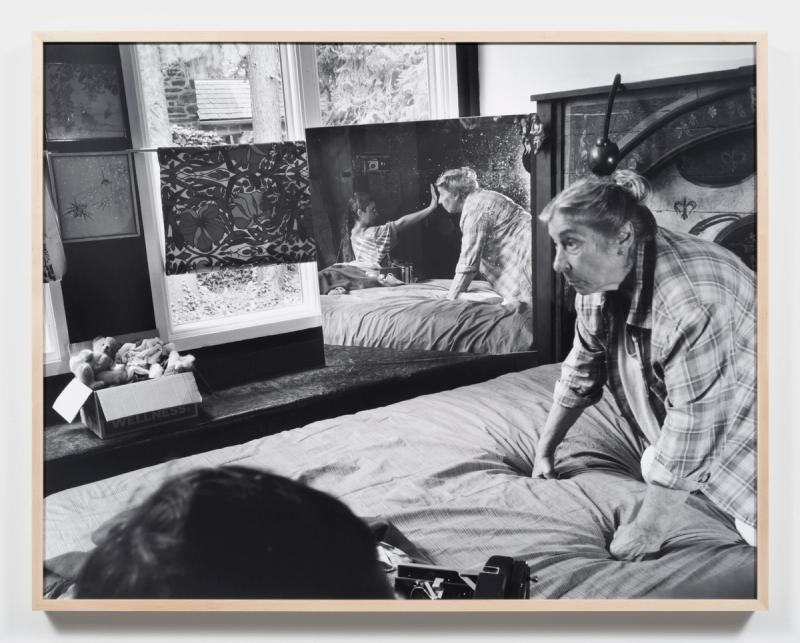
"The American interdisciplinary artist Katherine Hubbard has spent the past five years documenting her relationship with her ageing mother, Antonette Berger, who in 2020 began exhibiting the first signs of memory loss. Her book The Great Room, set between the four walls of Berger's home in Philadelphia, is a culmination of grief and intimacy, as Hubbard steps into her role as caregiver. Using two large- format 4x5 cameras (which she is both behind and in front of) and drawing on her background n performance art, Hubbard transforms the once safe, domestic space into a psychological playground as the pair navigate their new reality. ...
In this portrait, Hubbard sits with her mother on her bed. Their bodies are reflected in a square nirror offset by a series of other square and rectangular objects (picture frames, windows, the headboard) which fragment the viewer's gaze. "This photograph was taken before she had a diagnosis,' Hubbard tells me. "It was a very confusing time, with a lot of uncertainty and frustration between us. ... 
"І am using the camera as а means of creating time with my mom apart from the brutal task of managing her," Hubbard writes. And to the woman who gave her life: "You might like to know that, when І think of you and see you, it's as a whole person."  
Inès Cross. FTMagazine. 

Individual
|
      INTERPERSONAL    :     SCIENCES               
HUMANISTIC  --------------------------------------  MECHANISTIC      
 SOCIOLOGY  :    POLITICAL 
|
Group
one fifty one (hand to face), 2021. Silver gelatin photograph

'The
Great
Room'


Collaboration

Care in the Community

Direction

Gaze


Book: 
h290 x w219 mm. 88 pages
Text by Katherine Hubbard. Hardback. £46.00

https://loosejoints.biz/collections/current-titles/products/the-great-room

Photograph: https://companygallery.us/ - https://companygallery.us/exhibitions/the-great-room

Book cover: Amazon
https://www.amazon.co.uk/Katherine-Hubbard-Great-Room/dp/191271969X


My source:
Inès Cross. Katherine Hubbard, FTMagazine. August 9th 2025, #1137. pp.10-11.
Ack. Antonette Berger (mother ...).

Wednesday, August 13, 2025

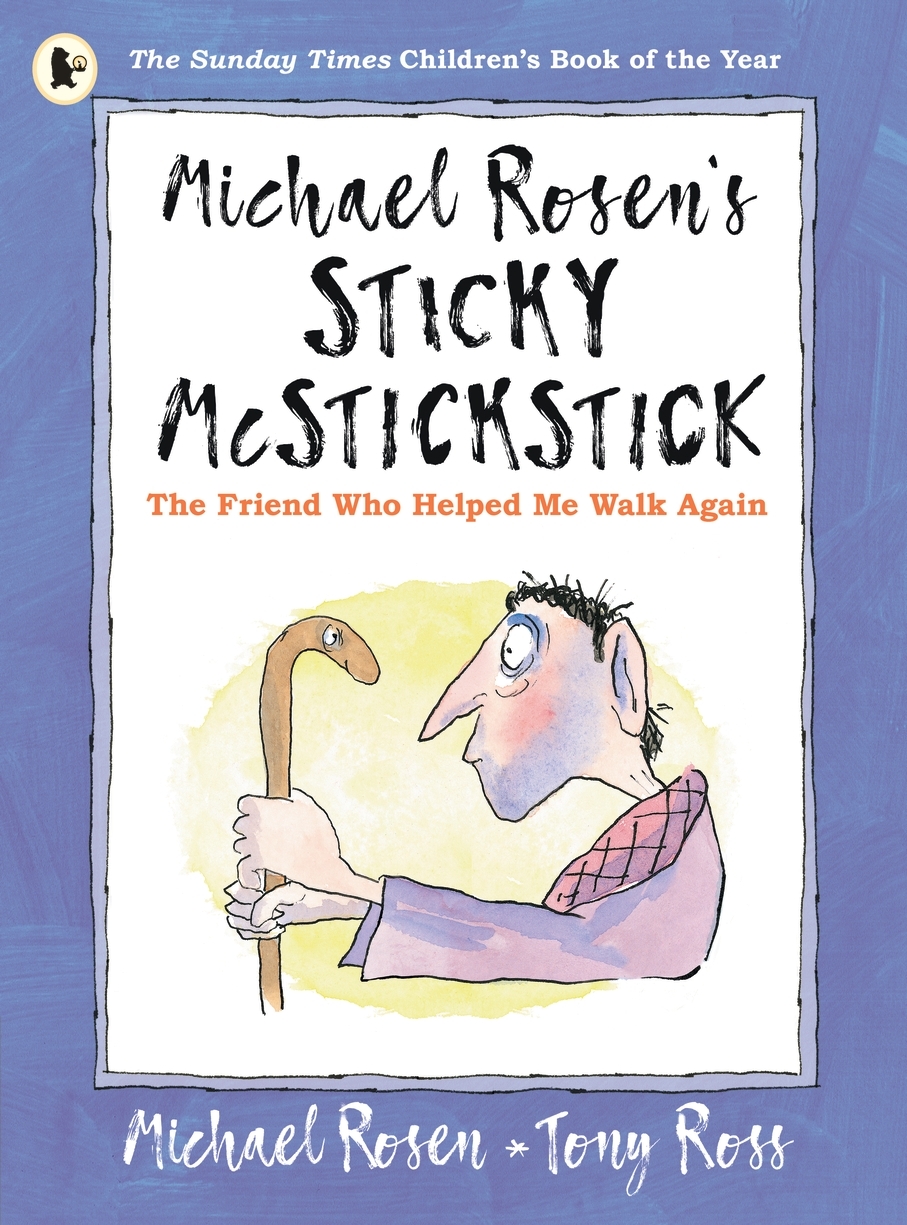
Jackanory: Parity of Esteem 'read' c/o Mr Rosen

Individual
|
      INTERPERSONAL    :     SCIENCES               
HUMANISTIC  --------------------------------------  MECHANISTIC      
 SOCIOLOGY  :    POLITICAL 
|


My source: 
Shop window of The Addyman Annexe - bookshop, Castle St, Hay-on-Wye, 12th August 2025.

Images: 
'STICKY McSTICKSTICK' - https://www.walker.co.uk/
Illustration - https://www.walker.co.uk/author/tony-ross/

Illustration - https://www.walker.co.uk/author/quentin-blake/

Previously: 'parity'

Tuesday, June 03, 2025

Self, ego, life and death

The INDIVIDUAL - GROUP axis continues to fascinate:


individual
|
INTERPERSONAL : SCIENCES
humanistic ------------------------------- mechanistic
SOCIOLOGY : POLITICAL
|
group

SELF - IDENTITY - PERSONHOOD

ego superego id

mood - depression - mania

psychoactive substances

ego death - reset, reconstitition, re-birth?

NATURE

 personhood -
rivers, mountains, trees, land

medicine(s)

psychedelics

cultural identity, knowledge

social history, practices

corporate personhood

law 'person'


See also:

Pahnke, Walter N. “The Psychedelic Mystical Experience in the Human Encounter with Death.” The Harvard Theological Review 62, no. 1 (1969): 1–21. http://www.jstor.org/stable/1509131.

Adler, Nathan. “Ethics, Ethos, and Actualization: The Paradigm of the Antinomian Therapies.” Issues in Criminology 5, no. 1 (1970): 85–99. http://www.jstor.org/stable/42912546.

Blainey, Marc G. “Forbidden Therapies: Santo Daime, Ayahuasca, and the Prohibition of Entheogens in Western Society.” Journal of Religion and Health 54, no. 1 (2015): 287–302. http://www.jstor.org/stable/24485257.

Nail, Thomas. “How to Read the Nature of Things.” In Contemporary Encounters with Ancient Practice, edited by Abraham Jacob Greenstine, Ryan J. Johnson, and Dave Mesing, 1st ed., 299–321. Edinburgh University Press, 2025. http://www.jstor.org/stable/10.3366/jj.17381661.21.

Corporate personhood
https://en.wikipedia.org/wiki/Corporate_personhood

Thursday, May 08, 2025

Sets in Hodges' model

INDIVIDUAL
  |
     INTERPERSONAL    :     SCIENCES               
HUMANISTIC --------------------------------------  MECHANISTIC      
SOCIOLOGY  :   POLITICAL 
|
GROUP

'The emotions that we want to infer are the seven basic emotion categories.
Concretely this set is E = {Anger,  Contempt, Disgust, Fear, Happy, Sadness, Surprise}.' p.111.*

Sets - Venn diagrams

Physical obs = { Temperature, Pulse, Respiration, Blood Pressure, Gait ... }
Social = { Friends, Family, Work colleagues, Neighbours ... }

Politics { [Freedom], - Elections, Law, Policy, Government, MPs, Ministers, PM-President ... }


David Sanchez-Mendoza, David Masip, Xavier Baro, and Agata Lapedriza. Emotion Detection Using Hybrid Structural and Appearance Descriptors. In. MDAI 2013: Proceedings of the 10th International Conference on Modeling Decisions for Artificial Intelligence - Volume 8234 November 2013. Pages 105–116 https://doi.org/10.1007/978-3-642-41550-0_10

*I am unable to double-check this reference and hope it is correct(?).

See also:
UNIVERSAL EMOTIONS: Paul Ekman Group

Thursday, March 27, 2025

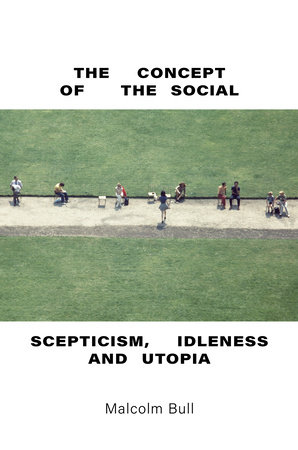
Vectors of the Biopolitical - (Chap. 2) c/o Bull

The Concept of the Social
'From one sentence in Aristotle derive two arresting theoret- ical discourses of the twenty-first century: Michel Foucault's biopolitics, provocatively reformulated by Giorgio Agamben in terms of the relationship between sovereignty and the body, and the capabilities approach developed by Amartya Sen and Martha Nussbaum as a means of evaluating and promoting development, justice and freedom. Both are characterized by deep reflection on the sources of Western political thought, and by urgent engagement with contemporary social and legal problems. Both are in some sense biopolitical in that they are shaped by the interplay of the same Aristotelian categories the human and the animal, politics and nature. But they are on opposite sides of the divide that has opened up in the human sciences since the 1960s, and there currently seems no optic through which they might simultaneously be viewed, no way of integrating or comparing their insights.
 
In part, this reflects a situation in which political debate appears to have fragmented into a multiplicity of single issues. The ancient 'Who will rule?' and the modern 'Who shall have what?' have been supplemented by an array of questions that deal with matters once exclusively cultural, personal or natural. For previous eras, the relative integrity and unmalleability of cultures, bodies and environments rendered such questions redundant. Now they frequently appear unanswerable from within established political traditions, and incommensurable in relation to each other. Within this expanded field, biopolitics and the capabilities approach have unusual salience and potential, for both bundle together issues otherwise assumed to be distinct. If they, in turn, could be coordinated, perhaps we could begin to map the new territory.' p.68.

individual
|
INTERPERSONAL : SCIENCES
humanistic ------------------------------- mechanistic
SOCIOLOGY : POLITICAL
|
group
'Who shall have what?'

nature

human - animal

bio-
culturepolitical

'Who will rule?'


Bull, M. (2021) The Concept of the Social, London: Verso.

Wednesday, March 26, 2025

Objectify me by Nicola L.

Individual
|
      INTERPERSONAL    :     SCIENCES               
HUMANISTIC  --------------------------------------  MECHANISTIC      
 SOCIOLOGY  :    POLITICAL 
|
Group
'You can touch
my breasts,
caress my stomach,
my sex.
But, I repeat it,
it is the last time,'

- read a note
L. left in a drawer.


Nicola L.
 'La Femme Commode' (1969)


My source: Stoppard, L. Objectify me, House&Home, FTWeekend, 5-6 October 2024, pp.1-2.

Thursday, February 27, 2025

(In-person) Seminar: Healthism, Neurodiversity, and Respectability Politics

Accustomed to posting news of many seminars and events that I cannot attend, this one does produce some frustration in that it is of marked interest but in-person. I am reaching out, seeking slides, and papers, and will follow-up, as for me, Professor Kukla's seminar really 'speaks' to Hodges' model. The relation conjoins the individual and collective, as it did originally for Brian Hodges in creating the eponymous model:


Hodges' model is invariably potentiated, as are all conceptual (idealised) models to encompass self-care, individual health care through to family, public and population health. As posted previously, the family(!) of -isms can be represented too:

https://hodges-model.blogspot.com/search?q=ism

Seminar Series in Analytic Philosophy 2024-25: Session 15

Healthism, Neurodiversity, and Respectability Politics

Quill Kukla (Georgetown University)

28 February 2025, 16:00 (Lisbon Time – WET)

Faculdade de Letras de Lisboa, Sala Mattos Romão [C201.J] (Departamento de Filosofia)


Abstract: “Healthism” is the pervasive ideology according to which each of us is responsible for valuing and protecting our own health and prioritizing health over other values, while society has the right to enforce, surveil, and reward healthy living. Neurodiversity and other forms of cognitive difference are generally understood through the lens of health: they are taken as diagnosable pathological conditions that should be treated or mitigated via medical interventions. Putting these two ideas together, neurodivergent people are supposed to try to be “healthy,” through pharmaceuticals, behavioral therapy, and the like, and society has an investment in making them be “healthy.” But neurodivergence is not a morbidity in a typical sense, so it is unclear what “health” means in this context. In practice, our societal standards for health for neurodivergent people are defined in terms of what avoids disrupting neurotypical expectations and systems or making neurotypical people uncomfortable. “Health,” for neurodivergent people, is in effect respectability—it is not defined in terms of their own needs or flourishing but in relation to the norms and needs of others. This can be seen from a close reading of diagnostic definitions and official medical “treatment” methods and goals. Trying to “treat” neurodivergent people by making them respectable citizens who are palatable within neurotypical productivity culture is usually likely to backfire; typically bad for their own well-being, and a social loss.


See also: 'recovery'

Jones P. (2014) Using a conceptual framework to explore the dimensions of recovery and their relationship to service user choice and self-determination. International Journal of Person Centered Medicine. Vol 3, No 4, (2013) pp.305-311.