Hodges' Model: Welcome to the QUAD: Search results for diagram

Hodges' model is a conceptual framework to support reflection and critical thinking. Situated, the model can help integrate all disciplines (academic and professional). Amid news items, are posts that illustrate the scope and application of the model. A bibliography and A4 template are provided in the sidebar. Welcome to the QUAD ...

Showing posts sorted by relevance for query diagram. Sort by date Show all posts

Wednesday, June 14, 2023

[ Towards . . .] A Geometry of Care*

Context -
"Introduction: We present a new model of skilled performance in geometry proof problem solving called the Diagram Configuration model (DC)." p.577.

INDIVIDUAL
|
INTERPERSONAL    :     SCIENCES               
HUMANISTIC --------------------------------------  MECHANISTIC      
SOCIOLOGY  :   POLITICAL 
|
GROUP
"A safe abstraction only ignores irrelevant details, i.e., details which only discriminate between objects that are functionally equivalent with respect to the problem solving task." p.582.

So much to consider here, I may be overstretching analogies but then Hodges' model can act as both a conceptual rack and resolver.


"For instance, to use the side-angle-side rule for inferring triangle congruence a problem solver must locate three congruence relationships - two between corresponding sides of the triangles and one between corresponding angles. In searching for a list of statements for these three relationships, one might need to consider numerous possible combinations of three statements that exist in the list. However, if these relationships are marked on a diagram, one can quickly identify them since the side-angle-side configuration comes together in each triangle at a single vertex. In other words, related information is often easier to find in a diagram because it is typically in the same locality whereas the same information may be separated in a in a list of statements. This is the locality feature of diagrams." p.584.


not just 'local' -


- but intra- interdomain -
with constant stress on safety.


Koedinger, K.R. & Anderson, J.R. (1995) Abstract Planning and Perceptual Chunks. In  Diagrammatic Reasoning: Cognitive and Computational Perspectives. Janice Glasgow, N Hari Narayanan, B. Chandrasekaran (Eds.). Massachusetts: AAAI PRESS / MIT Press. pp.577-625.

Book cover: https://dl.acm.org/doi/book/10.5555/546459

*There may be several? But -
"One of the places where the Geometry tutor expert (GTE) gets bogged down while attempting difficult problems is in the fruitless application of algebra inferences. Algebra expressions can be combined and manipulated in infinite variety and as a result, algebra inferences often lead problem solvers into black holes in the search space from which they may never return." (17.4.3 Avoiding Algebra in the Diagram Configuration Space),  p.593. 


Monday, February 22, 2021

Call for Papers: Diagrams 2021


The organization of Diagrams 2021 is making rapid progress. Five outstanding Keynote speakers have now been announced. Also, the free, online conference has adopted a novel approach to the program structure that is expected to provide fair access to the conference across multiple time zones.

 Find more details in the 2nd call for papers attached below or on the webpage www.diagrams-conference.org/2021 - and do pass on the information if you know researchers or students for whom it may be relevant.

Best,

Mikkel Willum Johansen 

Publicity Chair

Diagrams 2021


*** Call for Papers: Diagrams 2021 ***

12th International Conference on the Theory and Application of Diagrams

September 28 – 30, 2021

Virtual Event

www.diagrams-conference.org/2021


*** Highlights ***


- FREE REGISTRATION

- Proceedings published by Springer

- Three Tracks: Main, Philosophy, and Psychology and Education.

- Graduate Symposium

- Best Paper and Best Student Paper awards

- Submission dates in April 2021.


***************** Keynote Speakers Announced *******************

Shaaron Ainsworth, University of Nottingham

Daniel Rosenberg, University of Oregon

Katarina Scheiter, University of Tubingen

Atsushi Shimojima, Doshisha University

Frederik Stjernfelt, Aalborg University of Copenhagen


Francesco Bellucci, University of Bologna, is the Inspirational ECR Speaker for Diagrams 2021

******************* Novel Program Schedule *********************

Diagrams 2021 will adopt a novel approach to scheduling talks, to accommodate different time zones across the globe. See

http://www.diagrams-conference.org/2021/index.php/program/

for more details.

*************************************************************

Diagrams is the only conference series that provides a united forum for all areas that are concerned with the study of diagrams and has a multidisciplinary emphasis.

For 2021, *MAIN TRACK* conference topics include, but are not limited to:

– applications of diagrams,
– computational models of reasoning with, and interpretation of, diagrams,
– design of diagrammatic notations,
– diagram understanding by humans or machines,
– diagram aesthetics and layout,– evaluation of diagrammatic notations,
– graphical communication and literacy,
– heterogeneous notations involving diagrams,
– history of diagrammatic notations,
– information visualization using diagrams,
– nature of diagrams and diagramming,
– novel technologies for diagram use,
– reasoning with diagrams,
– semiotics of diagrams,
– software to support the use of diagrams, and
– usability and human-computer interaction issues concerning diagrams.

In addition to the main track, Diagrams 2021 will have two further tracks: Philosophy, and Psychology and Education; for their topics of interest, see

http://www.diagrams-conference.org/2021/index.php/calls/main-track/

http://www.diagrams-conference.org/2021/index.php/calls/philosophy/

http://www.diagrams-conference.org/2021/index.php/calls/psychology-of-diagrams/.


If the main research contribution of your submission is considered to fit either of the other tracks then you are strongly encouraged to submit to the respective special track, each of which has a dedicated program committee.

Authors of accepted submissions will be expected to be in attendance at the virtual conference to present their research and respond to questions presented by delegates. All presenters must accept that it is not within the power of the organisers to prevent delegates from recording  talks. However, when registering, delegates will be asked to confirm that they will not record any part of the conference.

*****************************************************************

Submission Categories

The conference will include presentations of refereed Papers, Abstracts, and Posters, alongside a graduate symposium.

We invite submissions for peer review that focus on any aspect of diagrams research, as follows:

- Long Papers (16 pages),

- Abstracts (3 pages),

- Short Papers (8 pages),

- Posters (4 pages – this is both a maximum and minimum requirement).

More details and all important dates can be found on at www.diagrams-conference.org/2021.

*****************************************************************

________________________________

Mikkel Willum Johansen

Associate professor

Department of Science Education

University of Copenhagen

Wednesday, February 20, 2019

The Compass Rose in Care


*"A compass rose
is a diagram of
directions that is located
on every map or globe."


individual
|
INTERPERSONAL : SCIENCES
humanistic ----------------------------------------------- mechanistic
SOCIOLOGY : POLITICAL
|
group


The Health Career rose
is a diagram,
a conceptual map of care 
that can be located within every 
care plan and health record?


*Source: https://slideplayer.com/slide/5847408/


Friday, March 03, 2017

Hodges' model: a blanc space, neutral for structure & content

On twitter today I mentioned the discovery of the book Panaesthetics by Daniel Albright. It was a buy in the end. A great discovery saddened to then learn that its author is no longer with us. Although I have not read it there will be much to draw from it: literally. I have often written about Hodges' model being initially a neutral space, a blank sheet. What is a starting position is always political as with Hodges' model. Its structure regiments the paper it is drawn upon. The presence of a political care - knowledge domain makes a statement. Structurally and in content the sense of neutrality is broken. Albright points to historical support as he discusses "What is painting?".

"White, said Superville, is an innocent peaceful color, calming us in the way that pure snow or moonlight calms. Black implies "silence and solitude, sadness, death, and oblivion"; red is "the hieroglyph of life and movement . . . the excess of luminous rays, just as the colour black is its absorption and annihilation." But this correlation of color with emotional state is less original than Superville's belief that color and lines are "the identical signs of one invariable language, and the associations of the one automatically imply the associations of the other" - every color corresponds to a linear pattern, every linear pattern presupposes a certain color. Superville provides a diagram to prove his point: red throws its arms into the air; black is stooped, submissive; "white , an invariable, pure sign, like the horizontal line, occupies the middle space between two extremes" (fig. 27)." p.102.

This is not the exact figure from the book but the meaning is relayed (I think).

A contact from the OU and 'The Difference that Makes a Difference' Conferences David Chapman kindly commented on this post on Facebook:


David Chapman "White is an innocent, peaceful, color". Except when it is the colour of the KKK, colonialism and slavery? I like the use of the shapes and can see that there may be ideas you can use in the quad, though.

I've expanded on my Facebook response below:

Thanks David, Yes I realise there's a potentially racist tone to this "white as pure". It is of course about the ideas, structure and form. I still refer implicitly to Michel Serres' work and the significance of 'blanc' and in previous posts. There are many ethnocultural connotations as to how black, white, greys and colours are interpreted and what they mean. As a tool it is important that Hodges' model conveys neutrality. In this case no emotional, value-based stance is taken.

Another thought from the past I recall is the BBC micro wordprocessor View and its appearance on a monochrome (Phillips) screen. Green on black (the new 'blanc'?) worked best. The penultimate blanc is the night sky...?

Albright, D. (2014) Panaesthetics On the Unity and Diversity of the Arts. New Haven: Yale University Press.

Diagram: http://www.dezenovevinte.net/obras/av_rc_baile_en.htm

Monday, April 15, 2024

Dramatherapy ii - from Sociometry, Sociogram to Sociatry

Individual
|
      INTERPERSONAL    :     SCIENCES               
HUMANISTIC  --------------------------------------  MECHANISTIC      
 SOCIOLOGY  :    POLITICAL 
|
Group

A personal journey


"... Moreno soon began to seek ways of measuring the form and structure of relationships in groups. The techniques of sociometry which he invented have since been widely and successfully adopted by his successors, becoming an accepted field of social research in their own right. At its simplest, this approach relies on asking of the social grouping under investigation to indicate their relationship to each other so that, for example, a pattern of dominance (vertical structure) or affinity (horizontal structure) can be discerned. These measures may be committed to paper in diagram form (a sociogram) or expressed by the individuals arranging themselves in positions symbolising their relationships (an action sociogram)". p.106.


"More complicated interconnections and patterns can be demonstrated and the group asked to explore alternatives in order to recognise sources of conflict and misunderstanding and to modify them. Moreno foresaw a new discipline for which he coined the name 'sociatry' in which the social organisation rather than the individual is the object of the healer's endeavours, a truly 'group' psychotherapy". p.106.


Anticipating future theory-practice policy and education change.

Could the reduction in the options for student mental health nursing placements be compensated in-part by addressing the concurrent change in the range of therapeutic (modalities) interventions available?


Davies, M.H. Dramatherapy and Psychodrama, Chap. 5. pp.104-123. In Jennings, S. (Ed.), (1987) Dramatherapy. Theory and Practice for Teachers and Clinicians. Routledge, London. p.106.

Previously: theatre , space , diagram

Friday, April 30, 2021

Conference: Diagrams in Science, Science in Diagrams

Johannes Stabius, Astrolabium imperatorium: detail (Nuremberg: Johann Stuchs, 1515). Courtesy Bayerische Staatsbibliothek, Munich, Einbl. VIII, 12, broadside, 61 × 45 cm.

Diagrammatic forms of visualization are ubiquitous in scientific publications, as well as in popular mediations of scientific contents. Every computer interface relies on diagrammatic forms, combining textual and graphical elements. Diagrams abstract and encode information. They are indispensable in many scientific contexts, and, together with charts and graphs, also in the daily media, reaching a wide audience of experts and non-experts.


As natural and familiar as these abstract forms of representing information are to us, they are products of many historical developments. Their historical roots may go back to prehistoric epochs. However, the historical integration of diagrams in scientific contexts is relatively recent. Even if these developments with regard to Western cultures have their origin in antiquity and were significantly developed further in the sciences of the Middle Ages, the early modern period can be considered the first flourishing phase of the diagram in practically all areas of the sciences of that time.

This event proposes to trace this historical development in the early modern period. It takes a truly interdisciplinary approach when talking about a timespan of roughly 500 years (1300-1800) across all early modern sciences, from Architecture to Zodiac men in medicine. The talks bring together research on the culture of the diagram in various sciences of the epoch to form a large overall picture.

This event aims at tracing the emergences and the disruptions of traditions of diagrams in all fields of scientific theory and practice, e.g. (but not restricted to) geometry, astronomy, medicine, philosophy, alchemy, law, theology, and music.

It will address, among others, questions such as the following:


1. Do the diagrams under investigation come from a precise tradition or do they form the foundation of such a tradition?

2. What is the scientific/disciplinary context of the diagrams under investigation and how do they relate to it?

3. What is the aim of the diagrams under investigation (illustration, explanation, demonstration, etc.)?

4. How does the medium carrying diagrams under investigation impact their form and role (print, manuscript)?

5. What are the most intriguing visual/graphical features to be found in the diagrams under investigation?

6. How do the diagrams under investigation interact with the text and which vocabulary is used to refer to the diagrams?

7. What justifies the diagrams under investigation to be labelled as ‘diagrams’ (and not ‘tables’, ‘maps’, etc.) and what is a reasonable demarcation line here?

8. How do the diagrams under investigation relate to scientific practices (experiments, taking measures, etc.)?

More details:

https://www.biblhertz.it/3101937/conference-diagrams-in-science-science-in-diagrams.html

Sunday, October 22, 2017

Drawing a Care Map

individual
|
INTERPERSONAL : SCIENCES
humanistic --------------------------------------- mechanistic
SOCIOLOGY : POLITICAL
|
group


I contacted the Atlas of Caregiving and Rajiv Mehta replied:
We have found that the value to individuals has come not only from the final artifact (the diagram), but even more from the thinking that goes into its creation (if the person draws his own), and the conversations and reflections sparked by discussing the CareMap with others. This recent news article gives some insight into this: Caregivers Draw Support By Mapping Their Relationships
Of course, the point I’m making is true for any graph, diagram, etc.!
Also, your readers would likely appreciate a link to this page, which has more information on drawing a CareMap: 
https://atlasofcaregiving.com/drawing-using-caremap/
Rajiv Mehta
CEO, Atlas of Caregiving (www.atlasofcaregiving.com)
Board member, Family Caregiver Alliance (www.caregiver.org)
Co-organizer, Quantified Self (www.quantifiedself.com)

Monday, January 14, 2013

'Holistic confrontation' Gadgil et al. - a useful construct for h2cm?

The possible explanatory utility of what I've termed holistic bandwidth is an ongoing prompt for me to study Hodges' model as a conceptual space, or series of spaces. In the literature recently I discovered Gadgil et al. who explain what they term holistic confrontation in their paper:

Chi (2008) has characterized three kinds of student misconceptions that increase in their representational complexity from false beliefs to flawed mental models to incorrect ontological categories. This framework suggests that different kinds of cognitive processes and instruction may be differentially effective in facilitating conceptual change for a given level of representational complexity. We hypothesize that as the representational complexity of the misconception increases, so does the amount of transformation needed to rectify it. Specifically, we hypothesize that conceptual change at the mental model level requires knowledge revision to the interrelations between the features of the prior knowledge, which is different from revising individual false beliefs or reassignment of a concept to an ontological category. Furthermore, we propose that instruction that focuses the learner on revising systems of relations of the misconception, what we call “holistic confrontation”, should be more effective in facilitating change of a flawed mental model than instruction that focuses on revising false beliefs or the type of ontological category. p.47.
One of the more specific applications for Hodges' model I see and in need of demonstration is case formulation, or case conceptualization. This could extend from a general counselling, long-term medical condition self-care management level through to collaborative case formulation in formal psychological therapies, such as cognitive behavioural therapy and cognitive analytic therapy.

Gadgil et al. use a diagram test of the circulatory system with two instructional conditions for subjects: compare or explain-diagram. The introduction, method, design and six hypotheses in this paper comprise an interesting approach for due consideration here.

Gadgil, S., Nokes-Malach, T. J., & Chi, M. T. H. (2011). Effectiveness of holistic mental model confrontation in driving conceptual change. Learning and Instruction: 22, 1, 47–61.

Monday, October 08, 2018

Book Review: [ii] Health System Redesign - How to Make Health Care Person-Centered, Equitable, and Sustainable

Part 1 gets straight to the matter of "challenging the orthodoxy" with a two page introduction to complexity and health. Part 1 covers:

  • systems sciences
  • visualization of complex systems (Capra's vortex metaphor)
  • understanding the co-existence of different degrees of complexity and their dynamics within complex adaptive organisations based on Kurtz and Snowden's Cynefin model.
  • health as a "complex adaptive experiential state"
All four points here are very pertinent to where we are in health and healthcare (the book rightly stresses this differentiation) and current and ongoing 21st century issues. The use of Capra helps to distinguish scale and the levels inevitably existent, experienced, and described in health and healthcare systems.

If you are familiar with Hodges' model and the Cynefin model, then the answer is yes - seeing the Cynefin model did make me hoot. (I remember Dave Snowden's work from Plaxo and a presentation he did in Lancaster back in 2007). More importantly, part 1 introduces where the focus needs to be to facilitate change; on the core driver of the system, the system's long-term direction, a specific system view and the need for a solid grounding in theoretical and applied approaches. This is were the visual tools and producing a view - perspective are so important. Chapter 2 contrasts the simple scientific world view and the complex scientific. The reader is asked to consider numerous background points, from the colloquial meaning of complex/complexity to the scientific. How do the words 'complex' and 'complicated' differ? At small scale the result is greater certainty BUT loss of context, while at the large scale we find greater uncertainty AND loss of detail.

https://www.springer.com/us/book/9783319646046
Figure 2.3 shows the key features of complex systems (also indicating the dynamics - '+' '-'):
  • System boundaries
  • Interconnectedness
  • Feedback
  • Impact of starting (initial) condition
Some of the figures point to their means of creation "The essence of systems thinking" (Figure 2.4) produced through Insightmaker. Sturmberg's seeks to ground the discussion too by reference to the everyday. Table 2.1 runs through how systems can be related to the experience of a 'Long day at work'. Addenda are put to immediate effect with a reference to a map of the history of complexity science; the philosophy of complex adaptive systems; and the complexity and difficult questions.

As already suggested Chapter 3 on the visualisation of complex adaptive systems had my attention. The vortex metaphor (Capra) seems trite on first encounter, but it works.* The four different ways to map a system:
  1. Systems map
  2. Influence map
  3. Multiple case diagram
  4. Sign graph diagram
are quite important as if you can take the explanations onboard you really will be on the way to fully understanding and utilising theoretical and applied approaches. The learning here is allied with understanding common system dynamic behaviours which are also illustrated and explained. Figure 3.4 shows the Cynefin framework, which is still in my head. The Cynefin model deals with the continua of:
  • uncertain - certain
  • non-linear - linear
  • Contrasts - Learning and Teaching
  • and four quadrants that combine what is complex, knowable or complicated, chaos, and known or obvious (simple). The three references here span 1996-2003.
At chapter 4 - I was worried - 'Defining Health' (now there's a task) but this is also interesting, rewarding and well placed. Core notions of health are tabled (4.1) from 1911 to 2007. Health is distinguished from dis-ease. I must follow up the footnote on p.59 Marja Jylhä and her framework of self-perception of health. 

The illustrations on pp.60-61 are frustrating.

Very!

Not because they shouldn't be there, but because they are a gift that remain (as far as I am aware) unrealised in respect of those of us working in the humanities. We still lack the visualisation tools that we need.

If I mention Figure 4.1 "The somato-psycho-socio-semiotic model of health" you will get the drift and overlap with Hodges' model. There is more with 4.2 on Attractors in Health and Illness and the system dynamics of health. The political attractor is missing (and its 'gravitational' impact) in this rendering, but the barriers to progress are also raised at the book's end. Given the topic of health, the text is not science light, with the physiology of health and disease also used to explain points, so we have, gene networks, the autonomic nervous system, the hypothalamic-pituitary-adrenal axis and bioenergetics in the mitochondrion. While not in-depth the potential application across external factors-personal experiences and internal mechanisms are demonstrated. The role of the patient, public and carers are central today and realised to various degree in theory, practice, management and policy. Self-rated health is briefly mentioned and with community health and health services utilisation this closes part 1.

More to follow...

Sturmberg JP. Health System Redesign. How to Make Health Care Person-Centered, Equitable, and Sustainable. Cham, Switzerland: Springer; 2018.

See also first part...

Wednesday, December 06, 2006

What are you - mathematician, book-reader or book-reading clock-watcher?

Sometimes you don't realise you are on a long-term cherry-picking escapade. I say escapade because this captures the rather haphazard, accidental and part-time nature of my fruit gathering.

In 1992 in the Engineering Computing Newsletter [SERC] Science and Engineering Research Council's EASE programme #38 p.4-5 Michael McCabe asked readers How would you label the quadrants of this diagram? - "How would you label the quadrants of this diagram?"


I cannot find the brief article "Human Factors Aspects of User Interfaces Design" on the web, but I kept the original. It obviously meant something to me, McCabe shows why...

As a mathematician you might choose - from top left clockwise 2,1,4,3

A clock-watcher - from top left 4,1,2,3


from top left 1,2,4,3 - for a book-reader.

And a book-reading clockwatcher - from top left 1,2,3,4

So, how would you label Hodges' model and does this say anything about how you would populate and read the model?

Friday, July 04, 2025

Diagrams - AMO/OMA at Prada Foundation Venice

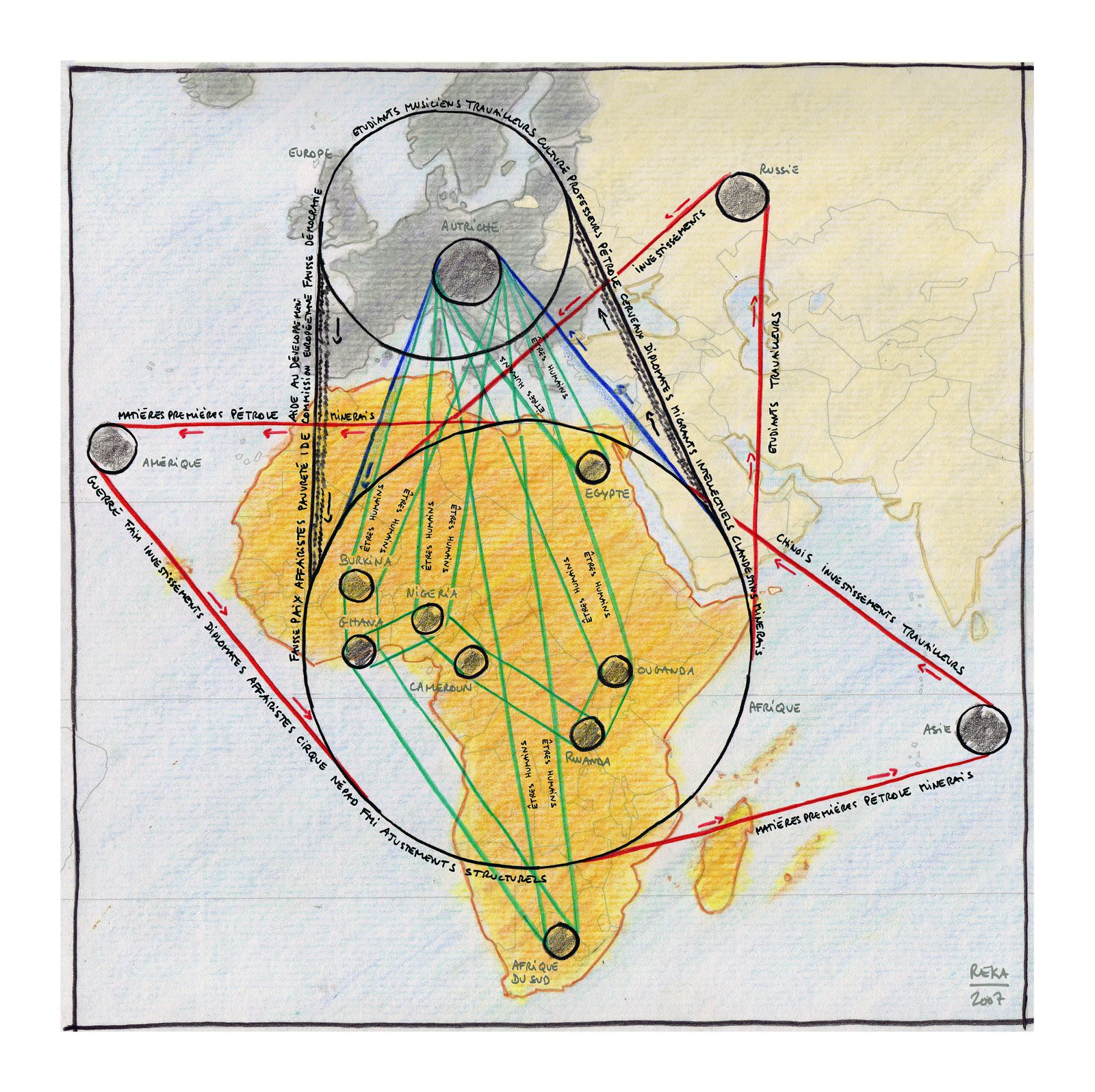
"There is no such thing as an innocent map, observes Philippe Rekacewicz in his catalogue essay that accompanies Diagrams, a new exhibition at the Prada Foundation in Venice.

A renowned cartographer, the Paris-born Rekacewicz is well aware of his medium's capacity to transform narratives for good and ill. His own work includes maps that illustrate the deaths of migrants as they bid for new lives in Europe. "A map," Rekacewicz continues, "is above all a social and political act - and therefore inherently subjective."' p.5.

Individual
|
      INTERPERSONAL    :     SCIENCES               
HUMANISTIC  --------------------------------------  MECHANISTIC      
 SOCIOLOGY  :    POLITICAL 
|
Group
Am I Free?

My history ...
Philippe Rekacewicz / The African big wheel, 2007
The wheel symbolizes permanence and continuity in the context of a profoundly unequal exchange, drawing, color pencil and ink, exhibition copy.
Courtesy Philippe Rekacewicz
(Image credit: Philippe Rekacewicz)

SOCIETY

... is our history ...

Freedom

National & International Law

Justice


'Other pictures are equally revealing for what they conceal. Consider the diagram entitled "Universal commercial history", a visual analysis drawn up by the Scottish engineer William Playfair in 1805 which traces the rise and fall of global wealth since 1500 BC against what he terms "Remarkable Events Relative to Commerce". Playfair, who is said to have invented the pie chart, includes moments such as "Rome founded" "Mahomet's Flight" and "America discovered". He never mentions slavery.

With such a broad-brush approach, lacunae are inevitable. It is a shame that the work of Viennese social scientist Otto Neurath - who, along with his wife Marie and colleague Gerd Arntz, invented the Isotype (International System of Typographic Picture Education) - is not on show. Based on pictograms, Neurath's Isotypes are an lmportant forerunner to the digital vernacular (from emojis to icons) so familiar to us today. Nor does the exhibition include maps of the devastation of Gaza since October 2023, such as those made by investigative research agency Forensic Architecture, which are proving among the most critical diagrams of our time.' p.5.

Philippe Rekacewicz - https://www.grida.no/resources/10988

My source:
Rachel Spence. Hidden truths in the best laid plans. Diagrams | What charts, maps and graphics can - and can't - tell us. Collecting, FTWeekend. 26-27 April 2025. p.5. 
With many thanks acknowledging length of quotation.

Image source:
https://www.wallpaper.com/architecture/oma-amo-diagrams-prada-foundation-venice

See also: 'icon' : 'symbols' : 'diagram' : 'map' : 'Forensic Architecture'

Archived listing Links II Sciences - inc. 'Diagrams' & 'Visualization I' and 'II': 

Tuesday, June 20, 2017

Pointing to the gap: Social Determinants of Health in Hodges' model

Recent discussion on a HIFA forum included mention of the Social Determinants of Health SDH and inequality. Revising the draft paper on h2cm and threshold concepts (abstract to follow soon) social determinants arose in references there also (Aronsson, 2016).

I realised that I have not stressed enough how readily (and obviously) Hodges' model facilitates reflection and critical thinking about SDH. Hodges' model can really come into its own in this particular application.

So, just in case I take Hodges' model for granted in its potential utility, below I have drawn on the following figure (the findings within will no doubt vary over time and with further research).

By Jsonin - Created this open source diagram for our research into standard human data elements Previously published: http://determinantsofhealth.org, CC BY 4.0, Link
I have mapped the main percentage items to Hodges' model below. Clearly there is great deal of overlap; what for example, is the effect of the physical environment upon individual behaviours? Medicine and medical care does not just rest upon several sciences, but it is inherently political and about power.

Throughout my career and many others I am sure, there is an accompanying gap. It follows us around from the initial educational encounters through to our very latest mandatory training and CPD exercises. Whilst educational in being the theory-practice gap, applying SDH to Hodges' model reveals a much greater gap that politically is still being fought over...

individual
|
INTERPERSONAL : SCIENCES
humanistic ----------------------------------------- mechanistic
SOCIOLOGY : POLITICAL
|
group - population
38%
individual behaviour


7% 
physical environment
11%
medical care
21% 
genetics and biology

SOCIAL DETERMINANTS OF HEALTH

23%
social
circumstances


As if we needed to be 'told':

This space suggests that there really is 
still much more to do.

To those who would say: 
"We have done so much!" 
I would say: 
"But, we have only 
scratched the surface of 
the three 'easiest' care domains."


The 38% attributed to an individual's behaviour is a further source of evidence for Hodges' model as a resource for education and personal change.

Aronsson, J. (2016). Transformative sustainability learning within the undergraduate nursing curriculum. Community Practitioner, 89(1), 20-21.


Monday, July 29, 2019

The number of pages count (in a medical MOT)

Received in the post: an invitation.

For a medical MOT that would cost me £129 - which is a saving of £141.

I am informed that a competitor charges £564 for a "360" Health Assessment and £424 for an "Essential" Health Assessment.

Recently I spoke to someone who had major surgery and they remarked on the lack of assessment not on the medical side, but the social, especially in relation to discharge and the circumstances they would be returning to.

This example of apparent disinterest in a social assessment contrasts with practice in the past - several decades ago.

Apart from an awareness of  'silver clouds' and rose-tinted glasses what struck me was securing a sale by a manifest of paper:


The various blood tests that would be completed are detailed using medical terminology across four A4 pages. Depending on age there is a free respiratory screening too.

The following quotations (Alber, et al., 2017) state clearly the risks:
"There is a growing awareness among clinicians and health care scientists, that medical overuse comprises unnecessary health care lacking benefit for patients [3] or putting them at risk of harm outweighing a potential benefit [4]. Moreover, unnecessary medicine adds to rising health care expenditures [5] and a misallocation of scarce resources [6]. Asymptomatic individuals are at risk of being labelled as patients, causing anxiety and affecting their quality of life [7]." ...

"Moreover, in secondary prevention, risk factors are increasingly treated as diseases [8]. There is a tendency to screen asymptomatic populations at low risk and to label pre-diseases as manifest diseases [1]. Serum cholesterol levels are a good example of threshold lowering by shifting the boundary between health and disease [9]."


Over-treatment is also a problem in two critical and concurrent senses, as follows:

Developed health
systems

Need to transform to
health promoting, educational, preventive,
self-caring systems.
Developing health
systems

Need to prevent the inheritance of commodified health care and over-treatment.*


Alber et al. also provide a useful diagram preceded with more background:
"In primary care, the “quaternary prevention concept” [11] was introduced (see Fig. 1 ) in order to protect individuals from unnecessary investigations and treatment. Quaternary prevention is a “new term for an old concept: first, do not harm” [12]. It refers to actions “taken to identify [a] patient at risk of overmedicalisation [= in the sense of medical overuse, author’s note], to protect him from new medical invasion, and to suggest to him interventions, which are ethically acceptable” [13]."

Fig 1
The concept of quaternary prevention. Source: [11] Kuehlein T, Sghedoni D, Visentin G, Gérvas J, Jamoulle M. Quaternary prevention: a task of the general practitioner. PrimaryCare. 2010;10:350–4, and [12] Jamoulle M. Quaternary prevention, an answer of family doctors to overmedicalization. Int J Health Policy Manag. 2015;4:61–4

Without being dismissive of screening and its relation to health and well-being, I have removed myself from this particular mailing list.

At some point I must really apply Hodges' model to this discussion. The model is ideally suited to navigating and arguing this debate; from self-care, primary care, prevention, population and global health. I have posted previously about the damaging ideal of the comprehensive health record and the way that records seem oriented to assessment and risk reduction with outcomes and relapse prevention an after-thought. This defensiveness is critical for public safety, professionalism and accountability, but as a thread on twitter shows it can have a negative impact too.


*There is an additional confounding factor at work in developing nations, the incursion of digital technologies from outside.


Alber, K., Kuehlein, T., Schedlbauer, A., & Schaffer, S. (2017). Medical overuse and quaternary prevention in primary care - A qualitative study with general practitioners. BMC family practice, 18(1), 99. doi:10.1186/s12875-017-0667-4

Tsoi, G.W.W. (2014). Update On Prevention - An Introduction to Quaternary Prevention, Medical Bulletin 19, 11, NOVEMBER 2014.

Ack.
I am subscribed to a mail list that is an invaluable resource on the status of medicine and health care, with contributors including, Mohammad Zakaria Pezeshki, Juan Gérvas, Karenleigh A. Overmann, Gene Tsoi and others.

MOT: Ministry of Transport test

Sunday, October 30, 2022

An observational record and learning from 30,000 years ago

"A fascinating example is the shoulder blade of an ox unearthed in the 1980s (Figure 1) by archaeologists investigating a stone age encampment in the south of France. Carbon dating showed this to be approximately 30,000 years old. The bone was marked with inscriptions that the archaeologist couldn't decipher. It was clear they were neither a tally, nor a pattern, nor any recognisable form of writing. Late one night one of the archaeologists noticed the moon, and something in its shape caught his curiosity.

Aurignacian Lunar Calendar / diagram, drawing after Marshack, A. 1970; Notation dans les Gravures du Paléolithique Supérieur, Bordeaux, Delmas / Don’s Maps
Figure 1 my source: https://sservi.nasa.gov/articles/oldest-lunar-calendars/

Then it struck him. Here, on this fragment of bone, was a lunar calendar complete with 72 observations ... something like 1,600 generations ago. One of our common ancestors (statistically, all of us can claim a relationship to this thoughtful person) 30,000 years ago had the intellectual curiosity to watch the moon, night after night, and then transcribe these movements, at scale, onto the stone age equivalent of the back of an envelope, as he (or she) attempted to "think it through". What makes us human is our ability to think, learn and adapt to our changing environment. The story of the stone age learner gets even better when you imagine a small community of people (adults, adolescents, children on their laps) sitting around a campfire every night working out the meaning of the lunar phases together." pp.72-73.

Abbott, J. & Ryan, T. (2000). Chapter 4, How mass education eclipsed apprenticeship, The Unfinished Revolution: Learning, Human Behavior, Community, and Political Paradox, Stafford, UK: Network Educational Press. (The figure in the book does not include the bone.)

Previously: 'diagrams' , 'archaeology'

[I am also still trying to clear papers and books, as some posts will suggest.]

Thursday, December 11, 2025

Bourdieu: systems, axes, maps, practical logics

I have checked these quotes and am fairly sure they are accurate. The first, I feel, improves with re-reading, and presents a clearing at the end? 

The clearing could be a template, and as per the second it may be old; but retains its practical function.

'Intellectualism is inscribed in the fact of introducing into the object the intellectual relation to the object, of substituting the observer's relation to practice for the practical relation to practice. Anthropologists would be able to escape from all their metaphysical questioning about the ontological status or even the 'site' of culture only if they were to objectify their relation to the object, that of the outsider who has to procure a substitute for practical mastery in the form of an objectified model. Genealogies and other models are to the social orientation which makes possible the relation of immediate immanence to the familiar world, as a map, an abstract mode of all possible routes, is to the practical sense of space, a "system of axes linked unalterably to our bodies, which we carry about with us wherever we go", as Poincaré put it.' p.34.
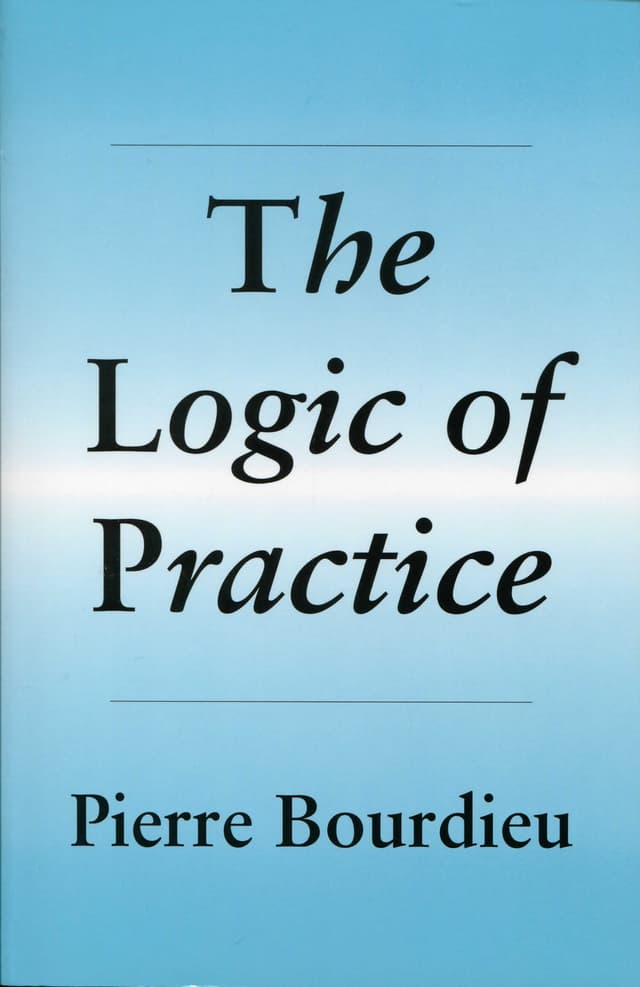
The Logic of Practice
'The logical [kinship] relations he constructs are to 'practical' relations - practical because continuously practised, kept up and cultivated - as the geometrical space of a map, a representation of all possible routes for all possible subjects, is to the network of pathways that are really maintained and used, 'beaten tracks' that are really practicable for a particular agent. The family tree, a spatial diagram that can be taken in at a glance, uno intuitu and scanned indifferently in any direction from any point, causes the complete network of kinship relations over several generations to exist in the mode of temporal existence which is that of theoretical objects, that is, tota simul, as a totality in simultaneity. It puts on the same footing official relationships, which, for lack of regular maintenance, tend to become what they are for the genealogist, that is, theoretical relationships, like abandoned roads on an old map; and practical relationships which really function because they fulfil practical functions.' p.35.


My source:
Bourdieu, P. (1990). The Logic of Practice. Stanford University Press. https://doi.org/10.1515/9781503621749 [and image source].

Bourdieu, Pierre, "The Logic of Practice (1990)" (1990). eTextbooks for Students. 875.
https://stars.library.ucf.edu/etextbooks/875

See also: https://hodges-model.blogspot.com/search?q=bourdieu

Thursday, April 29, 2010

A paper by Anzures-Cabrera & Higgins, Graphical displays for meta-analysis: An overview with suggestions for practice

The interesting paper below is currently available online:

Graphical displays for meta-analysis: An overview with suggestions for practice,
Judith Anzures-Cabrera, Julian P. T. Higgins

Keywords: meta-analysis • graphical displays • forest plot • funnel plot • Galbraith plot • L'Abbe plot

Abstract:

Meta-analyses are fundamental tools for collating and synthesizing large amounts of information, and graphical displays have become the principal tool for presenting the results of multiple studies of the same research question. We review standard and proposed graphical displays for presentation of meta-analytic data, and offer our recommendations on how they might be presented to provide the most useful and user-friendly illustrations. We concentrate on graphs that specifically aim to present similar sorts of univariate results from multiple studies. We start with forest plots and funnel plots, and proceed to Galbraith (or radial) plots, L'Abbé (and related) plots, further plots useful for investigating heterogeneity, plots useful for model diagnostics and plots for illustrating likelihoods and Bayesian meta-analyses.

Judith Anzures-Cabrera, Julian P. T. Higgins (2010) Graphical displays for meta-analysis: An overview with suggestions for practice, Research Synthesis Methods, 1, 1, 66-80.
DOI: 10.1002/jrsm.6

<->

I will explore these plot / diagram forms and update the diagrams listing on Links II accordingly. I wonder if this journal (or another?) will re-visit the question of visualization methods in the humanities - social sciences?

Saturday, June 28, 2025

Jayasinghe (2025) 'People‑centred care: a systems view of a new paradigm'

C/o HIFA

Dear friends,

It is my pleasure to share the link to my article "People-centred care: a systems view of a new paradigm". It is published online in Discover Health Systems and Open Access. Please see full-text access to your paper by using the following link:

https://rdcu.be/ejNUq

Kind regards Saroj
ABSTRACT People-Centred Care (PCC) is an emergent property in an “open” system. Policies aiming at promoting PCC can be categorized under four nested levels: Micro-level; Meso-level; Macro-level; and Mega-level and used to draw systems diagrams. We develop a single composite diagram which demonstrates interactions and feedback, within and across subsystems, resembling panarchy.
Jayasinghe, S. People-centred care: a systems view of a new paradigm. Discov Health Systems 4, 43 (2025). https://doi.org/10.1007/s44250-025-00215-9.

Saroj Jayasinghe MBBS (Col), MD (Col), MRCP (UK), MD (Bristol), PhD (Col), FRCP (Lond), FCCP, FNASSL Fellow of the International Science Council, Emeritus Professor, University of Colombo, Former Head, Department of Medical Humanities, University of Colombo, Sri Lanka Consultant Physician sarojoffice AT yahoo.com, saroj AT clinmed.cmb.ac.lk

Professor Jayasinghe's paper provides several informative figures on centredness, scale and levels, micro-mega; and affords a way to use Hodges' model to help define person, patient, people and service-centred care. These definitions could be developed, refined and validated using a relational formulation.


Individual
|
      INTERPERSONAL    :     SCIENCES               
HUMANISTIC  --------------------------------------  MECHANISTIC      
 SOCIOLOGY  :    POLITICAL 
|
Group

PERSON- 
PATIENT-CENTRED


psycho-

PERSON-
PATIENT-CENTRED

location

bio-
social

PEOPLE-CENTRED

'Health systems and services designed ‘for and with people’ are captured by the concept of People-Centred Care (PCC) defined as an approach “to care that consciously adopts individuals’, carers’, families’, and communities’ perspectives as participants in, and beneficiaries of, trusted health systems that are organised around the comprehensive needs of people rather than individual disease, and respects social preferences.' Duong, et al. (2024).

political


policy - engagement - design

SERVICE-CENTRED

panarchy

'Let us together forge a new way of knowing and practicing health care in the post-Sustainable Development Goal era, using people-centred care as our guide to achieve Universal Health Coverage.' Duong, et al. (2024).


Duong DB, Holt B, Munoz C, Pollack TM. For and with people: announcing the Lancet Global Health Commission on people-centred carefor universal health coverage and a call for commissioner nominations. Lancet Glob Health. 2024:S2214-109X(24)00216-X.
https://doi.org/10.1016/S2214-109X(24)00216-X.

Previously: 'design' : 'patient' : 'person' : 'system' : 'people'

Sunday, December 28, 2025

Feedback on Hodges' model in 'mathematical' terms

Through HIFA, I noticed an introduction by a new subscriber - Mr James Twahirwa; and noted a maths-oriented skillset:

'HIFA profile: James Twahirwa works on Research and data analysis in Rwanda. He is deeply interested in contributing to the global effort to improve health equity through reliable, accessible information. His background in statistics, data analysis, and research methods equips him to support evidence-based decision-making and strengthen health systems.

By email, I got in touch seeking an independent reading of the draft h2cm-maths paper (part 1).

Prior to this, Mr Twahirwa kindly made the following observations on Hodges' model which he is happy for me to post here:

==============

Dear Peter Jones 

I find your work interesting and really well-positioned.

Overall impression

Your work is intellectually ambitious and unusually well-positioned. You are attempting something that many disciplines struggle with: creating a unifying conceptual framework that can bridge practice, theory, and abstraction without collapsing into reductionism. The fact that Hodges’ model originates in nursing and has sustained relevance across decades already gives it credibility as a practice-informed epistemic structure, not just a diagram.

Your effort to reinterpret it through mathematics and category theory is especially interesting, because health economics often suffers from exactly the fragmentation your work seeks to address: disconnected models of behavior, outcomes, ethics, and systems.

1. The 2x2 structure aligns naturally with health systems thinking

Health economics constantly balances dualities such as:

  • Individual vs population
  • Clinical outcomes vs social value
  • Quantitative evidence vs lived experience
  • Efficiency vs equity

A 2x2 framework provides a powerful way to hold these tensions without collapsing them into a single metric. This is one reason cost-effectiveness frameworks often feel incomplete. Hodges’ model appears capable of holding multiple dimensions of value simultaneously.

2. Conceptual clarity over mathematical dominance

Health economics has increasingly recognized that mathematical rigor alone does not guarantee insight. Your attempt to treat Hodges’ model as a conceptual object rather than a predictive algorithm is aligned with modern critiques of over-formalization in economics and health policy.

Where your work could be strengthened

1. Clarify the “mathematical” claim carefully

From a health economist’s perspective, the risk is not that the model lacks mathematics, but that readers may misunderstand what kind of mathematics is being invoked.

You may want to explicitly distinguish between:

  • Mathematics as computation or formal proof
  • Mathematics as structural reasoning (relations, mappings, constraints)

Making this distinction early will help avoid criticism that the model is “not really mathematical,” while still defending its rigor.

2. Connect to applied decision-making

To attract health economists and policy researchers, it may help to show how Hodges’ model could:

  • Frame health technology assessment decisions
  • Structure evaluations of complex interventions
  • Support mixed-methods research designs

Even one concrete example (e.g., health service redesign, chronic disease management, or resource allocation) would strengthen its practical relevance.

3. Position the work in relation to existing frameworks

Your work resonates with, but is distinct from:

  • Systems thinking in health
  • Capability approach (Sen, Nussbaum)
  • Complex adaptive systems
  • Multi-criteria decision analysis

Explicitly stating how Hodges’ model complements or improves upon these will help readers locate it intellectually.

I hope this feedback may be of help

Happy festive season.

=================

Thank you Mr James Twahirwa. These comments are very helpful. You have identified the many strengths of Hodges' model and its uses. On the mathematics, you make many points for me to address and balance in terms of the overall intent and content of this 'project'.

Mr Twahirwa is now in possession of the draft paper. Any further thoughts are always welcome. While rather remote from clinical practice (a debate in itself) health economics is ultimately grounded in health services and health systems development. So this perspective provides a critical counterbalance to my clinical (business) as usual approach.

Point #1 is a primary motivating factor for this 'project'. I'm sure I can use structure as an anchor, while acknowledging that Hodges' model is a conceptual model, an idealisation. Additional feedback regards reasoning, decision making and Bayes also apply here:
ii Learn your lines and the hyperplanes will follow ].

In Point #2 I may be able to leverage research, drawing from #1:

'Mathematics as structural reasoning (relations, mappings, constraints)'.

Point #3 will be considered in-part through April's complexity conference; and revisiting former work on systems.

Both points #2 and #3 may find their home in a second paper (part 2), but this is fine, as it may support a step-wise workflow, and something akin to a logical progression(?).

As posted before any assistance greatly appreciated.

Monday, November 25, 2024

The naïve approach

Categories, Bundles and
Spacetime Topology 
 

'First steps' are by their nature plagued by uncertainty of intent and direction, ungainliness, missteps, stumbles and ('finally') possibly falls.

Finding a starting point can be difficult.

Where to find a hand-hold, place one's foot, or other anchor?

At Lancaster University library I came across this book, first published in 1980. The cover displayed is from the 1988 edition.

In order of appeal I read:

applications, categories, spacetime and topology.

Section I starts with Preliminaries: Notation and Abbreviations; always useful (reminder).

The next, Section II Naïve Category Theory, had my immediate attention. We often speak of learners as being naïve. As lifelong learners we all meet this descriptor. I keep revisiting this word, concept - 'naïve'.

Naivety is a starting point for practitioners in health and social care too. Hence the need for supervision, mentors, the tokens of probationary (driver) and 'newly qualified'. 

Many posts on W2tQ stress the diagrammatic quality of Hodges' model. It is visibly a 2x2 matrix, (once again..) beloved of management consultants, psychologists and change agents. In Section II Dodson recognizes the London Underground map as a graph. A small example is developed, explained and illustrated on p.6. 

Graph example, drawing on the London Underground. p.6.

Section II may be a small part of the overall book but it is invaluable to me. As the photo above suggests, the book is old, especially as 1st edition. I will try to access the 2nd edition. If this work is a project with which you can (more ably!) assist, I would greatly appreciate your input. The aim is to signpost Hodges' model as a potential focus for all researchers. Especially researchers interested in trying to conjoin the sciences and humanities and develop visualization in the latter. 

C.T.J. Dodson. Categories, Bundles and Spacetime Topology. 1st Edition, Shiva, Kent. 1980.

Previously: 'math'

'Diagram' resources listed on former, now archived website.