Hodges' Model: Welcome to the QUAD: visual

Hodges' model is a conceptual framework to support reflection and critical thinking. Situated, the model can help integrate all disciplines (academic and professional). Amid news items, are posts that illustrate the scope and application of the model. A bibliography and A4 template are provided in the sidebar. Welcome to the QUAD ...

Showing posts with label visual. Show all posts

Friday, February 13, 2026

{ Humanise } ARChITECTURE

INDIVIDUAL
|
    INTERPERSONAL    :     SCIENCES               
HUMANISTIC --------------------------------------  MECHANISTIC      
SOCIOLOGY  :   POLITICAL 
|
GROUP


ARChITECTURE


Humanise.org


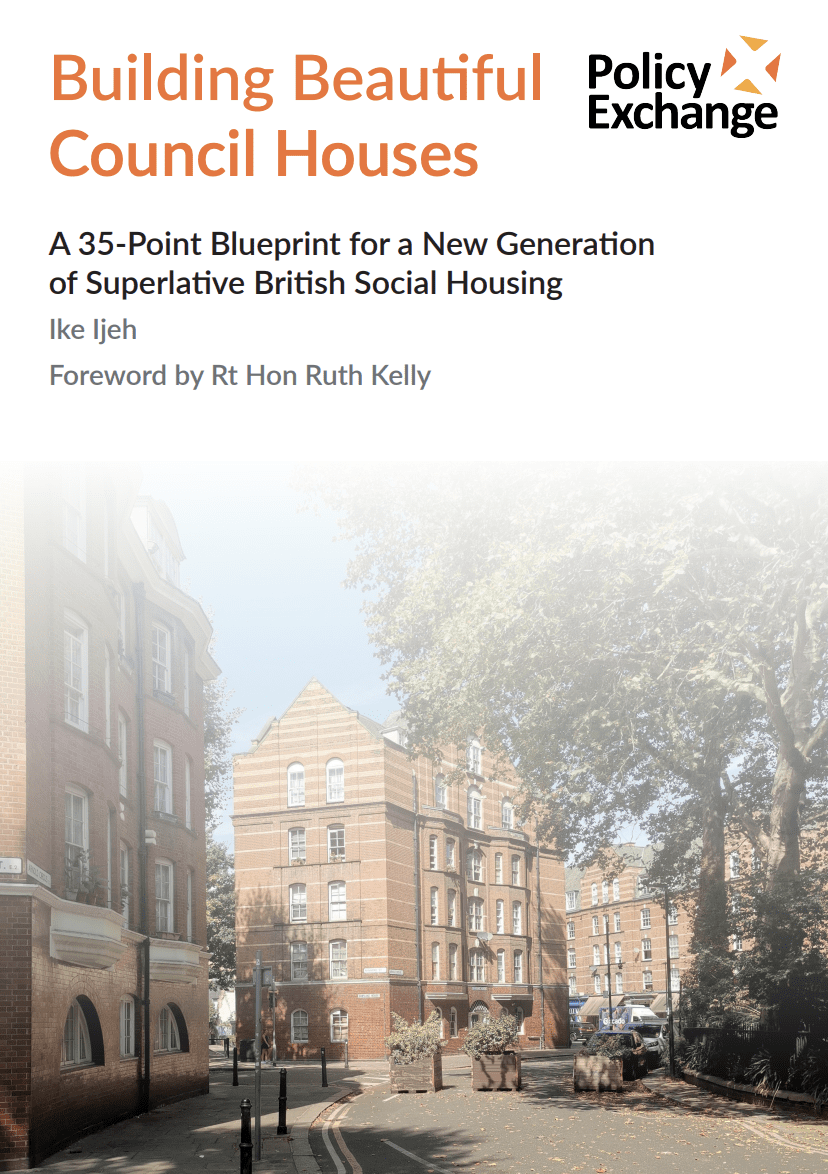
My source: Francesca Specter, Which is the fairest of them all? House&Home, FTWeekend, 11-12 October, 2025. pp.1-2.  

Spector refers to the Policy Exchange publication above, and other works:

McAdams P, Svobodova S, Newman T-J, Terry K, Mather G, Skelton AE, et al. (2025) The edge orientation entropy of natural scenes is associated with infant visual preferences and adult aesthetic judgements. PLoS ONE 20(2): e0316555. https://doi.org/10.1371/journal.pone.0316555

Valentine, C.; Wilkins, A.J.; Mitcheltree, H.; Penacchio, O.; Beckles, B.; Hosking, I. Visual Discomfort in the Built Environment: Leveraging Generative AI and Computational Analysis to Evaluate Predicted Visual Stress in Architectural Façades. Buildings 2025, 15, 2208.
https://doi.org/10.3390/buildings15132208

Calder, B. (2016). Raw Concrete: The Beauty of Brutalism. London: William Heinemann. 

Previously: 'housing' : 'homeless' : 'architecture'

Wednesday, January 28, 2026

ii Math Without Numbers - final notes & obs

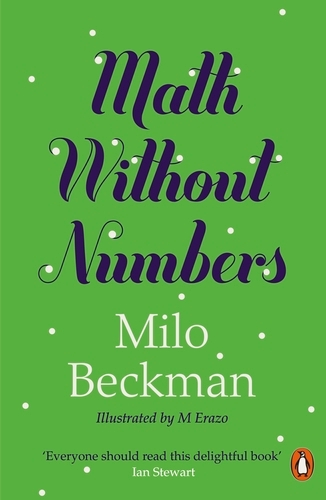
In Math Without Numbers the chapters and topics flow and slot in really well, even for novices. There is no index, the inclusion of which is a first-check usually. The book's appeal was its non-technical title and invitation reading the sleeve notes. The title throws up words and visuals, the latter, to repeat, are ably and simply furnished by M Erazo. Remaining notes to highlight (record here) include (and capture overthinking!):

Math Without Numbers

Reference to 'ideology space', 'conceptual space' and the role of visual analogies, idioms, and how 'the list of spaces to choose from is always the same.' ... pp.28 & 29. On page 30, 'When you say that gender is a spectrum rather than a binary, that's a topological claim: You're  saying gender space is one-dimensional (a line) rather than zero-dimensional (two separate points). 'Questions about which conceptual paradigm to use sometimes boil down to questions of dimensionality.' Discussion of an infinite continuum had me making an axis of Hodges' model warp, this way and that: concave-convex (p.59). Maps and correspondence is already well established, as per a new paper (abstract and thanks to follow 1st Feb):

S. Bettiol, P. Jones, H. A. Onyedikachi, and W. G. Kernohan, “Bridging Gaps in Oral Health Frameworks: Mapping With Hodges' Health Career - Care Domains - Model”, Journal of Public Health Dentistry (2026): 1–14, https://doi.org/10.1111/jphd.70034 

Interesting to read of general map facts, flowing substances inside a rigid container, and vector maps. A pencilled note to share:

'Because when you look at things in the abstract like this, dusting off the specifics of a situation to focus on underlying dynamics, you start to realize there are only so many different patterns and structures out there. These patterns and structures are called mathematical objects, and thinking about them is called math.' p.79

The chapter on (generalised) Algebra, forced me to reconsider the Socratic, guided discovery and arrival at the structure of Hodges' model. (lines & points : nodes & edges). For page 88, I noted 'generic' invites abstraction. Isomorphism is discussed. Again I tested this against Hodges' model. I've always found it helps to immerse oneself in a new vocabulary: so welcome (anew) - structures, fields, rings, groups, loops, graphs, lattices, orderings, semigroups, groupoids, monoids, magmas, modules . . . algebras, p.101. Some are named only, but on graphs raises questions ... p.103.

'How densely interconnected is it? How segregated into different cliques? Does it cut clean into two subgraphs, with no connections between them? Can it be drawn without any lines crossing? Are there any lone dots without any connections?' 

There's the matter of 'friend of a friend' who have broken out of the sociological domain. Other notes to self: Significance of concepts - patient-centred, service-centred? The distance between between (vertical, horizontal, diametric)? There are weighted graphs (p. 104) and acknowledgement of category theory (p.115). A chapter on modelling pp.161-175, and models p.164 & p.169 are just a selection of highlights on a marvellous tour.

A hidden puzzle in the book remains a mystery for me.

Milo Beckman (2021) Math Without Numbers. London, Penguin Books. Illustrated by M. Erazo.

Previously: 'math' : 'diagrams' 
Plus, now archived Science domain links: 
https://web.archive.org/web/20150414125339/http://www.p-jones.demon.co.uk/linksTwo.htm

Believe it or not, this 'diversion' does help my reading of Order and the Virtual. 

Sunday, January 25, 2026

'Maths Without Numbers' by Milo Beckman

'Before you go tell your loved ones that you read a book about math and learned that a square is a circle, keep in mind: Context matters. A square is a circle, in topology. A square is most certainly not a circle in art or architecture, or in everyday conversation, or even in geometry, and if you try to ride a bike with square tires you won't get far.' pp.7-8.

'Like a line:

(Illustration - pen drawing of a line, a 'C' and an almost closed circle.)

A line can be bent almost into a circle, but to finish the job we'd need to click the ends together--not allowed. No matter how you manipulate a line, you'll always have those two special points on either end, where the shape just stops. You can't get rid of end-points. You can move them around and stretch them apart, but the two end-points are an unchanging feature of the shape.

For a similar reason, a figure-eight is a different shape too. There aren't any end-points, but there's still a special point in the middle where the lines cross, where there are four arms reaching out instead of the usual two at any other point. Stretch and squeeze all you want, you can't get rid of a crossing-point either. p.9.

Math Without Numbers
'The circle (aka S-one) and the infinite line (named R-one) are the only manifolds in the first dimension. To avoid end-points, you either have to loop back around or just go on and on forever. And don't forget: Because all the shapes in topology are stretchy, this also covers any closed-loop shape and any goes-on-forever shape. It doesn't have to be literally a circle or a straight line.' p.16.

The third dimension, dough-type manifolds, is pretty well understood at this point, though it took a hundred years and a million-dollar prize to get there, and we still don't have a totally neat and clean classification like the lower dimension. In dimensions five and up, topologists use a set of techniques called "surgery theory" to operate on manifolds and construct new ones.

That just leaves dimension four.

I wish I could tell you what's going on in dimension four. I'm not sure there's anyone who really knows. It's a weird boundary case: too many dimensions to do visually, but not enough to use sophisticated surgery tools. There are entire textbooks dedicated to what little we know about four-manifolds, and I couldn't make sense of anything past the opening pages. A professional topologist once told me she'd wanted to work on four-manifolds as an undergraduate but was advised to steer clear.' pp.23-24.

"Like a line" ... Yes. Take two that cross. Then the universes open up. 

Milo Beckman (2021) Math Without Numbers. London, Penguin Books. Illustrated by M. Erazo.

Previously: 'surgery'

Monday, January 12, 2026

Improving University Teaching - July 2026 Glasgow

Dear Colleagues

A reminder that you are cordially invited to participate in the 52nd International Conference on Improving University Teaching, to be held this year in Glasgow, Scotland. Our conference theme is “Connecting Across Cultures: Collaboration, Compassion, and Creativity,” with a focus on the links that sustain teaching and learning. IUT welcomes proposals in a variety of formats — papers, posters, workshops, and roundtables. More information about theme, subthemes, and presentation formats is available on our website, https://iutconference.com, where you will also find a link for proposal submissions.

This year’s proposal submission deadline is Monday, January 26th.

The dates for IUT 2026 are July 15-17, 2026. Our in-person host is the University of Glasgow in Scotland — the fourth oldest university in the English-speaking world, with a student enrollment of almost 40,000 and a strong tradition of both research and teaching excellence. Once again, this year’s conference will be a hybrid event. We hope many participants will attend the conference in person in Glasgow, but also warmly welcome those who choose to participate remotely.

Whether you prefer to join us online or in person, we hope you will consider a submission. Please contact us at iutconference AT gmail.com with any questions.

With best wishes,

Anne Tierney
President, IUT

Jim Wilkinson
Treasurer, IUT, and President emeritus

Tuesday, December 31, 2024

Call for Abstracts (for Publication): "Visual Narratives, Aesthetics, and Decoloniality: Imagery and the Construction of the Other"

Mappæmundi is pleased to announce a call for papers for a collective publication on 

"Visual Narratives, Aesthetics, and Decoloniality: Imagery and the Construction of the Other"

Please find all the details below.

We invite contribution proposals for the edited volume Visual Narratives, Aesthetics, and Decoloniality: Imagery and the Construction of the Other. The book aims to critically examine the persistent influence of colonialism in shaping modern subjectivities, tracing its historical roots in the formation of Western modernity and interrogating its continued implications in contemporary contexts. It positions media and visual narratives as central discursive spaces where colonial legacies are both perpetuated and, potentially, contested. This volume conceptualizes and critically interrogates aesthetics as a foundational condition that establishes a visual lexicon integral to Western modernity. The aesthetic framework not only shapes the development of visual narratives but also plays a crucial role in the construction and perpetuation of varied subjectivities.

In particular, we focus on the critical analysis of the role of visual narratives within the framework of epistemological colonialism. Visual narratives have been central in defining, reinforcing, and legitimizing colonial ideologies by shaping perceptions and controlling representations of colonized peoples and cultures. These visual narratives have played a fundamental role in constructing colonial time and space, which were systematically controlled by Western epistemologies. This volume positions itself as a counterpoint to this colonial legacy, offering critical perspectives that challenge and re/deconstruct the visual lexicon of Western modernity. Through this lens, the book seeks to uncover pathways for alternative visual expressions that resist colonial frameworks and promote inclusive, decolonized understandings of identity and, more broadly, cultural production.

The arts, the media, and communication are powerful forces that can either perpetuate or challenge colonial legacies. Addressing and dismantling these legacies is essential for the creation of just, inclusive, and equitable societies - i.e., societies that value, embrace and benefit from the diversity of reason. From a decolonial lens, the book seeks not only to question the validity of established forms of knowledge but also to question the very criteria by which knowledge is defined. The objective is to contribute to critical discourses on potential pathways forward by amplifying cultural voices marginalized within the colonial matrix of power.  To this aim, we invite contributions that engage with scholarship in diaspora studies, subaltern and postcolonial studies, critical race studies, decolonial aesthetics, visual culture, and visual practices, with a particular emphasis on non-hegemonic epistemologies.

When bringing together these critical issues and perspectives, the book shall offer a comprehensive and interconnected framework for understanding postcolonial experiences in the 21st century. It will explore the role of aesthetics in shaping modern subjectivities, tracing the roots of domination in multiple paths toward modernity. This book intends to serve as an essential resource for scholars, researchers, activists, and the general public, encouraging deeper engagement with colonial histories that continue to shape contemporary life.

We especially encourage contributions from scholars, artists, and practitioners from the Global South that:

  • Engage in theoretical discussions on aesthetics and visual narratives from a decolonial perspective.
  • Combine theoretical frameworks with analyses that directly engage with visual arts, such as photography and other forms of artistic expression.
  • Discuss case studies that examine individual works of art, archives, photojournalistic projects, or other forms of visual narratives.
  • Explore media as a space for resisting and challenging colonial legacies.
  • Offer comprehensive analyses of how media and art contribute to the perpetuation or disruption of colonial ideologies.
  • Provide practical strategies and share lived experiences that contest colonial-rooted narratives.
  • Critique prevailing ideologies within the discursive spaces of media and art production and consumption.

Submission Details

The volume Visual Narratives, Aesthetics, and Decoloniality: Imagery and the Construction of the Other will be part of the Mappæmundi series published by Ventura Edizioni. It will be edited by Dr. Tomás Cajueiro (Universitat Autònoma de Barcelona) and Dr. Estevão Bosco (American College of the Mediterranean and the Latin American Social Science Faculty). The final publication will be exclusively in English. However, abstracts may be submitted in Portuguese, English, Spanish, or Italian. Once a proposal is accepted, authors will be responsible for translating their final chapters into English. Chapters should range from 20,000 to 40,000 characters, including spaces, and must incorporate visual materials to support the analysis of visual works. 

Proposals must be submitted to tomaskju AT gmail.com by April 4, 2025.

Theoretical and Textual Articles

Chapters may integrate theoretical insights with practical interventions or focus solely on theoretical exploration. Contributions can draw on real experiences from individuals, communities, and organizations. Potential research methods include literature reviews, case studies, comparative analyses, discourse analyses, and analyses of photographs and visual works. Abstracts should have a maximum of 5,000 characters, including references. Chapters should fall between 35,000 and 40,000 characters.

Visual narratives

For contributions focusing on the analysis of visual content, the textual component must range from 10,000 to 15,000 characters. The abstract, while limited to a maximum of 5.000 words, should also include an overview of the visual material being analyzed.

Important Dates 

Abstract Submission Deadline: April 4, 2025
Notification of Proposal Acceptance: May 11, 2025
Full Chapter Submission Deadline: September 11, 2025 
For more info: tomaskju AT gmail.com
--
Departamento de Filosofia, Comunicação e Informação
Faculdade de Letras da Universidade de Coimbra
3004-530 Coimbra, Portugal ... (and my source).
Monday, November 25, 2024

The naïve approach

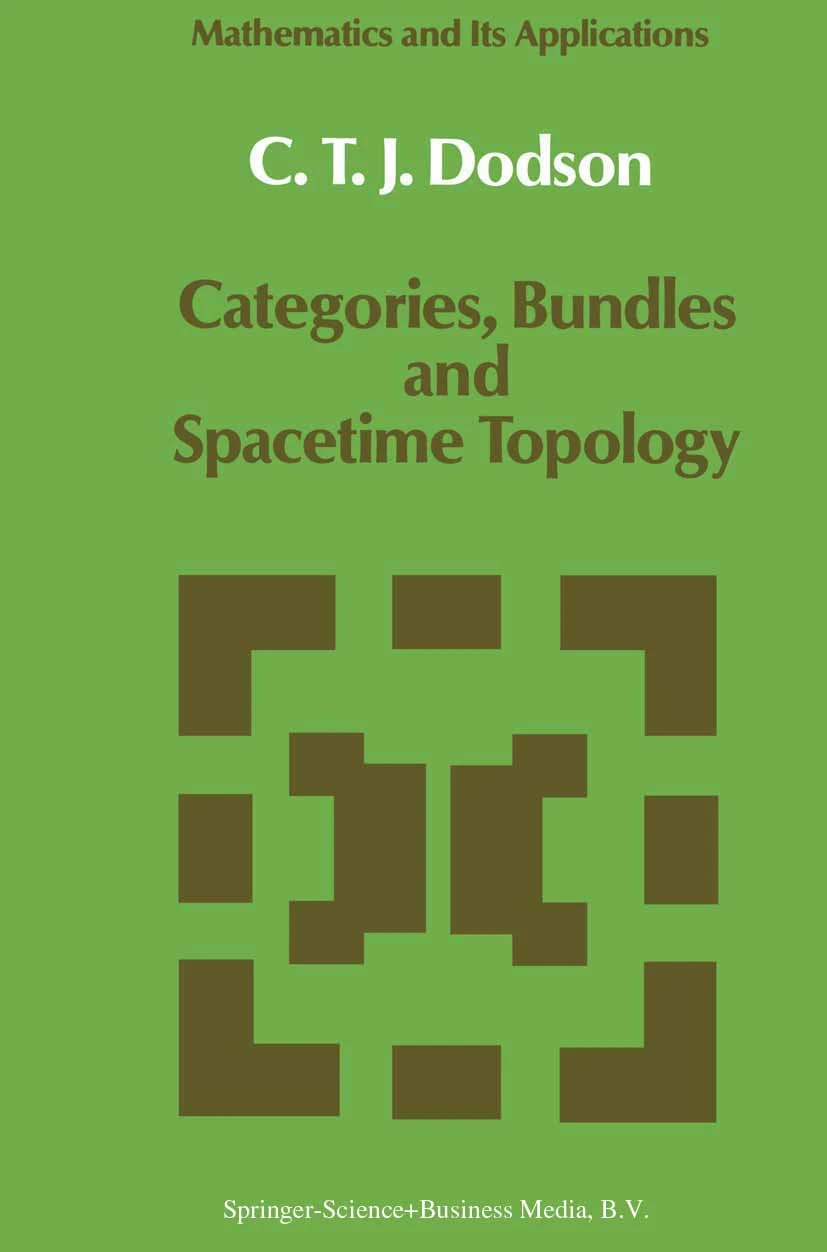
Categories, Bundles and
Spacetime Topology 
 

'First steps' are by their nature plagued by uncertainty of intent and direction, ungainliness, missteps, stumbles and ('finally') possibly falls.

Finding a starting point can be difficult.

Where to find a hand-hold, place one's foot, or other anchor?

At Lancaster University library I came across this book, first published in 1980. The cover displayed is from the 1988 edition.

In order of appeal I read:

applications, categories, spacetime and topology.

Section I starts with Preliminaries: Notation and Abbreviations; always useful (reminder).

The next, Section II Naïve Category Theory, had my immediate attention. We often speak of learners as being naïve. As lifelong learners we all meet this descriptor. I keep revisiting this word, concept - 'naïve'.

Naivety is a starting point for practitioners in health and social care too. Hence the need for supervision, mentors, the tokens of probationary (driver) and 'newly qualified'. 

Many posts on W2tQ stress the diagrammatic quality of Hodges' model. It is visibly a 2x2 matrix, (once again..) beloved of management consultants, psychologists and change agents. In Section II Dodson recognizes the London Underground map as a graph. A small example is developed, explained and illustrated on p.6. 

Graph example, drawing on the London Underground. p.6.

Section II may be a small part of the overall book but it is invaluable to me. As the photo above suggests, the book is old, especially as 1st edition. I will try to access the 2nd edition. If this work is a project with which you can (more ably!) assist, I would greatly appreciate your input. The aim is to signpost Hodges' model as a potential focus for all researchers. Especially researchers interested in trying to conjoin the sciences and humanities and develop visualization in the latter. 

C.T.J. Dodson. Categories, Bundles and Spacetime Topology. 1st Edition, Shiva, Kent. 1980.

Previously: 'math'

'Diagram' resources listed on former, now archived website.

Sunday, July 16, 2023

Reflexivity - c/o Rose G. (2012)


Visual Methodologies
"In the social sciences, reflexivity is claimed to be unnecessary for work that defines itself as scientific. Thus the practitioners of content analysis and semiology - discussed in Chapter 5 and 6 here - do not engage in reflexivity, since both, for different reasons, claim their work is scientific. However, reflexivity is a crucial aspect of work that participates in the so-called cultural turn. There, reflexivity is an attempt to resist the universalising claims of academic knowledge and to insist that academic knowledge, like all others knowledges, is situated and partial. Reflexivity is thus about the position of the critic, about the effects that position has on the knowledge that the critic produces, about the relation between the critic and the people or materials they deal with, and about the social effects of the critic's work." p.183. 


Rose, Gillian (2012). Visual Methodologies: An Introduction to Researching with Visual Materials (3rd ed.). London: Sage. PB.  [Now in 5th edition.] Image - Amazon.

I wonder if the fifth edition has revised content on photography and other content, such is the pace of change?

Friday, April 30, 2021

Conference: Diagrams in Science, Science in Diagrams

Johannes Stabius, Astrolabium imperatorium: detail (Nuremberg: Johann Stuchs, 1515). Courtesy Bayerische Staatsbibliothek, Munich, Einbl. VIII, 12, broadside, 61 × 45 cm.

Diagrammatic forms of visualization are ubiquitous in scientific publications, as well as in popular mediations of scientific contents. Every computer interface relies on diagrammatic forms, combining textual and graphical elements. Diagrams abstract and encode information. They are indispensable in many scientific contexts, and, together with charts and graphs, also in the daily media, reaching a wide audience of experts and non-experts.


As natural and familiar as these abstract forms of representing information are to us, they are products of many historical developments. Their historical roots may go back to prehistoric epochs. However, the historical integration of diagrams in scientific contexts is relatively recent. Even if these developments with regard to Western cultures have their origin in antiquity and were significantly developed further in the sciences of the Middle Ages, the early modern period can be considered the first flourishing phase of the diagram in practically all areas of the sciences of that time.

This event proposes to trace this historical development in the early modern period. It takes a truly interdisciplinary approach when talking about a timespan of roughly 500 years (1300-1800) across all early modern sciences, from Architecture to Zodiac men in medicine. The talks bring together research on the culture of the diagram in various sciences of the epoch to form a large overall picture.

This event aims at tracing the emergences and the disruptions of traditions of diagrams in all fields of scientific theory and practice, e.g. (but not restricted to) geometry, astronomy, medicine, philosophy, alchemy, law, theology, and music.

It will address, among others, questions such as the following:


1. Do the diagrams under investigation come from a precise tradition or do they form the foundation of such a tradition?

2. What is the scientific/disciplinary context of the diagrams under investigation and how do they relate to it?

3. What is the aim of the diagrams under investigation (illustration, explanation, demonstration, etc.)?

4. How does the medium carrying diagrams under investigation impact their form and role (print, manuscript)?

5. What are the most intriguing visual/graphical features to be found in the diagrams under investigation?

6. How do the diagrams under investigation interact with the text and which vocabulary is used to refer to the diagrams?

7. What justifies the diagrams under investigation to be labelled as ‘diagrams’ (and not ‘tables’, ‘maps’, etc.) and what is a reasonable demarcation line here?

8. How do the diagrams under investigation relate to scientific practices (experiments, taking measures, etc.)?

More details:

https://www.biblhertz.it/3101937/conference-diagrams-in-science-science-in-diagrams.html

Saturday, August 29, 2020

Reflecting in the Garden: c/o Anish Kapoor

individual
|
INTERPERSONAL : SCIENCES
humanistic ----------------------------------------------- mechanistic
SOCIOLOGY : POLITICAL
|
group - population
Anish Kapoor, Installation view, 2020
Houghton Hall, Norfolk, UK


See also: https://hodges-model.blogspot.com/search?q=kapoor

 My sources:

Campbell-Johnston, R. (2020) As maddening as it is mesmerising, The Times, Visual Art, Friday, July 10, p.10. 

Revely-Calder, C. (2020) The pomposity's still there, but so are the moments of magic, The Daily Telegraph, Friday, July 10, p.25.


Thursday, August 13, 2020

Tony Buzan: Mind mapping - mental literacy

Tony Buzan, The Times, April 17 2019, p.57

There are a great many diagrammatic reasoning and argumentation tools available in various forms, paper concept maps and a variety of software. As noted previously on W2tQ ever since watching Tony Buzan's Use Your Head programmes on BBC TV in the 1970s I have been fascinated by the use of drawings to represent a situation, problem and solutions. I was primed to be hooked by Hodges' model in 1987-1988.

I've been sitting on this obituary for over a year. It was sad to hear of Mr Buzan's death and still quite young by today's standards at 76 years. I never managed to make contact with Mr Buzan, although I'm sure I tried, the inevitable email - undoubtedly well-lost.

Now, letting revisions 'relax' [the draft SDGs, public health and Hodges' model resubmission(?)] I'm looking at Drupal (again) and papers that address fundamental questions about h2cm; the axes, care domains.

As an influence I've an old pb copy of Use Your Head and a recently acquired hb copy of The Mind Map Book published by the BBC.

Some of the points of interest to me include:

BULL, B.L. and WITTROCK, M.C. (1973), IMAGERY IN THE LEARNING OF VERBAL DEFINITIONS. British Journal of Educational Psychology, 43: 289-293. doi:10.1111/j.2044-8279.1973.tb02269.x

Bull and Wittrock's study was on 9-10 year olds (p.84). I've often wondered about the age at which Hodges' model could be taught.  I'm sure there are other, 'current' sources but this is a start.

There is a refreshing cultural contrast between the three Eastern basic instructions:

'obey, 'cooperate' and 'diverge'.

While the mind mapping equivalents are the three A's:

'ACCEPT', 'APPLY' and 'ADAPT'. pp.92-93.

If "drawing boundaries on a Mind Map has obvious mnemonic advantages;" is this, to some degree, what the care (knowledge) domains of Hodges' model also achieve? p.103 (and p.149).

Some chapters I can directly 'translate', e.g. -

Chapter 13 - Organising your own ideas -

Self-reflection, Self-care -

- similarly Chapter 18 Self-Analysis

The Mind Map Book
(Ideas stand for 'concepts' the latter no specific entry in the index.).

Chapter 19 Problem-Solving actually refers to interpersonal problem-solving using Mind Maps.

Chapter 19 might be extended to case formulation and especially so chapter 21 Family study and story-telling. I'm thinking of the way in health, whether physical or mental health context there is a narrative to told and listened to, acknowledged and acted upon.

Chapter 22 Thinking and Chapter 23 on Teaching, perhaps has a current analogue in Threshold Concepts and for the former Conceptual Spaces - both chapters stress learning.

The meaning of 'deep' and 'surface' learning has perhaps changed today, but deep being intrinsically motivated still stands - and could be related to the Socratic form of dialogue for engagement. p.228.

On pages 229-232 Mr Buzan demonstrated how people with special education needs can also utilise Mind Mapping. Hodges' model was created, very much with this population in mind, and in the Political domain.

'Mind Maps' ™ Acknowledged.


Wednesday, April 22, 2020

Munker illusion: Finding a palette for holistic, person-centred care

Hodges' model - Integrated Care?

It is as obvious as black and white.

Health, social care & education
are bound to be siloed.

Get over it!

What do you want: a rich picture?

Color Assimilation Grid Illusion


"Only the grid is colorful, the rest of the video is in grayscale, but the lower resolution of our color perception makes the color assimilate/blend into the grayscale cells within the human visual system."
https://www.patreon.com/posts/color-grid-28734535
 
"I've found that the grid works best."  Øyvind Kolås

individual
|
INTERPERSONAL : SCIENCES
humanistic ----------------------------------------------- mechanistic
SOCIOLOGY : POLITICAL
|
group - population


#carearchitecture #careresolution #integratedcare

See for original post:
https://www.patreon.com/posts/color-grid-28734535

My source: Massimo

Thursday, December 06, 2018

Art & Science: The need 4 Care Notation

McQueen - 'Picnic'

If you can make the core notation 
balanced,
fit for purpose 
(assess, plan, intervention, evaluation)
then annotations can be added 
according to the context 
(illness, strengths, recovery, end of life)
for a unique performance
(person centredness, integrated, holistic care)


My source: Battle, L. (2013) Scores unsettled, FT Arts, Sept 28-29, p.13.

Image: https://www.classicfm.com/discover-music/latest/graphic-scores-art-music-pictures/mcqueen-picnic/
8. McQueen - Picnic

Graphic scores serve a dual purpose: as well as looking beautiful, they explain abstract ideas about how the music should be played. In this piece, written in 2006, each line represents a different instrument, with the colours and shapes informing how the music might sound.

Saturday, July 22, 2017

Bliss + Symbols = Language for Care?

As I have written before on W2tQ the initial attraction of Hodges' model was its relation to brainstorming, mind-mapping, diagrams and the possibility of iconic languages. In addition, in the 1980s graphical user interfaces GUIs were introduced on microcomputers and PCs. There followed a rapidly expanding literature on icons, visual languages and interfaces. I had also heard of a Charles Bliss [ Charles K. Bliss (1897-1985) ] and Bliss Symbolics. So, to brainstorming ... we can add ideographs and pictographs.

This past week BBC Radio 4 explored the life and work of Charles Bliss and the application of Bliss in literacy, care and special needs education. The programme presented by Michael Symmons Roberts is available for 4 weeks. For its 30 minutes length the programme introduces Bliss himself, his life, aims, the challenges he and his wife faced and the ongoing legacy of his work. It could be argued - and has been - that this is a step backwards to hieroglyphs; but the programme is broader in its reference to 'care'...

individual
|
INTERPERSONAL : SCIENCES
humanistic --------------------------------------- mechanistic
SOCIOLOGY : POLITICAL
|
group

'bliss'


Wikipedia - Portal:Constructed languages


BBC Radio 4
The Symbols of Bliss

Ideal of
Universal - International
Languages


In the 1990s I received some copies of a journal devoted to 'Unish' a constructed language. The link to unish.net does not seem to work, but the Wikipedia site below includes some details.

Sunday, January 29, 2017

Hodges' model: Combined Care Feature Capture - Black Box + White Box?

Nursing is, in theory and practice, far removed from multimedia; which in turn has changed markedly from when the poster quoted below was published in 1999. 

Nursing is 'multi-media' in the sense of combining several data sources across several domains of knowledge and from a range of media.

[From a conference poster no longer available:]
"Feature Detectors 
Feature detectors are used to build a semantically rich index entry for the original multimedia object. They do this on two different levels:
  1. Blackbox detectors are implemented in a programming language to access the raw multimedia data and to derive the desired features from it. Example: the web_header detector sends a HTTP HEAD request to the specified HTTP server and extracts the content type from the response.
  2. Whitebox detectors consist of queries over the already collected feature values. Example: the page_type detector uses the content type to determine if an object is a page.
In the general case blackbox detectors will derive low-level feature data, e.g., the color distribution of an image. But they can also be used for more complex tasks, like finding a face in an image. The function of whitebox detectors is to relate low-level features to concepts, e.g., an image is a portrait because its color distribution classifies it as a photo and it contains exactly one face."
Hodges' model is situated and in healthcare context is everything. Behind a hospital clinic or ward door we might expect certain features to be found. Out in the community following a referral again certain features will be found. The features take on a personalised nature as key features confirming a diagnosis, problem or care issue are presented by the patient (client) or their carer. I'm not sure whether this is useful or not, but the domains of Hodges' model suggests quite a few boxes are required to tick the box that is holistic - integrated care.

And that does not take account of exactly where the knowledge resides; that is another test.


M., A. Schmidt, M. Kersten. Acoi: A System for Indexing Multimedia Objects. In International Workshop on Information Integration and Web-based Applications & Services, Yogyakarta, Indonesia, November 1999. (n.b. The link in the poster is no longer valid.)

My original source:
ERCIM News No. 59 October 2004 Grammar Enables Effective Multimedia Search Queries. pp.63-64.

Saturday, January 28, 2017

Hodges' model: A Black Box

"Globally, every theory of systems became a graph of either a simplex or a complex, all things being first of all situated in the depths of a black box." p.3.

Genesis: Michel Serres
"Who, in the end, and from the other side of the picture can boast of having conceived a general system, of projecting or constructing a general system of communication or relation, as a universal network? What would be conveyed by it? and how? What harmony, what cacophony would come of it? Do we have any sort of an ear for hearing that kind of thing?" p.4.

Michel Serres (1995). Genesis (Studies in Literature & Science). (Trans. Genevieve James, James Nielson) Ann Arbor: The University of Michigan Press.


Sunday, January 08, 2017

Perceptive Movement (Fifteen Points in 1 of 4)

individual
|
INTERPERSONAL : SCIENCES
humanistic -------------------------------------------  mechanistic
SOCIOLOGY : POLITICAL
|
group-population


My source:
A presentation at Conceptual Spaces at Work 2012
& Brilliant Ideas, Bloomberg, Random International

Sunday, August 21, 2016

Self: Inside and Outside the Boxes c/o Tate Liverpool Maria Lassnig

individual
|
INTERPERSONAL : SCIENCES
humanistic -------------------------------------------  mechanistic
SOCIOLOGY : POLITICAL
|
group-population


Let there be no - 'Invisible Rooms' - in the Art and Science of Care

Visited Tate Liverpool, 1000-1230 today.

Monday, February 01, 2016

Definition of a conceptual framework, Antonenko (2015)

"Definition of a conceptual framework  
Anecdotal evidence obtained from numerous discussions with students, colleagues, and the few research design books that address the issue of conceptual frameworks (e.g., Ravitch and Riggan 2012) indicates that the construct conceptual framework is viewed from at least three perspectives. The first, and most superficial, view defines conceptual framework as a visual representation of the structure of the study and its alignment with the relevant theoretical foundations. According to this view, conceptual framework is a figure, typically presented as a concept map, that summarizes all key information presented in the literature review of the study" (p.55).
At first it is confusing when within academic writing you have to present your theoretical - conceptual framework. In Hodges' model I already have one. Antonenko is very informative but I don't believe that this first definition is necessarily that superficial. It depends on the context and purpose. There is something in instrumental value that seems closely allied with the visual form and the paper provides an example.

If as Antonenko suggests there is a conceptual framework presented in the literature review, perhaps Hodges' model as a conceptual framework that can integrate discussion and the conclusion(s)? From the paper there are other points of note - even in the sub-headings alone, for example:

Conceptual framework is more than a literature review
The connective function of conceptual frameworks

Discipline is essential to prevent any risk of superficiality, or navel-gazing and Antonenko lists many strategies, including:
Avoiding getting stuck in a ‘‘no-risk’’ zone (Miles and Huberman 1994, p. 22), a situation where all concepts in the framework are abstract and interconnected. Informed commitments must be made regarding what the researcher finds as most relevant and important pieces of the conceptual framework. The entire point of building a conceptual framework is to be explicit and selective about the focus of the study (p.66).

Antonenko, P. D. (2015). The instrumental value of conceptual frameworks in educational technology research. Educational Technology Research and Development. 63(1), 53–71. http://doi.org/10.1007/s11423-014-9363-4

My source and with many thanks:
Technology Enhanced Learning studies, Module 6. Lancaster Univ.