Hodges' Model: Welcome to the QUAD: materials

Hodges' model is a conceptual framework to support reflection and critical thinking. Situated, the model can help integrate all disciplines (academic and professional). Amid news items, are posts that illustrate the scope and application of the model. A bibliography and A4 template are provided in the sidebar. Welcome to the QUAD ...

Showing posts with label materials. Show all posts

Friday, February 13, 2026

{ Humanise } ARChITECTURE

INDIVIDUAL
|
    INTERPERSONAL    :     SCIENCES               
HUMANISTIC --------------------------------------  MECHANISTIC      
SOCIOLOGY  :   POLITICAL 
|
GROUP


ARChITECTURE


Humanise.org


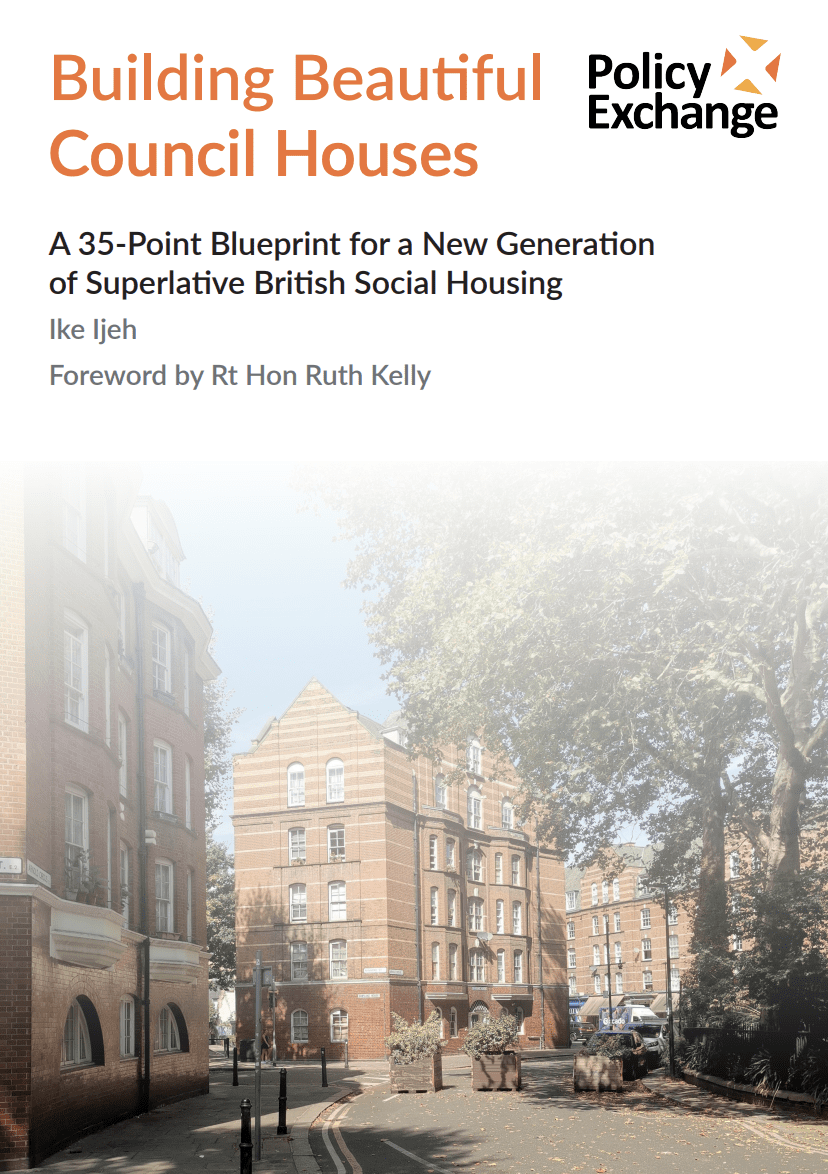
My source: Francesca Specter, Which is the fairest of them all? House&Home, FTWeekend, 11-12 October, 2025. pp.1-2.  

Spector refers to the Policy Exchange publication above, and other works:

McAdams P, Svobodova S, Newman T-J, Terry K, Mather G, Skelton AE, et al. (2025) The edge orientation entropy of natural scenes is associated with infant visual preferences and adult aesthetic judgements. PLoS ONE 20(2): e0316555. https://doi.org/10.1371/journal.pone.0316555

Valentine, C.; Wilkins, A.J.; Mitcheltree, H.; Penacchio, O.; Beckles, B.; Hosking, I. Visual Discomfort in the Built Environment: Leveraging Generative AI and Computational Analysis to Evaluate Predicted Visual Stress in Architectural Façades. Buildings 2025, 15, 2208.
https://doi.org/10.3390/buildings15132208

Calder, B. (2016). Raw Concrete: The Beauty of Brutalism. London: William Heinemann. 

Previously: 'housing' : 'homeless' : 'architecture'

Monday, October 27, 2025

Health, planet, self: after - 'Can molecular Lego save the planet?'

Ack: © Johan Jarnestad /
The Royal Swedish Academy of Sciences

'This morning’s Nobel Prize in Chemistry is one that’s been anticipated for several years now: it goes to Susumu Kitagawa of Kyoto, Richard Robson of Melbourne, and Omar Yaghi of Berkeley for metal-organic frameworks.'
'So what’s a MOF? This goes back to the idea of “coordination chemistry”, a huge topic in the inorganic and metal-organic fields.'


The 2025 Nobel Prize in Chemistry: Metal-Organic Frameworks 


Can conceptual Lego - 'human-metal organic frameworks' -
save healthcare, planetary and self-care?

'One astonishing characteristic is the amount of surface area locked away in these new materials: a MOF weighing one gramme can have an internal surface area the size of a football pitch^. MOFs are often likened to Hermione Granger's bottomless handbag in the Harry Potter books: a tiny exterior concealing a seemingly infinite interior. Rice University chemist Stavroula Alina Kampouri has called MOFs "magical sponges", describing them as "not just elegant crystals you'd admire under a microscope; they're an entire universe of structures, each like a miniature city of tunnels and rooms waiting to be filled."'
Anjana Ahuja, Can molecular Lego save the planet?, Opinion Science. Financial Times, 15 October 2025, p.22.

individual
|
INTERPERSONAL : SCIENCES
humanistic -------------------------------------------  mechanistic
SOCIOLOGY : POLITICAL
|
group-population


'This is not an ivory-tower sort of topic, though: the importance of these sorts of complexes cannot be overstated. They were the basis for the first Nobel awarded in inorganic chemistry (1913, Alfred Werner) and metal coordination is how the iron atoms in hemoglobin carry oxygen to the cells of your body to keep you alive, for starters. You can say the same thing about photosynthesis in plants, and about the actions of the many crucial enzymes in every living creature on the planet that have metal-ion centers in them. Outside of biology and biochemistry, the structures of minerals similarly cannot be understood without a knowledge of coordination chemistry.'


The 2025 Nobel Prize in Chemistry: Metal-Organic Frameworks

Popular information. NobelPrize.org. Nobel Prize Outreach 2025. Mon. 27 Oct 2025. <https://www.nobelprize.org/prizes/chemistry/2025/popular-information/>

^Is this a question for BBC Radio 4 More or Less?

Of course, I keep posting about the Nobel Prize in the hope of a prize - due recognition for Hodges' model. Discretely of course, given a limited readership. 
Go figure: in 3D naturally.

Sunday, September 14, 2025

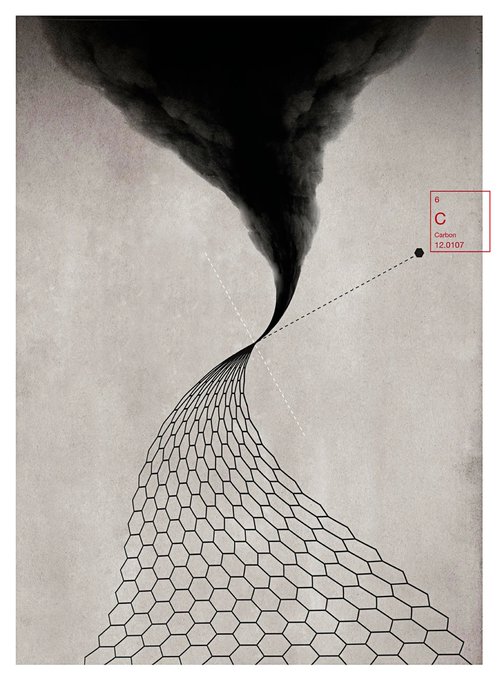
Graphene just broke a fundamental law of physics

Graphene just broke a fundamental law of physics.

Its electrons just did something physicists thought was impossible. For nearly 200 years, metals have obeyed the Wiedemann-Franz law – the rule that electrical conductivity and thermal conductivity always rise and fall together. 

But in ultra-clean graphene, researchers at the Indian Institute of Science found the opposite. As electrical conductivity increased, thermal conductivity dropped, shattering a principle taught in every physics textbook. 

The key lies at the “Dirac point,” a strange electronic tipping point where graphene is neither a metal nor an insulator. Here, electrons stop behaving like individual particles. Instead, they flow collectively as a nearly perfect fluid – a state called a “Dirac fluid.” 

This discovery doesn’t just rewrite the rules for graphene. It provides a tabletop window into extreme physics usually reserved for black holes and high-energy colliders. Scientists say this behavior could help probe mysteries of quantum entanglement, black hole thermodynamics, and the very fabric of matter itself.

 ["Universality in quantum critical flow of charge and heat in ultraclean graphene." Nature Physics, 2025] ...
Individual
|
      INTERPERSONAL    :     SCIENCES               
HUMANISTIC  --------------------------------------  MECHANISTIC      
 SOCIOLOGY  :    POLITICAL 
|
Group
While I can't fully understand this paper (even the abstract!), I realise that it is taking what seems a long time^ for industry and business to understand and realise the potential of graphene in industrial and technological applications. 


Hopefully, applications will emerge, that are beneficial to all. Reducing energy use, improving efficiency, removing pollutants even more effectively, imcreasing the durability and hence lifetime of materials and products, and more.

Also, marvellous to see global collaboration at work, as science continues to asks questions.

^I could have written exploitation there, but could we put the collective and planetary first?


Majumdar, Aniket and Chadha, Nisarg and Pal, Pritam and Gugnani, Akash and Ghawri, Bhaskar and Watanabe, Kenji and Taniguchi, Takashi and Mukerjee, Subroto and Ghosh, Arindam. (2025) Universality in quantum critical flow of charge and heat in ultraclean graphene, Nature Physics. http://dx.doi.org/10.1038/s41567-025-02972-z

My source: https://x.com/Rainmaker1973/status/1966896966316474505

Which includes a video 5m 'Quantum Critical Flow in Graphene: Charge & Heat Dynamics'

https://www.youtube.com/watch?v=LrImy9PAHGk

See also on W2tQ: 'physics : 'women'

Friday, September 22, 2023

"Conceptual: only worth the paper it's written on"

Financial Times. June 9, 2012, p.11.  
"How do you prove you own a work of conceptual art? This is an interesting issue in today's art market, with the trend towards the dematerialisation of art, and the primacy of the idea over its physical presence.
For example, the late US artist Félix González-Torres's works include "Candy Spills", in which wrapped sweets are piled on the floor or in a corner, to be taken and eaten by viewers. When the pile has gone, the owner of the work replenishes it.
So what stops anyone making and selling their own "Candy Spill"? The answer is the certificate of authenticity issued by the artist or their estate. This scrap of paper is, in fact, the only proof that the work of art genuinely belongs to you, and this is actually what you buy and sell."


INDIVIDUAL
|
     INTERPERSONAL    :     SCIENCES               
HUMANISTIC --------------------------------------  MECHANISTIC      
SOCIOLOGY  :   POLITICAL 
|
GROUP

cognition, reasoning
imagination, 
creativity
concepts, ideas
personal aesthetics
subjective - personal meaning
"This is mine!"

materials
physical objects
dimensions, form,
properties
entropy: time, decay - disorder
change
art and arts
culture - 'what is art?'
Art criticism
Collective aesthetic

'the Market'
Economic Worth / Value
Values
Proof of ownership
law, intellectual property / ©


Adam, G. "Conceptual: only worth the paper it's written on". Financial Times, The Art Market. Collecting, June 9, 2012, p.11.

Sorting / clearing books and papers ongoing. Break next week - inc. reading.

Saturday, June 17, 2023

'Process-based art' in Hodges' model

Process-based art appears to confirm my association of 'process' with the sciences care (knowledge) domain in Hodges' model. Hopefully, we all have the opportunity to confirm this as small children #PaintOnTheHandsFeet 

INDIVIDUAL
|
INTERPERSONAL    :     SCIENCES              
HUMANISTIC --------------------------------------  MECHANISTIC
SOCIOLOGY :   POLITICAL
|
GROUP


“I layer the lidocaine [the numbing agent used by dentists before uncomfortable procedures] onto the white,” explains Estep, “which has been painted around the edges with black paint.” At this point he takes the canvas off of the stretcher and, in a nod to his former work as an art technician, restretches it, but this time disturbing the still-wet borders and creating smudgy mistakes as he loses all feeling in his hands. This audacious dulling of the senses raises questions of authorship, randomness and the very idea of painting – while also creating beautiful works.

The materials and methods sit mostly within the canon of manual labour,” Estep explains, hinting at the discrepancy between the physical work that goes into his paintings and their eventual impracticality. Asked about the safety of the procedure, Estep, a robust and charismatic 33-year-old, shrugs his lack of concern. More worryingly, he then laughingly recalls one time when he got the measurements wrong and lay completely immobilised on his studio floor for several hours."


Art
Culture


Artists mentioned include:

Oscar Tuazon: https://www.luhringaugustine.com/artists/oscar-tuazon#tab:thumbnails

Ryan Estep: https://www.artnet.com/artists/ryan-estep/

Analia Saban: https://analiasabanstudio.com/

Holmes, Pernilla, A piece of the action, FT Weekend, HTSI, Nov-Dec 2014? pp.14-18.
(I did not record the date on the pages.)

See: https://www.arthistorynews.com/articles/3143_Guffwatch__Processbased_art

Saturday, December 10, 2022

Northern Network for Medical Humanities Research Congress 2023 - Call for Papers

We are delighted to announce that the Call for Papers for Critical: NNMHR Congress 2023 has now gone live: http://nnmh.org.uk/nnmhr-congress-2023-call-for-submissions-and-theme-announcement/

The congress will be held online April 19-21 2023.

Reflecting on a decade since the ‘critical’ turn in medical humanities heralded by an experimental 2013 symposium hosted by Durham University, this congress—online for the second time—explores questions like:

  • What does the ‘critical’ in critical medical humanities mean to you?
  • What has critical medical humanities accomplished in the past ten years, and to what extent has it delivered on its early claims and promises?
  • What is happening in the field today (and conversely, what is not happening enough)? Where is this happening, who is involved, and who and what has been left out or marginalised in this turn?
  • What should be the aims and ambitions of critical medical humanities for the next ten years? What forms of material change should the field seeks to bring about, in what sites and settings, how, and for whom?

Abstracts are invited for: 

  • ready-formed panels
  • individual papers
  • lightning talks
  • video poster presentations

We particularly welcome abstracts from those who do not necessarily identify themselves as medical humanities researchers, as well as those working outside the formal structures of the university.

Please note that proposals should address one of the following thematic strands:

  • Critical (what?)
  • Collaboration (with whom?)
  • Contexts (where?)
  • Methods (how?)
  • Materialities (to what effects?)

More information, including how to apply, can be found on the NNMHR website here. We look forward to receiving your submissions.

Best wishes,

The NNMHR Congress 2023 team

#nnmhr2023

Thursday, November 10, 2022

New York – Livable Cities: A Conference on Issues Affecting Life in Cities

NEW YORK Conference: Abstract Deadline

New York / Virtual
14-16, June 2023
Abstracts: Nov 20th, 2022 (Round One)


A cross-departmental conference held at City Tech (CUNY) with the Departments of Architectural Technology, Construction Management, Civil Engineering and Environmental Technology

LIVABLE CITIES - NEW YORK is a conference covering architecture, design, planning, health, technology, urban economics and social policy. It is calling for contributions to specific strands of sustainability, resilience, design, planning and construction.

These strands seek to explore issues related to net-zero energy buildings, sea defenses and strategic retreat, life cycle analysis in the construction industry, Building Environmental Assessment methods, EcoHomes, BREEAM, alternative energy generation in cities, material science and much more. 

The conference is organized across departments at City Tech (City University of New York) with Amps and publication support from Routledge and UCL Press.

CALL SUMMARY

What makes a city livable? Transport, housing, health and environment. Matters of culture, entrepreneurship, crime and safety. Affordability and education. Depending on whose ‘livability index’ you look at, it may include design quality, sustainability and the digital infrastructures of the smart city. Other criteria applied may encompass food access, job opportunities or walkability. Inclusivity and the politics of participation also come into play.

The past two decades have seen an exponential rise of livability measures. Reflecting increased urbanity globally, they risk making the notion of the city ever more contested. The two cities that host this event are cases in point. The Mercer Livability Ranking takes New York as the datum by which all other cities globally are graded – as better or worse. London, by contrast, measures itself: the London Assembly scoring everything from air quality to indices of deprivation. When we consider the livability of cities then, it is clear we are dealing with a plethora of issues – both isolated and, inevitably, interconnected.

Within this broad livability framework, we seek to develop strands and publications around themes of the design and construction sectors – particularly as they relate to sustainability and resilience.

https://amps-research.com/conference/livable-cities-new-york/

My source: http://www.cosmobilities.net/ list

n.b. A suggestion: consider the conference themes and the structure and domains of Hodges' model; what relationships, dichotomies, synergies, and opportunities can you glean?

Wednesday, December 30, 2020

Weighty matters ...

individual
|
INTERPERSONAL : SCIENCES
humanistic ----------------------------------------------- mechanistic
SOCIOLOGY : POLITICAL
|
group
 I have due regard for
my
'footprint'?


"The weight of roads, buildings and other constructed or manufactured materials is doubling roughly every 20 years, and authors of the research said it currently weighed 1.1 teratonnes (1.1 trillion tonnes)."

Our 'footprint'?

Our 'footprint'?


https://phys.org/news/2020-12-manmade-mass-outweighs-life-earth.html

My source: several

Global human-made mass exceeds all living biomass, Nature (2020). DOI: 10.1038/s41586-020-3010-5 , www.nature.com/articles/s41586-020-3010-5


Saturday, December 26, 2020

National Felt Service: Art - Sciences - Health

individual
|
INTERPERSONAL : SCIENCES
humanistic ----------------------------------------------- mechanistic
SOCIOLOGY : POLITICAL
|
group


Gabaldoni, A. (2020) Soft Touch, The Sunday Times Magazine. 6 December, pp.48-55.

https://www.sewyoursoul.co.uk/shop/


Saturday, December 29, 2018

The Art & Science of Health: [conceptual scraps i]

The role that both art and science have to play in health, medicine and nursing is recognised by all. The distinction can be made in a great many ways using Hodges' model. Now: there is an exercise for a new group of student nurses ... ?

As I hope is evident in numerous blog posts and subjects of relevance to h2cm, notably, conceptual spaces and threshold concepts, concepts are a basic element in nursing scholarship and debate within art.
 
In the FT Weekend June 9-10, 2012, p.11 I read: "Conceptual: only worth the paper it's written on" (Georgina Adam). From a healthcare perspective, Adam's opening question seems fairly innocuous:

"How do you prove that you own a work of conceptual art?"
Amid the ongoing revelations involving user's personal data and the governance and values of social media companies lies the question of ownership. First though, back to Adams:
"This is an interesting issue in today’s art market, with the trend towards the dematerialisation of art, and the primacy of the idea over its physical presence.
For example, the late US artist Félix González-Torres’s works include “Candy Spills”, in which wrapped sweets are piled on the floor or in a corner, to be taken and eaten by viewers. When the pile has gone, the owner of the work replenishes it. So what stops anyone making and selling their own “Candy Spill”?

The answer is the certificate of authenticity issued by the artist or their estate. This scrap of paper is, in fact, the only proof that the work of art genuinely belongs to you, and this is actually what you buy and sell.

So losing it is a disaster."
The contrast of this within health care and its 'record' is quite stark. There are at least two ways to  distinguish between the scraps of paper we use ...:

to be continued...

Friday, March 30, 2018

When a Double-Page Spread is not Enough ...

individual
|
INTERPERSONAL : SCIENCES
humanistic ---------------- the HEALTH RECORD --------------- mechanistic
SOCIOLOGY : POLITICAL
|
group

VA ".. how important is the notion of the book or the page to your research and outcomes?"

AGV "They are fundamental to my research.


I explore the double-page spread as a material support and a discursive space for visual ideas within an exhibition context. ...


The double-page spread is for me an extended space, a place to develop a site-specific practice.


... My intention is to generate meaning through symbolic signification, enhancing its material qualities through mirroring, folds, reflections and echoes."


Source: In Conversation, PRINTMAKING TODAY, Spring 2018, Cello Press Ltd. Volume 27, No. 1 Issue 105, p.4. Victoria Ahrens talks to Altea Grau Vidal about her PhD research and the format of the double-page spread as an opening for all her work.

Saturday, June 17, 2017

The Compartmentalisation of Grief and Tragedy: RIP

INDIVIDUAL
|
INTERPERSONAL : SCIENCES
humanistic ----------------------------------------- mechanistic
SOCIOLOGY : POLITICAL
|
POPULATION


a person

A LOVED ONE

(timeframe: grief)

(timeframe: Why)

(timeframe: answers)
to questions that should not need be asked 
(again and again....)

'problem'

Fear

uncertainty

advice

flight OR fight

values

ethics

morality

PSYCHO-

a house
a house
.
.
.
a house
a house
Fire a house fighting
.
.
Fire a house fighting
||||||||||||||||||

strength of towers
cladding - facade

material science

introducing: dead space

"probably"
'problem'

property: transparency vs opaque

(time-frame: risk, evidence)

-PHYSICAL
SOCIO-

a HOME

a group of people

family friends

social housing

a community

the most terrible of good-byes

Towers of Strength

SPIRITUAL

(timeframe: social justice)

D.ANGER

'problem'

introducing: a 'new' home

-POLITICAL

property

material evidence

facade - cladding

cost
££ value $$

Health & Safety Law

Building regulations

(timeframe: Public Inquiry)
(timeframe: ACTION)

GOV.UK

'problem'

'political correctness'?

local-regional-national

introducing: another Public Inquiry


Some reflections on the tragic event at Grenfell Tower, London, UK.

Personal note: In posting this, of course, I do not wish to trivialise the enormity of what has happened, the point is that even in disasters - across the world, tools are needed to reflect, think critically, to support learning in order to ultimately assure a safer future for all...


Wednesday, January 04, 2017

ERCIM News No. 108 Special theme: "Computational Imaging"

Dear ERCIM News Reader,

ERCIM News No. 108 has just been published at http://ercim-news.ercim.eu/en108

This issue features:

ERCIM News 108
  • A Special Theme "Computational Imaging" with 21 articles providing an insight in the many complex facets of computational imaging, coordinated by the guest editors Joost Batenburg (CWI) and Tamas Sziranyi (MTA SZTAKI) .
  • Keynote "Imaging as a Ubiquitous Technique: New and Old Challenges" by Andy Götz, Head of Software at European Synchrotron Radiation Facility and Armando Solé, Head of Data Analysis at European Synchrotron Radiation Facility
  • A "Research and Innovation" section with news about research activities and innovative developments from European research institutions
This issue is also available for download in pdf and ePUB

Thank you for your interest in ERCIM News. Feel free to forward this message to others who might be interested.

Next issue: No. 109, April 2017 Special Theme: "Autonomous Vehicles"

Best regards,
Peter Kunz
ERCIM News editor in chief

Sunday, March 24, 2013

Society (global trends?) that diminishes the greatest gifts

Last December 15th -16th Harry Eyres' column The Slow Lane in the FT Weekend (p.24) pointed me to the New Economic Forum's pamphlet entitled The New Materialism. Mr Eyres wrote about the The most precious gifts and the fact that things do not last like they used to. Quality lies in things that last, things that are worth repairing and repairable.

The piece prompted me to think back about some of the children's toys. Very gratefully received as gifts, guilt sprung when more of an impulse (impelled) buy: what about the amount of plastic, the oil, the probable lack of longevity in use, the longevity in decay and the some-other-where of waste and disposal?

Recall then the joys of the wooden train set, with non-toxic paint... The toy flung aside as the cardboard box is tossed, turned and crawled into and puzzled about. The reflection took me around a few towns too, the pound shops. It's good when you really can afford to make a choice about what you buy, about quality. The hammer, clearly not ready for hand: unbalanced once home. I'm not saying all 'cheap' screwdrivers are the same, but the slightest amount of torque and the handle is undone. Probably the one cheap find and sometimes free are the watchmaker's screwdriver sets. Eye-saving when the screw on the side of my glasses comes loose and the lens falls out on something soft thus far.

All the mass production and lack of love and care invested in making things - the loss of true craft, as Mr Eyres points out, makes me wonder whether this also pollutes the way we value our health.

Like so much advertising - conditioning - we recognize the true significance of what is happening only when forced to and we ourselves suffer a failure and 'break' in some way, to some degree.

This issue is provoking various responses. An example being Beck's Song Reader, an album released solely as sheet music.


Saturday, June 20, 2009

Relative poverty (1) - intrapersonal

There are many paradoxes in life and many of these are concentrated in the realm of health and medicine (a major sub-division of life and death).

For decades the link between poverty and standards and quality of health has been recognised and politicised in the media and policy. Just this past week was news of a Bill to make the eradication of child poverty a legal obligation not something that can be the political objective at the start of a Government and then cast aside.

Many things are relative and poverty is often described in this way applying to individuals, social classes, communities, regions and whole nations. Using the knowledge domains of Hodges' model what reflections does this prompt? Let us see:

INTRAPERSONAL: On one level highlighting poverty here appears a nonsense as usually we think of material wealth; the ability of people to be able to put decent quality - nourishing food on the table. In the miserable trap that poverty presents, it is perverse to suggest that health and social care workers - indeed all 'customer facing personnel' seek poverty. But they should exercise: poverty of thought.

safety netHealth and social care are often couched in terms of being a safety net, especially in community care - this conception emphasizes health and social care as a physical resource. In the intra-interpersonal domain though we are concerned with individual mental life, beliefs, attitudes, thoughts and emotions....

So here it is as if we must adopt the philosophy of Bruce Lee and turn the 'art of fighting without fighting' into the 'art of caring without caring' through a momentary forgetting in order to care effectively. We suspend our thoughts - take a mental breath, bring our training and current evidence to the fore. The conceptual safety net does not work if it comes pre-filled with bias, prejudice, pre-conceived ideas and negative expectations. There is of course a very poignant irony in calling for people to forget, suspend belief - even for an instant - at this time and in this domain. For health and social care workers in wiping the slate clean we do not think, but are VERY receptive to what follows.

This is where the wealth is:
between us.

We should not play the greedy capitalist and keep collaborative tools like Hodges' model to ourselves.

It was made to share: in my mind and yours a global health resource...

Image source: BBC

safety net: http://blogs.jamaicans.com/metinking/2009/04/30/a-jamaican-legacy-that-deserves-our-support/

Additional links: 'Poverty' on W2tQ


http://www.bmj.com/cgi/content/citation/325/7354/51


Monday, July 16, 2007

Human Ecology: Northern England CHE Group - Sedbergh 30 June

As mentioned previously the 2nd Northern England Centre for Human Ecology group meeting was held in Sedbergh last month Saturday 30th 11-3pm.


In addition to hosting the meeting the local organiser(s) also arranges the content for the session - with outside support if necessary. This time Deyna and Criggy took up the baton.

To begin, Criggy shared her work working in rural communities. Referring to my notes many topics were discussed including: community halls as a focus of the community. Raising the profile of sustainable communities, transport in a rural vs urban context and climate change.


Although we were not a legion the diverse experience represented that afternoon showed in knowledge of organisations, e.g. the work of the Commission for Rural Communities and publications - 'What are sustainable rural communities? - 5 Thinkpieces'.

We discussed the car and private transport, the state of public transport, housing, community engagement, belongingness and parish plans. Also in our minds were the extremes of community in terms of age groups, those commuting and second home owners, 'active' and 'passive' community members.

Next: AGENDA 21 and the need to empower civil society locally and globally.

Criggy highlighted and explained the CRC's work on Rural Disadvantage, especially the overlap of:

  • Access poverty
  • Network poverty
  • Financial poverty
The Rural Community Carbon Network and the number of communities that are driving forward with the sustainable agenda not just with words but deeds towards carbon neutrality.

Personalities in this field also featured notably Rob Hopkins. Finally, at least by my notes "Sustainable Communities Plans" were discussed.

Next, Deyna presented her work (I've copied her notes below) on Green Sedbergh covering:

PROJECTS:

Book town and the regeneration after foot-and-mouth
Green Marquee - raising awareness of environmental issues
Green Tourism initiatives - cycle map/local access leaflet / outdoor festival
Peoples Hall - green refurbishment / rebuild
Plastic bag reduction / replacement
Community cinema - social events
Local sustainability - range of shops /local produce
Farmers market
Sedburgh School - local employment
Hydro-electric scheme?
Re-opening of reservior?

ISSUES:

Low wages / High cost of housing / 2nd home syndrome
Rural location / Public transport
2 car families / middle class values
YDNPA national park
Apathy / smugness / commitment

Deyna then sought the groups ASSISTANCE regarding:

Green Parish plan - How? What? Timescale? Cost?
Alternatives to plastic bags?
Implementation incentives - socio-economic?
Balance of individual / community / business needs
Other sustainable / green possibilities

The time really whizzed by, to the extent that my tea went cold (a crime in these circles!) and we only had a break for lunch around 2pm.

The next meeting will be end of Sept-Oct time and may be near Horwich, Bolton. I'll post more details as soon as they are available. Sedbergh is a lovely book town (I bought two second hand) and I really enjoyed meeting CHE students and alumni old and new and as an outsider learning more about human ecology.

Andy also reminded me about the CHE ecopsychology course.