Hodges' model is a conceptual framework to support reflection and critical thinking. Situated, the model can help integrate all disciplines (academic and professional). Amid news items, are posts that illustrate the scope and application of the model. A bibliography and A4 template are provided in the sidebar. Welcome to the QUAD ...
I am pleased to invite the submission of abstracts to the Prototypes for Humanity 2026 Short Papers Platform.
Abstract Submission Deadline: 22nd May 2026 Invitations to Successful Authors: 8th July 2026 Conference Dates: 15th - 19th November, Dubai, UAE
** Description **
The Short Papers Platform provides a forum for professors to share their research and engage in interdisciplinary dialogue, fostering global collaboration and knowledge exchange, with a focus on driving real-world impact through academic research.
For 2026, Prototypes for Humanity is delighted to announce the launch of a strategic partnership with the Investment Corporation of Dubai (ICD), for the Short Papers Platform. This joint effort reinforces the programme’s commitment to advancing impactful innovation through collaboration between academia and industry, focusing on the key sectors and themes that reflect international research priorities and that are relevant to the city and to the fund.
Themes
Wellbeing and Human Performance
Infrastructures and Cities
Autonomous Systems and Advanced Manufacturing
Environment, Sustainability and Energy
Mobility and Logistics
Socio-Economic Empowerment, Digital Economies and Future Markets
Open and Speculative
Awards
As part of the programme’s ongoing commitment to research translation, ICD will award a $50,000 prize to one of the short papers presented at the conference. The award recognises academic work with strong potential for practical application, identified through engagement with ICD industry experts, and will support the winning project’s next stage of development towards implementation.
In London currently, 20th - 23rd I was on my way to Bankside Gallery and walking by Temple Place, #2 to be precise, on a board outside I read:
'The Weight of Being: Vulnerability, Resilience and Mental Health in Art'
Taking in the mental health and illness of artists, gender, domesticity, industrial and political struggle, COVID, and Gaza I spent and enjoyed a two hour detour. The building is also amazing. The exhibition is on until 19 April 2026, closed on Monday's and today 21st February. Before I share some text from their website, the interior of the building was a 'virtual' experience, but without the technology. Helpfully, the exhibition is spread across several rooms.
'Curated by Angela Thomas, this new exhibition explores artistic expression and mental health. Through depictions of deeply personal and collective experiences, it examines the powerful ways in which artists capture vulnerability, resilience, and their search for solace.
Including the work of a diverse range of twentieth century and contemporary artists and their varying perspectives, The Weight of Being showcases how artists have captured the psychological and emotional impact of societal pressures, resilience in the face of adversity, and existential uncertainty.
Alongside dozens of artworks drawn from galleries and collections across the UK, the portraits, landscapes, and figurative studies of the lesser-known artist John Wilson McCracken (1936–1982) are woven throughout. Denied the opportunity to return to the Slade School of Art following a period of hospitalisation for mental health reasons, McCracken spent much of his career in Hartlepool, producing work that reflects a profound sensitivity to the emotional and social pressures of his time. Shaped by personal and collective struggles, his art offers a deeply human perspective on the exhibition’s themes, revealing how external forces imprint themselves on the mind, body, and creative spirit.' Continued . . .
The building as a whole - Two Temple Place is owned and run by a registered charity, the Bulldog Trust.
I will definitely (hopefully!) visit again, on the way or returning from the South Bank of the Thames. The video below presents key aspects of the building's amazing interior and history:
We would like to draw your attention to the following funding opportunity offered by NIHR. Please pass on the information as appropriate. Thank you.
‘Short Placement Award for Research Collaboration (SPARC) (Cohort 12)
This award offers a unique opportunity to design and undertake a short, bespoke placement within a part of the NIHR. Tailored to your individual research training needs and background, the award aims to enhance your research career, skills, and professional network.
What are the priority themes for an NIHR SPARC?
Multiple Long Term Conditions - Morbidity (MLTC-M)
The NIHR SPARC welcomes applications centred around making connections important to your research and work, that may spark innovative new ways of working across MLTC research.
Links to industry and the commercial sectors
One of the aims of the NIHR is to increase the number of researchers equipped with the skills to work at the interfaces between:
academia
the NHS
wider health, public health and social care
industry
We work with a diverse range of industry sectors. The NIHR SPARC welcomes applications that undertake placements in other parts of the organisation that have developed partnerships and collaborations with industry partners. This opportunity should develop your skills and experience to have a successful working relationship with industry (including the life-sciences, med-tech, SMEs and the food industry) and encourage entrepreneurship.
Please note applicants wishing to plan and undertake placements that meet their own research training and career development needs will continue to be encouraged and welcomed; however for Cohort 12 of the NIHR SPARC we are particularly encouraging applicants to consider placements in the two areas outlined above.
If you wish to publicise information on the CHAIN Network please email your request to:enquiries AT chain-network.org.uk
CHAIN - Contact, Help, Advice and Information Network – is an online internationalnetwork for people working in health and social care.For more information on CHAIN and joining the network please visit website: www.chain-network.org.uk
Follow CHAIN on X: @CHAIN_Network ; Connect with CHAIN on LinkedIn
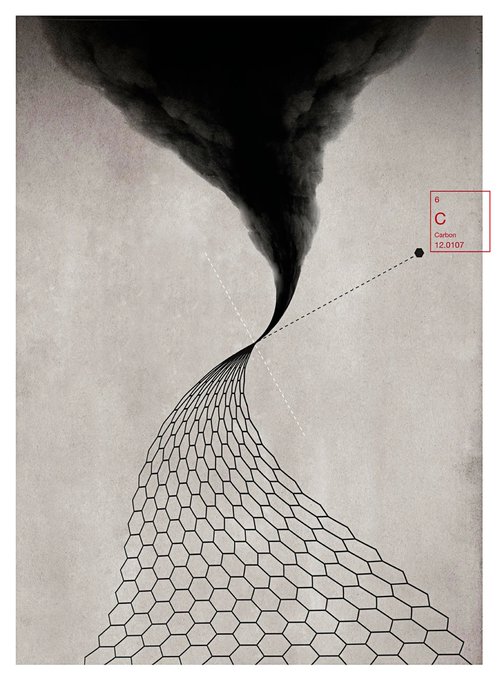
Its electrons just did something physicists thought was impossible. For nearly 200 years, metals have obeyed the Wiedemann-Franz law – the rule that electrical conductivity and thermal conductivity always rise and fall together.
But in ultra-clean graphene, researchers at the Indian Institute of Science found the opposite. As electrical conductivity increased, thermal conductivity dropped, shattering a principle taught in every physics textbook.
The key lies at the “Dirac point,” a strange electronic tipping point where graphene is neither a metal nor an insulator. Here, electrons stop behaving like individual particles. Instead, they flow collectively as a nearly perfect fluid – a state called a “Dirac fluid.”
This discovery doesn’t just rewrite the rules for graphene. It provides a tabletop window into extreme physics usually reserved for black holes and high-energy colliders. Scientists say this behavior could help probe mysteries of quantum entanglement, black hole thermodynamics, and the very fabric of matter itself.
["Universality in quantum critical flow of charge and heat in ultraclean graphene." Nature Physics, 2025] ...
While I can't fully understand this paper (even the abstract!), I realise that it is taking what seems a long time^ for industry and business to understand and realise the potential of graphene in industrial and technological applications.
Hopefully, applications will emerge, that are beneficial to all. Reducing energy use, improving efficiency, removing pollutants even more effectively, imcreasing the durability and hence lifetime of materials and products, and more.
Also, marvellous to see global collaboration at work, as science continues to asks questions.
^I could have written exploitation there, but could we put the collective and planetary first?
Majumdar, Aniket and Chadha, Nisarg and Pal, Pritam and Gugnani, Akash and Ghawri, Bhaskar and Watanabe, Kenji and Taniguchi, Takashi and Mukerjee, Subroto and Ghosh, Arindam. (2025) Universality in quantum critical flow of charge and heat in ultraclean graphene, Nature Physics. http://dx.doi.org/10.1038/s41567-025-02972-z
Does the language we use really matter? A public NHS document includes the following:
'PHARMACY
2.1
Background
Health and Wellbeing Boards (HWBs) in England hold statutory responsibility to publish and keep up to date a statement of the needs for pharmaceutical services of the population in its area, referred to as a pharmaceutical needs assessment (PNA). PNAs are used by the NHS to make decisions on which NHS funded services need to be provided by local community pharmacies.'
I'm not asking, or demanding, change to this but the words we employ do matter. One of them above matters greatly. The question of responsibility and its attribution. In the response to mental illness, responsibility has always been played out on the public stage. Even when society's response was to leave 'care' to religious and charitable agencies. Then the state stepped in with the first legislation. The state assumed responsibility as per the previous post. Not only where the keys thrown away, but many people admitted there, did not need be. The 'reason for referral' was more accurately described as a social ill. In this way, individuals were incarcerated and forgotten.
It is in the gift of Hodges' model, care of its vertical axis [INDIVIDUAL - GROUP], to be able to negotiate the contextual switch from personal to group and population. There is a marked contrast from self-medication, a nurse doing a medicines round - to the design, testing and research effort of production of a specific drug or intervention. The focus then is obviously at the population scale. The pharmocological business, is not just a business. It is a pharmaco-industrial complex, e.g.
Grouse L. Cost-effective medicine vs. the medical-industrial complex. J Thorac Dis. 2014 Sep;6(9):E203-6. doi: 10.3978/j.issn.2072-1439.2014.09.01. PMID: 25276402; PMCID: PMC4178073.
When we think of dependence it is often framed at the individual level. But how can we expect to change health services, health systems to see them as they truly are: Illness and Infirmity Boards masquerading as Health and Wellbeing Boards?
The Government needs a plan to fix our broken food system and turn the tide on the public health emergency
24 October 2024
The House of Lords Food, Diet and Obesity Committee demands that the Government should develop a comprehensive, integrated long-term new strategy to fix our food system, underpinned by a new legislative framework. This is the key conclusion of the Committee’s report, ‘Recipe for health: a plan to fix our broken food system’.
Chair's comments
Baroness Walmsley, Chair of the Food, Diet and Obesity Committee, said:
“Food should be a pleasure and contribute to our health and wellbeing, but it is making too many people ill. Something must be going wrong if almost two in five children are leaving primary school with overweight or obesity and so many people are finding it hard to feed healthy food to their families. That is why we took a root and branch look at the food system and analysed what had gone wrong over the past few decades.
“Over the last 30 years successive governments have failed to reduce obesity rates, despite hundreds of policy initiatives. This failure is largely due to policies that focused on personal choice and responsibility out of misguided fears of the ‘nanny state’. Both the Government and the food industry must take responsibility for what has gone wrong and take urgent steps to put it right.
“We hope, given the recent comments from the Prime Minister, Lord Darzi and the Secretary of State for Health, that there is now an appetite to shift towards prevention of ill health. We urge the Government to look favourably on our plan to fix our broken food system and accept that not only is it cost-effective, but that it would lead to a lot less human misery.”
The life chances I am afforded impact my 'health career'.
Environmental/Physical determinants
Ultra Processed Foods
Smoking
Food & Nutrition
Impacts of Obesity
Child development
Nutritional value of foods
Social determinants
public (mental) health information
Family economics
Social values
Sustainable Living
Political determinants 'Nanny State' (political rhetoric) Lobbying - (Food) Industry Business ethics Food poverty Advertising regulation Cost to Government, NHS, Society Security
Spiritual determinants: Values of society, governments, citizens, business . . .
Previously:
Jones P, Wirnitzer K. Hodges’ model: the Sustainable Development Goals and public health – universal health coverage demands a universal framework. BMJ Nutrition, Prevention & Health 2022;5: https://nutrition.bmj.com/content/5/2/358
Even as I look forward to September's trip; I'm pinching myself.
Following a BCS event last year, Hodges' model has been recognised. A video chat and many email exchanges has revealed there is a model possessed with the necessary holistic bandwidth. Hodges' model has the conceptual scope to encompass intelligence(s), One Health and planetary health.
This also fits with current reading - interrupted by Hardy's A Mathematician's Apology (£2.00) - with posts to follow that will also inform November's co-presentation.
More to follow and clearly I have learned a great deal from engaging with the BCS. While my affiliate membership has lapsed now, since the early 1990s the Society's publications, specialist groups: medical informatics, nursing, methods, security, expert systems, and now AI have proved well worth getting involved!
I am also hoping for some part-time tutoring at Bolton University in the new academic year.
A special event showcasing Practical Applications of Artificial Intelligence
Friday 27th September 2024
At the BCS London Office Ground Floor, 25 Copthall Avenue, London, EC2R 7BP (near Moorgate underground)
Organised by BCS-SGAI
BCS-SGAI, the British Computer Society Specialist Group on Artificial Intelligence, is the organiser of one of the longest running annual series of AI conferences in Europe: the AI-20xx series. In recent years we have seen a rise in popularity of one aspect of the conference: the industry case studies. These have presented AI as it is actually implemented out there in the real world, with all the triumphs and challenges that brings.
Building on this success, we are pleased to presentReal Artificial Intelligence,a series of meetings showcasing practical applications of AI.
We have aimed the event less at deep AI specialists and more at those who may be interested in understanding what AI can offer, and what it is doing right now. The event will feature talks from leading exponents and case studies outlining practical applications of AI from a wide range of application domains. Plenty of time has been allowed in the programme for discussion.
We hope that you will come and join us, and that you enjoy this new offering from the BCS SGAI.
The first time - ages ago - I noticed chocolate in cereals, I was shocked, incredulous and yet did nothing. The other day I asked to speak to the manager in Sainsbury's and complained (non-personally) and will in other stores.
The irony now is the choice the people can exercise in Gaza - is food being used as a weapon of war?
Jones P, Wirnitzer K. Hodges’ model: the Sustainable Development Goals and public health – universal health coverage demands a universal framework. BMJ Nutrition, Prevention & Health 2022;0:e000254. doi:10.1136/bmjnph-2021-000254
For Dr Wirnitzer's work please see:
The NURMI-Study (NURMI – Nutrition and Running high Mileage) https://www.facebook.com/nurmistudy
"In November 2022, I spent a month on remand at HMP Bronzefield for my part in the Just Stop Oil protests on the M25. I was happy to go to prison for something I know is morally right. Drawing in prison became my saviour against the monotony. I rarely draw from life anymore, but we were given a little notebook in our 'welcome' bags of grey tracksuits, pastel pants and toothbrush." p.19.
"This drawing is Slugfields Luxury Prison, (152×120cm) the institutional blue doors, plastic chairs, toilet in the corner and the panoptican architecture mirror that of Bronzefields. It's not quite finished yet, but it's been a cathartic experience to draw some of my thoughts on prison life and incarceration by the state." Instagram (and image source).
"In man we see the highest manifestation of this tendency. By virtue of his complexity of structure, he is furthest removed from the inorganic world in which there is least individuality. Again, his intelligence and adaptability commonly enable him to maintain life to old age - to complete the cycle of his existence; that is, to fill out the limits of his individuality to the full. Again, he is self-conscious; that is, he recognizes his own individuality." p.238.
"Spencer's key concept was 'evolution', by which he meant the process of increasing differentiation (that is to say specialization of functions) and integration (by which he meant mutual interdependence of the structurally differentiated parts and co-ordination of their functions.)" p.8.
"Here we see longitudinal and transverse integration going on simultaneously; ..." p.66.
"Having invented the word sociology, Comte is often treated as the founder of the study itself, although his contribution to empirical knowledge is meagre, and cannot be even remotely equated with that of Montesquieu or John Millar. His excellence lies in methodology in which field he laid the foundations for the systematic (or scientific, if you like) study of society." p.15.
"There is no sudden leap from the house-hold type to the factory-type, but a gradual transition. The first step is shown us in the rules of trade-guilds under which, to the members of the family, might be added an apprentice (possibly at first a relation), who, as Brentano says, 'became a member of the family of his master, who instructed him in his trade, and who, like a father, had to watch over his morals, as well as his work'; practically, an adopted son. ... With development of this modified household-group, the master grew into a seller of goods made, not by his own family only, but by others; and, as his business enlarged, necessarily ceased to be a worker, and became wholly a distributor - a channel through which went out the products, not as a few sons, but of many unrelated artisans." pp.135-136.
Herbert Spencer, Stanislav Andreski, (1971) Herbert Spencer : structure, function, and evolution. London: Nelson.
As you can tell - I'm still sorting through books!
"Nos. 7 and 8 pits were a short distance away from the main colliery and were known as Brookside or New Zealand Pits. No coal was raised at these pits when Wigan Coal Corporation took over, but they were used for pumping and ventilation. Shortly afterwards (in 1931) they were filled up.
Wigan Coal and Iron
A very tragic and bizarre accident happened here on 13th April 1945 when Ludovic Berry, a locomotive driver employed by the Coal Corporation, was moving 13 loaded wagons in sidings over the filled up No. 7 shaft which was 12ft. diameter and 400 yd. deep. Suddenly the ground collapsed under the leading wagon which fell into a large cavity followed by the rest of the train and the locomotive at an accelerating pace. The locomotive with all wheels locked by the brakes and the driver still at the controls was dragged into the shaft by the wagons and came to rest wedged in a vertical position with the smokebox uppermost 127 ft. down the shaft. The total length of the train was 283 ft. and there were indications on the rails that the brakes had been applied when the train was 226 ft. from the crater. This crater was 52 ft. long and 34 ft. wide. The body of the driver was never recovered, owing to the dangerous condition of the ground surrounding the cavity." p.181.
"Long before the Bryant and May Factory was
opened in Fairfield Road, Bow in East London, Charles Dickens wrote, in
1852, about the risks of ‘phossy jaw' in matchmaking
factories. Yet, when the factory was opened in 1861, they proceeded to
use the dangerous white phosphorus that caused the disease."
The greatest threat to their lives was
The sulferuous spite filled spit of diablo
The molten madness of a spark
They became spark catchers and on the word “strike”
a parched arched woman would dive
With hand outstretched to catch the light.
And Land like a crouching tiger with fist high
Holding the malevolent flare tight
‘til it became an ash dot in the palm. Strike. ..."
"The author Michael Morpurgo (War Horse, Private Peaceful) explores the
ways in which folk songs have reflected timeless human experiences, both
in the past and today.
Michael Morpurgo
With help from singers, songwriters and other passionate experts,
Michael admires the indelible stories within classic songs that deal
with migration, war, protest and love.
Over the four themed episodes, Michael considers the locations and
historical contexts that gave rise to much-loved traditional songs, and
finds out how the same topics are inspiring new folk songs in the 2020s.
In the second episode, Michael considers a song of protest: Four Loom
Weaver.
With Professor Lawrence Goldman, Muireann Nic Amhlaoibh, Nancy Kerr,
Karine Polwart, Nicola Kearey, Ian Carter, Blair Dunlop and Ashley
Hutchings." BBC Radio 4
"Many Lancashire folk, can give personal testimony of relative having worked in such a role.
My maternal grandmother was a four loom cotton weaver until the
mill, where she worked, in Rawtenstall, Lancashire, was closed and
relocated to India in the 1920s approx. Mill workers worked their way up
to four looms which were rented from the mill. Four was the maximum so
my nan told me, so a four loom weaver was an indication of the level of
attainment in the industry. So I think the title is probably correct and
not a corruption of a poor loom weaver.
Yes. Accessibility is critical, but given its age, and presentation of Hodges' model as a 2x2 table, this blog is best viewed on a tablet, laptop, or PC.
If I can assist with your use of Hodges' model please contact me: h2cmng AT yahoo.co.uk. Assistance in further study of the model, would also be welcome. Thank you.
Hodges' model also known as 'Hodges' Health Career Model' H2CM
A person's health career is impacted by their life chances.
Total Pageviews
Hodges' Health Career - Care Domains - Model
'Care Domains' was added to the model's title as some people thought the model only applied to employment, work, and jobs.
Born in Liverpool, UK. Community Mental Health Nurse NHS, Part-time Lecturer, Researcher Nursing & Technology Enhanced Learning
Registered Nurse - Mental Health & General Community Psychiatric Nursing (Cert.) MMU PG Cert. Ed. BA(Joint Hons.) Computing and Philosophy - BIHE - Bolton PG(Dip.) Collaboration on Psychosocial Education [COPE] Univ. Man. MRES. e-Research and Technology Enhanced Learning, Lancaster Univ.
Live and work in NW England - seeking a global perspective.
The views expressed on W2tQ are entirely my own, unless stated otherwise. Comments are disabled. If you would like to get in touch please e-mail me at h2cmng AT yahoo.co.uk
* IO Magazine
Source:
Reveal Digital , 01-01-1988
Contributed by: Charles Stein; Don Byrd; A.S. Yessenin-Volpin; Christer Hennix; Henry
Flynt; Henry Flynt; George Quasha; Charles Stein; Christer Hennix; Luitzen Egbertus Jan
Brouwer; L.E.J. Brouwer; L.E.J. Brouwer; Charles Stein
Stable URL: https://www.jstor.org/stable/community.28038534
Hodges' model was created by Brian E. Hodges [Senior Lecturer, Retired] in the mid-1980s at what is now Manchester Metropolitan University.
Peter Jones, author / editor of this blog has championed Hodges' model as a personal initiative online since 1998, but discovered the model on the CPN(Cert.) course 1988. The driver is recognition of the increasing relevance - decade-by-decade - of Hodges' model as a primary resource for local, national, global and glocal (virtual) health and education.
Visitors to this blog, individuals and organisations, are invited to consider use of Hodges' model.
Hodges' model is provided as an open educational resource (OER).
"Open Educational Resources are teaching and learning materials that you may freely use and reuse, without charge. OER often have a Creative Commons or GNU license that state specifically how the material may be used, reused, adapted, and shared." [Google, 8 Feb 2016]
CC CREATIVE COMMONS:
Hodges' model is assigned Attribution-ShareAlike 3.0 Unported (CC BY-SA 3.0):
OER is important for teaching, learning, and collaboration generally. Hodges' model is an ideal tool to span individual and global health care. Peter Jones encourages and will try to respond to support users interested in exploring how Hodges' model can support their work.
Post-publication I have learnt of new papers that have cited, or even used Hodges' model. This is very welcome news. If you are contemplating using h2cm, I'd be pleased to help. The aim is to see h2cm applied, especially in the real world, across disciplines and to help squeeze all the conceptual juice out of the model as per your context.
Nodes & Edges: Structure Content distinct
BIBLIOGRAPHY & Citations for Hodges' model
Please note the website - p-jones.demon.co.uk listed in many papers below is no longer active and maintained. 'Demon' ceased operating as an internet provider in 2015.
April 23 2025: There is a link to the archived POLITICAL links page, listed under 'External links': https://en.wikipedia.org/wiki/Outline_of_political_science Which is itself a useful page.
A new site for introductory materials and Brian Hodges' original notes will follow (one day!?) ...
Hodges, B.E. (1989) The Health Career Model, IN, Hinchcliffe, S.M. (et al.) 1989 Nursing Practice and Health Care, 1st Edition only, London, Edward Arnold.
Adams, T. (1987) Dementia is a family affair. Community Outlook, Feb, 7-8.
Jones, P. (1999) It's time to master the latest tools and Hodges' Health Career Model, IT in Nursing, 11.2.
Jones, P. (2004) Viewpoint: Can informatics and holistic multidisciplinary care be harmonised? British Journal of Healthcare Computing & Information Management, 21, 6, 17-18.
Jones, P. (2004) The Four Care Domains: Situations Worthy of Research. Conference: Building & Bridging Community Networks: Knowledge, Innovation & Diversity through Communication, Brighton, UK.
Jones, P. (2009) Socio-Technical Structures, the Scope of Informatics and Hodges’ model, IN, Staudinger, R., Ostermann, H., Bettina Staudinger, B. (Eds.), Handbook of Research in Nursing Informatics and Socio-Technical Structures, Idea Group Publishing, Inc. Chap. 11, pp. 160-174.
Kernohan, G. (2010) Theoretical review of public engagement in Nursing. Proc 1st Public Engagement Colloquium, Kells, Co Antrim, 22 April.
Merritt MK, Procter N. Conceptualising the functional role of mental health consultation-liaison nurse in multi-morbidity, using Peplau's nursing theory. Contemp Nurse. 2010 Feb-Mar;34(2):158-66. doi: 10.5172/conu.2010.34.2.158. PMID: 20509800.
Murphy, K., Welford C. (2012) Agenda for the future: enhancing autonomy for older people in residential care.International Journal of Older People Nursing. 7, 75–80.
Jones P. (2014) Using a conceptual framework to explore the dimensions of recovery and their relationship to service user choice and self-determination. International Journal of Person Centered Medicine. Vol 3, No 4, (2013) pp.305-311.
Bom, J. (2015) Geboeid signaleren. De Verpleegkundig Specialist. 10. 14-15. 10.1007/s40884-015-0051-z.
Jones P. Exploring the relationship of threshold concepts and Hodges’ model of care from the individual to populations and global health. Rev Cuid. 2017; 8(3): 1697-720. http://dx.doi.org/10.15649/cuidarte.v8i3.464
Maffissoni, André & Vendruscolo, Carine & De Lima Trindade, Letícia & Zocche, Denise. (2018). Redes de atenção à saúde na formação em enfermagem: interpretações a partir da atenção primária à saúde. Revista Cuidarte. 9. 1-13.
Holmes, D. Perron, A. Jacob, J.D. Paradis-Gagné, É. & Gratton, S (2018). Pratique en milieu de psychiatrie légale: proposition d’un modèle interdisciplinaire, (Practice in forensic psychiatry: A proposed interdisciplinary model). Recherche en soins infirmiers, 134, 33-43. DOI: 10.3917/rsi.134.0033
Ashiquer Rahman, S.K. (2019) Mobilizing ePLANETe.Blue knowledge mediation portal to deal with new challenges of sustainable development in Higher Education and Research Etablishments (HERE) from a perspective of Knowledge Economy.
Thèse de doctorat de l'Université Paris-Saclay
préparée à l’Université de Versailles-Saint-Quentin-en-Yvelines. École doctorale n°578 Sciences de l’homme et de la societé Spécialité de doctorat : Sciences Économiques.
Kennedy, Harry G. (2019). National Forensic Mental Health Service (NFMHS) Model of Care. 10.13140/RG.2.2.30103.59041.
Hayward, B.A. (2020), Mental health nursing in bushfire‐affected communities: An autoethnographic insight. Int J Mental Health Nurs. doi:10.1111/inm.12765
Iris Lohja, Yves Demazeau, Christine Verdier. A multi-agent system approach to dynamic ridesharing for older people: State-of-the-art work and preliminary design. 18èmes Rencontres des Jeunes Chercheurs en Intelligence Artificielle, RJCIA’20, Jun 2020, Angers, France. pp.52-59. ⟨hal-02897446⟩
Byrt R. Forensic Mental Health Nursing in Secure Hospitals and the Criminal Justice System. Nurs Health Care Int J. 2019, 3(2): 000176.
Hamilton EAA, Dornan L, Sinclair M, McCoy J, Hanna-Trainor L, Kernohan WG. A scoping review protocol: Mapping the range of policy-related evidence influencing maternal health outcomes in a fragile, low-income country. J Adv Nurs. 2021 Jul 20. doi: 10.1111/jan.14956. Epub ahead of print. PMID: 34288043.
Elien G Neimeijer (2021) "CLOSE(D) CARE: Group climate in a secure forensic setting for individuals with mild intellectual disability." Radboud University, ISBN: 978-94-6416-713-9
https://www.trajectum.nl/sites/default/files/proefschrift_e._neimeijer_pdf.pdf
Fryer, Jon. “Information Literacies – Learning, to Thrive in a Digital Age” IRMS Bulletin 230 (2022): 16-21.
Kistler KB, Tyndall DE. Application of the Threshold Concept Framework in Nursing: An Integrative Review. Nurse Educ. 2022 Mar-Apr 01;47(2):91-95. doi: 10.1097/NNE.0000000000001041. PMID: 34033613.
Jones P, Wirnitzer K. Hodges’ model: the Sustainable Development Goals and public health – universal health coverage demands a universal framework. BMJ Nutrition, Prevention & Health 2022;5:doi: 10.1136/bmjnph-2021-000254
Kernohan, W. G., & Jones, P. (2023). Hodges’ Health Care Model as a Framework for Quality. Paper presented
at Interprofessional work: developing oral care and the health workforce for the future, Brescia, Italy. https://pure.ulster.ac.uk/en/publications/hodges-health-care-model-as-a-framework-for-quality
Above paper cited by:
Leung, T.C.H., You, C.SX. (2023). Environmental, Social, and Governance (ESG) Promotion to Different Stakeholder Groups. In: Environmental, Social and Governance and Sustainable Development in Healthcare. Sustainable Development Goals Series. Springer, Singapore. https://doi.org/10.1007/978-981-99-1564-4_6
Yadav, V. S., & Singh, B. (2023). Evaluating the Human Rights Perspective on Sustainable Development Goals Accessible Health Coverage. Journal of Law and Sustainable Development, 11(6), e1254. https://doi.org/10.55908/sdgs.v11i6.1254
Kernohan, WG, Dornan, L & Jones, P 2023, 'A reflection on Hodges' Health Career Model for integration of health innovation', Trinity Health and Education International Research Conference 2023, Dublin, Ireland, 7/03/23 - 9/03/23.
McLaughlin, P., Brady, P., Carabellese, F., Carabellese, F., Parente, L., Uhrskov Sorensen, L., . . . Kennedy, H. (2023). Excellence in forensic psychiatry services: International survey of qualities and correlates. BJPsych Open, 9(6), E193. doi:10.1192/bjo.2023.578
Kainat Asmat (2024). Practice Without Theory: A Philosophical Inquiry into Contemporary Nursing in South Asia: Nursing Practice without Theory. International Journal of Practice-based Learning in Health and Social Care. 12. 125-131. 10.18552/ijpblhsc.v12i2.1068.
Güner, Y., Delibalta, B., Üçüncüoğlu, M., Paslı, S. (2025). Challenges encountered by emergency nurses in forensic case management: A qualitative study, Journal of Forensic and Legal Medicine, Volume 109, 102807, ISSN 1752-928X,
https://doi.org/10.1016/j.jflm.2025.102807.
Jones, P. (2025). A Conceptual Mapping Exercise of Deprivation of Liberty Safeguards in Residential & Community Care Using Hodges' Model and Threshold Concepts. Journal of Evaluation in Clinical Practice, 31: e70085. https://doi.org/10.1111/jep.70085
Ardenny Ardenny, Le Hoang Nam, Pham Anh Tu (2025). Sustainable Health Model: Increasing Universal Access to Health Services in Remote Areas. Journal of World Future Medicine, Health and Nursing. 3. DOI: 10.70177/health.v3i1.1907
Jones, P. (2025), A Generic Model and Conceptual Framework to Prime Curiosity Across Health and Social Care Disciplines to Facilitate Lifelong Learning. Journal of Evaluation in Clinical Practice, 31: e70252. https://doi.org/10.1111/jep.70252
Wirnitzer KC, Motevalli M, Tanous DR, Drenowatz C, Moser M, Cramer H, Rosemann T, Wagner K-H, Michalsen A, Knechtle B, Fras Z, Ritskes-Hoitinga M, Marques A, Mis NF, Stanford FC, Schubert C, Goswami N, Leitzmann C, Fredriksen PM, Ruedl G, Wilflingseder D, Lima RA, Kessler C, Jeitler M, Khan NA, Joulaei H, Fatemi M, Knight A, Kratky KW, Palmer KK, Haditsch B, Jakse B, Kofler W, Pfeiffer T, Cordova-Pozo K, Tortella P, Straub S, Lynch H, Schätzer M, Krishnan A, Fathima A. S, Gatterer L, Kriwan F, Abhishek M, Nandgaonkar H, Nandgaonkar S, Adedara AO, Haro JM, Gericke C, Neumann G, Akhtar A, Rashidlamir A, Thangavelu M, Ngoumou GB, Perpék É, Klaper M, Bhattacharya B, Kirschner W, Bessems KMHH, Jones P, Peoples G, Bescos R, Duftner C, Seifert G (2025). Toward a roadmap for addressing today's health dilemma–The 101-statement consensus report., Volume 12:1676080. doi: 10.3389/fnut.2025.1676080. https://doi.org/10.3389/fnut.2025.1676080.
Short form: Wirnitzer, KC. et al. (2025) Toward a roadmap for addressing today's health dilemma – The 101-statement consensus report. Frontiers in Nutrition. Volume 12.
https://frontiersin.org/journals/nutrition/articles/10.3389/fnut.2025.1676080 DOI:10.3389/fnut.2025.1676080
S. Bettiol, P. Jones, H. A. Onyedikachi, and W. G. Kernohan, (2026) Bridging Gaps in Oral Health Frameworks: Mapping With Hodges' Health Career - Care Domains - Model, Journal of Public Health Dentistry. 1–14, https://doi.org/10.1111/jphd.70034.
Simms, V., Jacobs, N., Magee, J., De Ornellas, K., Mollik, E., Kernohan, W. G., Leacock, J., Akter, J., Sempey, C., Beech, S. E., Naz Asif, R., Yap, L. K., & Miller, K. (2026, Jan 16). Ulster University Open Research Conference 2026: Conference Speaker Abstracts. Ulster University. Advance online publication. https://doi.org/10.21251/0d7780ce-ce97-468f-b5d5-69201ca90b20
-=<>=-
[ For Dr Wirnitzer's work please see:
The NURMI-Study (NURMI – Nutrition and Running high Mileage) https://www.facebook.com/nurmistudy
Editorial: Situational Awareness, Psychoses, Cardiovascular Nursing, Research Methods and Hodges' model.
Hodges' model and the use of Diagrams in Case Formulation
Recognising the Value of Hodges’ model as a Known - Unknown in the time of COVID and Information Disorder.
Hughes (1958) is clearly dated, and as reflected in the title. Brian Hodges referenced Hughes to define ‘health career’ the idea of life chances.
Hughes, E. (1958) Men and their work. New York: Free Press.
A paper in 1977 refers to "Health career model", this is not Hodges' model, but we can match the paper's econometric context as follows: 'health career' equates with 'life chances' and so draws upon the model's INDIVIDUAL domains. While in the paper "Life-cycle and Quality of Life" can be matched with the COLLECTIVE domains of Hodges' model, namely, SOCIOLOGICAL and POLITICAL. Of course, Quality of Life is also an individual, subjective, phenomenological experience. The paper however preempts the ongoing focus upon SOCIAL DETERMINANTS, and more generally, the current state of our Social and Political contracts. Now the further differentiation of political, commercial, geopolitical determinants (where we are born, what 'papers' we possess, or not; are we State/Stateless) is an opportunity for Hodges' model. The ability of Hodges' model to encompass and switch contexts provides evidence of the model's potential and power, a result of its structure and situated content. In health and social care, Quality of Life (clearly) remains an individual AND collective matter, from individual assessment tools, to weighing the ethics, benefits and costs of interventions in collective - aggregated terms (QALY).
"900: Welfare Programs; Consumer Economics; Urban and Regional Economics." (1977). Journal of Economic Literature, 15(4), 1451–1457. http://www.jstor.org/stable/2723014
The two papers below pre-date the first website [1998-2015 webarchived], but show how I have subsequently stressed the role of information, informatics and the socio-technical within Hodges model as a unifying concept. I have copious notes to revisit this subject, on: post-COVID and dis- mis- malinformation; and nursing's legacy issues.
Jones, P. (1996) Humans, Information, and Science, Journal of Advanced Nursing, 24(3),591-598.
Finally some software publications from the microcomputer era.
Jones, P. (1986) Computing in Nursing NEWS. Computerised Patient Assessment. Nursing Times. 85: 5. Sep 3-9;82(36):63-5. PMID: 3532039 (Describes 'CAPA', a BBC microcomputer program for student nurses.)
Jones, P. (1989) Computers in Nursing NEWS. Creating a Program. Nursing Times. Feb 1-7;85(5):66-8. PMID: 2648342 (Describes 'HAEM', a BBC microcomputer program for student nurses on blood and blood groups.)
Please contact me if you have a paper referencing Hodges' model, or you have a project in mind, but need some advice, more information to help you use the model. Thank you.
21th Annual STS Conference Graz 2023:
online: "Critical Issues in Science, Technology and Society Studies" 8th - 10th May 2023
https://stsconf.tugraz.at/
Information & Records Management Society: IRMS22 - Resilience, Recovery, Renewal
Glasgow - DoubleTree by Hilton, May 15-17 2022
8th Biennial Threshold Concepts Conferences
Online, 7–9 July 2021
Global Remote and Rural Healthcare
(Virtual) 17-18th November 2020
ATTENDED:
Systems: Transition to a Sustainable World 15th September 2023, Richmond Building, University of Portsmouth
RCGP’s 7th Health and Justice Summit: Journeys Through Justice – Leadership and Transformation
Bristol, 25-26 November 2019
Participant: Re-envisaging
Infection Practice Ecologies in Nursing through Arts and Humanities Approaches
Spring 2018 - October 2019
Threshold Concepts in Action, University of Dundee: 27th-28th June 2019
Friday 28th June 2019: Threshold Concepts in Health Special Interest Group meeting. Morning: papers/discussion with virtual access for members at a distance; Afternoon: research/writing workshop; sharing advice and ideas
Presented at UKSS Conference 2018
UK Systems Society: Can systemic thinking reshape health services?
Presented at 4th Int. Nursing Conference Jordan The Tipping Point: Creative Solutions to Health and Nursing Challenges
"نقطة التحول: حلول خلاقة للتحديات الصحية والتمريضية"
Is there interest in an open, accessible conceptual framework not only for self-care and health care but for planetary health too? I believe there is ...
THE WORLD NEEDS 2020 VISION
June '26: The previous global counter stopped suddenly, hence reset. Thank you for your time and interest.


 orcid.org/0000-0002-0192-8965


