Hodges' Model: Welcome to the QUAD: quantum mechanics

Hodges' model is a conceptual framework to support reflection and critical thinking. Situated, the model can help integrate all disciplines (academic and professional). Amid news items, are posts that illustrate the scope and application of the model. A bibliography and A4 template are provided in the sidebar. Welcome to the QUAD ...

Showing posts with label quantum mechanics. Show all posts

Saturday, January 10, 2026

Book: Bill Ross - 'Order and the Virtual' ii

'The Philosophy and Science of Deleuzian Cosmology'

Now I can say: "This year, Hodges' model will be presented at WCCS 6th World Conference on Complex Systems", so current reading needs to match this project. And, it does. In spades, in fact c/o and with thanks to Edinburgh University Press. Look at chapter 1! 'Chaos' with Mandelbrot fractals, smooth space drawing from Deleuze and Guattari's A Thousand Plateaus. For readers unfamiliar with the Deleuzian oeuvre, abbreviations of texts that feature in Bill Ross's book Order and the Virtual are listed (xii) and includes key sources by Michel Serres, Henri Bergson and Alfred North Whitehead. This works as you mentally take a note, of work to lookup. Almost twenty years ago, I related some ideas of Michel Serres to Hodges' model:

Jones, P. (2008) Exploring Serres’ Atlas, Hodges’ Knowledge Domains and the Fusion of Informatics and Cultural Horizons, IN Kidd, T., Chen, I. (Eds.) Social Information Technology Connecting Society and Cultural Issues, Idea Group Publishing, Inc. Chap. 7, pp. 96-109. 

Ross discusses the extent and proximity of Deleuze's thought to chaos, complexity theory and science more generally as identified by commentators. Now up to chapter 4, it would have helped to have a look at the bibliography at the book's end. Deleuze saw how his work resonated with chaos theory. Steve Strogatz's book (now in a 3rd edition):

Strogatz, S.H. (2015) Nonlinear Dynamics and Chaos: With Application to Physics, Biology, Chemistry and Engineering. 2nd edition. Perseus Books Publishing, Cambridge. 

- explains in the introduction how 'home computing' contributed to the aesthetic appeal of fractals, which could display incredible patterns derived from seemingly simple mathematics. Even though, the programs often required many hours of running to deliver their results.

In the late 1980s I was fascinated with a subscription to Fractal Report:

https://stephen.shawweb.co.uk/Fractalreportindex.html

The relevance for me of Order and the Virtual is apparent on page 1, Deleuze and Guattari's thought having an immediate transdisciplinary application, crossing boundaries, and the creation of regions of bifurcation. Ross connects Deleuze's thought and Ilya Prigogine & Isabelle Stengers' text:

Order Out of Chaos: Man's New Dialogue with Nature. London: Heinemann, 1984 

Ross is encouraging (to me and for Hodges' model), as he notes how the notions may be inexact, but they are nonetheless rigorous. Spanning as they do, philosophy, science - what is scientific(? - itself a boundary - demarcation) and artistic. I've often thought of Hodges' model as filled with folds, and multiple bifurcations. It looks like Bill Ross is going help me to isolate several, and possibly make my search more efficient (the latter really would assist). The memorial event held in Manchester last September was revalatory. Since the early 2000s I'd grown to  really appreciate the availability of books by Michel Serres. I was not aware of the force behind the Clinamen Press, which Bill Ross established in 1999. 'Clinamen' is a useful concept too, which I have encountered previously, through Serres and Lucretius. 

Readers new to philosophy, sociology and the development of ideas must often grapple with a new and specific vocabulary. This is a primary purpose of such texts. On page 2 the springboard is sprung, the Event is key in Deleuzian scholarship. The Event is a force for creative and disruptive force for thought,  idea generation and creativity. The Event is experienced in our current 'realities' of: time and space (Kronos) where things are actualised, and the virtual (Aion) - the pure Event. This lack of hesitation is welcome. Our 'virtual' world quickly provides access to reading:

parrhesia 27 · 2017 · 1-12
extract from the birth of physics
michel serres, translated by david webb, with an introduction by bill ross
https://parrhesiajournal.org/wp-content/uploads/2023/10/parrhesia27_serres.pdf

Where you have bifurcations, you have convergences and divergences, stasis, state - stasis or not, paths, a series and metrics. We are reminded that science is not just about theory - metaphysics, it is, sleeves rolled-up about doing too; as I've noted in subsequent reading. As 'chaos' predicts, there is no let up,  the Choasmos, quickly follows. I'm thinking of a 'situation' clinically as a rollercoaster - 'constant displacement' seeking a difference, and repetition, the ravages of alcohol, dementia, low mood, psychosis, obsession and compulsive 'states'. The chaosmos is central in Hodges' model, although as both continua and oppositions. Ross explains how Deleuze's chaosmos is not necessarily scientific, but belongs to the ancient cosmologies of the Greeks (p.3). I thought of flux here. 'Parity' is not just a physical metric, but a quality that acts, seeks resolution - equilibrium(?) - between the mental chaos and physical chaos.*

Thinkers like Deleuze 'trap' words, concepts, in boxes, drawing from other other sources (for chaosmos - with Guattari again); then they can be examined and tested for their scope, application, meaning and association. Hodges' model provides a trap, for any situation. Not as specific as a physicist's ion (or Penning) trap, but the model can act as a series of holistic traps. To provide a metric of holistic bandwidth.

*Of course, equilibrium is never found - until the 'End'; such is the nature of flux. 

More to follow...

Bill Ross (2024) Order and the Virtual: The Philosophy and Science of Deleuzian Cosmology. Edinburgh: Edinburgh University Press. https://edinburghuniversitypress.com/book-order-and-the-virtual.html

Saturday, December 27, 2025

Book: Bill Ross - 'Order and the Virtual' i

'The Philosophy and Science of Deleuzian Cosmology'

'ORDER and the VIRTUAL'


The preface, pp.ix-xi - 'Playing Cortázarian Hopscotch' begins:
'Gilles Deleuze argued that the most significant characteristic of an encounter is that it forces us to think. Order and the Virtual dramatises multiple encounters between the philosophies of Deleuze, Michel Serres, Henri Bergson, Alfred North Whitehead, Leibniz and Lucretius, and the scientific theories of general relativity, quantum mechanics, information theory, thermodynamics, evolutionary theory, chaos theory and complexity theory. Each of these encounters forces the reader to think anew, to imagine new possibilities for both philosophical and scientific thought. Each encounter also reveals the depth with which Bill Ross himself had thought about these matters.'

Reading Order and the Virtual, I am beyond the preface, but can see the point regards the depth of Bill Ross's reading of a broad range of philosophy and thought (which can be distinct).

The care die is rolled in the first sentence:

'Gilles Deleuze argued that the most significant characteristic 
of an encounter is that it forces us to think.'

When the encounter is clinical, complexity rains, and you really do need to think.

As the professions continue to find out. 

Finding and attending the workshop in September, Bill Ross's legacy and his book is a welcome coincidence as I write and prepare for April's conference. Much more to follow ...

Many thanks to Edinburgh University Press for my copy.

Bill Ross (2024) Order and the Virtual: The Philosophy and Science of Deleuzian Cosmology. Edinburgh: Edinburgh University Press. https://edinburghuniversitypress.com/book-order-and-the-virtual.html
See also:
https://www.thebsp.org.uk/bill-ross-memorial-workshop-deleuzian-cosmologies/

https://technophany.philosophyandtechnology.network/article/view/24392

'Serres'

Wednesday, September 17, 2025

Bill Ross Memorial Workshop – BSP Special Event 2025

A workshop in memory of Bill Ross, and to celebrate the posthumous publication of his book Order and the Virtual: The Philosophy and Science of Deleuzian Cosmology (2024). 
Convened by the British Society for Phenomenology with the family and friends of Bill.

I never met Bill Ross, nor had I learned of his work prior to receiving news of this workshop. I attended today in Manchester; also realising I'd intended to post the details. It was well worth the effort in the (predictable!) rain. The speakers and sessions were as follows:

  • Dan Smith (Purdue University): “Reality is a Problem: Deleuze’s Metaphysics of Manifolds”
  • Michael Epperson (California State University, Sacramento): “Relational Realism and the Ontogenetic Universe: Subject, Object, and Ontological Process in Quantum Mechanics”
  • Vera Bühlmann (Vienna University of Technology): “Cosmic splendour and signal messages, or the choice that will remain unmade”
  • Kemal Tezgin (Virginia Tech): “The Virtuality of Space: A Deleuzian Reading of Quantum Fields”
  • Robin Durie (University of Exeter) & Craig Lundy (London Metropolitan University): “What the imagination already knew: Science & Myth in the Genesis of Desert Islands”
Order and the Virtual (2024)
The sessions were informative and stimulating for studies here (category theory was noted).

With thanks to Carol at Edinburgh University Press, I have a review copy of Bill Ross's text.

Looking at the contents and index there are many fields in common, which I will share over the coming months.

As with the Laws of Form conference last year in Liverpool, here is another group of academics and scholars, welcoming and keen to share their expertise and learn.

So, thanks to Carol again for what looks an exciting book and the organisers and sponsors of this brilliant event acknowledging and commemerating the work of Bill Ross.

I will try to be more timely with news of related events, and developments. More to follow, but to close for now ...

'Bill Ross (1964 – 2022) had interests ranging widely across contemporary philosophy and culture, with a particular interest in the relations between science and philosophy. As managing editor, he was the driving force behind Clinamen Press, which in the early 2000s published new works by contemporary philosophers, and English translation of important works by continental philosophers such as Henri Bergson, Gaston Bachelard and Michel Serres. He completed his PhD in philosophy at Staffordshire University, where he taught on the MA in the Philosophy of Nature, Information, and Technology. Bill had a lifelong passion for the connections between science and philosophy, on which he had published several important articles. Bill was working on a monograph on the philosophy and science of Deleuzian cosmology, which was has been posthumously published by Edinburgh University Press. This event is to celebrate Bill’s book and his life, and to allow his friends, his colleagues, and anyone interested in his work or the topics and issues addressed by his work to continue the conversation that Bill’s work inspires.'
https://www.thebsp.org.uk/bill-ross-memorial-workshop-deleuzian-cosmologies/

Sunday, September 14, 2025

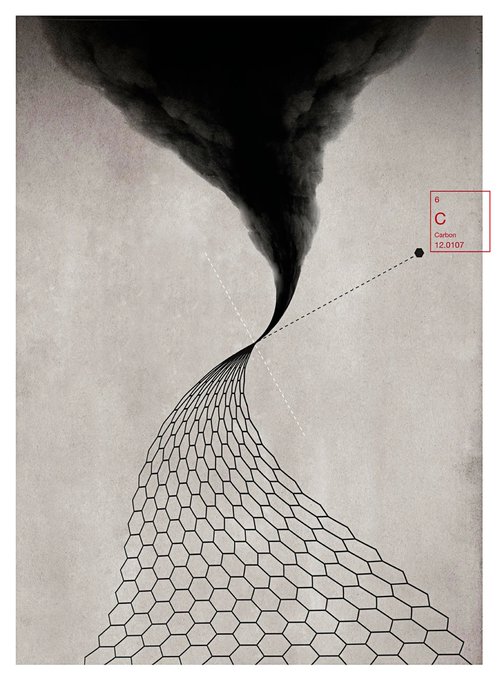
Graphene just broke a fundamental law of physics

Graphene just broke a fundamental law of physics.

Its electrons just did something physicists thought was impossible. For nearly 200 years, metals have obeyed the Wiedemann-Franz law – the rule that electrical conductivity and thermal conductivity always rise and fall together. 

But in ultra-clean graphene, researchers at the Indian Institute of Science found the opposite. As electrical conductivity increased, thermal conductivity dropped, shattering a principle taught in every physics textbook. 

The key lies at the “Dirac point,” a strange electronic tipping point where graphene is neither a metal nor an insulator. Here, electrons stop behaving like individual particles. Instead, they flow collectively as a nearly perfect fluid – a state called a “Dirac fluid.” 

This discovery doesn’t just rewrite the rules for graphene. It provides a tabletop window into extreme physics usually reserved for black holes and high-energy colliders. Scientists say this behavior could help probe mysteries of quantum entanglement, black hole thermodynamics, and the very fabric of matter itself.

 ["Universality in quantum critical flow of charge and heat in ultraclean graphene." Nature Physics, 2025] ...
Individual
|
      INTERPERSONAL    :     SCIENCES               
HUMANISTIC  --------------------------------------  MECHANISTIC      
 SOCIOLOGY  :    POLITICAL 
|
Group
While I can't fully understand this paper (even the abstract!), I realise that it is taking what seems a long time^ for industry and business to understand and realise the potential of graphene in industrial and technological applications. 


Hopefully, applications will emerge, that are beneficial to all. Reducing energy use, improving efficiency, removing pollutants even more effectively, imcreasing the durability and hence lifetime of materials and products, and more.

Also, marvellous to see global collaboration at work, as science continues to asks questions.

^I could have written exploitation there, but could we put the collective and planetary first?


Majumdar, Aniket and Chadha, Nisarg and Pal, Pritam and Gugnani, Akash and Ghawri, Bhaskar and Watanabe, Kenji and Taniguchi, Takashi and Mukerjee, Subroto and Ghosh, Arindam. (2025) Universality in quantum critical flow of charge and heat in ultraclean graphene, Nature Physics. http://dx.doi.org/10.1038/s41567-025-02972-z

My source: https://x.com/Rainmaker1973/status/1966896966316474505

Which includes a video 5m 'Quantum Critical Flow in Graphene: Charge & Heat Dynamics'

https://www.youtube.com/watch?v=LrImy9PAHGk

See also on W2tQ: 'physics : 'women'

Thursday, April 11, 2024

Peter Higgs - Boson and Field

"Higgs theorised that particles would acquire mass by interacting with a new type of field. That field had a very special excitation of its own, another particle called the Higgs boson. The Higgs field solved a huge question in theoretical particle physics, and the Higgs boson was a tantalising target that experimentalists could hunt for in order to tie theory to reality.


“If you remove everything from the vacuum, all matter or quantum fluctuations, all electromagnetic stuff, all gravity, you will be left with the Higgs field,” says Frank Close at the University of Oxford. “And we need that just like a goldfish needs water. It stabilises empty space.”

Working independently from Higgs, Belgian physicists Francois Englert and Robert Brout reached the same conclusion, also in 1964."
On BBC Radio 4 11th April 1500 UT, Frank Close extended the goldfish analogy: "as if some clever goldfish have proved that they are immersed in something because they have found a molecule of H2O."

BBC Inside Science

The following is from a previous post:

UK Higher Education Research Excellence Framework - Disciplines
https://hodges-model.blogspot.com/2023/07/ref-uk-higher-ed-h2cm.html


INDIVIDUAL
|
     INTERPERSONAL    :     SCIENCES               
HUMANISTIC --------------------------------------  MECHANISTIC      
SOCIOLOGY  :   POLITICAL 
|
GROUP

Psychology, Psychiatry and Neuroscience

Archaeology

Theology and Religious Studies

Philosophy

[Mathematics & Logic]

^Communication 
as Intra- Interpersonal (Skills) Neurodiversity
hence an individual's
sense-making

Clinical Medicine (Neuroscience)
Public Health, Health Services and Primary Care
Allied Health Professions, Dentistry, Nursing and Pharmacy
Biological sciences 
Agriculture, Food and Veterinary Sciences

Earth Systems and Environmental Sciences
Chemistry
Physics
Mathematical Sciences
Computer Science and Informatics
Engineering
Architecture, Built Environment and Planning
Geography and Environmental Studies
Archaeology
Area Studies
Sport and Exercise Sciences, 
Archaeology
Social Work and Social Policy
Sociology
Anthropology and Development Studies
area studies
Education
Modern Languages and Linguistics
English Language and Literature
History
Classics
Communication^, Cultural and Media Studies, Library and Information Management
Art and Design: History, Practice and Theory
Music, Drama, Dance, Performing Arts, Film and Screen Studies
Leisure and Tourism


Archaeology

Economics and Econometrics

Business and Management Studies

Law

area studies

Politics and International Studies

34 subject-based Units of Assessment (UOAs)


1st April 2030 From Person to Planet:

First Call for the First Transdisciplinary Health 
and Social Care Conference -
Everyone is Invited!


Open to all health and social care professions and disciplines:

https://en.wikipedia.org/wiki/List_of_healthcare_occupations

A celebration of the Hodges' field.😉

RIP Peter Higgs

Saturday, September 09, 2023

The 'quantum ballerina' - Dr Merritt Moore


INDIVIDUAL
|
     INTERPERSONAL    :     SCIENCES               
HUMANISTIC --------------------------------------  MECHANISTIC      
SOCIOLOGY  :   POLITICAL 
|
GROUP


"Her life to date reads like something dreamt up during a Disney story conference: pretty American teen fulfils a life-long dream of a career in quantum physics at both Harvard and Oxford. And the fantasy cash register goes right on ringing because our heroine has not one career, but two. Between all-night stints in the lab she leads a double life as a professional ballet dancer.
At this point one the grown-ups in our imaginary brainstorm might lean in and suggest that maybe the two-career thing was a mite, er, far-fetched? But Dr Merritt Moore, quantum physicist and alumna of four major-league ballet companies (Zurich, Boston, Norwegian, and English National), is living proof that this crazy scenario can be lived in real time by anyone with the ability to devote themselves body and soul to the dreams that devour them." p.12.

Skjalg Bøhmer Vold, Courtesy Merritt Moore


Dr Merritt Moore

Levene, L. (2021) The 'quantum ballerina' and her robot pas de deux", FTWeekend, Life&Arts, 27-28 March, p.12.

See also:
https://pointemagazine.com/merritt-moore-ballet/

Previously:
https://hodges-model.blogspot.com/2021/12/raymonda-ballet.html


Tuesday, March 30, 2010

Hodges model: The realm of the Centaur...?

I've rather messed about here before with ideas for the new website, banners and graphics. In reading I've switched from SF to Ken Wilber, who with David Bohm I have intended to read for many years.

In Wilber's book No Boundary I found a gift of an iconic image, as in health and social care we constantly strive to achieve integrated and holistic care.


Much of my day-to-day work involves mind-body : body-mind and the suffering between.

In No Boundary we read about the Centaur:

Let us return to the level of the total organism and continue with the story of the growth of the spectrum. At this level, the individual is identified solely with her organism, existing in time, in flight from death. Nevertheless, she is at least still in touch with her entire psychophysical being. This is why we usually refer to the level of the total organism by a simpler name: the centaur. A centaur is a legendary animal, half human and half horse, and so it well represents a perfect union and harmony of mental and physical. A centaur is not a horse rider in control of her horse, but a rider who is one with her horse. Not a psyche divorced from and in control of a soma, but a self-controlling, self-governing, psychosomatic unity. p.72

Related posts:

Holistic care and 'where' it means....

20/20 vision minus 1, 2, or 4 blind spots....

Physio-Political ... musings, songs and dances...


Ken Wilber (2000) No Boundary: Eastern and Western Approaches to Personal Growth. Paperback / Shambhala Publications, ISBN 978-1-57062-743-9.

Image source:
http://ancientcoinsforeducation.org/gallery2/d/3116-1/CentaurGreekPotteryRed.jpg
