Hodges' Model: Welcome to the QUAD: vectors

Hodges' model is a conceptual framework to support reflection and critical thinking. Situated, the model can help integrate all disciplines (academic and professional). Amid news items, are posts that illustrate the scope and application of the model. A bibliography and A4 template are provided in the sidebar. Welcome to the QUAD ...

Showing posts with label vectors. Show all posts

Friday, December 19, 2025

ii Learn your lines and the hyperplanes will follow

With these lines, partitions, axes and domains in mind, when a clinical practitioner is presented with a new person, whether as a patient, client, or carer ... they can, using Hodges' model (and other tools!) approach their assessment in an open and receptive manner.

This means that the information provided by the 'patient' can be readily fielded, captured whatever the context and situation.

As noted previously, my study of Hodges' model began in the late 1980s. Application in my work as a community mental health nurse, with an interest in informatics followed quite naturally(?). Primed as I was, for various reasons to carry this forward, I also carried a mathematical learning disability. At the risk of getting bogged down in my thought, use and approach to Hodges' model I need a challenge.

Mathematics is the challenge for me. It's fascinating how we have in-built 'calculators' that can help us catch a ball, and judge fairly well where to throw a ball for interception. There seems then to be an informal or naïve  mathematics, at work unconsciously. Does the same apply to Hodges' model? If so, how can I isolate, and identify it?

  • Is it represented somewhere, implicit in Hodges' model itself?
  • Is it (once again) to be found in the user of the model?
  • Is it (more likely, and obviously) a combination of these two?
  • Or, is it a product of the system, or a series of systems? 

I was reminded of what is a Sober toy, several years ago:

Is Hodges' model a selection machine?

All four original purposes of Hodges' model:

  1. Person-centred, integrated and holistic care;
  2. To bridge the theory - practice gap;
  3. To facilitate reflection and reflective practice;
  4. To support curriculum development;

- are concerned with conjunction and choice, selection. So is life itself through distinction, difference, and differentiation.

Hodges' model is a selection machine, that is both fhuman and machine driven.

A clinician may obtain the referral information through an email, a history of previous contacts can be retrieved from a clinical information system; the context and purpose supporting access to the information.   

A whole series of blog posts describe the role of Hodges' model to help assure parity of esteem across mental and physical health. What does this mean in practice?

For the practitioner, they take selected data from the referral, a history - if available, an initial telephone contact, a conversation with a colleague who remembers the person re-referred and starts to populate Hodges' model. What are the psychological concepts that arise? What are the physical?

If a referral in whatever form, or a database record can be viewed as a bag-of-words, then Hodges' model is a collection of care concepts. Four bags then. Sets or classes. An experienced user of Hodges' model may position care concepts that throws attention on the INDIVIDUAL↔GROUP axis. Lying between the INTRA- INTERPERSONAL and SCIENCES domains, this axis (like all the others) earns its keep. There is work to be done that is also of interest in machine learning:

'A support vector machine (SVM) is a supervised machine learning algorithm that classifies data by finding an optimal line or hyperplane that maximizes the distance between each class in an N-dimensional space.

SVMs were developed in the 1990s by Vladimir N. Vapnik and his colleagues, and they published this work in a paper titled "Support Vector Method for Function Approximation, Regression Estimation, and Signal Processing"1 in 1995.' 

https://www.ibm.com/think/topics/support-vector-machine

Strange to think that perhaps the VERTICAL axis and others in Hodges' model are not precisely S-N-E-W in their bearing? There may also be several vectors at work in fact?

Image: c/o https://www.ibm.com/think/topics/support-vector-machine

The word 'naïve' has been bubbling away for a good-many years. A close colleague Silvana Bettiol, Univ. of Tasmania kindly read my draft on Hodges' model as a mathematical object, and mentioned the introduction points to Bayes theorem even if informally. Even in those initial 'clinical' encounters (and social meetings, that attend to empathy, rapport and engagement...) complex judgements are being made, beliefs tested, from what is often partial and disparate sources of information.

Checking other leads led to Frequentist and Bayesian Approaches

'Statistical inference is a series of methods used to make decisions and draw conclusions based on available data. There are two primary approaches for inference: Frequentist and Bayesian. Each framework relies on a different philosophical perspective on probability and modeling, leading to different techniques and interpretations. Each has its own strengths and drawbacks, so understanding the distinctions between them is vital for researchers, data scientists, and statisticians who aim to choose the most suitable approach for their specific analysis.'
https://www.statology.org/comparing-frequentist-and-bayesian-approaches/

More reading required and threads to run.

Earlier this week I posted re. Cromer's book -

Cromer, A. (1997) Connected Knowledge: Science, Philosophy, and Education, Oxford: Oxford University Press

Before passing the book on, p.198, Chapter 8 notes, #4:

'"Understanding" is a commonly used English word which has no precise meaning. It's sometimes taken to mean the ability to apply knowledge to new situations. In this sense, it is a very high-level skill. Benchmarks for Science Literacy says, "Learning to solve problems in a variety of subject-matter contexts, if supplemented on occasion by explicit reflection on that experience, may result in the development of a generalized problem-solving ability that can be applied in new contexts' (American Association for the Advancement of Science, 1993)." The key word here is "may." 'We really don't know how to help students develop a generalized problem-solving ability, or whether there is such an ability apart from mere knowledge of many different problem-solving strategies. Whatever the case, since we do know how to teach students to solve specific, problems. this should be the primary focus of science education' p.198.

Ack. IBM.
Thursday, December 18, 2025

Learn your lines and the hyperplane will follow i

Take an empty [rectangular] space (A4 paper in landscape)

Blank! Isn't it?

Take a line. Yes, call it that.

Divide the space vertically, and equally, in two. 

Do this again but horizontally.

You can call these lines, partitions if you wish?

Or, as per adopted convention here, axes.

Now, there are four empty spaces.

These spaces can be called quadrants, planes, or domains. The latter term usually adopted here.

Labels can be decided, and assigned to the axes and the resulting domains.

Given a purpose, in practice (initially) the 'empty' spaces have the ability to assign significance to what may be placed within them.

Such decisions are non-trivial, in the sense that context and situation determine what follows, influenced by objective and subjective considerations.

The domains can contain concepts, or keywords with decisions driven by categorical reasoning.

The content of the domains can also be viewed as classes and sub-classes.

ii to follow (with revision here?)

Thursday, March 27, 2025

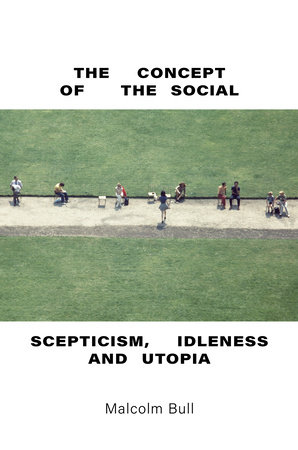
Vectors of the Biopolitical - (Chap. 2) c/o Bull

The Concept of the Social
'From one sentence in Aristotle derive two arresting theoret- ical discourses of the twenty-first century: Michel Foucault's biopolitics, provocatively reformulated by Giorgio Agamben in terms of the relationship between sovereignty and the body, and the capabilities approach developed by Amartya Sen and Martha Nussbaum as a means of evaluating and promoting development, justice and freedom. Both are characterized by deep reflection on the sources of Western political thought, and by urgent engagement with contemporary social and legal problems. Both are in some sense biopolitical in that they are shaped by the interplay of the same Aristotelian categories the human and the animal, politics and nature. But they are on opposite sides of the divide that has opened up in the human sciences since the 1960s, and there currently seems no optic through which they might simultaneously be viewed, no way of integrating or comparing their insights.
 
In part, this reflects a situation in which political debate appears to have fragmented into a multiplicity of single issues. The ancient 'Who will rule?' and the modern 'Who shall have what?' have been supplemented by an array of questions that deal with matters once exclusively cultural, personal or natural. For previous eras, the relative integrity and unmalleability of cultures, bodies and environments rendered such questions redundant. Now they frequently appear unanswerable from within established political traditions, and incommensurable in relation to each other. Within this expanded field, biopolitics and the capabilities approach have unusual salience and potential, for both bundle together issues otherwise assumed to be distinct. If they, in turn, could be coordinated, perhaps we could begin to map the new territory.' p.68.

individual
|
INTERPERSONAL : SCIENCES
humanistic ------------------------------- mechanistic
SOCIOLOGY : POLITICAL
|
group
'Who shall have what?'

nature

human - animal

bio-
culturepolitical

'Who will rule?'


Bull, M. (2021) The Concept of the Social, London: Verso.

Friday, December 15, 2023

Person to object: Surely you're joking* ...!

 INDIVIDUAL
  |
     INTERPERSONAL    :     SCIENCES               
HUMANISTIC --------------------------------------  MECHANISTIC      
SOCIOLOGY  :   POLITICAL 
|
GROUP

identity

person

choice


identity

person, age

integer


people

father - mother

election

voting age


By @Eyesomorphic - https://www.youtube.com/@Eyesomorphic 

"A gentle introduction to the study of Category Theory and Abstract Algebra, done from the ground-up by exploring the mathematical weapon of abstraction. This video aims to give an overview of the fundamental tool at the forefront of pure mathematical research: abstraction. By seeing this tool in various contexts, and how it allows us to encounter Category Theory in a natural and intuitive manner, we'll see how beautiful the abstract can really be."

  ― Timestamps ― 
 0:00 - Intro 
1:49 - Abstraction and Algebra 
7:30 - Examples of Abstraction 
8:49 - Set Theory 
13:25 - Category Theory 
21:16 - Outro 
― Credits ―
All animation and voiceover created by Eyesomorphic. Background music: 'Abstraction', composed by Caleb Peppiatt.

― Further Reading ―
Category Theory for Programmers: The Preface, by Bartosz Milewski: https://bartoszmilewski.com/2014/10/28/category-theory-for-programmers-the-preface/

Category Theory for Computing Science, by Michael Barr & Charles Wells (Book)

 *Person to object - and back again - assuring and preserving the humanistic.

Thursday, April 15, 2021

'Faulty thinking' or 'Thinking faulty'?

By Mikenorton - Own work, CC BY-SA 3.0, https://commons.wikimedia.org/w/index.php?curid=4050363

Mikenorton, CC BY-SA 3.0 <https://creativecommons.org/licenses/by-sa/3.0>, via Wikimedia Commons

Monday, September 17, 2018

The Economist: a Nurse, an Obituary - Lini RIP

individual
|
INTERPERSONAL : SCIENCES
humanistic ----------------------------------------------- mechanistic
SOCIOLOGY : POLITICAL
|
group

Lini


Many Keralans work in the Gulf.

More lucrative than staying at home.

Dream of Gulf as a magical place.

Proud pictures taken outside the house.

Study

Motivation
Ambition
Love

Lini - died of the Nipah Virus
(fatal in 70% of cases)
May 21st 2018, aged 28

Night shift
Patient admitted: Mohamed Sadiq from Changaroth Panchayat
Fever, breathing difficulty
Fluids, paracetamol, change of clothes,
sit with all night long
The patient died after a few days

 Travel by bus to work from Chempanoda, slow but beautiful journey across rivers, areca-nut and rubber trees, past wooded hills. The Western Ghats tower to the east, catch the evening sun.

Bats - infected water, or the mangoes nearby.

Lini was studying to improve her knowledge ...
Puthussery
(family)


Lini --------Sajeesh
|
|
---------------
|                    |
Rithul (5 yrs)       Sidharth (2 yrs)

Sajeesh, away 5 yrs Bahrain working as an accountant
Daily phone calls, returned a few times a year
Able to afford 1 storey brick house

Social media - rumours
Origin of infection?
to be eligible for a permanent government nursing job.

On contract to Perambra Taluk hospital
Upgraded from a community health centre 10 yrs ago
Still short of doctors and specialists
Difficult cases still go to Kozhikode 50km away

Lini worked as a daily-wage nurse - flexible hours.

Place not quite paradise as farmers at times gathered to protest when their land was misclassified as protected forest and claims to ownership were rebuffed.

Husband tried to get a family visa, but
Lini wanted a nursing job in Gulf first.
(She loved her work too much)


Obituary, Lini Puthussery, The Economist, June 2nd, 2018, 427, 9094, p.86.