Hodges' Model: Welcome to the QUAD: algebra

Hodges' model is a conceptual framework to support reflection and critical thinking. Situated, the model can help integrate all disciplines (academic and professional). Amid news items, are posts that illustrate the scope and application of the model. A bibliography and A4 template are provided in the sidebar. Welcome to the QUAD ...

Showing posts with label algebra. Show all posts

Friday, April 24, 2026

In Marrakech how can I forget "A is for ..."!

The Arabian world gave us algebra and algorithm and much more besides, as star gazers quickly find. There are many beautiful Arabic names for stars. At the UM6P Conference venue there were some wall displays, highlighting the major contribution of Al Khawarizmi:


Earlier this month I picked up The New York Review of Books, spotting a review of four books (2009-2025) on mathematics, including algebra by Paul Lockhart.

Dan Rockmore. In Defence of Algebra, The New York Review of Books. April 9th, 2026, Vol. LXXIII, No. 6. pp.28-30.
https://www.nybooks.com/articles/2026/04/09/in-defense-of-algebra-paul-lockhart/

Monday, March 30, 2026

Lavoisier: Math - Chemistry; Quantity, Quality, Principle ...

The philosophy of science, can not avoid being viewed historically, which leads us to learn how mathematics literally took hold, from physics, to chemistry and biology. The application of mathematics to chemistry provides many and ongoing insights:

'Curiously enough, Kant’s own student, Jeremias Benjamin Richter (1762-1807), would only a few years later disprove his professor with his PhD dissertation On the use of the mathematical method in chemistry (Richter 1789). It laid the groundwork for stoichiometry as an algebraic approach to chemistry, including what was later called the ‘law of constant proportion’ that John Dalton used for his atomism on chemical grounds (Richter 1792-3, Dalton 1808). Moreover, at the time of Kant’s writing, experimental philosophy was taking over most of the centers of European research to become the mainstream methodology of modern science, which would later denounce the ideal of a priori knowledge in science as ‘mere’ metaphysics. Although some philosophers of mathematical physics still adhere to that ideal today, Kant was a late partisan in the struggle for the methodological priority of mathematics in the study of nature as it was exemplified by the old field of ‘rational mechanics’. Yet, his view on science became marginalized as much as his verdict on chemistry, that it would be alien to mathematics, was refuted.'

The pitfalls presented and Schummer's 2.4 A methodological suggestion for defining mathematical chemistry are helpful.

Joachim Schummer. Why Mathematical Chemistry Cannot Copy Mathematical Physics and How to Avoid the Imminent Epistemological Pitfalls. HYLE--International Journal for Philosophy of Chemistry, Vol. 18, No.1 (2012). pp. 71-89. https://www.hyle.org/journal/issues/18-1/schummer.htm

Maths is filled with tragedy, but the personal manifestation in my lack of ability, pales to insignificance to the many scientific and human tragedies history reveals. Consider Galois, and Lavoisier:

‘Only a moment to cut off that head and a hundred years may not give us another like it,’ lamented the 18th-century French mathematician Joseph Louis Lagrange. The head in question had belonged to the French aristocrat and chemist Antoine Laurent Lavoisier, who was executed at the hands of French revolutionaries on 8 May 1794. Lavoisier’s ideas changed the face of chemistry. He is best remembered for overthrowing the phlogiston theory, but perhaps his greater and more lasting achievement was to impose order on the language and symbolism that have shaped the thoughts of chemists.'

Paul Board, The Aristocrat who revolutionised chemistry, New Scientist. May 7, 1994 (Volume 142, Issue 1924). https://www.newscientist.com/article/mg14219243-300/

In an essay in the Charles Coulston Gillispie's essay in the history of scientific ideas, Chapter VI. The Rationalization of Matter, describes how Lavoisier sought to develop an algebraic approach:

'But what is most interesting is Lavoisier's mode of representing these results, so correct in quantity, so wrong in principle. In order to sec what he was about, one has to follow him into some detail. It is obvious, he writes, that acidification of a metal involves many variables-heat, concentration, chemical affinities, etc. each of which is a force acting with characteristic energy. Therefrom results a problem complex and difficult of solution: [my emphasis]

"Better to exhibit the state of the question in this respect, and in order to show at a glance the result of what happens in metallic solutions, I have constructed formulas of a sort, which could at first be taken for algebraic formulas, but which have not the same object, and do not derive from the same principles . . ."'

Gillispie, Charles Coulston. The Edge of Objectivity: An Essay in the History of Scientific Ideas. Princeton, N.J.: Princeton University Press, 1960.

Gillispie quotes at length to demonstrate Lavoisier's approach*. There is a more accessible (for me, here) source in -

Stefano Zambelli (2012). Chemical Kinetics, an Historical Introduction, Chemical Kinetics, Dr Vivek Patel (Ed.), ISBN: 978-953-51-0132-1, InTech, Available from: 
http://www.intechopen.com/books/chemicalkinetics/chemical-kinetics-an-historical-introduction

Please see page 6: 3. Chemical equilibrium conception: The law of mass action.

To close, there is reading and advice to be carried forward in:

Guillermo Restrepo & José L. Villaveces, "Mathematical Thinking in Chemistry". Special Issue: Chemistry and Mathematics, Part 1. HYLE--International Journal for Philosophy of Chemistry, Vol. 18, No.1 (2012). pp. 3-22. https://www.hyle.org/journal/issues/18-1/restrepo-villaveces.htm

Gillispie concludes his illustrated exploration of Lavoisier:

'Is this not the most tantalizing memoir in the history of chemistry, and in Lavoisier's the most appealing? Here alone, one gets a sense of modesty. He never claims for these expressions the dignity of algebra. "We are still very far from being able to introduce mathematical precision into chemistry, and I beg, therefore, that no one consider these formulas . . . as more than simple annotations, of which the object is to ease the labors of the mind." (But compare this disclaimer with what he says of algebra itself in the Method of Chemical Nomenclature: "Algebra is the analytical method par excellence: it was invented to facilitate the labors of the mind, to compress into a few lines what would take pages to discuss, and to lead, finally, in a more convenient prompt and certain manner to the solution of very complicated questions.")' p.245.

*in - Lavoisier, A.L. (1782). Considerations sur la dissolution des metaux dans les acides, Mémoires de l’Académie des sciences 1782, pp. 492-527, Available from http://www.lavoisier.cnrs.fr/ice/ice_book_detail-fr-text-lavosier-Lavoisier-49- 5.htm

Thursday, January 08, 2026

Hodges' model: An algebra for care - seeking axioms?

Although Oliver had been brought up by philosophers, he was not theoretically acquainted with the beautiful axiom that self-preservation is the first law of nature.
                                                                                    
- Charles Dickens, Oliver Twist

Coady, C. A. J. (1990). Hobbes and “The Beautiful Axiom.” Philosophy, 65(251), 5–17. 
http://www.jstor.org/stable/3751240

"It is an axiom in therapeutics that the more remedies there are proposed for a disease the less likely is any of them to be effective."

[- William Osler]

Mountin, J. W. (1943). Nursing: A Critical Analysis. The American Journal of Nursing, 43(1), 29–34. https://doi.org/10.2307/3416264

Individual
|
     INTERPERSONAL    :     SCIENCES               
HUMANISTIC  --------------------------------------  MECHANISTIC      
 SOCIOLOGY  :    POLITICAL 
|
Group
 
'One of the core tenets of pragmatism, despite its various formulations by William James, Jane Addams, John Dewey, and neo-pragmatists like Rorty, Habermas, and Putnam, is an epistemological axiom first formulated in 1868 by Charles Sanders Peirce. This maxim, often dubbed the pragmatic maxim, states that the meaning of our ideas is best expounded when we can spell out the implications or the effects of these ideas in real-world experience and practice (Peirce 1878).' pp.105-106.
(Racine, 2024).

physical - SELF - My body[?]


'The lack of consideration of downside risks applies to all COVID-19 countermeasures, including mass-masking (e.g. the social and psychological consequences of mask-wearing for all kinds of social interaction, most notably in educational and childcare settings) and to the accelerated approval of vaccines. The latter is particularly noteworthy because the need for rigorous testing of new medications to guard against the risk of side effects is a standard axiom of contemporary ethical medical practice. Given that the vaccines in question employed novel mechanisms, not testing them sufficiently to assure their longer term safety was stratospherically risky: it meant that the possibility that this vaccination programme would do more harm than good could not be excluded. Yet, the medical establishment stood foursquare behind it, insisting on the safety and efficacy of the vaccines and pillorying any, including those within it, who demurred.' p.55. (Kelly, 2023).


'“Never have we been so free. Never have we felt so powerless”: this, according to Bauman, is the paradox of our time. Verhaeghe writes with a variant: “Never before have we in the West had it so good, and never have we felt so bad.”33 Because neoliberal axioms determine the standards of what is healthy and normal, society sees those who do not want to participate as sick or abnormal.' pp.97-98. (Vanheste, 2023).
 

My emphasis

Racine, E. (2024). What Participatory Research and Methods Bring To Ethics: Insights From Pragmatism, Social Science, and Psychology. Kennedy Institute of Ethics Journal 34(1), 99-134. 
 https://dx.doi.org/10.1353/ken.2024.a943431.

Kelly, M.G.E. (2023). Securing the Pandemic: Biopolitics, Capital, and COVID-19. Foucault Studies 35, 46-69. https://muse.jhu.edu/article/940834.

Vanheste, J. (2023). Half a Century of Exhaustion and Madness: The Fiftieth Anniversary of Pink Floyd's The Dark Side of the Moon. Soundings: An Interdisciplinary Journal 106(1), 87-109. 
https://muse.jhu.edu/article/950363.

See also: 'axiom' : 'algebra' : 'pragmatism'

Person-centred care = care axiomatics at a collective and individual level?

The first rule (axiom?) of first aid is...?

Sunday, November 30, 2025

Interesting ... 'Incidence structure(s)'

Unsurprising, in studying 'Hodges' model, I've been aware of Wilfrid Hodges and model theory for many years.


Now, trying to look at (Brian) Hodges' model using maths, I've wondered about possible connections with Wilfred Hodges' work.

Dr W. Hodges was listed in searches on lines, axes, and structure:
'Algebraists and geometers like to classify structures by the laws which they obey. A typical law for incidence structures reads:

"For any two different lines L and M, there is exactly one point which lies on both L and M."'
My imagination may be getting the better of me, but there seems something profound in the intersection of the model's two axes and the care - knowledge domains that are created (proposed - adopted..)?

So, is Hodges' model a form of 'incidence structure', or does it contain several incidence structures? 

Hodges, W. (1985). Truth in a Structure. Proceedings of the Aristotelian Society, 86, 135–151. http://www.jstor.org/stable/4545041

Tuesday, February 25, 2025

So, I can proceed, fall flat on my face - [ concepts-maths iii/iii ]

- and utilise the inevitable!

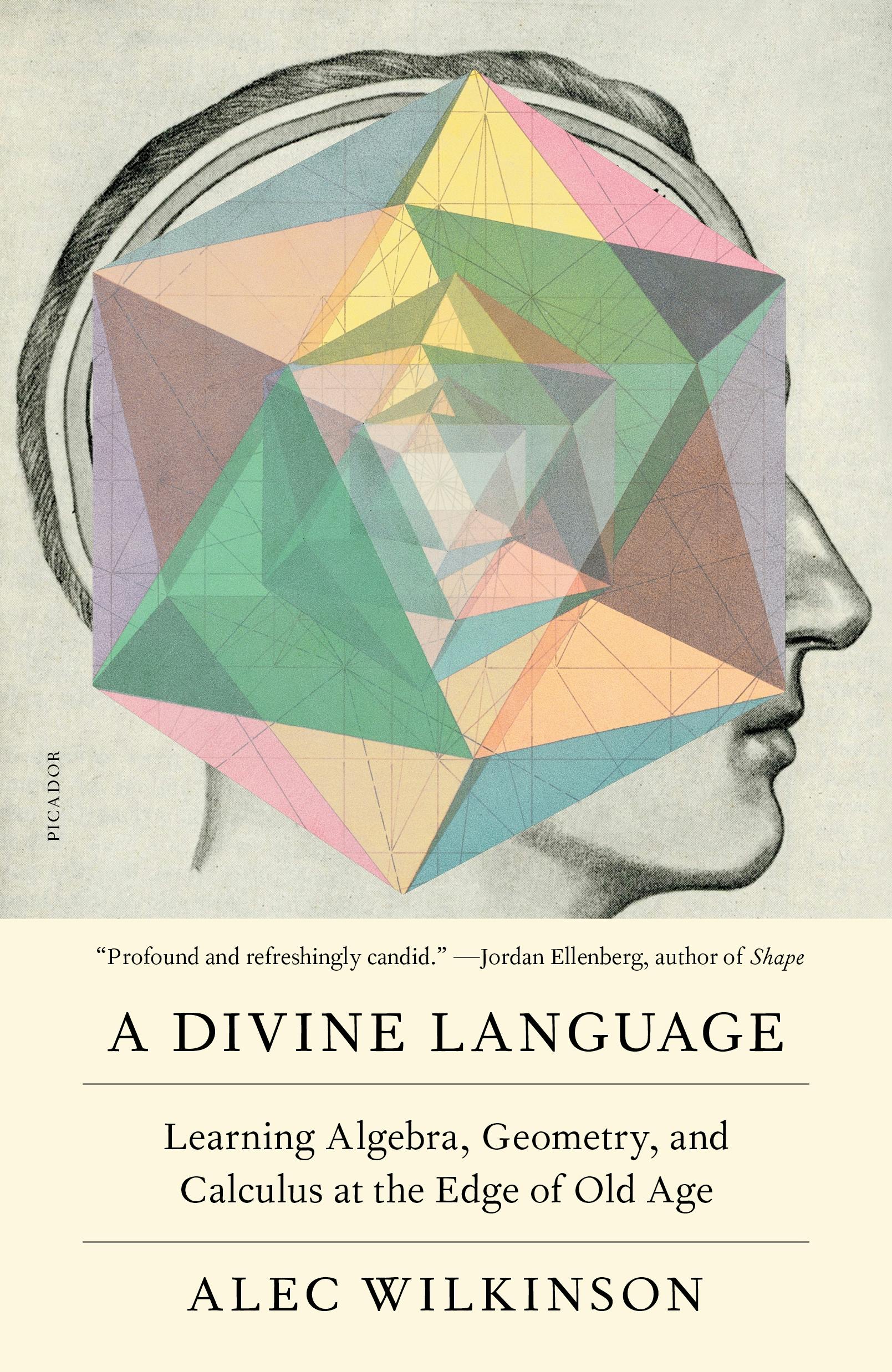
'Decades after struggling to understand math as a boy, Alec Wilkinson decides to embark on a journey to learn it as a middle-aged man. What begins as a personal challenge—and it's challenging—soon transforms into something greater than a belabored effort to learn math. Despite his incompetence, Wilkinson encounters a universe of unexpected mysteries in his pursuit of mathematical knowledge and quickly becomes fascinated; soon, his exercise in personal growth (and torture) morphs into an intellectually expansive exploration.' 
https://us.macmillan.com/books/9781250168580/adivinelanguage/


A Divine Language

As observed many times in the literature and here on W2tQ writing about Hodges' model, healthcare - medicine and nursing are both a science and art. Hodges' model is an invitation to the arts in liberal form, with an emphasis on practice: social sciences, humanities, physical sciences and even mathematics. 

There is now quite a bank of posts on W2tQ tagged art/arts and more specifically prints. I still plan to attend a workshop on printing. As ever, in my head, my mind's eye - I've an amazing, brilliant .. (!?) arts project, just waiting to be released. A true collage of the care concepts.

If Hodges' model is 'simple' in its basic form, then it is clearly possible for other people to create their own artistic impressions, interpretation of Hodges' model. My effort would of course be unique, as would theirs. There could be a competition and I end-up missing out. Not even short-listed for a prize; a victm of familiarity perhaps? 

Quite 'naturally' in a way, or at least by way of childhood experiences, a need for therapy and validation; I have also arrived at a belief that there is a mathematical project here (Oh, for goodness sake! Is there no end to this?). 

As posted before, like Alec Wilkinson I am no mathematician. Embarrased, shamed to a husk at school on many occasions, I encountered math teachers who must have empathised. Well, that's one way to explain the appreciation of maths I have always felt. Or more accurately, a love of knowledge; of which maths and logic are a part? Since I can hardly understand, I am more in love with the idea of maths, than mathematics itself. I have always been in awe of maths and people who 'get it', even if that is only  mastery of the high school mathematics curriculum.

Convinced that there is more to Hodges' model than meets the eye, I have thought of following Wilkinson - who tries to be systematic - to underpin a book - back into the nightmare lands of my youth. Should I retake GCSE maths? 'There be dragons', without a doubt. The heat can be recalled, like it was yesterday. This isn't just a dragon, it is a chimera. At times it wants to be a friend, providing familiar terms, domain, set, and group. Wilkinson's quest is structured and seeks a reasoned and disciplined approach. Why am I bothering? I have a choice surely? Nursing, health, global health can all collectively furnish many items of epistemological fruit. No need for calculative flagellation. Through Hodges' model you can productively span the disciplinary bridges once again: call in - sociology, economics, policy and more. How many Königsberg bridges do you need?

While the artist in me, might waste time. In pointing to Hodges' model as a potential mathematical object, this little seed might fall on fertile and (much) more capable ground(?), as Wilkinson describes:

'Mathematics might be the only creative pursuit in which inevitability figures. Other artists might be defeated by a task beyond their capabilities, but they do not live with knowing that sooner or later, if their work is consequential, someone will do what they haven't been able to do. Mathematicians work within a discipline in which, so long as their suppositions are correct, there is always a precise and irrefutable answer, even if they can't find it.' p.135.

I can hope for this at least.

Alec Wilkinson. (2022) A Divine Language. Learning Algebra, Geometry, and Calculus at the Edge of Old Age. New York: Farrar, Straus and Giroux. https://us.macmillan.com/books/9781250168580/adivinelanguage/

Previously: How 'divine' is the language of care?

n.b. At some point I will go though all the posts and unpublish/delete items that add little to the core.

Friday, January 03, 2025

How 'divine' is the language of care?

'My impression was that algebra was less a subject than a practice into which one was inducted by the algebra priests after a series of mortifications. The letters and equations that the teacher drew on the board did not seem related to the numbers I had handled in other classrooms. For one thing, a problem in arithmetic was vertical, one number beneath another, and a problem in algebra, an equation, was horizontal. I felt as if in a permanent present, unable to see how the past and the future were joined. In Ulysses James Joyce writes that the present is the drain that the future goes down on its way to becoming the past.' p.12.
'The mathematician Alonzo Church, who taught Alan Turing, told another of his students, David Berlinski, "Any idiot can learn anything in mathematics. It requires only patience." I would sit with a pencil and paper trying to solve an algebra problem and sometimes go only so far before my mind would halt, because I had could used up what little I knew that might apply. It hadn't occurred to me to think of algebra as the bright boys and girls I had been among had thought of it, as a series of related procedures. They were constructing a map. I was collecting postcards from places where anxiety or incuriousness had kept me from leaving my hotel.' p.31.
(my emphasis)


Alec Wilkinson. (2022) A Divine Language. Learning Algebra, Geometry, and Calculus at the Edge of Old Age. New York: Farrar, Straus and Giroux. https://us.macmillan.com/books/9781250168580/adivinelanguage/

Previously: math :: logic

Monday, August 12, 2024

Laws of Form - Society, Conference, and Journal (to follow)

Finding out last minute at the end of last week, I attended the Laws of Form Conference at the Old Library, Liverpool University, 19 Abercromby Square L69 7ZN, UK. It was 17 minutes away by rail, so I made the short walk from Lime Street Station, as pre-existing commitments allowed.

The Society, devoted to the ideas and work of George Spencer-Brown is quite new 2023. I was greeted with a welcome that actively encourages the widest range of ideas as relates to LoF, the AGM also revealed future plans.

Laws of Form Books: Source lof50.com 

I've been on the LoF mail list for many years and every so often I've replied to themes that also touch thinking on Hodges' model. Now trying to look at Hodges' model more formally, learning of the conference I had to attend.

At the close today the vote of thanks expressed for the support of University of Liverpool and West DenHaag was shared here.


After the introduction, the first session by Andrew Crompton, of The Alternative Natural Philosophy Association, How to Make a Horse Vanish included insights into the scope of George Spencer-Brown's thought, combining philosophy, design, and architecture with great visuals. All the sessions were interesting, helpful and stimulating, including several that were technical detailing applications of Laws of Form:

".. Spencer-Brown has pointed out that he discovered an arithmetic that underlies Boolean algebra. This arithmetic is the Spencer-Brown Calculus of Indications generated by the mark <> (here written in typographical form) subject to the relations of calling, <><>=<>, and crossing, <<>> = , where, in crossing, the two marks are erased in the plane of writing. .." 
KEYNOTE Louis H Kauffman, Arithmetic in 'Laws of Form' - also Weds 7th Aug. 

Even though I could not understand the approach, listening to purposes, application and and the terminology is useful. 

I was online Thursday, and only followed the first two sessions. I have been exasperated with the various -isms, a response possibly shared with Jonathan Mize, Mind, Your Business: Reimagining business, art and science:

"The world is aching for a fresh approach to how we interact with one another. A popular prescription for our ailment is some type of new “ism,” some meticulously engineered set of dictums that propose to “fix society” once and for all. In this paper, I offer no “isms,” no grand new paradigms and no set of rules that humanity “must follow,” lest they slip into oblivion. What I offer is something very simple—a re-seeing of our approach to our everyday lives, a lifting of the vision from the “ills” and the “evils” of the world to the potential for our collective creation and experience. ..." Thurs 8th Aug.

Secondly, Diego Lucio Rapoport Campodonico, presented The Geometry and Topology of the Primal Distinction: Phenomenology and cosmo-sociomorphisms. If the public's understanding of science can be represented as a morphism, then it was extended here so I will explore.

There was a slide in the session of Florian Grote, Playing the Game of Counting to Two: On the question of requisite re-entries in communication including artificial intelligence (Friday 9th August), that I could immediately relate to Hodges' model:

"In the poem which provided the title for the book Only Two Can Play This Game, James Keys (1971) aka George Spencer-Brown provides the reader with a thorough reflection on the unlikely inevitability of a communicative – a social – world."

I can't cover all the examples of interest, but over the years systems, systems theory invariably crop up. Through the UKSS and Open University I have come across people with ties to the Schumacher Inst.. This thread continued 10th Aug, with Laws of Context with Philip Franses.

Hans Rudolf Straub's The Form and the Bit as Basic Building Blocks of Information: A comparison stood out as a source of reading conjoining LoF and informatics.

Marcus J. Carney's talk (also Sat 10th) Letting Go. The Form of Mourning reminded me of what does a single discipline mean when it uses the term 'applied'? Nursing a cold I didn't want to use the mic, but I think Marcus's work could support theory given the attention on trauma-informed care and therapy at present. There were obvious immediate connections in the abstract, borne out (well delivered!) in his presentation.
"Threnos in antiquity was understood as the activity of mourning. S. Freud dichotomised mourning with melancholia, entangling both in libido. A. and M. Mitscherlich took this up in the 1960s for the German people post Holocaust as their “inability to mourn”. J. Ruesen tried “Trauer” in this context again in the 1990s as “mourning humaneness”, bloating its abstraction. While M. Rothberg introduced the notion of “implicated subject” to the field/s of historical violence and injustices to modify R. Hilberg’s perpetrator-victim-bystander triad in 2019, the German “Historikerstreit 2.0” was raging, but not about Rothberg’s “implication”, yet about his 2009 concept of “multidirectional memory”, wherewith he demonstrated how the Holocaust had enabled the articulation of other histories of victimisation at the same time that it had been declared "unique" among human-perpetrated horrors, while uncovering the more surprising fact that public memory of the Holocaust emerged in part thanks to postwar events that seemingly had little to do with it."
As noted in a previous post, there's also the approach of Parallel Histories. You wonder from where dialogue can follow: Israel and Palestine ... but it must. On Wednesday the recent rioting impinged on proceedings with directions to close earlier and dining plans impacted. 

After too many years I must explore George Spencer-Brown's Laws of Form and try to apply it to Hodges' model as an additional and alternative theoretical resource.

The GSB Society have a forthcoming journal which I will post about here as details follow.

The next conference is in 2026 and will be based in Cambridge - a great prospective source of ideas.

Saturday, July 20, 2024

Frayn - on maths

"Pure arithmetic is not about particular things but about particular relations between things. Algebra preserves an even loftier detachment from the world. It is not about relations between things - it about relations between relations. Numbers are variables that can be quantified in the physical world. Algebraic terms are variables that can be quantified in the world of numbers." pp.154-155.


Frayn, Michael (2006). The human touch: our part in the creation of a universe. 'Fingerhold', Chapter 5. London: Faber & Faber. pp.139-170.

individual
|
INTERPERSONAL : SCIENCES
humanistic ------------------------------- mechanistic
SOCIOLOGY : POLITICAL
|
group

human


TOUCH


... human human  human  human human ...


Don't you dare!
Yes, please do!


Thursday, January 25, 2024

James's 'terrible algebra'

“You are right in your consciousness that we are all echoes and reverberations of the same, and you are noble when your interest and pity as to everything that surrounds you appears to have a sustaining and harmonizing power. Only don’t, I beseech you, generalize too much in these sympathies and tendernesses — remember that every life is a special problem which is not yours but another’s, and content yourself with the terrible algebra of your own. Don’t melt too much into the universe, but be as solid and dense and fixed as you can." 
Henry James.

Source - and in full: 
https://www.goodreads.com/quotes/1242340-you-are-right-in-your-consciousness-that-we-are-all

My source: Berwick, I. Over the limit, Life&Arts, FTWeekend, 20-21 January, 2024, p.10. (Review of "How We Break").

Why not a 'care algebra' - across the five domains?


 Individual
   |
      INTERPERSONAL    :     SCIENCES               
HUMANISTIC  --------------------------------------  MECHANISTIC      
 SOCIOLOGY  :   POLITICAL 
|
Group
reasoning

thought

James's ...

'terrible algebra'

THEORY
<gap>
PRACTICE

mathematics & logic

abstraction

algebra


PRACTICE
<gap>
THEORY

Applied Mathematics
in the Social Sciences


Equity, Equality,
Efficiency, Effectiveness, Efficacy
Difference, Comparison
Inclusion, Exclusion


My emphasis.

Friday, December 15, 2023

Person to object: Surely you're joking* ...!

 INDIVIDUAL
  |
     INTERPERSONAL    :     SCIENCES               
HUMANISTIC --------------------------------------  MECHANISTIC      
SOCIOLOGY  :   POLITICAL 
|
GROUP

identity

person

choice


identity

person, age

integer


people

father - mother

election

voting age


By @Eyesomorphic - https://www.youtube.com/@Eyesomorphic 

"A gentle introduction to the study of Category Theory and Abstract Algebra, done from the ground-up by exploring the mathematical weapon of abstraction. This video aims to give an overview of the fundamental tool at the forefront of pure mathematical research: abstraction. By seeing this tool in various contexts, and how it allows us to encounter Category Theory in a natural and intuitive manner, we'll see how beautiful the abstract can really be."

  ― Timestamps ― 
 0:00 - Intro 
1:49 - Abstraction and Algebra 
7:30 - Examples of Abstraction 
8:49 - Set Theory 
13:25 - Category Theory 
21:16 - Outro 
― Credits ―
All animation and voiceover created by Eyesomorphic. Background music: 'Abstraction', composed by Caleb Peppiatt.

― Further Reading ―
Category Theory for Programmers: The Preface, by Bartosz Milewski: https://bartoszmilewski.com/2014/10/28/category-theory-for-programmers-the-preface/

Category Theory for Computing Science, by Michael Barr & Charles Wells (Book)

 *Person to object - and back again - assuring and preserving the humanistic.
