Hodges' Model: Welcome to the QUAD: relational

Hodges' model is a conceptual framework to support reflection and critical thinking. Situated, the model can help integrate all disciplines (academic and professional). Amid news items, are posts that illustrate the scope and application of the model. A bibliography and A4 template are provided in the sidebar. Welcome to the QUAD ...

Showing posts with label relational. Show all posts

Monday, September 14, 2026

Paper: What factors influence evidence use in policy? An updated systematic map

 Abstract  [ REVIEW | Article in Press ]

In 2014, a large systematic map found that relational factors were amongst the most frequently reported facilitators of evidence use in policy. Since then, there has been a growth in evidence-use initiatives and research, many of which have attempted to address relational factors. In this timely updated map, we describe the current state of research about which factors influence evidence use in policy. A search strategy combining ‘evidence’, ‘barriers and facilitators’ and ‘policy/policymakers’ was used to identify studies across 15 electronic databases between 2012 and 2022. Studies were screened for those that include empirical data about evidence use in policy. Data extraction enabled descriptive analyses characterising studies in terms of focus, topic area, setting, and types of factors influencing use. Two thousand, one hundred and ninety-nine studies were included, a 20-fold increase over 10 years. The most commonly reported factors influencing use were the relevance of evidence, and then organisational (resources, skills, personnel and managerial support). A large number of studies reported on evidence-use interventions (n = 877) of which 379 were evaluations. Findings may indicate a shift towards relational and systemic thinking about evidence use. There appears to be a growing recognition of the resourcing, work, time, and workforce required to embed evidence use within and between organisations. With this huge growth in the literature, particularly in new evidence use interventions being tested across policy sectors, continued review and mobilisation is necessary to effectively inform the design and implementation of evidence use interventions and research.


Oliver, K., Malin, J., Akerlof, K.L. 
et al. What factors influence evidence use in policy? An updated systematic map. Humanities and Social Sciences Communications. (2026). 
https://doi.org/10.1057/s41599-026-08391-6

Not a citation for Hodges' model, but I am grateful to Prof. Oliver and co-authors for being able to assist with data extraction using EPPI-Reviewer Screening Wizard. The preceding patience and guidance to complete the coding tasks was also invaluable in being transferable. I learned a great deal and it has been perversely reassuring (disheartening!) to see that the path to final publication is also 'circuitous' for academics.^  An additional lesson is building on existing work and publication (Oliver, 2014) to revisit a method and research question. (Updates to follow).

Previously: 'map' : 'systematic' : 'policy'

^A conclusion, much shared I believe: academic publishing is systematically dysfunctional.

Thursday, August 20, 2026

"Hey Jonesy: Where's the book?"

This prompt from yesterday is far from new. There are outlines for papers on W2tQ.

Seriously though, what would a book outline look like - now?

The introduction is probably already written, it just needs to be pulled-together. But, in truth it (desperately) needs a new perspective. The question of how to update the explanation - short of running a workshop? The model's original purposes 1-4 are a statement of fact. The intro figures that invariably show how the axes 'create' the model's care, or knowledge domains? What if...? Could we also present the inverse? That would be a new slant. Does the model still 'work'? 

Details aside, here is a quick outline:

Part 1

Introduction and Background 

1.1 Brian E. Hodges and Post-Registration Nurse Education

1.2 Peter Jones - Primed to mind-map

1.3 Web presence: Initial website 1998-2015 - Blog 'Welcome to the QUAD' 2006 ...

1.4 Brian's original lecture notes

1.5 Looking back and forward: Models of care for the 21st Century

1.6 Confessions: So, where is the new site / platform? 

Part 2

 The Four (Five) Care Domains 

2.1 Science

2.2 Interpersonal (& Intrapersonal)

2.3 Sociology

2.4 Political

2.5 Spiritual

Part 3

Hodges' model in Practice - Applications

3.1 Self care

3.2 Clinical

3.3 Social Care - Community 

3.4 Management

3.5 Informatics

3.6 Policy 

3.7 Education

3.8 Workforce: Local - Global 

Part 4

The Legacies (still) in Our Midst

4.1 Person-centredness

4.2 Integrated Care

4.3 Holistic Care

4.4 Parity of Esteem

4.5 The Theory-Practice Gap

4.6 Change - Transformation: When? Disease to Prevention

Part 5

It's Tomorrow Now

5.1 Health Promotion

5.2 Public (Mental) Health & Protection

5.3 Citizenship

5.4 Global Health

5.5 Planetary Health

Part 6

Research

6.1 Hodges' model as a Research Tool

6.2 Climate change

6.3 Planetary Health

6.4 Beyond the Bio-Psycho-Social Model: The Political Domain

6.5 The Literacies 

6.6 InterDisciplinary, Multi- and Transdisciplinary

6.7 Hodges' model as a Mathematical Object?

Part 7

Philosophy
 
7.1 Revisiting the Original Purposes
 
7.2 AI - The Elephant in Mind
 
7.3 Value & Values  

...?

Much to add, revise ... 'Education as Part X'. Political and Literacy too - a specific part - and with AI (in every part!)?

STOP!!

OK. It's a minefield. Even a proposal is a 'non-trivial' task.

Who's writing this? Not me! Not all of it, and for me; not AI either.

It would be marvellous to be one of several editors: one day? 

Clearly, a great project for students and early career researchers and current practitioners. 

An inoculation to help new cohorts deal with the realities, ravages and rewards of 'care' in its entirety*. 

P.S. With the start of a title right there? PJ

Tuesday, August 11, 2026

Philosophical Counselling - Reading group: Taylor 2002 'Central Value of Philosophical Counseling'

In addition to Kantian Desert (this p.m.) it is proving helpful to join a reading group on Philosophical Counselling. Being able to combine clinical and therapy experience* with philosophy is a welcome and rather overdue development. The reading for tomorrow (online for me I hope) is: 

Taylor J.S. (2002) The Central Value of Philosophical Counseling. International Journal of Philosophical Practice. 1 (2):1-9.

ABSTRACT: The title of this paper is deliberately ambiguous. It could refer either to the central value that philosophical counseling has for philosophy in general, or else it could refer to something (such as personal autonomy, or personal well-being) that philosophical counselors believe to be of value, and that they are able to help their clients pursue. In fact, this paper will be addressing both of these topics in order to demonstrate
the links that hold between them, and, in so doing, will attempt to further elucidate the nature of philosophical counseling itself.

Taylor (and related papers) also joins the dot (object?) that is Hodges' model, for example (with my emphasis):

'In this vein philosophical counseling is viewed as a Socratic drawing out of the knowledge that the client already possess, and that may be revealed through the careful questioning of a well-trained practitioner of the elenchic method.' pp.1-2.

I've long used guided discovery, by which the students (usually)/audience co-produce the model through a discussion.

'However, the difference between Socrates as a seeker after truth and the philosophical counselor as a professional who helps his or her client map out his or her own world-view in order to address particular problems that he or she is concerned with should not be overstated.' p.2.

'Furthermore—and perhaps most galling of all to philosophical counselors—academic philosophers often seem to view philosophical counseling as not being “real” philosophy at all, but more perhaps a species of social work, or an unsophisticated variant ofpsychotherapy.' p.4.

'Again, this information may be used by the counselor to help the client reflect more acutely upon her own views concerning the morality of abortion.' p.6.

'Given these two senses of “autonomy” it appears that the philosophical counselor is most concerned with enhancing autonomy in the second, Millian, sense of this concept. This is because philosophical counselors often try to aid persons in making decisions (or discoveries) about what it is that they really want to do, what their personal value-system or world-view really consists of.' p.11. 
(A contribution to person-centredness? Critical thinking is also noted by Taylor.)

 See also: https://www.igpp.org/english

 *Including, counselling, family, cognitive and behavioral therapies, plus psychosocial intervention.

Saturday, May 23, 2026

The alchemy of terminology, symbols, and signs ...

Or, 'What is a nurse doing … in a chemistry class?' [Ack. See Estrada]

In reading, I was reminded that chemistry adopted mathematical symbols for its own use. Not only that, but as a core science (with physics and biology, emerging from natural philosophy) there is a historical development from the time of alchemy:

Please see (with a graphical abstract):

C.Wentrup, The Transition from Alchemical to Modern Chemical Symbolism: from Bergman and Guiton de Morveau to Hassenfratz and Adet, Higgins, Richter, Dalton, and Berzelius. ChemPlusChem. 2024, 89, e202400033. https://doi.org/10.1002/cplu.202400033

This journey matters today as the use of symbols, in mathematics or other fields can be a barrier to learning and hence personal and disciplinary progress:

Ollie Hunter. Lost in translation: Demystify scientific symbolic language to help your chemistry students overcome any potential learning barriers. Royal Society of Chemistry, 23 May 2022.

As acknowledged many times, it is easy to take a word, or concept from one discipline and 'fit' it to - or in another. Or is it? Estrada concludes:

“The complexities of modern science and modern society have created a need for scientific generalists, for men trained in many fields of science.” This is a paradigm of science in the XXI century, where the advent of such fields like the study of complex systems requires multidisciplinary approaches. But the previous phrase was not written in the XXI century. It is the starting sentence in The education of a scientific generalist” published in Science in 1949 (Bode et al. 1949).' p.161. 

'Mathematics has been defined as the science of patterns. Thus, mathematicians search for “numerical patterns, patterns of shape, patterns of motion, patterns of behavior, voting patterns in a population, patterns of repeating chance events, and so on” (Byers 2010). Once a pattern is identified either in chemistry or in mathematics, the researcher can proceed to the clarification of the systematic rule which is behind that pattern. This is evident in the analogy used here between code-breaking and structure elucidation. This attachment to patterns makes both chemists and mathematicians very prone to the use of pictures. An organic chemist hardly can say anything about the chemical reactivity (or any physical or chemical property) of a molecule from its exact quantum-mechanical Hamiltonian. However, she will construct a complete narrative about the physical and chemical properties of a molecular structure drawn in a piece of paper, even if such a molecule is completely imagined. The power of pictures in mathematics is discussed in the book Mathematics and the Unexpected by Ivar Ekeland (1990) where its value is recognized as fundamental in the early stages of the development of mathematical ideas. This also introduces a very important analogy among chemists and mathematicians. Namely, that they use a proper language in their respective fields. While physicists use the mathematical language in their investigations, chemists use the sophisticated language of chemical formulas and specific symbols to represent charges, rearrangements, partial equilibria, etc. These “invented” languages mainly appear only in Chemistry and in Mathematics, making them unique intellectual activities.' p.162.

With thanks to the author, Ernesto Estrada IFISC for additional thoughts and insights:

Estrada, E. What is a mathematician doing…in a chemistry class?. Found Chem 26, 141–166 (2024). https://doi.org/10.1007/s10698-023-09497-4

Monday, May 18, 2026

CfP: Nonsense in Language and Thought

CFP: Nonsense in Language and Thought

Guest editor: 
Krystian Bogucki (Polish Academy of Sciences)

Deadline for submissions: 
the 31st of July 2026 

Description:

Studia Semiotyczne (Semiotic Studies) invites submissions for a special issue of the journal. Papers should be written in English and prepared for blind review. 

An interest in nonsense was a hallmark of the early analytic philosophy. Bertrand Russell (1908) thought that a theory of nonsense could help us avoid some daunting paradoxes in logic. Ludwig Wittgenstein (1922, 1953) and Rudolf Carnap (1931) recognised nonsense as a fundamental concept for philosophical criticism. They claimed that much of philosophical discourse is defective in the most fundamental way: it is neither true nor false, it does not consist of thoughts and propositions ? it is nonsense. According to the early Wittgenstein, philosophers want to describe the nature of the world, thought, language and ethics, but they unwittingly fall into nonsense. The Tractatus was supposed to free us from this troublesome position by presenting a perspicuous notation. On the other hand, the later Wittgenstein claimed that we should compare deceptive philosophical images with our ordinary ways of thinking and speaking in order to avoid nonsense. Philosophical problems arise when language goes on holiday, so we must always remember the everyday use of concepts. For Carnap, propositions should be reducible to sense data and constructed according to the rules of logical syntax in order to be meaningful. 

Later, the topic of nonsense was discussed by Alfred Ayer, Gilbert Ryle, Willard V. O. Quine, Arthur Prior, Richard Routley and Georg H. von Wright, among others. Since the late 1970s, however, the interest in nonsense has faded. Only recently, some important works have been published. The first important stimulus came from foundational works on theories of nonsense (Cappelen 2012, 2013; Camp 2004; Glock 2015; Magidor 2009, 2013). The second source of the revival of interest in nonsense was Wittgenstein scholarship on the austere and substantial conceptions of nonsense (Conant 2001; Diamond 1995, 2005; Glock 2004; Hacker 2003; Moore 2003; Sullivan 2003). Some works also examined the relation of nonsense to other phenomena (Gotham 2017, Keller and Keller 2021, Shaw 2015, Sorensen 2003). 

The important questions to be addressed in the forthcoming volume are (to name but a few):

  • What are the sources of nonsense? 
  • Are some parts of philosophical and non-philosophical discourse nonsense?
  • What is the relation between nonsense and figurative speech?
  • Is it at all possible to be wrong whether our own thoughts are meaningful? 

We hope that the special issue of Studia Semiotyczne will further strengthen and deepen the scholarly interest in nonsense. 

Possible topics include, but are not limited to:

Theories of nonsense
Nonsense and logical syntax
Nonsense and category mistakes
Nonsense and figurative speech (e.g. metaphor, metonymy)

Nonsense and fiction
History of the concept of nonsense (in particular Wittgenstein's and the Vienna Circle's views on nonsense)
Nonsense and understanding
Nonsense and illusions of sense
Nonsense and quantification
Nonsense and linguistics
Nonsense and ineffability
Nonsense, knowledge-how and knowledge-that
Logics of nonsense

Nonsense and semantic paradoxes
How to diagnose philosophical nonsense?
Metaphilosophical and methodological issues concerning nonsense
In order to submit the paper one is kindly asked to submit the manuscript by sending it to:
krystian.bogucki AT ifispan.edu.pl and studiasemiotyczne AT pts.edu.pl 

All submitted papers will be double-blind peer-reviewed.

My source (and emphasis):
Philos-L "The Liverpool List" is run by the Department of Philosophy, University of Liverpool 
https://www.liverpool.ac.uk/philosophy/philos-l/

Thursday, April 09, 2026

Book: 'Complexity in Health Care - A Paradigm Shift for Clinical Practice'

This book was published in 2023, so I am most grateful to Daniela and colleagues at SpringerNature for the review copy. My reading will also inform both the presentation I've to deliver, and the learning during the conference's three days and the rest of a visit to Morocco.

With a 15 minute talk and 5 minutes for questions, I have 15 slides. The final one, is a listing of sources, plus this book:

1. Estrada, E., Submitted (2026) Emergent Geometry in Complex Systems from Relational Dynamics. I. The Classical Setting.
https://ifisc.uib-csic.es/en/publications/emergent-geometry-in-complex-systems-from-relation/
2. Napoli, P.H., Fischer, B., Salati Marcondes de Moraes, G.H. et al. (2026). When complexity does not mean chaos: nonlinear dynamics of entrepreneurial ecosystems. J Technol Transf  https://doi.org/10.1007/s10961-025-10314-7
3. Hylin MJ, Kerr AL, Holden R. Understanding the Mechanisms of Recovery and/or Compensation following Injury. Neural Plast. 2017;2017:7125057. doi: 10.1155/2017/7125057. Epub 2017 Apr 20. PMID: 28512585; PMCID: PMC5415868.
4. Zanin, M., Papo, D. (2020) Assessing functional propagation patterns in COVID-19. Chaos, Solitons & Fractals 138, 109993
5. Braithwaite J, Ellis LA, Churruca K, et al. Complexity Science as a Frame for Understanding the Management and Delivery of High Quality and Safer Care. 2020
6. Bergström, J., & Dekker, S. W. A. (2014). Bridging the Macro and the Micro by Considering the Meso: Reflections on the Fractal Nature of Resilience. Ecology and Society, 19(4), art22. https://doi.org/10.5751/ES-06956-190422
7. Rickles, D., Hawe, P., & Shiell, A. (2007). A simple guide to chaos and complexity. Journal of Epidemiology & Community Health, 61(11), Article 11. https://doi.org/10.1136/jech.2006.054254
8. Miller, K. (2007). From Fears of Entropy to Comfort in Chaos: Arcadia, The Waste Land, Numb3rs, and Man’s Relationship With Science. Bulletin of Science, Technology & Society, 27(1), 81-94.
9. Frankel, Steven & Thurber, Steven & Bourgeois, James. (2023). Complexity in Health Care: A Paradigm Shift for Clinical Practice. Cham: Springer. 10.1007/978-3-031-14949-8.

Also pointing to the bibliography in the sidebar and the template link. 

More to follow ...

Saturday, March 28, 2026

Jürgen Habermas RIP: 'Synthetic abilities - Synthetic thinking'

'Jürgen Habermas is recognized for his immense
synthetic ability, integrating diverse cognitive domains—philosophy, sociology, linguistics, and psychology—to develop a cohesive theory of communicative action and social critique. His synthetic thinking aims to bridge modern rationalism with normative concerns, creating an interdisciplinary framework that addresses the complexities of modern society.
Google AI Overview: https://share.google/aimode/Tev1Ip96TMCMcEgdF 

'It is true that the sciences are increasingly interconnected with the development of productivity by way of technical progress; however, technical progress is not the only branch of science in the line of instrumental rationality defenders from Descartes and Bacon's scientific method. This is what distinguishes the Newtonian science from the second group of considerations: Darwinian science and contemporary systems theory (as Habermas, 1984 puts it). The latter do invite us to see the science as “an organism, population, or system [that] maintains itself through demarcation from and adaptation to a changeable, hypercomplex environment” (Habermas, 1984, p. 388). Also, the classical philosophical tradition, insofar that it suggests the possibility of a worldview, has become questionable:

Philosophy can no longer refer to the whole of the world, of nature, of history, of society, in the sense of a totalizing knowledge. Theoretical surrogates for worldviews have been devalued, not only by the factual advance of empirical science but even more by the reflective consciousness accompanying it. (Habermas, 1984, p. 1)'

Mejía Fernández, R. & Romero, J. (2022) Social Evolution in Jürgen Habermas: Towards a Weak Anthropological Naturalism between Kant and Darwin. Theoria, 88(3), 607–628. Available from: https://doi.org/10.1111/theo.12383

'According to Habermas, the self of the ethical life stage embodies a basis for a postmetaphysical grounding of the good life:

'Rather, all his attention is on the structure of the ability to be oneself, that is, on the form of an ethical self-reflection and self-choice that is determined by the infinite interest in the success of one’s own life-project. With a view toward future possibilities of action, the individual self-critically appropriates the past of her factually given, concretely re-presented life history. Only then does she make herself into a person who speaks for herself, an irreplaceable individual.'30 

Viertbauer, Jürgen HKlaus (2019) Habermas on the Way to a Postmetaphysical Reading of Kierkegaard.
European Journal for Philosophy of Religion 11 (4): 137-162. (p.145).

My source: Nick Pearce, Philosopher who fought the slide towards illiberalism, Jürgen Habermas Obituary. FTWeekend, 21-22 March 2026. p.9.

Sunday, March 22, 2026

Slingshot AI? Meet the Earthshot (Prize ...!)

Slingshot AI

Ash
"the first AI designed for therapy"
 

'In January 2024, we set out to build a 
foundation model for psychology. 

The mental health crisis sweeping across 
our communities isn’t going anywhere, 
and what we’re doing clearly isn’t enough. 
Therapists have one of the hardest jobs in the world,
and there just aren't enough people 
or resources to help everyone in need.
And we all know in our hearts that everyone 
could use some help with their mental health. ...'

'We need a foundation model for psychology.'
 
🔷 
 
Plus a bit more ...? 
 
INDIVIDUAL
|
    INTERPERSONAL    :     SCIENCES               
HUMANISTIC --------------------------------------  MECHANISTIC      
SOCIOLOGY  :   POLITICAL 
|
GROUP

The four primary therapeutic approaches used by Ash are:
  1. Cognitive Behavioral Therapy (CBT): Focuses on identifying and modifying dysfunctional thoughts, emotions, and behaviors.
  2. Dialectical Behavior Therapy (DBT): Teaches skills for emotion regulation, distress tolerance, and interpersonal effectiveness.
  3. Acceptance and Commitment Therapy (ACT): Focuses on accepting difficult emotions while committing to actions that align with personal values.
  4. Psychodynamic Therapy: Explores unconscious patterns and early life experiences to understand current behaviors. [ Google AI Overview* ]
?

?

?


Our 'Intelligence' is embodied.
The whole of Hodges' model is / can be 
embodied - embedded within the SPIRITUAL.

My source: Electronic therapy - Machines of loving grace, The Economist, November 15th-21st, 2025. Vol. 457: #9474. pp.72-73.

 *"slingshot ai - what are the four therapeutic approaches used by ash?"

 
Previously: 'health' : 'ai' : 'parity of esteem' : 'foundation' : 'language' : 'embodied'

Saturday, March 07, 2026

A definition of the 'Psycho-Political'

Clearing books, magazines and journals (to make space for a few new acquisitions) on a trip to Hay-on-Wye, I bought a secondhand copy of:

Weizsacker, Carl Friedrich von. (1980). The Unity of Nature.

I noticed chapters on the definition of health and illness, and information.

Models of Health and Illness, Good and Evil, Truth and Falseness

Chapter  Jun 2014 
https://doi.org/10.1007/978-3-319-03671-7
In book: Carl Friedrich von Weizsäcker: Major Texts in Philosophy (pp.74-89)

Abstract

This essay is the core of our reflections on cybernetics. It is the only essay in this Part that tries to describe concretely what cybernetics can achieve. Written in the fall of 1967 but unpublished until now, it was inspired by a lecture on “Peacelessness as Mental Illness” delivered in Bethel in 1967 (published in Der ungesicherte Friede; Göttingen: Vandenhoeck & Ruprecht, 1969). On that occasion the question arose whether it is medically justifiable, or merely metaphoric, to call the inability to maintain peace an illness. As far as I can see, contemporary medicine lacks a sufficiently clear concept of illness to decide this question. Since I had no desire to merely skirt the issue, I was faced with the task of outlining a scientifically justifiable definition of illness. The result is presented in Sect. 6.2 of this essay; its social application is very briefly sketched in Sect. 6.4.

(My emphasis)
Unfortunately, I cannot find a copy of the lecture. In my softback copy the title is "Lack of Peace as Psychic Illness".

We don't tend to think of mental illness in the collective, but history provides many examples within and extended across communities - 'mass psychogenic illness'. More recently there is a literature on the mental health, competency of global leaders, also known as 'hubris syndrome' previously. Even the history of Carl Friedrich von Weizsäcker is controversial, his World War II record and knowledge of nuclear physics.

We have a veritable storm across all the domains of Hodges' model (including the spiritual) that point to the model's ongoing  relevance, consider:

  • climate crisis;
  • pollution (air, water ...)
  • geopolitics;
  • disruption of the international rules-based order;
  • the status and reputation of global organisations (were they ever 'international'?);
  • the record of current global political leadership;
  • the need to protect Political titles (not just Professional titles, Dr, Nurse, ...)?;
  • the rise of artificial intelligence.


Link: 
https://www.researchgate.net/publication/300477492_Models_of_Health_and_Illness_Good_and_Evil_Truth_and_Falseness?

Saturday, January 24, 2026

Affordances


Affordance

An affordance is a perceptual pattern with survival significance. Affordances are relational, rather than objective or subjective properties. As Gibson, who coined the term, observes, 'An important fact about the affordances of the environment is that they are in a sense objective, real, and physical, unlike values and meanings, which are often supposed to be subjective, phenomenal and mental. But, actually, an affordance is neither an objective property nor a subjective property; or it is both if you like. An affordance cuts across the dichotomy of subjective-objective and helps us to understand its inadequacy' (Gibson 1979, 129). 
[Proust, Glossary, p.309.]


INDIVIDUAL
|
 INTERPERSONAL    :     SCIENCES               
HUMANISTIC --------------------------------------  MECHANISTIC      
SOCIOLOGY  :   POLITICAL 
|
GROUP

subjective

objective


Re. 'Survival significance' ...

Does this make affordances relevant in clinical education, and education more generally?

What of assisted dying in theory, policy, law and practice?

Are there any implications for the models employed by artificial intelligence - LLMs, neurosymbolic reasoning / AI (wave x)?

Source: Joëlle Proust (2013). The Philosophy of Metacognition: Mental Agency and Self-Awareness.  Oxford: Oxford University Press, Oxford. ISBN: 978-0-19-960216-2

Précis of The Philosophy of Metacognition:
https://joelleproust.org/wp-content/uploads/2012/09/pdf15.pdf 


See also: 'subject' : 'object' : 'affordance' : 'interface'

Thursday, December 11, 2025

Bourdieu: systems, axes, maps, practical logics

I have checked these quotes and am fairly sure they are accurate. The first, I feel, improves with re-reading, and presents a clearing at the end? 

The clearing could be a template, and as per the second it may be old; but retains its practical function.

'Intellectualism is inscribed in the fact of introducing into the object the intellectual relation to the object, of substituting the observer's relation to practice for the practical relation to practice. Anthropologists would be able to escape from all their metaphysical questioning about the ontological status or even the 'site' of culture only if they were to objectify their relation to the object, that of the outsider who has to procure a substitute for practical mastery in the form of an objectified model. Genealogies and other models are to the social orientation which makes possible the relation of immediate immanence to the familiar world, as a map, an abstract mode of all possible routes, is to the practical sense of space, a "system of axes linked unalterably to our bodies, which we carry about with us wherever we go", as Poincaré put it.' p.34.
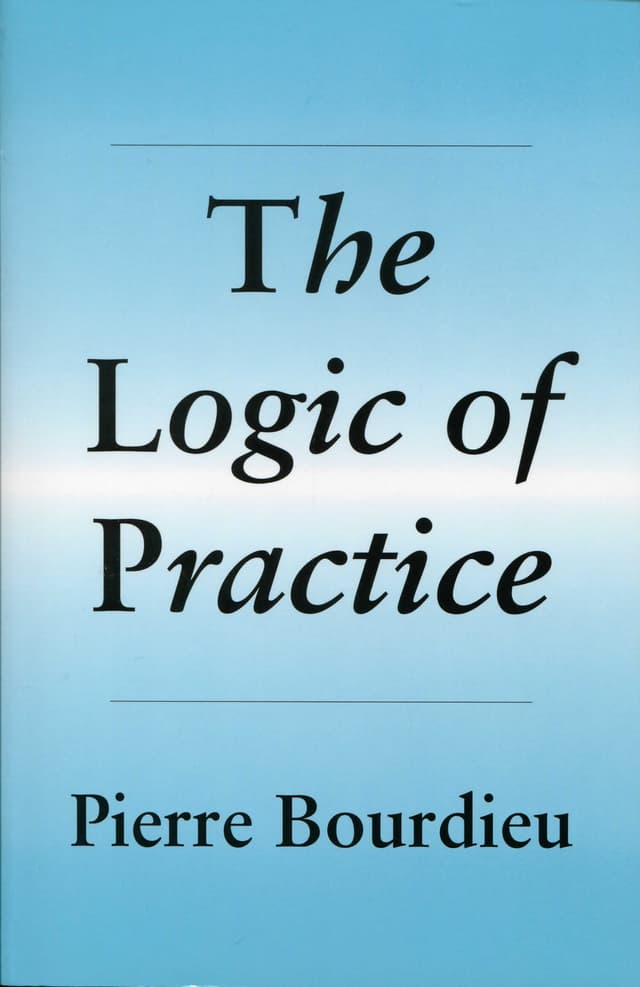
The Logic of Practice
'The logical [kinship] relations he constructs are to 'practical' relations - practical because continuously practised, kept up and cultivated - as the geometrical space of a map, a representation of all possible routes for all possible subjects, is to the network of pathways that are really maintained and used, 'beaten tracks' that are really practicable for a particular agent. The family tree, a spatial diagram that can be taken in at a glance, uno intuitu and scanned indifferently in any direction from any point, causes the complete network of kinship relations over several generations to exist in the mode of temporal existence which is that of theoretical objects, that is, tota simul, as a totality in simultaneity. It puts on the same footing official relationships, which, for lack of regular maintenance, tend to become what they are for the genealogist, that is, theoretical relationships, like abandoned roads on an old map; and practical relationships which really function because they fulfil practical functions.' p.35.


My source:
Bourdieu, P. (1990). The Logic of Practice. Stanford University Press. https://doi.org/10.1515/9781503621749 [and image source].

Bourdieu, Pierre, "The Logic of Practice (1990)" (1990). eTextbooks for Students. 875.
https://stars.library.ucf.edu/etextbooks/875

See also: https://hodges-model.blogspot.com/search?q=bourdieu

Wednesday, November 12, 2025

The INDIVIDUAL ↔ GROUP axis

Looking at the axes of Hodges' model, specifically the INDIVIDUAL ↔ GROUP axis, I realise (as ever) there's more than meets the eye. 

The labels for the axes are placeholders. To a certain degree they are open, flexible. In the template (link and figure in the sidebar), the what should now be familiar labels are provided for guidance, and convenience.

The care, knowledge domains can be viewed as giant - compound placeholders, even as an opportunity to abstract away a lot of detail. In care delivery, as we concentrate on patient care, , clinical interactions, procedures ... we tend to do this in political terms. Until that is, we are jolted to the wider situation and the true realities of policy, law, and practice.

While the HUMANISTIC ↔ MECHANISTIC labels are fixed, I've often shown how the I ↔ G is itself situated, so you could variously have (titles & names to follow...):

person, self, I, individual, client, patient,
carer, student, nurse x, dr y, allied health z ..

|

nurse .., husband, wife, partner, kin, couple, guardian, friend, family, team, group, community, region, nation, populations, Planet

Usually, what we have is a ONE-TO-MANY relationship, that is 1:N.

In Hodges' model can we also say that the team is the 'individual' and the organisation the group?

Another thought regarding self-care. ... Some times this state might be concurrent with being a patient.

Part of the journey in a patient's recovery. But at some point the person does not need a professional and is indepedently self-caring. Care episodes are not what they used to be. Although when 'true' self-care is achieved, it might appear One-to-None, but this is not correct. Not correct, that is, if we can credit society acting as a safety net. Usually, it would be One-to-Family; if there is no family, then the One-to-Community should (must) be the placeholder of choice.

On self-care, and the vertical axis of Hodges' model, is this also a way to define sustainable health and social care?

See also: https://hodges-model.blogspot.com/2025/10/l-shaped-model.html

Monday, October 13, 2025

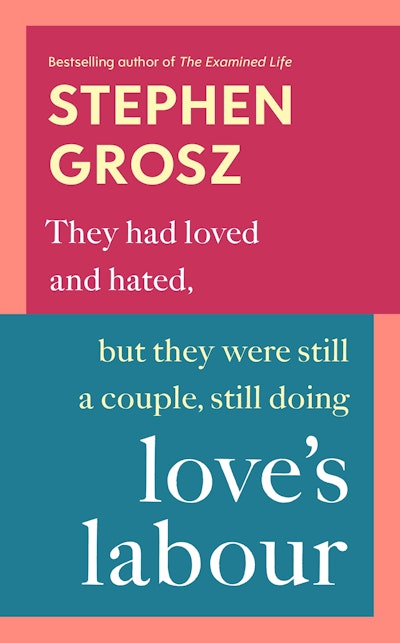
Book: Love's Labour by Stephen Grosz

They had loved and hated,
but they were still a couple, 
still doing love's labour ...

Luminous and necessary stories from the psychoanalyst's consulting room; on desire, heartbreak and learning how to love.

When it comes to love why do we find things so difficult? Drawing on over forty years of candid and surprising conversations with his patients, Stephen Grosz asks, what gets in the way of our falling in love? And what must we do to stay there? Penguin UK.
<>
'Ravi, a maths lecturer, is tormented by his wife Sonal's supposed infidelity, but won't look at the CCTV - even though that might reveal her to be innocent. This chapter has a sting in its tail when 19 years later Grosz is contacted by Sonal. She is dying of cancer and Ravi is cruelly neglecting her. Grosz feels that he missed a vital clue all those years ago, concerning Ravi's ingratitude and envy.

This moment of "failure" on Grosz's part forms an aspect of this small book's power. It shows that the psychoanalyst is not a machine, and the process is fallible. But it is also a testament to human complexity. When he hasn't understood the patient sufficiently, Grosz brings the case to his supervisor, and we, the reader, are witness to their exchange.' Life&Arts, FTWeekend.
Individual
|
      INTERPERSONAL    :     SCIENCES               
HUMANISTIC =========================  MECHANISTIC      
 SOCIOLOGY  :    POLITICAL 
|
My source: Kathy O'Shaughnessy. The hard work of seeing ourselves. Books, Life&Arts, FTWeekend, 27-28 September 2025, p.11.


Iamge: https://cdn2.penguin.com.au/covers/400/9780701188979.jpg

Monday, October 06, 2025

On the 'front' - or behind the line(s)?

In many sources on socio-economics, politics, health policy ... I still note the challenge to represent the INDIVIDUAL and COLLECTIVE within a figure. Of course the author's subject, purpose, the context all influence the final depiction and the message to be conveyed. 

I wonder if Hodges' model can provide a starting point to explore relationships, oppositions, arguments and synergies?

Hodges' model provides an 
expansive and potentially powerful 'front' 
through its horizontal axis 
[ HUMANISTIC ↔ MECHANISTIC ].

This axis - drawn across and through the model vertically, may make it easier(?) to analyse and synthesize the relations at work and produce a diagram?

Individual
|
      INTERPERSONAL    :     SCIENCES               
HUMANISTIC =========================  MECHANISTIC      
 SOCIOLOGY  :    POLITICAL 
|
Group
INDIVIDUAL

INDIVIDUAL

GROUP - POPULATION

GROUP - POPULATION


Monday, September 22, 2025

A paper of special note: 'The Relational Care Framework ...'

Doing a search on 'person-centered care' the following paper was listed. It is useful too in contrasting personhood, and selfhood in relation to dementia, through 'The Relational Care Framework'

Abstract

We argue that contemporary conceptualizations of “persons” have failed to achieve the moral goals of “person-centred care” (PCC, a model of dementia care developed by Tom Kitwood) and that they are detrimental to those receiving care, their families, and practitioners of care. We draw a distinction between personhood and selfhood, pointing out that continuity or maintenance of the latter is what is really at stake in dementia care. We then demonstrate how our conceptualization, which is one that privileges the lived experiences of people with dementia, and understands selfhood as formed relationally in connection with carers and the care environment, best captures Kitwood’s original idea. This conceptualization is also flexible enough to be applicable to the practice of caring for people at different stages of their dementia. Application of this conceptualization into PCC will best promote the well-being of people with dementia, while also encouraging respect and dignity in the care environment.


Matthew Tieu, Steve Matthews, The Relational Care Framework: Promoting Continuity or Maintenance of Selfhood in Person-Centered Care, The Journal of Medicine and Philosophy: A Forum for Bioethics and Philosophy of Medicine, Volume 49, Issue 1, February 2024, 85–101, https://doi.org/10.1093/jmp/jhad044


The authors may find Hodges' model of relevance.

See also: 'subject' : 'object' : 'relational' : 'objective' : 'subjective' : 'personhood' : 'self' : 'identity'

Monday, August 25, 2025

c/o SDOH list "Liberal/Individualized Versus Materialist/Structuralist Approaches"

Abstract

Background: While consensus exists that the sources of health inequalities are social inequalities brought on by the experience of qualitatively different living and working conditions, means of addressing these conditions continue to be the subject of dispute. Whether to emphasis education or income as a social determinant of health is one such example of differing views on the sources of these inequalities and the means of addressing them. These different emphases are often justified through the narrow examination of the magnitude of statistical relationships between educational attainment and income with health outcomes.
Purpose: We offer a broader view, seeing these differing emphases as indicative of contrasting views of the nature of society and means of responding to these inequalities with emphasis on education representing a liberal reformist view of the issue while an emphasis on income representing a materialist structuralist view.
Research design and study sample: We examine, the validity of this hypothesis through an analysis of content of five representative publications that consider educational attainment as a social determinant of health and five that do so for income.
Analysis and results: We find that the emphasis on education as a social determinant of health focuses on the attributes of the individual and is generally accepting of the structures and processes of the existing economic and political order. In contrast, an emphasis on income – when placed within a materialist analysis – views existing systems as inequitably distributing income and other resources thereby requiring their reform or transformation.
Conclusion: Considering evidence of deteriorating living and working conditions for many in Canada and elsewhere, we see the latter emphasis as more useful for understanding and addressing these disturbing developments.

Ervin A, Raphael D. Liberal/Individualized Versus Materialist/Structuralist Approaches to Addressing Social and Health Inequalities: Education and Income as Social Determinants of Health. Community Health Equity Research & Policy. 2025;0(0). doi:10.1177/2752535X251316086

At present differentiating and conceptualising the individual and the collective (society) is ongoing. Ervin and Raphael's paper is helpful then:

'Grabb’s definition of social inequality leaves room for the importance of individuals’ attributes such as educational attainment and income – while Crossman’s definition directs explicit attention to the structures and processes of society9,10:'

Individual
|
      INTERPERSONAL    :     SCIENCES               
HUMANISTIC  --------------------------------------  MECHANISTIC      
 SOCIOLOGY  :    POLITICAL 
|
Group

'Social inequality can refer to any of the differences between people (or the socially defined positions they occupy) that are consequential for the lives they lead, most particularly for the rights or opportunities they exercise and the rewards or privileges they enjoy.9, p.1'

Physical processes

Physical structures

Infrastructures

'Social inequality is characterized by the existence of unequal opportunities and rewards for different social positions or statuses within a group or society. It contains structured and recurrent patterns of unequal distributions of goods, wealth, opportunities, rewards, and punishments.10'

Political processes 
(bureaucracy)

Political structures
(inc. Institutional)

Power

In Ervin and Rapahael (2025) there are also two tables:

Table 1. Four Primary Aspects of How Educational Attainment Comes to be a Social Determinant of Health.

Table 2. Five Primary Means of Conceptualizing How Income Comes to be a Social Determinant of Health.

- the main headings of which I have mapped to Hodges' model below.


Individual
|
      INTERPERSONAL    :     SCIENCES               
HUMANISTIC  --------------------------------------  MECHANISTIC      
 SOCIOLOGY  :    POLITICAL 
|
Group

Personal cognitive and
decision-making skills

(Cognitive) Access - Literacies


(Physical) Access to healthcare


Behavioural risk factors


SOCIO-

Life Chances - Health Career

-ECONOMIC status

Monday, May 26, 2025

Variety really is the spice of Hodges' model

In the previous post - RCN Congress iii 2025 Accountability for patients in ambulances I wrote of how corridor care has become variegated, as it is bound to, in a system(?).

Variegation means difference, and yet in organisational accountability, there should be reliance upon a procedure, if not a standard operating procedure. The experience of individual patients should be nuanced, standardised and yet catering for individual differences.^ The resolution at congress was questioning the need for guidance amid legal ambiguities.

This is also helpful in two senses. 

  1. In exploring ways that Hodges' model might help encompass and explain the dual character category*, [or other, or not] as may apply to person-centredness and service-centredness?
  2. Plus, (and potentially confusing for me) in seeking a basic understanding of dual categories in a mathematical sense.

* Book review iii: 'Categories we live by'

from the above post:
Knobe J, Prasada S, Newman GE. Dual character concepts and the normative dimension of conceptual representation. Cognition. 2013 May;127(2):242-57. doi: 10.1016/j.cognition.2013.01.005. Epub 2013 Mar 1. PMID: 23454798.

^This highlights a quality of what it is to care/and caring. It relies upon relationship building, the nurse getting to know the patient, person and vice-versa (to a degree) as befits the emergence of empathy, rapport, generation of trust; and the nurse's ability to anticipate not only care needs (that arise from direct observation), but those that are unique to the patient as an individual. In the previous post which mentioned corridor care, the physical, emotional, social and political environment is not established. Noise, on several levels stymies care, disrupting communication and interpersonal skills - even presence and touch - amid the chaos of the corridor. 

Friday, May 23, 2025

RCN Congress 2025 ii - Losing direct nursing skills

No longer an issue for me, but in the mix of careers: health, education, work - professional; employees often find that they are pulled away from what originally brought them to their chosen career. "I want to help people, care for them, make them better." Especially, if they are ambitious, seek better pay and prospects, for themselves and (a) their family. 

This was an issue and tension for discussion at the RCN Congress:

'Climbing the ladder often means leaving the “bedside”, this is something that can leave mixed emotions for the individual. As a result, we are losing years of clinical experience and expertise which could impact on the future training and on-the-job development for early career or inexperienced colleagues.

The secondary issue that arises with nurses leaving the bedside is skill decay, where a person loses the skills developed in the clinical area through lack of everyday practice. This is being increasingly acknowledged in health care literature (Maehle, 2017). However, the biggest barrier is the resulting lack of confidence in personal skills and ability, particularly where someone is now seen as a senior colleague by those at the bedside.' cont. ...

Discussion - Losing direct nursing skills

I didn't make notes but reflected on how your 'basic training' (for me ...) registered mental nurse (RMN) and state registered nurse (SRN) provides the foundation for professional (and lifelong?) learning? This is, after all, what continuing professional development and post-registration refer to. I did realise that in returning to mental health nursing after qualifying as a SRN, I would surrender much learning - instead of consolidating.

Lecture 101, sets in train the scope of your theory and practice. This is why, and where I see Hodges' model having a role at this point in our professional education, whatever the discipline, or profession. Congress included a resolution for debate: Physician associates. 

We really do need to get this right. Get it wrong, and the quality of care and safety of the public are threatened. If existing standards and professional relationships are perturbed, the effects can be long-lasting and (grossly) injurious. Especially at a time of increasing demographic pressures globally for health systems and services.

individual
|
INTERPERSONAL : SCIENCES
humanistic ------------------------------- mechanistic
SOCIOLOGY : POLITICAL
|
group

1. Is the divide represented by parity of esteem in healthcare MIND :: BODY associated with the fact that in mental illness patients do not ordinarily need to be nursed, cared for in bed?
png image from pngtree.com
2. But, wait! What does history, medical sociology have to say?

3. Is the 'bed' the signifier of instititionalised care? It appears to be.

The pejorative term 'big bins' seems to epitomise the mechanisation of care. In prisons do they throw away the key? 


Previously: 'RCN' : 'skills' : 'beds'.

Also at Congress was the RCN Northwest Multicultural Group, which may be of interest if you are UK based (and not just in the NW). The following is edited from an email ...

Dear All,

I would like to congratulate everyone for an amazing Congress 2025 and take this opportunity to welcome the new members. It was really lovely to meet all of you in person.

Please see below the link to the webpage of multicultural group:

https://www.rcn.org.uk/northwest/Get-Involved/NW-Multicultural-Group

I will be sharing the details of the next meeting and other information via the group and email.

Kind regards,

Olanike Babalola (She/Her/Hers)
Chair/Cofounder RCN Northwest Multicultural Group
Email: olanike.babalola AT reps.rcn.org.uk

Monday, April 14, 2025

Relational Equality and Intergenerational Justice

ABSTRACT

Intergenerational justice has in recent decades become an increasingly important subfield of political philosophy. However, due to the absence of coexistence and other aspects of the intergenerational context, it is often unclear whether and how many ideals of justice apply. As such, relational egalitarianism – the view that justice requires equal social relationships – may appear particularly implausible in this domain. In this introduction, we explain this issue, motivating its further examination. Finally, we briefly summarize how the papers in this volume take up this challenge and offer insightful developments on both fronts, advancing our understanding of intergenerational justice and relational egalitarianism.


individual
|
INTERPERSONAL : SCIENCES
humanistic ------------------------------- mechanistic
SOCIOLOGY : POLITICAL
|
group
I - self - identity
ancestor - descendant

space - resources
past - now - future


INTERGENERATIONAL -  


- JUSTICE


Tuesday, January 28, 2025

Sticky Categories and Their Negative Consequences c/o Mikulak et al.

Category - Theory and Practice

Hodges' model -
A model for care in whatever situation, care environment*.

 
Individual
|
      INTERPERSONAL    :     SCIENCES               
HUMANISTIC  --------------------------------------  MECHANISTIC      
 SOCIOLOGY  :    POLITICAL 
|
Group
'I'
Me
My name is . . .
I am a person.
I am an individual.

Even if I don't thank you,
there may be someone out
there who thanks you for
acknowledging, confirming,
sustaining, preserving and
respecting my identity.

Even if I don't ask you
for your name please share
it with me, when you feel
 the time is right.

Together ...

[Abstract] "‘Behaviours that challenge others’ are attributed to 20% of people with learning disabilities. These behaviours are not a diagnosis, it is something people are labelled with. We conducted qualitative interviews with social care staff in the UK within four models of care: independent supported living, residential nursing home, Shared Lives, and living with family and attending a day opportunities centre*. We examine how the category of ‘behaviours that challenge others’ is produced, applied, and contested in adult social care settings. We demonstrate its stickiness and discuss its stigmatising consequences. How behaviours are understood, felt, and talked about matters for the support people with learning disabilities receive and maps onto their consequent inclusion or exclusion from society. We point out the harms the category carries for people who receive it and argue that it should be abandoned." p.110.


"Labeling theory suggests that labels lead to stigma, through changing how a group is perceived by others and supporting stratification (Haft et al. 2023). According to Link and Phelan (2001: 383), stigma ‘exists when elements of labeling, stereotyping, separating, status loss, and discrimination co-occur in a power situation that allows these processes to unfold’ (emphasis added). The acceptance of categories as valid and important differences is described by the labeling element of stigma (Link and Phelan 2001). Here, we attend to how this ‘labeling’ aspect of stigma interacts with its other mechanisms in the category of ‘behaviours that challenge others’." p.112.


"Emotions are not private, rather, they ‘circulate between bodies and signs’ producing meanings and creating ‘the surfaces or boundaries of bodies and worlds’ (Ahmed 2004b: 117); thus, affect is always distributed (Wetherell 2015). We propose the category—and the labeling process behind it—should be understood within an ableist (Campbell 2009) distribution of affect and politics of emotion; one that subordinates the experiences of people with learning disabilities through establishing the ‘truth’ of the reading as external and mediated through the emotions of people without learning disabilities. ‘Behaviours that challenge others’ (and synonyms of the category) are inherently relational but also reflect and reproduce existing power imbalances. We suggest their stickiness rehearses and reinforces the ableist politics of emotion that positions people with learning disabilities as ‘less human’ (Goodley 2021) and at times as monstrous. The category is a product of this politics, one that repeats its rehearsed, sticky associations, making the reading of the proximity of people with learning disabilities in the present a result of histories marked by dehumanization. The method of categorizing people through labels also makes them more susceptible to what McClimens has described as ‘reauthoring’, with collective histories ‘presented in a way that condones or even justifies their current situation’ (2007: 259)." p.113.


Mikulak, Magdalena, Sara Ryan, Elizabeth Tilley, Susan Ledger, Lisa Davidson, Pam Bebbigton, and Dawn Wiltshire. 2024. “Sticky Categories and Their Negative Consequences: People with Learning Disabilities and ‘Behaviours that Challenge Others’.” Scandinavian Journal of Disability Research 26(1): 110–123.
DOI: https://doi. org/10.16993/sjdr.1069 (with my emphasis)

I have cited Mikulak et al. in 1/2 papers submitted yesterday after revision on: threshold concepts, deprivation of liberty, residential care and Hodges' model.