Hodges' Model: Welcome to the QUAD: lived experience

Hodges' model is a conceptual framework to support reflection and critical thinking. Situated, the model can help integrate all disciplines (academic and professional). Amid news items, are posts that illustrate the scope and application of the model. A bibliography and A4 template are provided in the sidebar. Welcome to the QUAD ...

Showing posts with label lived experience. Show all posts

Sunday, March 15, 2026

ii 'GlobalMinds' - NHS study severe mental health problems

GlobalMinds has clearly stated goals and objectives. Three challenges that are highlighted:

  1. Diagnosis can take years
  2. Treatments target symptoms, not underlying causes
  3. Half of the prescribed drugs cause severe side effects

These are, to put it mildly, highly contested issues. Diagnosis in mental health/illness is problematic in several respects, for example:

INDIVIDUAL
|
    INTERPERSONAL    :     SCIENCES               
HUMANISTIC --------------------------------------  MECHANISTIC      
SOCIOLOGY  :   POLITICAL 
|
GROUP
a) Lack of Theoretical, Practical and Philosophical(?) agreement between: 
  • Psychology
  • Psychiatry
b) Individuals are self diagnosing
c) Access to mental health services can be highly structure - single-point entry
d) The evidence-base for treatment of mental illness is growing,but remains contested.
e) Perhaps there is a phenomena of people getting stuck, with not just a label, but a mindset?

a) Loss of trust in classification/coding schemes:
  • DSM
b) Proposed alternatives in -
c) Data defined scientifically:
  • existing diagnosis
  • biomarker

a) Increased awareness of mental illness, ADHD..
b) Behavioural explanations for mental illness
c) The determinants of mental illness (unlike, health?) are poorly researched (hence understood)
d) The vocabulary of mental illness (psychiatry) is more widely disseminated, hence used; not necessarily with full contextual understanding
e) Stigma associated with mental illness is nevertheless ongoing.


a) Reduced economic productivity
b) The socio-economic phenomena of NEETs
c) Increased demand on welfare benefits
d) The role of primary care - GPs
     - fit / sick notes
     - 'functional assessors' (Who is best placed?)
e) Loss of mental health beds, community compensations incomplete.


This will be a space to watch: and related (global) initiatives? 

Viewed from Hodges' health career - care domains - model, it appears an individual's life chances and expectations (family, and educational experience?) can result in their life chances being frozen?

Monday, February 16, 2026

The UK Dementia Awards 2026

Dear CHAIN member,

We would like to draw your attention to the following opportunity. Please pass on as appropriate. Thank you.

Dementia Community

The UK Dementia Awards 2026

The awards are judged by a panel of dementia experts, including people with lived experience, ensuring that every nomination is seen, valued, and understood.

Whether nominating a colleague, a team, a service, or someone whose quiet dedication deserves the spotlight, this is the chance to say: you matter, and your work matters too.

Friday 27 February 2026, 5pm: Nominations Close.

For more details please see: https://journalofdementiacare.co.uk/awards/listings
Regards,

Irina Johnston

CHAIN Administrative Assistant


If you wish to publicise information on the CHAIN Network please email your request to: enquiries AT chain-network.org.uk


CHAIN - Contact, Help, Advice and Information Network – is an online international network for people working in health and social care. For more information on CHAIN and joining the network please visit website: www.chain-network.org.uk


Follow CHAIN on X: @CHAIN_Network ; Connect with CHAIN on LinkedIn

Previously: 'dementia' : 'carer'

Wednesday, September 24, 2025

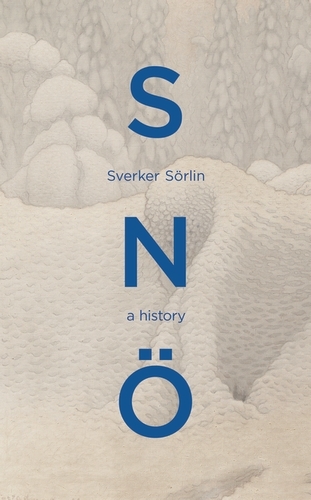
Book: SNÖ

'Snow. A single word, for an infinite variety of water formulations, frozen in air. The study of snow is physics, chemistry, meteorology, anthropology, geography, poetry and art. It is hope – annually renewed. And it is history, too.

Earth saw its first snowfall 2.4 billion years ago. The world's oldest skis, made by hand five thousand four hundred years old, pre-date the pyramids of ancient Egypt. To humanity, snow has variously been an ally and an adversary; an inspiration to countless artists and a place of breathtaking tragedy and survival. But it’s always been there. And now it is melting. 
In 1927, the snow was already more than nine metres deep on Japan's Mount Ibuki when a remarkable 230cm fell in 24 hours, bringing about the greatest depth of snow - 11.82m - ever recorded. Yet it is a fact today that, ironically not only has this mountain's resort been forced to close due to lack of snow, most people in the world have never been near snow: never felt the soft crunch of snow underfoot, never held snow to see it melt in their hands, let alone stood on a pair of skis.'  continued ...
Individual
|
      INTERPERSONAL    :     SCIENCES               
HUMANISTIC  --------------------------------------  MECHANISTIC      
 SOCIOLOGY  :    POLITICAL 
|
Group


compass defined

compass unified

mental expanse

beauty

memory

lived experience

signature of change

sadness

signifier
SNÖ by Sverker Sörlin

culture

poetry - arts

social history

shared loss

recreation - leisure

Two kids.
Uncles! In car, drenching
us driving through slush in the gutter 😎


Sverker Sörlin, Elizabeth DeNoma (Translator) (2025). SNÖ - A History. London: Doubleday.
https://www.penguin.co.uk/books/467833/sno-by-sorlin-sverker/9781529947878


My source: Clark, P. A gear shift to adapt to a warming world. Books. Genre Round-Up, Environment.  Life&Arts. FT Weekend. 23/24 August 2025. p.10.

John Denver - Season Suite (Full) The Suite is in this order:
  1. Summer
  2. Fall
  3. Winter
  4. Late Winter, Early Spring (When Everybody Goes to Mexico)
  5. Spring

Monday, September 22, 2025

A paper of special note: 'The Relational Care Framework ...'

Doing a search on 'person-centered care' the following paper was listed. It is useful too in contrasting personhood, and selfhood in relation to dementia, through 'The Relational Care Framework'

Abstract

We argue that contemporary conceptualizations of “persons” have failed to achieve the moral goals of “person-centred care” (PCC, a model of dementia care developed by Tom Kitwood) and that they are detrimental to those receiving care, their families, and practitioners of care. We draw a distinction between personhood and selfhood, pointing out that continuity or maintenance of the latter is what is really at stake in dementia care. We then demonstrate how our conceptualization, which is one that privileges the lived experiences of people with dementia, and understands selfhood as formed relationally in connection with carers and the care environment, best captures Kitwood’s original idea. This conceptualization is also flexible enough to be applicable to the practice of caring for people at different stages of their dementia. Application of this conceptualization into PCC will best promote the well-being of people with dementia, while also encouraging respect and dignity in the care environment.


Matthew Tieu, Steve Matthews, The Relational Care Framework: Promoting Continuity or Maintenance of Selfhood in Person-Centered Care, The Journal of Medicine and Philosophy: A Forum for Bioethics and Philosophy of Medicine, Volume 49, Issue 1, February 2024, 85–101, https://doi.org/10.1093/jmp/jhad044


The authors may find Hodges' model of relevance.

See also: 'subject' : 'object' : 'relational' : 'objective' : 'subjective' : 'personhood' : 'self' : 'identity'

Sunday, September 07, 2025

Editorial: Persistent Positive Change in Challenging Times - IJPCLHSC

'What then is the common theme for this issue? It is the persistence of these authors, practitioners and academics to be curious about what could be better and engage with scholarly enquiry to advance practice-based learning.' 

The editorial introduces the content of -

International Journal of Practice-based Learning in Health and Social Care Vol. 13 No 1 August 2025
https://publications.coventry.ac.uk/index.php/pblh/issue/view/96

Howden,  S.  (2025).  Editorial:  Persistent  Positive  Change  in  Challenging  Times.  International  Journal  of  Practice-based Learning in Health and Social Care, 13(1), ii-iii.

- which I have mapped to Hodges' model (with some additions):

Individual
|
      INTERPERSONAL    :     SCIENCES               
HUMANISTIC  --------------------------------------  MECHANISTIC      
 SOCIOLOGY  :    POLITICAL 
|
Group

restlessness (- in mind)
(curiosity)

patient's lived experiences*

intra- inter-personal

pastoral support

engagement - enjoyment

workshop, case study ...

psycho-

restless legs syndrome

remote, rural, urban
community-based :: clinical settings

(infra-) structures

processes - procedures

simulation, major incident

forensic, podcasts

-social factors

interdisciplinary (integrated?) working

social structures
(This is how we 'do it' here)

'Institutional? “positive restlessness"'

*clinical subjective exposure 
(determinants of health)

organisational (Inst.) structures


<>

The final paper is on workshops and continuing professional development:

Kenny, B., Bourne, E., & Li, J. (2025). Knowledge Translation from Clinical Education Workshop to Workplace. International Journal of Practice-based Learning in Health and Social Care, 13(1), 56-76. https://doi.org/10.18552/ijpblhsc.v13i1.1084 

The editorial notes:

'The authors integrate goal setting as part of a development session on supervision skills and follow up survey, to ask what happened next in relation to their goals and practice. When resources are scarce and CPD is so critical, these ideas about enhancing workshop effectiveness and feeding participants’ experiences back into sessions has never been more important.'

When presenting Hodges' model at events I will often tick for a workshop. This reflects former work experience with student nurses, OTs, social workers and other learners: when a workshop could cover the some 2 hours with a break in the middle. Hodges model is flexible, adaptable and in a workshop can be applied on an individual basis, or small group work - breakout sessions [this does not necessarily mean the participants are bored :-)]. A wide range of learning and teaching approaches can be considered. 

Kenny, Bourne & Li utilise role play, case studies for example, their approach and paper framed by the KTA Framework:

'Workshop design was underpinned by the Knowledge to Action (KTA) Framework. KTA acknowledges the importance of social interaction in the adaptation of research evidence, taking account of local context and culture (Graham & Tetroe, 2011).' p.58. ...

'The KTA framework comprises two major components: knowledge creation and an action cycle. During the workshop, knowledge creation was supported by CEs identifying factors that contribute to challenging clinical education situations and reflecting upon the impact of these factors in their workplace contexts. During Part 1 of the workshop, attendees focussed on understanding challenging situations. Each group was assigned a case study that included a complex mix of student, educator and workplace factors thatinteracted to create a challenging learning situation.' p.58. ...

'A focus on active learning within the workshop prepared CEs for translation of their knowledge of supervisory practices when they returned to their workplaces. In Part 2 of the workshop, CEs worked through a structured process for managing placement challenges by engaging in peer learning role play activities. The process was adapted to address challenges that included mental health issues in workplace learning, developing professionalism, providing inclusive learning environments, and facilitating clinicalreasoning and reflection.' p.58.

  clinical educators (CEs)

Reading KB&L: I wonder if Hodges' model provides a more 'accessible' map as an output / summary, evidence of learning and teaching activity? 'Filtering' would be essential of course, as to what exactly is mapped. While I've no evidence (in theory), Hodges' model in being (imho) accessible, might also be primed for transferability (after all what does transferable mean?^); by being recognised more consistently across larger groups, and (as per the conclusion) other individuals, and broader educational contexts.

Currently, working with three co-authors on a draft paper revision (dental health and policy frameworks) for a journal, I noticed our leading author refers to 'translational'. In the paper below, (cited by KB&I): 

Graham, Ian D. PhD1; Logan, Jo RN, PhD2; Harrison, Margaret B. RN, PhD3; Straus, Sharon E. MD, MSc4; Tetroe, Jacqueline MA5; Caswell, Wenda RN, MEd2; Robinson, Nicole6. Lost in knowledge translation: Time for a map?. Journal of Continuing Education in the Health Professions 26(1):p 13-24, Winter 2006. | DOI: 10.1002/chp.47

Graham et al's, Table 1 Definitions of Terms, is (still) really helpful.

See also on W2tQ: 'reflect' : 'holistic' : 'map' : 'situation'

^Translation; transfer - dual, two-way, inversion?

Saturday, July 19, 2025

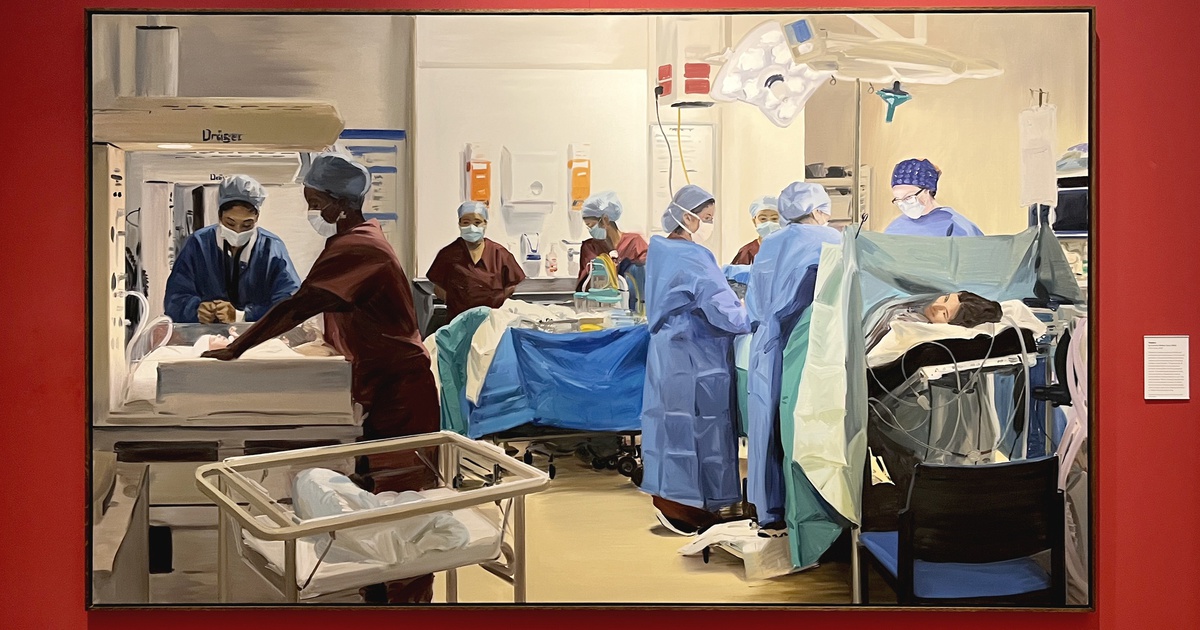
'Theatre' by Caroline Walker

Individual
|
      INTERPERSONAL    :     SCIENCES               
HUMANISTIC  --------------------------------------  MECHANISTIC      
 SOCIOLOGY  :    POLITICAL 
|


Image source: 
https://www.inglebygallery.com/news/7465-caroline-walker-the-scottish-national-portrait-gallery-theatre/

line of sight (seeing is believing) : 'care' : 'community' : 'theatre'

My source:
Harriet Baker, PAINT, FEED & PLAY, FT Weekend, Magazine. July 12 2025.  #1,133, pp.46-52.
https://www.ft.com/content/6e50181b-689e-4cd5-b084-37b311446e94

Great read too. The exhibition moves to Pallant House Gallery, Chichester from November 22nd.

Tuesday, May 27, 2025

‘Nursing Narratives: Racism and the Pandemic’

This film was made as part of ‘Nursing Narratives: Racism and the Pandemic’. A research project funded by the Arts and Humanities Research Council under the UKRI Covid-19 Urgent Response Call.


'Exposed is a groundbreaking documentary that combines the stories of 19 Black, brown and migrant nurses and midwives to speak about their powerful experiences of racism before, during and after the pandemic. If you want to organise a screening of the film please send us the details of date, time and location so we can let people know about opportunities for people to watch, share and discuss the issues that have come out of the film, as well as what action can be taken.'  
https://www.shu.ac.uk/centre-culture-media-society/projects/nursing-narratives

RCN North West Region - North West Multicultural Group


What does 'exposed' mean . . ?

individual
|
INTERPERSONAL : SCIENCES
humanistic ------------------------------- mechanistic
SOCIOLOGY : POLITICAL
|
group
exposed

exposed

Exposed

EXPOSED

Tuesday, April 08, 2025

Book TSR ii - Mental illness/health: History, process and progress

As posted yesterday through a book review, I developed an awareness for the role of process much earlier than previously thought. It wasn't Enid Mumford's work on the benefits of a socio-technical approach to successful deployment of information systems. I only discovered this well after the advent of home computing with the ZX81 and BBC micro 1981-1995.

It was 1978-79 to be more exact; on an admission ward during my three year student Registered Mental Nursing course at Winwick Hospital. On first recollection, I thought it was a clinic, with patients coming in for Clomipramine (Anafranil) infusion on to the ward. As students on placement we were allocated to support the clinic, completing regular observations, including pulse and blood pressure. Clearly, it was a long time ago. There is a paper (paywall), quite a significant one for me:
O’Flanagan PM. A Clomipramine (Anafranil) Infusion Unit. Journal of International Medical Research. 1973;1(5):375-381. doi:10.1177/030006057300100519 
I remember this Consultant's name being mentioned, but this was before my time(?). From the paper's first - accessible - page I can see the patients involved were actually in-patients. Which given the procedures, safety, observation makes better sense. There is reference to a film, in a hospital newsletter 'The Standard':
'Anafranil Film
In response to the interest shown in the film on Anafranil Infusion, Dr. P. O'Flanagan was present in the In-Service Training Room on Monday, October 29th for a second showing of the film, and to answer any questions from the audience.'
I wonder if the film is archived somewhere?

It isn't a surprise to see my former Community MH manager and friend David McKendrick listed on the Publications Committee. I do miss David - a great mentor!

In the previous post about 'The Sleep Room' I contrasted the mind-body dichotomy. In terms of evidence on 'both sides' of this divide, many people have made the observation of how you can see a broken arm, or leg, and other physical ailments, but mental health issues are often not obvious:
Powell J, Clarke A. Information in mental health: qualitative study of mental health service users. Health Expect. 2006 Dec;9(4):359-65. doi: 10.1111/j.1369-7625.2006.00403.x. PMID: 17083562; PMCID: PMC5060370.

The evidence-base of general medicine - physical health and psychiatry must be dynamic. The volume of publications bears testimony to the relentless change across all the sciences, research, technologies, knowledge, theory, practice, management and policy. On Twitter there is constant 'debate' between psychiatry and anti-psychiatry. 

Studies of intravenous clomipramine continue, the intervention much changed from the 1960-70s:

Fallon BA, Liebowitz MR, Campeas R, et al. Intravenous Clomipramine for Obsessive-Compulsive Disorder Refractory to Oral Clomipramine: A Placebo-Controlled Study. Arch Gen Psychiatry. 1998;55(10):918–924. doi:10.1001/archpsyc.55.10.918

Persson M-L. Adler Mats y Hetta J. Pulse Intravenous Clomipramine as an alternative antidepressant treatment to ECT: A pilot study. Eur. J. Psychiat. [online]. 2007, vol.21, n.4 [citado 2025-04-07], pp.263-267. Disponible en: <http://scielo.isciii.es/scielo.php?script=sci_arttext&pid=S0213-61632007000400003&lng=es&nrm=iso>. ISSN 0213-6163.

Karameh WK, Khani M. Intravenous Clomipramine for Treatment-Resistant Obsessive-Compulsive Disorder. Int J Neuropsychopharmacol. 2015 Jul 28;19(2):pyv084. doi: 10.1093/ijnp/pyv084. Erratum in: Int J Neuropsychopharmacol. 2016 Apr 27;19(10):pyw031. doi: 10.1093/ijnp/pyw031. PMID: 26221004; PMCID: PMC4772819.
Perhaps, someone can please enlighten me? Given the time between William Sargant's practice, and today how much more do we know? We know the gap can't be fully closed (phenomenologically?), but has the evidence-gap been reduced? What are the evidential mile[Km]stones in psychiatry - mental health nursing? What are 'the standard' measures? If we look at a model that is bio-psycho-socio-political, what difference might this make, to the 'debate', theory, practice, research, management and politics (policy)? 

'Woke' is a tainted word these days, but in mental health care and nursing we all need to wake up and in a safe space.

Monday, March 03, 2025

Finding a space for Lived Experience

Individual
|
      INTERPERSONAL    :     SCIENCES               
HUMANISTIC  --------------------------------------  MECHANISTIC      
 SOCIOLOGY  :    POLITICAL 
|
Group

Whatever your personal - emotional - journey, your experience, ongoing expectations ... hope: hope-fully this is you. You can, or have discovered the potential here. Whether or not the strengths you possess, are recognised due to what others see elsewhere. 


Lived experience brings so many pathways. So many rooms and spaces to explore. Whatever the physical challenges: whether well: 'all-good thanks'; or dealing with one or more diagnoses - acutely, in recovery, relapse, may all points of the compass be open to you.


Whatever your life experience: your health career began down here [and across there ->], shaped by your life chances. These days they call them the determinants. They are many, and can influence your social network, whether you have one ...


As you (literally) negotiate - even if you fail repeatedly - the systems, that the system throws your way, trying to make ends-meet; in work or out, never under-estimate what a person can do. Here lived experience can pay dividends, across the divides that really matter.


Welcome to your space ...
and may it include hope shared and delivered ...

Saturday, December 07, 2024

Multicultural Group (NWMG) NW Region - RCN


There is a group that that may be of interest, even if you are not located in the NW of England. If located elsewhere, perhaps you can help start a group in your respective region, and together mobilise and liaise with groups internationally. The group is also on WhatsApp, and Facebook; the website's introduction begins ...


The RCN North West Multicultural Group (NWMG) creates a community for members across the region from multicultural ethnic backgrounds to connect with each other, share their lived experience, knowledge and diverse ideas that help drive change around racism to ensure that their various organisations is the best place to work.

Membership is open to RCN members of Royal College of Nursing from multicultural backgrounds and their allies.

Mission statement: 

The aim of the North West Multicultural Group is to stand against racism and discrimination by using members lived experiences, encouraging organisations to be anti-racist and with the support of allies.  ...


Source and continued... https://www.rcn.org.uk/northwest/Get-Involved/NW-Multicultural-Group

Friday, August 16, 2024

Health & Care results in mountains of data: c/o Burke & Cao 2024

"When medical schools train medical students, they teach them to treat patients as collections of various data points. They are laboratory tests and results, each measured to a standard number of significant figures. Notes students write hack down the richness of patients' identities and experiences: unemployment increases suicide risk while having a religion diminishes it. Each positive result that an interview or physical exam reveals adds another data point to the growing mountain, while a negative result erases a branch of possibilities in a treatment algorithm. It is a familiar process for every doctor, almost second nature, and yet it creates a chasm between patients and providers. Learning about a patient and their life becomes a process of deleting what's seen as irrelevant, and a patient's humanity gets lost in the chaos of data. ..."

"How would Nan Shepherd treat a mountain without her vision being mangled by medical training? She would probe it, palpate its surface, and listen to it rather than trying to comprehend it by reading reams of surveyor data. She would build a portrait of it in her mind beyond solely that which was intended to slot into the criteria of the IC-10. Perhaps she'd write a sensuous physical exam: ..."  

individual
|
INTERPERSONAL : SCIENCES
humanistic ------------------------------- mechanistic
SOCIOLOGY : POLITICAL
|
group


"CONSTITUTIONAL:
a granite mountain range, millions of years old, overall stable and solid, teeming with living, breathing organisms
CARDIOVASCULAR:
its rivers are patent, low and high turbulence at turns, its veins crisscross the surface
RESPIRATORY:
the wind carves through it in mighty exhales
MUSCULOSKELETAL:
its stone carries a range of lives, and the wind, the snow, the sun slowly bend the range of its form
GI/GU:
it slowly digests, grows, evacuates, and seethes as its wastes give rise to new life
NEUROLOGICAL:
the mountain is awake but dreaming with you"

The Living Mountain


Burke, R., Cao, E. To Care for a Mountain - What medical practitioners can learn from Nan ShepherdOxford Review of Books, Summer 2024, Volume 8, Issue 2. p.14. In association with Stanford. Ack. length of quotations in relation to length of author's article.

Nan Shepherd 1893 - 1981:  Scottish Poetry Library 2024.
https://www.scottishpoetrylibrary.org.uk/poet/nan-shepherd/

Cover image: Allen and Unwin

Wednesday, June 12, 2024

Scaling-up Health Arts Programmes: Effectiveness Research (Sold Out!)

This event is located in London, it is sold-out and not online. Coming across the symposium on twitter and learning that the research has run its course prompted me to think about the life-cycle of projects, research (big and small); ever important, of course, in the dissemination of research results, outcomes and benefits.

More details are provided on the 'Sold Out' event link and in the image below:

https://www.eventbrite.co.uk/e/collaborating-to-scale-implement-established-arts-and-health-programmes-tickets-874119594237


Why bother to post this? We can't be all-knowing in terms of research / project calls. This means I've noticed how we often learn of initiatives and opportunities at their close. News of citations for Hodges' model arrive is invariably after-the-fact, the fact being the 'study' as a whole. So is the dissemination more haphazard than it needs to be? A silly question, but have all the research councils, academia in general looked at research 'alerts'. What about the Government? Especially in response to citizen science, patient engagement, public involvement? Is this an application begging for a digital solution? Perhaps there is one (several) out there already? In human resources there is employee on-boarding, orientation and there's off-boarding, or there's supposed to be the leaver's questionnaire and exit interview. Beyond the final research report what is the situation: marks out of 10?

This looks a great initiative, especially the participation, collaboration and creativity generated. Below I've related some relevant concepts within Hodges' model: embedded within the spiritual.

Individual
|
      INTERPERSONAL    :     SCIENCES               
HUMANISTIC  --------------------------------------  MECHANISTIC      
 SOCIOLOGY  :    POLITICAL 
|
Group

ipseity, identity

Health: parity of esteem - mind::body

my lived experience, efficacy

ideas, perspective, interpretation

body - movement, physio..

objects, media, physical reality

time, place, space

information sharing

art forms: fine, dance, drama, music ...

collective - collaborative creativity

shared motivation, public awareness

participant identification (biases?)


policy (national - regional, local)

research funding

physical accessibility - transport

funding distribution


My source:
https://x.com/TheNCCH/status/1798020326007472407

I also realise the access limitations presented here on a blog commenced in 2006.

Friday, March 15, 2024

Book (i): Mental Patient - Psychiatric Ethics from a Patient's Perspective

- by Abigail Gosselin


Individual
|
      INTERPERSONAL    :     SCIENCES               
HUMANISTIC  --------------------------------------  MECHANISTIC      
 SOCIOLOGY  :    POLITICAL 
|
Group
Book: Mental Patient
Do we say 

"PHYSICAL PATIENT"?

What is (still) heard here?

What is still heard here?


Gosselin, A. (2022). Mental Patient: Psychiatric Ethics from a Patient’s Perspective. The MIT Press.
https://doi.org/10.7551/mitpress/14589.001.0001

My source: 
https://x.com/AnneMarieGagnJ1/status/1767948059957227719?s=20


Friday, February 23, 2024

Do we need to / can we 'cancel' Mental Health Nursing / Psychiatric Nursing?

Ever since August 15th 1977 (and prior to starting in the NHS), I've been acutely aware of the politics of my chosen career choice. Once again this explains my focus here since April 2006 and prior...

Make no mistake, starting as a Nursing Assistant at Winwick hospital, a Victorian asylum then two months later entering Warrington School of Nursing was a test. Quickly, you were preoccupied with trying to innovate and move beyond task oriented care, ritualised practice, trying to escape (the irony) from custodial care - despite the clink of keys (even on non-secure wards/clinical areas).

The quality of debate on Twi/X regards psychiatry is saddening.

The structure and domains of Hodges' model have been applied to the following editorial:

Wand, T. (2024), We have to cancel psychiatric nursing and forge a new way forward. Int J Mental Health Nurs. https://doi.org/10.1111/inm.13301


Individual
   |
      INTERPERSONAL    :     SCIENCES               
HUMANISTIC  --------------------------------------  MECHANISTIC      
 SOCIOLOGY  :   POLITICAL 
|
Group
MIND
Evidence-base?           neuro-

Person - identity

Yes, how do we conceptualise ...

"Mental health nurse" (Long-term)
"Psychiatric Nurse" (Crisis)

What's in a Title:
REGISTERED Nurse
Mental illness nurse

ENOUGH!
Let's Fully integrate MIND-BODY!

You/We must manage legacy

Recognition of emotional intelligence, rapport-empathy; people who want to 'help' others

Lived experience:
Care in Community

Contrast with 'pastoral care'? Counselling - pre-'therapist'?

RMN, RNMH ..
1. Subservient to Medicine?* Use of power, pharmacology, beds - 'controlled' environment, place of safety, restraint, loss of freedoms ..
2. Therapeutic agents - therapist? (Never truly realised: Psychology - scope of practice, Banding, Career pathways).
Conscientious objection. 

VALUE - VALUES
Diagnosis here?
 Respond to distress ? - OR 
BODY
-biogenic         Evidence-base?

Iatrogenesis

DEFINE^: 'sustainable' in terms of:
individual - population
NHS
Professions
Demographics (time-scales)
Environment
Economic
Ethics - Human Rights
Curricula
medical model
bio-psycho-social model
...
[ ^Research ]

Modalities of care - student experience/placement has changed

Nurse education - curricula

What would a properly funded NHS/Mental health services 'look' like?
 
Models  of care

DEBATE ongoing:
Anti-psychiatry

PSYCHIATRIC DIAGNOSIS
biomarkers, genetics, neurological explanations - pathologising,
safety of anti-psychotics,
long-term use ...

Demographics - workforce scope
Diagnosis here?
Where - psycho-SOCIALLY has policy been thus far?

Wither humanism?
Therapeutic relationship -
human connection

Social history:
Creation of asylums to standardise care for the insane

Anti-psychiatry:
Psychiatry as MECHANISTIC social control

Role of language, history, expections, social justice, law-public safety ...
 (can you 'cancel' here?)

Lived experience, family, carers, peer support workers

"Lifestyle Medicine"
(Map the 6 pillars to Hodges' model)

Social prescribing (research?)

Attitudes, Stigma, Social media

Sense-making, 'Faith' 1:Pop.

Social care, community resources

Integrated & Person-centred care

Other models of MH care/services

 - mechanistically assess risk? 

Formal distinction (break):
MH Nursing <-> Trad. Psychiatric family?

POLICY:
Community care set in aspic,
NHS also: funding £££££?
Innovation in POLICY?

No slack resource - HOW to shift to prevention/education

Sustainable health care

What crises are you (health professions) responding to?

Determinants of health: 
social, commercial, economic, social, political, education ...

Mental Health Law: inc. Consent, MH Capacity
(now also a 'football'?)

UNHCHR - Mental Health: ‘Mental health, human rights and legislation’ (World Health Organization and the United Nations, 2023)

Former: RCP Reports on CPNs*
National Reports:
Suicides, Homicides, Forensic, Prisons

Change [Progress!]: predicated upon research & evidence,
not 'rebellion' as befits
a profession - Duty of care?

Once you start to apply Hodges' model then additional content often presents itself. For example, (12th March) apart from people employed in tax and undertakers how many professions, would admit to a value system that aims for, seeks making the collective enterprise redundant? A utopic appeal no doubt, and this would for a population demand that the socio-political foundation (ills!) for our individual lives are finally addressed. What are referred to as the determinants of health. It is a sign of the times that trying to do a search on this, 'redundancy' / redundant is taken as related to the state of being employed, not an ideal.

If this sounds like pie-in-the-sky, consider the birth of social medicine - the NHS. Consider too the future of the NHS and we arrive at sustainable health care systems?

National Confidential Inquiry into Suicide and Safety in Mental Health
The University of Manchester - https://sites.manchester.ac.uk/ncish/

Homicide in England and Wales: year ending March 2023 -
https://www.ons.gov.uk/peoplepopulationandcommunity/crimeandjustice/articles/homicideinenglandandwales/yearendingmarch2023

Sunday, February 04, 2024

ImROC: Briefing Paper 24 - Recovering Adult Acute Psychiatric Inpatient Wards

"Explanation, compassion and a holistic understanding of the person’s situation are critical (Royal College of Psychiatrists, 2017)." p.39.
(my emphasis)

"It requires practitioners to critically reflect on their values, beliefs, and biases and actively work to reduce as far as is possible the oppressive systems and practices within inpatient wards." p.15.

What models / frameworks for/of care do practitioners use? 

What models invite - are primed for:

  • critical reflection (individually, or as a group, p.56)?
  • recognition of oppressive situations, phenomena, ethical dilemmas?
  • citizenship - citizenry (p.18)?
  • deciding whether it is a journey, or not?
  • a possible role in burnout (p.54) mitigation?
  • reflection, development, and restoration (p.56)?
  • are all models situated?


Individual

   |
      INTERPERSONAL    :     SCIENCES               
HUMANISTIC  --------------------------------------  MECHANISTIC      
 SOCIOLOGY  :   POLITICAL 
|
Group

neurotypical
neurodivergent/autistic


[Yes.] Can what has been stressed for decades - compassion, listening, validating, empathy, rapport, the therapeutic alliance, seeing the person ... in mental health nurse education, theory and practice, be strengthened through review of skill-mix, and workforce? Whilst, in-turn, being sensitive to the pressures on mental health RNs, as cohorts of students, seek to assure their learning experiences; and as qualified nurses old and new seek to protect their professional identity, values, standards, and ethics - responsive to the demands of the 21st century.


close to home

transport

physical environment:
noise, smells, space, decor, light..

While (originally?) aimed at elective in-patient care, the mantra of discharge planning begins upon admission (even before) has reached mental health services and community mental health teams. Even as the reduced number of beds (perversely) provides ideal conditions, this should (must) not mean the 'game' becomes 'pass the parcel', 'musical chairs' - the person lost in the many processes.


Hell is other people -
as the saying goes ...


When the therapeutic value and potential of relationships are recognised, the need for a tool to identify and critique what is relational is even more critical. Not just to realise what has long-been psycho-social, but the 'alt-def' of person-centred. This demands simultaneity in assurance. We contrast the humanistic with the mechanistic - service-centred.

Let's not forget the
need for integrated** care.

See community/society
as the safety net it can be.


So DO NOT:
raise a patient's / family's expectations (p.49) only to let them down.

least restrictive

Let's not re-learn the lessons of
history, but if you insist...?^

One mention of (social)
'determinants' (p.37)!
Please take a look out of the [safety] window; and beyond the APPG Committee room...

 Wither ambition, courage in policy - to discover what is evidence-based (the lesson since 5th July 1948)?

In-patient care is too late.*

For sustainable health services and systems we need to act sooner, educate, to try to address all the determinants.

Please remember what 'you' (through policy..) have done to the patient as a concept: patiency.

<- Recovery carries political heft. 


Please remember what 'you' (through policy..) have done to the patient as a concept: patiency. Recovery carries political heft. No one wants to create, foster, instill dependency, but (emotional labour) care delivery demands space and time: being with, or at least available.

*If this was the guiding principle for all disciplines, stakeholders, policymakers, researchers could this:
  • place emphasis (again) on prevention; staying well - relapse prevention;
  • help generate alternate modalities for therapy / care;
  • help concentrate services to deliver person-centred, recovery and trauma informed in-patient experiences - where therapeutic outcomes are  at least feasible/possible;
  • begin from literacy-first stance: take up educational focus in schools - PSHE, work-place;
  • health career - life chances?

**physical-mental, care context, philosophy of care - trauma - recovery - strengths, funding, disciplines, pastoral, health - social care - housing ...

^Dept. of Health. Caring for people: the CPA for people with a mental illness referred to specialist mental health services. London: 1990
Joint Health/Social Services Circular  C(90)23/LASSL(90)11

Rachel Perkins, Sharon Gibbard, Yasmin Blackwood, Simon Barnitt, Lowri Smith, Anna Cheetham, Poppy Repper, Anne Rackham, Ben Dorey, Jo Luck, Julie Repper. Recovering Adult Acute Psychiatric Inpatient Wards: Creating Recovery-Focused, Trauma-Informed and Neuro-Inclusive Culture, Relationships and Practice. ImROC. Briefing Paper 24. 2024.


See also:

ImROC (2023) Thinking about Recovery Together

ImROC (2023a) Team Recovery Implementation Plan for Acute Inpatient Wards

Wand, T. (2024), We have to cancel psychiatric nursing and forge a new way forward. Int J Mental Health Nurs. https://doi.org/10.1111/inm.13301

Warrender, D., Connell, C., Jones, E., Monteux, S., Colwell, L., Laker, C. et al. (2024) Mental health deserves better: Resisting the dilution of specialist pre-registration mental health nurse education in the United Kingdom. International Journal of Mental Health Nursing, 33, 202–212. Available from: https://doi.org/10.1111/inm.13236

Plus:
Jones P. (2014) Using a conceptual framework to explore the dimensions of recovery and their relationship to service user choice and self-determination. International Journal of Person Centered Medicine. Vol 3, No 4, (2013) pp.305-311.

Tuesday, August 08, 2023

"Quod" by Barbad Golshiri

c/o Artist and 2014 Tate Liverpool/British Museum?

"I have made several works based on Malevich. One of these is called Quod 2010, which features words in Persian of the prison memories of A’ezam, a political prisoner of the 1980s, retold by Akbar Sardouzami. Quod is a rectangular diminishing spiral, and, unlike exotic and commodified calligraphies, is deeply rooted in the unique experience of reading it - which in itself stimulates nausea.

A’ezam has been degraded and tortured, living in timelessness and facelessness. She has nothing, and has turned to nothing, she says. Then one day she finds a rusty pin in her solitary confinement. She starts to draw squares, and the squares become her world: ‘Then I saw if I draw a square within another square and reach the depth, the square turns to a point. The cell was too dark, but I could see a point in the middle of the square that helplessly looked up at me and said: you should testify that I’ve been a square. You are the only one who knows that I have been and still am a square.’"

Please see:
TATE ETC 15 AUGUST 2014. Barbad Golshiri on Malevich.


INDIVIDUAL
|
     INTERPERSONAL    :     SCIENCES               
HUMANISTIC --------------------------------------  MECHANISTIC      
SOCIOLOGY  :   POLITICAL 
|
GROUP


QUOD 2010


Source:

My notebook from 2014, with sincere thanks to Barbad Golshiri and (ack.) Tate Liverpool & British Museum. I'm unclear on the exact source for this post. It may be both Tate and British Museum, as when in London I always try to visit room 90(a) at the latter.

This is still part of working through books, papers, notebooks - prior to moving.