Hodges' Model: Welcome to the QUAD: parity of esteem

Hodges' model is a conceptual framework to support reflection and critical thinking. Situated, the model can help integrate all disciplines (academic and professional). Amid news items, are posts that illustrate the scope and application of the model. A bibliography and A4 template are provided in the sidebar. Welcome to the QUAD ...

Showing posts with label parity of esteem. Show all posts

Friday, October 16, 2026

Mental Health and Physical Activity

You know you're on the right (running) track when there is a journal that seeks to address the fundamentals of parity of esteem that is mental and physical health:

Robertson, R., Robertson, A., Jepson, R., and Maxwell, M. (2012) Walking for depression or depressive symptoms: A systematic review and meta-analysis, Mental Health and Physical Activity, 5, 1, 66-75. ISSN 1755-2966 https://doi.org/10.1016/j.mhpa.2012.03.002.

Sometimes, geography matters too in terms of intervention choices and the population of a study:

Moran, R., Sperandei, S., Peel, N., Gray, T., and Reis, A. (2024) The long-term effect of surf therapy on posttraumatic stress, depression, and anxiety symptomology among current and former Australian defence force members - A nonrandomised controlled longitudinal study in a community setting. Mental Health and Physical Activity, 27, 100629, ISSN 1755-2966. https://doi.org/10.1016/j.mhpa.2024.100629.

While researchers seek an holistic view -

Ciaccioni, S. et al. (2026) Modifiable determinants of adolescents’ physical activity and sedentary behaviour in school, home and mixed settings: A DE-PASS systematic review and meta-analysis of self-reported data with a holistic analysis. Mental Health and Physical Activity, 31. 100803,
ISSN 1755-2966, https://doi.org/10.1016/j.mhpa.2026.100803.

- and the above journal 'Supports open access', I do not believe my individual circumstances would qualify for differential treatment of fees:
'Article Publishing Charge (APC): USD 3,190 (excluding taxes). Actual APCs may differ based on individual author circumstances.'

This is a pity, as surprisingly thus far, the journal does not appear to have explicitly referred to 'parity of esteem'? Clearly a soapbox for me, there is plenty of room for others to join in the debate. To acknowledge, however, severe mental illness is well represented.

Given the holistic scope of Hodges' model the lack of inclusion in such literature is a shame. 

Acutely so, as Hodges' model begs (demands!?) consideration of holistic bandwidth. The matter of exercise and activity as a therapeutic option in mental health care quickly gets intense and heated (even if the interlocutors are recumbent). Social prescribing seems well established. On social media ['X' still for me] voicing the benefits of exercise does not always go down well. 

Fabiano N, Puder D, Stubbs B. Could not prescribing exercise for depression be psychiatric malpractice?

Ironically given the limitations of the bio-psycho-social model, the 'barricades' don't go up they are a permanent feature. As soon as we need to consider the political dimensions of health care, legal and professional accountability, policy, funding, accessibility, the minutiae of human rights (individual instances). Plus, in the UK the welfare benefits bill, the struggles of young adults not in employment, education or training; then division and oppositions are all that is. And, what can be individual and collective opportunities are missed.

My source:  https://x.com/NTFabiano/status/2103876655366521278?s=20

Friday, July 10, 2026

Leapspace ii - References

Of the references listed by LEAPSPACE #6 stood out:

Merritt, M.K., Procter, N. (2010) Conceptualising the functional role of mental health consultation-liaison nurse in multi-morbidity, using Peplau's nursing theory. Contemporary Nurse. https://doi.org/10.5172/conu.2010.34.2.158 

Had I missed this? When I hear (read) of new citation for Hodges' model, it is added to the blog's bibliography. So, what about this one?

I could not access the full-paper initially, but did so at:

https://lmscontent.embanet.com/MVU/NURS600/Readings/W3_Peplau.pdf

I can see that Merrit and Proctor reference the following [#16 of 1-46]:

Jones, P. (1998). Hodges’ health career – Care domains – Model, nursing – Art or science? Retrieved October 4, 2009, from http://www.pjones.demon.co.uk/holsci.html

This additional cognitive and motivational nourishment is welcome. They are spot on with '1998', the year the former website (p-jones.demon.co.uk) went live. 

Pre-2015 and indicative of (what will increasingly follow) from AI, LLMs, agentic ai - LEAPSPACE found a page on the now archived website:

https://web.archive.org/web/20150409004111/http://www.p-jones.demon.co.uk/index.htm

While a positive, perhaps (again) we should worry about regurgitation? Although on another level perhaps the definition of 'grey literature' is also being (has been) redefined?

There is a positive in the author's acknowledgement of Hodges' model on several counts, being associated with:

  • Highlighting the need for inclusion of mental health/illness (parity of esteem);
  • Peplau's seminal work;
  • A search to link mental health with other specialities (emergency, liaison, burns);
  • Recognition of the inverse (psychological care within medicine); 
  • The fact of being listed with Phil Barker (Tidal Model). 

Negatively, on the archived homepage (above) many links to content may not work:

The (rather short but referenced) page Merrit and Proctor list is available here:

https://web.archive.org/web/20111018204743/http://www.p-jones.demon.co.uk/holsci.html

I will insert this paper in the bibliographical listing; and revisit this.

Monday, May 25, 2026

ii Book: 'Complexity in Health Care - A Paradigm Shift for Clinical Practice'

I didn't have time to finish reading Frankel et al. before WCCS26. This book has an index which was very useful, to efficiently check certain points. It is amazing the number of books without an index.

Chapter 1 is 'Guiding Principles' and links really well with the index. At two pages it is brief and yet also constitutes Part 1. 

Part II The Clinical Situation, continues an introductory thread. Chapter 2 The “Clinical Situation”: An Introduction to Its Structure and Complexity is what attracted me to the book. At five pages, there was more in this vein. I looked ahead and found that the chapters all seemed short. Checking the book's web page, 50 chapters in 270 pages, so just over 5 pages and well referenced too.

Initially, you might feel short-changed, of course, I didn't with a review copy. But don't worry. You are in patient- person-centred hands here. Sometimes content matters. The three authors work and are researchers in psychiatry. For me, the guiding principles and part II provide a handshake with the index. The person here then, is given a literary hug. Immediately, there is a link between the variables of care and the structure of a case (or caseness). 

'But importantly that "structure" is dynamic changing over time. We classify variables as "clinical" as they are brought into play for the purpose of treatment, i.e., the goal of healing.

The clinician is not just challenged to unravel this complicated situation but also to represent the patient accurately, including his or her "human" elements as represented by temperament and personal attitudes. What are the patient's essential needs. tolerances, preferences? Yet, there is even more to know about each patient. Does she have children? What is her financial status, her ethnicity? What are her attitudes about medical professionals. Does she believe in medicine, or even in science?

Beware! None of these factors are dispensable when trying to understand a patient. Just try to leave out a few and you are left with a gutted rendering of that person, not a living human being.' p.7. 

(and continued in fragmented form below ...)

individual
|
INTERPERSONAL : SCIENCES
humanistic ------------------------------- mechanistic
SOCIOLOGY : POLITICAL
|
group
'The result even when this level of detail, is available may still be an anemic version of the patient. 
 
Traditionally a medical patient is subjected to an extensive workup that includes a mental status examination, in addition to a detailed past and present history, ... 

... and an extensive "review of (organ) systems.

Now add the multiplicity of problems, psychiatric and systemic medical, from which the patient suffers. ...

Multiplicity may include systemic medical, psychiatric, social, financial, and lack of access to health providers.' p.7.


'From this description it seems logical that complex patients presenting with mixed medical-psychiatric disorders be managed with an ongoing collaborative approach delivered by a multispecialty team. Included may be a primary care physician, psychiatrist, and/or psychotherapists. One or more of the collaborating professionals may be a nurse practitioner and/or a physician's assistant.' p.7
I will return to the 'logical' in the final quoted paragraph above. The author's declare their intent from the outset, and by the literature-to-date they achieve this (may I please add? 'in spades!').
 
Over the years and as raised on W2tQ, several colleagues and contacts have asked "Where is the book on Hodges' model?" Not to sound weird, but this book asks that same question through some challenges to the usual 'medical' text. There are several lessons to take away here, even if only to keep a dream alive. While the physical size of a textbook, its practical appeal and stance makes it appear as something to pop in your top shirt/jacket pocket. A pocket guide: quite an impression just 10-20 pages in, and in this digital age.
 
As you would expect from mental health practitioners - psychiatrists - psychotherapists, interpersonal, subjective-objective and intersubjective factors are integral to how complexity is defined and measured. In Chapter 2, pp.11-12 there is mention and reference to the Value-Based Integrated Case Management Complexity Assessment Grid:
Specker, S., Andrew, R., Drexler, E., Koithan, E., Thurber, S., & Frankel, S. (2026). Development of the Self-Administered Health Complexity Screening Instrument. Professional case management, 31(2), 81–89. https://doi.org/10.1097/NCM.0000000000000845
I will check this instrument as I complete this review. As noted on April 9th this book was published in 2023, so I remain grateful to Daniela and colleagues at SpringerNature for the review copy (which also enjoyed WCCS!).

More to follow ...

Steven A. Frankel, Steven D. Thurber, James A. Bourgeois (2023) Complexity in Health Care: A Paradigm Shift for Clinical Practice. Cham. Switzerland: Springer. ISBN: 978303114948.

Wednesday, November 19, 2025

Diagnostic Overshadowing

Diagnostic overshadowing

People with mental health problems experience diagnostic overshadowing. This is reports of physical ill health being viewed as part of the mental health problem or learning disability and therefore not investigated or treated.  Undertaking a full physical health check for patients with SMI helps identify opportunities for evidence-based interventions which can reduce people’s risk of death, avoidable ill health and reduce health inequalities.

Source: https://primarycare.lancashireandsouthcumbria.nhs.uk/wp-content/uploads/2025/05/20250527-A-practical-guide-to-delivering-physical-health-checks-for-people-with-SMI.pdf?x23654

individual
|
INTERPERSONAL : SCIENCES
humanistic -------------------------------------------  mechanistic
SOCIOLOGY : POLITICAL
|
group-population

MIND
Surely, it's the mind -
 

not the body?


Thursday, September 18, 2025

Nurses - Ask 5 complimentary questions

I received an email from RCNi subject heading - 'Q. What questions are nurses asking?'

An invitation to sign-up and ask five free questions: https://rcni.com/ask 

Question 1

Is there a model of care, or nursing that encompasses the sciences, mental health, sociology and political domains of care?

Several models of care and nursing frameworks integrate diverse domains beyond purely biological aspects, encompassing scientific, mental health, sociological, and even political dimensions. These models emphasise a holistic approach to patient well-being, recognising the complex interplay of various factors in health outcomes.

  • Social Model of Health: This model focuses on salutogenesis, examining what contributes to health rather than just illness, by considering broad social, economic, environmental, and cultural influences on an individual's well-being .
  • Person-Centred Nursing Framework: This framework extends beyond individual biological health to include the person's intricate cultural context, family, spirituality, and life experiences, defining health as encompassing intellectual, social, and spiritual dimensions .
  • Biopsychosocial Model of Care: This approach integrates biological, psychological, and social factors to address a patient's holistic needs, moving beyond the biomedical model's sole focus on physical illness .
  • Dual Registration Degrees: Educational programmes for nurses and social workers combine life sciences with social work principles, law, and policy, preparing professionals to understand factors influencing health, social justice, structural inequalities, and anti-discriminatory practises .
  • Multidisciplinary Team (MDT) Care Model: While not a nursing model itself, the MDT approach enhances patient care by integrating expertise from various professionals, including specialist doctors, nurses, psychology counsellors, dietitians, and pharmacists, to deliver individualised treatment plans and coordinate care .
Modern healthcare increasingly recognises the necessity of comprehensive care models that extend beyond traditional medical approaches. These integrated frameworks, including the social model of health, person-centred nursing, and the biopsychosocial model, provide a foundation for understanding and addressing the multifaceted nature of health, incorporating scientific, mental health, sociological, and policy-related aspects to improve patient outcomes. [Five references provided - hence poor formatting in transfer.]

Question 2

What model of care has the conceptual scope to critique parity of esteem in mental health nursing?

Critiquing the concept of parity of esteem in mental health nursing requires models that move beyond a purely biomedical focus to embrace holistic, person-centred, and culturally sensitive approaches. These models emphasise equality, social justice, and comprehensive care, addressing the historical imbalance between physical and mental health provision.

  • Biopsychosocial Model: This model offers a conceptual framework to critique parity of esteem by considering biological, psychological, and social factors in a patient's health, aiming for holistic needs rather than just biological ones . It contrasts with the biomedical model, which has historically led to paternalistic decision-making in healthcare .
  • Culturally Sensitive and Competent Care: Essential for critiquing parity of esteem, culturally sensitive care requires nurses to appreciate diverse cultures and adopt personalised, flexible approaches to mental health support . Culturally competent care, underpinned by equality and diversity principles, involves behaviours and attitudes that value patients' diverse backgrounds, improving satisfaction and outcomes .
  • Person Centred Care: This approach is crucial for addressing the historical paternalism in healthcare, ensuring patients participate in decisions about their care and re viewed as individuals with unique experiences rather than just labels or symptoms . Recent mental health reforms, such as the Mental Health Bill 2025, aim to embed person-centred and equitable care further .
  • Holistic Care: The Nursing and Midwifery Council (2024) emphasises assessing spiritual needs to provide effective holistic care, recognising that "seeing the whole person supports better care" . This aligns with the biopsychosocial model's aim to meet holistic needs and challenges the organisational and practice divisions between mental and physical healthcare .
Effective critique of parity of esteem in mental health nursing necessitates a shift towards models that integrate biopsychosocial, culturally sensitive, and person-centred approaches. These frameworks are vital for fostering equality, social justice, and comprehensive care, moving beyond traditional biomedical limitations to address the full spectrum of patient needs. [Eight references.]

I'll leave it there. I think. PJ
<>

My emphasis: In the spring I tried to engage and see if I could write a short article about Hodges' model for RCNi. After an online chat and following up by email, Hodges' model isn't for them apparently. It was kindly suggested that I try another journal.

I must improve my prompt writing.
Nurse, you must improve your prompt writing ...

Thursday, September 04, 2025

Parity of Esteem: It's all smoke and mirrors ...

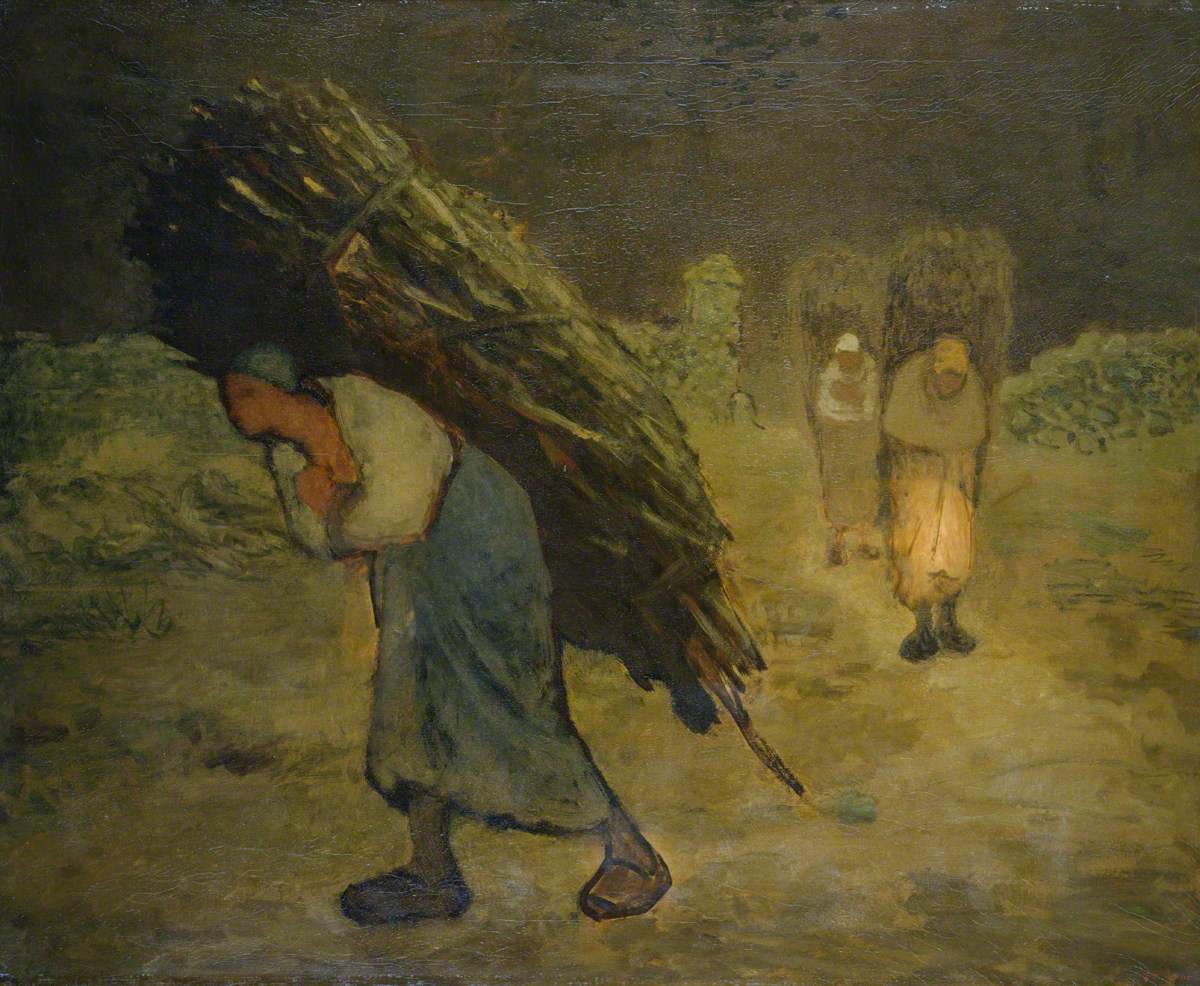
Having just visited the National Gallery and an exhibition on Millet:

https://www.nationalgallery.org.uk/exhibitions/millet-life-on-the-land

Dr Sanil Rege on twitter provided:


Seeing, and reading (again?) about 'The Faggot Gatherers' I couldn't help but see socio-economic history enacted:

'Two women are taking a short rest from gathering tree branches for sale as firewood. The older woman’s hunched back and clawed hands betray a lifetime of physical toil. The setting is the forest of Fontainebleau, south of Paris, close to the village of Barbizon. Millet was an exponent of Realism, a movement that rejected historical art and idealisation in favour of a truthful view of contemporary reality.'

Text: https://www.nationalgalleries.org/art-and-artists/232271
Winter, The Faggot Gatherers Jean-François Millet (1814–1875) National Museum Cardiff

The National Gallery's accompanying text reads:

'Three women are on their way home trom the forest of Fontainebleau. One of its entrances, the Porte aux Vaches, is visible at the back right. The staggering scale of their loads threatens to overwhelm them in their stumble homewards. The scene evokes Millet's 1851 letter to his biographer Alfred Sensier, in which he described how seeing 'a poor figure laden with a faggot reminded him of the constant fatigue of people's lives.
While the painting is unfinished, the elemental figures are typical of Millet's vork. The extreme simplification of their forms results in austere silhouettes.'

Mental illness has always been a facet of humanity, evidence of trephination from prehistoric times and across cultures and geographies bears testimony to the mind - body divide. Life was brutish physically too. What chance did the weakest stand? If, that is a broken bone: you could be left behind? But perhaps we underestimate the knowledge and experience of our ancient ancestors. Knowledge gained and passed orally, culturally, even before written history. Perhaps too, we struggle to understand how early humanity expressed itself beyond the big-stick of nature and the struggle for survival as the hominids that led to 'us' were winnowed down?

Even as recent as the 19th century life was hard. As the notes above attest, Millet's work seeks to record the sheer physicality of labour, even as the industrial age emerged. The advent of the industrial revolution brought its own pressures and privations, as pastoral life is replaced with change work at home (spinning cotton) to urban and factory growth. 

Severe mental illness would have been institutionalised in poor houses, religious and charitable organisations. Parity of esteem is grounded, to some extent in the questions: "What happened to you?", or "How are you feeling today?" In Millet's work the physical cost and strain stands out. While in the L'Angelus there is debate about prayer, or grief. What is visible usually speaks first, and stands for itself. This is why self-awareness, reflection, critical thinking, observational and interpersonal skills are important; and why mental health nursing calls for specific knowledge and skills. And, in psychiatry too, even when the same is contested.

Image source: Oil on carvas Lent by Amgueddfa Cymry - Museum Wales. Bequeathed by Gwendoline Davies in 1952.

Sunday, August 17, 2025

TDS - 'Tariff Derangement Syndrome' ...

... is that all you have to worry about?


Individual
|
      INTERPERSONAL    :     SCIENCES               
HUMANISTIC  --------------------------------------  MECHANISTIC      
 SOCIOLOGY  :    POLITICAL 
|


Vasan S, Padhy RK. Tardive Dyskinesia. [Updated 2023 Apr 24]. In: StatPearls [Internet]. Treasure Island (FL): StatPearls Publishing; 2025 Jan-. Available from: https://www.ncbi.nlm.nih.gov/books/NBK448207/

Morrison PD, Jauhar S, Young AH. The mechanism of action of clozapine. Journal of Psychopharmacology. 2025;39(4):297-300. doi:10.1177/02698811251319458

Taylor D, Watanabe K. Tardive dyskinesia: understanding current challenges in diagnosis and treatment. Therapeutic Advances in Psychopharmacology. 2023;13. doi:10.1177/20451253221144347

'syndrome'?

Jablonski S,  Syndrome--a changing concept. Bulletin of the Medical Library Association. 1992;80(4), 323–327.

Calvo F, Karras BT, Phillips R, Kimball AM, Wolf F. Diagnoses, syndromes, and diseases: a knowledge representation problem. AMIA Annu Symp Proc. 2003;2003:802. PMID: 14728307; PMCID: PMC1480257.

Previously: 'psychosis' : 'mental illness'

My prompt: Claire Jones. Trump picks Powell critic and rates ally for Fed board. FTWeekend. 9-10 August 2025, p.6.

Wednesday, August 13, 2025

Jackanory: Parity of Esteem 'read' c/o Mr Rosen

Individual
|
      INTERPERSONAL    :     SCIENCES               
HUMANISTIC  --------------------------------------  MECHANISTIC      
 SOCIOLOGY  :    POLITICAL 
|


My source: 
Shop window of The Addyman Annexe - bookshop, Castle St, Hay-on-Wye, 12th August 2025.

Images: 
'STICKY McSTICKSTICK' - https://www.walker.co.uk/
Illustration - https://www.walker.co.uk/author/tony-ross/

Illustration - https://www.walker.co.uk/author/quentin-blake/

Previously: 'parity'

Monday, June 02, 2025

Online: Hodges' model in Safety presentation

Later this week I've an online presentation to deliver. The brief is to introduce Hodges' model and relate the model to the matter of safety - some thoughts ...

individual
|
INTERPERSONAL : SCIENCES
humanistic ------------------------------- mechanistic
SOCIOLOGY : POLITICAL
|
group
PATIENT safety

Task: Attention - Concentration
Rest - Sleep

psychological environment - safety

to ERR is human
HUMAN as weakest link

risk to SELF

Cognitive support - lists, names,
informational analysis of environment

Critical thinking
Situational awareness

Therapeutic - OBSERVATIONS
ethics- video surveillance
PATIENT - PROCESS safety
 - e.g. diagnosis, handover
physical safety: 1st law 1st aid.
SELF-harm : SELF-neglect
Assessments, Plan, Evaluation
environment:safety, construction, buildings
occupational/disciplinary safety
Comms - Information theory
 safety as security: lone working
signals - alarms, protocols

medical safety: medicines, devices
risk reduction - management

Human factors
Human- Computer/Tech/AI Interaction
Research - Records
Interfaces

Public Health Safety: Food, Pollution

risk to others
stereotypes - assumptions

risk from others - bullying

social media

teamwork: simulation

PRACTICE safety
Law - Health & Safety
Reporting - Statistics
Transparency
Mandatory Training / Learning
Whistleblowing
safety standards ISO
safety organisations

The Learning Organisation
Other sectors e.g. Aviation, Formula 1 ...
Risk of 'groupthink'

 Is it a risk to assume parity of estem in patient safety? What of 'a' patient's safety?

safety
https://hodges-model.blogspot.com/search?q=safety

Wednesday, April 16, 2025

AI, Beliefs, Helplessness, Misinformation ...

Viewing this debate and SDGs both as information spaces, and mental health/illness can provide some insights.

'Learned helplessness' is an established phenomenon in psychological studies and history.

Adam Grant in Life&Arts, FTWeekend 29-30 March 2025, p.2. 

( https://adamgrant.net/book/think-again/ )
writes in 'HOW TO UNLEARN HELPLESSNESS'
'Many people believe that in a world of echo chambers and misinformation, it's not possible to talk anyone out of their convictions. They`re wrong. Even a bot can do it.

In recent experiments psychologists recruited thousands of Americans who believed in unfounded conspiracy theories ranging from the moon landing being faked to 9/11 being an inside job. After the participants described their views, the psychologists randomly assigned some of them to discuss these views with an AI chatbot that was prompted to refute them.

After less than 10 minutes of conversation with a ChatGPT-based LLM, more than a quarter of participants felt uncertain about their views - and those doubts persisted two months later. Short exchanges were even enough to move the opinions of strong believers.

Why? It's not just that ChatGPT has access to infinite knowledge. It turns out that AI chatbots are better listeners than the average human. The researchers found that chatbots were persuasive because they presented information that directly challenged the reasons behind people's beliefs.'
Also helpful, as per discussion to consider AI as a new / emerging 'information space' as a literal frontier, a new territory with unknowns that businesses wish to conquer and the public must learn to trust - even as users. What knowledge - understanding is needed of what is happening in the 'box'?

Once again (within Hodges' model) we can potentially draw in (ask questions of - all) the literacies:

3Rs, information, IT, media, culture, spiritual, financial, health, sciences, civic - national, international...

This also means to what extent are existing imbalances in parity of esteem - between the mind and body dichotomy perpetuated, even increased?

It is not surprising that there is an imbalance, in the distribution of datasets - LLMs on huggingface:

https://huggingface.co/docs/hub/en/datasets

e.g. INTRA- INTERPERSONAL [MIND]

BioBert 1.1
UCI ML Drug Review dataset - Subset 
LOST arXiv:2306.05596 [cs.CL]
Mindwell https://doi.org/10.1007/978-981-97-3601-0_34

SCIENCES [BODY]

eScience kidney factomics (PubMed titles)
BioBert 1.1
SAVSNET sample (VetCN) - Important in terms of Zoonotic diseases and planetary health*.

Image datasets: 
Lung Cancer IQ-OTH/NCCD 
Surface Crack Detection 
Oxford-IIIT Pet 
BreastMNIST 
DermaMNIST 
PneumoniaMNIST 
BloodMNIST 
RetinaMNIST

There is overlap also.

Ack. *As mentioned late 2024, the datasets were discussed at: https://www.bcs-sgai.org/health2024/

'ChatGPT (40) Differentiating reliable information from misinformation (12)'

Tuesday, April 08, 2025

Book TSR ii - Mental illness/health: History, process and progress

As posted yesterday through a book review, I developed an awareness for the role of process much earlier than previously thought. It wasn't Enid Mumford's work on the benefits of a socio-technical approach to successful deployment of information systems. I only discovered this well after the advent of home computing with the ZX81 and BBC micro 1981-1995.

It was 1978-79 to be more exact; on an admission ward during my three year student Registered Mental Nursing course at Winwick Hospital. On first recollection, I thought it was a clinic, with patients coming in for Clomipramine (Anafranil) infusion on to the ward. As students on placement we were allocated to support the clinic, completing regular observations, including pulse and blood pressure. Clearly, it was a long time ago. There is a paper (paywall), quite a significant one for me:
O’Flanagan PM. A Clomipramine (Anafranil) Infusion Unit. Journal of International Medical Research. 1973;1(5):375-381. doi:10.1177/030006057300100519 
I remember this Consultant's name being mentioned, but this was before my time(?). From the paper's first - accessible - page I can see the patients involved were actually in-patients. Which given the procedures, safety, observation makes better sense. There is reference to a film, in a hospital newsletter 'The Standard':
'Anafranil Film
In response to the interest shown in the film on Anafranil Infusion, Dr. P. O'Flanagan was present in the In-Service Training Room on Monday, October 29th for a second showing of the film, and to answer any questions from the audience.'
I wonder if the film is archived somewhere?

It isn't a surprise to see my former Community MH manager and friend David McKendrick listed on the Publications Committee. I do miss David - a great mentor!

In the previous post about 'The Sleep Room' I contrasted the mind-body dichotomy. In terms of evidence on 'both sides' of this divide, many people have made the observation of how you can see a broken arm, or leg, and other physical ailments, but mental health issues are often not obvious:
Powell J, Clarke A. Information in mental health: qualitative study of mental health service users. Health Expect. 2006 Dec;9(4):359-65. doi: 10.1111/j.1369-7625.2006.00403.x. PMID: 17083562; PMCID: PMC5060370.

The evidence-base of general medicine - physical health and psychiatry must be dynamic. The volume of publications bears testimony to the relentless change across all the sciences, research, technologies, knowledge, theory, practice, management and policy. On Twitter there is constant 'debate' between psychiatry and anti-psychiatry. 

Studies of intravenous clomipramine continue, the intervention much changed from the 1960-70s:

Fallon BA, Liebowitz MR, Campeas R, et al. Intravenous Clomipramine for Obsessive-Compulsive Disorder Refractory to Oral Clomipramine: A Placebo-Controlled Study. Arch Gen Psychiatry. 1998;55(10):918–924. doi:10.1001/archpsyc.55.10.918

Persson M-L. Adler Mats y Hetta J. Pulse Intravenous Clomipramine as an alternative antidepressant treatment to ECT: A pilot study. Eur. J. Psychiat. [online]. 2007, vol.21, n.4 [citado 2025-04-07], pp.263-267. Disponible en: <http://scielo.isciii.es/scielo.php?script=sci_arttext&pid=S0213-61632007000400003&lng=es&nrm=iso>. ISSN 0213-6163.

Karameh WK, Khani M. Intravenous Clomipramine for Treatment-Resistant Obsessive-Compulsive Disorder. Int J Neuropsychopharmacol. 2015 Jul 28;19(2):pyv084. doi: 10.1093/ijnp/pyv084. Erratum in: Int J Neuropsychopharmacol. 2016 Apr 27;19(10):pyw031. doi: 10.1093/ijnp/pyw031. PMID: 26221004; PMCID: PMC4772819.
Perhaps, someone can please enlighten me? Given the time between William Sargant's practice, and today how much more do we know? We know the gap can't be fully closed (phenomenologically?), but has the evidence-gap been reduced? What are the evidential mile[Km]stones in psychiatry - mental health nursing? What are 'the standard' measures? If we look at a model that is bio-psycho-socio-political, what difference might this make, to the 'debate', theory, practice, research, management and politics (policy)? 

'Woke' is a tainted word these days, but in mental health care and nursing we all need to wake up and in a safe space.

Friday, March 15, 2024

Book (i): Mental Patient - Psychiatric Ethics from a Patient's Perspective

- by Abigail Gosselin


Individual
|
      INTERPERSONAL    :     SCIENCES               
HUMANISTIC  --------------------------------------  MECHANISTIC      
 SOCIOLOGY  :    POLITICAL 
|
Group
Book: Mental Patient
Do we say 

"PHYSICAL PATIENT"?

What is (still) heard here?

What is still heard here?


Gosselin, A. (2022). Mental Patient: Psychiatric Ethics from a Patient’s Perspective. The MIT Press.
https://doi.org/10.7551/mitpress/14589.001.0001

My source: 
https://x.com/AnneMarieGagnJ1/status/1767948059957227719?s=20


Sunday, December 04, 2022

Time - for care to commute [an appendum]

"The whole thrust of nursing in the last decade [1981-91] has been directed towards seeing the patient as an integrated, individual human being rather than as a piece of malfunctioning anatomy. The patient is a person not 'the mastectomy in bed 3' or 'the man with the leg'. This means that any model of nursing must take into account the patient's psychological and social functioning as well as anatomy and physiology." p.53.
Ack. Walsh, M. (1991). Models in clinical nursing: The way forward. London: Bailliere Tindall.
[Book now bound for students.]

 INDIVIDUAL
|

 INTERPERSONAL    :     SCIENCES               
HUMANISTIC --------------------------------------  MECHANISTIC      
SOCIOLOGY  :   POLITICAL 
|
GROUP

psychology

anatomy, physiology

social


employment, studying ...
life chances / end of life choices


We need to consider concepts of care for a person, patient, and carer, not only in terms of their respective, or primary care domain [ e.g. leg, mastectomy; anatomy, physiology; sciences ] and associations with the academic disciplines; but in Hodges' model, focus upon the horizontal, vertical and diametric relation across and between care domains.

As described by Walsh, talk of  'the mastectomy in bed 3' or 'the man with the leg', is a dated trope; yet sadly it can signify the nature of staff (team) attitudes, the quality of care and experience of patients and their families. 
 
Technically, I see Hodges' model as a relational ontology. What this means basically, is that the model facilitates, encourages the user of the model to consider what they identify in a situation as objects (entities), events, concepts, relationships, data, and so on. An important assumption here is that what 'stands out' is what has salience (what the patient says - non-verbally too, what they mean, what they don't say?); that is, meaning and significance. 
 
Returning to Walsh's example: What does this event, diagnosis, prognosis (including anatomy and physiology) mean for this person as an individual? (If it means 'nothing' this may still - in a mental health context - be important.) What will it mean for the person's friends and family? What do the person it will mean to friends and family - significant other? What about their ability to work, and study? Can they resume their life plans and what of the person's life chances and those also affected? 
 
Crucially, there may not be a connection, a relation, across the care domains of Hodges' model. Asking the question is key, however; to go beyond what can be(come) task-based care. The ability of the model to assure and improve health care rests on this. The same applies for self-care too, with the model's support of reflection and critical thinking, essential to health and other forms of literacy.

Parity of esteem means we have to travel across the model. If we are 'collapse' the model's domains - four sets, into one that actually means something for the nurse, patient, manager, policy maker and researcher. This something, at least conceptually; is no less than person-centred, holistic and integrated care.

Q. Can care commute?

Sunday, November 27, 2022

"No safety without emotional safety" by Veale, et al. (2022)

 INDIVIDUAL
|

 INTERPERSONAL    :     SCIENCES               
HUMANISTIC --------------------------------------  MECHANISTIC      
SOCIOLOGY  :   POLITICAL 
|
GROUP
psychological needs (risk)
inc. threat processing - treatment of interpersonal violence
'therapeutic
emotional safety (re-traumatisation)
control behaviour
severe panic with flashbacks, dissociation, and visual hallucinations
physical needs (RISK)
'low intensity touch'

environment' ... tepee - in room my safe space
physical safety (safe room)
to increase physical safety
privacy, lighting, doors, window

lived experience
family - relationship experience (touch)
'atmosphere'?
change in culture, positive risk-taking
person-centredness, family orientation in 'team'
Leadership
'therapeutic community'
Open Dialogue
CONTROL:
'take away' - autonomy, responsibility
policies - abuse risk, 'protect' patients and staff
regulatory reform
in-patient care, pets - policy
parity of esteem
Access (still) to therapies, CBT
Institutional risk
Alternative protocols


David Veale, Eleanor Robins, Alex B Thomson, Paul Gilbert, No safety without emotional safety, The Lancet Psychiatry, 2022, ISSN 2215-0366, https://doi.org/10.1016/S2215-0366(22)00373-X. (https://www.sciencedirect.com/science/article/pii/S221503662200373X)

My source:
https://twitter.com/tadhg50/status/1596901626765529091?s=20&t=FJe9qpYUrxHN2yxWEWLUdQ
The purposes of Hodges' model is to identify the concepts that have salience clinically, to the person, be they - patient, carer, student ... and then to integrate care, to draw the care domains together into a 'whole'.

Four original purposes of Hodges' model: 

1. Reflection, reflective practice, critical thinking
2. Person-centred care
3. Holistic - integrated care
4. Bridge the Theory - Practice gap

Wednesday, September 14, 2022

Yes, size matters

 INDIVIDUAL
|
 INTERPERSONAL    :     SCIENCES               
HUMANISTIC --------------------------------------  MECHANISTIC      
SOCIOLOGY  :   POLITICAL 
|
GROUP


Hammond, G. 'The mini market'. House&Home, City Living Special, FTWeekend, 4-5 May 2019, pp.8-9.
https://www.ft.com/content/03a9343e-6b35-11e9-80c7-60ee53e6681d


This morning I shared three slides with the PAMHOP research team and greatly appreciate the opportunity to present and join their meeting:

Physical and Mental Health of Older Prisoners (PAMHOP)

As I spoke of considering the environment and the carceral context across the domains of the model, I recalled another piece of paper.

The image above is from FTWeekend in 2019.

In prison of course, while the physical environment is the intended constraint, the model also invites consideration of the psychological, social, political environments and added here - the spiritual.

Since 2019 and post-COVID, the change in how we regard and value the spaces we inhabit - voluntarily or otherwise.

Hammond, G. 'The mini market'. House&Home, City Living Special, FTWeekend, 4-5 May 2019, pp.8-9. https://www.ft.com/content/03a9343e-6b35-11e9-80c7-60ee53e6681d

The image above was copied from FTWeekend and pasted into a new image and saved from avif format to .jpg.


Thursday, September 01, 2022

Update on draft papers ;-)

Please excuse the intended irony, as need for an - 'update' could refer to far more than papers.*

Across the life of W2tQ (since April 2006...) there are many posts about papers by other people, papers planned and less frequently work published. 

A paper that started in 2017 has finally been accepted and we (not the Royal variety - which is a critical joy) await the proof. 

I'm really grateful to my co-author who stayed the course on what has been an utter roller-coaster and with COVID too. I look forward to sharing details and hence news of their ongoing research elsewhere - in Europe.

Another paper conceived in March has progressed more rapidly. With the initial draft well received, I'm addressing some revisions from editors, which are straightforward. 

I still need to 'see' these two birds in my hands, to believe: it will be worth it (I think?) to add these to the bibliography, as:

  • SDGs are fundamental in global health and reveal the scope and relevance of h2cm;
  • nutrition is critical in public (mental) health, policy and sustainability;
  • there is more to follow from the 'mapping' that is exercised on W2tQ [2x2 HTML tables thus far], in these, and other papers;
  • the psychoses constitute a severe mental health condition that can also illustrate the impact on individuals, friends, family and society;
  • in health (and social) care we must address parity of esteem in and across theory, practice, management, policy, and research;
  • how do (research) methods figure in Hodges' model (a mapping approach);
  • what does a similar mapping of cardiovascular medicine and nursing reveal?

These bibliographical additions may help researchers in health, social care, and other fields find the model. While it is disappointing to find out about papers that reference h2cm 'after the writing' this still counts. It is a reference, not a collaboration! This is very welcome and a key purpose of the blog, and presence - @h2cm - on twitter. 

It would be validating, so 'me' [massaging ego] but it would also be contradictory. 

Hodges' model is simple, isn't it? 

In its basic form, blank and template - it presents virgin territory for the user(s) to overlay with their map according to context.

I'll post again about three remaining drafts papers, one dates back to 2012 (I was full-time then) and one that is in two parts. I've learnt a lot (again) with the two 'nearbies' and will post and list details when able. 

If I can help you, your project - I'd be pleased to do so.

*a website for example!

See also: the blog's bibliography in the sidebar, plus -

'New' citation: "Pratique en milieu de psychiatrie légale: proposition d’un modèle interdisciplinaire."

Saturday, October 09, 2021

RSPH Sparks Debates - Geopolitical determinants of health

The Royal Society for Public Health 

Thu, 11 November 2021, 15:00 – 16:00 GMT

Online event

 
Individual
|

INTERPERSONAL : SCIENCES
humanistic ------------------------------------- mechanistic
SOCIOLOGY : POLITICAL
|
Group
 
i m p a c t

GEO-
SOCIAL
determinants of health

POLITICAL
determinants of health


My source:

https://twitter.com/R_S_P_H/status/1446469190198628376?s=20

https://twitter.com/R_S_P_H/status/1445011311478325249?s=20

#RSPHSparksDebate