Hodges' Model: Welcome to the QUAD: organisation

Hodges' model is a conceptual framework to support reflection and critical thinking. Situated, the model can help integrate all disciplines (academic and professional). Amid news items, are posts that illustrate the scope and application of the model. A bibliography and A4 template are provided in the sidebar. Welcome to the QUAD ...

Showing posts with label organisation. Show all posts

Saturday, April 25, 2026

MAACAL: Statues Also Breathe

Catharsis Arts Foundation in collaboration with Obafemi-Awolowo University and 108 students, 2022

This exhibition presents a collaboration between Obafemi-Awolowo University, 108 students from all across Nigeria, and the families of the Chibok girls who were kidnapped by Boko Haram in 2014. 

Inspired by the iconic terracotta heads of Ife, it was initiated by artists Prune Nourry and Ade Bantu and seeks to raise awareness on the plight of the missing girls, and to highlight the diversity of Nigerian culture. . . .

On Thursday I visited MAACAL - Museum of African Contemporary Art Al Maaden, an art gallery  I first read about in FTWeekend Life&Arts, not long after first visiting Marrakech in 2023.

The main exhibit presents itself straight away after entering:

Statues Also Breathe, exhibition view, Art Twenty One, Lagos, Nigeria
 ©Dohdohndawa Photography/DDD Studios

A short but touching film in the gallery bears testimony to the fact many 'school girls' are still absent. Repetition is standard method in design. In today's manufactured world you might think what is so special about this? Until you are there physically, and walk through them. You see each one, a who: unique, an individual, a person taken away from where they belong.

As a white man from NW England, there was a moment when I realised: I was on the same continent where this had happened and is ongoing. Searching Youtube reveals other related videos concerning the exhibitions. It's strange watching them again as a check on their availability. A short video of an event to launch three new installations earlier this year is worth watching. Unfortunately, my phone failed until I got back to Marrakech, so I've no photos. I've three works in mind though.

I walked there, and back after trying to sort a taxi with a lovely couple from Germany and their son. Some taxis are limited to carry three persons. This is what arrived. The sun, even behind clouds that day, and flights taking off from the airport helped my sense of direction. The girls, seeking an education, did not have these means of navigation.

The garden at MAACAL was small but lovely. I hope to return one day, and well before then . . .

Thursday, March 26, 2026

Is there such a thing as the holistic bandwidth of 'resilience'?

In preparing my presentation for World Conference on Complex Systems 2026 (WCCS26) next month^, I am reading:

Bridging the Macro and the Micro by Considering the Meso: Reflections on the Fractal Nature of Resilience

ABSTRACT. We pursued the following three interconnected points: (1) there are unexplored opportunities for resilience scholars from different disciplines to cross-inspire and inform, (2) a systems perspective may enhance understanding of human resilience in health and social settings, and (3) resilience is often considered to be fractal, i.e., a phenomenon with recognizable or recurring features at a variety of scales. Following a consideration of resilience from a systems perspective, we explain how resilience can, for analytic purposes, be constructed at four scales: micro, meso, macro, and cross-scale. Adding to the cross-scale perspective of the social-ecological field, we have suggested an analytical framework for resilience studies of the health field, which incorporates holism and complexity by embracing an ecological model of cognition, something supported by empirical studies of organizations in crisis situations at various spatial as well as temporal scales.  

Key Words: human resilience; organizational resilience; resilience; resilience engineering; societal resilience 

Since the turn of the millennium, it appears 'resilience' has exploded across the media, and literature. As a result, it has also been viewed negatively by mental health service advocates, and activists as they decry the run-down state of formal services. The 'recovery model', undoubtedly closely associated with personal resilience is not the only answer.

This paper is helpful, in several respects but specifically to illustrate the idea of how Hodges' model can frame holistic bandwidth, across its care / knowledge domains.

INDIVIDUAL
|
    INTERPERSONAL    :     SCIENCES               
HUMANISTIC --------------------------------------  MECHANISTIC      
SOCIOLOGY  :   POLITICAL 
|
GROUP

individual - emotional - mental
resilience


resilience engineering

human & societal resilience

organizational resilience


I think the answer is yes. 

But, what do you think (h2cmng AT yahoo.co.uk)?

Bergström, J., & Dekker, S. W. A. (2014). Bridging the Macro and the Micro by Considering the Meso: Reflections on the Fractal Nature of Resilience. Ecology and Society, 19(4), art22.
https://doi.org/10.5751/ES-06956-190422
 
See also:
Jones P. (2014) Using a conceptual framework to explore the dimensions of recovery and their relationship to service user choice and self-determination. International Journal of Person Centered Medicine. Vol 3, No 4, (2013) pp.305-311.  
 
Previously: 'complexity' : 'resilience' : 'holistic bandwidth' : 'fractal'

^Fingers x'd!

Sunday, September 07, 2025

Editorial: Persistent Positive Change in Challenging Times - IJPCLHSC

'What then is the common theme for this issue? It is the persistence of these authors, practitioners and academics to be curious about what could be better and engage with scholarly enquiry to advance practice-based learning.' 

The editorial introduces the content of -

International Journal of Practice-based Learning in Health and Social Care Vol. 13 No 1 August 2025
https://publications.coventry.ac.uk/index.php/pblh/issue/view/96

Howden,  S.  (2025).  Editorial:  Persistent  Positive  Change  in  Challenging  Times.  International  Journal  of  Practice-based Learning in Health and Social Care, 13(1), ii-iii.

- which I have mapped to Hodges' model (with some additions):

Individual
|
      INTERPERSONAL    :     SCIENCES               
HUMANISTIC  --------------------------------------  MECHANISTIC      
 SOCIOLOGY  :    POLITICAL 
|
Group

restlessness (- in mind)
(curiosity)

patient's lived experiences*

intra- inter-personal

pastoral support

engagement - enjoyment

workshop, case study ...

psycho-

restless legs syndrome

remote, rural, urban
community-based :: clinical settings

(infra-) structures

processes - procedures

simulation, major incident

forensic, podcasts

-social factors

interdisciplinary (integrated?) working

social structures
(This is how we 'do it' here)

'Institutional? “positive restlessness"'

*clinical subjective exposure 
(determinants of health)

organisational (Inst.) structures


<>

The final paper is on workshops and continuing professional development:

Kenny, B., Bourne, E., & Li, J. (2025). Knowledge Translation from Clinical Education Workshop to Workplace. International Journal of Practice-based Learning in Health and Social Care, 13(1), 56-76. https://doi.org/10.18552/ijpblhsc.v13i1.1084 

The editorial notes:

'The authors integrate goal setting as part of a development session on supervision skills and follow up survey, to ask what happened next in relation to their goals and practice. When resources are scarce and CPD is so critical, these ideas about enhancing workshop effectiveness and feeding participants’ experiences back into sessions has never been more important.'

When presenting Hodges' model at events I will often tick for a workshop. This reflects former work experience with student nurses, OTs, social workers and other learners: when a workshop could cover the some 2 hours with a break in the middle. Hodges model is flexible, adaptable and in a workshop can be applied on an individual basis, or small group work - breakout sessions [this does not necessarily mean the participants are bored :-)]. A wide range of learning and teaching approaches can be considered. 

Kenny, Bourne & Li utilise role play, case studies for example, their approach and paper framed by the KTA Framework:

'Workshop design was underpinned by the Knowledge to Action (KTA) Framework. KTA acknowledges the importance of social interaction in the adaptation of research evidence, taking account of local context and culture (Graham & Tetroe, 2011).' p.58. ...

'The KTA framework comprises two major components: knowledge creation and an action cycle. During the workshop, knowledge creation was supported by CEs identifying factors that contribute to challenging clinical education situations and reflecting upon the impact of these factors in their workplace contexts. During Part 1 of the workshop, attendees focussed on understanding challenging situations. Each group was assigned a case study that included a complex mix of student, educator and workplace factors thatinteracted to create a challenging learning situation.' p.58. ...

'A focus on active learning within the workshop prepared CEs for translation of their knowledge of supervisory practices when they returned to their workplaces. In Part 2 of the workshop, CEs worked through a structured process for managing placement challenges by engaging in peer learning role play activities. The process was adapted to address challenges that included mental health issues in workplace learning, developing professionalism, providing inclusive learning environments, and facilitating clinicalreasoning and reflection.' p.58.

  clinical educators (CEs)

Reading KB&L: I wonder if Hodges' model provides a more 'accessible' map as an output / summary, evidence of learning and teaching activity? 'Filtering' would be essential of course, as to what exactly is mapped. While I've no evidence (in theory), Hodges' model in being (imho) accessible, might also be primed for transferability (after all what does transferable mean?^); by being recognised more consistently across larger groups, and (as per the conclusion) other individuals, and broader educational contexts.

Currently, working with three co-authors on a draft paper revision (dental health and policy frameworks) for a journal, I noticed our leading author refers to 'translational'. In the paper below, (cited by KB&I): 

Graham, Ian D. PhD1; Logan, Jo RN, PhD2; Harrison, Margaret B. RN, PhD3; Straus, Sharon E. MD, MSc4; Tetroe, Jacqueline MA5; Caswell, Wenda RN, MEd2; Robinson, Nicole6. Lost in knowledge translation: Time for a map?. Journal of Continuing Education in the Health Professions 26(1):p 13-24, Winter 2006. | DOI: 10.1002/chp.47

Graham et al's, Table 1 Definitions of Terms, is (still) really helpful.

See also on W2tQ: 'reflect' : 'holistic' : 'map' : 'situation'

^Translation; transfer - dual, two-way, inversion?

Saturday, December 07, 2024

Multicultural Group (NWMG) NW Region - RCN


There is a group that that may be of interest, even if you are not located in the NW of England. If located elsewhere, perhaps you can help start a group in your respective region, and together mobilise and liaise with groups internationally. The group is also on WhatsApp, and Facebook; the website's introduction begins ...


The RCN North West Multicultural Group (NWMG) creates a community for members across the region from multicultural ethnic backgrounds to connect with each other, share their lived experience, knowledge and diverse ideas that help drive change around racism to ensure that their various organisations is the best place to work.

Membership is open to RCN members of Royal College of Nursing from multicultural backgrounds and their allies.

Mission statement: 

The aim of the North West Multicultural Group is to stand against racism and discrimination by using members lived experiences, encouraging organisations to be anti-racist and with the support of allies.  ...


Source and continued... https://www.rcn.org.uk/northwest/Get-Involved/NW-Multicultural-Group

Monday, December 02, 2024

'Un Caso Clinico' BUZZATI (I906-I972)

Reading The Theatre of the Absurd earlier this year was a very enjoyable and disconcerting experience. In acknowledgement: I have quoted from the book at length below. I do so to better convey the context, and in the hope other people may similarly obtain and enjoy this classic theatrical text.

Reading, I was reminded of starting my career as a nursing assistant and student nurse, and the 'lock-up' wards: male and female. Listening now to the current Reith Lectures I will post regards: 

Gwen Adshead - Four Questions about Violence

https://www.bbc.co.uk/sounds/play/m0025cmg

As a community mental health nurse in community mental health teams and nursing home liaison, residents on the ground floor (of two or three floors - with 'general') 'knew' there were very poorly people on the top floor. In summer, windows open, they could often be heard shouting and in the night. Inside, for staff, family members, friends became advocates expressing concern for a lack of access to fresh air and sunshine. Something, of course, we can all benefit from. For some residents there was an in-house understanding of NOT wanting to be moved 'upstairs'. At times I gather, if a resident 'played up' such re-location (displacement) was used as a threat: a cue for education.^

DINO BUZZATI (I906-I972)
'In Les Bátisseurs d'Empire the flight from death takes the form of trying to escape upwards. The same image appears in the opposite direction in a remarkable play by Dino Buzzati, the eminent Italian novelist and journalist on the staff of the Corriere della Sera in Milan. This play, first performed by the Piccolo Teatro, Milan, in 1953, and in Paris in an adaptation by Camus in 1955, is Un Caso Clinico. In two parts (thirteen scenes), it shows the death of a middle-aged businessman, Giovanni Corte. Busy, overworked, tyrannized but pampered as the family's breadwinner, whose health must be preserved, he is disturbed by hallucinations of a female voice calling him from the distance and by the spectre of a woman that seems to haunt his house. He is persuaded to consult a famous specialist, and goes to see him at his ultra-modern hospital. Before he knows what has happened, he is an inmate of the hospital, about to be operated on. Everybody reassures him - this hospital is organized in the most efficient modern manner; the people who are not really ill, or merely under observation, are on the top floor, the seventh. Those who are slightly less well are on the sixth; those who are ill, but not really badly, are on the fifth; and so on downwards in a descending order to the first floor, which is the antechamber of death.

In a terrifying sequence of scenes, Buzzati shows his hero's descent. At first he is moved to the sixth floor, merely to make room for someone who needs his private ward more than does. Further down, he still hopes that he is merely going down to be near some specialized medical facilities he needs, and before he has fully realized what has happened, he is so far down that there is no hope of escape. He is buried among the outcasts who have already been given up, the lowest class of human beings - the dying. Corte's mother comes to take him home, but it is too late.

Un Caso Clinico is a remarkable and highly original work, a modern miracle play in the tradition of Everyman. It dramatizes the death of a rich man - his delusion that somehow he is in a special class, exempt from the ravages of illness; his gradual loss of contact with reality; and, above all, the imperceptible manner of his descent and its sudden revelation to him. And in the hospital, with its rigid stratification, Buzzati has found a terrifying image of society itself - an impersonal organization that hustles the individual on his way to death, caring for him, providing services, but at the same time distant, rule-ridden, incomprehensible, and cruel.' 
Esslin, Martin. Parallels and Proselytes, The Theatre of the Absurd. London: Pelican, 1982. (3rd Ed.).pp.277-279.

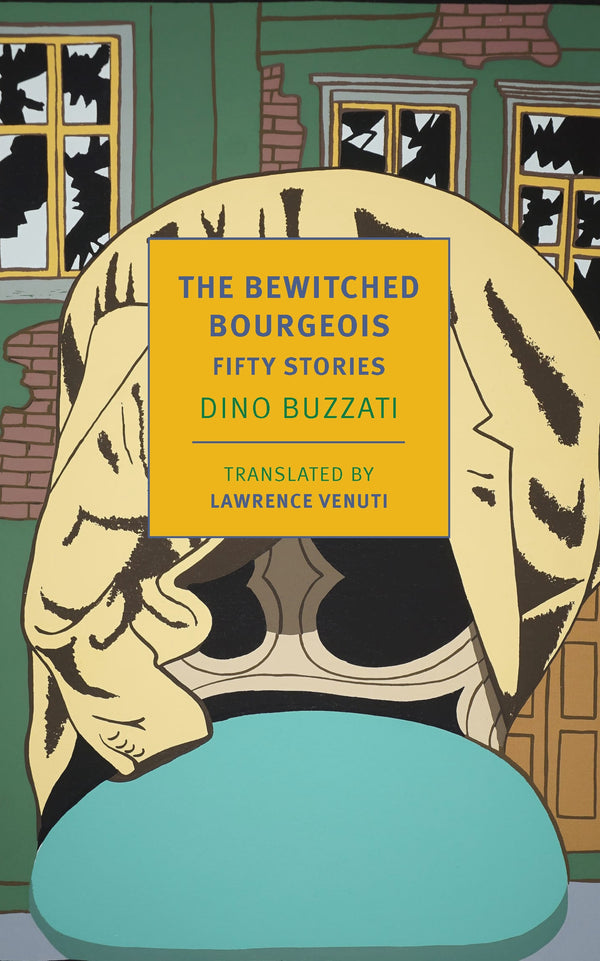
The Bewitched Bourgeois
^Rest assured, there were and are excellent centers of care too.


Update: 11th January 2025: c/o John Self. Meet the forgotten maestro of the ultra-short story. Saturday Review, The Times, p.15.
'One of his most widely published stories, Seven Floors, is set in a hospital where they put the "mildest cases" on the seventh floor, and so on in increasing order of sickness down to the first floor, which is occupied by those who are "beyond hope"'.

Lawrence Venuti. (2025) The Bewitched Bourgeois, New York: NYRB Classics ISBN: 9781681378671.

Cover image: NYRB.

Wednesday, August 28, 2024

Call for Participation in NHS Survey

ARE YOU WORKING IN THE NHS? IF SO, HELP NEEDED URGENTLY! Please read this email. 

Glasgow Caledonian University is inviting NHS Staff across the UK to participate in this doctoral research survey to analyse the impact of responsible leadership on improving well-being and organisational trust among NHS Staff members. 


To be eligible, you must be an NHS staff member from any area of the UK in any job role. The survey collects no recognisable information and is wholly anonymised to protect participant privacy and confidentiality. It has received full ethical approval, will take around 10 minutes and will help provide an improved understanding of the area of well-being in the profession.


Please forward this survey link to everyone in your contacts working for NHS. This will help gain more responses, increasing the study's reach and validity. Your help is highly appreciated, and we thank you in advance.


Here's the link for the participant information sheet and survey: 

https://app.onlinesurveys.jisc.ac.uk/s/caledonian/impact-of-responsible-leadership-on-employee-well-being-and-org


Warm wishes
Umm E Habiba Tariq (Chief Investigator)


Umm E Habiba Tariq (she/her) | PhD Candidate, MSc, BBA (Hons)

Occasional Lecturer | Department of HRM | Glasgow School for Business and Society (GSBS)


Glasgow Caledonian University is a registered Scottish charity, number SC021474

My source: Nurse-Philosophy List.

Saturday, October 07, 2023

Hodges' model: The Art & Science of Care Choreographies?

INDIVIDUAL
|
     INTERPERSONAL    :     SCIENCES               
HUMANISTIC --------------------------------------  MECHANISTIC      
SOCIOLOGY  :   POLITICAL 
|
GROUP

Introduction to Choreographies
Merce Cunningham:
Changes:
Notes on Choreography


Last month attending the UKSS conference in Portsmouth, I stopped in Oxford on the way South arriving 0800. Visiting Blackwell's bookshop - what bliss! I spotted Montesi's book and found a comfy armchair for more comfortable look. On the return journey, two days later, I used Park and Ride again and returned. It was worth it.

Over the years I've thought of Hodges' model as a theatre (in every sense), dance floor and the performance of health care practitioners. The wear of shoes bears testimony to the many steps about the hospital, clinic, nursing home, patient's home and community.

Choreography as a discipline naturally follows, and is more extensive than I thought.

UKSS is scheduled for Oxford in 2024, details - when I have them.

Cunningham cover: Amazon.

Tuesday, June 06, 2023

The social function of memory - and of forgetting


"The social function of memory - and of forgetting - can thus be seen as  the final stage of what may be called homeostatic organization of the cultural tradition in non-literate society. The language is developed in intimate association with the experience of the community, and it is learned by the individual in face-to-face contact with the other members. What continues to be of social relevance is stored in the memory while the rest is usually forgotten: and language - primarily - vocabulary - is the effective medium of this crucial process of social digestion and elimination which may be regarded as analogous to the homeostatic organization of the human body by means of which it attempts to maintain its present condition of life." pp.30-31. 
INDIVIDUAL
|
INTERPERSONAL    :     SCIENCES              
HUMANISTIC --------------------------------------  MECHANISTIC
SOCIOLOGY :   POLITICAL
|
GROUP

individual memory
forgetting (salience)
learner - literacy
writing - reading books
truth via dialectic
soul of the learner


function
speech - writing
digestion / elimination
[anatomy & physiology]
homeostasis - body - life


community
language - oral society

social function of memory
culture
social digestion & elimination
homeostasis


organisational memory
power
specious sense of knowledge


Literacy in Traditional Societies
"The emphasis on memory, the repository of the cultural tradition in oral society, is significant; and it is appropriate that Socrates should deliver his attack on writing in the form of a fable or myth, in a distinctively oral and non-logical mode of discourse (Notopoulos 1938: 465-93). The ensuing discussion, and several other discussions, of which the most important occurs in the Seventh Letter, make clear that the objections to writing are two-fold: it is inherently shallow in its effects; and the essential principles of truth can only be arrived at dialectically.
Writing is shallow in its effects because reading books may give a specious sense of knowledge, which in reality can only be attained by oral question and answer; and such knowledge in any case only goes deep when it 'is written in the soul of the learner' (Phaedrus, 276a)." p.50.


Goody, J. (1968) Literacy in Traditional Societies, Cambridge: CUP.

See also: "Life, Literacy, Oppositions, Complexity and Information"

Sunday, March 27, 2022

Call for Chapters - Book on Digital Literacy

 Dear "HIFAers",

I hope my message finds you well and safe!

A new IFLA book on Digital Literacy will be published by DeGruyter-Saur in the IFLA Publication Series. Some of you might be interested in the following call for chapters (deadline for proposals: March 31):

https://www.ifla.org/news/call-for-chapters-book-on-digital-literacy/

Call for Chapters - Book on Digital Literacy 

Title: Libraries Empowering Society through Digital Literacy 

Editors: Dr Prudence Dalrymple, Ms Heather Todd, Dr Luisa Marquardt, Mr ...

www.ifla.org
Best regards.
Luisa Marquardt
---
Dr. Luisa Marquardt
Cattedra di Bibliografia e Biblioteconomia
*Dipartimento di Scienze della Formazione (via Principe Amedeo, 182/a)*
*Dipartimento di Studi Umanistici (via Ostiense, 234/236)*
Università degli Studi "Roma Tre"
sito web

HIFA profile (and my source): Luisa Marquardt teaches Library and Information Science. She is interested in literacy of different types (e.g., Media and Information, Health, Visual etc.) and the educational role of libraries in equipping their patrons with the multiple literacies needed in our challenging (and challenged), ever-changing and high-demanding societies. luisa.marquardt AT uniroma3.it

Friday, August 06, 2021

Management evolution: Book "Global Teams"

 self - PERSON - individual
|

INTERPERSONAL : SCIENCES
humanistic ------------------------------------- mechanistic  
SOCIOLOGY : POLITICAL
|
team - group - organisation

Intelligence QUOTIENT
19TH c.
Emotional QUOTIENT
20th c.

Integrative* QUOTIENT
21st c. ...


Emotional QUOTIENT

Cultural QUOTIENT

Political QUOTIENT
21st c.


The book, may be aimed at global businesses, teams and leaders, Hodges' model is applicable to these groups and the individual employee.

*Main challenges: 

Climate change, Energy transition, Global governance, AI, Bio- and Geo-engineering, Political efficacy/stability, Health and Education for all and First Contact. ;-)

Ack. Wilber and many others.

Owen, J. (2016) Global Teams: How the Best Teams Achieve High Performance, FT Publishing.

https://www.pearson.com/store/p/global-teams-how-the-best-teams-achieve-high-performance/P100000256990/9781292171913?tab=overview

My source: Book extract, Business, Sunday Times, 20 November 2016.


Wednesday, July 07, 2021

SIMPOL Supporters Q&A - Corporation tax

Dear Peter,

As a supporter of the Simultaneous Policy (SIMPOL) campaign to solve global problems, we’d love you to join us at our next SIMPOL Supporters Q&A zoom meeting. It’ll be on Tuesday 13th July at 8pm UK time.

We’ll be discussing the recent international agreement on a minimum level of corporation tax signed by over 130 countries. But will it work? To answer that question and others, we’re delighted to have Richard Murphy of the Tax Justice Network with us. He’ll explain the agreement, whether it’ll be effective, and answer your questions. Your hosts will be Rob Cobbold of the Conscious Evolution Podcast and me, John Bunzl, SIMPOL’s founder.

Edited: please ask people to register by sending an email to info@simpol.org and we will then send them the link.

You’ll be very welcome. We look forward to seeing you then!

Best wishes,

John

John Bunzl – Trustee

International Simultaneous Policy Organisation

https://www.simpol.org

Topic: Simpol Supporters Q&A zoom

Time: Jul 13, 2021 08:00 PM London

Tuesday, May 11, 2021

National NHS & social care staff survey launched to build future workforce resilience

Good morning Colleague,

National NHS and social care staff survey launched:“to build a culture of workforce resilience that is organisational-based - not just reliant on the individual.”

Launched this week, the ‘Developing a Resilient Workforce Survey’, funded by Skills for Health, aims to identify the critical development shortages of the nation's NHS and social care workforce at an individual, organisational and systemic level, to support the UK government and sector leaders implement measures that will not only protect staff from pressures that pre-date the pandemic but, crucially, address the new challenges they will continue to face as a result of it.

John Rogers, Chief Executive at Skills for Health says: “As the nation emerges from the pandemic, there has never been a greater need to address the challenges of NHS and social care workforce development. Workforce issues remain the biggest concern facing the sector and now is the time to ensure long-term plans are based on an accurate evidence-based understanding of the needs of the workforce. The upcoming NHS Bill offers an opportunity to create a truly integrated workforce and this research can help inform policy to both improve the workplace for our people and build a workforce which is better able to meet the needs of patients in the future.”

Download the press release here (with survey link)

Kindest regards,

Tara Duffy
PR and Communications Manager
Skills for Health

Monday, August 17, 2020

Expression of Interest to Join the Global Planning Committee


Expression of Interest to Join the Global Planning Committee

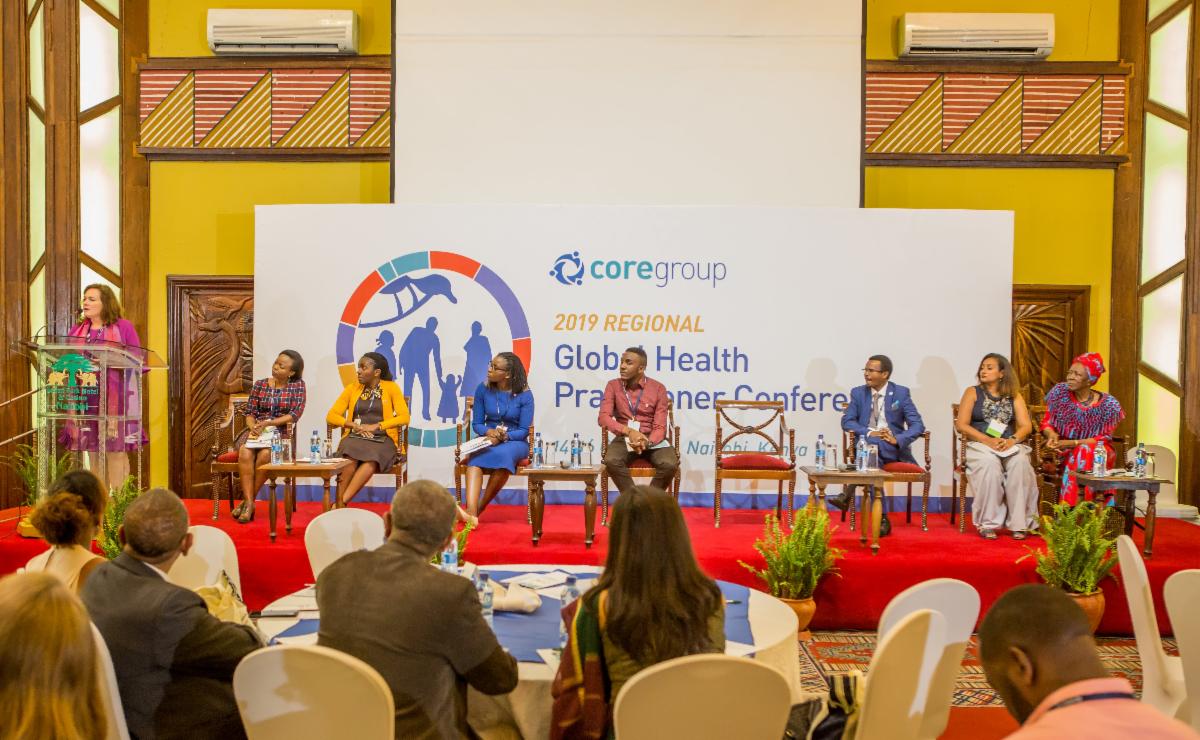
Unlocking Potential: Prioritizing Child & Adolescent Health and Well-Being in the New Decade

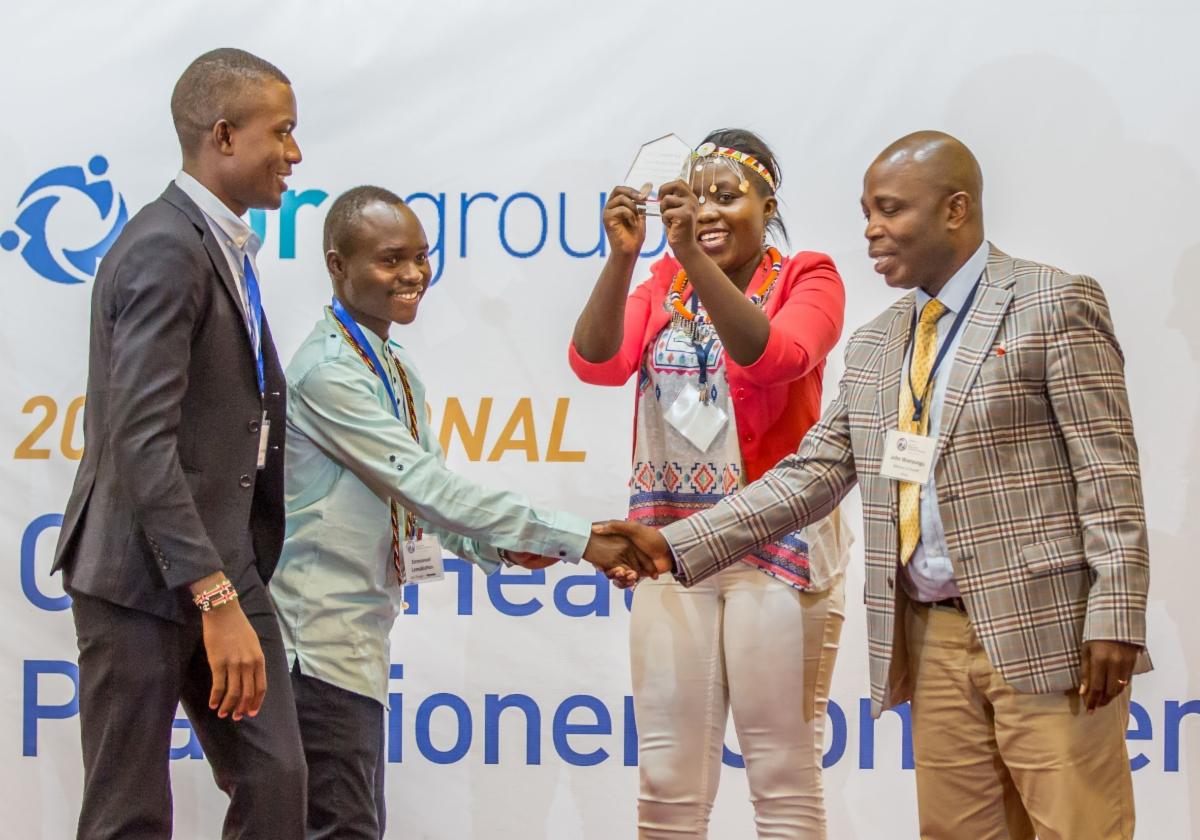
CORE Group Global Health Practitioner Conference (GHPC)

For over two decades, CORE Group has hosted a Global Health Practitioner Conference featuring skills-building sessions, recent evidence on cross-sectoral technical areas, and dialogue on community health. We have a unique opportunity this year to connect even more organizations and professionals around the world with our new digital format, and this year is particularly important as we set the stage for future investment and innovation in child and adolescent health and well-being.

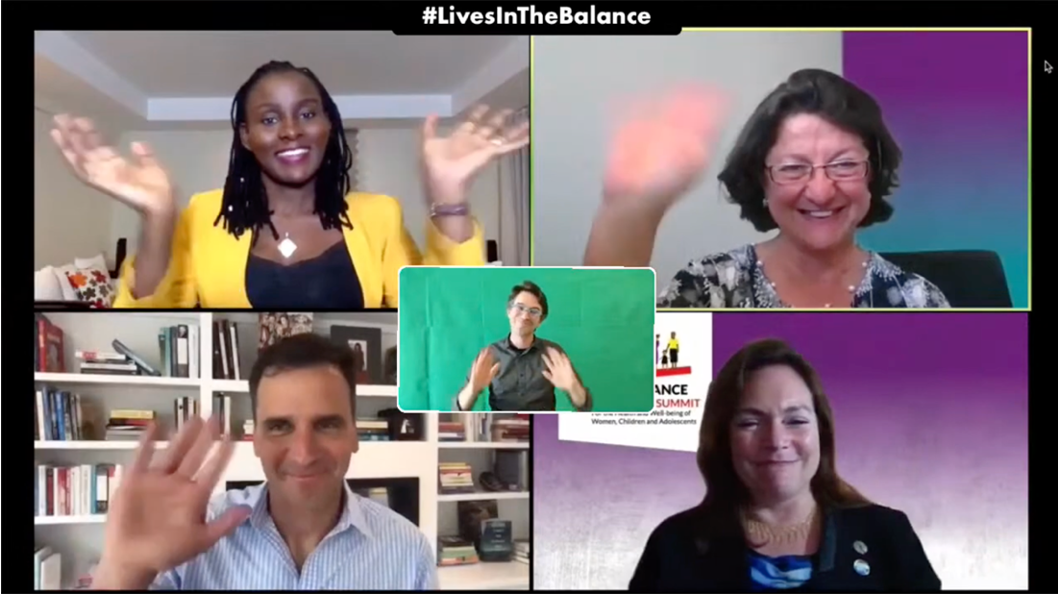
CORE Group and its membership will engage government, ministries of health, policymakers, practitioners, academia, civil society, private sector, global and local organizations in this virtual conference on December 8-10, 2020.

This Conference positions itself as a sharing platform for promising practices and innovations, ongoing challenges, and lessons learned in child and adolescent health and well-being worldwide; and as a convening space for various stakeholders - from community health workers who perform work on the ground to government policymakers who draft national policies - to discuss current opportunities and challenges for policy making, implementation, and partnership and draw consensus on key steps to move the needle forward.

CORE Group is convening a Global Planning Committee with various interested stakeholders to provide input on conference themes and objectives and to support the creation of a multi-day, interactive agenda. Being a committee member is a volunteer position* and will require up to 6 hours per month in planning calls and agenda input, outreach to speakers, and more.

If interested in participating in the Global Planning Committee, please complete the form below by Friday, August 21, 2020, COB.

*A stipend will be provided to young people in the committee, CORE Group is committed to meaningful youth engagement and aims to include 50% of young leaders in this committee. 


My source: Ados May, hss AT lists.coregroup.org