Hodges' Model: Welcome to the QUAD: coordination

Hodges' model is a conceptual framework to support reflection and critical thinking. Situated, the model can help integrate all disciplines (academic and professional). Amid news items, are posts that illustrate the scope and application of the model. A bibliography and A4 template are provided in the sidebar. Welcome to the QUAD ...

Showing posts with label coordination. Show all posts

Wednesday, October 07, 2026

Hodges' model: Is it a virus: or a universal vaccine?

The arrival of 'imposter syndrome' well-over a decade ago(?), from the speaker's podium was an interesting surprise. A case of lived experience, as I'd felt this in trying (and failing) to grapple with the ever-growing, morphing development stack of a software program. Long gone are the days of Sinclair and BBC BASIC. The mountain and learning cliff, was CMS content management system: Drupal. 

What contributed to that feeling back then? Well there was the people I was sat by and sharing time at various European DrupalCons. It was I who was the 'con'. A hobbyist, from pre-PC days. Seeing and hearing what they were creating and the great community. Fascinating also, to see web design fashions come-and-go.

I've written before about Hodges' model being an over-valued idea to me. As a mind-mapping meme it infected me decades ago. Is it a virus? If it is I clearly had no resistance, no immunity. I've always tried to acknowledge, reminded myself that the model is not the be-all-and-end-all.

While the specific mathematical is complex, it is worth trying to grasp some of the intent and meaning (even at the risk of exacerbating imposter reactions). Hestenes provides a paper (and several others):

'ABSTRACT. The discovery of Mathematical Viruses is announced here for the first
time. Such viruses are a serious threat to the general mental health of the mathematical
community. Several viruses inimical to the unity of mathematics are identified, and their
deleterious characteristics are described. A strong dose of geometric algebra and calculus
is the best medicine for both prevention and cure.'

Hestenes, D. (1992). Mathematical Viruses. In: Micali, A., Boudet, R., Helmstetter, J. (eds) Clifford Algebras and their Applications in Mathematical Physics. Fundamental Theories of Physics, vol 47. Springer, Dordrecht. https://doi.org/10.1007/978-94-015-8090-8_1

'The computer virus (CV) owes its name and perhaps its genesis to the biological virus
(BV). Like a BV, a CV cannot function by itself, but when attached to a host it replicates
repeatedly until it impairs the functioning of the host, sometimes to the point of disabling
the host altogether. ...

My purpose here is to call your attention to another kind of virus - one which can
infect the mind - the mind of anyone doing mathematics, from young student to professional
mathematician. As I believe this is the first published paper to explicitly identify
such viruses, I take the liberty of naming and describing them as follows: A mathematical
virus (MV) is a preconception about the structure, function or method of mathematics
which impairs one's ability to do mathematics. Just as a CV is program which impairs the
operating system of a computer, an MV is an idea which impairs the conceptualization of
mathematics in the mind. Indeed, as one definition of "virus," Webster gives "something that
corrupts the mind or soul." Since the identification and classification of MVs has only
just begun, it would be premature to attempt a more precise definition. The better course
is to examine some specific viruses to form a form empirical base for further study.
My first example is an easily recognized MV which is extremely virulent and as common
as the common cold. I call it the coordinate virus, designating it by MV/C to denote genesis
and type, and characterizing it as follows:' pp.1-2. (online copy)

Hestenes' biohistory is an interesting conceptual and interdisciplinary bridge. Another construct to add to our  collection. Is there a virus in the models deployed within medicine and healthcare to date? You know, the bed-round of the medical, biomedical, bio-psycho-social? The round were you don't need to count the number of beds, except in the event of a pandemic. Is the omission of the political, even as the socio-economic reality is now a constant point of reference a symptom of a centuries-long infection? 

For a long time now* the legacies that successive cohorts of students, and newly qualified professionals encounter have stood out. Another question is, just how far back in time do we need to travel to find can the origin of this situation? Was there an initial crisis involving the overt expression of 'power'? Can this be found the as the Hippocratic oath butted up - literally - against triage on the battlefield?

Now: Time won't tell (or will it?). Now that - is some virus.
Saturday, September 12, 2026

TED - Talks & Listenings

THOUGHT

EDUCATION

DESIGN

  
individual
|
INTERPERSONAL
: SCIENCES             
humanistic ------------------------------- mechanistic
SOCIOLOGY : POLITICAL   
|
group
 
THOUGHT
 
Cognitive maps

Your -
Sense of direction?

Maps

DESIGN

'True South'


Ancient maps - periplus

EDUCATION for All


Maps - Power
 

Our -
Sense of direction?


Previously: 'thought' : 'education' : 'design' : 'cognitive map'

My source:  https://x.com/NobelPrize/status/2098073718371262921?s=20 and @TED_ED

Monday, June 15, 2026

"Keep politics out of sport!"

individual
|
INTERPERSONAL
: SCIENCES             
humanistic ------------------------------- mechanistic
SOCIOLOGY : POLITICAL   
|
group
Lewis
 
Russell


Norris


Previously: 'sport'

See also: https://www.formula1.com/ 

Thursday, June 04, 2026

Individual and shared mental models c/o Proctor, & Vu, (2023).

The first day of the conference on 'Ecologies of Care' 4th-5th June is complete. It was helpful to contribute early and then focus on the programme. The questions and acknowledgement have made the (personal) effort worthwhile. Tomorrow also looks promising. There was an emphasis on attention which I tried to reflect and featured in a fascinating keynote by Professor Yves Citton. I will check the sources highlighted; and tomorrow, inquire about a point made re. use of socio in contrast to social.

Regards ongoing reading, perhaps, the evidence to support Hodges' model in practice is already out there? There might be a caveat, that the literature may suggest (if does not yet confirm) that if taught cross-curricula and professional groups then Hodges' model can function as a meta-model? 

What do you think of the following from a chapter on 'Social attention and team performance' (with my emphasis)? :

'... Other two-person team examples include doubles tennis partners and pairings of an airline pilot and copilot. Larger teams can be found in the numerous team sports surgical teams, busineses, and research teams of many scientific laboratories. For teams, coordinated performance is crucial, which becomes more difficult when teams extend to three or more people. As such, teams need to have shared mental models representing the team knowledge (Gardner et al., 2017), which support team situation awareness (Demir et al. 2017).
 
The concept of individual mental model refers to understanding a particular event on the basis of the activation of relevant schemas from long-term memory and, sometimes, simulation of possible scenarios (see also Chapter 10). Bower and Morrow (1990) pointed out that a crucial role in mental models is to shift and focus attention. ...
 
Shared mental models refer to collective understanding among team members of the task to be performed and how it can be accomplished. This understanding includes the responsibilities of the individual team members and dependencies between teammates on other members progress. The term team mental models is sometimes used when the context is teamwork that needs to be coordinated and executed (Jonker et al., 2010). The idea is that teams will perform better if they share mental models. ...
 
The surgery intern study illustrates that shared mental models are learned, leading to the question of how this learning can be facilitated.' p.368. ...
 
'Team leadership can be effective at getting members to be engaged in activities that will promote shared mental models. Boies and Fiset (2018) found evidence that leaders can facilitate the development of shared mental models by involving team members in the consideration of the to-be-accomplished task and their roles in its accomplishment. This involvement, again, likely directs members' attention to information relevant for achieving team goals and enables more domain-specific group discussion, which then furthers the emergence of a shared mental model. ...
 
Situation awareness is a broader concept than mental models, focusing on an explicit understanding of events and contexts. Shared situation awareness differs from individual situation awareness discussed in Chapter 9, in the information required for operators to have effective coordination (Chiappe et al., 2016). For example, paramedics delivering a patient to an emergency room need to coordinate with the hospital and its staff members to ensure that the hospital has the capacity and that the doctors receiving the patient have the vital information they need to treat the patient. Once the patient is in the emergency room, nurses, doctors and technicians need to coordinate with each other to make sure that the patient is being properly cared for.' p.369. 

Proctor, R. W., & Vu, K.-P. L. (2023). Social attention and team performance. In R. W. Proctor & K.-P. L. Vu, Attention: Selection and control in human information processing (pp. 343–374). American Psychological Association. https://doi.org/10.1037/0000317-012

Sunday, April 26, 2026

Invite to an In-person Interactive Workshop to Advance Action on SDoH [Geneva]

Advancing the Social Determinants of Health during the World Health Assembly

Dear Colleague

Is it possible to share in HIFA Network the following announcement?

Thanks a lot for your precious help

Dr Eric Comte Director of the Geneva Health Forum https://genevahealthforum.com

HIFA profile: Eric Comte is Executive Director, Geneva Health Forum, External Affairs Directorate, Geneva University Hospitals. eric.comte AT unige.ch

Bonjour,

We are pleased to invite you to take part in an interactive workshop dedicated to advancing action on the social determinants of health.

Forty years after the Ottawa Charter, there is broad consensus on the importance of health promotion and the determinants of health. Yet, translating this knowledge into effective policies and concrete action remains a major challenge. In a context marked by climate change, growing inequalities, rapid urbanisation and geopolitical instability, the need for more integrated, preventive and equity-oriented approaches has never been greater.

Building on this observation, this session will bring together, NGO, practitioners, policymakers and experts to move beyond general principles and focus on what really enables implementation in practice. Through the exchange of real-world experiences and case studies, participants will collectively identify actionable lessons, key barriers, and practical ways forward.

The expected outcome is a set of clear, operational messages to strengthen collaboration across sectors and support the implementation of strategies addressing the social determinants of health in diverse contexts. The session will also provide an opportunity to identify concrete avenues for further work, including potential projects that the Geneva Health Forum could support.

The workshop will take place on Tuesday 19 May from 9.00 to 12.30 at Campus Biotech in Geneva.

We would be delighted to count on your participation and active contribution to this important discussion.

👉 More information and registration on the link : https://worldhealthassembly2026.genevahealthforum.com/rethinking-determinants-of-health-in-todays-global-context-from-knowledge-to-action/

Space is limited, so only register if you really want to attend.

Registration is free but required so we can print badges and organize the workshop.

Link with the World Health Assembly discussions

This workshop is directly aligned with the strategic discussions taking place at the World Health Assembly, particularly in relation to document EB158/27 on well-being and health promotion. This report highlights the growing recognition of health promotion and the social determinants of health as essential pillars of public health, while also emphasizing the persistent gaps in implementation and the need to strengthen multisectoral action, governance, and measurable impact.

In particular, it calls for better integration of health promotion across the full continuum of policies and systems, stronger cross-sector collaboration, and a renewed focus on addressing structural determinants of health, including through more effective implementation mechanisms and improved coordination across actors.

Our session contributes to this agenda by focusing on practical experiences and implementation challenges, with the aim of identifying concrete, actionable lessons that can help accelerate the translation of global commitments into real-world action. In doing so, it also seeks to feed into ongoing reflections at the global level and to support more effective implementation of the priorities discussed at the World Health Assembly.

You are receiving this message because you are a member of the community HIFA - Healthcare Information For All.

View this contribution on the web site

Monday, October 27, 2025

Health, planet, self: after - 'Can molecular Lego save the planet?'

Ack: © Johan Jarnestad /
The Royal Swedish Academy of Sciences

'This morning’s Nobel Prize in Chemistry is one that’s been anticipated for several years now: it goes to Susumu Kitagawa of Kyoto, Richard Robson of Melbourne, and Omar Yaghi of Berkeley for metal-organic frameworks.'
'So what’s a MOF? This goes back to the idea of “coordination chemistry”, a huge topic in the inorganic and metal-organic fields.'


The 2025 Nobel Prize in Chemistry: Metal-Organic Frameworks 


Can conceptual Lego - 'human-metal organic frameworks' -
save healthcare, planetary and self-care?

'One astonishing characteristic is the amount of surface area locked away in these new materials: a MOF weighing one gramme can have an internal surface area the size of a football pitch^. MOFs are often likened to Hermione Granger's bottomless handbag in the Harry Potter books: a tiny exterior concealing a seemingly infinite interior. Rice University chemist Stavroula Alina Kampouri has called MOFs "magical sponges", describing them as "not just elegant crystals you'd admire under a microscope; they're an entire universe of structures, each like a miniature city of tunnels and rooms waiting to be filled."'
Anjana Ahuja, Can molecular Lego save the planet?, Opinion Science. Financial Times, 15 October 2025, p.22.

individual
|
INTERPERSONAL : SCIENCES
humanistic -------------------------------------------  mechanistic
SOCIOLOGY : POLITICAL
|
group-population


'This is not an ivory-tower sort of topic, though: the importance of these sorts of complexes cannot be overstated. They were the basis for the first Nobel awarded in inorganic chemistry (1913, Alfred Werner) and metal coordination is how the iron atoms in hemoglobin carry oxygen to the cells of your body to keep you alive, for starters. You can say the same thing about photosynthesis in plants, and about the actions of the many crucial enzymes in every living creature on the planet that have metal-ion centers in them. Outside of biology and biochemistry, the structures of minerals similarly cannot be understood without a knowledge of coordination chemistry.'


The 2025 Nobel Prize in Chemistry: Metal-Organic Frameworks

Popular information. NobelPrize.org. Nobel Prize Outreach 2025. Mon. 27 Oct 2025. <https://www.nobelprize.org/prizes/chemistry/2025/popular-information/>

^Is this a question for BBC Radio 4 More or Less?

Of course, I keep posting about the Nobel Prize in the hope of a prize - due recognition for Hodges' model. Discretely of course, given a limited readership. 
Go figure: in 3D naturally.

Thursday, March 27, 2025

Vectors of the Biopolitical - (Chap. 2) c/o Bull

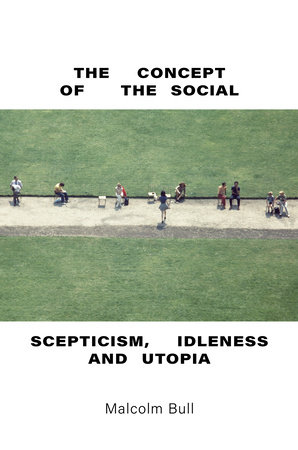
The Concept of the Social
'From one sentence in Aristotle derive two arresting theoret- ical discourses of the twenty-first century: Michel Foucault's biopolitics, provocatively reformulated by Giorgio Agamben in terms of the relationship between sovereignty and the body, and the capabilities approach developed by Amartya Sen and Martha Nussbaum as a means of evaluating and promoting development, justice and freedom. Both are characterized by deep reflection on the sources of Western political thought, and by urgent engagement with contemporary social and legal problems. Both are in some sense biopolitical in that they are shaped by the interplay of the same Aristotelian categories the human and the animal, politics and nature. But they are on opposite sides of the divide that has opened up in the human sciences since the 1960s, and there currently seems no optic through which they might simultaneously be viewed, no way of integrating or comparing their insights.
 
In part, this reflects a situation in which political debate appears to have fragmented into a multiplicity of single issues. The ancient 'Who will rule?' and the modern 'Who shall have what?' have been supplemented by an array of questions that deal with matters once exclusively cultural, personal or natural. For previous eras, the relative integrity and unmalleability of cultures, bodies and environments rendered such questions redundant. Now they frequently appear unanswerable from within established political traditions, and incommensurable in relation to each other. Within this expanded field, biopolitics and the capabilities approach have unusual salience and potential, for both bundle together issues otherwise assumed to be distinct. If they, in turn, could be coordinated, perhaps we could begin to map the new territory.' p.68.

individual
|
INTERPERSONAL : SCIENCES
humanistic ------------------------------- mechanistic
SOCIOLOGY : POLITICAL
|
group
'Who shall have what?'

nature

human - animal

bio-
culturepolitical

'Who will rule?'


Bull, M. (2021) The Concept of the Social, London: Verso.

Wednesday, May 29, 2024

Point Nemo: 48°52.6′S 123°23.6′W

The oceanic pole of inaccessibility

Individual
|
      INTERPERSONAL    :     SCIENCES               
HUMANISTIC  --------------------------------------  MECHANISTIC      
 SOCIOLOGY  :    POLITICAL 
|
Group


Point Nemo: 48°52.6′S 123°23.6′W
                 
Social care


Al-Othman, H. Notes from the remotest place on Earth: father and son voyage to Point Nemo. The Sunday Times, 31 March 2024. p.11.

https://brown.co.uk/expeditions/point-nemo

Image: https://oceanservice.noaa.gov/facts/nemo.html

Saturday, October 07, 2023

Hodges' model: The Art & Science of Care Choreographies?

INDIVIDUAL
|
     INTERPERSONAL    :     SCIENCES               
HUMANISTIC --------------------------------------  MECHANISTIC      
SOCIOLOGY  :   POLITICAL 
|
GROUP

Introduction to Choreographies
Merce Cunningham:
Changes:
Notes on Choreography


Last month attending the UKSS conference in Portsmouth, I stopped in Oxford on the way South arriving 0800. Visiting Blackwell's bookshop - what bliss! I spotted Montesi's book and found a comfy armchair for more comfortable look. On the return journey, two days later, I used Park and Ride again and returned. It was worth it.

Over the years I've thought of Hodges' model as a theatre (in every sense), dance floor and the performance of health care practitioners. The wear of shoes bears testimony to the many steps about the hospital, clinic, nursing home, patient's home and community.

Choreography as a discipline naturally follows, and is more extensive than I thought.

UKSS is scheduled for Oxford in 2024, details - when I have them.

Cunningham cover: Amazon.

Thursday, August 30, 2018

Medicine and Art: (Steady) Eye & Hand

individual
|
INTERPERSONAL : SCIENCES
humanistic ----------------------------------------------- mechanistic
SOCIOLOGY : POLITICAL
|
group
https://hepworthwakefield.org/whats-on/barbara-hepworth-the-hospital-drawings/
Barbara Hepworth, Reconstruction, 1947
© BownessHepworth Estate / Arts Council Collection, Southbank Centre, London

"In 2012, the NHS is threatened, its future uncertain. ... Hepworth was a Labour voter - of course she was. In these drawings, she reveals her egalitarian values. Work is goodness: she sees her own work as a sculptor reflected in the steady eye and hand of the surgeon. In one drawing he even seems to wield a hammer and chisel. But this is not mere artistic self-consciousness. The work being done in these pictures saves lives; Hepworth believes her art, too, can heal souls." p.18.


My source:
Jonathan Jones (2012) A cut above, The Guardian, Arts. 25.10.12, p.18.

Hammers and chisels are found in operating theatres and wielded by female surgeons too. The exhibition long finished, I can't believe* that I have held onto to this page from The Guardian for almost six years. I must visit Wakefield.

*others can...

Saturday, June 24, 2017

Evidence for simplicity, genericity, openness and holistic competence

N-th mover to Integrated, Person-Centered and Holistic Care

walk the talk, sour grapes, or holistic humbug?

Although, sadly (and all down to me) I stepped off the PhD programme with an MRes, the intention was not to bring my journey with Hodges' model to a close. The joke of course with this model is that you are always presented with a crossroads. As I've written previously (even in draft!) this model is a baton to pass on to others. If the workforce of the 1970s to date evaluates its contribution to health care change and progress, then while the achievements speak for themselves, the challenges* that remain still shout out:
  1. parity of esteem 
  2. integrated - co-ordinated and collaborative care
This week I received an email, purely as a list member I must add:
NHS Innovation Accelerator 
Applications for the 2017 NHS Innovation Accelerator (NIA) are now open. For 2017, the NIA is seeking local, national and international innovations that address the following NHS priorities:

·         Mental Health
·         Urgent and Emergency Care
·         Primary Care

The above is now closed but I immediately thought about Hodges' model, given that from the information provided mental health is a priority and a top priority for citizens. Plus, the things that can make a difference to problems:
  • Suicide and relapse prevention
  • Access and availability with a focus on perinatal, children and young people, dementia and psychological therapies
  • Early identification and intervention to minimise the impact on a person’s life, the likelihood of escalation and, in some cases, the chances of survival
  • Care closer to home including self-care and access to services at home, in a primary or community setting
  • Holistic care of both mental and physical health needs including prevention, screening and treatment for those at greatest risk of poor physical health   
"There are many innovations available to improve mental health services, however they are not always used..."

There are however a series of requirements, which present a stumbling block as high impact evidence is lacking.

The purpose of NHS Innovation Accelerator lies in the name. The target is established initiatives and projects that would benefit the NHS and others from a boost of further momentum and leadership support including funding and mentoring. Hodges' model is far from this, but the call is interesting nonetheless.

Reading the details I can argue, for example, that Hodges' model is immediately applicable across the life-span. The model is already designed, but in use the model could be said to meet the requirement of being co-designed with people (including carers, where appropriate). I have used the model with patients and carers (young and adult) who have lived experience of mental illness. With some consideration of the patient, carer, as I have stressed here before on W2tQ the model is accessible to a diverse population. Critically, the delivery of the most significant benefit in terms of outcomes and cost savings needs proof.

It seems that many of the world's problems could be ameliorated through education. This has been evidenced for decades and yet globally there are those who politicise their respective educational system, or even worse deny sections of a society access to education.

In healthcare how can we demonstrate the effectiveness of what is basically a back-of-an-envelope tool? While not a solution Hodges' model helps us to resolve the constituents of healthcare demand and supply, to critically analyse and synthesize - what is going on? I'm sure Hodges' model is just one of many local 'innovations' (in this case created in NW England) that are not evidenced and are therefore missed. Why is this? It may be that the model needs to be re-discovered since being invented somewhere else, by somebody else makes it a non-starter. Similarly, reading the information 'model of care' always grabs my attention:

Your innovation can be a device, digital app or platform, 
a service, process, pathway or model of care. 

But as is often the case, this is framed in service commissioning, funding, delivery and yes patient outcomes terms. Devices, apps, platforms and services can be specified to a high degree. This is essential to success in research (as is dissemination). Aims and objectives can then be clearly defined, outcomes can be recognised and measured. Processes and pathways are perhaps more fuzzy? These are all important tools, aspects and contexts in health care.

My frustration is that this and similar research formulations seem to exclude tools and resources that are by their nature intentionally simple, holistic, generic and cognitive-reflective. The "model of care" is broken. A whole systems approach# is needed that incorporates education and with it prevention and staying well; plus caring for those affected by illness and disease. We have to honour the legacy problems that the political, education and health systems have 'delivered'. Even if not broken the model of care is missing its twin, the model of life-style choices'.

I still believe there is a model - a conceptual framework - that must precede the (politicised?) model of care, if health and social care are to be truly transformed. Without this, well yes the NHS can accelerate, staff have demonstrated this repeatedly while negotiating all sorts of obstacles. The line of travel will however be circular; circular, but without the discoveries and change gifted to the particle physicists.

individual
|
INTERPERSONAL : SCIENCES
humanistic ----------------------------------------- mechanistic
SOCIOLOGY : POLITICAL
|
group - population

education

mental health

cognitive access

benefits - outcomes

subjective

Evidence

process

primary care, accident and emergency

physical access

objective
qualitative

home

social care

co-design

public engagement


quantitative

strategy

'model of care'

education system

citizens

cost savings

My source: 
Irina Johnston
CHAIN Administrative Assistant

If you wish to publicise information on the CHAIN Network please email your request to: enquiries AT chain-network.org.uk

CHAIN - Contact, Help, Advice and Information Network – is an online international network for people working in health and social care. For more information on CHAIN and joining the network please visit website: www.chain-network.org.uk

*
  1. parity of esteem (a very broad interpretation - the comparison and contrasts between mental health and physical care on several levels - demand, supply, funding, research, integration, staffing, policy, outcomes, evidence-base, social determinants...)
  2. integrated - co-ordinated and collaborative care (this is not one thing, but several. These terms are sometimes used interchangeably. Care that is truly integrated will also be co-ordinated and collaborative.
# This is not recourse to jargon, Hodges' model implies several systems from the outset.

Tuesday, November 29, 2016

Power vectors...?

individual
|
INTERPERSONAL : SCIENCES
humanistic -------------------------------------------  mechanistic
SOCIOLOGY : POLITICAL
|
group-population


...
line management
line(s?) of communication
special measures
legal directions
line(s) of command
chain of command
command hierarchy
command line
bottom line
...

Wednesday, April 27, 2016

what3words = addressing the globe : Hodges' model = mapping the world of care

individual
|
INTERPERSONAL : SCIENCES
humanistic ---------------------------------------  mechanistic
SOCIOLOGY : POLITICAL
|
group

think feeling happy

soma tech pressure

gender celebration peers


Bureacracy Hegemony Subsidiarity 


My source: 
Hurley, J. (2016) It pays to know exactly where you are going. The Times, 27 April, p.49.

Tuesday, April 05, 2016

ERCIM News No. 105 Special theme: "Logistics and Planning"

Dear ERCIM News Reader,

ERCIM News No. 105 has just been published at http://ercim-news.ercim.eu/en105

This issue features a special theme on "Logistics and Planning"
coordinated by the guest editors Rob van der Mei (CWI) and Ariona Shashaj (SICS).
Keynote "Trends and Challenges in Logistics and Supply Chain Management"
by Henk Zijm, Professor of Production and Supply Chain Management, University of Twente.

This issue is also available for download in pdf and EPUB.

Thank you for your interest in ERCIM News. 


Feel free to forward this message to others who might be interested.

Next issue: No. 106, July 2016 - Special Theme: "Cybersecurity" (see Call for contributions)

Best regards,
Peter Kunz
ERCIM News central editor


Includes:
An Industrial Take on Breast Cancer Treatment
d2V – Understanding the dynamics of Evolving data: A Case Study in the Life Sciences

Tuesday, March 29, 2016

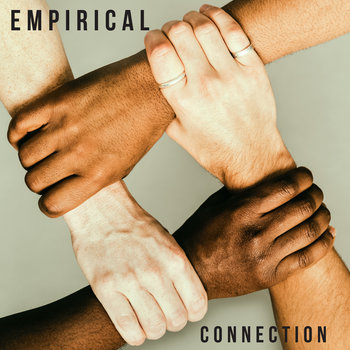
Empirical(?) - Connection

individual
|
INTERPERSONAL : SCIENCES
humanistic ---------------------------------------  mechanistic
SOCIOLOGY : POLITICAL
|
group


Empirical by Connection


Connection by Empirical


Image source and link:
https://cuneiformrecords.bandcamp.com/album/connection

My source: Hobart, M. (2016) Critics' choice, FT Weekend, 12-13 March. p.18.


Monday, November 24, 2014

House of Care model

... the House of Care model - a coordinated, patient centred system, in which patients and carers work with healthcare staff, supported by organisations, to optimise their care. HSJ (2014)

individual
INTERPERSONAL : SCIENCES
humanistic ------------------------------------------- mechanistic
SOCIOLOGY : POLITICAL
group

Patients

Healthcare staff

Carers


Organisations


NHS England: House of care -
http://www.england.nhs.uk/house-of-care/

King's Fund: House of care -
http://www.kingsfund.org.uk/publications/delivering-better-services-people-long-term-conditions


My source: 
Trueland, J. (2014) How to tackle the workforce planning issue, Health Service Journal. 124, 6418: pp.16-21.

Wednesday, January 23, 2013

In orbit*: Where a model of global health care should be


What platform are you using 
to monitor and positively impact 
the minutiae of care 
and the whole picture?

* and in mind.

On 25 May, NASA's Phoenix lander was 10 kilometres above the surface of Mars and less than three minutes from landing when it was captured passing in front of Heimdall crater by the HiRISE camera on the Mars Reconnaissance Orbiter (MRO).

http://www.nature.com/news/2008/080604/full/453712a/box/1.html
Published online 4 June 2008 | Nature 453, 712-713 (2008) Eric Hand

Additional link:
Phoenix: A tribute