Hodges' Model: Welcome to the QUAD: land

Hodges' model is a conceptual framework to support reflection and critical thinking. Situated, the model can help integrate all disciplines (academic and professional). Amid news items, are posts that illustrate the scope and application of the model. A bibliography and A4 template are provided in the sidebar. Welcome to the QUAD ...

Showing posts with label land. Show all posts

Thursday, January 01, 2026

NEW YEAR: Ongoing support for the 17 SDGs UN

Individual
|
     INTERPERSONAL    :     SCIENCES               
HUMANISTIC  --------------------------------------  MECHANISTIC      
 SOCIOLOGY  :    POLITICAL 
|
Group

security & peace

security & peace
security & peace


See also:
Jones P, Wirnitzer K. Hodges’ model: the Sustainable Development Goals and public health – universal health coverage demands a universal framework. BMJ Nutrition, Prevention & Health 2022;5: doi:10.1136/bmjnph-2021-000254 
https://nutrition.bmj.com/content/5/2/358
 

Source: https://x.com/UNDP/status/2006591346522599746?s=20

See also: 'SDGs' : 'security' : 'poverty' : 'nutrition' : 'water'

Monday, December 22, 2025

Contexto Int. [Newsletter] - Special Issue 47.2 Where is the Sea in Int. Relations?

Dear Colleagues,

We hope this correspondence finds you well.

We are delighted to formally announce the publication of the latest special issue of Contexto Internacional, entitled "Where is the Sea in IR?," which I had the distinct honour of co-editing with Dr Flavia Guerra (Federal University of Rio de Janeiro).

The overarching objective of this Special Issue is to address a central scholarly lacuna within International Relations (IR) scholarship: the historical and theoretical marginalisation of the oceanic domain. In pursuing this fundamental inquiry—why and how does the ocean recede from scholarly and political attention?—the assembled contributions collectively prompt a sustained, rigorous examination of two key analytical challenges:

  1. The specific mechanisms through which IR has historically relegated the oceanic domain to the periphery of its dominant analytical frameworks.
  2. The subsequent broader political and theoretical implications that stem from this systematic exclusion.

The volume is structurally organised around three distinct, yet interconnected, thematic axes, each seeking to contribute to a deeper engagement with the marine sphere:

  1. The Marginalisation of the Ocean in IR: Conceptual and empirical explorations of how the sea is actively rendered absent or subordinate within core theoretical debates.
  2. Complex Entanglements between the Ocean and Ontological Security: Analyses focusing on the relationship between maritime spaces, existential anxieties, and state identity formation.
  3. Ocean Governance as Regulatory Mechanism and Platform for Political Discourse: Critical assessments of regulatory frameworks and their role in structuring political contestation over the maritime commons.

We sincerely hope that you find the contributions within this volume to be a compelling and theoretically relevant read that stimulates further research and critical reflection within the discipline.

Special Issue: Where is the Sea in IR?

Where is the Sea in International Relations?
  Francisco Eduardo Lemos de Matos; Flávia Guerra Cavalcanti

Abstract | Full text

Table of Contents: https://www.scielo.br/j/cint/i/2025.v47n2/

Includes - Addressing 'Maritime Aphasia' in International Relations
  Bruno Sowden-Carvalho; Marcelo M. Valença

Between Nuclear Tests and Rising Sea Levels
  Beatriz Rodrigues Bessa Mattos

Carl Schmitt on the Move: Spatial Politics and the (political) Sacrifice of the Sea
  Francisco Eduardo Lemos de Matos

Thinking Ontological (In)Security with Water: The Place of the Ocean in Boat Migration
  Flávia Guerra Cavalcanti

What is the Place of Mar de Timor in Timorese Geopolitics, Culture and Education?
  Silvia Garcia Nogueira; Betina Lopes; Ângelo Ferreira; Samuel de Souza Freitas

Fluid Boundaries: Reassessing Maritime Spaces and Nomadic Waves in International Relations Theory
  Henrique Campos de Oliveira

The Third Bank of the Sea: Maritime Traces of Constitutive Outside(r)s and International Ontopolitical Lines
  Roberto Vilchez Yamato; Gustavo Alvim de Góes

Ocean Governance, Maritime Security, and International Relations
  Daniele Dionisio da Silva; Gilberto Carvalho Oliveira

Sailing on Waves beyond National Sovereign Land Borders: On the Crossroads between International Ocean Relations and the Blue Economy
  Thauan Santos

Regards,
chico

Francisco Eduardo Lemos de Matos
Doutor em Relações Internacionais pelo IRI/PUC-RIO.
Pesquisador de Pós-Doutorado em Relações Internacionais no IRI/PUC-RIO pela FAPERJ.

Rede IPS Brasil - https://www.ipsbrasil.com/
Lattes: https://lattes.cnpq.br/9338374067089166
Orcid: https://orcid.org/0000-0003-4214-5382

My source: DOINGIPS list - https://www.doingips.org/

Monday, September 29, 2025

Raven Chacon - graphical musical scores

Individual
|
      INTERPERSONAL    :     SCIENCES               
HUMANISTIC  --------------------------------------  MECHANISTIC      
 SOCIOLOGY  :    POLITICAL 
|
Group
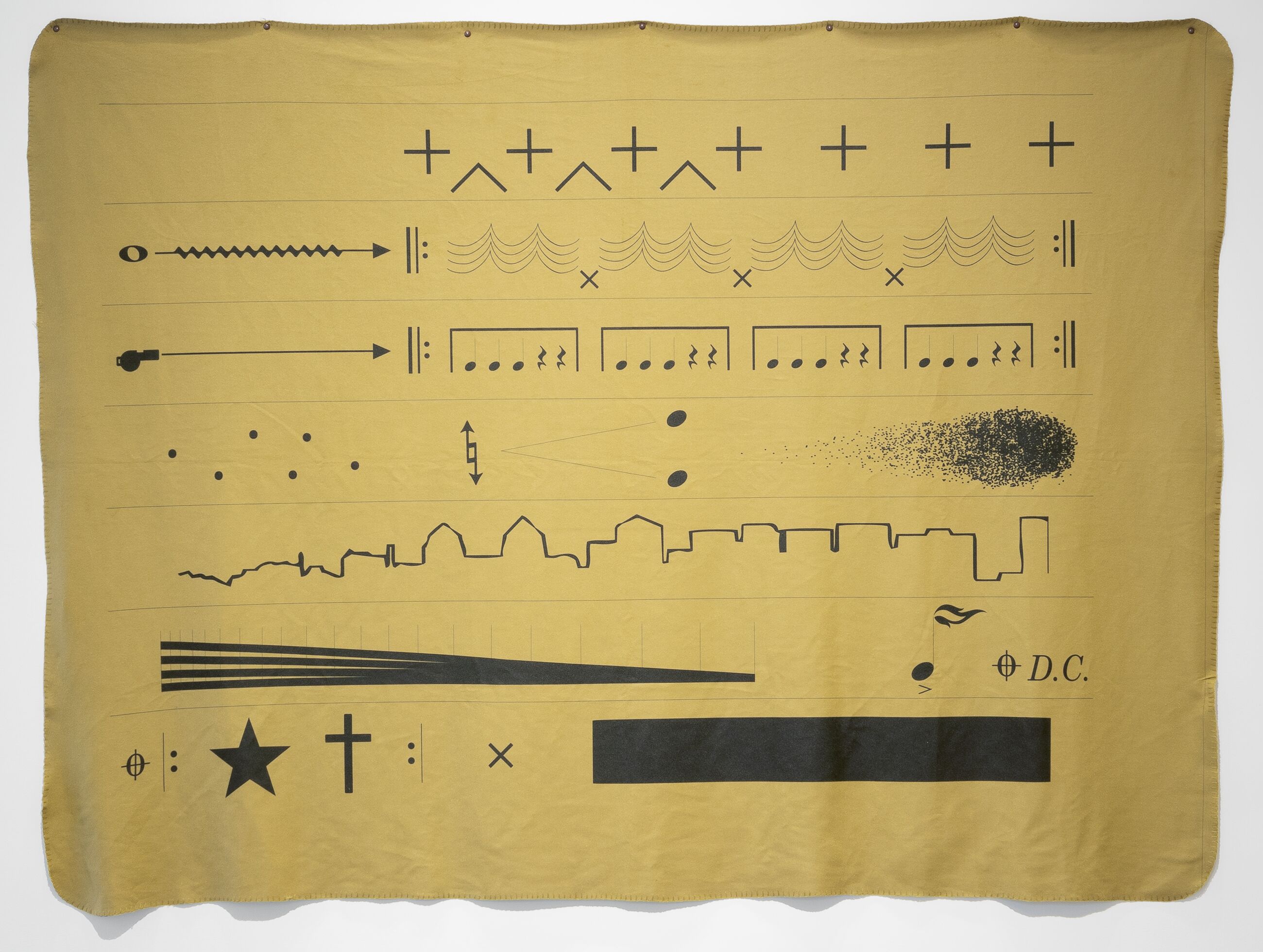
'The artist and composer Raven Chacon, 46, who grew up in Albuquerque and now divides his time between the city and upstate New York, used to explore these lava fields as a youngster, ingesting psychoactive plants such as jimson weed and searching for petroglyphs on the sides of rocks. Some - spirals, zigzags and dotted lines, for example - have found their way into the graphic musical scores for which he is now known. When I visited him in Albuquerque, he drove me out to see them.'
Raven Chacon, American Ledger No. 1 (Army Blanket), 2020. Graphic score


My source: Griffin, J. Sound of a different music. Life&Arts. FT Weekend. 24/25 February 2024. p.17.

Image: ECHOES OF A PLACE - Raven Chacon on transforming land, memory and political resistance into sound: https://www.hauserwirth.com/ursula/echoes-of-a-place-raven-chacon/

See also: RAVEN CHACON - https://spiderwebsinthesky.com/

https://en.wikipedia.org/wiki/Raven_Chacon

Previously: 'music'

Thursday, August 28, 2025

Lessons NOT learned: Bhopal, Brumadinho, Fundão, Kafue River ...?

Individual
|
      INTERPERSONAL    :     SCIENCES               
HUMANISTIC  --------------------------------------  MECHANISTIC      
 SOCIOLOGY  :    POLITICAL 
|
Group


Kafue River -
( clearly - not a 'person', nor the Rio Doce )

Signs of Life
Signs of Government, Law & Accountability


Wednesday, July 17, 2024

'Land Back' - Owens Valley, California

"The vast territory known as Owens Valley in California was home for centuries to Native Americans who lived along its rivers and creeks fed by snowmelt that cascaded down the eastern slopes of the Sierra Nevada. Then came the European settlers, and over time, the Native Americans tribes lost access to nearly all of that land. Eventually, the water was lost too: ...
Less familiar is what happened to the Owens Valley, and the people who lived there, after most of the water was sent south. Owens Lake is now a patchwork of saline pools covered in pink crystals and wetlands studded with gravel mounds designed to catch the dust. And today, the four recognized tribes in the area have less than 2,000 acres (800 hectares) of reservation land, estimated Teri Red owl, a local Native American leader. 
But things are changing, tribal members say. They have recently reclaimed corners of the valley, buoyed by the growing momentum across the United States to return land to Indigenous stewardship, also known as the "Land Back" movement." p.7.

Individual
|
      INTERPERSONAL    :     SCIENCES                   
HUMANISTIC  --------------------------------------  MECHANISTIC      
 SOCIOLOGY  :    POLITICAL 
|
Group


LAND
culture

indigenous peoples

history
BACK


justice


Cowan, J. Native Americans reclaim lost land in California, The New York Times International Edition, June 18, 2024. p.7.

Tuesday, July 16, 2024

Honouring 'Wheatfield: a Confrontation' by Agnes Denes

"In the summer of 1982, two acres of wheat were planted and harvested by artist Agnes Denes, two blocks from Wall Street and the World Trade Center and facing the Statue of Liberty.

Planting and harvesting a field of wheat on land worth $4.5 billion created a powerful paradox. Wheatfield was a symbol, a universal concept; it represented food, energy, commerce, world trade, and economics. It referred to mismanagement, waste, world hunger and ecological concerns. It called attention to our misplaced priorities.

The harvested grain traveled to twenty-eight cities around the world in an exhibition called “The International Art Show for the End of World Hunger”, organized by the Minnesota Museum of Art (1987-90). The seeds were carried away by people who planted them in many parts of the globe." twistedsifter

Individual
|
         INTERPERSONAL    :     SCIENCES                   
HUMANISTIC  --------------------------------------  MECHANISTIC      
 SOCIOLOGY  :    POLITICAL 
|

http://agnesdenesstudio.com/

'Honouring Wheatfield: a Confrontation' - ArtBasel from June 10:
https://www.artbasel.com/stories/ecology-pioneer-american-artist-agnes-denes-basel-messeplatz-wheat-field-climate-change-awareness

Images: 

In 1982, An Artist Harvested Two Acres of Wheat on Land Worth $4.5 Billion by TwistedSifter

https://twistedsifter.com/2018/03/new-york-city-wheat-field-by-agnes-denes/

Roux, C. Reaping what you sow, Collecting, FTWeekend, 8-9 June 2024, p.4.
https://www.ft.com/content/346ad7e8-9ddf-4802-9658-053d1c5758a8

Wednesday, May 29, 2024

Point Nemo: 48°52.6′S 123°23.6′W

The oceanic pole of inaccessibility

Individual
|
      INTERPERSONAL    :     SCIENCES               
HUMANISTIC  --------------------------------------  MECHANISTIC      
 SOCIOLOGY  :    POLITICAL 
|
Group


Point Nemo: 48°52.6′S 123°23.6′W
                 
Social care


Al-Othman, H. Notes from the remotest place on Earth: father and son voyage to Point Nemo. The Sunday Times, 31 March 2024. p.11.

https://brown.co.uk/expeditions/point-nemo

Image: https://oceanservice.noaa.gov/facts/nemo.html

Monday, January 22, 2024

When you 'give no quarter'^


When the only thing
on the table is your history,
there is no space, even as corners multiply.
No longer is there space for a future,
no longer space for hope,
no space for a peace to be thought of -
let-alone shared.


When you give - absolutely! - no quarter
and act to prove the same,
Yes, you stand.
But how do you stand?
You stand to lose insight,
and so much more - 
you stand to lose
humanity


 Individual
   |
      INTERPERSONAL    :     SCIENCES               
 HUMANISTIC  --------------------------------------  MECHANISTIC      
 SOCIOLOGY  :   POLITICAL 
|
Group
CON-SCIENCE

SCIENCE

geo-

Time & Land

politics

PEACE?


^Easy for me - many of us - to say?

Listen also:

BBC Radio 4 Start the Week War crimes justice
https://www.bbc.co.uk/sounds/play/m001vktw

Where do you/we find peace? Discuss.

Saturday, October 14, 2023

"I'd like to Teach the World to Sing ..."


INDIVIDUAL
|
     INTERPERSONAL    :     SCIENCES               
HUMANISTIC --------------------------------------  MECHANISTIC      
SOCIOLOGY  :   POLITICAL 
|
GROUP

intelligence


ARTIFICIAL

Peoples

Communities

Societies

Peace

 "Joseph Votel, a recently retired head of the Pentagon's Central Command, said last year he was struck by how Israeli forces mounting strikes in Gaza in May had been integrating AI into their operations and by "the impact that is having on their targeting cycles". He says Israel is using AI to generate a large range of potential targets for surveillance to whittle down. This lets its forces "disrupt enemy attacks without the need for a lengthy development period or a longer campaign."

 America's armed forces, helped by Palantir (an AI company which, like Anduril, takes its name from "The Lord of the Rings") and other contractors, is trying to build such technology into a system which can narrow down a huge range of potential targets and pass information about them freely to where it is most needed. Given the finite capacity of communication systems, not to mention the vulnerability, this requires that an increasing amount of processing be done "on the edge" - that is, on the platform carrying the sensor.

 In 2016 a Pentagon project called Maven started trying to address the "lots of surveillance but not much to show for it" problem identified by General Ryan. The idea was to automate the identification of people and objects in the petabytes of video footage sent back by surveillance drones. It ended up producing software efficient enough to run on the drones themselves. In Scarlet Dragon, a recent-AI focused American exercise in which a wide range of systems were used to comb a large area for a small target, things were greatly speeded up by allowing satellites to provide estimates of where a target might be in a compact format readable by another sensor or a targeting system, rather than transmitting high-definition pictures of the sort humans look at.

 In a world where bandwidth is often the biggest constraint such parsimony is a boon. It speeds up kill chains while reducing vulnerability to jamming. At the same time, it puts a greater burden on the automated parts of the system to provide reliable synopses of what they see, which is a worry for people keen to ensure that fully informed and responsible human beings stay on top of all decisions about where and when to blow things up." p.9. 


 Signals from Noise. Heads in the clouds. The Economist Technology Quarterly, Defence technology, Hide and seek. January 29th 2022. 442: 9281. pp. 9-10.

https://www.youtube.com/watch?v=mR_7Swtv0XM

Sunday, September 18, 2022

Territories of Belief, Community, Nature and Technology i

SOCIO - TECHNICAL

 INDIVIDUAL
|
 INTERPERSONAL    :     SCIENCES               
HUMANISTIC --------------------------------------  MECHANISTIC      
SOCIOLOGY  :   POLITICAL 
|
GROUP
Aleks Krotoski

The TERRITORY
The Digital Human
The Digital Human
13 June 2022 BBC Radio 4
'Unintended'


The TERRITORY - A film
The TERRITORY


Image: The Territory - https://www.enprimeur.ca/photos/english/the-territory/163889/movie-poster/

Monday, February 01, 2021

Caleb's Crossing ... "Harvard's native son"

Individual
|
INTERPERSONAL : SCIENCES
humanistic ----------------------------------------------- mechanistic
SOCIOLOGY : POLITICAL
|


Mr Stephen Coit, the artist who produced the portrait above, also emailed ...

"Here are some notes on the painting that you might find interesting:

-- For Caleb's face, I used images of the earliest photographs I could find -- well over 100 years old -- of young men Caleb's age who were members of the Wampanoag Aquinnah on the Vineyard.  These would have been taken before intermarriage happened with any frequency with other groups.  While I was visiting their headquarters in Martha's Vineyard, the tribe elders uncovered and gave me permission to use these images for this project.  There are no extant images of Caleb's actual appearance anywhere that I could find at Harvard or anywhere else.

-- I planned for this to appear as if Caleb's portrait had been commissioned the year of his graduation, 1665.  In that era, many early colonial era leaders likely went to Europe to have portraits done, and they were often painted in a Dutch style after Rembrandt.  See John Eliot's portrait painted in 1659, (https://en.wikipedia.org/wiki/John_Eliot_(missionary).)  Note that Rembrandt died four years after Caleb graduated.

-- Seeking a Dutch painter of that era to inspire Caleb's portrait, I noticed that Girl with Pearl Earring by Vermeer was done the same year as Caleb's graduation, 1665. (https://en.wikipedia.org/wiki/Girl_with_a_Pearl_Earring)  Because I love Vermeer and his work, I chose to portray Caleb's drawing on the style of Vermeer, specifically using the light, setting and composition of Vermeer's, The Milkmaid.  The table, the book, the Turkish tapestry over the table in the portrait all confirm to Dutch portraiture conventions.

-- The bag on the wall is a portrayal of "Caleb's bag" in Harvard's Peabody Museum (https://www.peabody.harvard.edu/node/495.)

-- The map on the wall, again drawing on the style of Vermeer, is a map of Martha's Vineyard from the late 1600's showing the region on that island where Caleb was from.  

-- Caleb's dress, his hair style and his collar were as accurate for that era as I could determine.  

-- The room is plausibly a room in the Indian College at Harvard with morning light coming in to Harvard Yard from the southeast.  I wondered whether the leaded window panes would be rectangular or diamond shaped; an architectural historian assured me they could have been either.

-- The one element that would not have been a Dutch convention was the quill in Caleb's hand.  For Caleb's quill, honoring his history and tradition, he and I chose a turkey quill."
 
My sincere thanks to Mr Coit for permission to use the above image.

=====

This post came together for me as there is a nurse theory group:


Their online meetings begin as follows:
For e.g.

"Guest on the traditional territories of the Coast Salish people, specifically the Nisqually and Squaxin Island peoples."

Living in England and a 'Jones' I mentioned a Celtic heritage (assumed - I should add) and awareness of Welsh valley flooding to create reservoirs (and in England - in the Lake District).

https://www.lake-vyrnwy.com/history.html
 
As for all at present, continuing to sort papers I came across the above newspaper cutting from 2011:
 
Dunn, P. Harvard's native son, The (Sunday?) Times, 16 April, 2011, p.11.
 
Book cover source: https://www.worldofbooks.com/en-us
 

Thursday, January 21, 2021

Book review: iii "Leave No One Behind" #LNOB

Arriving at chapter 4 "No Smallholder Farmer Left Behind" by Jane Nelson,I was acutely aware of the news from India in the (N) autumn. Smallholders and family farmers protested about newly enacted farm laws. The government claimed the changes would protect the farmers from bullying middlemen, while the farmers were afraid of price instability and the rise of corporations*. Even in today's news I note this issue is ongoing. Very quickly any romantic notions of smallholder farmers are challenged reading this book and must be set aside. How can being a farmer (and agricultural laborers) equate with being among the world's poorest and most vulnerable and yet they number an estimated 500 million? There are 200 million smallholders producing food as part of formal supply chains and yet they are in extreme poverty and were circumstances are improved, there is a risk of relapse. 

Leave No One Behind
The talk of public-private partnerships, even if 'new' is disconcerting. This is the 21st C. though as  'inclusive business models' are defined. I was (slightly) shocked at the proximity of businesses and corporations, what choices do 'small-players' have? This is the value of the book, correcting parochial notions from Wigan Pier.

With an eye on the Green agenda though, and reading of the role for technology it still unsettles me thinking about bio-genetics, digital colonialisation when reading of the role of digital technology. With low and high Earth orbits filling up, there should be improved broadband access in remote locations, but I do wonder about choice. This is were the authors and organisations will no doubt push an advocacy role (p.68).

  As I mention orbits and digital technology, mapping is key and to smallholder farmers too:

It is good to hear of development work that is also climate-smart. Leapfrogging is a important idea in the book (to follow) but I hope that as mobile technology has jumped the communications infrastructure of some developed nations that small-holders here can also leapfrog. The book's footnotes do not leapfrog, they are fairly constant and a very rich thread of learning and sources. A key and literal platform for leapfrog is big data and AI (p.70) [ https://www.brookings.edu/research/using-big-data-and-artificial-intelligence-to-accelerate-global-development/ ]. Hopefully, this blog demonstrates my enthusiasm and interest in STEM, again with these influences I can't help recalling my review of Friel's LITTLE-big book on climate change and the people's health in which attention to the nutritional value of food is stressed. When Nelson asks of the poorest farmers "What are they eating?" (p.76) yes, you do have to ask. 

Give me a page of text and certain words standout a kilometer. 'Holistic' is one. So, holistic investment in infrastructure is needed (p.77) and a holistic approach to on- and off-farm interventions. The expertise, experience and political awareness of the development community is evident here in accounts of measures and evaluation. Rurbanomics (p.77) concerns the linkages between rural and urban economies and in policy terms there could be specific mention of the rural phenomena of 'empty villages' (in the EU too?) and the need to better manage the movement of people from rural to urban environments.

The chapter organisation is almost logical moving to refugees and migrants [Chap. 5]. I've posted before on geopsychiatry and it will be interesting to see in coming years if non-refoulement (p.79) routinely enters the news lexicon. At this time, how the majority of us wish we could travel, and p.82 had me wondering about ancient history before 'countries': no nations. Discussion of the definition and its limitations of 'refugee' 1951 is very informative, especially as it relates to the SDGs, which includes migrants. You can see how much crossover there is (and must be - sustainable determinants of health ...) between the SDGs and hence the need for all governments to address this in policy and law. 

Working in healthcare and c/o Brexit and the COVID crisis you are aware of the global nursing and social care workforce.  This is described here in terms of training (p.96) To state the obvious, politically, refugees and migration remain a charged matter. Quite rightly the gains from international refugee and migration flows have a section of their own. Since the 1990s you become ever more aware of remittances sent abroad (and until recently the cost of the same). Talk of seasonal work has an analogue in the seasonal routes that people at great risk whatever their reasons, make from Africa and Asia. I've mapped some content from chapter 5 to Hodges' model:

INDIVIDUAL
|
INTERPERSONAL : SCIENCES
humanistic ----------------------------------------------- mechanistic
SOCIOLOGY : POLITICAL
|
GROUP - COMMUNITY - POPULATION
mental health
post-traumatic stress
knowledge diffusion

access to shelter, water,
health care and sanitation
rural - urban
border regions
cities
social media
social attitudes in receiving nations
sexual and gender-based violence
formal labor market access
informal camp employment?
remittance flows
'mechanism design theory' p.93
land registration
having an 'address'

I learned of What3Words quite a while ago** and the addition of 'having an address' in the POLITICAL domain is an addition. I knew an article in May (FT Magazine, 16-17 May 2020, pp.32-35.) would come in handy:

"Where the streets have no name" by Deirdre Mask - The Address Book. 

An illustration by Andy Robert Davies says it all:

Mask's book points out the obvious that if you are Stateless you are address-less too. The health - political implications here are serious and this problem is not restricted to 'developing' nations. So much is tied to this: track and trace, having a bank account, being able to vote all can depend on this specific information. Without an address, a default - whether acknowledged or not - of 'data missing' in census data gathering follows. For many nations the 'census year' has been disrupted by the pandemic. 

Referring back to migrants, refugees and the recent politicization and nationalistic rhetoric, reading made me wonder about government's ability to envision the positive potential of migration flows and refugees. The statistics are revealing in the impressions provided by social media and news reporting. The problem for (some) policy makers and resident populations given the bias and misinformation of reporting seems to me, extracting individual and family narratives from the collective.

The reader is very well served with the index, if needed, while reading and my writing here. Unless I've missed it, there is a missing reference to 'tax' on page 312, which we'll reach next time. It is an important one.

Homi Kharas, John W. McArthur and Izumi Ohno, (Eds.) 2020. Leave No One Behind: Time for Specifics on the Sustainable Development Goals, Washington D.C.: Brookings Institution Press.  

*https://www.aljazeera.com/economy/2020/12/1/why-are-thousands-of-indian-farmers-protesting

**https://hodges-model.blogspot.com/2016/04/what3words-mapping-globe-hodges-model.html

Wednesday, December 25, 2019

Otobong Nkanga: From Where I Stand - c/o Tate St Ives


"From where you stand, what is your own position?
How do you look at something?
What is the story that comes out of what you've seen?"
Otobong Nkanga.

INDIVIDUAL
|
INTER-PERSONAL : SCIENCES
HUMANISTIC -------------------------------------------------- MECHANISTIC
SOCIOLOGY : POLITICAL
|
GROUP


Otobong Nkanga, Infinite Yield, 2015.
Tapestry; 133 2/5 × 68 9/10 in. (288 × 175 cm); 

© Museum of Modern Art, Antwerp.


I've a post still to follow from my trip to Dundee in the summer which included the V&A. On my four day visit last month to Cornwall I visited St Ives and the Tate. I really enjoyed this exhibition with its ecological, colonialism, consumerism, topological and science references. The exhibition ends on 5 January but there's another post for the new year.

Image source https://mcachicago.org/Calendar/2018/03/Talk-Otobong-Nkanga-With-Omar-Kholeif

Merry Christmas to All: Peace.

Sunday, March 10, 2019

'Surgical Procedure' by Hilary Paynter


Social History - Sterile Field


individual
|
INTERPERSONAL : SCIENCES
humanistic ----------------------------------------------- mechanistic
SOCIOLOGY : POLITICAL
|
group


sterile
field


Surgical Procedure by Hilary Paynter


"Road works to widen the airport road near  
Sumburgh Head uncovered a large and 
complex archeological site that had previously
been considered fairly insignificant." p.160-161.
Full Circle (2010)


With thanks to Hilary Paynter for permission and original tif file.
And to the Print Symposium events in Wrexham.

Wednesday, April 18, 2018

ERCIM News No. 113 Special theme "Smart Farming"

Dear ERCIM News Reader,

ERCIM News No. 113 has just been published at https://ercim-news.ercim.eu/

The Special Theme "Smart Farming" was coordinated by the guest editors:

Mirco Boschetti (IREA-CNR) and Erwin Schoitsch (AIT)

https://ercim-news.ercim.eu/en113/special
The research & society section of this issue features the topic "Research Evaluation", edited in cooperation with Informatics Europe by the guest editors Hélène Kirchner (Inria) and Fabrizio Sebastiani (ISTI-CNR).

The section "Research and Innovation" reports on news about research activities and innovative developments from European research institutes.

This issue is also available for download in pdf and ePUB.


Thank you for your interest in ERCIM News. Feel free to forward this message to others who might be interested.

Next issue:
No. 114  July 2018
 Special Theme: "Human-Robot Interaction

Peter Kunz            
ERCIM Office
https://www.ercim.eu

Thursday, February 08, 2018

Grid Corrections at a Crossroads


or Grid Care Corrections at a Crossroads?


GERCO DE RUIJTER

My source:
https://twitter.com/Rainmaker1973/status/961542009193402368

Thursday, March 23, 2017

Witness the Land and the Location of Truth

individual
|
INTERPERSONAL : SCIENCES
humanistic --------------------------------------- mechanistic
SOCIOLOGY : POLITICAL
|
group


Lockerbie Witness Box (Exhibition Version), 2003
Nathan Coley, b.1967
Rosewood, laminates, aluminium, steel, carpet, plywood, electrical components and chair


"This work consists of an exact replica of the witness box used at the Lockerbie bombing trial alongside eight of a series of 12 drawings representing evidence presented during the trial. The trial was held in the Netherlands, but for 36 weeks the small area of land where the court stood was temporarily legally Scottish. Coley challenges what we take as 'real', by looking at the arbitrary rules that enable a country to 'appear' somewhere else and the assumption that a person is telling the truth because they are sitting in a certain place." 


My source: Gallery of Modern Art, Royal Exchange Square, Glasgow G1 3AH visited 28 November 2015.

Wednesday, October 16, 2013

Blog Action Day 2013: Human Rights - Health and Disability

HUMANistic -------- RIGHTS


INTERPERSONAL : SCIENCES
SOCIOLOGY : POLITICAL
individual
Reflecting on Human Rights with Hodges' model
Educating health professionals about disability: A review of interventions
Tom Shakespeare and Ira Kleine suggest health professionals need a better understanding of the health needs and human rights of disabled people. Read the first comprehensive review of educational interventions. (HEA)
Physical (and cognitive) access to info:

Governments are legally obliged to ensure adequate access to health information
The Lancet Global Health, Volume 1, Issue 3, Pages e129 - e130, September 2013
doi:10.1016/S2214-109X(13)70043-3
(HIFA2015)
-ismsDear All, I would like to congratulate the initiative HIFA-Watch about access to health information as universal human right and use this opportunity to share with you an excellent illustration, presentation by video on the Declaration of Human Right, source of inspiration for all. http://www.youtube.com/watch?v=O9chQdZw7Bc
And I use also this opportunity to share with you the Medicus Mundis International discussion paper published today which compares key elements of the concept of Universal Health Coverage as promoted by the World Health Organization
With my warmest regards.
Isabelle WACHSMUTH
World Health Organization, Knowledge Management and Sharing
 (HIFA2015)
group - population

Additional links:
Law in Action BBC Radio 4 (see - Interview with Attorney General Dominic Grieve 15 Oct 2013 download available for 28 days)

Health and Human Rights: journal

http://hodges-model.blogspot.co.uk/2013/08/an-international-bill-of-rights-of-man.html