Hodges' model is a conceptual framework to support reflection and critical thinking. Situated, the model can help integrate all disciplines (academic and professional). Amid news items, are posts that illustrate the scope and application of the model. A bibliography and A4 template are provided in the sidebar. Welcome to the QUAD ...
“A tale of rapacious colonialism, Cold War spy games, dazzling
technical innovation, big business rivalry, big power geopolitics . . .
Niarchos has produced an unflinching, landmark work on the nature of
extractive capitalism.” —Patrick Radden Keefe, New York Times best-selling author of Empire of Pain and Say Nothing
Epic, shocking, and deeply reported, The Elements of Power
tells the story of the war for the global supply of battery
metals—essential for the decarbonization of our economies—and the
terrible, bloody human cost of this badly misunderstood industry
'Congo
is rich. Swaths of the war-torn African country lack basic
infrastructure, and, after many decades of colonial occupation, its
people are officially among the poorest in the world. But hidden beneath
the soil are vast quantities of cobalt, lithium, copper, tin, tantalum,
tungsten, and other treasures. Recently, this veritable periodic table
of resources has become extremely valuable because these metals are
essential for the global “energy transition”—the plan for wealthy
nations to wean themselves off fossil fuels by shifting to sustainable
forms of energy, such as solar and wind. The race to electrify the
world’s economy has begun, and China has a considerable head start. From
Indonesia to South America to Central Africa, Beijing has invested in
mines and infrastructure for decades. But the U.S. has begun fighting
back with massive investments of its own, as well as sanctions and
disruptive tariffs. ...'
'Apps such as TikTok and Instagram are filled with videos of young girls and teenagers advising their peers on elaborate skincare routines, especially through a popular line of content called "Get Ready with Me".
Parents have sounded the alarm over this trend, while recent medical literature has recognised the phenomenon of "cosmeticorexia", also called "dermorexia", defined as a culturally reinforced preoccupation or obsession with achieving "flawless" skin that can lead to "excessive, age-inappropriate or compulsive use of cosmetic products".'
'Italy is investigating a beauty retailer and make-up brand owned by French luxury group LVMH over claims their marketing has fuelled "cosmeticorexia", an unhealthy obsession with skincare among young girls. The Italian Competition and Market Authority (AGCM) said
yesterday it was probing Sephora and Benefit Cosmetics for suspected "unfair commercial practices" with the promotion of skincare products such as face masks, serums and anti-ageing creams to girls as young as
10 years old. Those marketing campaigns were carried out mainly via social media, the regulator said, leading young girls to "compulsively" buy such products.'
My sources: Amy Kazmin, LVMH's Sephora probed in Italy over fuelling young girls' skincare obsession, FTWeekend, 28-29 March 2026, p.1. FTWeekend and The Times. Reviews.
See also: Kazmin et al. Beauty industry scrutinised over age-inappropriate teen marketing. FTWeekend. 11-12 April, 2026, p.14.
London visit February. Waterstones, Foyles, Hatchards & others.
Book image: https://www.amazon.ca/Face-Cultural-Fay-Bound-Alberti/dp/1538766531
The canalization of a river The grafting of a fruit tree The education of a person The reconstruction of a state. These are all instances of a fruitful critique And they are also Instances of art. —Bertolt Brecht, “On the Critical Attitude”
'The canalization of a river The grafting of a fruit tree'
'These are all instances of a fruitful critique And they are also Instances of art.' —Bertolt Brecht, “On the Critical Attitude”
'The reconstruction of a state.'
MacGregor, W., Horn, M. & Raphael, D. Beyond Empathy to System Change: Four Poems on Health by Bertolt Brecht. J Med Humanit45, 53–77 (2024). https://doi.org/10.1007/s10912-023-09801-5
My source:
Politics of Health Group Mail List Messages Visit PoHG on Facebook: https://www.facebook.com/282761111845400 Follow us on Twitter: @pohguk You can subscribe to / unsubscribe from the PoHG mail list here: http://www.jiscmail.ac.uk/POHG And SDOH list - https://listserv.yorku.ca/cgi-bin/wa?SUBED1=sdoh&A=1
As a community mental health nurse, I've always recognised (as best I can) the critical, power relation of psychiatry.
This is why I study - champion Hodges' model, because the -
medical model
bio-medical
bio-psycho-social models
- are all inadequate (in the 21st C. and supposedly post-Institutional care?).*
Inclusion of the 'Political' domain in Hodges' model, is critical in the negotiation between the person and collective.
This is what opens up the wide, expansive 'front' in Hodges' model, where relations can be explored in abstract and concrete terms.
A point I'm currently working through (post - paper?): is it ironic that that education and health have acknowledged and try to mitigate(?) the 'deficit model', but in the very conceptual frameworks / models that these disciplines & professions deploy (esp. medicine?), there is a deficit* - manifest in were we are and how we Care today and tomorrow. This is further aggrevated as capitalism clearly has its way (counter-lobbying the health and care professions)?
*tantamount to neglect?
Despite the pioneering efforts and work of several leaders e.g. Virchow, and fields of medical sociology and public (mental) health.
Despite many posts tagged economics, references to capitalism, the recent reading of Prof. Borras's 'Health and Health Care Inequities', it looks like the search for 'alpha' has won out.
Health, healthcare, health systems and health services, universal health coverage, universal access, planetary health, social care and more SDG3 are playing catch-up. This is inevitable. That is clear, as and in the lives we live.
We shouldn't be ashamed.
As curricula (by and large), medicine, and academia keep telling us:
health care is bio-medical, or at best bio-psycho-social.
Business, commerce, neoclassical economics, in short - Capitalism holds sway within the political domain. It influences policy, sustains the existing ill-health care system paradigm. Without which, we must acknowledge of course, COVID, and other threats, the ageing populations in many nations ... society as we know it would be in serious trouble, if not at risk of collapse.
Alpha (α) is a term used in investing to describe an investment strategy’s ability to beat the market, or its “edge.” Alpha is thus also often referred to asexcess returnor theabnormal rate of returnin relation to a benchmark, when adjusted for risk."
The literature in the past has identified the risks of free-ranging reflection. Two sources are referenced in the paper published this month:
61. L. Platt, “The ‘Wicked Problem’ of Reflective Practice: A Critical Literature Review,” Innovations in Practice 9, no. 1 (2014): 44–53.
62. A. de la Croix and M. Veen, “The Reflective Zombie: Problematizing the Conceptual Framework of Reflection in Medical Education,” Perspectives on Medical Education 7 (2018): 394–400.
There is a truth here, however. It looks to me like the economists, politicians, and policymakers are engaged in navel-gazing.
To fully apprehend health, healthcare, and prevention in the 21st century we must reflect upon and think critically biopsychosociopolitically.
Then collectively the disciplines, embedded in the spiritual
Chapter 7: Searching for Socialism Chapter 8: Mobilizing for Health Equity.
These themes are preceded at the close of chapter 6 with Arnel sharing some personal background, as an immigrant to Canada from a racialized background, who has worked in the health care industry (p.96). COVID also features again, its effects still resonate socio-politically.
It is an unfortunate conjunction - relationship as far as socialism, social justice, the green movement and social cohesion are concerned but Borras provides an invaluable service in linking the Capital-State alliance, which I have capitalised. It seems to be appropriate?
There is 'something' here (I think) in the 'identity' of governments, administrations - I will work through elsewhere.
Having added a note in post iv on expropriation, I see that 'precarity' is also included (p.98).
Chapter 7 gets to grips with 'Welfare Systems in Capitalism'. As before the details are Canadian, but with global reference to other welfare systems - liberal, conservative, and social democratic. If Marxism - Socialism was once feared for its seismic potential, I wondered if chapter 7 points to socialism being in a dormant state? Borras explains welfare state evolution and influences and employs metrics of trade union density, low-wage rates, poverty rates, and infant-mortality rates. On low-wages reference to the US as a capitalist powerhouse that does not provide a favourable environment for most workers, added to my thoughts about nursing globally and the US specifically: despite my parochial vantage point. Five tables aid international comparisons, with inconsistencies in data also highlighted. I couldn't help but feel the need to consider the impact of the wider-determinants of health. Now undoubtedly, an emerging field. The discussion on infant mortality prompts thoughts of my daughter a mum-to-be amid health news in the UK. Plus, Labour's previous and renewed efforts in Sure Start; and the need stressed through Hodges' model to focus on ALL the literacies, including health.
It sounds a contradiction but HHCI frequently had me thinking 'BIG picture' and detail. Reading 'US Empire' (p.110) made me wonder what descriptor might have been applied if written in June 2025? Social democracies are called to account. As a community nurse I am ready to support someone in making a change. But they must want and be the agent of that change. I can't support the individual in their drinking to excess - in the case of alcohol misuse/dependency. Social democracies and capitalism can operate as a conspiratorial dyad, limiting social and welfare progression. The lessons here are invaluable (pp.110-113).
More could be made of the specific political impacts of technology. But clearly that would be another book. For example, no excuse, but BIG-TECH were clearly determined to start[-up] as they intended to go. They had a 'cleanroom' - clean-slate as far as unionisation was concerned. Governments permitted the same - paving the way, enabling and across continents. Ironic, the touchy-feely "We Care" with 'amazing offices', work cafés, dog areas, cycle paths, gardens, breakout spaces, and views. "Now, it is almost a religion: 'Give me a company until it is seven ...'.
As socialism tries to overcome the past, and its associations; a political movement is needed. Somehow 'new socialism' sounds dated. There a call for openness in new ideas and ways to realise socialism. Over the past two decades work has changed, zero-hour contracts, part-time contracts, the rise of employment agencies and self-employed workers. It appears 'complex adaptive systems' can explain and help solve many problems, extending to human organisation and government. Yes. 'It is crucial to understand people's situations and value their experiences.' But how? And, how to 'encourage open conversations and learn from each other.' (p.114)? Neither 'citizen', or 'assemblies' are in the index, as with gambling and advertising. I may have missed one, or more in the text. You have a sense of a need for international organisation. Especially, with AI - artificial intelligence also in the wings.
The results of Erik Olin Wright's analysis of anti-capitalist movements does not sound convincing to me (pp.114-116), but then I'm a nurse. Perhaps economics itself needs to be looked at (again)? Is it an ongoing project - radical economics - that is? How does a new socio-political order 'account' for the existing distribution wealth? The paths toward health equity 1-6, make more sense. The political realism demonstrated, gives me reason to continue here.
A brief section on electoral politics, brought me to short-termism. I have reached out to SIMPOL about this book and will share with the author.
[ Update 20/08/25: I've put the author Arnel in touch John Bunzl at SIMPOL. Short-termism remains an acute problems in our politics and policy. I've always worked clinically, so despite union and professional body membership, policy is something that has been done to my colleagues and I. There did seem some coherence with the National Service Frameworks. That may be illusory as they focussed on long-term conditions, but there was more:
Boardman J, Parsonage M. Government policy and the National Service Framework for Mental Health: modelling and costing services in England. Advances in Psychiatric Treatment. 2009;15(3):230-240. doi:10.1192/apt.bp.106.003095
They also had the attention of 'service user / carer specific organisations' - https://mstrust.org.uk/a-z/national-service-frameworks-nsf
Last week, outside a large bookshop in Hay-on-Wye there were cabinets with books for sale at £1. With £5 worth under my arm, I was ready to go in to pay, and spotted 'Walk Don't Run' an absolute gem which I will post about soon. It links to the first post about Arnel's text and evidence. ].
Chapter 8: Mobilizing for Health Equity. Social justice: It seems the more it is spoken of (shouted even); the further it is to being delivered. We used to talk about minority and disenfranchised groups needing a 'voice'. Now social media amplifies the voice, that gets lost in the cacophony and chaos of information disorder. The 'essence of socialism' needs to quickly get to grips with capitalism as the need for 'labour' changes - is changing. We must listen to literature too: 'Some animals are more equal than others'. Class awareness and the role of unions is discussed. Education is critical. Perhaps we need more Philosophy in Pubs? People learn more effectively when they discover things, and arrive at conclusions for themselves. Use of guided discovery and Socratic dialogue have proved their worth repeatedly. This is why formative education is so important. Young people should be able to reflect and think critically. Within the education system the development of character and values too. That way: 'Workers must become political activists.' (p.126).
As a former health care worker there's a page (+) on engaging nurses in the fight for health equity. It is good to see I am probably right to assume the majority of nurses not 'politically active'. Hopefully, nurses and other formal carers reflect the local community and demographics. Although COVID revealed blatent structural realities.
On page 108 is '2SLGBTQIA+' below is a video that helps:
There are 'minimum demands' - Canada-centric of course. A look beyond policy change limitations and a short review of the need to establish a genuine socialist political party. This begs the question of how 'genuine' would be recognised. There may be a case study emerging in UK politics over the next four years? The bones are here in HHCI- no doubt about that. More is needed, so it's encouraging there is no 'manifesto' in the index either.
Many thanks to Fernwood Publishing for my pb copy.
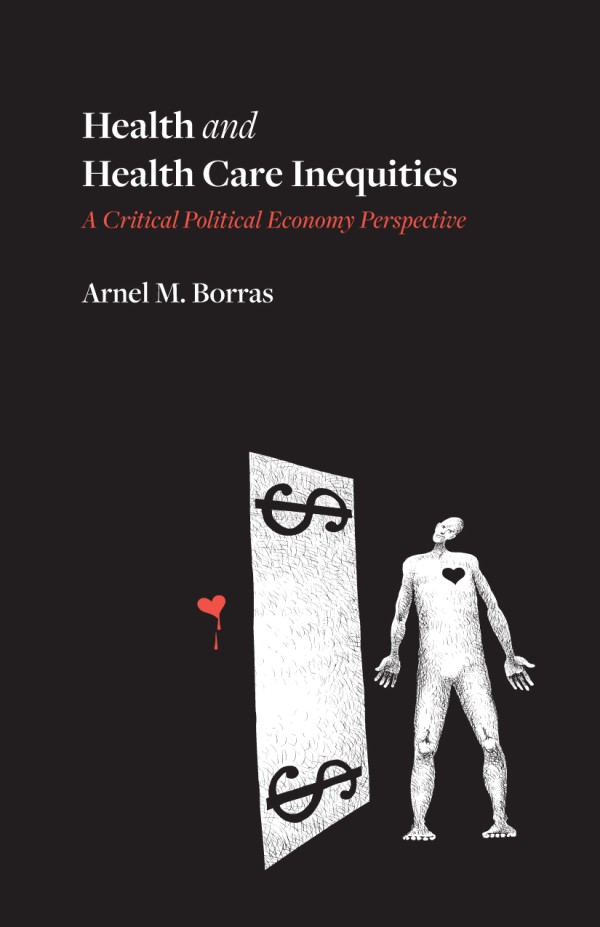
Arnel M. Borras. (2025) Health and Health Care Inequities - A Critical Political Economy Perspective. Fernwood Publishing.
See also - reference to Hodges' model:
Iris Lohja, Yves Demazeau, Christine Verdier. A multi-agent system approach to dynamic ridesharing for older people: State-of-the-art work and preliminary design. 18èmes Rencontres des Jeunes Chercheurs en Intelligence Artificielle, RJCIA’20, Jun 2020, Angers, France. pp.52-59. ⟨hal-02897446⟩
Fittingly, chapter 4 brings us to Political Power and Policy Advocacy. In Hodges' model you can both have your cake; and gratefully receive the cake you're given. This is the health in politics and the health in politics (as, for example, revealed in the health status of political leaders).
As a framework structure, the axes of Hodges' model initially give rise to four symmetric domains (spaces). There is an invitation to begin where you choose. Chapter four reveals some truths, as the 'nexus' - center of the model is mobile (unlike many citizens!) as the 2x2 rendition below suggests, if not illustrates. Borras takes us through health politics, political participation and representation, unequal power and politics, and policy change approaches with illustrative cases.
In an institution (like the NHS), bureaucracy, aka an organisation, the workforce are often acutely aware of policy and procedure. It is like the Force. It permeates everything - the meetings - and yet is remote. Borras seek to shed light on unequal resources and policy influence. Again Borras's literature informed discussion and argument, includes some historical gems, such as Lasswell (1958).
In chapter 5 on evidence and ideas, discussion of Katherine Smith's 'under 'Six Travelling Ideas' is an excellent resource, with several references including:
Smith, Katherine E (2013) Institutional filters : the translation and re-circulation of ideas about health inequalities within policy. Policy and Politics, 41 (1). pp. 81-100. ISSN 0305-5736 (https://doi.org/10.1332/030557312X655413).
I love the image of ideas as and on a journey, some successful, others fractured, weak, re-contextualised, even non-journeys (falling - 'dead from the press' - I suppose?). At least the journey of Hodges' model is ongoing. A baton for our times. As I wrote in post i, chapter 5 tackles 'evidence' (there's a post or two). It does so in relation to information, ideology, and interests:
If you've read many posts on W2tQ, you may see: I've a chip on my shoulder. Evidence for the safety, benefits, theoretical underpinning ... of Hodges' model is still to be realised. To the satisfaction, that is: of course to the powers that be. Speaking of which: the axial (for me) subtitles arise again in chapter 6; capitalism-imperialism-colonialism-racism nexus (p.87).
To demonstrate the utility of Hodges' model, this is significant.
Please feel free to search for these terms - capitalism-imperialism-colonialism-racism in the search bar above.
I've been interested in drama since playing the part of Francis Nurse in Miller's The Crucible. It took some 50 years to go from armchair to treading the boards again. I played Ken, supported by his wife, trying to run a post office, amid a chaotic and injurious IT system. An 8-9 minute sketch which was part of a Living Newspaper. Interested in writing - as previous posts may reveal, I also keep trying get to the theatre. With the themes of chapter 6, Liberation was thought provoking.
Mind-Body, Private-Public, Socialist-Conservative, Borras adds the global health North-South schism. A prompt for suggesting a brief glossary is expropriation and exploitation^ (p.88). Four stages of capitalism too. This chapter - A critical political economy approach is essential reading for me (and you!?) - a path to a critical care economy (self-care to planetary health).
Merelman, R. M. (1981). Harold D. Lasswell’s Political World: Weak Tea for Hard Times. British Journal of Political Science, 11(4), 471–497. http://www.jstor.org/stable/193766
Arnel M. Borras. (2025) Health and Health Care Inequities - A Critical Political Economy Perspective. Fernwood Publishing.
This book, or similar should be read by 3rd year student nurses and other healthcare learners. I wondered if, for students, a brief glossary might be useful. But key terms are explained and clearly, with typologies numbered and expanded when needed. There seems an aversion in nursing academia to avoid the acutely 'political'. Even though of course in psychiatry, the need for considersation of human rights, consent, capacity, law, personal and public safety, risk is inevitable. Should we only learn of the politics of our role on a post-registration/license course of learning? As mentioned in post i, Borras duly notes the asymmetric impact COVID. The disproportinate deaths of frontline healthcare workers from ethnic minority groups (UK). A sign of the impact, is reflected in COVID recurring through the text.
The device of using axes, e.g. Class-Gender-Health (p.11) rightly draws in commentary on nutrition, pay gaps - heterosexual white men, terms of employment, and design and occupational health for woman. Gender politics is also reflected in the text. The relational dimensions of this discussion also stands out. The Class-Race-Health axis (had me return to the question of parity, but beyond the mental - physical divide.
These axes employed by Borras seemingly traverse a path and are extensible (across pages). Briefly, in Hodges' model the domains and axes act as stepping stones:
We can ‘walk’ the model:
Humanistic INTERPERSONAL Individual SCIENCES Mechanistic: adding - Humanistic
SOCIOLOGY Group POLITICAL Mechanistic
A global perspective is matained, even though the focus is Canadian health, government, policy and policy. The press have often highlighted the global nature of the housing crisis. Canada is not immune; as discussed in chapter 2. For what is in many nations a 'housing disaster', Borras covers the history too. Reflecting on:
'Around the world, neoliberal programs have resulted in over a billion people living in slums (Davis 2017, 23). In wealthier countries, there was rampant privatization of social housing units.' p.25.
- you feel like a nodding dog toy. Where is the leadership, the strategy and integrity to provide housing for all? Arnel also stresses the link between mental health status and housing. The SDGs place emphasis on security (yes, at the level of what is happening in Ukraine, Gaza, South Sudan...), then housing follows. And with climate refugees to follow ...! I have seen gentrification, and listened to an account in 2007 as Manchester started to experience high-rise growth. I used to try to walk to community visits with students when possible. Observational skills come in many forms, safety still depends upon them. With no place to call home, safety and security is a stark issue for people. A foundation for health, wellbeing and ironically productivity. The rise of foodbanks is also damning.
Gambling is not indexed, but there appears a denial in the UK government, with other nations 'folding' to the influence of lobbying and corporate influence reducing or removing restrictions in gambling and crucially: advertising. What's the denial you say? Yes, well governments seem to be in denial that there are vulnerable groups in their respective populations. It is laudable that they bestow upon the citizenry the freedom of choice, but that can spell trouble.
If Canada - Ontario has its housing scandal:
'Housing insecurity and homelessness occur because the state and its goencies support real estate and banking corporations that continuously increase housing prices. This setup is a huge problem because these enti- ties focus on generating profit and capital accumulation. The Greenbelt Scandal in Ontario revealed how the government made decisions that served the interests of big companies instead of the public (McGrath 2023; Office of the Auditor General of Ontario 2023). This scandal is an example of neoliberalism and a corrupt style of governance (Moscrop 2023). We need to stop using neoliberal strategies and focus on socialized housing.' p.27.
So does the UK: Grenfell Tower Inquiry No doubt, other nations have their tragic examples. It seems 'international Standards', quality, integrity can never be taken for quality. They too are precarious, vulnerable. Borras's work in chapter 2 on housing security, and differenciation of core housing need is laudable, informative and welcome. Re-reading Arnel's point: 'There is no doubt that housing insecurity affects health'. p.28. His book as a whole makes the point that of course more evidence will always be needed. In healthcare for decades the basics of public health have been identified, studied, established, placed in models and frameworks. Yet we find we are found wanting (UK - Awaab's Law) dragged back to the first steps; and despite the urgent issues we now face.
"Universal health care" is not exactly new:
The Canadian Association of Social Workers. (1961). The Social Worker, Volume 29, Numbers 1 to 2. 29(1to2), 1to78. The Canadian Association of Social Workers. The Social Worker - Le travailleur social. Canadian Association of Social Workers. https://jstor.org/stable/community.39672572.
Borras is correct to write of 'The Continuing Private War against Universal Health Care' (p.36). Looking at NGRAM it appears the private sector has been winning in recent decades. Working previously as a community mental health nurse for older adults, chapter 3 explores Canada's health care systems. Table 3.1 compares the ownership of long-term care homes in figures. The discussion deals with the quality of care and variation. Policy intentions, plans, research and what follows in practice is also debated. Is there any comfort in learning that Canada is not alone in being skilled at kicking-can-down-the-road. To be fair many developed nations face the same demographic cliff (whichever way you it!), just one of the urgent issues noted above. The contribution of informal carers is also highlighted.
Here in the UK the commissioner - provider split and models of care at the finance level are a maze: amazing in their bureaucracy. Borras does a marvellous job, in providing enough detail without weighing the narrative flow, and losing the reader. The close of chapter 3 offers hope that Hodges' model will continue to be found:
'Therefore, shifting away from neoliberalism toward a new societal system where health care is seen as a fundamental human need and a universal right, not a profit-driven commodity, is crucial. This alternative system requires a new societal framework built on solidarity, fairness, and humanity, prioritizing health over financial and personal gain.' p.50.
Arnel M. Borras. (2025) Health and Health Care Inequities - A Critical Political Economy Perspective. Fernwood Publishing.
In addition:
Messing, K., & de Grosbois, S. (2001). Women Workers Confront One-Eyed Science: Building Alliances to Improve Women’s Occupational Health. Women & Health, 33(1–2), 125–141. https://doi.org/10.1300/J013v33n01_08 (Borras - pp.11-12).
In the introduction to Health and Health Care Inequities - A Critical Political Economy Perspective, Borras concludes:
'This book aims to spark thoughutful conversation and collaboration by moving away from capitalism to improve society and health. Health is not just about nursing and medicine; it is integrally connected to economic, political, cultural, and institutional systems. Moreover, it encompasses philosophy and ethics. Capitalism's focus on individualism and competition harms people and the environment,making it all but impossible to achieve health equity. We must work together to envision and create a new world that ensures fairer and better health for all.' p.3.
This sets the tone for a short 163 page book, with a page of acknowledgements, (said) introduction pp.1-3, reference listing pp.136-153; 10 page index, and eight chapters:
Chapter 1: Social Determinants of Health Inequities Chapter 2: Neoliberalism and Canada’s Housing Policies Chapter 3: Neoliberalism and Canada’s Health Care System Chapter 4: Political Power and Policy Advocacy Chapter 5: The Role of Evidence and Ideas Chapter 6: A Critical Political Economy Approach Chapter 7: Searching for Socialism Chapter 8: Mobilizing for Health Equity
Chapter 1 on 'Social Determinants' provides the first of many political points to underscore the effort with Hodges' model here. If income and poverty come second the preceding paragraphs on wages reveal the socialist stancestand of the author, and the acknowledged networks. Throughout the book the relational nature of determinants, inequality, inequity, protected characteristics, socio-economics and political struggle is raised. In the discussion on wages the importance of education is described in cross-cultural and gender-based terms. The book possibly turns on the sentence:
'To effectively address poverty, we need to unite those who are in poverty with individuals who have more economic stability but are still ulnerable within our capitalist system. These individuals are at risk of falling into poverty if they lose their jobs due to workplace closures or privatization. It is essential to acknowledge that certain groups experience higher poverty rates, but we should see them not as victims but as protagonists and capable workers facing unique but connected challenges.' p.7.
For the people who follow the news, the majority of 'us' are (even if only roughly) aware of the distribution of wealth across national and the global population: the injustice. The erosion and lack of union representation within many workforces, especially 'Big-tech'. The way utility enterprises have provided dividends for shareholders at the expense of ongoing investment in infrastructure, the quality of service provided to the public and even public safety. COVID (p.7), crystalised 'difference' for us all. I came to now substitute collective for 'group' in Hodges' model. Suddenly all those individuals, many working in health, were collectively vulnerable:
wisdom, leadership, truth LAW - POLICY FREEDOM - CHOICE
Throughout the text, I like the concise coherence Borras demonstrates in the steps from wages, income and poverty to investigate the state of health inequities. Once again (from i) the context is Canada, but the lessons are for all - as globalisation should/must demand? There is public health history too. As expected Canada's First Nation, Indigenous, and Nunavut populations are frequently referenced regards exclusion and disparity in health services access and provision. Under health inequities, after infant mortality and life expectancy there is a convention(?) adopted of several axes being identified. The first (p.9) is the class-health axis, then class-gender-health and others. No surprise I found the relational and organisational aspects of these 'constructs' very helpful. As I try to think of Hodges' model as a mathematical object I realise (through oft impromtu conversations^) that we don't have two 'axes' in Hodges' model. Still musing on this; and more to follow ...
Arnel M. Borras. (2025) Health and Health Care Inequities - A Critical Political Economy Perspective. Fernwood Publishing.
^A pure maths lecturer, Gower St Waterstones, London.
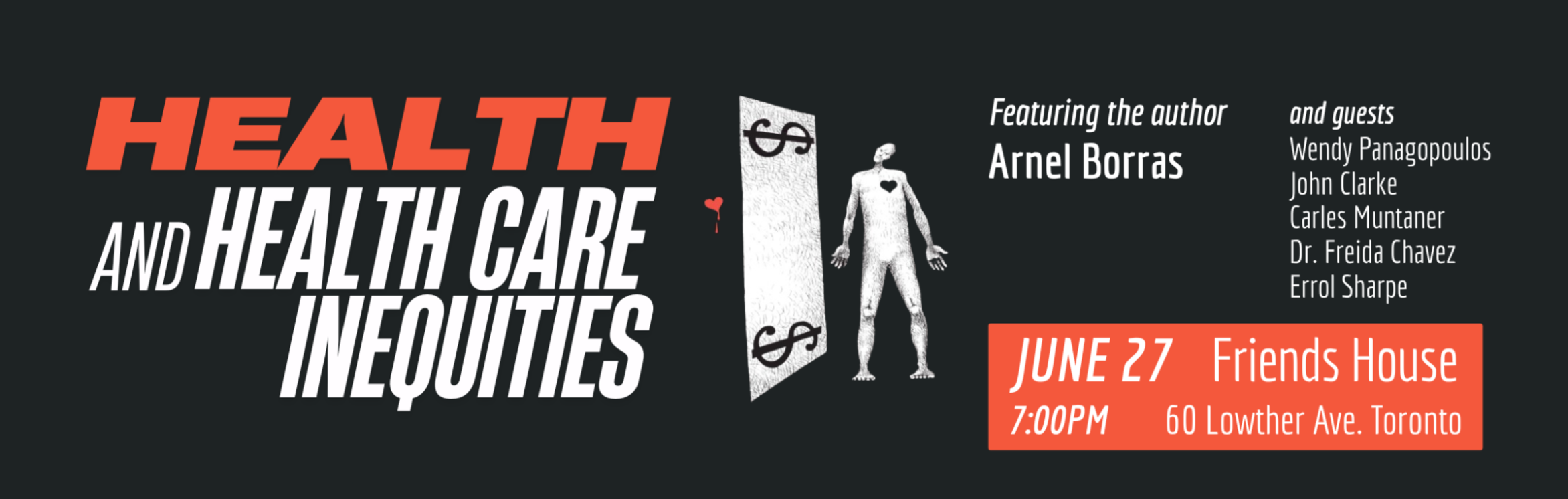
I didn't attend online the book launch for Health and Health Care Inequities. It appeared to be in the early hours for the UK. Making good progress on a week's break last month, upon return, a presentation and some writing proved a distraction. I've picked it up again, a task that was smooth and straightforward such is the style and writing. H&HCI is - as expected - academic. The statistics, politics and government publications come thick and fast. But they literally do count here.
Borras and the Fernwood are based in Canada. The focus of Borras's thesis is then Canadian politics, economics, society, social and cultural challenges, poverty, exclusion, global standing, statistics and reporting (and more) are all relevant globally. Especially as COVID, climate change, and the current state (or stasis?) of global health provision attests. The book is unashamably Marxist, but not heavy with it. If that makes sense. I was drawn to the publisher too. Well: critical books for critical thinkers; how could I resist! The influence of Marx and Marxism on the 20th century is profound and full of contradictions. There's the history, and its lessons of Marxism as a political ideology and the geopolitical exemplars that have given Marxism a 'bad' name. To the extent that 'socialism' is also tainted. What other term can be applied that captures 'Marxism', Marxist thought and its relevance today? And that is, relevance in terms of health, health care and social care inequities? 'Struggle' seems utterly inadequate amid current news?
Amidst the history of various revolutions, some arguably on-going, fizzled out, on life support ...? it is, it seems, capitalism that goes marching on. To keep time, the metronome is the tick of central processing unit, and now the graphics 'pu' and tensor; for we live in the 'information age'. I've been keeping notes, but will begin with some reading today, which is an excellent point to 'healthcare professionals', obsessed as we are, with evidence.
'I often go back to Carol Weiss. Years ago, she said three things that go into the decision making ... information, ideology, and interest. And then she went on to say, don't for one moment think that information can trump either ideology or interest. So if you look at the whole climate debate right now, it's actually an ideological debate, The right-wing, the Republicans, some Conservatives here, their rejection of the evidence has nothing to do with the evidence. It's really an ideology ... our group thinks this way, and we are aligned with the fossil fuel industry because they're rich and powerful. Our whole system is based on cheap energy. And so we have to keep going kind of thing. And bugger the evidence.
And that second one, which is actually very closely related to that, is interest. By interest, she meant power and wealth and stakeholders. So, who gets the policy they want? The people who have the money and power to influence it. So, the fossil fuel industry is very powerful ... And so, no matter what the evidence is, they have a financial interest in not having any controls upon them having the minimum of controls. And so, that will triumph usually. So, you put together ideology and interest, and it will almost always overcome evidence or information.' p.78.
More to follow and a return here is essential.
Weiss, C.H. (1983). Ideology, Interests, and Information. In: Callahan, D., Jennings, B. (eds) Ethics, The Social Sciences, and Policy Analysis. The Hastings Center Series in Ethics. Springer, Boston, MA. https://doi.org/10.1007/978-1-4684-7015-4_9
Arnel M. Borras. (2025) Health and Health Care Inequities - A Critical Political Economy Perspective. Fernwood Publishing.
'In The New Nature of Business, Luc's son André, now vice-chair of Roche, and co-author Peter Vanham lay out how to bring these parallel tracks together. "The business of business isn't just m of business," they write. "The business of business is to at least preserve and where possible expand the world's human, social, environmental and financial capital."
The book makes the familiar case that maximising short-term profit leads to long-term destruction of value. But it also suggests that a "narrow focus on [reducing] carbon emissions" could have dangerous unintended consequences. Those four "capitals" depend on one another, write Hoffmann and Vanham. They call for nothing less than a systemic change to a "sustainable, inclusive form of capitalism, with new principles, and new practices".
The most interesting parts of the book describe Hoffmann's path to the realisation in the early 2000s that the profit- making power of business should be harnessed in the quest for sustainability.' (My emphasis with some re-formatting.)
Hill, A. (2024) The sweeter pill, FTWeekend, Life&Arts, 28-29 September. p.11.
"In the summer of 1982, two acres of wheat were planted and harvested by artist Agnes Denes, two blocks from Wall Street and the World Trade Center and facing the Statue of Liberty.
Planting and harvesting a field of wheat on land worth $4.5 billion created a powerful paradox. Wheatfield was a symbol, a universal concept; it represented food, energy, commerce, world trade, and economics. It referred to mismanagement, waste, world hunger and ecological concerns. It called attention to our misplaced priorities.
The harvested grain traveled to twenty-eight cities around the world in an exhibition called “The International Art Show for the End of World Hunger”, organized by the Minnesota Museum of Art (1987-90). The seeds were carried away by people who planted them in many parts of the globe." twistedsifter
Apparently nature has intrinsic value and 'natural asset companies' are a thing (for good or ill is another Q. - continuity of capitalism? Is this one way where (literally) SMALL comes in? As nature locally has value, citizens are stakeholders (in the country by proxy)? But then how as societies do we compensate urban environments and those who clamour for - see the future in 'smart' cities? https://www.nytimes.com/2024/02/18/business/economy/natural-assets.html
See also: https://www.nature.com/scitable/knowledge/library/intrinsic-value-ecology-and-conservation-25815400/ Sandler, R. (2012) Intrinsic Value, Ecology, and Conservation. Nature Education Knowledge 3(10):4.
Lydia DePillis, Nature Has Value. Could We Literally Invest in It? The New York Times. “Natural asset companies” would put a market price on improving ecosystems, rather than on destroying them. 18th February 2024. https://www.nytimes.com/2024/02/18/business/economy/natural-assets.html
Yes. Accessibility is critical, but given its age, and presentation of Hodges' model as a 2x2 table, this blog is best viewed on a tablet, laptop, or PC.
If I can help you apply Hodges' model please contact me: h2cmng AT yahoo.co.uk. Assistance in further study of the model, would also be welcome. Thank you.
Black History Month - NW & Manchester - All Welcome
22 Oct 2026, 10:00-16:00 6 Mount St, , Manchester, M2 5NS. Free
Hodges' model also known as 'Hodges' Health Career Model' H2CM
A person's health career is impacted by their life chances.
Total Pageviews
Hodges' Health Career - Care Domains - Model
'Care Domains' was added to the model's title as some people thought the model only applied to employment, work, and jobs.
Brian E. Hodges (1942-2022) RIP
Brian E. Hodges - c/o Brian's family.
Peter Jones: Blog author & editor - 2006 ...
Researcher - Practitioner on Hodges' model since 1987
Born in Liverpool, NW England, UK. Community Mental Health Nurse NHS, Part-time Lecturer, Researcher Nursing & Technology Enhanced Learning
Registered Nurse - Mental Health & General Community Psychiatric Nursing (Cert.) MMU PG Cert. Ed. BA(Joint Hons.) Computing and Philosophy - BIHE - Bolton PG(Dip.) Collaboration on Psychosocial Education [COPE] Univ. Man. MRES. e-Research and Technology Enhanced Learning, Lancaster Univ.
Live and work in NW England - seeking a global perspective.
The views expressed on W2tQ are entirely my own, unless stated otherwise. Comments are disabled. If you would like to get in touch please e-mail me at h2cmng AT yahoo.co.uk
* IO Magazine
Source:
Reveal Digital , 01-01-1988
Contributed by: Charles Stein; Don Byrd; A.S. Yessenin-Volpin; Christer Hennix; Henry
Flynt; Henry Flynt; George Quasha; Charles Stein; Christer Hennix; Luitzen Egbertus Jan
Brouwer; L.E.J. Brouwer; L.E.J. Brouwer; Charles Stein
Stable URL: https://www.jstor.org/stable/community.28038534
Hodges' model was created by Brian E. Hodges [Senior Lecturer, Retired] in the mid-1980s at what is now Manchester Metropolitan University.
Peter Jones, author / editor of this blog has championed Hodges' model as a personal initiative online since 1998, but discovered the model on the CPN(Cert.) course 1988. The driver is recognition of the increasing relevance - decade-by-decade - of Hodges' model as a primary resource for local, national, global and glocal (virtual) health and education.
Visitors to this blog, individuals and organisations, are invited to consider use of Hodges' model.
Hodges' model is provided as an open educational resource (OER).
"Open Educational Resources are teaching and learning materials that you may freely use and reuse, without charge. OER often have a Creative Commons or GNU license that state specifically how the material may be used, reused, adapted, and shared." [Google, 8 Feb 2016]
CC CREATIVE COMMONS:
Hodges' model is assigned Attribution-ShareAlike 3.0 Unported (CC BY-SA 3.0):
OER is important for teaching, learning, and collaboration generally. Hodges' model is an ideal tool to span individual and global health care. Peter Jones encourages and will try to respond to support users interested in exploring how Hodges' model can support their work.
Post-publication I have learnt of new papers that have cited, or even used Hodges' model. This is very welcome news. If you are contemplating using h2cm, I'd be pleased to help. The aim is to see h2cm applied, especially in the real world, across disciplines and to help squeeze all the conceptual juice out of the model as per your context.
Nodes & Edges: Structure Content distinct
BIBLIOGRAPHY & Citations for Hodges' model
Please note the website - p-jones.demon.co.uk listed in many papers below is no longer active and maintained. 'Demon' ceased operating as an internet provider in 2015.
April 23 2025: There is a link to the archived POLITICAL links page, listed under 'External links': https://en.wikipedia.org/wiki/Outline_of_political_science Which is itself a useful page.
A new site for introductory materials and Brian Hodges' original notes will follow (one day!?) ...
Hodges, B.E. (1989) The Health Career Model, IN, Hinchcliffe, S.M. (et al.) 1989 Nursing Practice and Health Care, 1st Edition only, London, Edward Arnold.
Adams, T. (1987) Dementia is a family affair. Community Outlook, Feb, 7-8.
Jones, P. (1999) It's time to master the latest tools and Hodges' Health Career Model, IT in Nursing, 11.2.
Jones, P. (2004) Viewpoint: Can informatics and holistic multidisciplinary care be harmonised? British Journal of Healthcare Computing & Information Management, 21, 6, 17-18.
Jones, P. (2004) The Four Care Domains: Situations Worthy of Research. Conference: Building & Bridging Community Networks: Knowledge, Innovation & Diversity through Communication, Brighton, UK.
Jones, P. (2009) Socio-Technical Structures, the Scope of Informatics and Hodges’ model, IN, Staudinger, R., Ostermann, H., Bettina Staudinger, B. (Eds.), Handbook of Research in Nursing Informatics and Socio-Technical Structures, Idea Group Publishing, Inc. Chap. 11, pp. 160-174.
Kernohan, G. (2010) Theoretical review of public engagement in Nursing. Proc 1st Public Engagement Colloquium, Kells, Co Antrim, 22 April.
Merritt MK, Procter N. Conceptualising the functional role of mental health consultation-liaison nurse in multi-morbidity, using Peplau's nursing theory. Contemp Nurse. 2010 Feb-Mar;34(2):158-66. doi: 10.5172/conu.2010.34.2.158. PMID: 20509800.
Murphy, K., Welford C. (2012) Agenda for the future: enhancing autonomy for older people in residential care.International Journal of Older People Nursing. 7, 75–80.
Jones P. (2014) Using a conceptual framework to explore the dimensions of recovery and their relationship to service user choice and self-determination. International Journal of Person Centered Medicine. Vol 3, No 4, (2013) pp.305-311.
Bom, J. (2015) Geboeid signaleren. De Verpleegkundig Specialist. 10. 14-15. 10.1007/s40884-015-0051-z.
Jones P. Exploring the relationship of threshold concepts and Hodges’ model of care from the individual to populations and global health. Rev Cuid. 2017; 8(3): 1697-720. http://dx.doi.org/10.15649/cuidarte.v8i3.464
Maffissoni, André & Vendruscolo, Carine & De Lima Trindade, Letícia & Zocche, Denise. (2018). Redes de atenção à saúde na formação em enfermagem: interpretações a partir da atenção primária à saúde. Revista Cuidarte. 9. 1-13.
Holmes, D. Perron, A. Jacob, J.D. Paradis-Gagné, É. & Gratton, S (2018). Pratique en milieu de psychiatrie légale: proposition d’un modèle interdisciplinaire, (Practice in forensic psychiatry: A proposed interdisciplinary model). Recherche en soins infirmiers, 134, 33-43. DOI: 10.3917/rsi.134.0033
Ashiquer Rahman, S.K. (2019) Mobilizing ePLANETe.Blue knowledge mediation portal to deal with new challenges of sustainable development in Higher Education and Research Etablishments (HERE) from a perspective of Knowledge Economy.
Thèse de doctorat de l'Université Paris-Saclay
préparée à l’Université de Versailles-Saint-Quentin-en-Yvelines. École doctorale n°578 Sciences de l’homme et de la societé Spécialité de doctorat : Sciences Économiques.
Kennedy, Harry G. (2019). National Forensic Mental Health Service (NFMHS) Model of Care. 10.13140/RG.2.2.30103.59041.
Hayward, B.A. (2020), Mental health nursing in bushfire‐affected communities: An autoethnographic insight. Int J Mental Health Nurs. doi:10.1111/inm.12765
Iris Lohja, Yves Demazeau, Christine Verdier. A multi-agent system approach to dynamic ridesharing for older people: State-of-the-art work and preliminary design. 18èmes Rencontres des Jeunes Chercheurs en Intelligence Artificielle, RJCIA’20, Jun 2020, Angers, France. pp.52-59. ⟨hal-02897446⟩
Byrt R. Forensic Mental Health Nursing in Secure Hospitals and the Criminal Justice System. Nurs Health Care Int J. 2019, 3(2): 000176.
Hamilton EAA, Dornan L, Sinclair M, McCoy J, Hanna-Trainor L, Kernohan WG. A scoping review protocol: Mapping the range of policy-related evidence influencing maternal health outcomes in a fragile, low-income country. J Adv Nurs. 2021 Jul 20. doi: 10.1111/jan.14956. Epub ahead of print. PMID: 34288043.
Elien G Neimeijer (2021) "CLOSE(D) CARE: Group climate in a secure forensic setting for individuals with mild intellectual disability." Radboud University, ISBN: 978-94-6416-713-9
https://www.trajectum.nl/sites/default/files/proefschrift_e._neimeijer_pdf.pdf
Fryer, Jon. “Information Literacies – Learning, to Thrive in a Digital Age” IRMS Bulletin 230 (2022): 16-21.
Kistler KB, Tyndall DE. Application of the Threshold Concept Framework in Nursing: An Integrative Review. Nurse Educ. 2022 Mar-Apr 01;47(2):91-95. doi: 10.1097/NNE.0000000000001041. PMID: 34033613.
Jones P, Wirnitzer K. Hodges’ model: the Sustainable Development Goals and public health – universal health coverage demands a universal framework. BMJ Nutrition, Prevention & Health 2022;5:doi: 10.1136/bmjnph-2021-000254
Kernohan, W. G., & Jones, P. (2023). Hodges’ Health Care Model as a Framework for Quality. Paper presented
at Interprofessional work: developing oral care and the health workforce for the future, Brescia, Italy. https://pure.ulster.ac.uk/en/publications/hodges-health-care-model-as-a-framework-for-quality
Above paper cited by:
Leung, T.C.H., You, C.SX. (2023). Environmental, Social, and Governance (ESG) Promotion to Different Stakeholder Groups. In: Environmental, Social and Governance and Sustainable Development in Healthcare. Sustainable Development Goals Series. Springer, Singapore. https://doi.org/10.1007/978-981-99-1564-4_6
Yadav, V. S., & Singh, B. (2023). Evaluating the Human Rights Perspective on Sustainable Development Goals Accessible Health Coverage. Journal of Law and Sustainable Development, 11(6), e1254. https://doi.org/10.55908/sdgs.v11i6.1254
Kernohan, WG, Dornan, L & Jones, P 2023, 'A reflection on Hodges' Health Career Model for integration of health innovation', Trinity Health and Education International Research Conference 2023, Dublin, Ireland, 7/03/23 - 9/03/23.
McLaughlin, P., Brady, P., Carabellese, F., Carabellese, F., Parente, L., Uhrskov Sorensen, L., . . . Kennedy, H. (2023). Excellence in forensic psychiatry services: International survey of qualities and correlates. BJPsych Open, 9(6), E193. doi:10.1192/bjo.2023.578
Kainat Asmat (2024). Practice Without Theory: A Philosophical Inquiry into Contemporary Nursing in South Asia: Nursing Practice without Theory. International Journal of Practice-based Learning in Health and Social Care. 12. 125-131. 10.18552/ijpblhsc.v12i2.1068.
Güner, Y., Delibalta, B., Üçüncüoğlu, M., Paslı, S. (2025). Challenges encountered by emergency nurses in forensic case management: A qualitative study, Journal of Forensic and Legal Medicine, Volume 109, 102807, ISSN 1752-928X,
https://doi.org/10.1016/j.jflm.2025.102807.
Jones, P. (2025). A Conceptual Mapping Exercise of Deprivation of Liberty Safeguards in Residential & Community Care Using Hodges' Model and Threshold Concepts. Journal of Evaluation in Clinical Practice, 31: e70085. https://doi.org/10.1111/jep.70085
Ardenny Ardenny, Le Hoang Nam, Pham Anh Tu (2025). Sustainable Health Model: Increasing Universal Access to Health Services in Remote Areas. Journal of World Future Medicine, Health and Nursing. 3. DOI: 10.70177/health.v3i1.1907
Jones, P. (2025), A Generic Model and Conceptual Framework to Prime Curiosity Across Health and Social Care Disciplines to Facilitate Lifelong Learning. Journal of Evaluation in Clinical Practice, 31: e70252. https://doi.org/10.1111/jep.70252
Wirnitzer KC, Motevalli M, Tanous DR, Drenowatz C, Moser M, Cramer H, Rosemann T, Wagner K-H, Michalsen A, Knechtle B, Fras Z, Ritskes-Hoitinga M, Marques A, Mis NF, Stanford FC, Schubert C, Goswami N, Leitzmann C, Fredriksen PM, Ruedl G, Wilflingseder D, Lima RA, Kessler C, Jeitler M, Khan NA, Joulaei H, Fatemi M, Knight A, Kratky KW, Palmer KK, Haditsch B, Jakse B, Kofler W, Pfeiffer T, Cordova-Pozo K, Tortella P, Straub S, Lynch H, Schätzer M, Krishnan A, Fathima A. S, Gatterer L, Kriwan F, Abhishek M, Nandgaonkar H, Nandgaonkar S, Adedara AO, Haro JM, Gericke C, Neumann G, Akhtar A, Rashidlamir A, Thangavelu M, Ngoumou GB, Perpék É, Klaper M, Bhattacharya B, Kirschner W, Bessems KMHH, Jones P, Peoples G, Bescos R, Duftner C, Seifert G (2025). Toward a roadmap for addressing today's health dilemma–The 101-statement consensus report., Volume 12:1676080. doi: 10.3389/fnut.2025.1676080. https://doi.org/10.3389/fnut.2025.1676080.
Short form: Wirnitzer, KC. et al. (2025) Toward a roadmap for addressing today's health dilemma – The 101-statement consensus report. Frontiers in Nutrition. Volume 12.
https://frontiersin.org/journals/nutrition/articles/10.3389/fnut.2025.1676080 DOI:10.3389/fnut.2025.1676080
[ For Dr Wirnitzer's work please see:
The NURMI-Study (NURMI – Nutrition and Running high Mileage) https://www.facebook.com/nurmistudy
S. Bettiol, P. Jones, H. A. Onyedikachi, and W. G. Kernohan, (2026) Bridging Gaps in Oral Health Frameworks: Mapping With Hodges' Health Career - Care Domains - Model, Journal of Public Health Dentistry. 1–14, https://doi.org/10.1111/jphd.70034.
Simms, V., Jacobs, N., Magee, J., De Ornellas, K., Mollik, E., Kernohan, W. G., Leacock, J., Akter, J., Sempey, C., Beech, S. E., Naz Asif, R., Yap, L. K., & Miller, K. (2026, Jan 16). Ulster University Open Research Conference 2026: Conference Speaker Abstracts. Ulster University. Advance online publication. https://doi.org/10.21251/0d7780ce-ce97-468f-b5d5-69201ca90b20
-=<>=-
As a source Hughes (1958) below, is clearly dated. Brian Hodges referenced Hughes to define ‘health career’, fundamentally linked to the idea of life chances.
Hughes, E. (1958) Men and their work. New York: Free Press.
A paper in 1977 refers to "Health career model", this is not Hodges' model, but we can match the paper's econometric context as follows: 'health career' equates with 'life chances' and so draws upon the model's INDIVIDUAL domains. While in the paper "Life-cycle and Quality of Life" can be matched with the COLLECTIVE domains of Hodges' model, namely, SOCIOLOGICAL and POLITICAL. Of course, Quality of Life is also an individual, subjective, phenomenological experience. The paper however preempts the ongoing focus upon SOCIAL DETERMINANTS, and more generally, the current state of our Social and Political contracts. Now the further differentiation of political, commercial, geopolitical determinants (where we are born, what 'papers' we possess, or not; are we State/Stateless) is an opportunity for Hodges' model. The ability of Hodges' model to encompass and switch contexts provides evidence of the model's potential and power, a result of its structure and situated content. In health and social care, Quality of Life (clearly) remains an individual AND collective matter, from individual assessment tools, to weighing the ethics, benefits and costs of interventions in collective - aggregated terms (QALY).
"900: Welfare Programs; Consumer Economics; Urban and Regional Economics." (1977). Journal of Economic Literature, 15(4), 1451–1457. http://www.jstor.org/stable/2723014
The two papers below pre-date the first website [1998-2015 webarchived], but show how I have subsequently stressed the role of information, informatics and the socio-technical within Hodges model as a unifying concept. I have copious notes to revisit this subject, on: post-COVID and dis- mis- malinformation; and nursing's legacy issues.
Jones, P. (1996) Humans, Information, and Science, Journal of Advanced Nursing, 24(3),591-598.
Finally some software publications from the microcomputer era.
Jones, P. (1986) Computing in Nursing NEWS. Computerised Patient Assessment. Nursing Times. 85: 5. Sep 3-9;82(36):63-5. PMID: 3532039 (Describes 'CAPA', a BBC microcomputer program for student nurses.)
Jones, P. (1989) Computers in Nursing NEWS. Creating a Program. Nursing Times. Feb 1-7;85(5):66-8. PMID: 2648342 (Describes 'HAEM', a BBC microcomputer program for student nurses on blood and blood groups.)
Please contact me if you have a paper referencing Hodges' model, or you have a project in mind, but need some advice, more information to help you use the model. Thank you.
@h2cm
h2cmng AT yahoo.co.uk
Tanzania Health Summit 2026
Self Care + Planetary Care = Future
Is there interest in an open, accessible conceptual framework not only for self-care and health care but for planetary health too? I believe there is ...
THE WORLD NEEDS 2020 VISION
June '26: The previous global counter stopped suddenly, hence reset. Thank you for your time and interest.
21th Annual STS Conference Graz 2023:
online: "Critical Issues in Science, Technology and Society Studies" 8th - 10th May 2023
https://stsconf.tugraz.at/
Information & Records Management Society: IRMS22 - Resilience, Recovery, Renewal
Glasgow - DoubleTree by Hilton, May 15-17 2022
8th Biennial Threshold Concepts Conferences
Online, 7–9 July 2021
Global Remote and Rural Healthcare
(Virtual) 17-18th November 2020
ATTENDED:
Systems: Transition to a Sustainable World 15th September 2023, Richmond Building, University of Portsmouth
RCGP’s 7th Health and Justice Summit: Journeys Through Justice – Leadership and Transformation
Bristol, 25-26 November 2019
Participant: Re-envisaging
Infection Practice Ecologies in Nursing through Arts and Humanities Approaches
Spring 2018 - October 2019
Threshold Concepts in Action, University of Dundee: 27th-28th June 2019
Friday 28th June 2019: Threshold Concepts in Health Special Interest Group meeting. Morning: papers/discussion with virtual access for members at a distance; Afternoon: research/writing workshop; sharing advice and ideas
Presented at UKSS Conference 2018
UK Systems Society: Can systemic thinking reshape health services?
Presented at 4th Int. Nursing Conference Jordan The Tipping Point: Creative Solutions to Health and Nursing Challenges
"نقطة التحول: حلول خلاقة للتحديات الصحية والتمريضية"

.jpeg)





 orcid.org/0000-0002-0192-8965


