Hodges' Model: Welcome to the QUAD: analysis

Hodges' model is a conceptual framework to support reflection and critical thinking. Situated, the model can help integrate all disciplines (academic and professional). Amid news items, are posts that illustrate the scope and application of the model. A bibliography and A4 template are provided in the sidebar. Welcome to the QUAD ...

Showing posts with label analysis. Show all posts

Saturday, April 18, 2026

'Our broken sticks' c/o Roger Lewin "Complexity: life at the edge of chaos"

Chapter 4 Explosions and Extinctions

  'Is Stu being led astray? I asked. "There's something called the broken stick model in statistics," said Dave. In this trick, a random number generator "breaks'' a stick a hundred inches long at twenty-five points, and produces twenty-six short sticks. Measure them, count the number that are one inch long, the number two inches long, and so on, and draw a histogram. You get a skewed distribution, toward the short end, just like many natural phenomena, including the distribution of sizes of U.S. cities, for instance. "One thing you have to remember about extinctions is that some species are more likely than others to die out, just because they exist as small, isolated populations,'' explained Dave. "This sort of statistical quirk can skew your results, easily." So, you would be suspicious of anything that looks like a power law? "I would, because it's common, just in the nature of statistics. It may tell you that a system is poised at a critical point, whatever that means, but it may not. In any case, when Stu says that the curve he gets from my data is close to a power law, he knows that there are many other mathematical models that could fit equally well."
  Clearly, there were many reasons to be cautious about drawing the conclusion that global ecosystems are poised at the edge of chaos, using just the extinction data.' p.80.
 
Hodges' model: Axes (structure) and Domains (content)

If we take the axes of Hodges' model, and break them at twenty-five points, I wonder what we end-up (or start) with?
 
Lewin, Roger. (1993) Complexity: life at the edge of chaos. London : Phoenix [Dent, 1993] ISBN: 1857990285.

Previously: 'complexity' : 'system'

Friday, March 20, 2026

Florence Nightingale Commemoration Service

Supporting nurses and midwives to promote health, improve care and save lives Florence Nightingale Commemoration Service

The second group of public tickets for the Florence Nightingale Commemoration Service will be available at 13:00 GMT on 24 March. Click the button below as soon as possible after this time, to complete the form to apply. 

You will be able to request a maximum of 2 tickets and you will need to complete the form with your name and email address. If you are requesting two tickets you will also need to give the name and email address of the second person. 

Please note that if you provide guest details they will then receive an email with an invitation and will need to RSVP themselves in order to secure their ticket. 

If you have further queries please visit our Frequently Asked Question page.

🔷

INDIVIDUAL
|
    INTERPERSONAL    :     SCIENCES               
HUMANISTIC --------------------------------------  MECHANISTIC      
SOCIOLOGY  :   POLITICAL 
|
GROUP
On Wednesday in Waterstones, Deansgate, Manchester, I spotted this book. Opening it randomly - I kid you not - it fell to pp.204-205, and Florence Nightingale's contribution.


'At that time, the idea of visualizing data in order to make its messages clearer to non-mathematicians (including politicians) in order to change minds and inform opinions had started to gain traction in Europe but was not common in England. Nightingale continued to use statistical diagrams to communicate stories hidden in data, and while this clearly contributed to improvements in health and mortality in British military encampments at home and abroad (and by extension in the population in general), it is also undoubtedly the case that she helped to popularize the use of appropriate data visualization methods to expand the reach of statistical information beyond specialist audiences. A testament to the influence of her work is that the Royal Statistical Society had the honour of accepting Florence Nightingale as their first female member in 1859.' p.204.


Thomas K. Briggs. (2025) The Mathematicians' Library The books that unlocked the power of numbers Hardback. Part of the Libri Historici series. Ivy Press.
 
Previously: 'Nightingale' : 'math' 

My source: Waterstone, Deansgate, Manchester and email Florence Nightingale Foundation.

Monday, January 26, 2026

'Drama classes help GPs handle difficult patients' c/o BBC

'Hull Truck Theatre has just won the Innovation prize at the Stage Awards for their new training scheme for GPs. Associate Director Tom Saunders and GP Dr Eman Shamsaee discuss why drama classes are helping doctors treat patients.' 

BBC Radio 4 'Front Row' https://www.bbc.co.uk/sounds/play/m002q2jz (15 mins ...)

◇

Holly Phillips, East Yorkshire and Lincolnshire and Ian Youngs, Culture Reporter

Published - 21 January 2026

'A theatre company is using drama training to help doctors deal with challenging patients.

Hull Truck Theatre's classes feature actors performing difficult GP consultations, with GPs giving feedback before taking over the consultation themselves.

The theatre recently won the Innovation Award at the Stage Awards for the programme.

Dr Eman Shamsaee, who has taken part in the training scheme, described it as a "really creative way of doing GP training".'

BBC News:  Drama classes help GPs handle difficult patients

INDIVIDUAL
|
 INTERPERSONAL    :     SCIENCES               
HUMANISTIC --------------------------------------  MECHANISTIC      
SOCIOLOGY  :   POLITICAL 
|
GROUP


The training programme has completed its pilot stage and is now in the delivery phase


A reminder of co-working to deliver STORM training with a Clinical Psychologist colleague. 

See also: 'communication' : 'primary care' : 'GP' : 'drama'

Thursday, January 08, 2026

Hodges' model: An algebra for care - seeking axioms?

Although Oliver had been brought up by philosophers, he was not theoretically acquainted with the beautiful axiom that self-preservation is the first law of nature.
                                                                                    
- Charles Dickens, Oliver Twist

Coady, C. A. J. (1990). Hobbes and “The Beautiful Axiom.” Philosophy, 65(251), 5–17. 
http://www.jstor.org/stable/3751240

"It is an axiom in therapeutics that the more remedies there are proposed for a disease the less likely is any of them to be effective."

[- William Osler]

Mountin, J. W. (1943). Nursing: A Critical Analysis. The American Journal of Nursing, 43(1), 29–34. https://doi.org/10.2307/3416264

Individual
|
     INTERPERSONAL    :     SCIENCES               
HUMANISTIC  --------------------------------------  MECHANISTIC      
 SOCIOLOGY  :    POLITICAL 
|
Group
 
'One of the core tenets of pragmatism, despite its various formulations by William James, Jane Addams, John Dewey, and neo-pragmatists like Rorty, Habermas, and Putnam, is an epistemological axiom first formulated in 1868 by Charles Sanders Peirce. This maxim, often dubbed the pragmatic maxim, states that the meaning of our ideas is best expounded when we can spell out the implications or the effects of these ideas in real-world experience and practice (Peirce 1878).' pp.105-106.
(Racine, 2024).

physical - SELF - My body[?]


'The lack of consideration of downside risks applies to all COVID-19 countermeasures, including mass-masking (e.g. the social and psychological consequences of mask-wearing for all kinds of social interaction, most notably in educational and childcare settings) and to the accelerated approval of vaccines. The latter is particularly noteworthy because the need for rigorous testing of new medications to guard against the risk of side effects is a standard axiom of contemporary ethical medical practice. Given that the vaccines in question employed novel mechanisms, not testing them sufficiently to assure their longer term safety was stratospherically risky: it meant that the possibility that this vaccination programme would do more harm than good could not be excluded. Yet, the medical establishment stood foursquare behind it, insisting on the safety and efficacy of the vaccines and pillorying any, including those within it, who demurred.' p.55. (Kelly, 2023).


'“Never have we been so free. Never have we felt so powerless”: this, according to Bauman, is the paradox of our time. Verhaeghe writes with a variant: “Never before have we in the West had it so good, and never have we felt so bad.”33 Because neoliberal axioms determine the standards of what is healthy and normal, society sees those who do not want to participate as sick or abnormal.' pp.97-98. (Vanheste, 2023).
 

My emphasis

Racine, E. (2024). What Participatory Research and Methods Bring To Ethics: Insights From Pragmatism, Social Science, and Psychology. Kennedy Institute of Ethics Journal 34(1), 99-134. 
 https://dx.doi.org/10.1353/ken.2024.a943431.

Kelly, M.G.E. (2023). Securing the Pandemic: Biopolitics, Capital, and COVID-19. Foucault Studies 35, 46-69. https://muse.jhu.edu/article/940834.

Vanheste, J. (2023). Half a Century of Exhaustion and Madness: The Fiftieth Anniversary of Pink Floyd's The Dark Side of the Moon. Soundings: An Interdisciplinary Journal 106(1), 87-109. 
https://muse.jhu.edu/article/950363.

See also: 'axiom' : 'algebra' : 'pragmatism'

Person-centred care = care axiomatics at a collective and individual level?

The first rule (axiom?) of first aid is...?

Monday, December 29, 2025

Factor Analysis - in the Intra- Interpersonal domain

 'Some Limitations of Factor Analysis.
The mistake should not be made of identifying the whole of the psychology of abilities with factor analysis. Vocational and educational selection and guidance must take account not only of personality traits and interests which might profitably be expressed as factors also, but also of relevant experience, home circumstances and the like. And although there is a strong case for substituting objective tests for the subjective judgments of an interviewer, in practice it is seldom possible to carry out such guidance without an interviewer to bring together all the data and to interpret them to the candidates (cf. Vernon and Parry, 1949). Still more mportant for the development of psychological science are experiments on conditions affecting the performance of skills and of mental tasks, for example, investigations of the design of equipment, or studies of the learning process, of concept formation, of physical or mental fatigue and boredom, and so forth. Here factor analysis is largely irrelevant, since it deals only with the end products of human thinking and behaviour, and throws little light on how these products come about in individual human beings. Factors are indeed a kind of blurred average, for though they derive from the common features displayed by a large group of people, they may stem from very diverse mental and physical processes in different people. Analysis does not even usually tell us which factors an individual uses in any given performance, though it probably could do so. Thus one individual may score well at a test through high g, another might get the same score by virtue of some group factor, yet another through specific ability at that particular test.' p.9.


Philip E. Vernon, (C. A. Mace, Ed.). (1971) The Structure of Human Abilities. Methuen's Manuals of Modern Psychology. London: Methuen & Co. Ltd., pp. 208.

See also: 

Seemüller, F., Schennach, R., Musil, R. et al. (2023). A factor analytic comparison of three commonly used depression scales (HAMD, MADRS, BDI) in a large sample of depressed inpatients. BMC Psychiatry 23, 548. https://doi.org/10.1186/s12888-023-05038-7

Bajraktarov, S., Blazhevska Stoilkovska, B., Russo, M., Repišti, S., Maric, N. P., Dzubur Kulenovic, A., Arënliu, A., Stevovic, L. I., Novotni, L., Ribic, E., Konjufca, J., Ristic, I., Novotni, A., & Jovanovic, N. (2023). Factor structure of the brief psychiatric rating scale-expanded among outpatients with psychotic disorders in five Southeast European countries: Evidence for five factors. Frontiers in Psychiatry, Volume 14-2023. https://www.frontiersin.org/journals/psychiatry/articles/10.3389/fpsyt.2023.1207577

Bandalos, D. L. (2018). Measurement theory and applications for the social sciences. New York: Guilford Publications.

Schmitt, T. A. (2011). Current methodological considerations in exploratory and confirmatory factor analysis. Journal of Psychoeducational Assessment, 29(4), 304–321. 
https://doi.org/10.1177/0734282911406653

Friday, November 28, 2025

The Silent Pandemic? The Global Rise of Early-Onset Colorectal Cancer - via HIFA

Last year, a team at The Christie NHS Foundation Trust in Manchester, UK published a real-world analysis of 203 patients with early-onset colorectal cancer (eoCRC). The study showed a dramatic surge in cases over a short period, with over half of patients presenting with metastatic disease, predominantly left-sided tumours, and a median symptom duration of just 3 months before diagnosis. The authors warned that eoCRC could represent an "evolving pandemic." 


See - http://doi.org/10.1093/oncolo/oyae239

Since then, incidence continues to rise across all continents, with similar patterns emerging in multiple national and international datasets.

Why This Matters for the HIFA community
  • eoCRC is rising rapidly among people in their 20s, 30s, and early 40s.
  • Most cases are sporadic, suggesting major gaps in understanding modifiable and early-life risk factors.
  • Awareness among young adults and clinicians remains limited, contributing to delayed presentation.
  • Meanwhile, short-form social media (e.g. TikTok reels) and AI-driven content are now the dominant information sources for young people - creating both opportunities and risks for public health.
Introducing Our Upcoming Initiative

We, the Special Interest Group in Digital Health & AI at WHO/Europe Youth4Health network, are launching a global project to develop evidence-based communication guidance for raising eoCRC prevention and awareness among young adults. The project will:
  • Convene clinical specialists, youth advocates, communication scientists, social-media creators, and digital-health experts.
  • Identify which prevention and awareness messages should be prioritised for youth.
  • Define how these messages can be adapted effectively for short-form platforms such as TikTok and Instagram Reels.
  • Examine how generative AI can support safe, accurate, and engaging content creation.
  • Co-design prototype posts to illustrate how the consensus messages can be translated into youth-appropriate communication
  • Our aim is to bridge the gap between emerging science, behavioural insights, and contemporary digital communication channels.
Why We're Sharing This Here

As we shape this work, we're keen to learn from the HIFA community:
  • What approaches have you seen succeed in raising awareness of cancer symptoms among younger populations?
  • Are there youth-driven or co-designed campaigns that we should look to as models?
  • What are the risks you foresee when using short-form social media or AI tools for public-health communication?
  • What considerations are especially important in LMIC contexts?
  • How can we strike the right balance between urgency and fear-avoidance when communicating about cancer to young adults?
eoCRC incidence is increasing rapidly and globally. Communication strategies - particularly those targeting young people - have not kept pace with this trend. We would greatly value your insight and experience as we develop this work.

HIFA profile: Kathleen Guan is a multidisciplinary researcher passionate about all things digital behavioral health and (global) community engagement. Her PhD research focuses on involving young people in the co-design of personalized AI and emerging technologies, including adaptive mobile apps, LLMs, neurotechnology, and social media reels. By developing novel participatory approaches with a focus on preventative and precision health, Kathleen aims to inform how digital tools can meaningfully enhance everyday life and help reduce mental health challenges alongside chronic disease risks. To achieve this, she prioritizes community-based implementation by working closely with stakeholders across healthcare, engineering, policy, industry, education, and the arts.

Kathleen previously studied human rights and developmental neuroscience (BSFS, Georgetown; MRes, UCL) and has experience in public health and digital innovation (with WHO, Johns Hopkins, Yale, Qatar Computing Research Institute, various early-stage digital health start-ups) as a research collaborator and advisor. She chairs the Special Interest Group in Digital Health & AI within WHO Europe's Youth4Health Network. Kathleen has resided in 7 countries and worked in diverse settings across Asia, North America, and Europe, fostering her deep commitment to global health equity. She is always open to collaboration for social impact and can be found at https://www.linkedin.com/in/kathleenwguan/.

Sunday, October 26, 2025

'Politics as a science' ...

'The science of politics is the oldest of the social sciences but still perhaps the most dependent: it derives much of its methodology from statistics (the science of the state turned into the science of numerical data), from economics and from sociology and it steals much of its substance from anthropology, from history and from law. Yet there is little doubt about the core of the subject: it focuses on the ways in which decisions are taken by men acting within territorially or functionally defined networks and constellations of organizations. And the hallmark of the discipline is 'its systematic analysis', whether couched in verbal and literary terms or in the formalized language of statistics or of mathematical logic.' Preface vii
Hayward R. Alker, Karl W. Deutsch, Antoine H. Stoetzel (eds.), Mathematical Approaches to Politics, Amsterdam, Elsevier, 1973, pp. 475.

Thursday, July 17, 2025

Ryle's 'logical geography'

I like the way Ryle apparently analogised philosophy to cartography.*

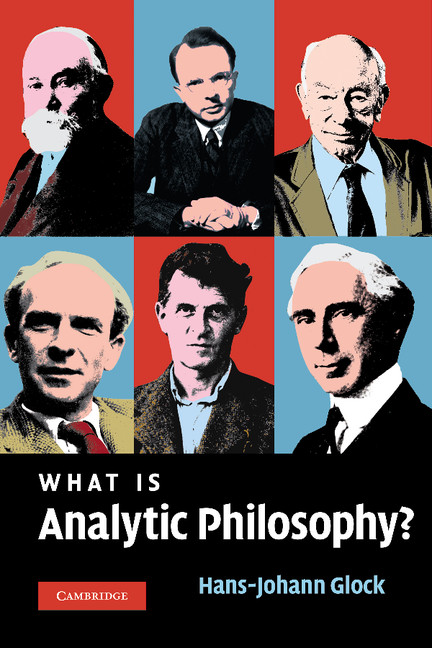
'Similarly, Ryle advocated that philosophy should chart the 'logical geography' of our concepts. In The Concept of Mind he argued that the Cartesian dualism of mind and body results from 'category-mistakes': it treats mental concepts which signify behavioural dispositions as if they referred to processes that are just like physical ones, only more ethereal. Ryle rejected Wittgenstein's therapeutic image according to which 'the philosopher treats a question like a disease' (1953: §255). Yet he accepted that philosophy is a meta-discipline which does not 'talk sense with concepts' but tries to 'talk sense about concepts' (1949: 9-10). The paradox of analysis disappears since the task is not to provide novel information about a realm extrinsic to us. According to Wittgenstein, philosophy reminds us of rules that we have mastered in practice but which mislead us in the course of philosophical reflections. According to Ryle, it takes us from the knowledge how to use words to an explicit knowledge that they are used according to certain rules. Either way, analysis is not a trivial pursuit, because the explanation of philosophically interesting concepts is complex and rich, especially when it places these concepts in their diverse contexts (everyday, scientific, philosophical).' p.43.
Hans-Johann Glock. 2008. What is analytic philosophy? Chapter 2. Historical survey. pp.21-60. CUP. Pb. 
https://www.cambridge.org/us/universitypress/subjects/philosophy/philosophy-general-interest/what-analytic-philosophy

* 'Ryle analogises philosophy to cartography. Competent speakers of a language, Ryle believes, are to a philosopher what ordinary villagers are to a mapmaker: the ordinary villager has a competent grasp of his village, and is familiar with its inhabitants and geography. But when asked to interpret a map of that knowledge, the villager will have difficulty until he is able to translate his practical knowledge into universal cartographic terms. The villager thinks of the village in personal and practical terms, while the mapmaker thinks of the village in neutral, public, cartographic terms.[20]: 440–2 '. https://en.wikipedia.org/wiki/Gilbert_Ryle

I've wondered about 'cogeography' - combining cognition and geography, even care cartography. There is also of course psycho-politics, geo-psychiatry and psycho-geography ...

Hopefully a more current text would be more diverse.^

Thursday, April 03, 2025

Survey: Identifying and Fixing Undesirable Behaviors Across Software Versions

Hello,

As part of my PhD at the University of Lille, I am currently conducting a study on how developers handle certain bug scenarios. 
The goal is to better understand current practices, the tools used, and developers' needs regarding debugging in a specific scenario. 

You can find the survey at the following address:
Your participation in this short questionnaire (5 - 10 minutes) would greatly help us analyze existing methods and identify potential gaps in the available solutions. 
This survey will be open for 6 weeks (until May 15th, 2025). The responses will be analyzed and included in a scientific publication. The results will be available here.

If you can, please feel free to share this questionnaire with other developers who might be interested. 
Every response counts and will contribute to a better understanding of the community's practices! 


A big thank you for your help and time. 


Best regards, 
Rémi Dufloer
PhD Student, University of Lille 

---------------------------------------------------------------------------------------------------------------------------


Bonjour,

Dans le cadre de ma thèse à l’Université de Lille, je mène actuellement une étude sur la manière dont les développeurs gèrent certains scénarios de bugs.
L’objectif est de mieux comprendre les pratiques actuelles, les outils utilisés et les besoins des développeurs en matière de debugging sur un scénario précis.

Voici le lien du questionnaire:


https://sondages.inria.fr/index.php/462191?lang=en


Votre participation à ce court questionnaire (5 - 10 minutes) nous aiderait énormément à analyser les méthodes existantes et à identifier les éventuelles lacunes dans les solutions disponibles.
Ce survey est ouvert durant 6 semaines (fermeture le15 mai 2025).Les réponses obtenues seront analysées et feront l'objet d'une publication scientifique.Les résultats seront publiésici.

Si vous le pouvez, n’hésitez pas à partager ce questionnaire avec d’autres développeurs susceptibles d’être intéressés.
Chaque réponse compte et contribuera à une meilleure compréhension des pratiques de la communauté !

Un grand merci pour votre aide et votre temps.

Bien cordialement,

Dufloer Rémi
Doctorant, Université de Lille


________________
My source: Esug-list mailing list & checking with Rémi.

Friday, March 07, 2025

'Critical Notes on the Nature of Sociology as a Science'

4Ps

As a model of care (education, management, safety, systems, ...)*, or a conceptual model, conceptual framework, or however described, Hodges' model, as with its many peers is idealised.

You quickly 'see' that the 4Ps I've associated with the knowledge - care domains of Hodges' model are far specific, or limited to that domain alone.

In our dialogues, media and literature it becomes obvious that in addition to physical, sequential, and  natural (scientific) processes, there are also political,  sociological, and psychological, or mental  (interpersonal) processes.


I've always been drawn to the diagonal distances between the interpersonal-political domains; and that between the sociological-scientific. The latter I think about often as it makes the news regularly, when education is raised, literacy, the state of our schools, colleges, universities and (globally) the public's understanding of the sciences. So finding a paper heading for its centennial birthday caught my attention. Not just that, but the journal - Social Forces is (very much!) still with us aged 103 this year. Unsurprisingly, I like the way Woodard contrasts the mechanistic and humanistic:


Hodges' model
'For there is a further distinction to be made among evaluations of functional appropriateness. I may analyze the functional appropriateness of the gears and pulleys of a machine. That is applied mechanics, not the pure science of mechanics. For the function of the machine is tacked on to it arbitrarily and does not emerge from the data of the science of mechanics. But the same may not be said of hearts and lungs, of mental and emotional processes, or of social structures, functions, and processes. Here the functions are not extraneously tacked onto an arbitrarily assembled collation. They are inescapable emergents from the process of scientific analysis and are warp and woof of our data as it confronts us, in situ, in the natural universe. They are not in any sense superimposed.' p.32.

Interesting point regarding 'hearts and lungs' - to possibly return to? Also, as a template Hodges' model provides a 'warp and woof' for data gathering - a foundation.

Woodard, J. W. (1932). Critical Notes on the Nature of Sociology as a Science. Social Forces, 11(1), 28–43. https://doi.org/10.2307/2569615 

*Please give it a try whatever your field, and let me know your thoughts. ... h2cmng AT yahoo.co.uk

Friday, February 21, 2025

Rediscovering nursing ...? [ concepts-maths i/iii ]

   Individuals


'In the Introduction to his landmark book, Individuals Peter Strawson talked of the “massive central core” of human thinking that has no history … categories and concepts which, in their most fundamental character, change not at all”.'

'Strawson’s central core revolved around the need for us to identify persistent objects in a unified framework of space and time. He was not troubled that with the arrival of special and general relativity our concepts of space and time had changed, nor that our concept of middle-sized dry goods had changed to accommodate what we suppose to be their constitution by quantum particles.'


Blackburn, S. Rediscovering the Past, The Philosopher's Magazine, 1st Quarter 2018. 80: 72-73. 
https://archive.philosophersmag.com/rediscovering-the-past/

Strawson, P.F. (1964). Individuals (1st ed.). Routledge. https://doi.org/10.4324/9780203221303

https://www.taylorfrancis.com/books/mono/10.4324/9780203221303/individuals-strawson

See also:

How 'divine' is the language of care?


Sunday, February 09, 2025

iConference 2025 & new Community Informatics Research Network list

Dear CI colleagues,

I am writing with two updates.

First, this listserv* has been moved to the iSchool at the University of Illinois Urbana-Champaign: https://lists.ischool.illinois.edu/lists/info/ciresearchers. To post a new message to this mailing list, please use the following email address: ciresearchers AT ischool.illinois.edu

I'd like to thank the Metropolitan New York Library Council for hosting this list during the past several years. We moved the list to the iSchool at Illinois where it will be supported in the years ahead.

Second, the new iSchools Community Informatics group will meet during the on-site portion of the 2025 iConference at Indiana University on Wednesday 19 March 2 PM-3:30 PM local time in Bloomington, Indiana. To learn more about the iConference, please visit the conference website: https://www.ischools.org/iconference


Dr. Khalid Hossein has generously agreed to help lead the iSchools Community Informatics group *virtual* session on Tuesday 11 March 9:30 PM-11:00 PM local time in Bloomington, Indiana. Khalid and I are hoping to provide opportunities for everyone to engage virtually in both sessions of the conference.

Please stay tuned for more information about the conference.

Thank you,
Colin
—
Colin Rhinesmith, Ph.D.
Pronouns: he/him
Visiting Associate Professor
Director, Digital Equity Action Research (DEAR) Lab
School of Information Sciences
University of Illinois Urbana-Champaign

 *My source, with my editing. PJ

Friday, January 24, 2025

ERCIM News No. 140 Special theme: "Large-Scale Data Analytics"

Dear ERCIM News reader,

ERCIM NEWS #140
The January 2025 issue of ERCIM News (Number 140) is online with a special theme on Large-Scale Data Analytics. This issue features a Special Theme that highlights the diverse applications of large-scale data analytics across Europe. The advancements are achieved through close collaboration with European data spaces and open science platforms.

You can access the issue at https://ercim-news.ercim.eu/

This special theme was coordinated by our guest editors Andras Benczur (HUN-REN SZTAKI) and Dominik Ślęzak (University of Warsaw).

===
Note PJ: Includes: 
Breaking the Silence: Brain-to-Speech Innovations. p.36
Data Visualisation for Big Data: Digital Epidemiology. p.39.

CWI Research Semester Programme. Truth is in the Eyes of the Machines Amsterdam, 8-9 May 2025.
https://kwz.me/hF1
===

Thank you for reading ERCIM News! Please share this issue with anyone who might find it interesting. You can also support us on LinkedIn. Let's keep the conversation going and share the latest updates together!

Next issue: No. 141, April 2025
Special Theme: "Cultural AI". Submissions are welcome! See preliminary call for contributions.


ERCIM News is published quarterly by ERCIM, the European Research Consortium for Informatics and Mathematics. With the printed and online edition, ERCIM News reaches more than 10000 readers.
All issues published to date are available online.


About ERCIM

ERCIM - the European Research Consortium for Informatics and Mathematics - aims to foster collaborative work within the European research community and to increase cooperation with European industry. Leading European research institutes are members of ERCIM. ERCIM is the European host of W3C.

https://x.com/ercim_news
ERCIM LinkedIn Group
ERCIM LinkedIn Page

Peter Kunz                      	
ERCIM Office
2004, Route des Lucioles
BP93
F-06902 Sophia Antipolis Cedex

Friday, January 17, 2025

"AI & Health: Seminars 2025" - Current topics in AI in medicine and health informatics ...

Dear Madam/Sir,

This is to officially announce the FIRST seminar of the "AI & Health: Seminars 2025" series as hosted by HC@AIxIA, i.e., the "Artificial Intelligence for Healthcare" working group of the Italian Association for Artificial Intelligence.

*** Save the date: 22 JANUARY 2025. 3:30 CET ***

We hope you will attend and participate in the discussion on the relevant topics that will be presented and by our speakers. Feel free to share this with those potentially interested.

Please find some details below, and a poster attached. All directions for participating are available at https://aixia.it/en/gruppi/hc/.

2024 January 22 - 3:30PM CET

Mor Peleg, PhD, Professor of Information Systems, University of Haifa (HAifa, Israel), EIC of Journal of Biomedical Informatics

Title: 
Current topics in AI in medicine and health informatics: 
current challenges and a look ahead

Abstract: In this talk I will review current challenges, current work by the biomedical informatics community, and future topics related to AI. I draw the information from a paper[1] that a group of informatics editors and other respected members of the community co-authored and published in 2023 in the Journal of Healthcare Informatics Research. There, we identified focus areas that should be addressed in the next ten years, specifically learning from new challenges that emerged in the Covid-19 epidemic. I will also present my analysis of current and emerging topics of papers published in the Journal of Biomedical Informatics (JBI) in the past two years, and current calls for special issue papers. I will also touch upon the role of international collaboration in emerging research areas (in JBI).
[1] Combi C, Facelli JC, Haddawy P, Holmes JH, Koch S, Liu H, Meyer J, Peleg M, Pozzi G, Stiglic G, Veltri P. The IHI Rochester report 2022 on healthcare informatics research: Resuming after the covid-19. Journal of healthcare informatics research. 2023 Jun;7(2):169-202.
Short Bio: Mor Peleg is Full Professor of information systems and Founding Director of the University of Haifa’s Data Science Research Center, former Chair of the Data Science BSc program of the University of Haifa, and former Chair of the Department of Information Systems. She is Editor-in-Chief of the Journal of Biomedical Informatics, which focuses on novel biomedical informatics methods. Mor's BSc and MSc degrees in biology and her PhD in Information Systems – are from the Technion -- Israel Institute of Technology, and her 4-year postdoc was at Stanford University's Center for Biomedical Informatics Research. Mor’s research focuses on clinical guideline-based decision support systems (CDSS) for patients and physicians. She led the large-scale European project MobiGuide and was a PI in the CAncer PAtients Better Life Experience ( CAPABLE project https://capable-project.eu/). There she uses machine learning methods to personalize triggers for health behavior change, utilizing behavioral theories. Web-site: https://mpeleg.hevra.haifa.ac.il/

Flyer: https://drive.google.com/open?id=1pYIdbkk63mS52wRbOiiEpwaDJmsraZJL&usp=drive_fs

Link to participate: https://unimib.webex.com/unimib/j.php?MTID=m8e6e76b39cc5aa47f15922dddb167a25

(PLEASE CHECK the site https://aixia.it/en/gruppi/hc/ for any changes or updates)
====
Some notes
Serving as coordinators of the working group on AI for Healthcare of the Italian Association of Artificial Intelligence (AIxIA, see: https://aixia.it/en/gruppi/hc/), part of our commitment consists of fostering contamination and collaboration between AI researchers and experts and operators in Medicine and Healthcare; in particular, we aim to contribute in building a two-way road for informing healthcare operators about AI results and opportunities, while also raising awareness among AI researchers about challenges and problems in medicine and healthcare.
Therefore, the 2025 seminar series, in the trail of the 2024 edition, will feature a number of experts presenting research results, projects, best practices, ideas, and more to a mixed audience of AI researchers and healthcare operators.

== Are you interested in Joining the group? ==
Please head to https://aixia.it/en/gruppi/hc/ fo find out how. Do not hesitate to contact us at
  hc-aixia AT googlegroups.com for any information or clarification.

Thank you for your interest in the AI & Health seminar series and the HC@AIxIA working group, and see you soon!

Sincerely,
Francesco Calimeri, Mauro Dragoni, Fabio Stella
(coordinators of the HC@AIxIA working group)
(and my source)

Saturday, December 14, 2024

The Science of Conceptual Systems - and Hodges' model

Wallis, S.E. The Science of Conceptual Systems: A Progress Report. Found Sci 21, 579–602 (2016). https://doi.org/10.1007/s10699-015-9425-z

From the conclusion:
'The approaches presented here do not provide a ‘‘map’’ for advancing the sciences. Indeed, none is available because we are advancing across that new terrain. What it does provide is a compass suggesting a new and potentially exciting direction to travel. Historically/traditionally, scholars have travelled about the countryside of the social/behavioral land making useful observations and gathering interesting data. They have often staked claims regarding the importance of their terrain. They could not advance more purposefully because they were guided only by intuition. So, they did not know what direction was ‘‘forward’’ although it seemed to have something to do with empirical analysis. Today, with the creation of a new science, we have a new direction.

When we do have a choice between theoretical maps, generally, and metaphorically, this paper suggests that we should choose to create and use roadmaps with many dots connected by many lines; not maps with few disconnected dots.' p.594.

There is also a glossary [pp.594-599] that includes:
'Integral thinking

Understanding (or attempting to understand) the world from a transdisciplinary perspective where those many perspectives are interrelated'
'Integrative propositional analysis (IPA)

Combined processes of qualitative and quantitative analysis involving rigorous hermeneutic deconstruction of propositions found in formal texts including the rigorous reintegration of propositions from those texts following a structured methodology. Also a process of meta-analysis for investigating conceptual systems to determine the Complexity of conceptual systems (diversity of concepts) and the Systemicity of the conceptual system (connectedness between concepts)'

'Mental model 

A representation within one’s mind about how the world works. Useful for understanding and engaging the world and for making predictions'

'Parsimony 

Generally, the understanding that a theory is better when it is smaller. Or, as small as possible while including ideas that are necessary or useful. Ockham’s Razor is a common example'

INDIVIDUAL
|
INTERPERSONAL : SCIENCES              
humanistic ---------------------------- mechanistic
SOCIOLOGY : POLITICAL   
|
GROUP

more SUBJECTIVE

more OBJECTIVE
QUALITY

QUANTITY


'Reflexive dimensional analysis (RDA) 

A process for creating a unified conceptual system from multiple conceptual systems through a process of categorization, abstraction, dimensionalization, and the identification of causal connections'
'Theory 

An ordered set of assertions. Weick (1989, p. 517. Drawing on Southerland)'
Cited above: 
Weick, K. E. (1989). Theory construction as disciplined imagination. Academy of Management Review, 14(4), 516–531.

Previously:
terrain : landscape : line-of-sight (with overlap; of interest in itself)

Tuesday, November 12, 2024

Call for Papers “THE CULTURAL EXPLOSION OF AI: ...

Navigating the Intersection of Artificial Intelligence, Society, and Culture”


Artificial intelligence has burst into the cultural space with the speed of an explosion. As with any powerful explosion, its initial impact is a spectacular blinding flash, followed by a shock wave with real effects. Perhaps we are still at the very beginning, but often the intensity of the blinding flash is proportional to the real effect that follows, both in terms of sweeping away existing forms and as long-term cultural “radiation”.

According to Lotman, a cultural explosion is a period of transformation when rapid and large-scale changes occur in cultural systems, leading to a significant increase in the creation of new information. It is estimated that artificial intelligence produces as much cultural text in one year as humanity has produced throughout its millennia-long history until the advent of the digital age. More interestingly, this new textual production is entering its most productive phase with the invention of Transformer architecture, which is almost a literal algorithmic realization of Lotman's concept of translation — the main mechanism of semiotic metabolism in the Semiosphere.

Training Large Language Models (LLMs), which is the foundation of AI, suspiciously resembles the way Umberto Eco models culture in the structure of a rhizome, which computer scientists call a "neural network." His encyclopedic model is based precisely on what LLMs extract from huge arrays of existing text—the statistic constancy of sign usage. In a polemic with textual immanentists, Eco postulates as part of the reader's encyclopedic competence the ability to inferentially reproduce the possible contexts of sign usage that make up the text. For many, the “magic” of artificial intelligence in its current form lies in its understanding of our questions to it, achieved with the Attention Mechanism, which, as a principle of cooperation between author and reader, is quite literally described in "The Role of the Reader" (1994).

The hardest to find were a fruitful correspondences between generative semiotics and generative media like Chat GPT, as paradoxical as that may sound, but surely there are such correspondences, and they are likely to be discovered in the future. In any case, as a theory of meaning generation on the one hand and an endless machine for creating meaningful texts on the other, the cultural explosion of AI will not leave this breed of semioticians unemployed.
We welcome contributions on the following key topics, but not limited to them:

- Semiotic models of AI generated cultural content
- Semiotic analysis of AI texts generation
- Semiotic theory of generative media
- Socio-cultural consequences of AI's advent
- Transdisciplinary collaboration between semiotics and informatics
- AI in creative practices in the arts
- AI in creative practices in marketing and advertising
- AI in research and education
- Cultural-economic implications of AI
- AI in pop culture
- AI in videogames and XR

Send here your proposal for papers (200-300 words): DigitASC AT nbu.bg

Deadline for the abstracts : 31 January 2025;

Deadline for full papers: 15 June 2025;

Deadline for the final revised papers: 31 August 2025;

Publication: December 2025

Digital Age in Semiotics & Communication, a journal from the Southeast European Center for Semiotic Studies at the New Bulgarian University and founded by Prof. Kristian Bankov, explores the new forms of knowledge, social and linguistic interaction, and cultural phenomena generated by the advent of the Internet and information technologies.

A topic is chosen for each issue by the editorial board, but the topics will be always related to the issues of the digital environment. The working language of the journal is English. It uses double-blind review, meaning that both the reviewer’s and the author’s identities are concealed from each other throughout the review process.

Link to the archive of the first six issues: https://ojs.nbu.bg/index.php/DASC/issue/archive

For more information and submission of papers: DigitASC AT nbu.bg

My source:
--


Departamento de Filosofia, Comunicação e Informação
Faculdade de Letras da Universidade de Coimbra
3004-530 Coimbra, Portugal

E-mail: iestudosfilosoficos AT gmail.com
Sítio Web: http://www.uc.pt/fluc/ief
YouTube: https://youtube.com/@uidief
Academia: https://coimbra.academia.edu/ief

Friday, July 19, 2024

Axiology, concept, horizon

"The hypothesis that thinking is founded in valuation requires for its development what philosophers call "axiology," the philosophic study of values. Of course, values are not phenomena that float into view, stimulating a "philosophy of values" to study them. Rather, it will be argued that values should be conceived of as the universal character of everything. Axiology, therefore, is the study of things with regard to their value dimension. An axiology of thinking is a study of the various roles of value in thinking." p.12.

individual
|
INTERPERSONAL : SCIENCES
humanistic ------------------------------- mechanistic
SOCIOLOGY : POLITICAL
|
group

"An image is the horizon in terms of which our definitions of its contents makes sense.  It is like a mental picture of the rough outlines of the world: it handles information by giving each datum a position relative to the rough outlines." p.36.


"A concept is a way of mentally grouping various components whose combination is valuable because of a normative measure. The "real" identity of things comes from the normative measure of which their de facto harmony is an approximation." p.84.


Neville, R.C. (1981) Reconstruction of Thinking, New York: SUNY.


Monday, November 13, 2023

Empathy - Relating, Knowing, Objects, Patterns ...

INDIVIDUAL
|
     INTERPERSONAL    :     SCIENCES               
HUMANISTIC --------------------------------------  MECHANISTIC      
SOCIOLOGY  :   POLITICAL 
|
GROUP

"Logos is our capacity to separate ourselves from the surrounding world, making it into objects in order to recognize it objectively, reflect about it. Any fully developed human relationship needs both principles, the relating and the knowing. Knowing in this sense means the possibility of discriminating between the common ground and the difference of I and Thou. Without knowing, there is fusion or identity but not relationship between a separate I and a separate Thou." p.64.


"Recently a woman training to be an analyst came for supervision and brought with her for the first time a tape of an analytic session she had had with a woman patient of hers. To our amazement, in listening to this tape, we both had at certain times quite some difficulty in distinguishing her own voice from the voice of the patient. This happened mostly when the patient was talking very softly and obviously fighting to overcome feelings of shame. The candidate felt rather shocked at first and asked me whether she might have identified with the patient in an unhealthy way. I heard her interventions on the tape as being genuinely in tune to the atmosphere and situation of the patient at those moments, so I told her that to my mind she was responding in an empathetic way to her patient. It was apparent that the patient needed this kind of response, for later in the tape one could hear that the patient became more confident in exploring her feelings. I think the candidate reacted to the needs of her patient with a concordant countertransference reaction." p.38.


Jacoby, M. (1984) The Analytic Encounter: Transference and Human Relationship. Toronto: INNER CITY BOOKS.

In this text and other reading I can see a possible means as to how the concept of identity can be used between the Individual - Group (other).

To follow soon:

Book review iii. General Psychotherapy: Principles and Common Theoretical Aspects - Rediscovering Humanity

Thursday, November 03, 2022

Award: h2cm #1 Framework ... #2 and #3?


"Elden and Levin (1991) suggest distinguishing between insider and outsider frameworks. A framework is described as a way of understanding. Insiders are the project workers or programme staff who have first-hand experience of the situation. They have their views about programme goals and problem solutions. The outsiders are the external researchers, the social scientists, who bring a battery of research skills and a wealth of theoretical ideas: 'The richness and quality of the research depends on the ability of the insiders to play their different frameworks and expertise against each other to create a new, third explanatory framework." (1991: 132). p.28.

 INDIVIDUAL
|
 INTERPERSONAL    :     SCIENCES               
HUMANISTIC --------------------------------------  MECHANISTIC      
SOCIOLOGY  :   POLITICAL 
|
GROUP

outsider

new

insider

outsider

new

insider

insider

new

outsider


insider

new

outsider


Nurses, and nursing encompass all three, but (should - must) realise they are also part of the 'system', together with their colleagues in the multidisciplinary team. 

In grounded theory, participatory - ethnological and other qualitative approaches, we need to ensure the 'ground' to inhabit is sufficiently accessible. Hodges' model can assist in scoping a project; what is the perspective, standpoint, or positioning? While the health, or social care staff are the insider's and conceptually at the center of the model, the aim is to place the patient, carer at the center, with the situation we collectively encounter. The model's subjective - objective duality can also act as a regulator to assure overall balance.

Elden, M., & Levin, M. (1991). Cogenerative Learning. Bringing Participation Interaction Research. In W. F. Whyte (Ed.), Participatory Action Research (pp. 127-142). Newbury Park, CA: Sage Publications.

Clarke, A. (1999). Evaluation research. SAGE Publications Ltd,
https://dx.doi.org/10.4135/9781849209113 

[Clarke, again: p.174]

"Carol Weiss (1988a), one of the foremost writers on the impact research findings on policy, describes four ways in which evaluation information is used in the decision-making process. First, the information provided by evaluators can serve as a warning that that something is going wrong. For example, if early research findings suggest that some groups are not receiving the designated services, or intermediate outcome measures are not being achieved, then corrective action can be taken before the situation worsens. Second, evaluation findings can provide guidance for improving a programme. ... A third contribution evaluation can make is by way of offering a new way of looking at a familiar problem; Weiss refers to this as 'reconceptualization'. Finally, evaluation can be used to mobilize support for a project or programme." p.174.
Weiss, C.H. (1988a) 'Evaluation for decisions: Is anybody there? Does anybody care?', Evaluation Practice, 9 (1):5-19.

n.b. When on the PhD programme [MRes], I looked at evaluation and design-based research as potential research methods.

Wednesday, October 05, 2022

Is there an implicit theory in Hodges' model? ii


More to follow, including what is proving a real yet enjoyable challenge.