Hodges' Model: Welcome to the QUAD: Search results for GP

Hodges' model is a conceptual framework to support reflection and critical thinking. Situated, the model can help integrate all disciplines (academic and professional). Amid news items, are posts that illustrate the scope and application of the model. A bibliography and A4 template are provided in the sidebar. Welcome to the QUAD ...

Showing posts sorted by relevance for query GP. Sort by date Show all posts

Monday, January 26, 2026

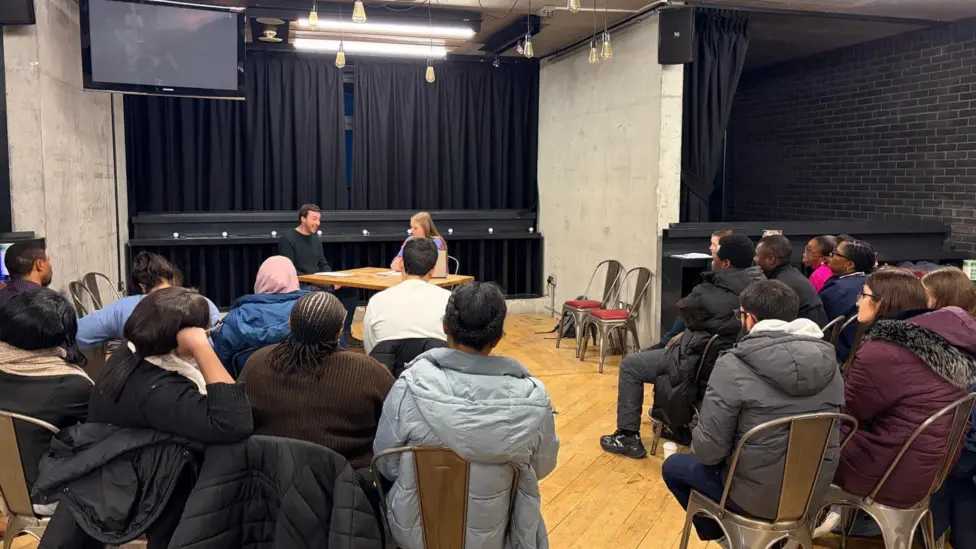
'Drama classes help GPs handle difficult patients' c/o BBC

'Hull Truck Theatre has just won the Innovation prize at the Stage Awards for their new training scheme for GPs. Associate Director Tom Saunders and GP Dr Eman Shamsaee discuss why drama classes are helping doctors treat patients.' 

BBC Radio 4 'Front Row' https://www.bbc.co.uk/sounds/play/m002q2jz (15 mins ...)

◇

Holly Phillips, East Yorkshire and Lincolnshire and Ian Youngs, Culture Reporter

Published - 21 January 2026

'A theatre company is using drama training to help doctors deal with challenging patients.

Hull Truck Theatre's classes feature actors performing difficult GP consultations, with GPs giving feedback before taking over the consultation themselves.

The theatre recently won the Innovation Award at the Stage Awards for the programme.

Dr Eman Shamsaee, who has taken part in the training scheme, described it as a "really creative way of doing GP training".'

BBC News:  Drama classes help GPs handle difficult patients

INDIVIDUAL
|
 INTERPERSONAL    :     SCIENCES               
HUMANISTIC --------------------------------------  MECHANISTIC      
SOCIOLOGY  :   POLITICAL 
|
GROUP


The training programme has completed its pilot stage and is now in the delivery phase


A reminder of co-working to deliver STORM training with a Clinical Psychologist colleague. 

See also: 'communication' : 'primary care' : 'GP' : 'drama'

Saturday, January 13, 2018

Person-centred care [PCC]: is it really happening? c/o National Voices

https://www.nationalvoices.org.uk/publications/our-publications/person-centred-care-2017

individual
|
INTERPERSONAL : SCIENCES
humanistic --------------------------------------- mechanistic
SOCIOLOGY : POLITICAL
|
group

PCC =
what’s important to the individual,
is co-ordinated around their needs
and involves them in decisions.

"To be person-centred, that care needs to work together to wrap around all the needs of the individual in a holistic way. Sadly, our report found that neither the NHS nor adult social care can demonstrate co-ordination of care, despite ‘integrated care’ being a key goal of all national and local leaders over the past five to 10 years.
The way health and care services work must change to reflect the needs of the population. It would be a start to recognise that co-ordination of care is an important factor, and that we need to be measuring whether it is happening."
(many) Definitions = 5 key indicators of pcc: 
good information,
good communication,
involvement in decisions, 
care co-ordination
 and care planning.

Service user reported data from 19 nat. surveys
NHS:  in primary care, only 39% of patients said their GP was ‘very good’ at involving them in decisions. What’s more, personalised care planning doesn’t really happen. Only 3% of GP patients with one or more long-term conditions reported having a written care plan, suggesting that opportunities to deliver personalised care in the NHS are being missed.

"Personalisation of care is more advanced in adult social care than in the NHS, with 89% of adult social care users reporting that the care and support they received helped them to have control over their daily life.

Similarly, 63% of people using a social care personal budget said that this had improved their ability to make everyday decisions.
Participation and control of decisions is well-established in adult social care, with just over 90% of those using community adult social care saying they were involved in decisions about their care and support needs."

(See original post - report for important additions)


 20+ years policy
 England
Care Act 2014

National Voices
coalition of health and care charities  report
‘Person-centred care in 2017'

No National data on this...

"It is clear from our report that a strategic overhaul of how care is measured is needed. Rather than single-service, single-setting, activity measures, more credence needs to be given to the experiences of the people who rely on services. Only then can we help local systems succeed in offering personalised, integrated and holistic care.
Whilst there have been some advances in the delivery of person-centred care, there is still a long way to go before the policy rhetoric matches the reality experienced by people."


Tuesday, February 03, 2026

Joining the digital dots across primary care and integrated care

My partner and I both received a letter today from our respective GPs. An invitation for a 'FREE LUNG HEALTH CHECK'.

Overleaf is an information sheet in landscape about the health check, plus three more sides of A4, similarly formatted - inviting trifold presentation.

After the 'Re. ......' an opening sentence asks: 'Have you ever been a smoker?'

Suddenly, I was dragged backwards through his-tory (some things don't change); not one history, but several:

INDIVIDUAL
|
    INTERPERSONAL    :     SCIENCES               
HUMANISTIC --------------------------------------  MECHANISTIC      
SOCIOLOGY  :   POLITICAL 
|
GROUP
My personal and life experience 
and not just since my teens . . .

The letter states:
**If you have never smoked, you are not eligible for this service**


My mother and father 
smoked when I was a child and my siblings. 
 
They got the message early 1980s.
  
'Society' smoked back then!  
 
Once old enough, I refused to go to the corner shop.
 
Into the 1990s, patients, smoking (some chain-smoking) on admission, long-stay and other clinical areas. As a community mental health nurse, I learned diplomatic and health promoting skills when in the car, giving a patient a lift to hospital. And, when visiting their home where I was, of course, usually, a guest.


I wondered what has happened to the GP's records? To the primary care clinical record ? The custodians of my health record, that they should need to ask that question? 
 
Or, does confidentiality tie some bureaucratic knots?
 
Where is 'integrated care' and its driver 'clinical informatics'? 
The letter included the NHS Number.
 
 Don't get me wrong, I/we appreciate the obvious effort here, even if the chronology is confusing, or,  speaks of afterthought? The letters are dated 19/06/2025. I must admit I haven't accessed my GP record, checking it for accuracy.
 
If anything, this is a prompt to do so. And seek a general medical. 


Previously: 'smoking' : 'winwick'

Sunday, December 16, 2007

GP launches YouTube health films

Bob Pyke posted the following today:
--------------
I wrote about this about a year ago and they recently updated it, but it is still pretty cool.
http://www.builthsurgery.co.uk/

A GPs' surgery in mid Wales has launched a series of health education films on YouTube, better known as a website featuring home videos.

Advice about flu vaccination and cervical screening are two of the topics covered by Builth and Llanwrtyd Medical Practice in Powys.

Doctors said they wanted to help educate their 7,700 patients and a wider global audience.

Last year, the surgery launched a series of podcasts to advise patients.

YouTube allows users to upload their home videos and other clips online.

Dr Richard Walters, who helped to develop the practice's project, said surgeries normally printed leaflets to advise patients, but added that things were changing.

He told the Western Mail newspaper: "There are a lot of things that we do in a GP practice that have to be conveyed to patients, some of which are not easy to demonstrate within the surgery.

"Sometimes getting patients to watch a quick video on the computer screen is a lot easier."

He added: "We are a practice in rural mid Wales, shops in Hereford and Aberystwyth are an hour away, Cardiff an hour-and-a-half, so although broadband access is not ideal, people tend to use the internet for all sorts of things."

The practice, which covers more than 500 square miles (1,295 sq kms), hopes its advice online will avoid unnecessary travelling to a see a doctor. The videos include tips about asthma inhalers, smear testing, blood sugar testing and the winter flu vaccine, and are made by two practice nurses.

New topics are planned to be added every month. As well as being available on YouTube, the videos are posted on the practice's own website and can be downloaded onto an MP3 player. The surgery is no stranger to using modern technology to get across its health messages to patients. Last year, it launched podcasts demonstrating, among other topics, how to use an asthma inhaler properly.

Story from BBC NEWS:
http://news.bbc.co.uk/1/hi/wales/mid/6234141.stm

Tuesday, September 15, 2020

Chaotic Modeling & Simulation Web Conference 22-24 October 2020

Dear Colleague,

Please see the announcement for the October CMSIM2020 International Web-Conference, 22-24 October 2020. You are invited to contribute by a presentation, a special session or workshop and suggest a keynote talk.

We already have done the appropriate provisions for an important meeting following the successful previous Virtual events.

The deadline for Abstract submissions and Special and Invited session and Workshop proposals is set to September 18, 2020, see at http://www.cmsim.org/cmsim2020webconference.html

We already invite papers for the Conference Proceedings where accepted papers will be included along with Book and Journal publications (submit following the conference paper guidelines to Secretariat AT cmsim1.org ).

On behalf of the Conference Committee,

Prof. Christos H Skiadas,

Conference Chair

________________

Over the years several Books from leading publishers emerged from the CMSIM and CHAOS Conferences and events.

Please see the last years Books published by Springer

11th Chaotic Modeling and Simulation International Conference, 2019,

https://www.springer.com/gp/book/9783030152963  and

12th Chaotic Modeling and Simulation International Conference, 2020,

https://www.springer.com/gp/book/9783030395148

13th Chaotic Modeling and Simulation International Conference, Springer (in preparation)

Saturday, April 06, 2019

Court of Protection: Supported Decision-Making - case of P

SELF - individual
|
INTERPERSONAL : SCIENCES
humanistic ----------------------------------------------- mechanistic
SOCIOLOGY : POLITICAL
|
group - POPULATION

Decisions on: residence, care,
alcohol consumption, depression

reluctant and distrustful of (statutory) services

Who would P feel she could trust
 to help with decision?

psychological interventions

P. being listened to ...

feel safer, healthier, in control, respected
detox placement

 (identified by LA)

place - area

physical health services

Access to knowledge - local expert - 'signposting'

Asking why and why again ...


distrust of social workers
sister and neice primary people of trust
then GP.

So family and GP became more involved.
engagement
Local Authority [LA]

Social workers and mental health support workers agreed to take a back seat

CRPD Committee
Mental Capacity Act
Judge, Lawyer

option to introduce elements of supported decision-making into the Court of Protection


Friday, July 11, 2025

'Thinking outside the box ...' iii by Amber Javis

Third response to a blog post by Amber Jarvis on The Mental Elf:

Thinking outside the box: alternatives to standard inpatient mental health care

Amber's post considers a study by:

Griffiths, J. L., Baldwin, H., Vasikaran, J., Jarvis, R., Pillutla, R., Saunders, K. R., … & Johnson, S. (2025). Alternative approaches to standard inpatient mental health care: development of a typology of service models. International Journal of Mental Health Systems, 19(1), 1-13: https://pubmed.ncbi.nlm.nih.gov/40247283/

A Community Psychiatric Nurse since 1985, on first contact patients were often upset initially at the prospect of a visit. Not the fact it was a nurse, but a psychiatric, 'mental' nurse. If the patient was OK about it, their family may have had qualms. Discretion was always exercised, essential in terms of maintaining confidentialty. Not infrequently, as a team we had a conflict of interest. A colleague already had a client a few doors down; or they lived around the corner. Socio-politically, there was never an issue back then with shop fronts, but homelessness has a long history of course. I've worked in intermediate support, visiting someone 2-3 times in a day. That continuity helps, in contrast to the experience of older adults in social care. It could be that the potential stigma elicited by intensive home care is now attenuated by:
  • The public's increased awareness mental health & illness;
  • The fragmentation of neighbourliness means people really aren't interested?
In the conclusion on Griffith's et al's study Amber notes:

'The authors’ classification of alternative service models could help planners and commissioners understand ‘the whole range of options’ when deciding which improvements to prioritise and invest in.

However, future studies should investigate the implementation challenges surrounding these alternative models – that is, what might make certain models easier or more difficult to introduce? Research investigating their effectiveness in practice is also required – are there particular models that are better suited to certain individuals, at particular times? As the authors put it: “what works best for whom, when and how”!'

The government in England has launched a trial regards people who are sick, and their work status:

'GP surgeries in England can offer advice to patients on getting back to work, including career coaching or exercise classes, as part of a pilot project to reduce the number of people who are signed off work sick.

The aim is to help people return to the workplace more quickly to reduce the length of time they need fit notes - better known as sick notes.

These are issued by health professionals if a patient is unwell or cannot work for more than seven days.

A total of £1.5m is being made available to 15 regions in England, and will be shared between GP practices in these areas to hire coaches or occupational therapists to support patients in their return to work.'

Hugh Pym, Health editor: https://www.bbc.co.uk/news/articles/cwyx880d1w8o 

Individual
|
      INTERPERSONAL    :     SCIENCES               
HUMANISTIC  --------------------------------------  MECHANISTIC      
 SOCIOLOGY  :    POLITICAL 
|
Group
Career coaching
Exercise classes
Counselling
Reduce time spent 'ill - sick - off-work'
Motivation - Mindset

FIT - SICK:
physically only of course!
Seven days
What can't I do?
What can I do?


Social Prescribing
Occupational Therapists
Physiotherapist
Support workers
Horticultural groups
Local history


FIT NOTES - SICK NOTES
£1.5m across 15 regions
Policy
Welfare budget
Behavioural Economics
Integrated Care & Social Policy


Given the rise of mental health related provblems in the population, some might argue that increased awareness of, and education about mental illnesses is part of the problem. But this isn't literacy then?

With the standing of the mental health nursing curriculum called into question, policymakers have some serious decisions to make. Social prescribers and care navigators are not the only people preoccupied with signposting. Griffith et al. write:

'Inpatient care is also costly; even though only 3% of people in England accessing mental health care in 2018/19 received inpatient mental health care, National Health Service (NHS) trusts in England still invest more in inpatient than community services [].'
Hodges' model: Axes & Domains

You can appreciate just how far away prevention and a health literate population truly are. Budgets will have to be re-directed. Now that is 'care-ordination'.

Griffith et al. and Amber's response, calls care that is simultaneous person-centred and service-centred. 

In Hodges' model it is as if the vertical axis, is turned and the 'individual' aligned with the humanistic (person-centred) and group - the mechanistic (service-centred) axis. This gives us self-care, individualised healthcare, personalised medicine through to population health.


Griffith does not venture into literacy and education (not their study's purpose, of course); but using Hodges' model, we can see two critical related issues. In addition to reducing the time a person is physically, and mentally indisposed, unwell, ill, sick ...
  1. We need to improve the lot of children excluded from school;
  2. Seriously address the determinants of health socio-politically.


Tuesday, November 06, 2007

TEMSS - Therapeutically Enhanced Medium Secure Service for Women [II]

Dear Rachel (Ms Magee)

Delighted to help you and well done on picking out Hodges' model. It sounds like an exciting time for you personally being newly qualified and working on a new unit.

Apart from several occasions as a student (late 70s at Winwick Hospital) and more recent liaison through my Trust's NHS Care Record Service Project I have not worked in forensic/secure mental health services. So what follows is a very generic over view. That said Hodges' model is more than an out-liner - brainstormer tool. As your experience grows the model will grow with you and your clients if it is appropriate to share it with them. Anyway, here are some initial thoughts a real mish-mash running through the care (knowledge) domains in turn (with some repetition).

If you wish to develop and elaborate on what follows, casting a distinct TEMSS light on each care domain I'd be happy to place your prioritised version in a graphic (with you duly ack.)

intra-INTERPERSONAL
Screening on admission. Existing psychic 'injuries'.

An·a·gram: 'secure' = 'rescue' .....

Life history, experiences +ve/-ve (including hospital care), skills, strengths, beliefs, mood, expectations, RISK behaviour, personality, psychological reactions to situation (admission, secure environment, diagnosis, prognosis, treatment - psychotropics, locus of control, helplessness, motivation, family contact...), specific, individualised - person-centred care. Thought disorder? Attribution. Risk - self-harm, harm to others, self-neglect. Psychological dependence. Intelligence. Literacies: 3Rs, visual, social, information. Boredom, Mental capacity. Cognitive functioning. Religious beliefs. Personal skills, strengths, interests. Education - access to training. Response to stress - existing coping mechanisms. Sleep. Attitudes. Sexuality. Biopsychosocial influences PMT (sorry don't wish to seem sexist!)? Stress-vulnerability. Biases, prejudices. Orientation time, place, person (not just older adults).
(YOU as a nurse are also in this domain - your skills, control and restraint, anticipation of needs, observation, empathy, self-awareness, non-judgemental, bias etc....) Assessment tools. My care plan. 'personal' time. Quality - therapeutic time if used.

SOCIOLOGY
Family, pressure on existing - new relationships, spouse-boy/girlfriends, socialisation into the 'secure' environment, dependencies - children / pets. Observation. Group activities. Group therapies. Routine. Co-operation. Team work. Leadership. Status, stigma, respect. Communication. Social skills, Assertiveness. Media - papers, radio, TV. Qualitative research - client narratives. Demographic profiles - catchment areas - deprivation indices.

SCIENCES
Screening on admission. Existing injuries. Access to GP, emergency services if needed. Physical characteristics, height, weight - BP, temp, bloods, mobility. Evidence based care? NICE. Drugs, side-effects (+ substance misuse / alcohol), physical effects of addiction, physical environment - lighting (on-off [fade]), noise (acoustic) signature, colour, architecture (sharp corners vs curves), physical health problems, trauma. ADLs. Assessment toolkit - what's in yours? Nursing (care) process. Hygiene, Domestic services. Infection control. Physical space allocation. Multidisciplinary assessments - occupational therapy, physiotherapy, psychology, pharmacist. Unit viewed as a system - ecology. Complexity within TEMSS. Literature review. Site visits / conferences. Learners. Staff course study opportunities. Academic partnerships. Quantitative research. Triangulation. Statistics. Data gathering processes. Geographic profile of referrals.

POLITICAL
Human rights, policies, protocols, GP service provision, right of appeal as relevant, 'disciplinary constraints', compliance-concordance, 'offence' category. Client space - privacy / dignity. Access to therapies, rehabilitation, training opportunity, AUTONOMY, ability to exercise choice, institutional 'rules' make-up, clothing, bathing, kitchen, toilet facilities, dignity and privacy, 'unwritten' rules - bullying - vulnerable adults, abuse, financial, sexual, physical. Inspection - Commissioners - accountability. Referral process-pathway. Thresholds, waiting lists? Travel distance - regional resource. Transport links - visiting times. Cost of fares. Staff establishment. Health & safety rules. Disability. Care transitions. Learning disability. Early onset dementia. Ageism (other '-isms') RECORDS. CPA. Community Team. Qualified-unqualified staffing. Patient-relative groups. Service user representation on management. Academic links. Visiting. SAFETY - patients-staff. Serious untoward incident reporting. Translation. Advocacy - short-long term. Other agencies - Social Services, third sector voluntary partners? Philosophy of care, OUTPUTS vs OUTCOMES? 'contracts', Mental Health Act, appeals, hospital managers. Politics of care. Psychiatry in Dissent. Audit, data collection, IT systems. Access to REPORTS - INTELLIGENCE "How are we doing?" "Where are we going and is that the right way?" Your involvement - engagement - in these processes. Client - carer - public involvement. Finance budgets - (unit budget - resources), staff support / supervision. Energy use. Recycling. Client abilities with finances / debts. Homelessness. Re-housing. Existing tenancy. Opportunity for (regular) TEAM BUILDING ;-) Innovation and creativity. PDP - KSF. Targeted issues: Managed care. Personality disorder....? Professional associations, groups:
http://health.groups.yahoo.com/group/forensic-psychiatric-nursing/
No group for TEMSS for women? Over to you! .....

As you can see the model is high level. It does not DICTATE how your unit is run, what therapy is undertaken. It can help as an aide memoire prompting you and your colleagues to systematically consider all the care domains according to the context-situation and can help ASSURE an holistic assessment and evaluation.

The model can also be used to help explain problems, issues and their solution - or realistic outcomes to clients and their families. So the model doubles as an educational resource - very helpful to engage the INDIVIDUAL or a GROUP (family). You can do this EXPLICITLY using paper or flipchart for example, or implicitly with you using the model mentally as you go along...

By including a POLITICAL domain Hodges' model is ideally suited to your speciality - in fact POLITICALLY and SOCIALLY there are 'nested' issues within your 'secure care' context: gender, ethnicity, equality and equity, public attitudes, institutionalisation, citizenry, public involvement....

This blog includes many labels (on the right hand side) I will also add 'secure services'.

Rachel - I noticed on your organisation's website there are the names of the wards and address - there's a space to fill there...

Good luck, hope this helps and thanks again for your interest.

Best,
Peter

Thursday, November 28, 2019

ii RCGP’s 7th Health and Justice Summit: Journeys Through Justice – Leadership and Transformation

Before moving to day 2 ...

- the keynote by Cllr Asher Craig Deputy Mayor (Communities, Equalities & Public Health) at St George West Ward and Bristol City Council provided a city-wide perspective on public health, public mental health, the lived experience of child poverty and with it adverse childhood experiences, the impact of institutional racism and deaths in custody. I've taken more notice locally of community initiatives and sadly note speaking to what was once a local authority day care centre is now a social enterprise with uncertainty about its future. Cllr Craig spoke of Bristol's One City Approach and Learning Circles.

I attended Dr James Matheson's workshop, a GP at Hill Top Surgery and three medical students at Manchester Medical School - “Resources for primary care support to people in contact with the criminal justice system and their equally-affected others”

"Whilst the GP workforce is short, never have we had so many GPs in training. Is general training enough without extra specialist skills training on top? How then do we create and deliver a curriculum to inspire and prepare the next generation adequately for the challenges they will face?"
With posts to follow reviewing Kinchin's book the care environment presented by prison health  seems to encourage a network approach to learning, not merely linear - procedural - chain like approaches. As air safety methods demonstrate (outside of recent design?) checklists have their vital place as a heuristic and decision-making algorithm, but prison immediately challenges a student's attitudes, their expectations of themselves and others. Meeting prisoners crystalises a focus on self-awareness, what is subjective, objective, verbal and non-verbal communication. As per the synopsis the enthusiasm and feedback of the students to their learning was great to hear.

In addition to the student's contributions Dr Matheson highlighted inequality and referenced the "Deaths of Despair" that we have reached.

Another by Dr Matthew Langley, Consultant Forensic Psychiatrist for Rampton Hospital addressed:
“Remote vital signs and activity monitoring”.
"Early experiences with remote vital signs monitoring technology in High Secure (Women’s) Coral Ward (NHSHSW) is trialling Lio Health (Oxehealth)’s remote vital signs and activity monitoring system. This is an innovative solution to support our staff but also presents challenges to integrate effectively. This presentation will discuss initial feedback from staff and patients and investigate our experience as a service with this new technology."
This project was already underway when Dr Langley returned to work at Rampton. Apparently the technology is very effective, Dr Langley trying it himself. Risk is a cost-rationaliser and here the risk is acute. Generally in health care professionals will need to weigh the ethical pressures in adopting technology. Technology will be a factor in making health care (and universal health care) sustainable, but as with electronic health records and their benefits the latter need to be assured. Does a technology 'solution' really free senior staff to focus on more 'complex' work?

I did not ask in session Dr Langley about his awareness of work on socio-technical approaches and Enid Mumford's work. At coffee we had a chat and will follow up with some information. I am very much an advocate for technology - students expect no less, the public look at what we do, the way we work and rightly wonder: wither the technology?

Another concern, however, is the word 'recognition'. Facial recognition is already politically and ethically loaded. States are deploying this technology with 'emotional recognition', so careful consideration and critique is needed (imho).

Sarah Bromley, National Medical Director Health in Justice at Care UK, covered:
“Patient Safety and Quality in Prisons”
"Deaths in Custody are still rising and the PPO have identified repeat recommendations that continue to contribute to deaths. How do we learn lessons and implement change and how do we know when we have been successful. Dr Sarah Bromley will discuss the challenges faced, the Care UK PROTECT programme and quality assurance measures in use."
Sarah appealed to my 'information-oriented' focus, as it was noted how teams can still reach a point with a new referral / patient ' client and question:

"Have we got more information"?
"No."
"Oh, right."

They then elect to carry on without this (acute - in contrast to the uncertainty it represents?) need being pursued and fulfilled. A useful distinction was made by Sarah between training for staff - Wellbeing approach, ASSIST training 2-days on self-harm and suicidality, TRIM training; and support for staff who experience extreme trauma, clinical supervision and clinical forums.

There are subjects that need regular update and so I was very grateful for:

Dr Iain Brew, Deputy National Medical Director of Health in Justice Medicines Safety and
“Hepatitis C – developments and outcomes”.

This was very helpful personally as a nurse, and in the national and global objectives that have been set. With Hodges' model incorporating an individual -- group (population) axis and a Political care domain two further talks were greatly appreciated:

Juliet Lyon CBE, Chair of the Independent Advisory Panel on Deaths in Custody, who presented ‘Keeping Safe – how consultation with women and men in prison and health and justice professionals informs our work and advice to ministers.’ Ms Lyon explained feedback from prisoners on how "... you get the odd officer who really takes care and really wants to do something but there should be an officer on every landing who spends at least twenty minutes with one prisoner at a time through the time he is there and understand him and get to know him rather him just being a number ...".

A comment Ms Lyon made concerned the training of prison officers. The time is limited. I spoke briefly to Ms Lyon as there is a resource that imho should be a part of all course 101's and again I will reach for the email. This resource might help many prisoners too. One of the needs identified was prevention, improving prisoner - officer relationships and preparation for release. It must surely help in all of these if prisoners themselves were better equipped to reflect and have a better relationship with themselves? Self-esteem counts for a great deal and whether inside or out it seems many prisoner's self-esteem is challenged, even if sufficiently coherent and emotionally mature?

A quote also struck a chord: "All my life just got the better of me since aged 13" and a self-harmer.

And, Dr Brad Hillier, Consultant Forensic Psychiatrist at Heathrow Immigration and Removal Centres on “Mental Health and Substance Misuse in the Immigration Estate”. A topic that is clinically remote to me and yet conceptually 'visible'. Visible through geopsychiatry, the impacts of conflict, enforced migration.

Dr Hillier outlined the history of immigration removal in the UK from "Immigration Act Prisoners"
1970 - small detention unit in Harmondsworth, similar units in Dover and Gatwick.
Most IAPs held in prisons (180 in 1982).
1993 - Campsfield House converted from prison to IRC
Current system dates from around 2001-6
Home Office Policy to detain and deport developed
Detention Centre Rules (2001 - statutory instrument)
Immigration Detainees

More background on 'Routes into Detention'; the impact of detention on mental health (Von Werthem et al. 2018; Adult at Risk and Rule 35 - consideration for release on medical/professional evidence that there is a history/evidence of
  • Torture/trauma
  • self-harm
  • Health condition (mental and physical) ...;
and Issues on removal / release.

This insight was new for me.

Although the programme is primarily divided between plenary sessions and workshops, the workshops - at least those I attended are essentially presentations. The room layouts reflected this. A workshop for me should have an audience work.

More to follow ...
Thursday, March 25, 2021

Anticipatory Prescribing as part of Anticipatory Care

This post is derived from a selection of the main concepts found within three papers (references listed below) on 'anticipatory prescribing'. Some explanation may assist. I have duplicated 1. What is current practice? across the domains to suggest that the question needs to be answered for each of the care (knowledge) domains. The same principle applies to the repetition of the attitudinal questions at the individual and group (sociological) level. Person-centredness demands that the patient's views are paramount plus the aggregated responses of the group as a whole.

Perhaps there is a 'drug TIME' too, which operates across all the domains once more, and each variously weighted objectively and subjectively? The concept of control and assessment of control is also critical.

I've placed GP decision-making across both 'individual' domains described as it is as a 'process' and for the patient as 'bedside manner', as also reflected in the GP and healthcare professional's communication with the family.

Clinical effectiveness and observations are likewise span the interpersonal and sciences domains. This is to denote the need to achieve and sustain parity of esteem and integrate physical and mental health care - pastoral and spiritual also.

'Cost' is anchored in the political domain, but clearly there are much wider economic ramifications, both in quality of life, quality of death and the way 'cost' is determined, measured, analysed, evaluated and reported.

For me nursing, medicine, healthcare are most effective when they are anticipatory. Observation, reflection and critical thinking are key. In a way for an individual to be health literate is a preparation for self-care. Although clearly in a general sense of health and well-being; not necessarily being literate with respect to a long-term medical condition.

Hodges' model is an idealisation and the detail is obviously described in the papers listed. The intention below is for readers to gain an appreciation of anticipatory prescribing and the application and scope of Hodges' model.

 Taking a larger perspective anticipatory prescribing is part of anticipatory care.

@GeriSoc https://twitter.com/GeriSoc/status/1374716732120645632?s=20


individual
|
INTERPERSONAL : SCIENCES
humanistic ----------------------------------------------- mechanistic
SOCIOLOGY : POLITICAL
|
group

Anticipatory Prescribing

Reassurance for patient, family &  friends
clinical effectiveness
subjective TIME
observation
agitation, distress (mood, anxiety, orientation, communication, identity - self, fear, understanding, mental capacity...)

The patient's spiritual well-being needs are met*.

1. What is current practice?

2. What are the attitudes of patients?
3. What are the attitudes of family carers?
4. What are the attitudes of community healthcare professionals?
[as individuals]


GPs’ discussion with patients

(Advanced care planning - choices)

5. What is its impact on patient comfort and symptom control?

Anticipatory Prescribing

Physical access to medication and treatment is assured.
clinical effectiveness
objective TIME
observation
remote anticipatory prescribing increased 24 hours availability
(out-of-hours)


The intervention seeks to improve [my] symptom control

pain, nausea and vomiting, agitation, and respiratory secretions.

The Covid-19 pandemic has accelerated the practice of Anticipatory Prescribing; more terminally ill patients are having end-of-life care at home and in care homes.

1. What is current practice?

New routes of administration

injection, oral, sublingual, or rectal

5. What is its impact on patient comfort and symptom control?
GPs’ decision-making processes
Research:
Systematic review and narrative synthesis
Semi-structured interviews
Web-based survey
An important intervention in supporting patients and families who wish to have last days of life care at home.

1. What is current practice?

2. What are the attitudes of patients?
3. What are the attitudes of family carers?
4. What are the attitudes of community healthcare professionals?
[collectively]

5. What is its impact on patient comfort and symptom control?
Patient and families’ well-being throughout the end-of-life journey

*There is concord and respect regards patient's spiritual well-being needs.

GPs’ discussion with family

family caregiver administration

The Independent Review of the Liverpool Care Pathway found that the use of Anticipatory Prescribing without adequate explanation or justification led to families being concerned about over-sedation and the medication hastening death.

1. What is current practice?

5. What is its impact on patient comfort and symptom control?

6. Is it cost-effective?

Revise pharmaceutical regulations to permit repurposing of anticipatory prescribing medications in care homes, wider community drug access, and recycling unused medications returned to pharmacies.
Address stock shortages.


Bowers B, Ryan R, Kuhn I, Barclay S (2019) Anticipatory prescribing of injectable medications for adults at the end of life in the community: A systematic literature review and narrative synthesis. Palliative Medicine 33(2): 160-177 https://doi.org/10.1177/0269216318815796

Antunes B, Bowers B, Winterburn I, Kelly MP, Brodrick R, Pollock K, Majumder M, Spathis A, Lawrie I, George R, Ryan R, Barclay S. (2020) Anticipatory prescribing in community end-of-life care in the UK and Ireland during the COVID-19 pandemic: online survey. BMJ Supportive & Palliative Care; http://dx.doi.org/10.1136/bmjspcare-2020-002394

Bowers B, Barclay SS, Pollock K, Barclay S (2020) General Practitioners’ decisions about prescribing end-of-life anticipatory medications: a qualitative study. British Journal of General Practice; 70(699) e731-739 https://doi.org/10.3399/bjgp20X712625 


Wednesday, January 21, 2009

First NHS Constitution Launched

FIRST NHS CONSTITUTION LAUNCHED
An historic signing ceremony to mark the launch of the NHS Constitution for England took place at Downing Street today. The Constitution, the first of its kind in the world, was signed by Prime Minister Gordon Brown, Health Secretary Alan Johnson and NHS Chief Executive David Nicholson.
The Constitution will give power to patients and the public by bringing their existing rights together in one place so they know what they are legally entitled to – and how they can exercise their rights as well as understanding their responsibilities. It also contains a range of pledges to patients, public and staff, which the NHS is committed to achieving. For NHS staff, the Constitution will mean an NHS-wide commitment to equipping them with the tools, training and support they need to deliver high quality care for patients.
Lord Darzi’s review of the NHS, High Quality Care for All concluded last summer that there was a case for an NHS Constitution to enshrine the principles and values of the NHS in England. The landmark document will put in one place what patients, staff and the public can expect of the health service. It is designed to safeguard the future of the NHS and renew its core values, making sure it continues to be relevant to the needs of patients, the public and staff in the 21st century.
Health Secretary, Alan Johnson said:
“This is a momentous point in the history of the NHS. Following on from Lord Darzi’s Next Stage Review, the launch of the NHS Constitution shows how its founding principles still endure today and have resonance for staff, patients and public alike. It will ensure that we protect the NHS for generations to come.

“The content of the Constitution is based on discussions with thousands of NHS staff and patients across the country and will form the basis of a new relationship between staff and patients – a relationship based on partnership, respect and shared commitment where everyone knows what they can expect from the NHS and what is expected from them.”
The Constitution is the result of extensive consultation with staff and patients, which was led by strategic health authorities and overseen by independent experts on the Constitutional Advisory Forum (CAF). In response to the consultation and report published by the CAF, the final Constitution includes:
  • A right to makes choices about your care and to information to help exercise that choice;
  • A new legal right to receive the vaccinations that the Joint Committee on Vaccination and Immunisation recommends that you should receive under an NHS-provided national immunisation programme;
  • A right making explicit your entitlement to drugs and treatments that have been recommended by NICE for use in the NHS, if your doctor says they are clinically appropriate for you;
  • A right to expect local decisions on funding of other drugs and treatments to be made rationally following a proper consideration of the evidence;
  • Clear and comprehensive rights to complaint and redress.
David Nicholson, NHS Chief Executive said:
“Ara Darzi asked me in his interim report to lead a work programme exploring the merits of a Constitution for the NHS. This has been a fantastic opportunity to listen to what matters most to our patients, public and staff and to use this to set out clearly the values and purpose of the NHS system.
“It also pulls together in one place what the patients who use the NHS, the public who fund it and the staff who provide it, can expect to receive from the NHS, and the contribution they can make themselves.
“I’m proud to sign off the Constitution today and am sure that it will be a powerful driver of change in the system, and help us to deliver care fit for the 21st century.”
Professor Steve Field, Chairman of the Royal College of [General] Practitioners, said:
"By stating that patients have a responsibility to register with a GP practice, the NHS Constitution reinforces the central role of the GP and the importance of continuity of care in the NHS today and in the future.
"We become GPs because we want to help people improve the quality of their lives through better healthcare. GPs want to provide the solutions and lead improvements and innovations. Having the Constitution in place will help us improve standards and care for all our patients, whoever and wherever they are.
"The new NHS Constitution is something which all GPs, their practice teams and NHS staff can commit to and have confidence in. I'm convinced that it will be an important, defining point in the development of our NHS."
Sally Brearley, Chair of the Patients Forum said:
“The NHS Constitution is a very valuable re-affirmation of the principles and values of the NHS. I was delighted to be involved in the process of drawing it up. It demonstrates the commitment of Government to the NHS, and of the NHS to its patients. We know that the public supports the NHS. The Constitution provides an important opportunity for patients, public and NHS staff to focus on giving our best to the NHS, and getting the best out of it.”
Also published today are the Handbook to the NHS Constitution; a Statement of NHS Accountability; regulations, directions and guidance to support the new rights around choice, vaccines and the funding of drugs and treatments; and our response to the consultation and the CAF’s recommendations.
The Health Bill, published last week, will underpin the new Constitution by creating new legislation to ensure that the Constitution will be reviewed every 10 years and a duty on NHS bodies, as well as independent sector and third sector providers of NHS services, to have regard to the Constitution.
ENDS
My source: COI’s News Distribution Service is the public sector leader in the electronic delivery of news releases and information direct from Whitehall departments, and more than 100 agencies and non-departmental public bodies, to the national, regional and specialist media. COI’s News Distribution Service is the public sector leader in the electronic delivery of news releases and information direct from Whitehall departments, and more than 100 agencies and non-departmental public bodies, to the national, regional and specialist media.

Friday, March 20, 2009

Study the hoops, but care about the thresholds

When you are on a course you really have - quite rightly - to do things by-the-book. That is the way - they say - you learn which corners of the pages you can turnover. Students learn early on that you have to jump through various hoops in order to complete the course and earn the stripes. The art and science of caring presents its own hoops, but in addition it is thresholds that present a barrier, thresholds that need to be negotiated in order to meet need.

Suddenly this is not about one person (you) it is about a partnership. A partnership of professionals allied and directly collaborating with a 'patient' and their carers.

One of the hoops is the paper or electronic referral form. Are you still sure this referral of yours is necessary? Are those two assessments really necessary?

There are a host of thresholds that may (or may not?) shift like a tide around the local and increasingly extended health and social care community, or 'economy' if you prefer, for example:

The threshold at which a nursing home will contact a GP surgery; or mental health services?
Just exactly what is residential care's capacity to cope internally and manage with a given range of health and social care challenges? What exactly should that capacity be? Should the public have access to referral data from care homes - to accident and emergency, mental health services, primary care? What proportion of 'referral problems' are dealt with at the nursing - social work level? What is the mental health service's threshold in terms of responding to a referral? What is the threshold for relatives believing that sufficient is being done for their loved one?

As lifelong learners of course we are all perennial hoop jumpers, learning the art of scaling and re-framing the thresholds that cross our way.

Image sources:

Seed-and-threshold segmentation

hula hoop (no longer available)

Thursday, February 28, 2019

Capital letter. Start of Sentence.

Prison, Offenders, Release ... in h2cm


individual
|
INTERPERSONAL : SCIENCES
humanistic ----------------------------------------------- mechanistic
SOCIOLOGY : POLITICAL
|
group

Mental Health Assessment - diagnosis?
Learning disability
Ongoing counselling, legacy issues PTSD?
Addiction services
Custody Liaison Mental Health Nurses
Understanding of – my [care] plan,
stress & vulnerability, relapse signature
Literacies, writing, numeracy
Life chances
Key skills:
interviews, exams, assertiveness, strengths ...


Medication: prescribing, compliance,
concordance, safe prescribing
Addiction, Substance misuse

Assurance of physical health, exercise

Location – familiar with the area?
Logistics – transport
Technology*
Treatment for Offenders

Sentence length

Re-integration into society
Social attitudes
Sex Offenders

Role of family
Relationships (Legacy issues - 'resolve'?)
(Re-)Housing
The social network they may return to
Contact with a  support group*
Having a ‘buddy’ when available

Determinate Sentence (half)

Policy (integration?) and Funding
Offender Assessment System
Rehabilitation of offenders
Employment – work
Opportunities for training - education
Allocation to a GP and other health services
Organisation of State Benefits
Probation services, Charities
Statutory supervision
Mental Health Act
Community assignment


Once we have sufficiently addressed what is identified using Hodges' model, we can can stand together in the center with an improved chance of achieving person-centred care and Recycling Lives?

 
If you can suggest changes, additions, please get in touch h2cmng AT yahoo.co.uk

Saturday, September 19, 2009

Hodges model: indicative concepts in Substance Misuse Care

Hodges' model
in substance misuse services
psychological dependence
vulnerable individuals, education, risk, assessment, review, motivation to change, harm reduction, 
motivational interviewing, appreciative inquiry, life skills, education, advice, feedback
withdrawal, aggression, hallucinations, change,
drug use history, measures, care pathways, contract, rapport, empathy
substance profiles, abuse, signs
physical dependence, health status,
pregnancy, research methods, evidence, diagnosis, co-diagnosis, staff awareness, statistics, drug-treatments, triage, screening,
scientific advice, dissemination
models: stepped care, training,
forensic science - mental health,
classification, interventions, physical access, stepped care models
dependents, family, social network
social attitudes, vulnerable communities,
community projects, self-help, e.g. A.A., socio-economic depreviation,
systemic - family, group therapies
Advertising, housing, casual drug use, work, employment, benefit incentives, re-integration, inclusion,
community, neighbourhood policing,
drug culture, media
supply, cost of drugs - alcohol
health & social care policy,
service interfaces, statistics
Drugs strategy, funding, X-agency working, funding, GP contract, commissioning, "client contract-plans", National Treatment Agency, NICE, Home Office, legislation, crime, offending, re-hab. / specialist teams / treatment facilities, Government data, community prescribing, employers

Saturday, March 24, 2012

Alcohol: Messages in bottles, domains and anagrams

The perennial health news item that is alcohol has bubbled and overflowed this week. In 1987-88 I visited several nearby alcohol services in Blackburn, Preston and Salford with a questionnaire to compare and contrast with Chorley which at the time had no dedicated alcohol services. There was Alcoholics Anonymous AA and Al-Anon, but nothing specific through health beyond community psychiatric nurses. The project was for the CPN(Cert.).

Back then I remember a Consultant Psychiatrist saying that the level of alcohol consumption is directly related to cost. The literature I read also drew attention to historical comparisons. I think it was Alcohol Concern who supported this view and called for urgent action. Of course all that was some 24 years ago. Incredible that there is some movement in 2012. In 2007 the taxi driver from Elounda to Heraklion airport described the movement and horizontal stasis that adorns the pavements (and spills onto the roads) of Malia as we zipped by. The Brits do have a problem. A Consultant physician highlighted this from a hospital ward on BBC Radio 4 news today.

Don't get me wrong: I like an occasional drink but my enjoyment of alcohol has been tempered over the years by several experiences:
  • An early party aged 15 (and at a church social club) preloading was already in vogue. No sooner were a group of us sat at a table than someone threw up on the table. It was alcohol.
  • Biology and human biology lessons helped instil the impacts of alcohol.
  • Having to say 'goodbye' to clients with a drink problem, duly referred by their GP. I cannot support them in their drinking after several attempts to effect change.
  • Appreciating the link between drink and risk behaviours.
  • Working with people whose 'ill-health career' has seen them having to live with, but not themselves recognise Korsakoff's syndrome.
  • Seeing people over three decades who cannot be supported in the community with their family, relatively young for residential care, but given a lack of specialised facilities - there they frequently are.
Hopefully the policy turn will have a positive impact extending beyond news headlines:

Minimum alcohol price planned for England and Wales
http://www.bbc.co.uk/news/uk-17482035

Alcohol pricing: politics under the influence 
http://www.guardian.co.uk/commentisfree/2012/mar/23/alcohol-pricing-politics-under-influence?newsfeed=true

With the prospect of an alcohol and a new NHS information strategy in England you hope that some dots can be joined. Here are a few:

INTERPERSONAL : SCIENCES
SOCIOLOGY : POLITICAL
Motivation    Psychological effects
Attitudes to risk         Predisposition
Personality     Education    Vulnerability
Data     Evidence      Public health
Physical effects    Dual diagnosis
Research       Violence - statistics
Social contradictons and attitudes - 'image'
Upbringing       Cultural attitudes
 Marketing          Media
Cost per unit      Services        Funding  
Cost to health budget      Reporting
Policy   Lobbying   Taxes   Commissioning


Beer label c/o http://www.beerlabelizer.com/

'Real Stout' = 'Sale Tutor'

Wednesday, October 17, 2018

"One-size-fits-all" Assurance of Insurance needed?

individual
|
INTERPERSONAL : SCIENCES
humanistic ----------------------------------------------- mechanistic
SOCIOLOGY : POLITICAL
|
group
mental health problems affect

Self-employed, single
No previous history of MH problems
PURPOSE#
Psychology - Counselling
12.5 million adults - 1 in 4

PROCESSES (automated?)*

'Life cover'
Insurer access to GP record - deemed high-risk
500,000 people affected by

Untimely death of a parent
Mother killed by drug-using driver
Refused IVF treatment
PRACTICE

insurance company
POLICIES
driver jailed
Voided application for life cover
(figures) suggest insurers reject up to 625,000 people a year
By law ins. companies cannot discriminate

*Need to discuss an application with a person, fill in 'gaps' then less likely to become subjected to an algorithm and an automated rejection.

# What were the reasons for referral to psychology and counselling?

My source:
Miller, L. (2018) My fight to get life cover after mental health trauma, The Daily Telegraph, Money, 22 September, pp.1-2.

See also: https://www.telegraph.co.uk/insurance/life/get-life-insurance-mental-health-problem/

Technology can, will and is helping to 'disrupt' the insurance market.
