Hodges' Model: Welcome to the QUAD: bureaucracy

Hodges' model is a conceptual framework to support reflection and critical thinking. Situated, the model can help integrate all disciplines (academic and professional). Amid news items, are posts that illustrate the scope and application of the model. A bibliography and A4 template are provided in the sidebar. Welcome to the QUAD ...

Showing posts with label bureaucracy. Show all posts

Tuesday, February 03, 2026

Joining the digital dots across primary care and integrated care

My partner and I both received a letter today from our respective GPs. An invitation for a 'FREE LUNG HEALTH CHECK'.

Overleaf is an information sheet in landscape about the health check, plus three more sides of A4, similarly formatted - inviting trifold presentation.

After the 'Re. ......' an opening sentence asks: 'Have you ever been a smoker?'

Suddenly, I was dragged backwards through his-tory (some things don't change); not one history, but several:

INDIVIDUAL
|
    INTERPERSONAL    :     SCIENCES               
HUMANISTIC --------------------------------------  MECHANISTIC      
SOCIOLOGY  :   POLITICAL 
|
GROUP
My personal and life experience 
and not just since my teens . . .

The letter states:
**If you have never smoked, you are not eligible for this service**


My mother and father 
smoked when I was a child and my siblings. 
 
They got the message early 1980s.
  
'Society' smoked back then!  
 
Once old enough, I refused to go to the corner shop.
 
Into the 1990s, patients, smoking (some chain-smoking) on admission, long-stay and other clinical areas. As a community mental health nurse, I learned diplomatic and health promoting skills when in the car, giving a patient a lift to hospital. And, when visiting their home where I was, of course, usually, a guest.


I wondered what has happened to the GP's records? To the primary care clinical record ? The custodians of my health record, that they should need to ask that question? 
 
Or, does confidentiality tie some bureaucratic knots?
 
Where is 'integrated care' and its driver 'clinical informatics'? 
The letter included the NHS Number.
 
 Don't get me wrong, I/we appreciate the obvious effort here, even if the chronology is confusing, or,  speaks of afterthought? The letters are dated 19/06/2025. I must admit I haven't accessed my GP record, checking it for accuracy.
 
If anything, this is a prompt to do so. And seek a general medical. 


Previously: 'smoking' : 'winwick'

Monday, July 21, 2025

"Passport please!"

Press release

'Innovator passports’ set to accelerate cutting-edge NHS care

The move is a key part of the government’s Plan for Change and its 10 Year Health Plan, which will transfer power to patients and transform how healthcare is delivered, creating an NHS fit for the future.

For too long, cutting-edge businesses avoided working with the NHS and went elsewhere, weighed down by slow timelines and reams of processes. Now, organisations will be able to join up with the NHS quicker than ever before through the removal of needless bureaucracy. Not only is this better for patients but also for our NHS and economic growth.

A ‘one-stop shop’ thorough check from the NHS will now allow businesses to get to work as quickly as possible and deliver on what matters most to patients across the country. It means NHS patients will get more effective treatments and support quicker, and the NHS will make the most of its finite assessment resource, all while businesses are given a boost through the government’s industrial strategy.

Treatments including special wound dressings - already reducing surgical site infections by 38% at Barking, Havering and Redbridge University Hospitals - could be adopted more widely, benefiting patients across the country.

At Barts Health NHS Trust in London, use of antimicrobial protective coverings for cardiac devices has cut infections and saved over £103,000 per year. At University Hospitals Dorset, adopting rapid influenza testing reduced bed days and antibiotic use, freeing up vital resources.

The new passport will eliminate multiple compliance assessments, reducing duplication across the health service. It will be delivered through MedTech Compass, a digital platform developed by DHSC to make effective technologies more visible and widely available.

MedTech Compass will make these innovations and the evidence underpinning them clear to buyers within the NHS.

The initiative builds on the government’s drive to slash waiting lists and ensure people have access to health and care when and where they need it under the Plan for Change.

Wes Streeting, Secretary of State for Health and Social Care, said: 

For too long, Britain’s leading scientific minds have been held back by needless admin that means suppliers are repeatedly asked for the same data in different formats by different trusts - this is bad for the NHS, patients and bad for business. 

These innovator passports will save time and reduce duplication, meaning our life sciences sector - a central part of our 10 Year Health Plan - can work hand in hand with the health service and make Britain a powerhouse for medical technology.

Frustrated patients will no longer have to face a postcode lottery for lifesaving products to be introduced in their area, and companies will be able to get their technology used across the NHS more easily, creating a health service fit for future under the Plan for Change.

Dr Vin Diwakar, Clinical Transformation Director at NHS England, said:

We’re seeing the impact improvements to technology are having on our everyday lives on everything from smartwatches to fitness trackers - and we want to make sure NHS patients can benefit from the latest medical technology and innovations as well.

The new innovator passports will speed up the roll-out of new health technology in the NHS which has been proven to be effective, so that patients can benefit from new treatments much sooner.

It also forms an important element of the industrial strategy through the upcoming Life Sciences Sector Plan, which will turbocharge Britain’s life sciences sector and cement the UK’s position as a global innovation leader.

MedTech Compass helps speed up decision-making in trusts, allowing technology to scale faster - making it easier for trusts across the country to find, assess and adopt proven technologies that improve and speed up patient care.

The passports mean that once a healthcare tool has been assessed by one NHS organisation, further NHS organisations will not be able to insist on repeated assessments, reducing the need for local NHS systems to spend their limited resources on bureaucratic processes that have already been completed elsewhere.

The digital system will act as a dynamic best buyer’s guide, making it easier for trusts to compare products side-by-side in one place.


Read the full press release:
https://www.gov.uk/government/news/innovator-passports-set-to-accelerate-cutting-edge-nhs-care

In my source (below) Laura Hughes also notes:
'However, the Financial Times has reported on calls by frontline workers for basic NHS infrastructure to be brought up to a minimum standard before politicians extol the virtues of cutting-edge tech.

Matthew Taylor, head of The NHS Confederation, which represents health managers, said not all NHS organisations were at the same stage of digital maturity, which would "affect their ability to either innovate or implement preapproved innovation in this passport model."'


Individual
|
      INTERPERSONAL    :     SCIENCES               
HUMANISTIC  --------------------------------------  MECHANISTIC      
 SOCIOLOGY  :    POLITICAL 
|
Group
innovation

personal passport

awareness of existing state / processes

innovation

'innovation passport'

duplication

innovation

public safety

waiting lists / times

accountability - standards - assurance

innovation

bureaucracy - multiple Trusts

procurement
of infrastructure and innovation -
cutting-edge technology


Laura Hughes NHS use of medical innovations streamlined. FTWeekend, 2 July, 2025, p.3.
https://www.ft.com/content/1d025579-990a-4d58-9e0b-6d0d29d27dab

Previously:

Wednesday, November 20, 2024

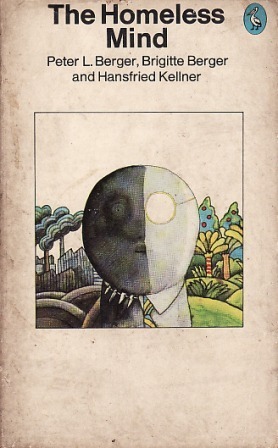
Hello? Is anyone there? 'The Homeless Mind'

individuality
|
INTERPERSONAL : SCIENCES              
humanistic ------------------------------- mechanistic
SOCIOLOGY : POLITICAL   
|
group

'Put differently, the componentiality of the cognitive style pertaining to technological production extends to identity. Again, a specific kind of double consciousness develops. In this case the dichotomy is between concrete identity and anonymous identity. The individual now becomes capable of experiencing himself in a double way: as a unique individual rich in concrete qualities and as an anonymous functionary. This dichotomization in the subjective experience of identity makes it possible for the individual to establish subjective distance vis-à-vis certain features of this identity.9 

For example, the individual will now experience that portion of his identity that contains his anonymization as a 'worker' as being 'less real' than his identity as a private person or family man. Since each portion of identity relates to specific roles, it now becomes possible for the individual to perform some of these roles 'tongue in cheek'. The componentiality of identity, as the componentiality of social relations, makes possible an 'engineering' practice. This time what is involved is the 'engineering' of one's own self. Those aspects of identity that a defined as 'more real' must be protected against threats coming from the 'less real' components of identity.' p.37-38.


Helpful reference to ideas of multi-relational synchronization and institutional vectors and how our mind's became homeless.

Also encouraging, even though 'historic', discussion on life plans and life planning.

'A basic presupposition is that life careers are not firmly fixed but are at least relatively open. Put simply the individual is faced with a number of alternative careers, especially in his " younger years, and therefore must make decisions about these available options. It is possible for the individual to imagine, himself as having different biographies. This possibility has both positive and negative consequences for the emotional economy of the individual. Positively, it may give him a feeling of frees dom to shape at least certain parts of his life. Negatively, it increases the likelihood of frustration regarding specific careers One is, after all, less likely to resign oneself to a particular situation if one believes that other situations are, in principle, possible.' p.67.
'Implicit in this scale of probabilities is a general 'sociology', on whatever level of theoretical sophistication. The individual has a `map of society' within which he can locate and project himself in terms of both past biographical recollection and future projects. The individual's life is perceived as a trajectory across this 'map'. There is also a large body of factual knowledge, most of which is 'weighted' in terms of the individual's life plans. Thus if a particular career appears to the individual as a realistically plausible project, he will have more factual knowledge about it than about a career in which he can participate only in pragmatically irrelevant fantasy. In other words, a good deal of background knowledge is related to 'anticipatory socialization'. p.68.
'However vaguely this may be defined, there is the underlying concept of life plan, both for the individuals and for the a family unit. This life plan is the totalization of all the relevant timetables, their grand sum and their integrative meaning In modern society, such life planning has become a value in itself. Its absence is commonly an occasion for reproach. The family unit thus operates as a life-planning workshop.' p.69.

'There is a general expectation of justice. It is expected that everyone in the relevant category - as, for example, those en-titled by law to a passport - will receive equal treatment. It is, of course, understood that certain persons may be excluded from this relevant category - for example, resident aliens or convicted criminals. It is also understood that the bureaucratic procedures may codify certain preferences, for example, in favour of diplomats or other people travelling on urgent government business. Once the categorial system has been established, however, the presumption of equality holds within each category. In the most general way, bureaucracy is expected to conform to the Roman principle suum cuique. An implication of this is that there will be no favouritism or any other intrusion of personal bias in the bureaucrat's handling of each client's case. The bureaucrat is expected to handle every case sine ira et studio. In other words, there is the general expectation that bureaucracy will operate impersonally and with 'affective neutrality'.2 These considerations bring us to an important point: unlike anything discussed in the preceding chapter, the cognitive style of bureaucracy contains a moral quality, not just as a limiting factor (after all, there are also moral assumptions about technological production - for example, that no one will be killed in the course of it), but as an intrinsic part of its own structure of consciousness. The source for this moral element is probably to be sought in the primary social location of bureaucracy in the political sphere.' pp.52-53.


Berger, P. L., Berger, B., & Kellner, H. (1973). The homeless mind: Modernization and consciousness. Penguin. 

Cover image: https://www.goodreads.com/book/show/3368465-the-homeless-mind

9 This is an amplification, by way of phenomenological description, of what Erving Goffman has called 'role distance'.

2 This term was coined by Talcott Parsons.

See also: 'homeless'

Friday, February 14, 2020

'Desk-topping' i [ c/o BBC Radio 4 today 5 Feb. ]

individual
|
INTERPERSONAL : SCIENCES
humanistic ----------------------------------------------- mechanistic
SOCIOLOGY : POLITICAL
|
group - population


'desktop'

Definition #1 below is as obvious as it is brief. A desk might be topped with various things, so-called executive toys (still?), personal affects, or company related branding.
It may have the proverbial in-tray, out-tray (paper still lingers?). The desk may be clear, or cluttered as a workspace. It will be the home of technology, it's PC - desktop - namesake, that shares the floor nearby, wired the sign of connectedness and energy.


'Desk-topping'

To have 'papers' on the desk, might be to denote action of some sort, but how long are those 'papers' held for?
The subjects of the issue at hand could be experiencing a protracted delay. The desktop in this case exemplifies not just bureaucracy, but obfuscation.


desk·top (dĕsk′tŏp′)
n.
1. The top of a desk.
2. Computers
a. The area of a display screen where images, windows, icons and other graphical items appear.
b. A computer that is designed to be used at a desk or table and is not easily moved, in contrast to a laptop or other portable device. Also called desktop computer.

https://www.thefreedictionary.com/desktop

My source:
BBC Radio 4 Today 5 February- discussion regarding historical child abuse in the Church.

Desk-topping or desktopping?

Tuesday, July 28, 2015

Rose Report: "Create a short NHS handbook/ passport/ map summarising in short and/or visual form the NHS core values..."

Department of Health 16 July 2015:
Lord Rose June 2015, p.49.
The second prerequisite condition is cultural. The NHS needs to create a values-based culture. A large and complex organisation can be made more effective if all of its people behave in ways that are ethically consistent, and in ways that show they share the same values and base what they do on those values. There is already the ground work for this: the NHS Constitution includes a Staff Handbook, and Trusts communicate the NHS values contained within it in a variety of ways. But there needs to be a consistency in approach. Values must be easily and quickly understood across the NHS. Great leadership must be understood and fostered in staff at every level; the three military services are good examples of how this can be achieved across an organisation. A new and more visual format will promote this. 
R2: Create a short NHS handbook/ passport/ map summarising in short and/ or visual form the NHS core values to be published, broadcast and implemented throughout the NHS.

Monday, July 27, 2015

BBC Radio 4: NHS regulation, leadership, training, careers...

Edited from BBC Radio 4: "Today, 27/07/2015, NHS constantly feeding regulatory beast"

Lord Stuart Rose has produced a report -

Better leadership for tomorrow: NHS leadership review

- looking at how to improve leadership in the NHS.

The Conservative peer and former Marks and Spencer boss said he found a great ethos across the NHS, but also change-fatigue and staff burdened by an enormous amount of data and bureaucracy.

“We have to have regulation with a light touch,” said Lord Rose. “There’s a lot of managing upwards, constantly feeding the regulatory beast.” ...

Release date: 27 Jul 2015

http://www.bbc.co.uk/programmes/p02y4dpv

Monday, March 09, 2015

Ngrams: E-portfolios, nursing theory, models of nursing...: Do the lines run true?

For the latest module I'm looking at e-portfolios in nursing education and possibly wider afield. In the FT Weekend Life & Arts there is an extract -

Capitalism’s secret love affair with bureaucracy

- from David Graeber’s book: The Utopia of Rules: On Technology, Stupidity, and the Secret Joys of Bureaucracy published this week on March 12. It includes a graph from Google Books Ngram a word count through time of 'bureaucracy'. I'd read about Ngrams and tried them quite some time ago, but never used them. Now's my chance.

The graph below began with e-portfolio and eportfolio. I tried nursing e-portfolio... but these were not found. With conceptual framework the scale was disrupted. Adding models of nursing and nursing theory provided a frame that also nicely encompasses, at least in this rendering, conceptual space and threshold concepts.

At the risk of asking too much of the graph if not the source, we might be disappointed that models of nursing is not running concurrent with e-portfolio and reassured that nursing theory has waned but is 'still up there'. This is to forget though that the count for e-portfolio here is general not nursing specific.


Ngrams are another tool and a dynamic one no doubt, when the API is utilised, the data downloaded and words are re-examined over time. In answer to the title's question, I do not believe the lines do run true but this is about nursing and e-portfolios.

Saturday, March 20, 2010

More SF (speculations on person-centred care...?)

I've been reading a bit more SF - this time Joe Haldeman's, The Forever War here's a fascinating excerpt:

I went to the phone in the kitchen and with some difficulty managed to get through to the hospital. A plain girl in her twenties formed in the cube. "Nurse Donalson, general services." She had a fixed smile, professional sincerity. But then everybody smiled.
"My mother needs to be looked at by a doctor. She has a --"
"Name and number, please."
"Beth Mandella." I spelled it.
"What number?"
"Medical services number, of course," she smiled.
I called into Mom and asked her what her number was.
"She says she can't remember."
"That's alright, sir, I'm sure I can find her records."
She turned her smile to a keyboard beside her and punched out a code.
"Beth Mandella?" she said, her smile turning quizzical.
"You're her son? She must be in her eighties."
"Please. It's a long story. She really has to see a doctor."
"Is this some kind of joke?"
"What do you mean?" Strangled coughing from the other room, the worse yet. "Really -- this might be very serious, you've got to--"
"But sir, Mrs. Mandella got a zero priority rating way back in 2010. "
"What the hell is that supposed to mean?"
"S-i-r . . ." The smile was hardening in place.
"Look. Pretend I come from another planet. What is a 'zero priority rating'?"
"Another -- oh I know you!" She looked off to the left.
"Sonya -- come over here a second. You'd never guess who .." Another face crowded the cube, a vapid blonde girl who smile was twin to the other nurse's. "Remember? On the stat this morning?"
"Oh, yeah," she said. "One of the soldiers -- hey, that's really max, really max." The head withdrew.
"Oh, Mr Mandella," she said, effusive. "No wonder you're confused. It's really very simple."
"Well?"
"It's part of the Universal Medical Security System. Everybody gets a rating on their seventieth birthday. It comes in automatically from Geneva."
"What does it rate? What does it mean?" But the ugly truth was obvious.
"Well, it tells how important a person is and what level of treatment he's allowed. Class three is the same as anybody else's; class two is the same except for certain life-extending--"
"And class zero is no treatment at all."
"That's correct, Mr Mandella." And in her smile was not a glimmer of pity or understanding.
"Thank you." I disconnected. Marygay was standing behind me, crying soundlessly with her mouth wide open. ...

Joe Haldeman, The Forever War, Gollancz, SF Masterworks, pp.148-149.
Link:
http://en.wikipedia.org/wiki/The_Forever_War

Monday, January 11, 2010

Ticks in boxes and triplicate thinking

Having things in triplicate may be reassuring from an admin perspective. ...

Triplicate GirlThat said, 1st year learners on wards can relax to focus on learning, not having to worry (too much) about the administration - the running of the ward 24/7.

Very soon though years 2... 3 come knocking and they must consider due process, they have to question and get to grips with the established routine that sets and keeps several plates spinning.

Of course IT has by and large (?!) removed the need for paper carbon copies (although those three copies should have three distinct purposes).

Despite that an obsession with ticks in just three boxes may not be enough when it comes to high quality multidisciplinary, holistic and integrated care - it's ticks in the mind and attitude that count.

Additional links:
Records Management Society

The Productive Ward

Image source:
Triplicate Girl - http://upload.wikimedia.org/wikipedia/en/6/63/Triplicate_Girl_LSH3.jpg