Hodges' Model: Welcome to the QUAD: life plan

Hodges' model is a conceptual framework to support reflection and critical thinking. Situated, the model can help integrate all disciplines (academic and professional). Amid news items, are posts that illustrate the scope and application of the model. A bibliography and A4 template are provided in the sidebar. Welcome to the QUAD ...

Showing posts with label life plan. Show all posts

Saturday, August 22, 2026

Re. 'Population mental health in England, 2003–2022: Teasing apart psychological distress, mental illness and activity limitation'

Last month I was struck reading John Burn-Murdoch's regular opinion piece 'Data Points' in the FTWeekend.

This one 'What's really going on with mental health around the world?' concerned a report:

Henking, C. and Baumberg Geiger, B. (2026), 'Population mental health in England, 2003–2022: Teasing apart psychological distress, mental illness and activity limitations'. ESRC Centre for Society and Mental Health, King's College London.
https://osf.io/preprints/socarxiv/8ygrz_v2

Below I have mapped some points to Hodges' model and added others. 

By accident or not, Mr Burn-Murdoch continued this theme last weekend, discussing pandemic lockdowns and how they never ended for some people (citations below):

individual
|
INTERPERSONAL
: SCIENCES             
humanistic ------------------------------- mechanistic
SOCIOLOGY : POLITICAL   
|
group


Getting stuck in a psychological minima. Becoming fixed in mindset, lack of self-development through others - empathy, rapport. 

Subtle self-harm becoming more serious.

What is character in the 21st C?

Lack of measures.
^Lack of coherence - parity in health policy.

Lack of assertiveness, self-advocacy, prone to self-stigma (non-help seeking!)

Qualitative lived experience becomes self-reinforcing (and other - family?)

Getting fixed with a physique, posture - shaped by technology.
Physical equivalent-complement 
of 'mindset'.

Getting stuck in a physical minima 'long-term'. Subtle self-harm becoming more serious.


'Systems medicalisation'
PROCESSES

Convenience (POLITICAL) of binary responses, e.g. 
DISABLED -------- NOT DISABLED

Search for 'answers' - diagnosis

Search for 'solutions' interventions

Early effect of lack of external play, risk-taking with others, friends - testing - trust.
Lack of social skills.
Impact of social and other media - reduction of stigma.
Social roles models - father-
figure? 

Lack of 'real' socialisation - meeting peers.

Socio-Political Power, hence resort to 'sick role'.

Social media - contribution to self-diagnosis. 

Support inc. Social prescribing: "You're not listening! How dare you suggest walking, gardening, volunteering, discussion group .. as a way to deal with this!"

'It's life - get on with it!' 

The compound effect of 'World News' on young people: cost of living; housing; cost of/access to education; employment options - related to AI; geopolitical events; climate change, state of economics since birth; COVID; housing; and isolation.
'Jobs' for teenagers?
(I had a 7-day paper-round)

 ^Parity of esteem (see above)

Welfare traps - 
especially by age xx

Realisation of the importance of outdoors play. Streets being protected for children.

Early Start Nursery


Imagine four characters called Harlequin meet for dinner. Halfway through another Harlequin gatecrashes the party, called spirit, then add psychiatry, anti-psychiatry, psychology, service users, policy-makers, the pharma-industry and education to the guest list and you are set for a marvellous time.

My source: John Burn-Murdoch, What's really going on with mental health around the world? FTWeekend, 11-12 July 2026, p.10.

John Burn-Murdoch, Pandemic lockdowns never ended for some people. FTWeekend, 15-16 August 2026, p.8.

Previously: 'young people' : 'mental illness' : 'behaviour' : 'Serres'
Wednesday, November 20, 2024

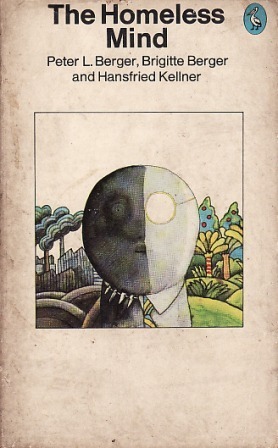
Hello? Is anyone there? 'The Homeless Mind'

individuality
|
INTERPERSONAL : SCIENCES              
humanistic ------------------------------- mechanistic
SOCIOLOGY : POLITICAL   
|
group

'Put differently, the componentiality of the cognitive style pertaining to technological production extends to identity. Again, a specific kind of double consciousness develops. In this case the dichotomy is between concrete identity and anonymous identity. The individual now becomes capable of experiencing himself in a double way: as a unique individual rich in concrete qualities and as an anonymous functionary. This dichotomization in the subjective experience of identity makes it possible for the individual to establish subjective distance vis-à-vis certain features of this identity.9 

For example, the individual will now experience that portion of his identity that contains his anonymization as a 'worker' as being 'less real' than his identity as a private person or family man. Since each portion of identity relates to specific roles, it now becomes possible for the individual to perform some of these roles 'tongue in cheek'. The componentiality of identity, as the componentiality of social relations, makes possible an 'engineering' practice. This time what is involved is the 'engineering' of one's own self. Those aspects of identity that a defined as 'more real' must be protected against threats coming from the 'less real' components of identity.' p.37-38.


Helpful reference to ideas of multi-relational synchronization and institutional vectors and how our mind's became homeless.

Also encouraging, even though 'historic', discussion on life plans and life planning.

'A basic presupposition is that life careers are not firmly fixed but are at least relatively open. Put simply the individual is faced with a number of alternative careers, especially in his " younger years, and therefore must make decisions about these available options. It is possible for the individual to imagine, himself as having different biographies. This possibility has both positive and negative consequences for the emotional economy of the individual. Positively, it may give him a feeling of frees dom to shape at least certain parts of his life. Negatively, it increases the likelihood of frustration regarding specific careers One is, after all, less likely to resign oneself to a particular situation if one believes that other situations are, in principle, possible.' p.67.
'Implicit in this scale of probabilities is a general 'sociology', on whatever level of theoretical sophistication. The individual has a `map of society' within which he can locate and project himself in terms of both past biographical recollection and future projects. The individual's life is perceived as a trajectory across this 'map'. There is also a large body of factual knowledge, most of which is 'weighted' in terms of the individual's life plans. Thus if a particular career appears to the individual as a realistically plausible project, he will have more factual knowledge about it than about a career in which he can participate only in pragmatically irrelevant fantasy. In other words, a good deal of background knowledge is related to 'anticipatory socialization'. p.68.
'However vaguely this may be defined, there is the underlying concept of life plan, both for the individuals and for the a family unit. This life plan is the totalization of all the relevant timetables, their grand sum and their integrative meaning In modern society, such life planning has become a value in itself. Its absence is commonly an occasion for reproach. The family unit thus operates as a life-planning workshop.' p.69.

'There is a general expectation of justice. It is expected that everyone in the relevant category - as, for example, those en-titled by law to a passport - will receive equal treatment. It is, of course, understood that certain persons may be excluded from this relevant category - for example, resident aliens or convicted criminals. It is also understood that the bureaucratic procedures may codify certain preferences, for example, in favour of diplomats or other people travelling on urgent government business. Once the categorial system has been established, however, the presumption of equality holds within each category. In the most general way, bureaucracy is expected to conform to the Roman principle suum cuique. An implication of this is that there will be no favouritism or any other intrusion of personal bias in the bureaucrat's handling of each client's case. The bureaucrat is expected to handle every case sine ira et studio. In other words, there is the general expectation that bureaucracy will operate impersonally and with 'affective neutrality'.2 These considerations bring us to an important point: unlike anything discussed in the preceding chapter, the cognitive style of bureaucracy contains a moral quality, not just as a limiting factor (after all, there are also moral assumptions about technological production - for example, that no one will be killed in the course of it), but as an intrinsic part of its own structure of consciousness. The source for this moral element is probably to be sought in the primary social location of bureaucracy in the political sphere.' pp.52-53.


Berger, P. L., Berger, B., & Kellner, H. (1973). The homeless mind: Modernization and consciousness. Penguin. 

Cover image: https://www.goodreads.com/book/show/3368465-the-homeless-mind

9 This is an amplification, by way of phenomenological description, of what Erving Goffman has called 'role distance'.

2 This term was coined by Talcott Parsons.

See also: 'homeless'
