Hodges' Model: Welcome to the QUAD: quantitative

Hodges' model is a conceptual framework to support reflection and critical thinking. Situated, the model can help integrate all disciplines (academic and professional). Amid news items, are posts that illustrate the scope and application of the model. A bibliography and A4 template are provided in the sidebar. Welcome to the QUAD ...

Showing posts with label quantitative. Show all posts

Sunday, October 26, 2025

'Politics as a science' ...

'The science of politics is the oldest of the social sciences but still perhaps the most dependent: it derives much of its methodology from statistics (the science of the state turned into the science of numerical data), from economics and from sociology and it steals much of its substance from anthropology, from history and from law. Yet there is little doubt about the core of the subject: it focuses on the ways in which decisions are taken by men acting within territorially or functionally defined networks and constellations of organizations. And the hallmark of the discipline is 'its systematic analysis', whether couched in verbal and literary terms or in the formalized language of statistics or of mathematical logic.' Preface vii
Hayward R. Alker, Karl W. Deutsch, Antoine H. Stoetzel (eds.), Mathematical Approaches to Politics, Amsterdam, Elsevier, 1973, pp. 475.

Friday, January 03, 2025

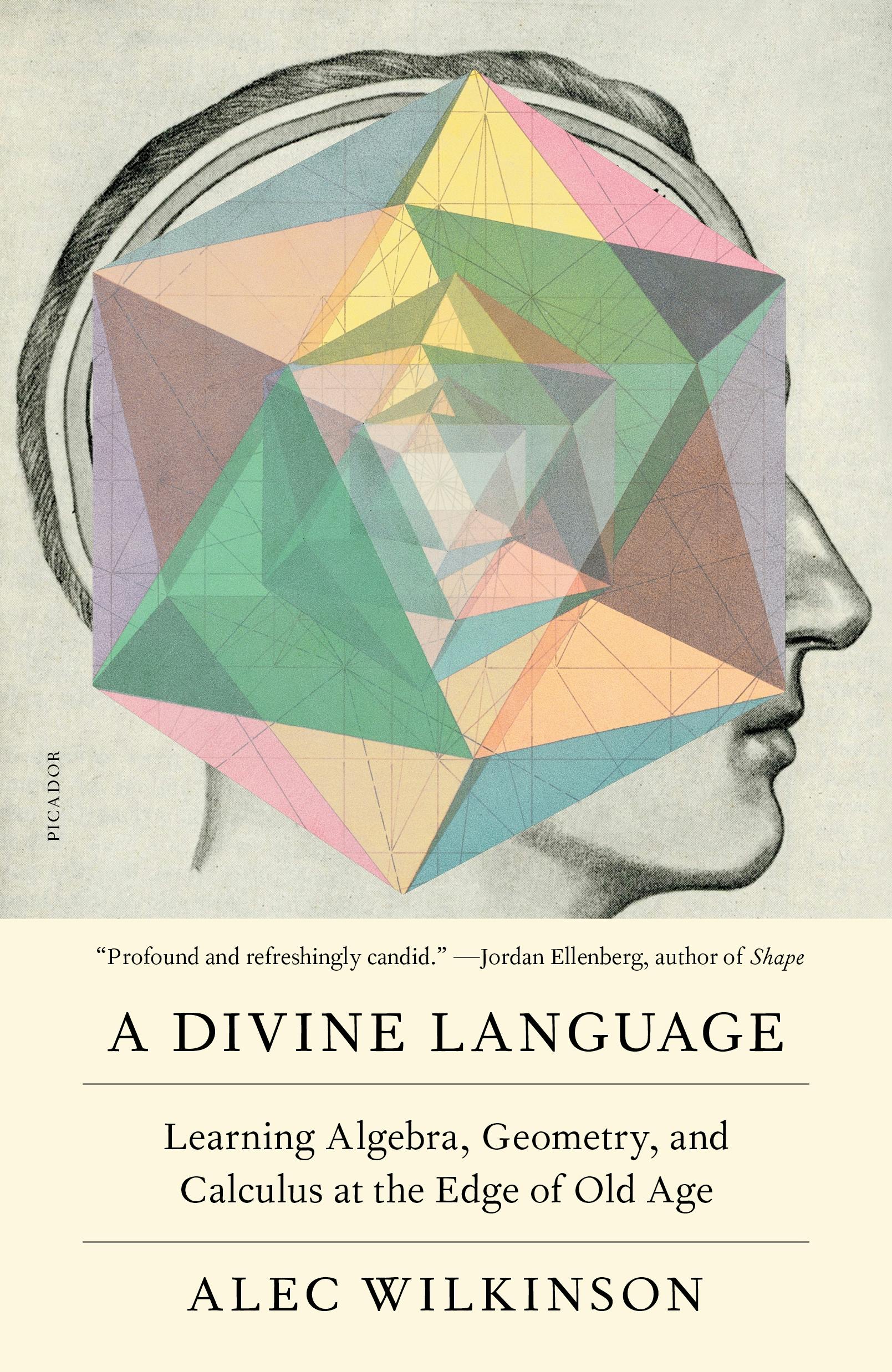
How 'divine' is the language of care?

'My impression was that algebra was less a subject than a practice into which one was inducted by the algebra priests after a series of mortifications. The letters and equations that the teacher drew on the board did not seem related to the numbers I had handled in other classrooms. For one thing, a problem in arithmetic was vertical, one number beneath another, and a problem in algebra, an equation, was horizontal. I felt as if in a permanent present, unable to see how the past and the future were joined. In Ulysses James Joyce writes that the present is the drain that the future goes down on its way to becoming the past.' p.12.
'The mathematician Alonzo Church, who taught Alan Turing, told another of his students, David Berlinski, "Any idiot can learn anything in mathematics. It requires only patience." I would sit with a pencil and paper trying to solve an algebra problem and sometimes go only so far before my mind would halt, because I had could used up what little I knew that might apply. It hadn't occurred to me to think of algebra as the bright boys and girls I had been among had thought of it, as a series of related procedures. They were constructing a map. I was collecting postcards from places where anxiety or incuriousness had kept me from leaving my hotel.' p.31.
(my emphasis)


Alec Wilkinson. (2022) A Divine Language. Learning Algebra, Geometry, and Calculus at the Edge of Old Age. New York: Farrar, Straus and Giroux. https://us.macmillan.com/books/9781250168580/adivinelanguage/

Previously: math :: logic

Wednesday, November 29, 2023

Mathematical 'objects' c/o TPM

INDIVIDUAL
|
     INTERPERSONAL    :     SCIENCES               
HUMANISTIC --------------------------------------  MECHANISTIC      
SOCIOLOGY  :   POLITICAL 
|
GROUP

"Fine's position is called 'procedural postulationism'. When we postulate, when we do a certain sort of reflection on mathematical objects, our acts in a sense bring those objects into existence. But what's going on is not quite like an author imagining a character. It's more like intellectually bumping into something, where the bumping and the something result in a new grip on mathematical objects. But he suggests that the objects, once we have them, in a  sense have always been there. I ask him how he makes sense of the idea." p.23.

"The right picture isn't one in which we just create the objects the way you might create a statue, bring into existence something that didn't exist before. What you're doing when you postulate is extending the domain of quantification, you're extending the objects about which you're talking. It's not that you're bringing them into existence. You're targeting the domain of quantification, a domain of discourse which hadn't been previously targeted. These objects are themselves mathematical objects that don't exist in time, in fact, if they exist they necessarily exist. So it's not that they previously didn't exist, it's just that you now managed to target a new domain of eternal, necessary existence." p.23.


"Logical and philosophical investigations into parts and wholes have been dominated by a certain tradition that goes under the name 'mereology'. ... I hold the view according to which there are many different ways in which parts can form wholes, and many of those ways are not mere sums. I think it's unfortunate for philosophy that philosophers focus so much on mereology as traditionally conceived."
"But how can a thing be more than the sum of its parts? Where does the more come from? Fine explains, 'If you take a tower of blocks that a child might make, that's composed of the blocks, but it's not a mere sum of the blocks. The blocks have to be in a certain order, one has to be on top of the other. I'm inclined to think of that tower as the blocks in a certain arrangement. So when you think of it in that way it's not a mere sum of the blocks. If you want to actually understand mereological structure as it's presented to us, it's very rare that we're going to be talking about mere sums. We're going to be talking about objects structured in a certain way to constitute a whole.'" p.25.


Garvey, J., with Fine, K. The silence of the lambdas, The Philosopher's Magazine, 4th Quarter 2011. 55: pp.19-27.

Monday, May 29, 2023

Humanistic motivations for study - c/o Harris et al.

 "Asking '[I]n what sense . . . can mathematics be considered a democratic regime . . .' open to all, Pimm and Sinclair quote (Supergiant) Henri Poincaré to the effect that 'only mathematicians are privy to the aesthetic sensibilities that enable' the decision of 'what is worth studying.' The article, published in a journal for educators, is motivated by the 'view that mathematics can do something for me in a humanistic sense that repays the the careful attention and deep engagement it may require; one that may expose students to a fundamental sense and experience of equality . . . and provide them with another sense of human commonality.'" p.33.  

Harris, M. (2015) Mathematics without Apologies: Portrait of a Problematic Vocation. Princeton University Press.

Hodges' model - Axes - Structure :: Domains - Content

Tuesday, January 11, 2022

The Fact/Value Dichotomy in Economics

Convenor: Catarina Tello de Castro and Julian Reiss

All inquiries about the panel should be sent to
catarinatellodecastro AT gmail.com and julian.reiss AT jku.at.
 
Participants in this panel will include Julian Reiss.
 
 
Much of modern economics follows the scientific method to have a grip on human conduct so that useful predictions are possible. This way, economics as a discipline distanced itself from moral philosophy as it was firstly thought by Adam Smith. Nevertheless, this presumption of objectiveness has been accused of being very little objective, separating economics into normative and positive economics as well as originating the fact-value dichotomy. These distinctions are now being disputed by the proposal of an entanglement of both facts and values (Putnam, 2002; Dasgupta, 2005; Kincaid, Dupré, & Wylie, 2007; Reiss, 2008; Putnam & Walsh, 2011; Hausman, McPherson & Satz, 2017, et al.). As so, it is possible to think about ways of doing economics with moral, ethical or any other normative criteria.
 
This panel seeks to promote an interesting debate between any scholar or student (undergraduates included). We welcome works on subjects such as value theory, normative economics, positive economics, economic transformations in contemporary times, rational choice and utility maximization, scientific method on economic theories, and others regarding the main areas and topics proposed.
 
If you want to apply, please submit an abstract, of 400-500 words along with five keywords, of your paper prepared for peer review by 5 April 2022. We will respond by 28 April 2022. All proposals must be submitted online through our website using the Abstract submission Form (please, click “Submit Abstract” and fill the form).

Prof. Dr. Julian Reiss, lic. oec. HSG
Institute for Philosophy and Scientific Method

JOHANNES KEPLER
UNIVERSITY LINZ

Altenberger Straße 69
4040 Linz, Austria
Phone +43 732 2468-3681

julian.reiss AT jku.at
www.jreiss.org

Administrator: Evelin Stockinger
T +43 732 2468-3680
philo AT jku.at

My source and in liaison with the panel convenors:

Philos-L "The Liverpool List" - Department of Philosophy, University of Liverpool
https://www.liverpool.ac.uk/philosophy/philos-l/

Thursday, July 15, 2021

Of Bodies and Persons

individual
|
INTERPERSONAL : SCIENCES
humanistic ----------------------------------------------- mechanistic
SOCIOLOGY : POLITICAL
|
group


Three-body problem


Three-Person problem


https://www.britannica.com/science/three-body-problem


Sunday, July 11, 2021

Measuring physical, mental and social space: A Political record

Since I was a child and my father used a metallic tape measure and my mission was to get it from the garage; I remember the sound as it was rolled out and uttered an occasional click. I took for granted its ability to hold its temporary span, filling a void perhaps and then its signature crack as it collapses. I was reminded of this yesterday.

The span now 3.5 metres.

What a measure of resilience this is.


individual
|
INTERPERSONAL : SCIENCES
humanistic ----------------------------------------------- mechanistic
SOCIOLOGY : POLITICAL
|
group
mental RESILIENCE

PHYSICAL resilience

Ability to 'span' ?
'health career' = life chances
education, work, relationships, housing, the literacies (lifelong learning) ...


Policy

POLICY resilience:

Strategic, planned, long-term, funded, integrated ...


 Previously: Caution! spanning the Theory - Practice Gap


Tuesday, April 27, 2021

Tides: Tackling Inequalities and Discrimination Experiences in health Services

individual
|

INTERPERSONAL : SCIENCES
humanistic ----------------------------------------------- mechanistic
SOCIOLOGY : POLITICAL
|
group


"What is the TIDES study?

The Tackling Inequalities and Discrimination Experiences in health Services (TIDES) study investigates how discrimination experienced by both patients and healthcare practitioners may generate and perpetuate inequalities in health and health service use. The TIDES study is funded by the Wellcome Trust and the Economic and Social Research Council (ESRC)."

My source:

https://twitter.com/tides_study/status/1387089743742177289?s=20

Wednesday, February 10, 2021

data-verse 1 by Ryoji Ikeda

INDIVIDUAL
|
INTERPERSONAL : SCIENCES
HUMANISTIC----------------------------------------------- MECHANISTIC
SOCIOLOGY : POLITICAL
|
GROUP - COMMUNITY - POPULATION


My source: Ings, S. Sublime numbers, FTWeekend, Life&Arts, 30 Nov-1 Dec 2019, p.15.

Saturday, June 27, 2020

Arithmetic, Population and Energy by Dr Albert Bartlett

individual
|
INTERPERSONAL : SCIENCES
humanistic ----------------------------------------------- mechanistic
SOCIOLOGY : POLITICAL
|
group - population


- a presentation by:

Dr. Albert A. Bartlett
Professor Emeritus
Department of Physics
University of Colorado, Boulder

My source:
Price, T. (2016) A monster called growth, MoneyWeek, 23 September, p.28.

Tuesday, January 07, 2020

Paper: Rose, G. "Sick Individuals and Sick Populations" 1985

individual
|
INTERPERSONAL : SCIENCES
humanistic ----------------------------------------------- mechanistic
SOCIOLOGY : POLITICAL
|
group - population


Sick Individuals


Sick Individuals


Sick Populations


Sick Populations


Geoffrey Rose, Sick individuals and sick populations, International Journal of Epidemiology, Volume 30, Issue 3, June 2001, Pages 427–432, https://doi.org/10.1093/ije/30.3.427


My source - with thanks:
Stewart Brock - message on FutureNHS Collaboration Platform


Friday, May 24, 2019

Dear McKinsey and Company, Re. "The era of exponential improvement in healthcare?"

Re. Your article:

The era of exponential improvement in healthcare?

(By Shubham Singhal and Stephanie Carlto)
Technology-driven innovation holds the potential to improve our understanding of patients, enable the delivery of more convenient, individualized care—and create $345 billion to $420 billion in value by 2025.

Healthcare advances have delivered great benefits to society, bringing material improvements in average life spans and quality of life.1 Yet these improvements have come at a cost—an ever-expanding portion of the US GDP is being consumed by healthcare expenses.2 Could technology, enabling delivery of healthcare advances while improving affordability, be part of the solution? We have reviewed the evidence, done the math, and identified technology-enabled use cases that could create between $350 billion and $410 billion in annual value by 2025 (out of the $5.34 trillion in healthcare spending projected for that year3 ).
Read more ...
<>

But how would we recognise the era of exponential improvement in healthcare?


SELF - individual
|
INTERPERSONAL : SCIENCES
humanistic ----------------------------------------------- mechanistic
SOCIOLOGY : POLITICAL
|
group - POPULATION
The exponential benefits realised 'elsewhere' in global, local and glocal health and healthcare systems finally sees the achievement of parity of esteem with mental health not only fully funded, but designated as the key that must be turned 4 happiness. Despite the diametrical opposition of this domain to the political domain, there is a breakthrough in policy makers and the body politic prioritising "The Long Now"
"Predictions of an exponential increase in people living with dementia in the coming 30 years require evidence-based strategies for advancing dementia care and maximizing independent living. However, the evidence required to inform priorities for enabling improvements in dementia care is rarely presented in a way that stimulates and sustains political interests."  Martin, O’Connor, & Jackson (2018).


Community-based healthcare becomes
 the norm and the educational,
preventive and sustainable ethos for
health and healthcare systems
is adopted globally.
Look at the readiness and response-to potential epidemic crises, plus
 interventions in population health. 
Exponential benefits are accrued.
Evidence - look at the number of
 (new) hospital beds.
The community IS the market.


Exponential growth in global
healthcare funding, health information
for all, access to universal health care.
 Social Determinants of Health not
just a vision: but enacted and ongoing
#SDoH-X.
Evidence - climate change slowing,
air quality improving -
the 21st Century truly begins ...


Martin, A., O’Connor, S., & Jackson, C. (2018). A scoping review of gaps and priorities in dementia care in Europe. Dementia. https://doi.org/10.1177/1471301218816250

My source:
email - McKinsey Insights

Monday, April 08, 2019

Multivariate Testing - meet - Multivariate Care ...

aka: socio-technical?


SELF - individual
|
INTERPERSONAL : SCIENCES
humanistic ----------------------------------------------- mechanistic
SOCIOLOGY : POLITICAL
|
group - POPULATION
creativity
MULTIVARIATE TESTING


The human side of data


"Data testing more or less works from a mathematical base using dichotomy and statistical averages. So it trends towards value. but this just promotes uniformity and means it will become a struggle to differentiate yourself,"p.3


[ ... and a way to define what person-centredness is not in a big-data world? ]

Charles Orton-Jones, Uncovering the human side of data, Raconteur, Future of Data, (Distributed with The Times) 26/03/19.

Wednesday, December 26, 2018

i A new Health Index for England: the Chief Medical Officer's 2018 annual report

https://www.gov.uk/government/publications/chief-medical-officer-annual-report-2018-better-health-within-reach


My comments are italicised below ...

individual
|
INTERPERSONAL : SCIENCES
humanistic ----------------------------------------------- mechanistic
SOCIOLOGY : POLITICAL
|
group
health of


"... explores emerging technologies and their potential impact on health promotion, protection and treatment. This section concludes by discussing the ethics of big data, emerging technologies and the fundamental role of mutual trust between the public and health institutions."

Some individual users of social media platforms are learning the hard way, that they are the product. The effectiveness of technology depends upon user-testing and attending to the user-interface and ultimately deploying a socio-technical approach.
individual

"The first section identifies health as one of England’s primary assets through analysing the links between health and the economy, the local health environment, social health and how the maintenance and treatment of health could be experienced in 2040."

Tangible assets are by definition readily identified. Much data gathering is focussed here: events, contacts, referrals and sessions ... Healthcare systems and health systems can be described, economics studied and quantified. Additional perspectives can and must be integrated from the experience of individuals and society as a whole (more subjective considerations). 'Here' things are described objectively as far as possible (until disproven). On this future policy can be based ...
"... identifies the potential health gains and reduction in health inequalities that could be possible with a ‘prevention first’ approach."

The effects of a 'prevention first' approach may be small initially, but it is here in society as a whole where inequalities are experienced and witnessed that the benefits will be felt.

nation as
"... explores current and future uncertainties in health and identifying the potential of futures thinking methods to inform and ‘future-proof’ health policy." Chap 1, p.2.

There are problems that demand cross-party and long-term political sustained approaches to policy if progress is to be assured.

a whole


Davies, S.C. Annual Report of the Chief Medical Officer, 2018, Health 2040 Better Health Within Reach. London: Department of Health and Social Care, 2018.

My source: twitter

Image: https://www.imperial.ac.uk/news/189627/diversity-champ-producing-plastic-news-from/


Tuesday, December 26, 2017

"Modern financial theory ..." Letter c/o FT

individual
|
INTERPERSONAL : SCIENCES
humanistic --------------------------------------- mechanistic
SOCIOLOGY : POLITICAL
|
group


"... for their quantitative models based on equilibrium, efficiency and rationality. By co-opting methods from the physical sciences, a bewildering array of fancy-looking graphs and complex equations was soon spawned. Having stripped out the fuzziness of mortal endeavours, these neo-economists were freed to use their slide-rules on a quantitative version of our world. ... Their Möbius-strip models go everywhere and arrive nowhere." (2)


"Since the early writings of 13th century theologians such as Thomas Aquinas, what we call economics had been taught as a broad discipline covering politics, society, ethics, husbandry and moral philosophy. But by the 19th century, academics such as Vilfredo Pareto, Alfred Marshall and Thorstein Veblen had jettisoned humanistic thinking ..." (1)


"For the rest of the 20th century, the cult of quants purged humanity from the study of finance. This was a big mistake. We don't build businesses, work in offices, service customers or sell products to satisfy arcane algorithms.
We pursue a very human set of needs: food, shelter, status, community and well-being. Economics needs to be re-entered on human ad societal conduct - however messy and irrational it actually is." (3) Aron Miodownik


Aron Miodownik, Modern financial theory is built on conceit, Letters, FT Weekend, 9-10 December 2017, p.10.

Tuesday, July 11, 2017

Book: The Vital Question

individual
|
INTERPERSONAL : SCIENCES
humanistic --------------------------------------- mechanistic
SOCIOLOGY : POLITICAL
|
group
Book:
THE VITAL QUESTION
"We are nothing special. Bacteria such as E coli can divide every 20 minutes. To fuel its growth E coli consumes about 50 billion ATPs per cell division, some 50-100 times each cell's mass. That's about four times our rate of ATP synthesis. Convert these numbers into power measured in watts and they are just as incredible. We use about 2 milliwatts of energy per gram - or some 130 watts for an average person weighing 65kg, a bit more than a standard 100 watt light bulb. That may not sound like a lot, but per gram it is a factor of 10,000 more than the sun (only a tiny fraction of which, at any moment, is undergoing nuclear fusion). Life is not much like a candle; more a rocket launcher." p. 64.


Lane, N. (2015) The Vital Question: why is life the way it is? London: Profile Books. p.64 (Paperback)

Tuesday, November 29, 2016

Power vectors...?

individual
|
INTERPERSONAL : SCIENCES
humanistic -------------------------------------------  mechanistic
SOCIOLOGY : POLITICAL
|
group-population


...
line management
line(s?) of communication
special measures
legal directions
line(s) of command
chain of command
command hierarchy
command line
bottom line
...

Saturday, November 12, 2016

Triangulation: c/o Roger Ballen

individual
|
INTERPERSONAL : SCIENCES
humanistic -------------------------------------------  mechanistic
SOCIOLOGY : POLITICAL
|
group-population
Triangulation: (c) Roger Ballen


Triangulation: (c) Roger Ballen


© 2016 Roger Ballen

The Theatre of Apparitions

My source and original image (top):
Jackson, K. Snapshots Primitive power in black and white. The New Review, The Observer, 30 October 2016. p.5.

https://www.theguardian.com/artanddesign/gallery/2016/oct/29/through-a-glass-darkly-roger-ballens-theatre-of-apparitions-in-pictures


Wednesday, November 25, 2015

Nursing the Research Councils

It seems incredible the way the years have flown by since 2006, the year this blog started. So many changes personal, technical, learning ... along the way.

That year I attended a research grants event in Bath, UK. An Ideas Factory organised by one of the research councils. Writing about the fraught, hard, emotionally demanding and yet very rewarding experience it struck me back then how duplication between organisations could creep in.

All those acronyms! There was in a way a lot of support for Hodges' model, with the disciplinary divides in evidence. Whether it's a 'market' view, policy or other perspective it seems innovation, serendipity, creativity and interdisciplinary progress (that might also become transdisciplinary?) might be assisted by some 'slack resource' in the system. Some opportunities, avenues for cross-fertilization of ideas to occur. Sometimes this is done deliberately, such as the Ideas Factory.

Now with austerity ongoing, UK research has been reviewed:


I hope that some capacity for mixing things up will remain.

Thursday, July 17, 2014

The Global Health Research Process Map

As a conceptual ready reckoner Hodges' model helps us locate, isolate and contextualise the commonly cited 4Ps. In the h2cm matrix below I have related the 4Ps, as before, to the four care domains:

individual
INTERPERSONAL : SCIENCES
humanistic ------------------------------------------- mechanistic
SOCIOLOGY : POLITICAL
group
PURPOSEPROCESS
PRACTICEPOLICY

I raise this learning of a new process oriented resource for global research produced by The Global Health Network.

Processes are critical.  

Think of the relationship of purpose, practice and policy in relation to triage and emergency care? When I reflect on a situation even if the priority, context is process driven I am mindful of the bigger picture.

+++++++++++++++

The Global Health Network has launched a brand new, interactive Global Health Research Process Map, the first digital toolkit designed to enable researchers anywhere in the world to initiate rigorous global health research studies.

As the HIFA community know all too well, health research is often lacking in the regions where evidence to improve health is needed most. Crucial evidence is not being generated because doctors and nurses lack access to training, information, and support. Effort is also regularly duplicated or conducted using different criteria in different territories and studies, and sometimes it falls by the wayside from lack of simple resources and guidance on best practice. The Global Health Research Process Map (http://processmap.org/) is set to change this. It’s an open-access internationally-available online resource that guides every process and method needed to initiate a health research study. For each step researchers and their staff are provided with the information, support and training that they need to successfully run a health study. Researchers will also gain the opportunity to engage with their peers along the way, aiding collaboration and the spread of ideas.

The Process Map was released just over one week ago, and has already generated nearly 2,500 views from around the world. It is the product of four years of best practice gathered and refined by the research community who use the pioneering Global Health Network to guide and support their effort to conduct research in challenging settings. The Global Health Network works like an online science park for exchanging knowledge, sharing research methods and facilitating collaboration among global health professionals to fuel faster and better evidence to improve health. The Global Health Network facilitates global partnerships between researchers ­ allowing researchers in low-resource settings and those with more support to learn from each other ­ and conduct research studies in places where this is difficult and unusual.

The Process Map is a pioneering research tool that centralises the information and resources that researchers anywhere in the world need to develop and initiate rigorous and effective global health studies. It has the potential to revolutionise the current process, speeding the development of new drugs and vaccines, and improving how diseases are managed. With this toolkit, researchers can access the guidance, training and support that they need in order to run their own studies. This is important because there is much evidence that shows that locally-led research rarely happens in low-income settings because health workers lack research skills and any access to training and support. Therefore the Global Health Network is meeting that gap and the Global Health Research Process Map will take them through the process of conducting accurate research, step-by-step. 

Visit the tool today, and click on each node to access formally written information, links to eLearning courses, guidance articles, discussions, blogs, up-to-date news, and all sorts of tools and templates which will help you complete each step. As with everything else on the Global Health Network, it’s completely free and open-access, and always will be. Your feedback is always greatly appreciated, so feel free to have a look and leave comments, either here* or on the map itself.

Thank you!
Tamzin

Tamzin Furtado
Project Manager
The Global Health Network

*My source: HIFA2015