Hodges' Model: Welcome to the QUAD: beauty

Hodges' model is a conceptual framework to support reflection and critical thinking. Situated, the model can help integrate all disciplines (academic and professional). Amid news items, are posts that illustrate the scope and application of the model. A bibliography and A4 template are provided in the sidebar. Welcome to the QUAD ...

Showing posts with label beauty. Show all posts

Sunday, June 28, 2026

1st Workshop on the Internet of Mirrors (IoM): Connected Intelligence for Healthcare, Beauty, and Immersive Digital Experiences

Dear Colleagues,

I would like to invite your technical papers submissions to our 1st Workshop on the Internet of Mirrors (IoM): Connected Intelligence for Healthcare, Beauty, and Immersive Digital Experiences, which will be held in IEEE WF-IoT 2026 in Abu Dhabi, UAE.

Workshop Focus


The Internet of Mirrors (IoM) is an emerging IoT ecosystem built around interconnected smart mirrors that can sense, process, communicate, and deliver personalised services across healthcare, beauty, wellness, assisted living, fitness, and immersive digital experiences.
Although the workshop is centred on the Internet of Mirrors, the realisation of this vision requires multi-domain expertise. As such, we are very keen to receive contributions not only from researchers directly working on IoM, but also from those developing the architectures, algorithms, communication technologies, computing frameworks, and application domains that will underpin future intelligent IoT ecosystems.

Topics of Interest
  • Relevant topics include, but are not limited to:Edge, fog, and cloud computing for IoT systems
  • Distributed intelligence and multi-agent AI
  • AI-enabled IoT applications and personalised services
  • Multimodal sensing, data fusion, and contextual awareness
  • Intelligent task orchestration and adaptive resource allocation
  • Wireless connectivity, 5G/6G, and network optimisation
  • Privacy-preserving AI, security, interoperability, and trustworthy AI
  • Human-computer interaction, accessibility, and inclusive smart interfaces
  • Digital twins, immersive technologies, and metaverse-enabled experiences
  • Internet of Sounds, Internet of Medical Things, and broader Internet of Everything ecosystems
  • Smart healthcare, assisted living, wellness, fitness, beauty, and immersive digital lifestyle applications
  • Proof-of-concept implementations, benchmarking, testbeds, and real-world IoT deployments
Important Dates 
  • Paper submission deadline: 12 July 2026
  • Notification of acceptance: 15 August 2026
  • Camera-ready deadline: 30 August 2026

Workshop Chairs

  • Lina Mohjazi, University of Glasgow, UK
  • Luca Truchet, University of Trento, ITALY
  • Ahmad Taha, University of Glasgow, UK
  • Rabeb Mizouni, Khalifa University, UAE
  • Muhammad Ali Imran, University of Glasgow, UK
  • Haneen Fatima, University of Glasgow, UK

Information

Workshop website: https://sites.google.com/view/wfiot2026-workshop-iom
Submission link: https://edas.info/newPaper.php?c=34901&track=138858

Contact Emails:
l.mohjazi AT ieee.org
ahmad.taha AT glasgow.ac.uk

It would be wonderful if you could consider submitting relevant work, or share the call with colleagues and students who may be interested!
--
Kind regards,
Dr Kubra Duran
Postdoctoral Fellow
Edinburgh Napier University, UK

My source: SOCIOTECH list - JISC

Saturday, April 04, 2026

Apollo - Artemis II and the Joy of Earth

Since Artemis II was launched, several more-senior people in the media have been interviewed, with their reflections on certain lunar events in 1969 with the Apollo programme.
 
I too remember being woken up, taking several giant steps down the stairs and huddling around the black & white TV set in the early hours. I'm so glad I did that.
 
Thanks mum and dad. X
 
Following the livestream from Artemis, it's brilliant to see Christina Koch and Victor Glover onboard too.
 
INDIVIDUAL
|
    INTERPERSONAL    :     SCIENCES               
HUMANISTIC --------------------------------------  MECHANISTIC      
SOCIOLOGY  :   POLITICAL 
|
GROUP
 

art002e008487 (April 4, 2026) - NASA astronaut and Artemis II mission specialist Christina Koch peers out of one of the Orion spacecraft's main cabin windows, looking back at Earth, as the crew travels towards the Moon.


"I have not complained about the weather one single time. I'm glad there is weather. I've not complained about traffic. I'm glad there are people around. One of the things that I did when I got home - I went down to shopping centers, and I'd just go around there, get an ice cream cone or something, just watch the people go by, and think: "Boy, we're lucky to be here. Why do people complain about the Earth? We are living in the garden of Eden."

                    Alan Bean. Apollo 12


Friday, February 13, 2026

{ Humanise } ARChITECTURE

INDIVIDUAL
|
    INTERPERSONAL    :     SCIENCES               
HUMANISTIC --------------------------------------  MECHANISTIC      
SOCIOLOGY  :   POLITICAL 
|
GROUP


ARChITECTURE


Humanise.org


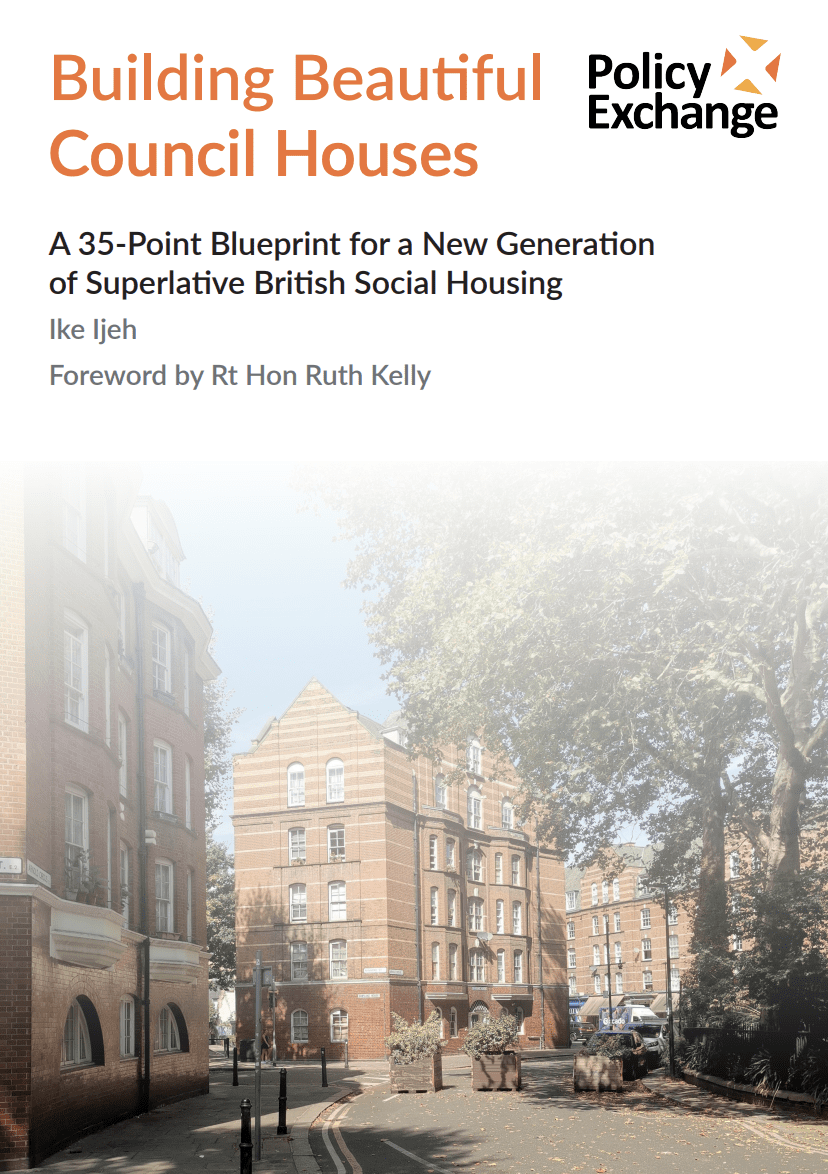
My source: Francesca Specter, Which is the fairest of them all? House&Home, FTWeekend, 11-12 October, 2025. pp.1-2.  

Spector refers to the Policy Exchange publication above, and other works:

McAdams P, Svobodova S, Newman T-J, Terry K, Mather G, Skelton AE, et al. (2025) The edge orientation entropy of natural scenes is associated with infant visual preferences and adult aesthetic judgements. PLoS ONE 20(2): e0316555. https://doi.org/10.1371/journal.pone.0316555

Valentine, C.; Wilkins, A.J.; Mitcheltree, H.; Penacchio, O.; Beckles, B.; Hosking, I. Visual Discomfort in the Built Environment: Leveraging Generative AI and Computational Analysis to Evaluate Predicted Visual Stress in Architectural Façades. Buildings 2025, 15, 2208.
https://doi.org/10.3390/buildings15132208

Calder, B. (2016). Raw Concrete: The Beauty of Brutalism. London: William Heinemann. 

Previously: 'housing' : 'homeless' : 'architecture'

Saturday, September 14, 2024

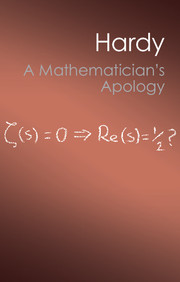
Hardy (1940) A Mathematician's Apology


In Liverpool I came across G.H. Hardy's short book A Mathematician's Apology. At £2.00 - a pristine bargain and a  marvellous read, especially the latter sections.

From being taught and applying Hodges' model in a case study in 1987 through to online work since 1998; I have to ask myself. Do I need to write:

'A Nurse's Apology'?

Aware of Hardy in the history of mathematics, and having read his apology, I'm no Hardy. My antics are a lesson in addition, but this is more 'Laurel and Hardy' - with apologies to comic genius of course. 


By their nature professions seek to maintain, and assure their continuity. A professional body can point to a definable body of theory, practice (curricula), that carries social and political status, if not patronage. There is national agreement that the NHS needs reform; radical reform no-less. The new Labour government is drawing lines to negotiate with the BMA, other professional bodies and unions. Specificity, specialisation is key. In healthcare people have suggested to me that Hodges' model invites genericism. Any suggestion of genericism is to be shunned. There seems an almost allergic reaction such is the threat to professional identity; unless, of course, you are a 'General Nurse', or General Practitioner - GP family doctor). Even Hardy warns:
"'GENERALITY' is an ambiguous and rather dangerous word, and we must be careful not to allow it to dominate our discussion too much." p.105.

This also applies to the quality and solidity of professional agencies and bodies whose role is to provide governance and set standards. The NMC has stumbled? Life and death is made up of details AND big pictures. How do you provide for - balance both? Curricula are another concern. Is the future of mental health nursing guaranteed as a profession? 

https://hodges-model.blogspot.com/2016/08/future-of-mental-health-nurse-training.html

The instrumental potential of Hodges' model is obvious. It invites a checkbox approach. One-to-one clinical encounters and interactions reduced to a tick-box exercise. This reduces any sense of specialist knowledge, training and education needed to assess, plan, deliver and evaluate high quality, effective, sustainable healthcare.

'THE second quality which I demanded in a significant idea was depth, and this is still more difficult to define. It has something to do with difficulty; the deeper? ideas are usually the harder to grasp: but it is not at all the same.' p.109.

Hardy's thoughts (and no doubt similarly expressed by other mathematicians and logicians) can be 'found' in Hodges' model; with an addition. Depth and difficulty rests on the uniqueness of  the 'one'. 

Here, Hardy is comparing between 'real mathematics' and chess:

'A chess problem also has unexpectedness, and a certain economy ; it is essential that the moves should be surprising, and that every piece on the board should play its part. But the aesthetic effect is cumulative. It is essential also (unless the problem is too simple to be really amusing) that the key-move should be followed by a good many variations, each requiring its own individual answer. 'If P-B5 then Kt-R6; if .... then if .... then ...., ....' - the effect would be spoilt if there were not a good many different replies. All this is quite genuine mathematics, and has its merits; but it is just that 'proof by enumeration of cases'  (and of cases which do not, at bottom, differ at all profoundly*) which a real mathematician tends to despise.' p.114.

*I believe it is now regarded as a merit in a problem that there should be many variations of the same type. (footnote)

While Kings, and Queens et al. undoubtedly have their own unique personalities, in healthcare effective clinicians make a concerted effort not to merely enumerate cases. The professional emphasis is (idealistically, professionally, purely and in application to) person-centredness; with the compassion, complexity, cussedness, and (sometimes literal) complications this brings. From 1-1 interaction, the clinical encounter, the therapeutic relationship, and alliance are the reason for practitioners achieving and sustaining intra- and interpersonal communication skills. Our attitudes towards knowledge, what is thoughts affects what we feel individually and collectively. Science should be neutral. It might be concluded that this question is for the philosophers and ethicists to wrestle with. In healthcare ethics are central: 'Do no harm'. Whether the practitioner, theorist, manager, policy maker is a nurse, scientist or mathematician such questions impact upon the person. As they are social, cultural and political. Revisiting Bronowski's Ascent of Man, this question arose in Archive on 4.

'It seems that mathematical ideas are arranged somehow in strata, the ideas in each stratum being linked by a complex of relations both among themselves and with those above and below. The lower the stratum, the deeper (and in general the more difficult) the idea.' p.110.

(my emphasis)

individual
|
INTERPERSONAL : SCIENCES
humanistic ------------------------------- mechanistic
SOCIOLOGY : POLITICAL
|
group

logical & mathematical reasoning
depth of reasoning (memory)
mathematical aptitude
intelligence(s)
pure maths
identity

vector
relations
mathematics
logic
depth of analysis, complexity
Cricket!
pure - applied maths
"1" problem per visit

patient - health practitioner 
relationship
Watching cricket - conversation

reports - outcomes
enumeration of cases


Back-tracking to page 104, Hardy:

'The relations revealed by the proof should be such as connect many different mathematical ideas.'

Our proof is person-centredness, placing the person at the center (in this case - of Hodges' model). The proof can be quantitative and qualitive. There are a great many ideas at work. Critically, the ideas that might be called upon (even improvised) are not all health-related, but can extend beyond to encompass the four care (knowledge) domains of Hodges' model. In healthcare as in Hardy's life the spiritual is encountered. So, the determinants of health are ALL available to us - as required. Well not available as a resource might be, they are available in the hope they will be seen as factors. Hardy would approve I think of the direction of travel, not just as a vector, but a model of multidimensional vectors - reaching for relations.

Hardy, G.H. (1940) A Mathematician's Apology, Cambridge: Canto.
https://www.cambridge.org/core/books/mathematicians-apology/B90D81A8E28674119781863988A3E11B

Friday, August 16, 2024

Health & Care results in mountains of data: c/o Burke & Cao 2024

"When medical schools train medical students, they teach them to treat patients as collections of various data points. They are laboratory tests and results, each measured to a standard number of significant figures. Notes students write hack down the richness of patients' identities and experiences: unemployment increases suicide risk while having a religion diminishes it. Each positive result that an interview or physical exam reveals adds another data point to the growing mountain, while a negative result erases a branch of possibilities in a treatment algorithm. It is a familiar process for every doctor, almost second nature, and yet it creates a chasm between patients and providers. Learning about a patient and their life becomes a process of deleting what's seen as irrelevant, and a patient's humanity gets lost in the chaos of data. ..."

"How would Nan Shepherd treat a mountain without her vision being mangled by medical training? She would probe it, palpate its surface, and listen to it rather than trying to comprehend it by reading reams of surveyor data. She would build a portrait of it in her mind beyond solely that which was intended to slot into the criteria of the IC-10. Perhaps she'd write a sensuous physical exam: ..."  

individual
|
INTERPERSONAL : SCIENCES
humanistic ------------------------------- mechanistic
SOCIOLOGY : POLITICAL
|
group


"CONSTITUTIONAL:
a granite mountain range, millions of years old, overall stable and solid, teeming with living, breathing organisms
CARDIOVASCULAR:
its rivers are patent, low and high turbulence at turns, its veins crisscross the surface
RESPIRATORY:
the wind carves through it in mighty exhales
MUSCULOSKELETAL:
its stone carries a range of lives, and the wind, the snow, the sun slowly bend the range of its form
GI/GU:
it slowly digests, grows, evacuates, and seethes as its wastes give rise to new life
NEUROLOGICAL:
the mountain is awake but dreaming with you"

The Living Mountain


Burke, R., Cao, E. To Care for a Mountain - What medical practitioners can learn from Nan ShepherdOxford Review of Books, Summer 2024, Volume 8, Issue 2. p.14. In association with Stanford. Ack. length of quotations in relation to length of author's article.

Nan Shepherd 1893 - 1981:  Scottish Poetry Library 2024.
https://www.scottishpoetrylibrary.org.uk/poet/nan-shepherd/

Cover image: Allen and Unwin

Saturday, June 08, 2024

'Earthrise' c/o Bill Anders RIP

Earthrise in 4K

"In December of 1968, the crew of Apollo 8 became the first people to leave our home planet and travel to another body in space. But as crew members Frank Borman, James Lovell, and William Anders all later recalled, the most important thing they discovered was Earth." 


See also:

Earthrise: The Story of the Photo that Changed the World | Short Film Showcase

https://www.youtube.com/watch?v=BsShNeDvccc

Thank you Bill and all the Apollo team and subsequent space faring families across the Home planet.

P.S. I'll leave it to you to relate the significance of Apollo 8's 'Earthrise' to Hodges' model.

Friday, June 02, 2023

(ii) What sort of field is 'nursing'?

Mathematics without Apologies:
Portrait of a Problematic Vocation
Harris quickly differentiates between pure and applied - practical mathematics. Nursing can claim mathematical tenure in being a constant. A constantly problematic vocation for governments worldwide. Temporarily recognised for its criticality, in terms of the population's dependence on nursing by the COVID pandemic. The global nursing workforce while often a political football in its host country, is in intensive care amid demographic change and policy imperatives. 

Neither maths/mathematicsnumeracy, nor arithmetic are indexed in:

If present, such detail might suggest a concept-based curricula approach, but the dichotomies of qualitative-quantitative and subjective-objective work to good effect; performing as per the axes of Hodges' model. Perhaps, there are nonetheless, more similarities between mathematics and nursing than an axial first-glance might suggest?

I've noted (if not lamented) the fall in prominence of nursing theory, models of care in nurse education and practice. Within the corpus of books the phrases are still common in terms of usage:

It seems that 'models of care' are not the sole preserve of nursing and health disciplines. These models are also defined by management consultancies*, care commissioners, economists, philosophers and policy makers. Hodges' model itself can be used to argue this is a legitimate activity, desirable and to be expected. 

An admittedly small sample, but here in NW England student nurses I encounter struggle to recall 'a' model, or theory that has caught their attention. With discussion, they realise they have been to this abstract place before. The attention on models and theory does not appear to match the focus afforded in North America. The political background of national health systems provision, the state of development of health services and systems and education make a huge difference between nursing academia globally, even as we strive to be one-family. 

Harris writes of the quest narrative in mathematics. There are problems solvers and the theory builders in mathematics. Tenured mathematicians seek the 'golden goose'. Hodges' model is the quest here: a golden goose in cognitive form that all can possess with requisite basic literacy and explanation. While as noted in (i) mathematics is a relaxed field (Preface, p.xi), it seems nursing theory is a (largely) deserted field. Ironically, seeking person-centredness, this is where Hodges' model begins - a necessarily conceptually deserted field that offers only structure but with the prospect of unconditional positive regard.

Harris, M. (2015) Mathematics without Apologies: Portrait of a Problematic Vocation. Princeton University Press.

*Reimagining the nursing workload: Finding time to close the workforce gap. https://mck.co/43tMB7v
via @McKinsey [A post may follow.]

See also: 'commissioning'


Tuesday, May 30, 2023

What sort of field is 'nursing'? (i)

. . . It is NOT 'relaxed'.

My copy of Harris (2015) is secondhand, £8.50 from 'Green Ink' in Hay-on-Wye last November. 

Apparently, the (professional - high-level) study of mathematics is a relaxed field. McCleary reviews the book and the good, truth, and beauty of mathematics; 'relaxed field' relates to the latter:

Mathematics without Apologies:
Portrait of a Problematic Vocation
"That leaves beauty, the deepest source for Hardy, and the most challenging motivation for mathematical activity. Challenging because it calls into question how external support of mathematics is justified. Hardy tells us that “a mathematician, like a painter or poet, is a maker of patterns.” Throwing mathematicians in with the painters and poets leads to justification of mathematics as an art. Harris situates his discussion of beauty in the notion of play. Play needs to take place in a “relaxed field,” a notion introduced by ethologist Gordon Burghardt to describe animal behavior when not preoccupied with food, mating, territory, or predators—'the opposite of stress.'"

John McCleary, Book Review, NOTICES OF THE AMS VOLUME 65, NUMBER 10 pp.1280-1283. https://www.ams.org/journals/notices/201810/rnoti-p1280.pdf 


Talk of absolutes is common in mathematics. There is absolutely no mathematician involved in the writing of this post and others. That said, I have been privileged to work in a 'relaxed' manner.* When I trained mental health and then general nursing, we were part of the 'numbers' on the duty-rota. Your presence was not just a matter of learning, there were concrete things - tasks - to do. Completing the Community Psychiatric Nursing Certificate course 1987-8, involved a secondment to another community team (thank you Bolton!). My caseload was left to the support of colleagues, so I could concentrate on the course. A course in which Brian Hodges (not Wilfred Hodges - the  logician) taught his eponymous model. Post-Project 2000 with nurse education an undergraduate pursuit, students were designated supernumerary. Student nurse finances are precarious, worthy of a post in itself. 

If relaxed and stress are opposites, nurses would seek to be 'relaxed'** suffice to have the time and resources to deliver care safely, professionally and to a high standard. Adequate time + resources also brings a dividend: person-centredness, health promotion and education, preventing relapse. As it stands, however, for nurses be they students or qualified, nursing is far from relaxed.

tbc... ii

Harris, M. (2015) Mathematics without Apologies: Portrait of a Problematic Vocation. Princeton University Press.

*But without the charisma Harris describes.

**The notion of slack resource could be applied, space for creativity and innovation in assessment, planning, interventions (case formulation) and evaluation.

See also: 'Four Fields'

Monday, May 29, 2023

Humanistic motivations for study - c/o Harris et al.

 "Asking '[I]n what sense . . . can mathematics be considered a democratic regime . . .' open to all, Pimm and Sinclair quote (Supergiant) Henri Poincaré to the effect that 'only mathematicians are privy to the aesthetic sensibilities that enable' the decision of 'what is worth studying.' The article, published in a journal for educators, is motivated by the 'view that mathematics can do something for me in a humanistic sense that repays the the careful attention and deep engagement it may require; one that may expose students to a fundamental sense and experience of equality . . . and provide them with another sense of human commonality.'" p.33.  

Harris, M. (2015) Mathematics without Apologies: Portrait of a Problematic Vocation. Princeton University Press.

Hodges' model - Axes - Structure :: Domains - Content

Friday, June 03, 2022

Book: "The Things That Really Matter"

Philosophical conversations on the cornerstones of life

[ open access ]

INDIVIDUAL

|
 INTERPERSONAL    :     SCIENCES               
HUMANISTIC --------------------------------------  MECHANISTIC      
SOCIOLOGY  :   POLITICAL 
|


Source: Literature search - inc. Dewey, reflect.

More corners - and yes - all can be 'found' here.

https://twitter.com/imathematicians/status/1530724466073952261?s=20&t=eF1XRD9HbkSJ2XWWbIk2qQ

Sunday, September 29, 2019

Scenic Sports ... in Hodges' model

individual
|
INTERPERSONAL : SCIENCES
humanistic ----------------------------------------------- mechanistic
SOCIOLOGY : POLITICAL
|
group - population


Rugby World Cup, photo, Foxsports.com.au, Getty Images
https://www.foxsports.com.au/rugby/rugby-world-cup/wales-unchanged-while-wallabies-swing-the-axe-for-world-cup-blockbuster/news-story/d43fef9a9311da0cd344a888773faab0

My source:
Luyken, J., Environmental exhibition in Austria attracts far-Right ire, The Daily Telegraph, 28 September 2019, p.18.

Wednesday, November 17, 2010

The Beauty of Diagrams: Vitruvian Man BBC Four

Tomorrow a new six part series begins on BBC Four.

Diagrams, conceptual frameworks and cognitive spaces have driven my interest in models of care and h2cm for decades:

1996 Peter attends 'Thinking with Diagrams' Colloquium, IEE, Savoy Place, London. 18 Jan BCS-SGES et al.
Professional Group C4: Digest No: 96/010


I also maintain a 'diagrams' listing on the sciences domain listing, suggestions welcome.

So, really looking forward to this!