Hodges' Model: Welcome to the QUAD: TV

Hodges' model is a conceptual framework to support reflection and critical thinking. Situated, the model can help integrate all disciplines (academic and professional). Amid news items, are posts that illustrate the scope and application of the model. A bibliography and A4 template are provided in the sidebar. Welcome to the QUAD ...

Showing posts with label TV. Show all posts

Friday, January 16, 2026

Progress? In the age of uncertainty

INDIVIDUAL
|
 INTERPERSONAL    :     SCIENCES               
HUMANISTIC --------------------------------------  MECHANISTIC      
SOCIOLOGY  :   POLITICAL 
|
GROUP


The Age of 


Uncertainty

'Over a relaxed weekend, a distinguished international gathering at John Kenneth Galbraith's Vermont farm offer their views on the themes outlined in the series and on other major anxieties facing the modern world.' 

BBC iPlayer
https://www.bbc.co.uk/iplayer/episode/m002l708/the-age-of-uncertainty-series-1-13-13-weekend-in-vermont

Tuesday, January 09, 2024

See, hear, feel... Drama still has a role to play

Mr Bates vs The Post Office

4 Episodes

The first part of a four-part drama.
Mysterious financial losses lead the
Post Office to sack and prosecute village
sub-postmasters who have no way
 to prove their innocence.


INDIVIDUAL
  |
     INTERPERSONAL    :     SCIENCES               
HUMANISTIC --------------------------------------  MECHANISTIC      
SOCIOLOGY  :   POLITICAL 
|
GROUP

personal ethics?

listen - listening

Well, this hasn't happened to anyone else!

Losing control of one's horizons ...

socio-technical methods
software testing
verification - validation
life-cycle management
data/information standards
human-factors -
(need a chance to breathe?)
... !?

politics
law
justice

Establishment
Institutions
Public services

group think

lack of whistleblowers?

Sometimes* political and legal action -::- needs a social nudge.

*All the time?

My sources:
Quality press and BBC Radio 4 The Great Post Office Trial

Sunday, November 12, 2017

Wednesday, July 22, 2015

Life (and death) in Squares*

individual
|
INTERPERSONAL : SCIENCES
humanistic --------------------------------------- mechanistic
SOCIOLOGY : POLITICAL
|
group

ARTS & HUMANITIES


SCIENCES


...Squares


BBC 2 Life in Squares
Drama mini-series by Amanda Coe. A story of the close and often fraught relationship between sisters Vanessa Bell and Virginia Woolf.

* Well OK 'rectangles'.

Sunday, May 24, 2015

The profit motive and health currency

individual
|
INTERPERSONAL : SCIENCES
humanistic --------------------------------------- mechanistic
SOCIOLOGY : POLITICAL
|
group


"... They tell us that temperatures are still unbearable, that it’s consistently scorching hot. And it’s getting worse as the weather heats up. Workers are fainting every day. To cope, they use a traditional technique called “coining”, where they scratch their skin with coins to bring blood to the surface of the skin. It’s meant to relieve the stress and fatigue caused by the heat. ..."

A Kin Tai factory worker getting “coined” by a coworker on Monday.

When people are exploited and in the absence of health services and evidence-based health care information, they may resort to traditional remedies to try to solve acute health problems. When the control of the work environment is also beyond the worker's control then acute problems and risks to health are bound to follow.

My source: France24 TV English Service

Web: Cambodian workers 'keep fainting from heat' while making Armani jeans:
https://observers.france24.com/en/20150513-fainting-heat-factory-cambodia-armani


Saturday, April 04, 2015

For people of a certain age 5 4 3 2 1 ...: Big Data and Little Data (please)

People of a certain age may be tied to the TV at 5pm today, in the UK at least as a CGI animated reboot of Thunderbirds hits our screens. Since the original series I've experienced the joys of Tracey Island as a toy and the increasing influence of 'nostalgia'.

While not spoken of with the same frequency in healthcare, there is still the need for a philosophy of care. Apparently this new series is trying to remain true to the values and messages of Gerry Anderson's original. Together with Star Trek, series like this can (surely) also contribute to children's having critical, empathic skills, an open attitude and a global perspective.

Since the 1960s and the data transmissions that John in Thunderbird 5 was listening for (yes, I know...), we are now in the realm of Big Data, the internet no less! I wonder if they will reference space junk and how this is reflected in the World's oceans? A great opportunity, but then this is a children's show.

As Thunderbird 5 monitors World communications for humanitarian reasons, I'm still seeking Little Data. If you are a nurse lecturer, UK or from the global nursing community I'd really appreciate your help:

...


Many thanks (especially for completed surveys thus far) and if you watch the new series - enjoy.

See also:
Thanks Gerry for pulling some strings


Thursday, March 21, 2013

"How to Avoid Mistakes in Surgery" BBC TV Horizon 21/03/2013 2100 UT

On 03/18/13 9:45 AM, Martin Bromiley wrote:
--------------------
About two years ago I approached Dr Kevin Fong with an idea for a BBC scientific programme, and at last it’s happened. Since September I’ve been working with Kevin and the BBC Horizon team to pull together a programme about human factors in healthcare. It looks at how learning about the human in the system and the system itself can bring about enormous improvements in safety and outcomes that technology and medical science can only aspire to.

Kevin and the Horizon team have produced something inspirational yet scientific, and - just as importantly - is by a clinician, for clinicians. It's written in a way that will appeal to both those in healthcare and the public. It uses a tragic death to highlight human factors that all of us are prone to, and looks at how we can learn from others both in and outside healthcare to make a real difference in the future.

Although the BBC Management chose a surgery based title for the programme to gain mass public appeal the lessons of this programme are for everyone in healthcare.

It would wonderful if you could pass on details of the programme to anyone you know who works in healthcare. My goal is that by the end of this week, every one of the 1 million or so people who work in healthcare in the UK will be able to watch it (whether on Thursday or on iPlayer). BBC 2 Thursday 21 March 2100 UK

Cheers

Martin Bromiley


My source: Joy Whitlock via LinkedIn

Friday, January 11, 2013

Thanks Gerry for pulling some strings

http://www.bbc.co.uk/news/entertainment-arts-20847151
Today it was Gerry Anderson's funeral. I am a child of that generation Thunderbirds, Joe 90, UFO - great TV.

In 2008 I found myself back in my old home town and an old friend from junior school got in touch. One of John's memories regards my dad who passed away in 2003 was the fact that when John came around in the very early 70s my dad would watch Thunderbirds with us too.

It really was family entertainment. Visionary, innovative, humane in its messages and delivery; and like the web today the stories counted. There was humour and human frailty on display too, a great primer for a future mental health nurse.

http://gerryanderson.wikia.com/wiki/Thunderbirds_Are_Go
There are favourite episodes - that featuring Fireflash, the Sidewinder, Sunprobe and Zero X from the film Thunderbirds Are Go that I saw on first release at the cinema.

I acquired a love of film soundtracks from the marriage of music and the action in Thunderbirds. Fusion existed in the 60s. Even before Star Trek arrived in the UK there was hope and optimism for the future.

Thanks Gerry!

Saturday, May 14, 2011

C4 News researching anti-psychotic drugs in people with learning disabilities, inc. children and young people

Channel 4 News is researching the use of anti-psychotic drugs to control challenging or difficult behaviour in people with learning disabilities, including children and young people.

If this is an issue which affects you (or those you care for) or if you would like to share your views or experiences, in confidence, then please do get in touch with Philip Carter on -

... email at pc at pacarter.com

(Dementia is also an issue for people living with learning disabilities and their families. PJ)

My source: The Choice Forum - by the Foundation for People with Learning Disabilities

http://www.learningdisabilities.org.uk

Wednesday, November 17, 2010

The Beauty of Diagrams: Vitruvian Man BBC Four

Tomorrow a new six part series begins on BBC Four.

Diagrams, conceptual frameworks and cognitive spaces have driven my interest in models of care and h2cm for decades:

1996 Peter attends 'Thinking with Diagrams' Colloquium, IEE, Savoy Place, London. 18 Jan BCS-SGES et al.
Professional Group C4: Digest No: 96/010


I also maintain a 'diagrams' listing on the sciences domain listing, suggestions welcome.

So, really looking forward to this!

Wednesday, December 12, 2007

Drupal - CSS and the DOM, NHS & Paxman

I managed to sort the image in the Drupal archive (trial and error - learning!) page. Now to get to grips with CSS, DOM and Drupal themes. Human nature often wins out to the detriment of learning: you pick up just sufficient HTML, a limited amount of javascript to get your website up and running and then your learning stops.


Reading through DOM Scripting there is so much more I can do by correctly and comprehensively using CITE, 'title', 'ID' and 'class'. ... There's a name for it starting from scratch. So, the old content I have copied and pasted thus far needs a lot of tweaking stylistically. I plan on to spend some time on this, but not as long as I feared. Using CSS stylesheets a single change can be reflected across the whole site.

I've also downloaded a Drupal print module and will ask about this next Wednesday night in Manchester.

I just watched Can Gerry Robinson Fix The NHS? One Year On and must dash soon 22:30 BBC2 Newsnight with Jeremy Paxman there's a follow-up to the programme. This should be available online for 24 hours after and VERY 'interesting' too? [Hope they do re-visit this topic].

Friday, October 27, 2006

Who are you going to be Jo(e)?

Are all nurses, psychologists, health and social care professionals in general frustrated would-be Joe 90s?

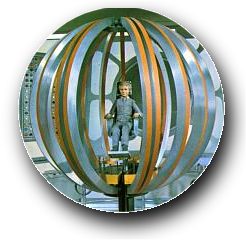
Joe 90 BIG RATIf you recall: courtesy of an incredible device called BIG RAT - Brain Impulse Galvanoscope Record And Transfer - Joe could benefit from the transferred knowledge and experience of experts in disparate fields. The literature is full to this day with commentaries on the transition from novice-to-expert practitioner. Enter Joe: our fictional character who could take a short-cut.

Fact may be catching up, not that nurse training departments will notice next year, but major strides are being made in understanding the relation of stimuli and neural activities across the cortex.

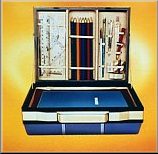
What I'm interested in though is Joe's briefcase. Bizarrely equipped for a nine-year old: packing gun and silencer. We readily take Joe and the entertaining premise of the show in our stride, but we trip-up when it comes to real child-soldiers. Of course, it is just fiction vs fact; a question of worlds-apart - North-South and East-West?

Joe's briefcase held the tools that he needed by virtue of the transferred knowledge and skills (for UK NHS readers you can imagine the Knowledge and Skills appraisal interview). Just think when the BIGRAT's job is done and Joe is spin-dizzy, the repertoire of tools will change. Some are generic, but others need to be specific to the new mission. Health professionals are dizzy with constant change and the world's citizenry struggle to keep up locally and globally.
Joe 90's briefcase
So as your foot taps in time to Barry Gray's excellent theme music - what's in your briefcase today? What will you need tomorrow? What choice do our children have? What do they need in their briefcase to cope with the 21st Century?