Hodges' Model: Welcome to the QUAD: story

Hodges' model is a conceptual framework to support reflection and critical thinking. Situated, the model can help integrate all disciplines (academic and professional). Amid news items, are posts that illustrate the scope and application of the model. A bibliography and A4 template are provided in the sidebar. Welcome to the QUAD ...

Showing posts with label story. Show all posts

Friday, September 26, 2025

Book: Atlas of Finance

Individual
|
      INTERPERSONAL    :     SCIENCES               
HUMANISTIC  --------------------------------------  MECHANISTIC      
 SOCIOLOGY  :    POLITICAL 
|


Dariusz Wójcik, James Cheshire, Oliver Uberti. (2024). Atlas of Finance: Mapping the Global Story of Money. Yale University Press. https://atlasoffinance.com/

Previously: 'atlas' : 'finance' : 'visualization'

My source:Guthrie, J. Tresure maps. Life& Arts. FT Weekend. 26/27 October 2024. p.12.

Wednesday, September 03, 2025

TEL us a story ... Hard, Soft and being Smart

Sorting papers I'd saved I came across -

David Mossley and Clare Saunders: A revolution in philosophy teaching? from the The Philosophy Magazine. 3rd quarter. 2013. pp. 40-45. 

Checking back, I see I posted and cited this item in 2013:


In the decade-plus since, how things have changed in tech, education and philosophy!

The story is ... that around this time I needed a new website and in the past I practised computer aided learning. Or should I say mCAL, microcomputer aided learning on the ZX81 and BBC Micro (related citations below). In 2013-2014, I started a PhD (as noted elsewhere) thinking I could recover and update some IT skills. Could I recapture the CAL days, by picking up TEL - technology enhanced learning? I stepped outside healthcare, and nursing specifically. I see now this was an error, but of course I still venture off-piste. The latest detour is even more extreme? On a personal - psychological level I'm visiting a subject maths - formal methods that simultaneously fills me with wonder (recognising its power and utility) and yet terrifies me with its complexity, made me feel sick at school, as a pre-teen and after.

My 'research question' was poorly formulated - which I did recognise. Two years were not wasted, far from it. The journey then was also driven by personal circumstances, married with events in 2007, 2010 and then 2015. 
 
Sticking with the current conference theme, I noticed a call for the 7th International Soft Computing and Engineering Applications Conference. Selected themes from track #4 include:


Track 4: Soft Computing for Smart Sustainable World

Smart agriculture and aquaculture
Smart cities
Smart communication
Smart disaster monitoring and management
Smart earth system
Smart education
Smart elderly care
Smart environment and ecosystems
Smart governance
Smart healthcare
Smart homes and buildings
Smart learning
Smart living
Smart machines and robots
Smart materials and fabric
Smart medicine
Smart social services
Smart villages
Smart wearables and implants

Amid all the (understandable) emphasis on 'smart' we need to retain a place for the human. That's the challenge in simultaneously considering the hard and soft of today's and tomorrow's world.

Citations

1982 CAPA: COMPUTER AIDED PATIENT ASSESSMENT, Sinclair ZX81, advertised in Nursing Mirror (see below) provided on audio cassette tape.

1983 THE NURSING PROCESS – Computer Aided Learning program, BBC Micro, published by Open Software Limited (OSL)

1984 HAEM. Blood Groups Computer Aided Learning program, BBC Micro – (OSL).

1989 SHADES OF GREY, Computer Aided Learning program, BBC Micro. Simulation of nuclear weapons, Based on Fanchi, J. Local effects of nuclear weapons, BYTE, Volume 11. Issue 13. Dec., pp. 143–155. Computer Aided Learning program, BBC Micro, published by Open Software Limited..

Jones, P. (1986) Computing in Nursing NEWS. Computerised Patient Assessment. Nursing Times. 85: 5. Sep 3-9;82(36):63-5. PMID: 3532039 (Describes 'CAPA', a BBC microcomputer program for student nurses.)

Jones P. 1988 Thunderbirds are Go? (Impact of technology in society, disasters, macro-engineering). Popular Computing Weekly.

Jones, P. (1989) Computers in Nursing NEWS. Creating a Program. Nursing Times. Feb 1-7;85(5):66-8. PMID: 2648342 (Describes 'HAEM', a BBC microcomputer program for student nurses on blood and blood groups.)

Jones, P. (1989) Information Technology is Good For You! (Effects of information technology) IT in Nursing, BCS-Nurs. Specialist Group. 1,1

Jones, P. (1990) Creating a Community Mental Health IS (Creation of a community mental health resource centre - a multidisciplinary research project). IT in Nursing and Paper at BCS NSG Conference. 2,4.

Jones, P., & Beckingham, D. (1991) The Ins and Outs of a small mental health Information System. Healthcare Computing 91 Conference Paper.

Jones, P. (1992) Nursing: All in the mind and machine? (Models of nursing and computing). British Computer Society -Nursing Specialist Group Conference Paper

Wednesday, July 02, 2025

Did 'to a T' find its inspiration in Rio de Janeiro?

... or somewhere else?

to a T

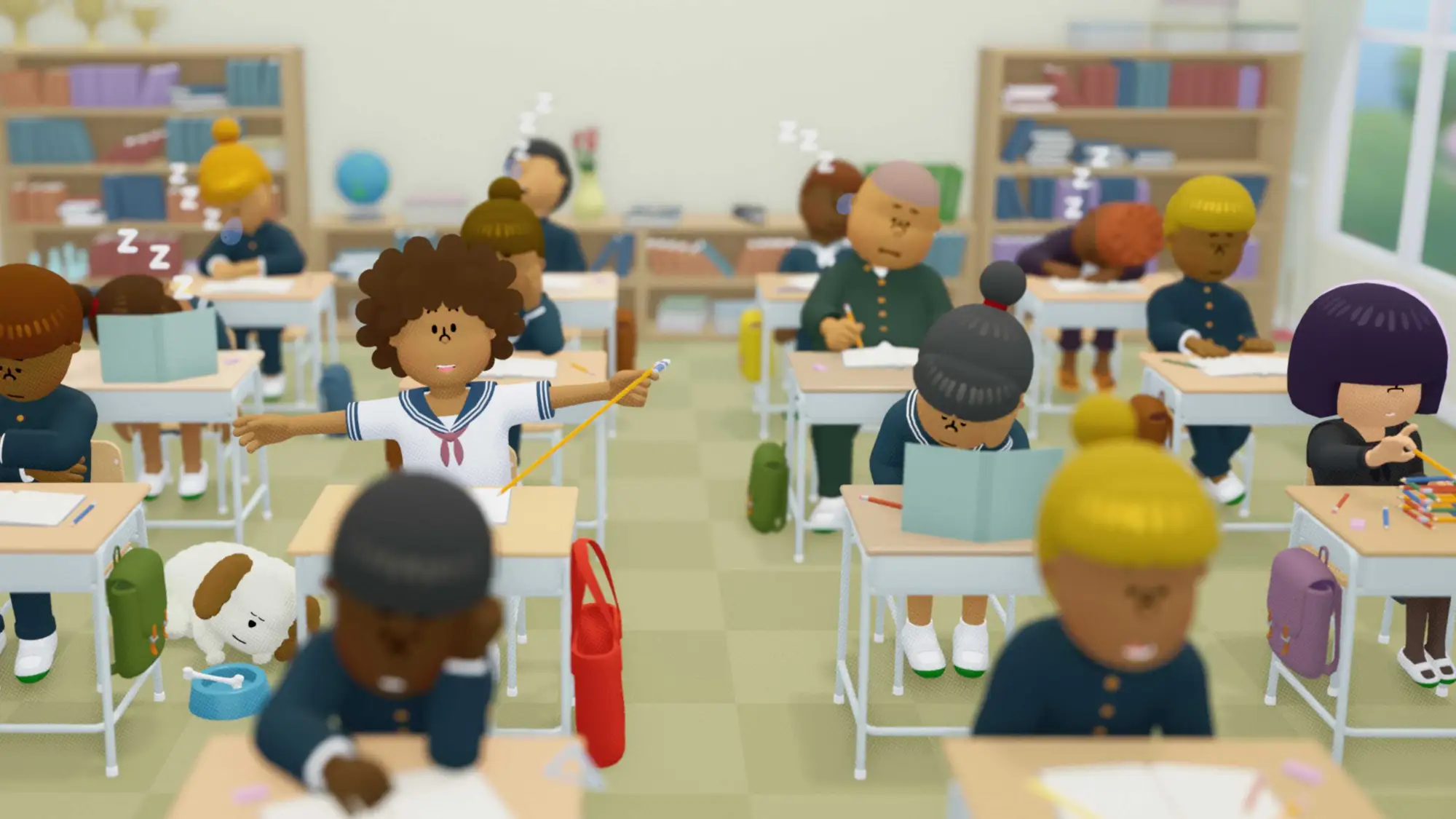
A new game from Keita Takahashi
"'to a T' is an episodic 3D adventure game developed by Keita Takahashi and the uvula team, with a strong focus on character, interaction, story and exploration. Play as a teenager (Teen), with a unique posture just trying to live a normal life in a small coastal town. Explore the town along with the help of Teen’s loyal dog and loving mother. While going to school and contending with bullies, Teen discovers a new ability granted to them by their extraordinary posture, and they start to uncover more about their mysterious lineage."
'to a T' - image https://annapurnainteractive.com/en/games/to-a-t

Developer - https://uvula.jp/

I have never been as far south as Rio de Janeiro. It would be marvellous to visit Tijuca National Park - Alto da Boa Vista, Rio de Janeiro - RJ.

But then ... 🌍🌎🌏🌐

My source: Tom Faber, In praise of gaming's auteurs. Financial Times, 11 June, 2025, p.18.

Thursday, November 28, 2024

Invitation for User Evaluation of OntoChat

Dear W3C Semantic Web Community,^

(Sending the below on behalf of one of our PhD students-your help would be very much appreciated!) 

We are a research team at King's College London conducting a study on the user experience of OntoChat, a tool built on large language models and designed to assist ontology engineers in creating user stories for ontology development. If you are currently or have previously been involved in ontology engineering projects, performing tasks such as ontology development, refinement, alignment, extension, or evaluation, we invite you to participate in this study to help improve OntoChat's design.

Participation Details:
  • Duration: Approximately 35 - 40 minutes
  • Activities:
    • Use OntoChat to create an ontology user story relevant to your project while sharing your thoughts
    • Answer open-ended questions about your experience
    • Complete a brief questionnaire evaluating OntoChat's usefulness
We are flexible and can accommodate your availability within 19th November and 10th December 2024. If you are interested in participating in this study, please indicate your preferred time and agree to the user consent form by completing the registration form at:

https://forms.office.com/e/2wkmugH9v1

Your feedback is invaluable for refining OntoChat to better support ontology engineering processes. Please be assured that all personal data will be kept confidential and anonymised.

Thank you for considering this opportunity to contribute.

Kind regards,
Yihang Zhao
PhD Researcher, King's College London
Contact: yihang.zhao AT kcl.ac.uk

^Via semantic-web mail list.

Saturday, December 18, 2021

Raymonda ...

... Care Aesthetics :: Care Architecture :: 

Care Choreography :: Care Design :: Care Journeys ...


"An epic journey of love and courage.

Taking inspiration from the ground-breaking spirit of Florence Nightingale and the women who supported the war effort in Crimea, Tamara Rojo, Artistic Director of English National Ballet, creates a new version of the classic story ballet, Raymonda.

England, 1854. Raymonda runs away from her comfortable life to become a nurse in the Crimean War. There, she becomes engaged to a soldier, John, but soon develops feelings for his friend Abdur, a leader of the Ottoman army. As turmoil grows around and inside her, who will she give her heart to?

Starring a huge cast of dancers and a full orchestra, this lavish adaptation keeps the best of the 19th-century original – its glorious and sensuous score by Alexander Glazunov and the classical choreography of ballet genius Marius Petipa – and updates it with a dramatic new story.

Introducing a heroine in command of her own destiny, and celebrating the courage of nurses and women who fought for emancipation, this beautiful production is guaranteed to thrill, move and inspire.

The original Raymonda is very rarely performed in the UK, where no dance company performs it in its entirety. This highly-anticipated version marks Tamara Rojo’s debut in directing and choreographing, building on her illustrious career as dancer and artistic director.

..."


The Trailblazing Nurses of the Crimean War


My source: RCN Bulletin 394: Winter 2021, p.26.


Thursday, July 02, 2020

Book: The Ungrateful Refugee

individual
|
INTERPERSONAL : SCIENCES
humanistic ----------------------------------------------- mechanistic
SOCIOLOGY : POLITICAL
|
group - population
listen to me


"Why do we 
listen to refugees
in one way ...
The Ungrateful Refugee


... and 
Harvard Business School 
students in another?"

listen to us


"Anyone with a boss knows the basics: lock eyes, shake hands firmly, under-promise, over-deliver, repeat. At HBS, we picked up other ways to affect the need-potential calculus: when pitching something, dismantle scepticism by arguing against yourself. If a narrative lacks complexity, put it into an intellectually satisfying framework. And so on.
The most important signal is this: you don't need them - they need you. Your value lies in the vastness of your potential, walk into every room potential first." p.24.

My source:
Nayeri, D. (2020) How to be believed, FT Weekend, Magazine, 7-8 March, pp.24-27.

Friday, October 27, 2006

Who are you going to be Jo(e)?

Are all nurses, psychologists, health and social care professionals in general frustrated would-be Joe 90s?

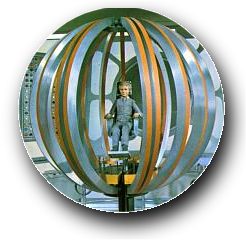
Joe 90 BIG RATIf you recall: courtesy of an incredible device called BIG RAT - Brain Impulse Galvanoscope Record And Transfer - Joe could benefit from the transferred knowledge and experience of experts in disparate fields. The literature is full to this day with commentaries on the transition from novice-to-expert practitioner. Enter Joe: our fictional character who could take a short-cut.

Fact may be catching up, not that nurse training departments will notice next year, but major strides are being made in understanding the relation of stimuli and neural activities across the cortex.

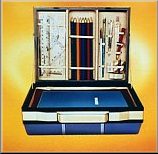
What I'm interested in though is Joe's briefcase. Bizarrely equipped for a nine-year old: packing gun and silencer. We readily take Joe and the entertaining premise of the show in our stride, but we trip-up when it comes to real child-soldiers. Of course, it is just fiction vs fact; a question of worlds-apart - North-South and East-West?

Joe's briefcase held the tools that he needed by virtue of the transferred knowledge and skills (for UK NHS readers you can imagine the Knowledge and Skills appraisal interview). Just think when the BIGRAT's job is done and Joe is spin-dizzy, the repertoire of tools will change. Some are generic, but others need to be specific to the new mission. Health professionals are dizzy with constant change and the world's citizenry struggle to keep up locally and globally.
Joe 90's briefcase
So as your foot taps in time to Barry Gray's excellent theme music - what's in your briefcase today? What will you need tomorrow? What choice do our children have? What do they need in their briefcase to cope with the 21st Century?