Hodges' Model: Welcome to the QUAD: games

Hodges' model is a conceptual framework to support reflection and critical thinking. Situated, the model can help integrate all disciplines (academic and professional). Amid news items, are posts that illustrate the scope and application of the model. A bibliography and A4 template are provided in the sidebar. Welcome to the QUAD ...

Showing posts with label games. Show all posts

Wednesday, July 02, 2025

Did 'to a T' find its inspiration in Rio de Janeiro?

... or somewhere else?

to a T

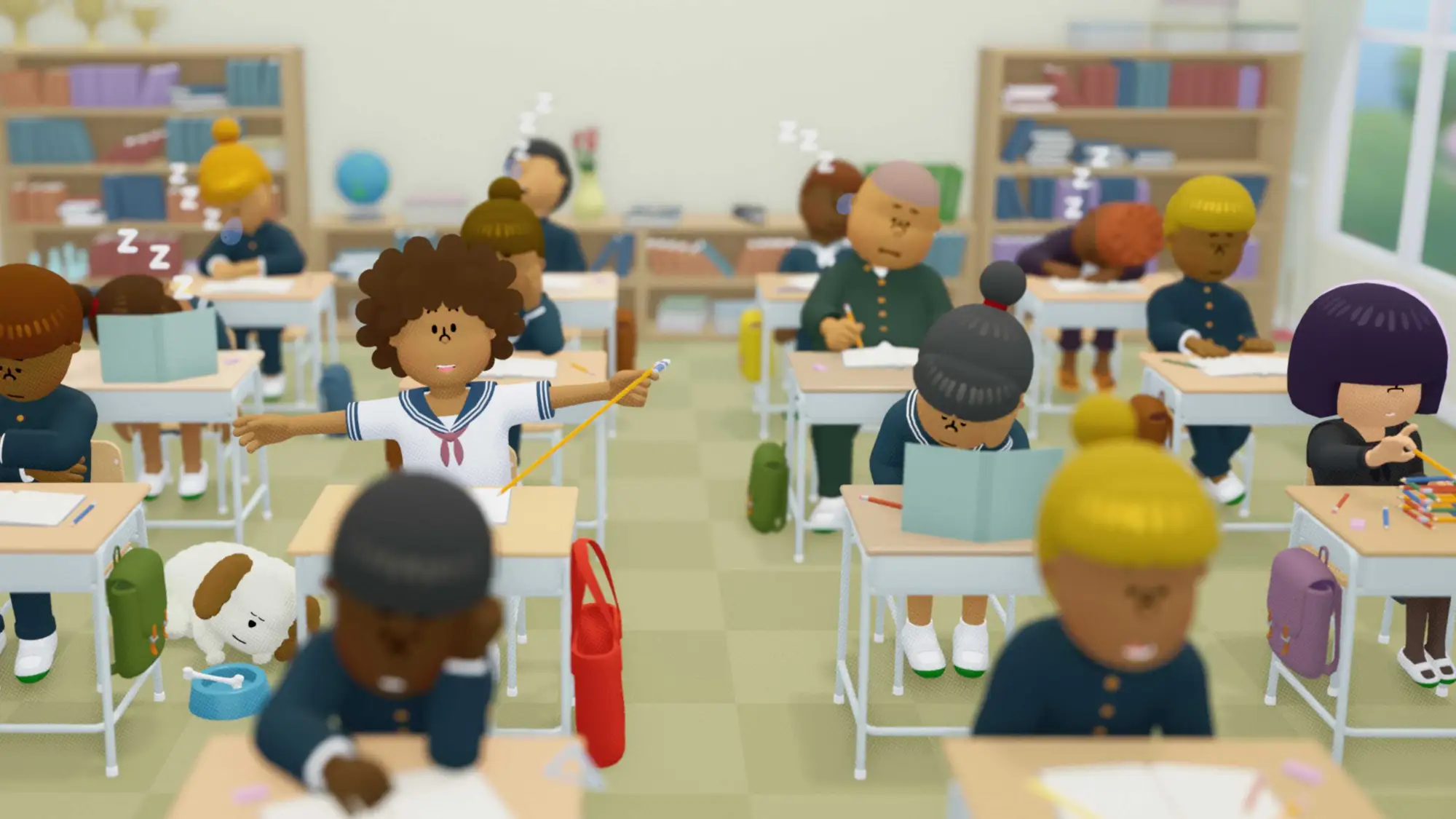
A new game from Keita Takahashi
"'to a T' is an episodic 3D adventure game developed by Keita Takahashi and the uvula team, with a strong focus on character, interaction, story and exploration. Play as a teenager (Teen), with a unique posture just trying to live a normal life in a small coastal town. Explore the town along with the help of Teen’s loyal dog and loving mother. While going to school and contending with bullies, Teen discovers a new ability granted to them by their extraordinary posture, and they start to uncover more about their mysterious lineage."
'to a T' - image https://annapurnainteractive.com/en/games/to-a-t

Developer - https://uvula.jp/

I have never been as far south as Rio de Janeiro. It would be marvellous to visit Tijuca National Park - Alto da Boa Vista, Rio de Janeiro - RJ.

But then ... 🌍🌎🌏🌐

My source: Tom Faber, In praise of gaming's auteurs. Financial Times, 11 June, 2025, p.18.

Monday, December 09, 2024

Baseball: One of the games people play ... Fisher (2001) ii

Critical Thinking 
2nd Ed. Cover

Returning to Fisher's excellent book I mentioned an analogy from basket ball in discussion about Richard Paul's definition of critical thinking and 'thinking about your thinking'.
'Critical thinking is that mode of thinking - about any subject, content or problem - in which the thinker improves the quality of his or her thinking by skilfully taking charge of the structures inherent in thinking and imposing intellectual standards upon them. (Paul, Fisher and Nosich,1993, p. 4).' pp.4-5.
Fisher's daughter aged eleven wanted to learn how to play basket ball and attended coaching sessions. At the first the raw recruits were divided into two teams and with simplified rules set to play. Initially, getting the ball and in a position to score: shoot.

After the chaos, the coach had them practice shooting after he demonstrated how they had been playing. He explained and pointed out the basics of technique and 'drew attention to how he held the ball, where he looked, how he stood and so on.' p.5. Acknowledging their efforts, they subsequently moved on to passing, then guarding, or marking - practising each skill. 

This is a great analogy and can be applied to health, social care, medicine, nursing and other novices. Hodges' model is the basket ball, tennis, squash court, football, hockey pitch. You might move to a position to obtain an advantageous point of view. In reflective, critical thinking terms, additional data to support or negate a line of thought.

The axes of Hodges' model, serve as a scaffold to help structure our 'game player', and possibly better co-ordinate a group or team's efforts. The domains of Hodges' model cover the knowledge or subject bases that will relate to any context. Hodges' model is situated. If there is need to consider spiritual matters - experiences, then a conceptual journey ... at least, as befits an individual's or group's beliefs and purpose can be made. So forms if intelligence (emotional, cultural, spiritual ...) can also be factored in, as necessary.
 
Are there relational, logical, even mathematical standards that can be applied (formally, in theory) to our thinking? Does 'subject, content or problem' equate with 'situated'? Another book to pass on.

Fisher, A. (2001) Critical Thinking: An Introduction. Cambridge University Press, Cambridge, England. PB. 


Post: ... 'anyone for tennis'.

Wednesday, October 04, 2023

Two abstracts for 2024 inc. Philosophy at Play Conference

This month, in addition to an abstract for:

MYTH, RITUAL AND PRACTICE FOR THE AGE OF ECOLOGICAL CATASTROPHE


- there is an invitation to submit a paper abstract for:


The sixth Philosophy at Play Conference will be hosted by the Faculty of Education at the Complutense University in Madrid on June 3-5, 2024


No one likes to waste time^, but whether or not these abstracts are accepted, the thought and effort will extend my thinking and application of Hodges' model. Beyond initial thoughts below, I need to check on the key issues in the philosophy of play:

INDIVIDUAL
|
     INTERPERSONAL    :     SCIENCES               
HUMANISTIC --------------------------------------  MECHANISTIC      
SOCIOLOGY  :   POLITICAL 
|
GROUP

play therapy (distraction ...)

being outdoors:
psychological impact of green
symbolic play
mental games - play

intellectual skill, creativity
imagination in play

individual play child - verbalisation

cognitive and character development - morality, personal ethics
'illness' norms - anhedonic
addictive quality of gaming
role of advertising

play theology - utopia

play senses, kinaesthetics, embodiment
accessibility
information at play: uncertainty, bluff, prediction - movement, strategy
functional play - toys/objects
activities - performance

space: arena, field, theatre

games / sport - physical contest
gaming as work / effort / energy
gaming as tech/software
simulation
gaming 'in' Virtual Reality
(tech's role in disrupting (idealised?) play?
Games/Gaming as rules/process

quantitative research - evidence

social inclusion/exclusion

sociology of play (and in arts)

socialisation

language: "= playing field"
role play :: fancy dress

socio-cultural dimensions - history
traditional play/games

social behaviour, status, participation

turn-taking, stigma (cheating)

sports etiqette, 'fair play'

team games (team building - work)

Serres - Myth, History
Harlequin - mischief
politics of play studies: oppression, marginalisation, erasure, vulnerable groups, exploitation*

'export' of games
hegenomy, hierarchies
software colonialism (Africa)**
debates: guns in play, weapons,
'shoot em up'
FROM: child's-play
TO: gamesmanship
whose rules, control of space?

governance & politics of play

economies of play
'A nation at play'

media - controls -
consumerism, advertising
gambling
THEOLOGY


*An example - previously:

^Since posting: I realise that 'neutrality' in play (studies) and the call here appears an important concept. Clinically, Hodges' model can literally reflect unconditional positive regard, as a template the model provides a 'blank slate'; as long as we are being authentic and not 'playing games'.

In terms of this conference, can Hodges' model act as a referee - by providing a neutral space? It would appear so, but this is quickly challenged - if not illusory.

That neutrality is lost in the blink of an eye - shattered even, by a twist, a step of a foot. A shift from the nexus, center of the model - the neutrality is comprised. All of a sudden the observer is forced to play. Or at least there is an invitation to contextualize; psychologically, physically, socially, politically or spiritually.

A game to play in itself?

**c/o Bytes for All mailing list:
"Software colonialism is killing Africa" - Neville Roy Singham  

BBC - Software Development in Africa

Thursday, January 12, 2023

ERCIM News No. 132 Special theme: "Cognitive AI and Cobots"

Dear ERCIM News reader,

ERCIM News No. 132 has just been published. This issue features a special theme "Cognitive AI and Cobots" showcasing remarkable achievements from research teams in Europe.  

This special theme was coordinated by our guest editors Theodore Patkos (ICS-FORTH) and Zsolt Viharos (SZTAKI).

Thank you for your interest in ERCIM News. Please forward this message to anyone who might be interested. We also appreciate you following and talking about us on Twitter @ercim_news and other social media.

[ Includes:

Cognitive Mimetics and Human Digital Twins – Towards Holistic AI Design
by Antero Karvonen (VTT) and Pertti Saariluoma (Jyväskylä University). p.17.

"Industry is just one example. AI will gradually change the way
people live and work and how society operates. Therefore, it
makes sense to develop AI design as a holistic process in
which social and technical aspects of intelligent technologies
can be simultaneously considered. Such new design practice
can be called holistic AI design. Cognitive mimetics and HDTs
provide key elements in such AI design." p.18.*
Cognitive Machine Argumentation
by Antonis Kakas (University of Cyprus). p.21.

Personalisation of Humanoid Robots: Serious Games for Older Adults Based on Biographical
Memories
by Benedetta Catricalà, Marco Manca, Fabio Paternò, Carmen Santoro and Eleonora Zedda (ISTI-CNR). p.28.

Food Waste Reduction in Healthcare – Challenges in Integrating Usage Data with Scorings
by Johann Steszgal (Steszgal Informationstechnologie GmbH), Peter Kieseberg (St. Pölten UAS) and, Andreas Holzinger (University of Natural Resources and Life Sciences Vienna). p.37.
Additional note PJ ]

Next issue:
No. 133,  April 2023
Special Theme: "Data infrastructures and management". Submissions are welcome!


About ERCIM

ERCIM - the European Research Consortium for Informatics and Mathematics - aims to foster collaborative work within the European research community and to increase co-operation with European industry. Leading European research institutes are members of ERCIM. ERCIM is the European host of W3C.

Subscribe to the ERCIM News quarterly alert

Peter Kunz                      	
ERCIM Office
2004, Route des Lucioles
BP93
F-06902 Sophia Antipolis Cedex

https://www.ercim.eu
https://ercim-news.ercim.eu 
--------------------------------
@ercim_news
http://twitter.com/ercim_news

join the ERCIM Linkedin Group
https://www.linkedin.com/groups/81390/

*Hodges' model is ideal for initial scoping, planning, and holistic assurance throughout research, study processes and (case) formulation. The model provides ready-to-mind access to conceptual inter- multi- transdisciplinary bridges (even as we struggle to define the latter), e.g. socio-technical. 

Immediately preceding the above quotation, Karvonen and Saariluoma write:

"Arriving at this point via the cognitive mimetic route yields a deep and rich picture of human-technology co-agency in industrial processes." p.17.

A 'rich picture' (Checkland) is a feasible output of Hodges' model (extending Karvonen and Saariluoma's context). Clinically, this might comprise a 'comprehensive' assessment, or case formulation. It is bounded, guided by being situated, while the clinician's experience and patient's is built up across several encounters (appointments/home visits...). Unpopulated, initially (please see the template in the sidebar) the model serves as an aide-mémoire, an inner critical friend, helping to sustain values, and person-centredness. At a one-to-one(-group) level  integrated care, that is, parity of esteem across physical and mental health, a professional attitude and disposition to practise through unconditional positive regard remain key competencies. Each contact can act as its own 'reset', another blank sheet/slate: what can we learn together on this occasion? In some contexts this 'pause' can assist in risk management and safety - ensuring that the rich picture, and the knowledge gained thus far, does not mean things are taken for granted.
Thursday, July 07, 2022

ERCIM News No. 130 Special Theme: "Assistive Technologies for a More Accessible and Inclusive Society"

Dear ERCIM News reader, 

Assistive Technologies for a More Accessible and Inclusive Society is the special theme of ERCIM News No.130, just published at https://ercim-news.ercim.eu/ 

ERCIM NEWS 130
This issue's Special Theme presents numerous contributions with studies in the field of assistive technology with different and complementary approaches. This special theme has been coordinated by our guest editors Christine Azevedo Coste (Inria) and Barbara Leporini (ISTI-CNR). 

 Thank you for your interest in ERCIM News. 

Feel free to forward this message to anyone who might be interested.

We are also happy if you follow us and talk about us on twitter @ercim_news and other social media. 

Next issue: No. 131, October 2022 Special Theme: "Ethical Software Engineering and Ethically Aligned Design". 

Submissions are welcome! See call for contributions

ERCIM News is published quarterly by ERCIM, the European Research Consortium for Informatics and Mathematics. With the printed and online edition, ERCIM News reaches more than 10000 readers. 

All 130 issues published published to date are available online. 

The last four issues have focused on Fighting Cybercrime, Quantum Computing, Smart and Circular Cities, and Privacy Preserving Computation. 

About ERCIM 

ERCIM - the European Research Consortium for Informatics and Mathematics - aims to foster collaborative work within the European research community and to increase co-operation with European industry. Leading European research institutes are members of ERCIM. ERCIM is the European host of W3C.

Join the ERCIM Linkedin Group https://www.linkedin.com/groups/81390/

Peter Kunz*            	
ERCIM Office
2004, Route des Lucioles
BP93
F-06902 Sophia Antipolis Cedex

https://www.ercim.eu
https://ercim-news.ercim.eu 
*My source. 

Thursday, November 25, 2021

"Political Arena"

Individual
|

INTERPERSONAL : SCIENCES
humanistic ------------------------------------------ mechanistic
SOCIOLOGY : POLITICAL
|


My source: Tomlinson, H. American politics? Turns out it's just a game after all, The Times, November 6, 2021.p.50.


Saturday, September 14, 2019

Loot boxes: GET YOURS TODAY!

individual
|
INTERPERSONAL : SCIENCES
humanistic ----------------------------------------------- mechanistic
SOCIOLOGY : POLITICAL
|
group - population

LOOT BOXES

'Liminality' - a journey -
into gambling?

e-Gaming
Immersive Worlds
Part-work encyclopaedias
Model part-work products
(so many plastic things)

Antique collectables -
Football cards
Stamps, Coins ...


Overall cost
Oversight: parental
Policy - Government


There are no loot boxes in Hodges' model, but then again,

you could say there are four.

The loot boxes in Hodges' model are not free,

the cost is time.

For many that is already a major expenditure and at the expense of relationships, friendships and studies.

Like many games there is a challenge in Hodges' model.

By all means please do explore the knowledge (care) domains of Hodges' model.

You are then invited to reflect, weigh, balance ... and find the real loot boxes you seek.

Your mission [ if you choose to accept it ;-) ] is to learn from each of the boxes about the situation you find yourself in and fuse these new insights into one.


WHO: Gaming disorder

Note to self:
#h2cm has an addictive - memetic quality (but is not a 'memetic hazard')
As a tool it is not the only one, but is a key resource for reflection, critique and problem solving.


Friday, April 13, 2018

Hellblade: Senua's Sacrifice

individual
|
INTERPERSONAL : SCIENCES
humanistic ----------------------------------- mechanistic
SOCIOLOGY : POLITICAL
|
group


My source: BBC World Service

Tuesday, March 13, 2018

The fake news game (four forms of resistance?)*

individual
|
INTERPERSONAL : SCIENCES
humanistic --------------------------------------- mechanistic
SOCIOLOGY : POLITICAL
|
group
psychological well-being
vaccination against
misinformation
trust

"... research has shown that exposing people to propaganda tactics can psychologically immunise them against a growing epidemic of misinformation said to be sweeping across social media and online news outlets."

inoculation: resistance 

TRUE vs FALSE
 epidemiology of news 
 broadcast dynamics
assertions - claims

gamification: 
instructional, educational, app design

inoculation: resistance


stories ..... rumors
virality

role: fake news producers

social media:
‘echo chambers’ and ‘filter bubbles’

inoculation: resistance

Fakenewsgame.org

POLITICAL polarisation

inoculation: resistance

Jon Roozenbeek & Sander van der Linden (2018) The fake news game: actively inoculating against the risk of misinformation, Journal of Risk Research, DOI: 10.1080/13669877.2018.1443491

My source:
Honestly, fake news is now an online game, The Daily Telegraph, 20 February 2018. p.8.

*perhaps even five?

Sunday, October 09, 2016

Queen of Katwe: Searching for a chess board

individual
|
INTERPERSONAL : SCIENCES
humanistic -------------------------------  mechanistic
SOCIOLOGY : POLITICAL
|
group-population


(Robinson Crusoe & Friday)


#OscarsSoWhite

Group Psychology

Behavioural Economics


Queen of Katwe


My source:
Gilbey, R. (2016) Leading the race for the Oscars, Culture, The Sunday Times, pp. 6-7.

#OscarsSoWhite

Thursday, August 27, 2015

‘Brain training’ app may improve memory and daily functioning in schizophrenia

Cambridge Advanced Training Programme
Credit: Peak

A ‘brain training’ iPad game developed and tested by researchers at the University of Cambridge may improve the memory of patients with schizophrenia, helping them in their daily lives at work and living independently, according to research published today. ... [3 August 2015].


My source: 
FT Weekend Magazine, 15/16 August 2015, p.41.

Wednesday, October 31, 2012

A model, HTML5, games, the normal and the pathological


In the UK the powers that be finally recognise the need to introduce children to computer programming. Our future economic viability depends on no less. So many children are too locked into playing games to consider how games are created. New developments including the Raspberry Pi should help change this.

Here's a possible book intro....
While this book is considered an introduction to building HTML5 care applications with Hodges' model a conceptual framework, it is also intended to be a companion guide to help get you started making, and more importantly, finishing your care applications.
Now I'm not seriously proposing that a care application could be written in HTML5 (am I?). In trying to encourage a teen game player to try game programming, I came across a sentence in Jesse Freeman's short book Introducing HTML5 Game Development which I've revamped above.

The book is about Impact (not open source), a javascript framework. Skimming through the text's potential as a present, you appreciate the potential of games and simulations in health care.

In health care we talk about levels of care. In Impact there is Weltmeister a level editor.

The reader is also encouraged:
"Think of the canvas as an image, that we can bitmap data into." p.8.
There are maps: background and collision. There are Classes, Person is an inevitable example. Admittedly there is also a zombie, but then one of the domains of Hodges' model is frequently described as being populated by zombies (well, look at their movement and the fact that they are non-living).

There's talk of a GDD - a game design document. There is a need for a high concept, plus an asset pipeline, and if the design includes complex levels the likely need for a background, middle ground and foreground. If Life is about sprites running ragged around levels of game play, Death is in there too.

Additional link: Normal and Pathological

Saturday, January 19, 2008

Holistic care striking a balance: Dance halls and the steps we take

I was reminded recently of these research related terms:

NOMOTHETIC -

Of or relating to the study or discovery of general scientific laws.

IDIOGRAPHIC -

Concerned with establishing the uniqueness of a phenomenon:
an individual, a place, or a region, for example.

These words struck me due to the way that Hodges' model can encompass them courtesy of the INDIVIDUAL-GROUP and HUMANISTIC-MECHANISTIC axes.

You know those arcade and now home based interactive dance games where the player dances on a pad?: well if Hodges' model is a dance hall and the concepts we use (the semantic web) comprise the dance steps; then if we focus on one side only (self?) we would essentially be standing on one foot - dancing with one half of our body or may be even a quarter.

Come on.
Yes of course - "at your own risk".
Stand up, move the chair out of the way and do your groove thing!

Try it!

Do you feel a bit silly?

OK, OK, it's no use,

Alright!

I confess!

While I try to be holistic, that's how I dance...

Image source adapted from:
http://www.uniqlo.jp


Answers.com - definitions
