Hodges' Model: Welcome to the QUAD: Search results for ground

Hodges' model is a conceptual framework to support reflection and critical thinking. Situated, the model can help integrate all disciplines (academic and professional). Amid news items, are posts that illustrate the scope and application of the model. A bibliography and A4 template are provided in the sidebar. Welcome to the QUAD ...

Showing posts sorted by relevance for query ground. Sort by date Show all posts

Wednesday, June 13, 2012

What is the foundation of h2cm? Gabora & Aerts 2009

I've described h2cm as a foundation, a substrate for the health and social care assessments that follow. And that's the question: what is there before the conceptual framework is populated? As a foundation the model is initially empty, void, null. In terms of theory, practice, values and judgements there are none. The piece of paper is blank. So is the screen. Once (quickly) learned, the professionals have the conceptual framework in mind (ready to call upon), but it is not exercised. Until they encounter a patient, client, carer amid a situation, the conceptual space is empty.

Lund, Hobykrok B&B in the distance - the farm track
If we allow for the structure to permanently reside what then? Does this situation produce an array of potential? An array of potential concepts? Nurses are used to potential and actual problems (often re-framed as strengths). It seems this is the case with language, the amazing compositional scope of different words to produce sentences and meanings.

In a way I don't want to venture into this space. There are monsters there. I know the above is far removed from nursing. Where is  compassion, dignity, respect, plans and empathy in all this? ... Once the care concepts are realised then: yes - do lead the way. But before the light is turned on: no.

No: but there is no choice. The question needs to be asked and settled.

Liane Gabora gave a talk at Conceptual Spaces At Work. Checking back on her previous work I found this (SCOP: State COntext Property theory of concepts):
An important notion in SCOP is the ground state of a concept, denoted p. This is the ‘raw’ or ‘undisturbed’ state of a concept; the state it is in when it is not being evoked or thought about, not participating in the structuring of a conscious experience (such as, most likely, the concept ZEBRA when you began reading this paper). The ground state is the state of being not disturbed at all by the context. One never experiences a concept in its ground state; it is always evoked in some context. The notion of ground state is somewhat similar to the notion of prototype. The ground state is a theoretical construct; it cannot be observed directly but only indirectly through how the concept interacts with various contexts (which may include other concepts). p. 436.

Gabora, L., Aerts, D. (2009) A model of the emergence and evolution of integrated worldviews, Journal of Mathematical Psychology. 53, 434–451.

Sunday, January 17, 2010

Sahana OSS response in Haiti

My source: Community informatics list [ciresearchers]:
Sahana Software Foundation
Haiti Earthquake Response
Status Report #1
January 17, 2010 00:00 UTC


The Sahana Software Foundation and the Sahana community responded with a massive voluntary effort immediately following the earthquake that has devastated the poor country of Haiti. Working around the clock, we have set up a hosted instance of Sahana (the first deployment of SahanaPy following a disaster!) on a public website that is already filling gaps in the information management requirements of the massive relief operation.

Major Accomplishments

We have a Haiti 2010 Sahana Disaster Response Portal - a live and active website up at http://haiti.sahanafoundation.org which contains a feeds from many of the relief agencies and links to Sahana modules that are actively being used to help coordinate the relief effort.

We have a Sahana Haiti wiki page where we are tracking all of our and others' activites at: http://wiki.sahana.lk/doku.php/haiti:start

We have a requirements page where we record all the modification, configurations, and changes to Sahana based on the mission requirements at: http://wiki.sahana.lk/doku.php/haiti:requirements

See - https://sahanafoundation.org/products/eden/

The Haiti 2010 Sahana Disaster Response Portal provides the following functionality:

1. An Organization Registry - serves to track organizations and offices working on the ground in Haiti. Organizations are encouraged to self-register and report their office locations - alternatively, individual organization office or lists of offices can be e-mailed to haiti-orgs AT googlegroups.com and we have volunteers to assist with data entry and to aggregate lists from other sources. We have entered data from pre-disaster lists of organizations working in Haiti available from UN OCHA. We can assume that these organizations will be working on the relief efforts, but expect that most of their office locations will be different as most organizations have been forced to move into tents given that few buildings remain standing and usable in the capital. We are working to validate these lists with the organizations directly.

The site serves up both KML for Google Earth users and GeoRSS for everyone else, and will generate reports of organization activities and the gaps (uncovered sectors by geographic location). This site will hopefully become the main resource for accurate information about the organizations working on the ground, where they are located, and what activities they are engaged in, and the resources in terms of staff and equipment that they have available to them. (Currently, data is admittedly sparse but we expect more details to become available as the coordination efforts take root on the ground). We are coordinating with UN OCHA, Google and others on sources of accurate lists and updates.

What are the gaps in our information collection? We have a large and we think accurate list of organizations, but not much office location information. Without this, it becomes hard to generate data that can be used as a layer in a GIS system. We are encouraging people to report this information - preferably by GPS coordinates, but any location information that we can use to manually geo-reference the office is valuable. We hope to be able to enhance our capabilities such that we can produce polygons showing organization's areas of coverage by sector. Please direct organizations working in Haiti to our site to register their offices and activities!

2. A Missing Persons Registry / Disaster Victim Identification (DVI) Registry - we are working with Google and others on an agreed common standard for the exchange of Missings Persons data using the PFIF standard. The Google site at http://haiticrisis.appspot.com/ is the main aggregator collecting all missing and found persons reports and we are encouraging all people to send data to that site. [We are struggling a little as Google's feed is not fully PFIF compliant and the lack of unique record identifiers makes it more complex to set up true synchronization without the creation of duplicate records. We continue to work with Google on this and hope to have a resolution and solution within the next few hours.] We will also be embedding Google's widget on our site for collecting missing person information. Google will be making their data available via a PFIF feed and we will be importing it into Sahana's Missing Persons registry. From there, Sahana can add value to the simple lists being collected.

In particular, Sahana's Disaster Victims Identification registry - or DVI - which is used to management the handling and tracking and tracing of the deceased, dead bodies and their identification. There is currently no other known application for this and we hope that those working in this area will find Sahana extremely valuable. Sahana will have the ability to cross-reference missing persons information with the identified and unidentified deceased, thus facilitating reconciliation efforts. The Sahana Missing Persons registry has additional physical description information fields and we hope to be able to utilize some of the image matching capabilities available to extend these capabilities further. Organizations interested in utilizing these capabilities (which will not be made open for public use) should contact the Sahana team at
sahana-haiti AT lists.launchpad.net.

Any updated missing persons status information will be pushed back to the main Google repository from Sahana.

3. Situation Mapping - Sahana's site is able to map all of the geo-referenced data within Sahana - primarily the organization data, but we have also manually entered a data layer of hospitals and medical facilities. Sahana has worked with members of the OSGeo community to obtain a fast tiled set of the current imagery being made available by Digital Globe. Sahana is also leveraging the constantly updated set of Open Street Map tiles. These are acting as backdrop for the offices that are being entered as part of the Organization Registry. Other data sources that are ready and available to be leveraged by Sahana and SahanaPy for other deployments include reports from Ushahidi, various point layers from Open Street Map, location names, USGS earthquakes, and locations from GeoNames. We will continue to build out these capabilities further as relevant layers are made available.

Capabilities we are working on:

The following capabilities are in the process of being developed and we expect will soon be available:

4. Request Management: We are working with the US State Department, Ushahidi and some other voluntary efforts on a project to process SMS messages with requests for assistance sent from survivors in Haiti. SMS text messages sent to a short code in Haiti will go into Ushahidi, who will have volunteer translators to add some structure to the message, identifying the sender's name, location (to the extent possible), and category of the message - a missing persons report, a request for assistance, etc. The message will go into a Ushahidi GeoRSS feed that will be captured by Sahana and fed into a simple Request Management system where the requests for assistance (such as "send water" to a certain village or neighborhood) can be made visible to relief organizations working on the ground. Organizations can fulfill or claim requests for handling and message the person back that assistance is coming. (Missing persons information will be captured by Google).

5. Translation: In addition, our translation project is now set up for Kreol and French translation and we may utilize a pool of Kreol-speaking volunteers being set up by the Service Employees International Union (SEIU) to help in these efforts. Interested translators should be directed initially to:
http://translate.hfoss.eu/wiki/Translation to become oriented in the process.

6. Shelter Registry and Disaster Victims Registry: In the coming days, we expect that there will be a requirement to start tracking the location of temporary shelters now being established, and possible registration of the survivors. We will prepare Sahana's existing registries for such purposes, which will produce further consumable data layers as well as additional missing persons reconciliation capabilities.

If you want to help:

We are using the IRC #sahana channel on freenode as our main coordination tool. Join the chat room to volunteer for tasks and someone from our core volunteer team will direct you - this room is actively staffed on a 24x7 basis.

But first, please check out the wiki pages to see what are the current requirements and areas of focus. We have a lot of volunteer Python and PHP programmers already working on the codebase, but we can probably use more. Please review the requirements page in particular to see where you might help.

We also have a large need for non-technical help - particularly for documentation support - user guidelines and instructions in particular - including some nice screenshots.

...

Finally, we could use help maintaining our own wiki - both the main page and requirements... much of this can be culled from the chat room logs - and helping to update some of the common public repositories of information about similar efforts, such as the crisis commons wiki at
https://crisiscommons.org/, although they are doing a pretty good job at tracking us ourselves.

Remember to add yourself to the wiki as part of team, and what you are doing.

Acknowledgements

Personally, I have never been a part of such a collaborative and cooperative effort on the part of different organizations to come together and to help each other and to not replicate efforts. The Sahana community has worked closely and constantly with InSTEDD, Ushahidi, haitianquake.com, Google, the Crisis Camp participants, and others I apologize for not mentioning and we wouldn't have been able to accomplish all that we have without this, and for this I am very grateful.

The around the clock efforts of many of the Sahana community are too numerous to mention here, and at risk of leaving anyone out, I would just like to thank everyone for all that they have done and been able to do while juggling responsibilities such as full-time jobs and families.

This has been a new model for Sahana deployments - rather than waiting for a specific customer to come forward to take ownership of Sahana, we have self-deployed and I think this will be a likely successful model for the future. More and more, technology projects are stepping forward and doing good directly.

So go forth and do good.

Best regards,
Mark
==========
Mark Prutsalis
President & CEO
Sahana Software Foundation

Tuesday, November 26, 2013

Winter Exhibition at Wellcome Trust: Foreign Bodies, Common Ground

INTERPERSONAL : SCIENCES
SOCIOLOGY : POLITICAL
individual


Art in Global Health: Reflections


http://www.wellcome.ac.uk/News/2013/WTP054754.htmThe exhibition brings together artworks including painting, photography, sculpture, film and performance, made during residencies at medical research centres funded by the Wellcome Trust in Kenya, Malawi, South Africa, Thailand, Vietnam and the UK.

The contributing artists were given a simple and wide-ranging brief: to find out about research being undertaken and produce work responding to their investigations. The result is a series of varied, moving and humorous works, recording journeys taken within the complex realm that lies between scientific processes and local communities, often on the frontlines of communicable diseases.
http://www.wellcome.ac.uk/News/2013/WTP054754.htm
"Health issues are usually addressed by women
because of their standing in society.
The question is: how do we bring the
 
men
into the picture?"
Elson Kambalu
About Art in Global Health

‘Global health’ is a phrase we hear more and more frequently. As it attracts more attention it attracts more investment and more research. But what does it mean? ...
group - population


‘Foreign Bodies, Common Ground’ at Wellcome Collection
[See Internet Archive]


My source: FT Weekend Magazine

Friday, October 13, 2023

Hodges' model: How the I-G axis is idealised

As a conceptual model, Hodges' model is idealised.

As an example, take the concept individual in the vertical axis. Whether a patient, client, carer, student or teacher, the individual is where the self also resides.


'I' - INDIVIDUAL 'Self'
|
     INTERPERSONAL    :     SCIENCES               
HUMANISTIC --------------------------------------  MECHANISTIC      
SOCIOLOGY  :   POLITICAL 
|
GROUP

spiritual - emotional self
(my mind)
Identity?


material / physical self
(my body)
identity?


social self
(realised, or not; loneliness, excluded, isolated, ostracized, or loner by choice/character. Socio-Politically we arrive at 'civil society', if indeed it is civil.)


political self
(whether or not politically
motivated / engaged. Self as a citizen arises here, with the law in whether in States voting is mandatory.)


 James, W. (1892). The conscious self. In W. James The principles of psychology (Volume 1), Chapter 10. Harvard university Press: MA.

"From the very beginning of the chapter, James established that he was going to take a fresh approach to his subject. "In its widest possible sense," he wrote,
'a man's Self is the sum total of all that he CAN call his, not only his body and his psychic powers, but his clothes and his house, his wife and children, his ancestors and friends, his reputation and works, his lands and horses, and yacht and bank-account.' (p. 279) 
The explication James offered for this claim is telling: All these various things and persons are part of an individual's self insofar as they give that individual the same emotions (pp. 279-280). In pointing thus toward the emotional foundations of the self, James indicated right at the start that he was going to follow Bain (1859, chap. 7) and others in reaching beyond the old rationalist approach to "the soul" in order to ground his treatment of the human self on the experience and makeup of the whole person, emotional as well as intellectual." (p.107)

 
Leary, David E. "William James on the Self and Personality: Clearing the Ground for Subsequent Theorists, Researchers, and Practitioners."Reflections on The Principles of Psychology: William James after a Century. Ed. William James, Michael G. Johnson, and Tracy B. Henley. Hillsdale, NJ: L. Erlbaum Associates, 1990. 101-37. Print.

Thursday, April 23, 2020

c/o Boccioni - "Empty and Full Abstract of a Head"

"The destruction, in 1927, of a number of plaster and mixed-media sculptures by the Futurist artist Umberto Boccioni (1882-1916) was a tragic loss for avant-garde art. Of the many ground-breaking sculptures he created between c.1913 and 1915, only a handful remain in existence today. Now, using a combination of vintage photographic material and cutting-edge 3D printing techniques, digital artists Matt Smith and Anders Rådén have recreated four of Boccioni’s destroyed works: a volumetric study of a human face titled Empty and Full Abstracts of a Head, and three of the artist’s iconic striding figures. This ground-breaking display enables modern audiences to ‘see’ these lost masterpieces for the very first time."

https://www.estorickcollection.com/exhibitions/boccioni-recreating-the-lost-sculptures

individual
|
INTERPERSONAL : SCIENCES
humanistic ----------------------------------------------- mechanistic
SOCIOLOGY : POLITICAL
|
group - population
Umberto Boccioni
Study for ‘Empty and Full Abstracts of a Head’, 1912
Matt Smith and Anders Rådén
Digital rendering (contour) of
Empty and Full Abstracts of a Head


Coin - Boccioni


See also:

https://www.ardi.se/ 

https://www.uniqueforms.net/


Art Images:
https://www.widewalls.ch/boccioni-recreated-sculptures-estorick-collection/

Coin:
https://twitter.com/CorriereQ/status/1252646124898398209?s=20

Cuttings, Back to the Futurism, Printmaking Today, 2019, 28: 112, p.6.

Friday, December 06, 2019

TC2020: 8th Biennial Threshold Concepts Conference 2020

Bentham House, University College London
London, UK, July 8-10, 2020
After almost two decades of research on threshold concepts that stemmed from Meyer and Land’s seminal publication in 2003 it is time to reflect and take stock. As an idea it has generated significant interest and has become a world-wide phenomenon that has captured the interest of researchers and practitioners across the globe.

The promise it offers as a lens to consider curriculum design, approaches  to pedagogy and a way of reimagining learners has already had significant impact  as the Flanagan website attests… But its full potential remains as yet unrealised. Is it time for an honest appraisal of where we are and where we want to go? If we want to continue to develop the ideas then we need to ask ourselves some potentially troublesome questions:
  • Has threshold concepts become synonymous with learner difficulty?
  • Have we become entrenched in a slavish adoption of the framework? Or do we apply the framework too loosely?
  • How do we avoid thresholds becoming seen as a panacea that can explain all learner difficulty?
In considering these and other questions the conference offers an opportunity to reflect on the achievements thus far and encourages us to consider where we think work in the area needs to go next. There will never be a single solution to support all learners master the same threshold but an awareness of threshold concepts and their associated complexities allows us to become more informed practitioners.

Conference Sub-themes

  • Disciplinary retrospectives: transforming the disciplines;
  • Practice based thresholds: embedding thresholds within professional practices;
  • Liminality: knock knock knocking on transformation’s door;
  • Thresholds and curriculum design: new horizons;
  • Troublesome not tricky: not all that challenges is a threshold;
  • Avoiding swampy ground: acknowledging the pitfalls and planning for the future.

Submission Guidelines

We are inviting the following submissions:
  • Full paper: 20 minutes presentation, 10 minutes Q&A (max 300 word submission);
  • Lightning Talk: 5 minutes presentation, grouped questions (max 150 word submission);
  • Roundtable: 1 or 2 to lead a discussion, perhaps outlining a planned project or exploring an interdisciplinary collaboration (max 300 word submission).
The deadline for submissions is 6pm GMT 16 December (was originally end of Friday 6th December) 2019.

Conference sub-themes

  • Disciplinary retrospectives: transforming the disciplines;
  • Practice based thresholds: embedding thresholds within professional practices;
  • Liminality: knock knock knocking on transformation’s door;
  • Thresholds and curriculum design: new horizons;
  • Troublesome not tricky: not all that challenges is a threshold;
  • Avoiding swampy ground: acknowledging the pitfalls and planning for the future.

Organising Committee

  • Jason Davies (UCL)
  • Julie Rattray (Durham)
  • Anne Tierney (Heriot-Watt)
  • Susannah McGowan (Georgetown, USA)
  • Abel Nyamapfene (UCL)
  • Elia Gironacci (Warwick)
See also:
https://www.jiscmail.ac.uk/cgi-bin/webadmin?A0=TCS

Monday, December 19, 2022

Are the lines open? Is the train running? "Wigan Coal and Iron"

"Nos. 7 and 8 pits were a short distance away from the main colliery and were known as Brookside or New Zealand Pits. No coal was raised at these pits when Wigan Coal Corporation took over, but they were used for pumping and ventilation. Shortly afterwards (in 1931) they were filled up.

Wigan Coal and Iron


A very tragic and bizarre accident happened here on 13th April 1945 when Ludovic Berry, a locomotive driver employed by the Coal Corporation, was moving 13 loaded wagons in sidings over the filled up No. 7 shaft which was 12ft. diameter and 400 yd. deep. Suddenly the ground collapsed under the leading wagon which fell into a large cavity followed by the rest of the train and the locomotive at an accelerating pace. The locomotive with all wheels locked by the brakes and the driver still at the controls was dragged into the shaft by the wagons and came to rest wedged in a vertical position with the smokebox uppermost 127 ft. down the shaft. The total length of the train was 283 ft. and there were indications on the rails that the brakes had been applied when the train was 226 ft. from the crater. This crater was 52 ft. long and 34 ft. wide. The body of the driver was never recovered, owing to the dangerous condition of the ground surrounding the cavity." p.181.


 INDIVIDUAL
|
 INTERPERSONAL    :     SCIENCES               
HUMANISTIC --------------------------------------  MECHANISTIC      
SOCIOLOGY  :   POLITICAL 
|
GROUP


Ludovic
|
|
|
-------------------------------------------------------
|
|
|
(Mr) Berry RIP


D. Anderson, A.A. France (1994) Wigan Coal and Iron. Paperback. Smiths of Wigan.
ISBN 0 9510680 7 5.

Cover image file - Amazon. Cover painting David W. Barrow.

See also:
http://www.healeyhero.co.uk/rescue/Collection/ian/2004/page_30.htm

https://www.wiganworld.co.uk/stuff/past1.php

Thanks to Mr Harold Parkinson RIP for the book.

Thursday, March 29, 2012

Tied to the mast: achieving anonymity

It isn't just me - is it?
Other people must have this problem.
No?

It isn't that it's an embarrassing body problem -
although time will tell on that
- it's just Frustrating.

If you venture to write a paper for publication then the submission process usually asks you to render the paper Anon. This makes good sense: right and proper. While some scholars can spend decades on a specific problem, or project the majority of academics must be fleet of foot. Usually, they have to  chase funding, publish, publish and shift from flower to flower garnering citations and increasing aplomb. There must be exceptions I suppose, were researchers become a 'known' quantity, associated not just with particular research subject, but with a set of peers and establishments. Of course I'm Generalizing.

Here though I can't help wishing it was different - that's what this mission is all about. Trying to get other people on board, to recognize the potential value of Hodges' model in health, social care and beyond.

Speaking
of
beyond
it is
marvellous 
to note that the past two days have seen over 100 
visitors 
to 
W2tQ. 
Thanks
everyone.


As to the anonymity bit, well I've climbed the pole, I've balanced on the beam and yet sadly this new gymnastic element the anonistic-maneuver is beyond me.

I don't want to moan, but in this case models offer no anonymity.

If I could hide I would: the long and short of it is I'm stuck ....

If it is not Brian Hodges himself writing about the model, then who is?

Now clearly I'm no Odysseus, but it seems I'm tied to this thing. This conceptual contraption. This mast.


Jokes aside though, it makes you wonder how many other innovations, worthy projects, ideas of merit, struggle against what appears to be a figure ground illusion?

You see with h2cm even when duly anonymised -  one moment we have an unknown - a personally, politically neutral entity. The next moment - ah! hold on. Now I can see who it is and hear this 4-track song.

Oh wondrous enchanted music ....


There is a way around this...!

Additional link:
http://hodges-model.blogspot.co.uk/2007/01/hodges-model-what-is-it-1-house-of.html

Original image sources:
Figure ground labelled
http://psylux.psych.tu-dresden.de/i1/kaw/diverses%20Material/www.illusionworks.com/html/figure_ground.html
Odysseus
http://www.prospectmagazine.co.uk/tag/social-structures/

Friday, August 27, 2010

Drupal musings 12: Semantic Web, ICNP, Case studies and Care domains

Drupalcon 2010 Copenhagen is over for me. It's been a really useful week: awesome indeed. My head is dizzy with all the options, sources and resources to consider. I will contact the London Drupalcon group for 2011 with some suggestions regards beginners, networking and outreach.

Ever since setting off on the Drupal road, the semantic web has been a constant item of street furniture. In Szeged '08, Paris last year and this past week in Copenhagen the semantic web, RDF and terminologies have had a pivotal presence. I did not attend all the rdf / SW sessions but Wednesday's Semantic Terminologies was sit on the floor popular (even though at that point the program hit a bottleneck from 6 to 3 streams). Whatever the cause - I was there, late and my pivot ached (no padding!).

As a Drupal 7 prelude I'm creating a Drupal 6 site, a basic homepage for someone. The content for the latter is fixed - sorted. Apart from the pages for the archive, the new h2cm content involves me figuring out how to combine:

  1. the health career model;
  2. nursing - in theory and practice;
  3. external sources and resources;
  4. and Drupal.
Johannes Wehner's terminology session above did not emphasize RDF, but highlighted Open Linked Data by means of Open Calais as a tool to extend existing content. I've downloaded the Drupal OC module and obtained a key.

As for the list: #1 The health career model is straight forward really. Four care domains - get on with it! From there though it is quite a reach to encompass #2 & #3. My options appear to be:
  • free tagging, auto tagging - let the users of the site decide;
  • pre-define a data set, a terminology (classification) for the health career model;
  • use an existing nursing classification / terminology scheme - perhaps a subset.
Before I decide I need to be aware of what is available. I e-mailed Derek Hoy in Scotland - contact for the International Classification for Nursing Practice® [ICNP]. This is another thing I pick up, put down. ... Now thanks to Derek I'm sorted now with ICNP downloaded (and I will need a module to import .csv files). There are videos on the ICNP website.

I have followed the development of nursing terminologies for quite some time. The most striking thing to me is how removed they are from the day-to-night life on wards and other care encounter situations. With mental health as a Cinderella in terms of the politics and recognition of nursing service provision I am in effect professionally twice removed. For the vast majority of nurses on the ground and from where I work in community mental health the ICNP, SNOMED CT, Omaha and other schemes are rather esoteric things. They are there in the background, part of management and reporting 'function'. This is not to say that the above initiatives have few followers, or lacks experts in this field. Make no mistake nursing has its own geeks, nursing classification its experts!

The scope of ICNP makes it a great candidate (from the website) -

Diagnosis/outcome

Interventions

Individual 7 axes

  1. focus
  2. action
  3. client
  4. judgement
  5. location
  6. means
  7. time
Plus:
  • it's International;
  • it's by nurses, for nurses;
  • it has momentum (political and financial support);
  • So it is credible, and research based.
Despite this, I must take a critical look at what is available for my needs and time available. All the above provide way too much for a first bash - prototype, proof of concept. I have the luxury of not worrying about safety. My project does not constitute an electronic health record or other variant. Yes, I want to prove the health career model and to this end I must also find or create several nursing case studies to interrogate within Drupal and h2cm.

Perhaps as things improve economically, nursing classification will be revived and will allowed the time to fully mature? I recall in 2006 plans to explore mental health within SNOMED which unfortunately did not materialise. So, when I say mature, I mean like cheese in the holistic senses of the ingredients: nursing care concepts across contexts that also incorporate self-care, recovery, demographic trends ...; and the process across communities of practice (integrated care) through to academic and management applications - research / reporting.

In March 2010 plans were announced of plans to harmonize the efforts of the ICNP and SNOMED CT nursing.

So, with a possible jumpstart - a sprint for my site this autumn in Manchester, UK and work afoot to make nursing classification matter on the 'ground' there is more to follow on several fronts. ... I remember a presentation Derek did in the 1990s about classification and making nursing visible - let's do it!

contact: h2cmng @ yahoo.co.uk

Friday, December 10, 2021

Fragmentation in Nursing ...


Jarrin, Olga F., "An Integral Philosophy and Definition of Nursing: Implications for a Unifying Meta-Theory of Nursing" (2006). School of Nursing Scholarly Works. 46.
https://opencommons.uconn.edu/son_articles/46

 - begins (page 2):

"From the frame of reference of mainstream thinking, a major issue in
nursing is our failure to achieve unity. ... From a feminist perspective,
the real issue involves divisiveness and fragmentation that sustains
oppressive relations in an industrialized, patriarchal medical system.
Remaining divided from one another serves the interests of the
dominant group. Rather than benefiting us, fragmentation in nursing
serves to confuse us, to keep our minds and hearts focused on the
dominant system for solutions that never materialize."
~ Peggy L. Chinn1


"Fragmentation within the profession of nursing is still a pressing concern fueled by differences in educational preparation, specialization, disparities in working conditions, divergent worldviews, and, where I hope this paper will make a difference, a lack of a basic nursing theory that is easily understood. The following pages will lay the philosophical and theoretical foundation for a unifying meta-theory of nursing, which retains all the diversity of nursing while providing common ground for communication, both within our profession, and for better articulation of our work to other professions and the general public. The contemporary philosophical and epistemological grounding of nursing in systems theory is challenged, but not rejected, in this new vision for unification and growth of nursing as a discipline and a profession."


Previously on W2tQ:

https://hodges-model.blogspot.com/search?q=wilber

Monday, August 17, 2020

Expression of Interest to Join the Global Planning Committee


Expression of Interest to Join the Global Planning Committee

Unlocking Potential: Prioritizing Child & Adolescent Health and Well-Being in the New Decade

CORE Group Global Health Practitioner Conference (GHPC)

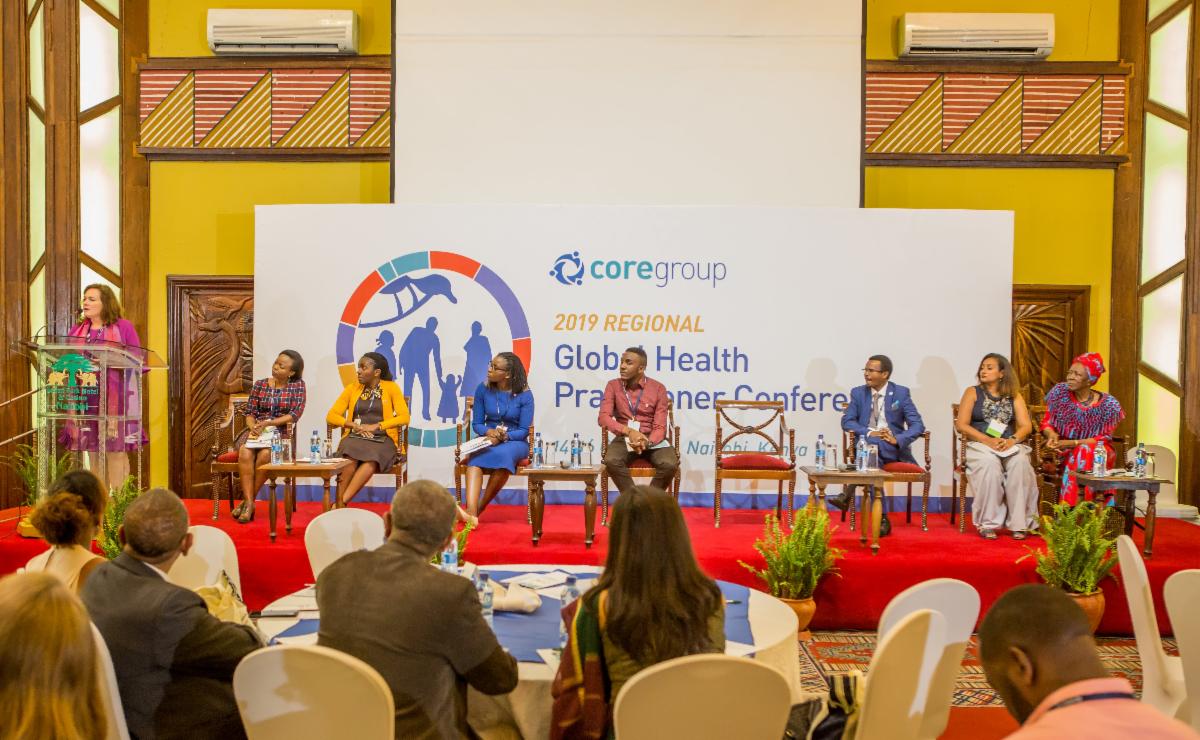
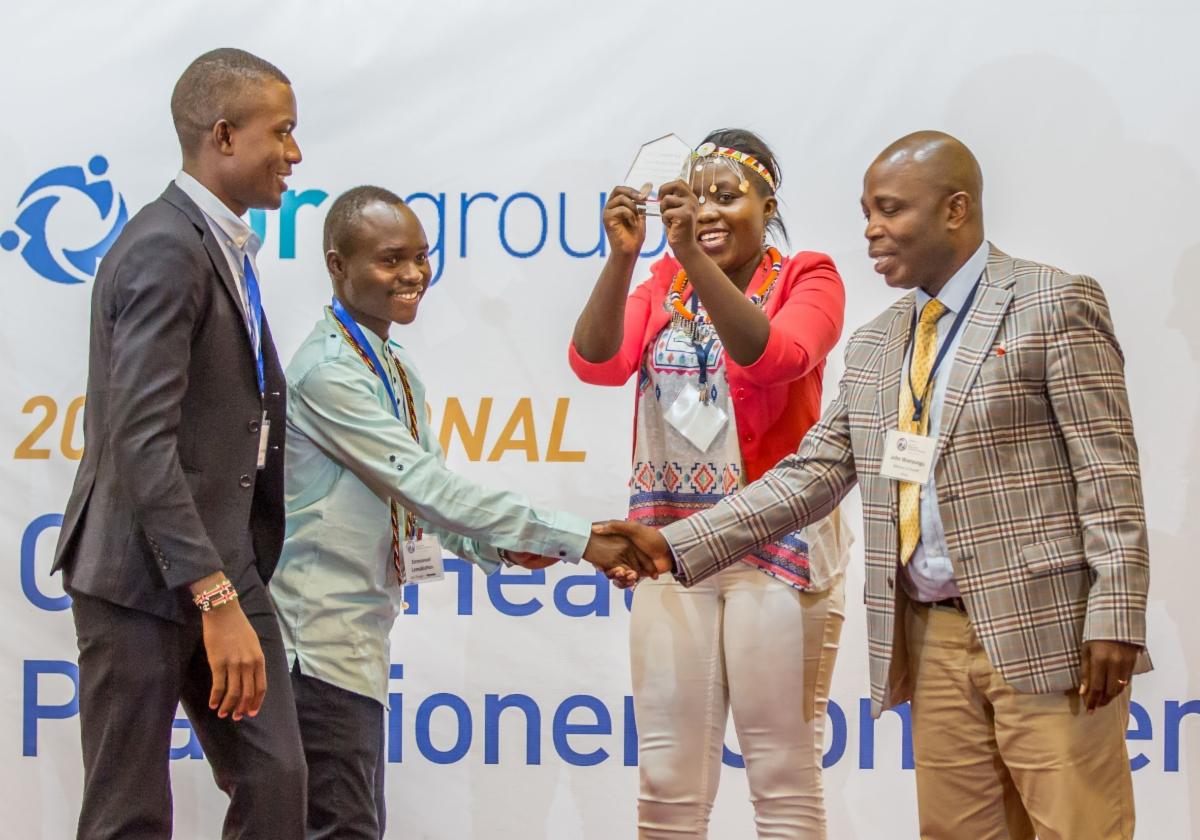
For over two decades, CORE Group has hosted a Global Health Practitioner Conference featuring skills-building sessions, recent evidence on cross-sectoral technical areas, and dialogue on community health. We have a unique opportunity this year to connect even more organizations and professionals around the world with our new digital format, and this year is particularly important as we set the stage for future investment and innovation in child and adolescent health and well-being.

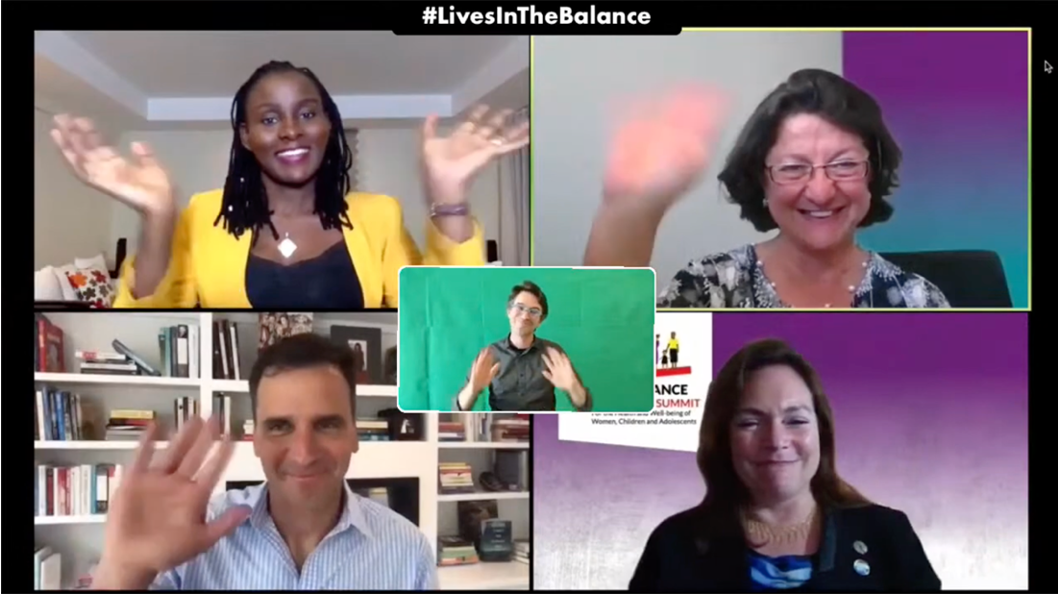
CORE Group and its membership will engage government, ministries of health, policymakers, practitioners, academia, civil society, private sector, global and local organizations in this virtual conference on December 8-10, 2020.

This Conference positions itself as a sharing platform for promising practices and innovations, ongoing challenges, and lessons learned in child and adolescent health and well-being worldwide; and as a convening space for various stakeholders - from community health workers who perform work on the ground to government policymakers who draft national policies - to discuss current opportunities and challenges for policy making, implementation, and partnership and draw consensus on key steps to move the needle forward.

CORE Group is convening a Global Planning Committee with various interested stakeholders to provide input on conference themes and objectives and to support the creation of a multi-day, interactive agenda. Being a committee member is a volunteer position* and will require up to 6 hours per month in planning calls and agenda input, outreach to speakers, and more.

If interested in participating in the Global Planning Committee, please complete the form below by Friday, August 21, 2020, COB.

*A stipend will be provided to young people in the committee, CORE Group is committed to meaningful youth engagement and aims to include 50% of young leaders in this committee. 


My source: Ados May, hss AT lists.coregroup.org

Friday, December 15, 2023

Person to object: Surely you're joking* ...!

 INDIVIDUAL
  |
     INTERPERSONAL    :     SCIENCES               
HUMANISTIC --------------------------------------  MECHANISTIC      
SOCIOLOGY  :   POLITICAL 
|
GROUP

identity

person

choice


identity

person, age

integer


people

father - mother

election

voting age


By @Eyesomorphic - https://www.youtube.com/@Eyesomorphic 

"A gentle introduction to the study of Category Theory and Abstract Algebra, done from the ground-up by exploring the mathematical weapon of abstraction. This video aims to give an overview of the fundamental tool at the forefront of pure mathematical research: abstraction. By seeing this tool in various contexts, and how it allows us to encounter Category Theory in a natural and intuitive manner, we'll see how beautiful the abstract can really be."

  ― Timestamps ― 
 0:00 - Intro 
1:49 - Abstraction and Algebra 
7:30 - Examples of Abstraction 
8:49 - Set Theory 
13:25 - Category Theory 
21:16 - Outro 
― Credits ―
All animation and voiceover created by Eyesomorphic. Background music: 'Abstraction', composed by Caleb Peppiatt.

― Further Reading ―
Category Theory for Programmers: The Preface, by Bartosz Milewski: https://bartoszmilewski.com/2014/10/28/category-theory-for-programmers-the-preface/

Category Theory for Computing Science, by Michael Barr & Charles Wells (Book)

 *Person to object - and back again - assuring and preserving the humanistic.

Sunday, January 08, 2023

Special Issue - Theorytellings: Epistemic Narratives in the Digital Humanities

Photo by Marcus Urbenz on Unsplash

Journal of Cultural Analytics

Vol. 7, Issue 4, 2022
Theorytellings: Epistemic Narratives in the Digital Humanities

"This special issue deals with existing theory narratives and conceptions in DH scholarship. Introducing the neologism “theorytellings”, this special issue invites DH scholars to narrate and discuss their own theoretical contributions to the field."
 
Kleymann, Rabea, et al. “Foreword to the Special Issue ‘Theorytellings: Epistemic Narratives in the Digital Humanities.’” Journal of Cultural Analytics, vol. 7, no. 4, Nov. 2022, doi:10.22148/001c.55593.
 
Includes:

Abstract

The status of theory in the Digital Humanities (DH) has been the subject of much debate. As a result, we find different theory narratives competing and entangled with each other. If at all, these narratives can only be grasped and examined from a somewhat detached perspective. Here, we attempt to investigate these elusive narratives by means of a conceptual history approach. In doing so, we define different theory dimensions, ranging from specific cultural and literary theory frameworks to more generic uses of the concept of theory. We examine the use and semantic changes of these theory notions in a large corpus of DH journals. Using a mixture of heuristic methods and approaches from the field of distributional semantics, we aim to create tellable conceptual stories of DH theory.

Kleymann, Rabea, et al. “Conceptual Forays: A Corpus-Based Study of ‘Theory’ in Digital Humanities Journals.” Journal of Cultural Analytics, vol. 7, no. 4, Dec. 2022, doi:10.22148/001c.55507.


 INDIVIDUAL
|
 INTERPERSONAL    :     SCIENCES               
HUMANISTIC --------------------------------------  MECHANISTIC   
SOCIOLOGY  :   POLITICAL 
|
GROUP


'theorytellings'
storytelling


Abstract

Instead of looking for new paradigms for Digital Humanities (DH), we present Grounded Theory Methodology (GTM) as a methodological approach to frame digital research practices more reflectively. By turning to the epistemological and practical implications of digital tools like Topic Modeling and digital data sources like YouTube comments, we highlight the theoretical assumptions that are already in the game—and call for more explicitness and methodical monitoring. To explain the procedures of GTM and the proposed worth for DH, we present an example of a qualitative research project using machine learning techniques to narrow down a large scale of data to human interpretable resample. The methodically monitored resampling process provided valuable means to validly minimize the amount of data without losing a qualitative trajectory of the process itself. Defining and tracing relevant content in our original data set enabled us to find related comments and textual conversations to be analyzed further. We discuss the example iteration in two ways: Our prototype and procedure show on the one hand, how qualitative research and computational methods can be better intertwined without compromising their epistemological foundations. On the other hand, we argue for an understanding of DH as research practice, that should follow an abductive research agenda in order to ground its theories in data.

Bischof, Andreas, and Konstantin Freybe. “Grounding Theory in Digital Data: A Methodological Approach for a Reflective Procedural Framework.” Journal of Cultural Analytics, vol. 7, no. 4, Dec. 2022, doi:10.22148/001c.57197.

Tuesday, October 30, 2018

First WHO Global Conference on Air Pollution and Health, 30 October – 1 November 2018

individual
|
INTERPERSONAL : SCIENCES
humanistic ----------------------------------------------- mechanistic
SOCIOLOGY : POLITICAL
|
group

Individual potential
Self-Actualization
Anxiety - Distress
Sleep
Disability
Mental Health
Parity of Esteem


Schematic drawing, causes and effects of air pollution: (1) greenhouse effect, (2) particulate contamination, (3) increased UV radiation, (4) acid rain, (5) increased ground-level ozone concentration, (6) increased levels of nitrogen oxides. Source: https://en.wikipedia.org/wiki/Air_pollution

Outdoor Air Quality
Local, Regional, National, International, Global
7 Million deaths

Home  & Work
Indoor Air Quality
Air Pollution respects Borders?

WHO Conference on Air Pollution

@EconomicTimes
All private vehicles in Delhi will be stopped from November 1 if pollution worsens: Official #DelhiAirPollution #DelhiSmog #AirPollution

Urban Planning
Policy 


My source:
Follow this event:


Monday, December 27, 2010

Musings... building models, health & safety, group and individual

....

Basic foundations and minimal defaults
[Accounting for the I-G (individual-group) axis]

Since nurses and technologists are concerned with communication then the foundation from which they begin to (build and model their) work is of fundamental importance. The foundation needs to be generic in the first instance. Generic in the sense of the commonality that language instills, enables and facilitates within and between communities. Not only that, but if we take the property of 'generic' to its extreme then the foundation must be stripped down to the barest of defaults: there are no 'types'.

To use the safety analogy we need to risk assess the extent of our model building activities.

We can do this by asking: is this a one, or at most two dimensional venture; such that we can rest secure on terra firma? Or are we above 'ground' floor and immediately required to address health and safety legislation?

Since medicine and nursing are concerned with safety and so must be evidence based, there is an immediate vertical challenge in the hierarchies inherent in the sciences and the structure of knowledge.

Science is not the only influence here. The foundation of what we are modelling and building must reflect the ultimate subjects (the person - patients, carers, communities, whole populations) must incorporate the individual and collective nature of our activities. So, the individual (whose very safety is our concern!) must be factored in and the public's health. Systems of assurance are then needed and founded in human rights. This in turn is a measure of the level of social coherence, coherence through a level of social and political organisation that allows leaders to effect positive change and betterment. The person, the individual is built not upon the shoulders of giants, but ordinary people - our ancestors and peers. ...

Axes in hand and mind
...
PJ Dec 2010

Thursday, July 03, 2025

AI Health 2025 Friday November 7th 2025

AI Health 2025

Friday November 7th 2025

At the BCS London Office
Ground Floor, 25 Copthall Avenue, London, EC2R 7BP (near Moorgate underground)

Organised by BCS-SGAI

BCS-SGAI, the British Computer Society Specialist Group on Artificial Intelligence was founded in June 1980. Its mission is: "To foster achievement, capability and awareness in both business and research in Artificial Intelligence, and to promote the interests of the related community". It is one of Europe's longest established groups working to support the community of artificial intelligence developers and users and is the organiser of one of the longest running annual series of AI conferences in Europe: the AI-20xx series.

In England, 189 out of 208 (91%) hospital trusts are using electronic health records (EHRs) bringing opportunities and challenges and for Artificial Intelligence (AI). In the morning, there will be a session about EHRs with speakers from UK (animal health records), France (European Health Data Space infrastructure for the use and exchange of EHRs), and Spain (personal health records). Before lunch break, there will be a brief 101 hands-on tutorial about Neuro-Symbolic AI with short exercises. In the afternoon, there will be a session about clinical decision support, exemplifying the use of AI-based healthcare technologies. Come along if you are interested in AI and its potential in healthcare.

There will be Certificates of Attendance for those who register and attend the event.

We hope that you will come and join us, and that you enjoy this new offering from the BCS SGAI.

Dr. Mercedes Arguello Casteleiro (BCS SGAI)*

Please see link above for programme and speaker details.
*.. And my source - BCS SGAI.

Wednesday, April 28, 2010

Presentation: King's College London 17 May Mental Health SIG


Can you join us at the Higher Education Academy Health Sciences & Practice Subject Centre - Mental Health SIG in London
17th May 1000 - 1600?


I am really looking forward to presenting at the Mental Health Special Interest Group next month. It looks a great prospect as I have an hour on the programme. The draft title does not really represent what I intend, paradoxically I will re-introduce Hodges' model and explain why the model is so relevant in theory and practice.

I will outline my presentation here in a future post and the programme overall. For my sins I am now also a sign-off nursing mentor, so being able to network is another great plus. More to follow ....

Here are some details about the SIG from their website:

Welcome

To date, there has been no UK wide, cross disciplinary special interest group providing a regular opportunity for educators to meet face to face - with a view to exploring common issues and challenges, sharing resources and influencing policy and practice in the field of mental health. Arguably, this has hampered educators’ capacity to shape and respond to new developments.
In February 2005 the ‘Common Ground’ event organised by the Mental Health in Higher Education project in partnership with the Health Sciences and Practice subject centre met to identify key issues facing mental health educators in nursing and the Allied Health Professions. Subsequently, the special interest group has broadened out to encompass all colleagues with an interest in sharing approaches and engaging in debate about educational practice and the implications of policy developments for learning and teaching about mental health.

Who is the Mental Health SIG for?

Anyone involved in higher education with an interest in mental health.
We are keen to bring together people from across all disciplines and perspectives (including lecturers, practice educators and user educators and carers with involvement in education) – those who are mental health specialists and those for whom mental health may be one aspect of a broader subject area.
Health Sciences and Practice Subject Centre
Room: 1.17 Franklin Wilkins Building (1st floor)
Franklin-Wilkins buildings,
King's College London,
150 Stamford Street,
London SE1 9NH