Hodges' Model: Welcome to the QUAD: environment

Hodges' model is a conceptual framework to support reflection and critical thinking. Situated, the model can help integrate all disciplines (academic and professional). Amid news items, are posts that illustrate the scope and application of the model. A bibliography and A4 template are provided in the sidebar. Welcome to the QUAD ...

Showing posts with label environment. Show all posts

Wednesday, July 22, 2026

I don't want to look cool ...

individual
|
INTERPERSONAL
: SCIENCES             
humanistic ------------------------------- mechanistic
SOCIOLOGY : POLITICAL   
|
group

"What is it with all this 
stuff, tat, rubbish 
they try to sell you? 
I don't want to look cool:


... what I want is for those 
with the power, to 
keep the planet cool."


Thursday, May 21, 2026

June 4-5 'Ecologies of Care' - London, UK

With more to follow from RCN Congress, this morning I received the agenda for next month's conference 'Ecologies of Care'. I am speaking, first session on the Thursday, which is a good to know and see the broad range of presentations. 

The focus on attention, is helpful for a possible further event in October. In the meantime, the Call for Papers began:

Chancellor’s Hall, Senate House London

June 4 & 5, 2026

Keynote lecture by Professor Yves Citton

How do increasing demands on our attention influence what we know, and how we act, in response to climate change? Despite a strong scientific consensus that climate change is ongoing and anthropogenic, political and legal action remains fragmented. Ecologies of Care asks to what extent the environmental crisis is a crisis of attention. Speaking to the dynamics of the attention economy, Yves Citton notes that “the new scarcity is no longer to be situated on the side of material goods to be produced, but on the attention necessary to consume them.” The word ‘attention’ is etymologically linked to the notion of care, or that which one attends to. This relationship (of subject and object) is fundamentally collective, insofar as collective attentional regimes influence what each one of us pays attention to on a daily basis, and how we navigate the barrage of informational flows from popular media.

Terms such as "the Anthropocene" and "planetary boundaries" function both as scientific descriptors and attempts to provoke action commensurate to the urgency that scientists believe their research demonstrates. The recent decision not to formalize the Anthropocene as an official geological unit, for example, highlights growing unease concerning intensifying media attention directed at scientific expertise. Under conditions of increasing disparity between what we know, and how we act, in response to climate change, the role of scientific expertise plays an increasingly normative, and not only informative, function. Scientific expertise attempts to direct what we attend to, and consequently, how (or if) we care. This is a collective practice of narrating and internalizing mythologies, whereby informational flows draw attention to some thing that needs to be cared for: Earth, the planetary, capital, or each other.

Continued ...

 c/o Law and the Environmental Humanities Network

n.b. With little time, I'm not going to transfer the pdf text, but may add here.

Monday, May 18, 2026

Call for Abstracts: Prototypes for Humanity - Submission Deadline 22 May 2026

Dear Colleagues, 

I am pleased to invite the submission of abstracts to the Prototypes for Humanity 2026 Short Papers Platform. 

Abstract Submission Deadline: 22nd May 2026
Invitations to Successful Authors: 8th July 2026
Conference Dates: 15th - 19th November, Dubai, UAE 

** Description **

The Short Papers Platform provides a forum for professors to share their research and engage in interdisciplinary dialogue, fostering global collaboration and knowledge exchange, with a focus on driving real-world impact through academic research.

For 2026, Prototypes for Humanity is delighted to announce the launch of a strategic partnership with the Investment Corporation of Dubai (ICD), for the Short Papers Platform. This joint effort reinforces the programme’s commitment to advancing impactful innovation through collaboration between academia and industry, focusing on the key sectors and themes that reflect international research priorities and that are relevant to the city and to the fund. 

Themes 
  • Wellbeing and Human Performance
  • Infrastructures and Cities
  • Autonomous Systems and Advanced Manufacturing
  • Environment, Sustainability and Energy
  • Mobility and Logistics
  • Socio-Economic Empowerment, Digital Economies and Future Markets
  • Open and Speculative
Awards

As part of the programme’s ongoing commitment to research translation, ICD will award a $50,000 prize to one of the short papers presented at the conference. The award recognises academic work with strong potential for practical application, identified through engagement with ICD industry experts, and will support the winning project’s next stage of development towards implementation.

Submissions

Full details can be found at: https://www.prototypesforhumanity.com/press-releases/stories/Call_For_Abstracts_2026

Apply here: https://form.jotform.com/260705028532451?source=https://www.jisc.ac.uk

Deadline for abstract submission: 22 May, 2026

We strongly encourage you to apply where your interests and research aligns with the programme’s thematic areas.

If you have any questions, please contact us at professors AT prototypesforhumanity.com

Sarah Ward
University Relations Manager
Prototypes for Humanity

E: sarah.ward AT prototypesforhumanity.com

My source: Email - https://www.bcs-sgai.org/

Thursday, March 12, 2026

John Gerrard's "Western Flag" 2017

INDIVIDUAL
|
    INTERPERSONAL    :     SCIENCES               
HUMANISTIC --------------------------------------  MECHANISTIC      
SOCIOLOGY  :   POLITICAL 
|
GROUP


http://westernflag.johngerrard.net

John Gerrard - Western Flag (Spindletop, Texas), 2017

My source: Twitter

Sunday, February 01, 2026

'First came the landscape' c/o Eden project & Resurgence & Ecologist

Ingela Ihrman - First Came the Landscape

Beech wood

'First Came the Landscape is a giant stick skeleton made from the trunk, limbs and branches of a single beech tree that was blown down during Storm Eunice in 2022. . . .'

https://www.edenproject.com/visit/things-to-do/first-came-the-landscape

INDIVIDUAL
|
    INTERPERSONAL    :     SCIENCES               
HUMANISTIC --------------------------------------  MECHANISTIC      
SOCIOLOGY  :   POLITICAL 
|
GROUP


My source: Anna Souter & Ingela Ihrman. 'First came the landscape'. Resurgence & Ecologist, May/June 2023. 338: pp.44-46. 

See also: https://www.edenproject.com/visit/things-to-do/first-came-the-landscape

Previously: 'landscape' : 'ecology'

Saturday, January 24, 2026

Affordances


Affordance

An affordance is a perceptual pattern with survival significance. Affordances are relational, rather than objective or subjective properties. As Gibson, who coined the term, observes, 'An important fact about the affordances of the environment is that they are in a sense objective, real, and physical, unlike values and meanings, which are often supposed to be subjective, phenomenal and mental. But, actually, an affordance is neither an objective property nor a subjective property; or it is both if you like. An affordance cuts across the dichotomy of subjective-objective and helps us to understand its inadequacy' (Gibson 1979, 129). 
[Proust, Glossary, p.309.]


INDIVIDUAL
|
 INTERPERSONAL    :     SCIENCES               
HUMANISTIC --------------------------------------  MECHANISTIC      
SOCIOLOGY  :   POLITICAL 
|
GROUP

subjective

objective


Re. 'Survival significance' ...

Does this make affordances relevant in clinical education, and education more generally?

What of assisted dying in theory, policy, law and practice?

Are there any implications for the models employed by artificial intelligence - LLMs, neurosymbolic reasoning / AI (wave x)?

Source: Joëlle Proust (2013). The Philosophy of Metacognition: Mental Agency and Self-Awareness.  Oxford: Oxford University Press, Oxford. ISBN: 978-0-19-960216-2

Précis of The Philosophy of Metacognition:
https://joelleproust.org/wp-content/uploads/2012/09/pdf15.pdf 


See also: 'subject' : 'object' : 'affordance' : 'interface'

Tuesday, January 06, 2026

KU Leuven - LCHH2 Health Humanities Lecture Series 2025-2026

Dear all,

The Leuven Centre for Health Humanities organises a yearly lecture series and we would love to invite you!

This year’s lecture series explores the entangled relations between nature and health. Bringing together perspectives from medical history, psychology, disability studies, colonial studies, and environmental humanities, the talks examine how ideas of nature have shaped — and have been shaped by — practices of care, control, and coexistence. Topics range from the rise of disposable medical technologies and their environmental costs, to colonial disease management at the cattle frontier, and from the ambivalent role of “nature” in the lives of people with disabilities to contemporary debates on the restorative effects of natural environments. The series also turns to the microbial world, challenging human exceptionalism and rethinking health as multispecies interdependence rather than biological mastery. Together, these lectures invite critical reflection on sustainability, vulnerability, and care, and offer new ways of imagining health in a world where human and nonhuman lives are profoundly interconnected.

Join us online and on campus, at KU Leuven, for a series of inspiring health humanities talks.

You can find more information about the lectures and how to register here:

Health Humanities Lecture Series 2025-2026 — 
Leuven Centre for Health Humanities (LCH²)

Best wishes,

Lore Delahaye (she/her)
Administrative Support

KU Leuven
Doctoral School for Humanities and Social Sciences
Blijde Inkomstraat 5, box 3000
3000 Leuven


https://ghum.kuleuven.be/phd

Monday, December 22, 2025

Contexto Int. [Newsletter] - Special Issue 47.2 Where is the Sea in Int. Relations?

Dear Colleagues,

We hope this correspondence finds you well.

We are delighted to formally announce the publication of the latest special issue of Contexto Internacional, entitled "Where is the Sea in IR?," which I had the distinct honour of co-editing with Dr Flavia Guerra (Federal University of Rio de Janeiro).

The overarching objective of this Special Issue is to address a central scholarly lacuna within International Relations (IR) scholarship: the historical and theoretical marginalisation of the oceanic domain. In pursuing this fundamental inquiry—why and how does the ocean recede from scholarly and political attention?—the assembled contributions collectively prompt a sustained, rigorous examination of two key analytical challenges:

  1. The specific mechanisms through which IR has historically relegated the oceanic domain to the periphery of its dominant analytical frameworks.
  2. The subsequent broader political and theoretical implications that stem from this systematic exclusion.

The volume is structurally organised around three distinct, yet interconnected, thematic axes, each seeking to contribute to a deeper engagement with the marine sphere:

  1. The Marginalisation of the Ocean in IR: Conceptual and empirical explorations of how the sea is actively rendered absent or subordinate within core theoretical debates.
  2. Complex Entanglements between the Ocean and Ontological Security: Analyses focusing on the relationship between maritime spaces, existential anxieties, and state identity formation.
  3. Ocean Governance as Regulatory Mechanism and Platform for Political Discourse: Critical assessments of regulatory frameworks and their role in structuring political contestation over the maritime commons.

We sincerely hope that you find the contributions within this volume to be a compelling and theoretically relevant read that stimulates further research and critical reflection within the discipline.

Special Issue: Where is the Sea in IR?

Where is the Sea in International Relations?
  Francisco Eduardo Lemos de Matos; Flávia Guerra Cavalcanti

Abstract | Full text

Table of Contents: https://www.scielo.br/j/cint/i/2025.v47n2/

Includes - Addressing 'Maritime Aphasia' in International Relations
  Bruno Sowden-Carvalho; Marcelo M. Valença

Between Nuclear Tests and Rising Sea Levels
  Beatriz Rodrigues Bessa Mattos

Carl Schmitt on the Move: Spatial Politics and the (political) Sacrifice of the Sea
  Francisco Eduardo Lemos de Matos

Thinking Ontological (In)Security with Water: The Place of the Ocean in Boat Migration
  Flávia Guerra Cavalcanti

What is the Place of Mar de Timor in Timorese Geopolitics, Culture and Education?
  Silvia Garcia Nogueira; Betina Lopes; Ângelo Ferreira; Samuel de Souza Freitas

Fluid Boundaries: Reassessing Maritime Spaces and Nomadic Waves in International Relations Theory
  Henrique Campos de Oliveira

The Third Bank of the Sea: Maritime Traces of Constitutive Outside(r)s and International Ontopolitical Lines
  Roberto Vilchez Yamato; Gustavo Alvim de Góes

Ocean Governance, Maritime Security, and International Relations
  Daniele Dionisio da Silva; Gilberto Carvalho Oliveira

Sailing on Waves beyond National Sovereign Land Borders: On the Crossroads between International Ocean Relations and the Blue Economy
  Thauan Santos

Regards,
chico

Francisco Eduardo Lemos de Matos
Doutor em Relações Internacionais pelo IRI/PUC-RIO.
Pesquisador de Pós-Doutorado em Relações Internacionais no IRI/PUC-RIO pela FAPERJ.

Rede IPS Brasil - https://www.ipsbrasil.com/
Lattes: https://lattes.cnpq.br/9338374067089166
Orcid: https://orcid.org/0000-0003-4214-5382

My source: DOINGIPS list - https://www.doingips.org/
Monday, December 08, 2025

Remember (if you can) in each care domain ...

... there is an elephant in the 'room'!


individual
|
INTERPERSONAL : SCIENCES
humanistic -------------------------------------------  mechanistic
SOCIOLOGY : POLITICAL
|
group-population
'If there is one product that symbolises the absurdities of the EU's single market in goods, it might be a cuddly elephant. The Djungelskog toy from Ikea may only be 12cm tall and cost less than €2, but it has a 20cm-long label protruding from its behind.

Environmental rules from France and EU textile legislation account for much of the length. But the elongated label reflects a strategic even a philosophical, problem for Europe as its companies battle to compete globally.

The single market in goods should be the EU's crowning achievement. Compared with free movement of people, services or capital, it is the area that has come furthest in more than 30 years since the common market was established.

Yet there remain small, often invisible barriers to trade that, taken together, amount to what the IMF estimates is a drag on Europe's economy equivalent to a tariff of 44 per cent.'


RICHARD MILNE - OSLO and SAM JOINER - LONDON, Elephant in the room hampers frictionless EU trade, FTWeekend, 6-7 December 2025, p.6.

Related?

Jones, P. (1996) Nursing Technology and Elephants - Part 1: Technology as a beast of burden. IT in Nursing. 8,1,4-6.

Jones, P. (1996) Nursing Technology and Elephants - Part 2: Technology as a serpent. IT in Nursing. 8,2,5-7.

Jones, P. (1996) Nursing Technology and Elephants - Part 3: Technology rope to save humanity and health care, IT in Nursing. 8,3,5-7.

Sunday, December 07, 2025

AI - World Models

'What Is a World Model?

World models are neural networks that understand the dynamics of the real world, including physics and spatial properties. They can use input data, including text, image, video, and movement, to generate videos that simulate realistic physical environments. Physical AI developers use world models to generate custom synthetic data or downstream AI models for training robots and autonomous vehicles.'

https://www.nvidia.com/en-us/glossary/world-models/

In healthcare a 'world model' is slightly more expansive, hence the importance of experienced humans. We call these - nurses, doctors, physiotherapists, occupational therapists, social workers and many other professions, support workers and disciplines. They learn and train for many years and must continue to learn and unlearn throughout their careers. Their work and engagement is shaped and directed by human values, which are in turn informed by social change, evidence-based research, professional guidance, policy and law.

individual
|
INTERPERSONAL : SCIENCES
humanistic -------------------------------------------  mechanistic
SOCIOLOGY : POLITICAL
|
group-population


WORLD MODEL


Wednesday, October 29, 2025

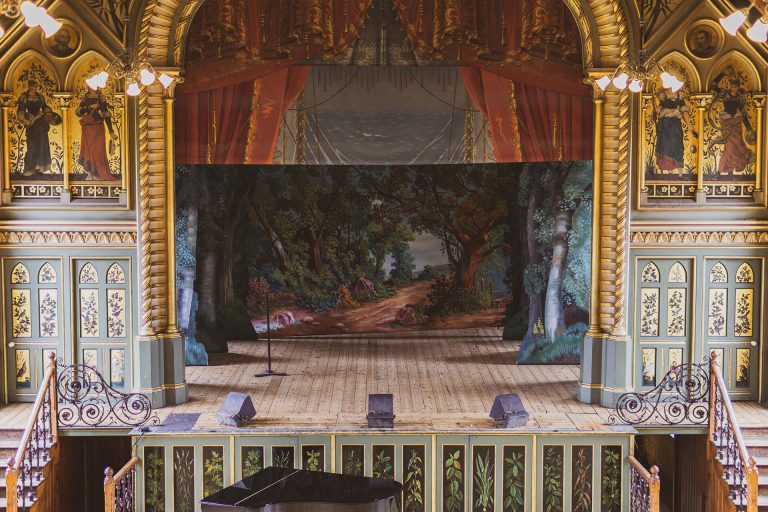
Normansfield Theatre in Teddington

Normansfield Theatre in Teddington

'My favourite building is the amazing Normansfield Theatre in Teddington that John Langdon Down (1828-1896) built to provide positive and stimulating education for learning disabled people (Down syndrome is named after him). At a time when most disabled people would have been shut away in horrific asylums, Down adapted his own house as a residential home, and built a beautiful theatre for creative rehabilitation. It's one of the few surviving private theatres from the period, with original painted scenery and other ornate fixtures, recently remodelled. For me, it's also a reminder of how the wealthy often used their money for good causes, which feels less common now. Jos Boys, guest curator and co-director of The DisOrdinary Architecture Project'


My source: The pick of London Open House. House&Home, FTWeekend. 6/7 September 2025. p.8.

Image: Langdon Down Centre

Previously: 'learning disability' : 'theatre' : 'architecture'

Wednesday, September 24, 2025

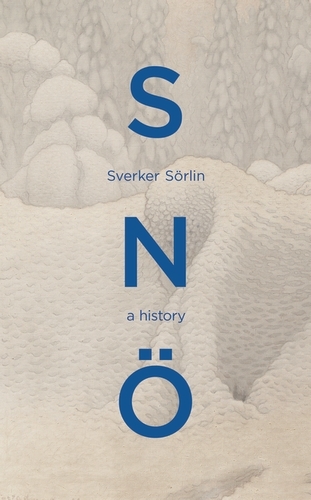
Book: SNÖ

'Snow. A single word, for an infinite variety of water formulations, frozen in air. The study of snow is physics, chemistry, meteorology, anthropology, geography, poetry and art. It is hope – annually renewed. And it is history, too.

Earth saw its first snowfall 2.4 billion years ago. The world's oldest skis, made by hand five thousand four hundred years old, pre-date the pyramids of ancient Egypt. To humanity, snow has variously been an ally and an adversary; an inspiration to countless artists and a place of breathtaking tragedy and survival. But it’s always been there. And now it is melting. 
In 1927, the snow was already more than nine metres deep on Japan's Mount Ibuki when a remarkable 230cm fell in 24 hours, bringing about the greatest depth of snow - 11.82m - ever recorded. Yet it is a fact today that, ironically not only has this mountain's resort been forced to close due to lack of snow, most people in the world have never been near snow: never felt the soft crunch of snow underfoot, never held snow to see it melt in their hands, let alone stood on a pair of skis.'  continued ...
Individual
|
      INTERPERSONAL    :     SCIENCES               
HUMANISTIC  --------------------------------------  MECHANISTIC      
 SOCIOLOGY  :    POLITICAL 
|
Group


compass defined

compass unified

mental expanse

beauty

memory

lived experience

signature of change

sadness

signifier
SNÖ by Sverker Sörlin

culture

poetry - arts

social history

shared loss

recreation - leisure

Two kids.
Uncles! In car, drenching
us driving through slush in the gutter 😎


Sverker Sörlin, Elizabeth DeNoma (Translator) (2025). SNÖ - A History. London: Doubleday.
https://www.penguin.co.uk/books/467833/sno-by-sorlin-sverker/9781529947878


My source: Clark, P. A gear shift to adapt to a warming world. Books. Genre Round-Up, Environment.  Life&Arts. FT Weekend. 23/24 August 2025. p.10.

John Denver - Season Suite (Full) The Suite is in this order:
  1. Summer
  2. Fall
  3. Winter
  4. Late Winter, Early Spring (When Everybody Goes to Mexico)
  5. Spring

Sunday, September 21, 2025

Book: 'Non-Western Approaches in Environmental Humanities'

Individual
|
      INTERPERSONAL    :     SCIENCES               
HUMANISTIC  --------------------------------------  MECHANISTIC      
 SOCIOLOGY  :    POLITICAL 
|
Group

attitude, mindset, approach, perspective, framework, philosophy, world-view, paradigm, method, -ism

'Man'
------------------------------------------
Nature - Biosphere - Planetary Health


distance: local, glocal, global
environment
physical space
urban, rural, remote

posthuman
'Non-Western Approaches in Environmental Humanities'

Policy
Politics
Economics
Priorities
Capital
Power
Postcolonialism
Decolonial
Postcolonial


Gabriela Jarzebowska, Aleksandra Ross, and Krzysztof Skonieczny (eds). (2025) Non-Western Approaches in Environmental Humanities. Göttingen: V&R unipress | Brill Deutschland GmbH.

My source: https://x.com/Plant_Init/status/1964274903504281966

See also: 'humanities' : 'environment'

Monday, September 15, 2025

The sands of time are running out ...

... ironic, when the place you most
need blue-sky and long-term thinking,
innovation and action is becoming a desert ...

Individual
|
      INTERPERSONAL    :     SCIENCES               
HUMANISTIC  --------------------------------------  MECHANISTIC      
 SOCIOLOGY  :    POLITICAL 
|
Group


Image(s) © Harry Haysom

With thanks to HARRY HAYSOM - DESIGN & ILLUSTRATION -
and for being able to edit and apply this work to Hodges' model.

Visiting bookshops regularly, following the media and https://harryhaysom.co.uk/

 - I realise I'm more aware of Harry's brilliant work than I thought.

https://www.instagram.com/harryhaysom

My source: FT Magazine, January 4/5 2025. p.10.

Thursday, July 24, 2025

Book - open access: 'Planetary Politics'

Individual
|
      INTERPERSONAL    :     SCIENCES               
HUMANISTIC  --------------------------------------  MECHANISTIC      
 SOCIOLOGY  :    POLITICAL 
|
Group


My source: Email EUP.

Lucy Benjamin (2025) Planetary Politics - Arendt, Anarchy and the Climate Crisis. Edinburgh University Press. https://edinburghuniversitypress.com/book-planetary-politics.html

Friday, March 14, 2025

New network in Environmental Humanities: H-EcoLit

supported by H-Net

Dear colleagues, 

Hello. Sorry for cross posting as I am sharing with you the below that may be of your interest. 
 
  • newly launched network in Environmental Humanities: H-EcoLit supported by H-Net

You are welcome to register for free as member of our newly launched network called "H-EcoLit", supported by the H-Net of the Michigan State University:


H-EcoLit is an international network of academics and researchers of all levels who study the fields of Environmental Humanities, Literary Theory and Cultural Criticism. The network seeks to explore issues beyond the traditional binary of nature-culture, and examines the changing status of subjectivity, agency, and citizenship, while envisioning matters for sustainable futures in a more-than-human world. H-EcoLit is aligned with the H-Net’s aims for supporting open access research, interdisciplinary projects, and ‘unites’ different voices across the globe. The intended audience includes academics, scholars of all levels and policy makers who are working on the Environmental Humanities, Literary and Cultural Studies, and related to Environmental Humanities areas.

Welcome to join us! Thank you!

  • Publications edited and co-authored by Professor Peggy Karpouzou and Dr. Nikoleta Zampaki
1. Special Issue: "Critical Green Theories and Botanical Imaginaries: Exploring Human and More-than-human World Entanglements" published in Open Cultural Studies:
2. Special Issue: "Ecologies of Life and Death in the Anthropocene" published in Lagoonscapes. The Venice Journal of Environmental Humanities
3. Special Issue: "The Digital Environmental Humanities: Towards Theory and Praxis" published in HJEAS:
4. our open access chapter titled "Toward Posthuman Aesthetics: The Flesh of the World in Auguste Rodin’s Le Penseur and The Thinking Robot" published in Nidesh Lawtoo's volume titled Mimetic Posthumanism. Homo Mimeticus 2.0 in Art, Philosophy and Technics at Brill:
5. our chapter titled “The Poetics of Zombification in Ryan Mecum’s Dawn of Zombie Haiku” In Zombie Futures in Literature, Media and Culture. Pandemics, Society and the Evolution of the Undead in the 21st Century edited by Simon Bacon, published by Bloomsbury: 
[I note online events are included in an announcements page:

We will keep in touch. Thank you!

Best regards, 
on behalf of the Editors

Nikoleta
--
Dr. Nikoleta Zampaki
Postdoctoral Researcher
Faculty of Philology, School of Philosophy, 
National and Kapodistrian University of Athens, Greece
E-mail: nikzamp AT phil.uoa.gr

My source: SOPHERE list

Thursday, March 06, 2025

Understanding Mathematics + Domains towards Corridors

It is for others to judge - whether it is helpful or distracting; but I find concepts defined by other disciplines, or professions illuminating and insightful. Especially so, when it comes to 'domain'. In Hodges' model - all four of them. Five! When (not if), we include the spiritual:
'Greeno (1991) argued that students develop understanding when

"a domain is thought of as an environment, with resources at various places in the domain. In this metaphor, knowing is knowing your way around ir the environment and knowing how to use its resources. This includes knowing what resources are available in the environment as well as being able to find and use those resources for understanding and reasoning. Knowing includes interactions with the environment in its own terms - exploring the territory appreciating its scenery and understanding how its various components interact. Knowing the domain also includes knowing what resources are in the environment that can be used to support your individual and social activities and the ability to recognize, find, and use those resources productively. Learning the domain, in this view, is analogous learning to to live in an environment: learning your way around, learning what resources are available, and learning how to use those resources in conducting your activities productively and enjoyably. (p. 175)"

In particular, in chapter 8, Nemirovsky et al. use the metaphor of becoming familiar with a new place (e.g., a town, a train station) and the process of learning a new mathematical concept.' p.7.

Greeno, J. (1991), Number sense as situated knowing a conceptual domain.,Journal for Research in Mathematics Education, 22(3), 170-2 18. 

Understanding Mathematics and Science Matters
. Edited by Thomas A. Romberg Thomas P. Carpenter Fae Dremock University of Wisconsin-Madison. EA LAWRENCE ERLBAUM ASSOCIATES, PUBLISHERS 2005 Mahwah, New Jersey London. (I hope there is a 2nd edition?)

(I will try to add the Nemirovsky et al. reference when I can.)

Previously: 'territory' : 'map' : 'vocabulary'

Saturday, March 01, 2025

Paper: Human social genomics i

Abstract

'The exciting field of human social genomics provides an evolutionarily informed, multilevel framework for understanding how positive and negative social–environmental experiences affect the genome to impact lifelong health, well-being, behavior, and longevity. In this review, we first summarize common patterns of socially influenced changes in the expression of pro-inflammatory and antiviral immune response genes (e.g., the Conserved Transcriptional Response to Adversity), and the multilevel psychological, neural, and cell signaling pathways by which social factors regulate human gene expression. Second, we examine how these effects are moderated by genetic polymorphisms and the specific types of social–environmental experiences that most strongly affect gene expression and health. Third, we identify positive psychosocial experiences and interventions that have been found to impact gene expression. Finally, we discuss promising opportunities for future research on this topic and how health care providers can use this information to improve patient health and well-being.'

Slavich GM, Mengelkoch S, Cole SW. Human social genomics: Concepts, mechanisms, and implications for health. Lifestyle Med. 2023; 4:e75. https://doi.org/10.1002/lim2.75
 

Lifestyle Medicine
For ongoing study of Hodges' model this is an interesting paper, especially in seeking to bridge the humanistic and mechanistic axis, and the social (soft) sciences and (hard) sciences. In trying to view Hodges' model as a mathematical object (categories, objects, relations ..) and extend the bio-psycho-social model (as needed urgently) of medicine (health and social care) the focus of this paper can help us explore the determinants.

It may be possible using Hodges' model, to identity (isolate) some specific ways in which conceptual models are idealised. They can reveal the nature and extent of situations - compositions, formulations and relationships (scope of practice?), but in practice of course we cannot set a situation* in aspic.


This may be important (essential) when we consider the determinants of health globally (across all the domains of Hodges' model).


Individual
|
      INTERPERSONAL    :     SCIENCES               
HUMANISTIC  --------------------------------------  MECHANISTIC      
 SOCIOLOGY  :    POLITICAL 
|
Group


Genomics

Social Genomics


*Hodges' model is situated.

To revisit ..

Thursday, February 20, 2025

Book review: #5 - Handbook on the Ethics of AI

Handbook on the Ethics of AI
If there is an overall theme to the book it is - rather inevitably -   anthropomorphism. Some argue it is consequential in nature due to the risks we are running. Sandry's chapter 10 Anthropomorphism and its Discontents begins by highlighting duality, dichotomies, and  oppositions that instantly come into effect in this emerging  theoretical, practical and policy field. If a term anthropomorphic can be 'loaded' this one carries extra baggage: history, religion, natural, aesthetic, philosophy, physical, existential. The dual issue of making a machine that looks human; versus, machines that could deceive humans (used remotely today and in situ in the future?) is considered. In our interacting with AI Tech, I found intention (and attention) of specific interest. Sandry seeks definitions, starting with dictionaries, the discussion is helpful across arts too. The reader is left well briefed and technically too: intrinsic and extrinsic forms, the role of the intentional stance, 3-factors. ...

Health is not a primary focus of the book. The index does not list healthmedicinenursing, at least not where they may be expected. The index is comprehensive but I wonder if it could be improved. Care is suggested through social robotics (p.147). Design figures again, anthropomorphically of course (p.147). Specific attention to ethics and Taking Care With Language are given (sections 6-7). I scribbled! again about care for tech - in the material, energy, and production 'costs' in an ecological sense. SUVs annoy me (sorry!) are they all necessary? On language, I thought back to McDermott D (1985) Artificial Intelligence Meets Natural Stupidity, In MIND DESIGN, Haugeland J (Ed), MIT Press, London, p.144-145:


Balance in subjectivity and objectivity of stances and resulting content / conclusions can be difficult to achieve and represent. The latter section prompts respond to frustration with the term anthropomorphism. I found myself in a couple's lounge, as a community mental health nurse, acutely aware of the role of proxies in dementia care; as Sandry described Paula Sweeney's 'fictional dualism' (8, 150). Hodges' model fits well here too, regards anxiety. To socialbots, I added carebots. There seems potential in sociomorphing.

As noted previously, reflection and relation-al points litter the text. In Jecker's chapter 11 A Relational Approach to Moral Standing for Robots and AI this is more explicit. Jecker refers to care of others - as animals too. In computer science and seeking to retain a socio-technical perspective, I've seen potential in capability and maturity frameworks. Section 2 provides some discussion of the former. One of the first words I looked up in the index was isomorphic. It wasn't listed but I found reference to it on page 157: '... a community of robots psychologically isomorphic to to human beings that share our psychology ...'. Maths is a focus here, even though I must try to utilise AI to aid my learning and understanding. This is - must be an outcome of reading HEoAI.

The section on (self-)counsciousness is engaging and not limited (again) to machine intelligence. Subjectivity arises again. I wrote a note re. the precautionary principle, my 'prompt' the ethical principle. A gift was dicovered in 3. A CONCEPTUAL REFLECTION and within 3.2 Relational Ethics, preceded by the potential of Kant, utilitarian and vurtue ethics. While not wishing to virtue signal I've long speculated on how other cultures could inform nursing theory and models of care. Jecker incorporates the African philosophy of ubuntu in relational ethics. Student's would enjoy this, especially as Jecker (Source: Author) provides tables laying out the ethical approaches and robot & AI capabilities. This can also encompass older adults and care contexts with social robots. Nussbaum's capabilities applied to human development is also adopted here - another useful reminder:

(And, once again I recall Nussbaum's talk on Aristotle.) In post #4 I wrote of the rubbish scene in the film A.I. Artificial Intelligence, but it's here (p.166) that I wrote the note. There is so much I'm skimming over - believe it not.

The conclusion in mentioning a hybrid future consisting of both humanistic and mechanistic agents appears to find an additional theoretical and practical ally in Hodges' model?


Chapter 12 by Navas is AI Ethics, Aesthetics, Art and Artistry visits the history and philosophy of this subject too, esp. from 1700s. With Žižek and Deleuze there is much prepatory reading for would-be undergrads - and general readers keen to have an awareness of contemporary issues. There is quite a triad here - disassembled - across several sections. I have quoted from the volume many times, but p.179 concerns empathy: 
'Empathy challenges the ongoing optimization of technology, because it takes time to exercise it. A person needs time to think about whatever issue, situation, thing, or person they may empathize with. In other words, empathy is essential for humans to understand and figure their relation to others and their surroundings. Empathy, if practiced reflexively, can lead to critical thinking. which may not lead to clear results but the activity may and often does end in "wasted" time if framed under the drive for efficiency, which is clearly something Al is designed to achieve. And lastly, empathy, because it has been foundational to art, is also part of art's long-term resistance against capitalism's exponential dependence on speed of production. At the core of AI ethics, then, we find speed of production and consumption coming in conflict with human existence itself. Humans are proving to be inefficient actors in the very system they built for their own benefit, which obsessively demands faster cultural activity from people, which (to be blunt) translates to an unapologetic and incessant desire for profit.' pp.179-180.
Section 6 on creativity AND speed is fascinating, especially as human-machine (brain) interfaces develop apace. Concerned as I am with what is a metacognitive tool, 8 Metacreativity formed the conclusion of chapter 12. The notes refer to generative coding which has come up in various webinars.

Silent Running: Film
Briefly, chapter 13 covers AI and the Environment. It is amazing (or not) how in a few sentences your mind can be changed? From "Really!" upon reading 'species culling', to this being explained in the crown-of-thorns starfish (hence COTSbot) and the toll on coral in Queensland. There are robots-for-ecology. I smiled returning to Silent Running's Dewey, Huey, and Louie becoming reality. Facinating point in: what is collective must be recognised in terms of causation. Appropriatly, PEAS is an acronym: probalistic weather event attribution studies are a reality in conjunction with remote sensing and tracking.

Drones are also developing apace, and applied robotics - tree-climbing. Less reassuring (adding to nature's precarity?) are artificial insects to undertake pollination; more positively reducing the impact of chemical and toxic spills. Simulation for training is well established in medicine and nursing; section 2.3 addresses this were PEAS form super-ensembles of data (I like that). PEAS can also have a role in determining an evidence-base and demonstrating it is hoped provenance for that evidence in the movement of populations, for example, climate refugees. In conflicts, human rights and justice, forensic architecture is of course well established: Forensic Architecture (Care Forensics?)

The summative nature in closing chapter 13 is a helpful approach which I will possibly try to duplicate.

Socio-technical approaches are found in chapter 14 Uses and Abuses of AI Ethics by Frank & Klincewicz. Understandably, boundaries play a large role, as you would expect in deliberating value and values, moral patients and agents. The Collingridge dilemma is discussed, regards putting in place controls for a technology while it is still in development, otherwise control may be lost (p.213). Diversity, a story of the moment - closes out this chapter. There is a 'nice' continuity across chapters to
15 The (Un)bearable Whiteness of AI Ethics by Syed Mustafa Ali et al. (the first note highlights the format is a dialogue). The (colonial) politics of north-SOUTH are duly noted and Africa (section 4). Section 8 points to technological (and health) colonialism. I take as a positive that the 'hyphen' also has a place (S.10).

The Savage Mind

Again related, as per the book's structured parts, chapter 16 Ethics beyond Ethics: AI, Power, and Colonialism by Kim prompts the reader to revisit the concepts of 'other', alterity even if 'understood'. I pencilled 'Savage Mind' here. Machines are posited as the colonial other. There will be a repeated argument as in response to humankind's going back to the moon (to stay) and on to Mars. We should sort Earth out first. So too for inclusion and the machines. What about the people who are excluded, disenfranchised and increasingly so? I wondered (previously) if (even) more could be made a transparency? Noting the word subaltern, it appears this has suddenly been attributed to Ukraine? On disability and ableism reminded also of radio history and 'Does He Take Sugar?'

The statement: 'Machines are perceived as distant - temporally, spatially, or socially - and different from human culture.' p.234. Is, so true.

INDIVIDUAL
|
      INTERPERSONAL    :     SCIENCES               
HUMANISTIC  --------------------------------------  MECHANISTIC      
 SOCIOLOGY  :    POLITICAL 
|
GROUP
cognitive - conceptual
'spaces'
distance:
time, space
human cultures
societies
difference


'Binary-opposition' and the need to think outside of this is acknowledged. And as if (perhaps) to stress both distance and proximity, I wrote 'mobius' in the margin (p.238). Hutchings (2015) sounds a valuable reference: 'Ethical Encounters - Encountering Ethics'. The books I've read contribute to evidence to revalidate my nurse registration. I realise I've sold-myself short in listing the book's titles. Although not discussed here the remaining chapters are excellent critical reading at a time when diversity, equality and inclusion policies are being rolled-back and undone. I will highlight these:

  • 17 Disabling AI: Biases and Values Embedded in Artificial Intelligence (quoted in 'Do you fit the description?')
  • 18 The AI Imaginary: AI, Ethics and Communication
  • 19 Feminist Ethics and AI: A Subfield of Feminist Philosophy of Technology
  • 20 Buddhism and the Ethics of Artificial Intelligence
  • 21 Queering the Ethics of AI

In chapter 16 'Ethics beyond Ethics...' just before the conclusion I will carry forward a sentence -
'Forming an identity requires that "I identify something or someone beyond me" - with one or more categories persons, non-human others, acts, ideals, values, or social systems' (p.243).
- and the points following, and end there.

Many thanks to David J. Gunkel (Editor), the many contributors, and Edward Elgar Publishing Ltd for my copy. I have greatly enjoyed and learned much from reading this book.

Handbook on the Ethics of Artificial Intelligence. David J. Gunkel (ed.). Cheltenham, UK: Edward Elgar Publishing Ltd. ISBN: 978 1 80392 671 1245
https://www.e-elgar.com/shop/gbp/handbook-on-the-ethics-of-artificial-intelligence-9781803926711.html


Images:
Silent Running 
https://cdna.artstation.com/p/assets/images/images/016/839/904/large/david-eagan-screenshot001.jpg?1553673214
The Savage Mind
https://en.wikipedia.org/wiki/File:The_Savage_Mind_(first_edition).jpg

Related previous posts: 'general + AI'

*That early streak of competitiveness was clearly educated out of me.