Hodges' Model: Welcome to the QUAD: empowerment

Hodges' model is a conceptual framework to support reflection and critical thinking. Situated, the model can help integrate all disciplines (academic and professional). Amid news items, are posts that illustrate the scope and application of the model. A bibliography and A4 template are provided in the sidebar. Welcome to the QUAD ...

Showing posts with label empowerment. Show all posts

Friday, July 24, 2026

WHO’s Self-Care Month (June 24th – July 24th) and International Self-Care Day July 24th


The Global Self-Care Federation (GSCF) is putting the spotlight on the benefits of self-care ahead of and beyond WHO’s Self-Care Month (June 24th – July 24th) and International Self-Care Day July 24th – two key annual advocacy milestones. 
 
GSCF’s 2022 International Self-Care Day campaign builds on the #SelfCarePromise theme, encouraging everyone to make and share their personal commitment to embrace a specific self-care action. This year, we are specifically focusing on the topic of resilience.  

Self-care is any action that an individual takes to look after their own health, based on the knowledge and information available to them. This practice can also occur in collaboration with healthcare professionals when needed. Actively managing your own health and well-being through self-care has numerous benefits, including better choice between healthcare options, better care for individual wellbeing and better value for governments and health systems worldwide.

Continued ...
 

individual
|
INTERPERSONAL
: SCIENCES             
humanistic ------------------------------- mechanistic
SOCIOLOGY : POLITICAL   
|
group

SELF-CARE
Mental health 
self-care & wellbeing
Individual Health literacy
(- and other literacies!)

Self Advocacy

Physical self-care
Personal resilience
Evidence-based interventions
Disease prevention
Diagnostics, Drugs, Devices, 
Integrated into Care


Health Promotion & Education
Community Empowerment
Community Resilience
Community Advocacy
Social cohesion
Rehabilitation, Recovery
& Reablement


Knowledge & Information Access
Learning opportunities
 
Universal Health Coverage
Approp. Policy frameworks
Improved care outcomes
Advocacy representation
WHO and agencies


See also:WHO - Self-care for health and well-being

Monday, May 18, 2026

Call for Abstracts: Prototypes for Humanity - Submission Deadline 22 May 2026

Dear Colleagues, 

I am pleased to invite the submission of abstracts to the Prototypes for Humanity 2026 Short Papers Platform. 

Abstract Submission Deadline: 22nd May 2026
Invitations to Successful Authors: 8th July 2026
Conference Dates: 15th - 19th November, Dubai, UAE 

** Description **

The Short Papers Platform provides a forum for professors to share their research and engage in interdisciplinary dialogue, fostering global collaboration and knowledge exchange, with a focus on driving real-world impact through academic research.

For 2026, Prototypes for Humanity is delighted to announce the launch of a strategic partnership with the Investment Corporation of Dubai (ICD), for the Short Papers Platform. This joint effort reinforces the programme’s commitment to advancing impactful innovation through collaboration between academia and industry, focusing on the key sectors and themes that reflect international research priorities and that are relevant to the city and to the fund. 

Themes 
  • Wellbeing and Human Performance
  • Infrastructures and Cities
  • Autonomous Systems and Advanced Manufacturing
  • Environment, Sustainability and Energy
  • Mobility and Logistics
  • Socio-Economic Empowerment, Digital Economies and Future Markets
  • Open and Speculative
Awards

As part of the programme’s ongoing commitment to research translation, ICD will award a $50,000 prize to one of the short papers presented at the conference. The award recognises academic work with strong potential for practical application, identified through engagement with ICD industry experts, and will support the winning project’s next stage of development towards implementation.

Submissions

Full details can be found at: https://www.prototypesforhumanity.com/press-releases/stories/Call_For_Abstracts_2026

Apply here: https://form.jotform.com/260705028532451?source=https://www.jisc.ac.uk

Deadline for abstract submission: 22 May, 2026

We strongly encourage you to apply where your interests and research aligns with the programme’s thematic areas.

If you have any questions, please contact us at professors AT prototypesforhumanity.com

Sarah Ward
University Relations Manager
Prototypes for Humanity

E: sarah.ward AT prototypesforhumanity.com

My source: Email - https://www.bcs-sgai.org/

Thursday, November 13, 2025

Friday, September 05, 2025

Submit your pitch for Black History Month 2025

London Arts and Health
and The Culture Health and Wellbeing Alliance


To celebrate Black History Month this year, London Arts and Health and The Culture Health and Wellbeing Alliance will commission six artists to explore and showcase their creative practices. This initiative is rooted in the belief that the arts can be a powerful force for health, climate justice, and cultural empowerment.

More details ...

Wednesday, April 02, 2025

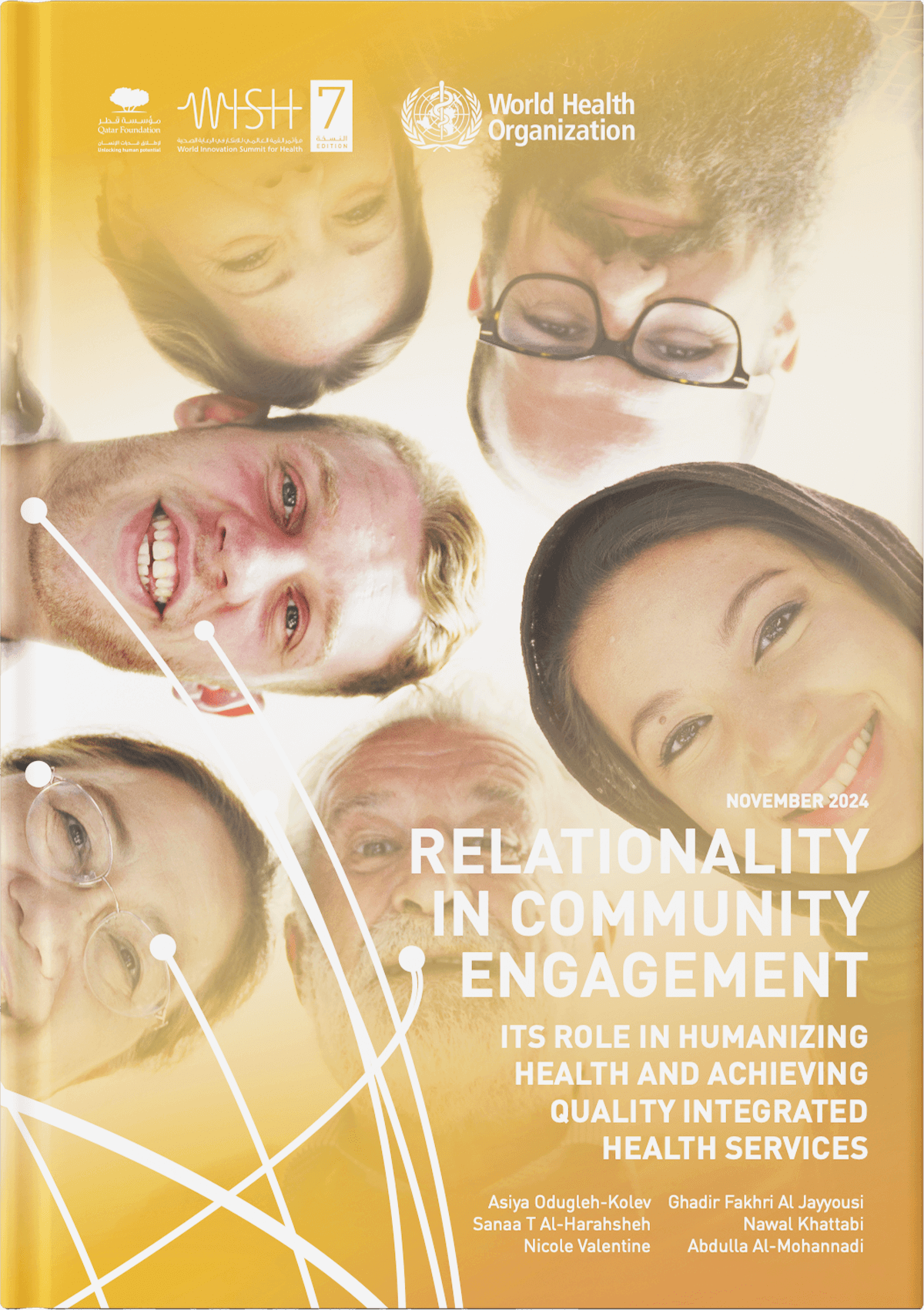
Webinar: 8 April Humanizing Health Care Through Relationality -

Exploring The Science And Practice Of Community Engagement


Join us for the first of four webinars co-hosted by the WHO Department of Integrated Health Services (IHS) and the Global Health Partnerships (GHP) (formerly THET). This webinar series is based on a new policy report launched at the World Innovation Summit for Health (WISH) -

https://wish.org.qa/wp-content/uploads/2024/09/Relationality-in-Community-Engagement.pdf 

The report revisits foundational concepts of community and examines how a deeper understanding of the relational nature of community engagement can contribute to improving quality of health care and transforming health systems. The webinar series hopes to inspire a shared understanding of community engagement’s transformative potential and how it can be leveraged for people-led change.

Continued ...


 Previously: relational :: community :: scale

Tuesday, February 11, 2025

Project: Partners against Stigma and Mortality in Epilepsy (PASME) Cameroon

Boyo Association for Rural Development (BARUDEV - Cameroon) has launched a project on epilepsy called Partners against Stigma and Mortality in Epilepsy (PASME).

We are calling for partnerships and support for our project on epilepsy which will focus on mental health and psychosocial support, treatment, knowledge and skills exchange,raising awareness, rights protection amongst patients affected and or bereaved by epilepsy, health care providers. Also reduce seizures and consequences particularly in children and adolescents living with epilepsy and HIV/AIDS. 
  • ADVOCACY AND AWARENESS. Promoting awareness and supporting initiatives that prevent epilepsy. Prioritize epilepsy at national and international levels, while lobbying and advocating support for partners and governments to prioritize epilepsy into their health programs and policies.
  • TREATMENT AND SUPPORT. Provide access to treatment and support initiatives that improve access to effective treatment including medications and their therapies. 
  • PROVIDE BEST-PRACTICE MODELS. Develop and share models for effective management of epilepsy in diverse settings including conflicts and disasters where people are forced to displace.
  • BUILD CAPACITIES THROUGH TRAINING. Advance training and information sharing for healthcare givers, CHWs and family care givers involved in epilepsy care. 
  • PROMOTE HUMAN RIGHTS AND DIGNITY. Advocate for the accessibility of services, protection of human rights and preservation of dignity for all with epilepsy including children and adolescents living with epilepsy and HIV/AIDS. 
  • EMPOWERMENT AND RIGHTS: Lobby and advocate for the rights of people with epilepsy through their associations and to enable them participate in decision making processes. 
  • RESEARCH AND COLLABORATION: Foster research through encouragement and support in epilepsy including causes, prevention, treatment and social impact. Strengthen their associations, develop and support them through mental health and psychosocial support projects and ensuring and protecting their well-being and their families.
BARUDEV is currently building a website (which I will add upon news - PJ).
Please contact me if you need further information

HIFA (my source) profile: Chiabi Bernard Ful is Director of Boyo Association for Rural Development (BARUDEV--Cameroon). This is a local NGO found in Boyo district of North Western Cameroon. Our activities are to empower women, protect the sexual and reproductive health for women and girls, and protect the rights of children. We have been training community health workers to follow up patients, pregnant women, sick children and refer them to the hospital.
barudev AT yahoo.co.uk

Tuesday, December 10, 2024

Webinar: 11 December - Universal Health Coverage (UHC) Day 2024

"The UHC Compass and Social Participation:
empowering patient organisations to hold governments
 accountable for universal health coverage"

Register for the UHC Compass launch!

To mark Universal Health Coverage (UHC) Day 2024, IAPO will officially launch the UHC Compass at an exciting webinar titled "The UHC Compass and Social Participation: empowering patient organisations to hold governments accountable for universal health coverage" on 11 December 2024, from 11:30 to 13:00 GMT via Zoom.

The webinar will be conducted in English with simultaneous interpretation into Spanish.

Panellists include:
  • Dani Mothci – International Alliance of Patients’ Organizations (IAPO) 
  • Dr Pamela Cipriano – UHC2030 & International Council of Nurses
  • Lara Brearley – Special Programme on Primary Health Care Universal Health Coverage - Life Course, World Health Organization
  • Dumiso Gatsha – Success Capital NGO & Civil Society Engagement Mechanism for UHC2030 (CSEM)
  • Nicola Bedlington – Global Patient Think Tank & Millwater Partners
  • Smitha Sadasivan – Global Patient Think Tank, Inclusive Health Policy, Disability Rights India Foundation & CSEM 
  • Paul Mendoza – Psoriasis Philippines and Psoriasis Asia Pacific & IAPO
The UHC Compass is a dynamic tool created by patients for patients, empowering local leaders and communities to advance universal health coverage (UHC). In the context of the World Health Assembly resolution on social participation and UHC Day 2024, this session will explore how the Compass can serve as a tool to hold governments accountable for investing in UHC.

Co-created by the Global Patient Think Tank (GPTT), a diverse group amplifying the patient voice in the UHC movement, the Compass is proudly hosted by IAPO. Our mission is to ensure this resource reaches and benefits our global network of patient organisations.

Join us to discover how the UHC Compass can help make UHC a reality for everyone!

Learn more & register [https://www.iapo.org.uk/node/15686] Share https://iapo.cmail19.com/t/d-fb-sfiudt-iuqjytrli-o/ Tweet https://iapo.cmail19.com/t/d-tw-sfiudt-iuqjytrli-b/ Share [https://iapo.cmail19.com/t/d-li-sfiudt-iuqjytrli-h/]

[http://www.iapo.org.uk]

The International Alliance of Patients’ Organizations is registered in England and Wales as charity no.1155577 and company limited by guarantee no.08495711.

Registered office: Hounslow House, 7 Bath Road, Hounslow TW3 3EB, UK.

It is also the IAPO's 25th Anniversary.
More details at:

https://www.iapo.org.uk/node/15687

I will post again in the New Year.

My source: HIFA

Previously: compass : UHC : patients

Wednesday, March 23, 2022

"Turning Red"

INDIVIDUAL
|
 INTERPERSONAL    :     SCIENCES               
HUMANISTIC --------------------------------------  MECHANISTIC      
SOCIOLOGY  :   POLITICAL 
|
GROUP


Previously: 'menstruation'

My source: Various


Saturday, March 06, 2021

The Great Green Wall

individual
|
INTERPERSONAL : SCIENCES
humanistic ----------------------------------------------- mechanistic
SOCIOLOGY : POLITICAL
|
group


The Great Green Wall


"Africa's history with the west is littered with examples of plunder masquerading as benevolence, and science is no exception. Doctors and researchers who came to help during Ebola flew out with more than 269,000 blood samples from patients in Guinea, Sierra Leone and Liberia. That has meant that researchers in those countries cannot access samples that in many cases they had collected.    'All those superpowers, all those parachute researchers ... they pretended as if they want to help, but the real agenda was to control samples, so they can do all kinds of research on them'".


https://www.greatgreenwall.org/

Munshi, N. (2021) Lunch with the FT Christian Happi: With pathogens, we need to play offence. FT Weekend, Life&Arts, 20-21 February, p.3. (A rewarding read.)

Image source: https://africaresearchonline.wordpress.com/2013/05/21/the-great-green-wall/


Friday, September 27, 2019

Climate Strike: Individual - Population :: Humanistic - Mechanistic

individual
|
INTERPERSONAL : SCIENCES
humanistic ----------------------------------------------- mechanistic
SOCIOLOGY : POLITICAL
|
group - population

KLIMAT

CLIMATE
STREJK
STRIKE

Monday, August 05, 2019

VOGUE: As they say - don't judge a ''book' just by its cover ...


... there is a resource to help you really reflect!


individual - self
|
INTERPERSONAL : SCIENCES
humanistic ----------------------------------------------- mechanistic
SOCIOLOGY : POLITICAL
|
group- population

"The 16th spot on the cover will appear
 in print as a silver reflective mirror, to
 show how you, the reader, are part of 
 this extraordinary moment in time –
 and to encourage you to use your own
 platform to bring change."


FORCE
CHANGE


Vogue, September cover

CHANGE
FORCE


*Whatever your chosen career at this 
point in time and throughout your 
lifelong aspirations and learning.
Best wishes!


Cover image source: Vogue.

Thursday, May 16, 2019

Kenyan-Korean ‘Solar Cow’ project wins CES Innovation Award c/o Africa Times

SELF - individual
|
INTERPERSONAL : SCIENCES
humanistic ----------------------------------------------- mechanistic
SOCIOLOGY : POLITICAL
|
group - POPULATION

Child's education

Child attends school OR work?


Access to power
Light, Phones
Battery

Social utility of electricity
Parental - family decision making: social 'nudge' ...
'Solar Cow' Project: Africa Times
Communities .. 

Parental power

School attendance

Collective financial motivation


Policy


Industry - Civil Partnership

 .. em-powered

Wednesday, January 02, 2019

An individual speaks to Power: Climate Change

individual
|
INTERPERSONAL : SCIENCES
humanistic ----------------------------------------------- mechanistic
SOCIOLOGY : POLITICAL
|
group

An
individual
speaks
to
power


Saturday, January 27, 2018

Planning tool for Early Onset Dementia - Mapped to Hodges' model

 This post is prompted by a tweet:


individual
|
INTERPERSONAL : SCIENCES
humanistic --------------------------------------- mechanistic
SOCIOLOGY : POLITICAL
|
group
Self-knowledge of symptoms -
Learn about my condition
Learn and stimulate the brain
Use lists, what I am doing, what interests me
music, places, work-experiences ...
Consider interventions, record in my biography
Feel safe, confront fears and anxieties
What does 'well-being' look like for me
Positive thoughts, dreams, aspirations
Use Mental Capacity for Future Planning
- and signs
 Seek environments that support me;
avoid those that drain or inhibit me


Use technology to create biography
(Research into diagnostic journey)


Take control - strategies on nutrition and health
Share biography with loved ones, friends.
Tell them how they can help -

 Ensure (assure) future needs are/will
be met as I would like them

(Hey!) I can still contribute to society so ..

- consider getting help e.g. Dementia Advisors
(Guidelines for health services, esp. primary care, GP, family physicians)
Mental Capacity Act, Power of Attorney,
Advanced Decision Making
Yes: to occupation, earning or volunteering

Apologies in advance, as the formatting may be disrupted on some devices so two lines may not scan across the care domains as intended.

As you can see this brief 'sketch' of #StillMyLife shows that the emphasis of this planning tool is well-placed. This also highlights what I have referred to as 'holistic bandwidth'. There are many claims regarding the centredness of various things, for example; student education and learning, health and nursing care, government and the way business is conducted. In this instance, the question of what is the conceptual, disciplinary and professional extent of a tool, approach, theory or practice. Is its claimed philosophical, ethical, social or other objective fully deserved? Is it person-centred, or task centred? Does it deal with the political dimensions of significance to an individual with a disabling health condition as it claims?

n.b. Note the boxes and the absence of ticks.

Tuesday, January 03, 2017

Learning Health Systems (LHS) Call and 1st Issue

Learning Health Systems

Learning Health Systems (LHS) is an international, open access, peer-reviewed journal published in collaboration with the University of Michigan. With a goal of advancing the interdisciplinary area of learning health systems, the journal promotes research, scholarship, and dialogue focused on theory, complex issues, conceptual syntheses, education models and more. LHS seeks to achieve continuous rapid improvement in health and healthcare and to transform organizational practice. The journal includes research reports, experience reports, briefs and commentaries.


Learning Health Systems is now accepting submissions for its first issue.

Reasons to publish:
  • Topics of international importance 
  • Immediately open access, freely available to read, download and share 
  • Distinguished editorial board 
  • High standard, rigorous peer review 
  • Quality and reputation, supported by the University of Michigan and Wiley 
  • Authors retain copyright 
  • Compliance with institutional and funder mandates

My source:
Kathleen Young via GANM:  http://knowledge-gateway.org/ganm/

Saturday, June 04, 2016

'Boxing' I

individual
|
INTERPERSONAL : SCIENCES
humanistic ---------------------------------------  mechanistic
SOCIOLOGY : POLITICAL
|
group
1
2

3
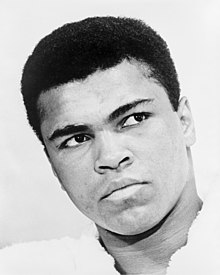
Ali (c) Library of Congress

Additional links;
Workplace experiences of BME and white staff published for every NHS trust across England
Briefing for NHS Boards on the NHS: Workforce Race Equality NHS workforce race equality delivers better care, outcomes and performance, NHS England 

Subsequent post: Boxing 'II'

Tuesday, February 02, 2016

LE t's GO

individual
|
INTERPERSONAL : SCIENCES
humanistic ---------------------------------------  mechanistic
SOCIOLOGY : POLITICAL
|
group


Elahe Izadi (2016) The disabled Lego figures that have sparked actual tears of joy. Independent.
https://www.independent.co.uk/news/world/lego-disabled-figures-buy-where-shop-a6846216.html

Photo source [mirrored]: 
http://www.11alive.com/story/entertainment/2016/01/30/lego-introduces-first-figure-disability/79594686/

Lego: "If you build it, they will come"


Will they - really? I wonder and hope so...

Still much building to do ...

Friday, May 08, 2015

'How to Build a New Global Health Framework': Gostin & Friedman in The Lancet

http://us5.campaign-archive1.com/?u=5556647df8c0be7cf0da07db2&id=2fa83f37fc&e=2b5ede61fe

http://www.law.georgetown.edu

May 7, 2015 - Can a true, robust global health framework be created to help prevent tragedies like Ebola while at the same time allow countries to meet everyday health needs?

Georgetown University global health and law experts say it can be done, and in a special issue of “The Lancet” focusing on global health security, they propose specific priorities to transform a fragmented health system into a “purposeful, organized” framework with national health systems at its foundation and an empowered World Health Organization at its apex.

“The Ebola epidemic in west Africa raised the critical question of who is in charge,” says Lawrence O. Gostin, JD (http://www.law.georgetown.edu/oneillinstitute/faculty/Lawrence-Gostin.cfm) , faculty director of the O’Neill Institute for National and Global Health Law (...) at Georgetown University Law Center (http://www.law.georgetown.edu/) . He and his O’Neill Institute colleague, Eric A. Friedman, JD (...) , published an analysis of global health security today in The Lancet (“A retrospective and prospective analysis of the west African Ebola virus disease epidemic: robust national health systems at the foundation and an empowered WHO at the apex.” (https://www.thelancet.com/journals/lancet/article/PIIS0140-6736(15)60644-4/fulltext) )

“The world is ill-prepared for the next epidemic,” Gostin says. “The need for advance funding, planning and coordination from the national health system up to WHO is at the heart of preparedness, not only for epidemic disease, but also naturally occurring disasters such as the crisis precipitated by the Nepal earthquake.”

In their review, Gostin and Friedman offer a retrospective analysis of the recent Ebola outbreak and the “profound harms posed by fragile national health systems.”

In creating a new framework, the authors say, “The scope of the reforms should address failures in the Ebola response, and entrenched weaknesses that enabled the epidemic to reach its heights.”

They propose a new global health framework that has national health systems as its foundation and an empowered WHO as the “global health leader envisaged at its creation.”

To reach the goal of having an empowered WHO to lead a global health framework, Gostin and Friedman outline priorities for reform:

  • Funding: commensurate with global mandate under WHO Director-General’s control,
  • Technical excellence: diverse staff with multisectoral capabilities,
  • Operational capacities: rapid deployment of economic and human resources,
  • Normative standards: setting priorities and ensuring compliance,
  • Regional offices: regional knowledge and consistency with headquarters, and
  • Engaging non-state parties: harnessing the potential of civil society.
Gostin and Friedman say another critical component to a global health framework are key stakeholders such as the United Nations, The World Bank and NGOs. “In a well functioning global health system, all parties would perform functions suited to their mandate, working cooperatively, and supporting national ownership.”

In addition, the authors point out the need for a strong legal framework to enforce international health regulations: “International law and national implementing legislation can be powerful means for a more effective global health system,” Gostin and Friedman write.

Another key component to a global health framework is to shore up the national health capacities in preparation for a crisis that would better ensure health security, regionally and globally.

“Planning for rapid mobilization should be combined with strengthening health systems to build country capacity,” they say and propose reforms including a global health workforce reserve, and emergency contingency fund, a pandemic emergency facility (like that suggested by The World Bank) and an international health system fund.

“Action now on WHO and other reforms to the global health system is crucial, before the political moment passes,” Gostin and Friedman conclude.  “These reforms would not only keep populations secure against pandemic threats, but would also ensure health and safety for all needs through rights-based universal health coverage.  This is a global health framework that is achievable in the aftermath of a tragic epidemic that needlessly took 10,000 lives in one of the world’s poorest regions.”

About the O’Neill Institute for National & Global Health Law

The generous philanthropy of Linda and Timothy O’Neill established the O’Neill Institute in 2007 to respond to the need for innovative new solutions to the most pressing national and international health concerns. Housed at Georgetown University Law Center in Washington D.C., the O’Neill Institute reflects the importance of public and private law in health policy analysis. The O’Neill Institute draws upon the University’s considerable intellectual resources, including the School of Nursing & Health Studies, the School of Medicine, the McCourt School of Public Policy, and the Kennedy Institute of Ethics.

http://www.oneillinstituteblog.org/ 

http://www.twitter.com/oneillinstitute 
====
Copyright © 2015 The O’Neill Institute for National and Global Health Law at Georgetown University. All rights reserved.


My source: O’Neill Institute for National and Global Health Law via HIFA2015

Below I have related the above to Hodges' model:

individual
INTERPERSONAL : SCIENCES
humanistic ------------------------------------------- mechanistic
SOCIOLOGY : POLITICAL
group
Concepts - Understanding
Global Health Conceptual Framework,
Beliefs, Belief systems,
Education,
Individual Action
Critical Thinking
Access to Health Information
Impact of disease/disaster on survivors
Psychological health needs
Pre-vent
Ebola..., Epidemic - Pandemic,
Natural disasters
Emergency response,
Critical Action
Timeliness - Surveillance, Readiness,
(National-) capacity,
Physical health needs,
Health systems, (Infra)Structures,
Technical, Operational, Processes,
Coordination, Mobilisation
Scales: Local, Regional, National, Global
Social Empowerment, Engagement
Poverty
Communities
Critical Communications
Concordance
Local Leadership, Cooperation
Behaviour of groups amid Fear / Uncertainty
Socio-Technical
Community-Social-Urban... Informatics
Pre-empt
UN, World Bank, WHO, NGOs,
Reform, Policy, Standards
Rights-Based Universal Health
Global Health Framework
Funding, Law, Legislation
Priorities, Compliance, 'HQ'
Critical Governance & Assurance
Civil Society, Citizenry

Wednesday, April 29, 2015

IxD&A Interaction Design and Architecture(s) Journal: TEL + 'Designing Self-Care For Everyday Life'


Special issue on:

The Design of TeL with Evidence and Users

- which includes:

Focus Section on 'Designing Self-Care For Everyday Life'

Ivo Maathuis, Valerie M Jones, Nelly Oudshoorn
Telecare and self-management: a guideline for anticipating future care in scenario-based design, pp. 142-159

Koen van Turnhout, Jasper Jeurens, Martin Verhey, Pascal Wientjes, René Bakker
The Healthy Elderly: Case Studies in Persuasive Design, pp. 160-172

Juan Jimenez Garcia, Natalia Romero, David Keyson, Paul Havinga, Reflective Healthcare Systems: micro-Cycle of Self-Reflection to empower users, pp. 173-190.


Tuesday, July 29, 2014

Stanford offers new open access MOOC - Open Knowledge: Changing the Global Course of Learning

Open source, open science, open data, open access, open education, open learning -- This fall Stanford faculty and librarians are working with international partners to offer the innovative free (no-cost) course Open Knowledge: Changing the Global Course of Learning on [updated] http://online.stanford.edu.


The course provides an introduction to the important concept of openness from a variety of perspectives, including library and information studies, education, publishing, economics, politics, and more. Open Knowledge is international and multi-institutional, bringing together instructors and students from Stanford University (USA), Fordham University (USA), University of British Columbia (Canada), Simon Frasier University (Canada), the Kwame Nkrumah University of Science and Technology (Ghana), the Universidad Autónoma del Estado de México (Mexico), and the rest of the world.

Learn more about the concept of "open", develop your digital literacy skills, and connect with peers from around the world.

For more information and to register: ...

Lauren A Maggio, MS (LIS), MA
Lecturer, Department of Medicine
Director of Research and Instruction
Lane Medical Library & Knowledge Management Center
Stanford University Medical Center
300 Pasteur Drive, L109, Stanford, CA 94305-5123

My source: HIFA2015