Hodges' Model: Welcome to the QUAD: families

Hodges' model is a conceptual framework to support reflection and critical thinking. Situated, the model can help integrate all disciplines (academic and professional). Amid news items, are posts that illustrate the scope and application of the model. A bibliography and A4 template are provided in the sidebar. Welcome to the QUAD ...

Showing posts with label families. Show all posts

Thursday, April 02, 2026

Launch of National Knife Crime Centre

INDIVIDUAL
|
    INTERPERSONAL    :     SCIENCES               
HUMANISTIC --------------------------------------  MECHANISTIC      
SOCIOLOGY  :   POLITICAL 
|
GROUP
Is this a knife I see before me?
Or is it something else?
 
Am I being duped and taken for a fool?
But, nobody will bother me now!
I'm ready...!
 
I don't think this is right.
 
Either way, I'm asking for trouble?
 
Will anybody else listen? 


Should I risk trying to buy a knife?
How? Shop, or online?

Do I look 18?
I've seen the signs by the tills.

Can I pass as an 18 year old?
Should I pick it up and take it?

Or, do I leave it exactly where it is hidden?

Do I really need a knife, 
because he/she/they have one?

Can I ask a friend?
My cousin? No they'd grass on me.
Could I pay that 5th year?

Ben Kinsella Trust


NATIONAL CENTRE FOR KNIFE CRIME
 
Ronan's Law


My sources: BBC Radio 4 'Today' 2nd April 2026.

Previously: 'crime' : 'knives' : 'law'

Friday, February 27, 2026

Rare Disease Day 2026 Official Video

28 February is 
Rare Disease Day


'Raising awareness and generating change for the 300 million people worldwide living with a rare disease, their families and carers.'

Manchester, UK https://www.rarediseaseday.org/event/light-up-for-rare-2/

Continued ... https://www.rarediseaseday.org/

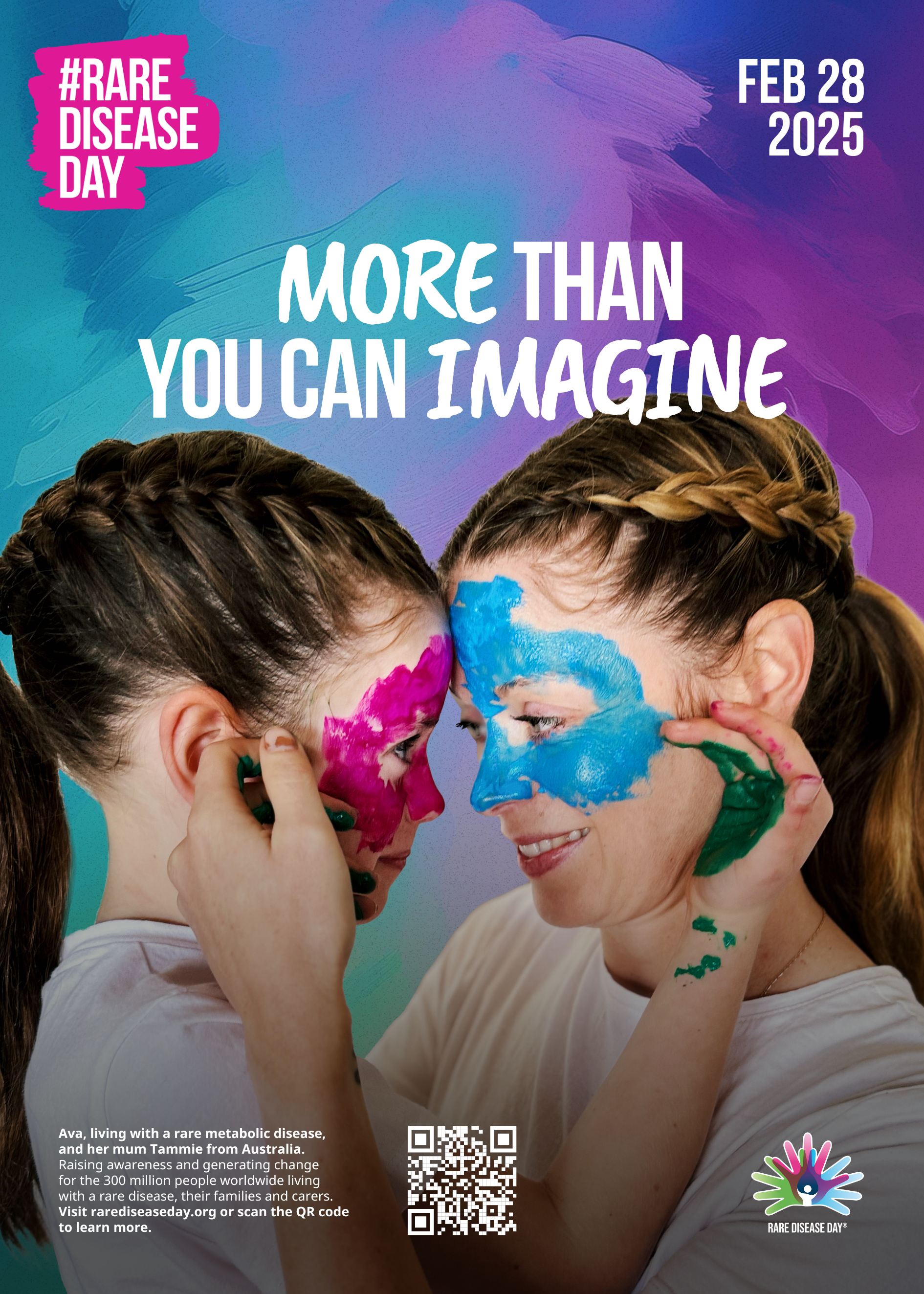
Friday, February 28, 2025

RARE DISEASE DAY FEB 28 2025

Ava and Tammie

Individual
|
      INTERPERSONAL    :     SCIENCES               
HUMANISTIC  --------------------------------------  MECHANISTIC      
 SOCIOLOGY  :    POLITICAL 
|
Group

IMAGINATION
IDENTITY
EXPERIENCE
EXPERTISE


ACTION
RESEARCH -
qualitative - quantitative
ACCESSIBILITY


SUPPORT
AWARENESS
COMPANIONSHIP
SOCIAL NETWORKS
FAMILIES


FUNDING
ACTIVISM
COOPERATION
COLLABORATION
COORDINATION


Previously: 'Rare'

Monday, October 21, 2024

Call for focus group participants: the records of adopted and care-experienced people -

– additional retention guidance for
record-keepers and care professionals

Could you help update retention guidance for record-keepers and care professionals by joining a focus group in November?

Care-experienced and adopted people, archivists & records managers and social workers are invited to participate in an online focus group to shape updated and detailed improvements in retaining care-experienced and adopted people’s records in England and Wales. This has been identified as a critical need by many recent reports including IICSA.

We recently published Guidance on the Records of Adopted and Care-Experienced People (Feb 2024) which sets out best practice, to improve consistency across England and Wales. We are a participative and inclusionary project led by members of the Chief Archivists in Local Government Group (CALGG), independent consultants and academics and professionals working in the records management, data protection and access to records fields, in the charitable and local government sectors. Some of our project members are adopted or care-experienced people.

Focus groups will take place on

Weds 13 Nov 11am-12.30

Mon 18 Nov 2-3.30pm

Thurs 28 Nov 2-3.30pm.

We will meet on Zoom: you will be able to join in your web browser, no zoom account or desktop app/licence is required.

Further information

The Guidance is aimed at people responsible for creating, managing, and providing access to care and adoption records. It includes the viewpoints of care-experienced people and adopted people to give practitioners a greater understanding of their experiences, needs and the challenges they face. The Guidance highlights that all organisations should have an up-to-date policy covering all records relating to children, young people and their families, together with procedures and plans to implement the policy including up-to-date retention schedules. Retention schedules recommend how long to keep different types of records. Each record type should have a retention period based on best practice, legislation, business need or a combination of these. Schedules also include how and when the retention period is triggered, and what should happen at the end of the period: typically either confidential destruction, or being kept permanently.

A retention period of [at] least 125 years from date of birth for case files and preferably 150 years as exemplary practice is recommended in the Guidance. However it also recommends the permanent preservation of these records with an option for people to opt out in the case of their own records.

These recommendations are made because many care-experienced or adopted people reconstruct their personal histories by turning to the records created about them by social workers and care providers. Thousands of requests to view records for this purpose are made each year in England and Wales. The records – a “paper self” - have significant impacts on a care-experienced person throughout their life. However, accessing records is often difficult, both practically and emotionally, and can be traumatic and dehumanizing. Records have been kept inconsistently across the public, private, and voluntary care sectors, affecting outcomes for individuals. Across England and Wales the records of adopted and care-experienced people who are formally classified as ‘looked-after people’ should be kept for 100 and 75 years respectively, but there are no permanent preservation protections for records in law. Moreover, some care-experienced people are omitted from the requirement for records to be retained. In addition, there are now many records sitting in digital systems which do not have a proper data migration/preservation strategy.

My Source: To view the list archives go to: https://www.jiscmail.ac.uk/cgi-bin/webadmin?A0=RECORDS-MANAGEMENT-UK 

Monday, May 20, 2024

NHS Contaminated Blood Scandal UK

UK  - World

Why we need always to acknowledge 
the political in health and health in politics

Individual
|
      INTERPERSONAL    :     SCIENCES               
HUMANISTIC  --------------------------------------  MECHANISTIC      
 SOCIOLOGY  :    POLITICAL 
|
Group

"In an interim report, the inquiry chair, Sir Brian Langstaff, said 'wrongs were done at individual, collective and systemic levels'."

                                                                    (UP)
contaminated       blood                             
blood            donors     'dying for 

COVER
 UP


scandal            paid          justice'    
(screening?)


My source: Various - over several decades.

Photograph: Daily Express
https://www.express.co.uk/news/politics/1795449/rishi-sunak-infected-blood-inquiry-heckled-booed

Saturday, December 09, 2023

Processing people ... in Nursing and Social Services

 When the nursing process was introduced in the UK in the late 1970s - early 1980s, the change was resisted to a degree with concern that patients were at risk of being  'processed': assessed, care planned, interventions delivered then evaluated, discharged or re-assessed. ...

 Individual
  |
     INTERPERSONAL    :     SCIENCES               
HUMANISTIC --------------------------------------  MECHANISTIC      
SOCIOLOGY  :   POLITICAL 
|
GROUP
play 
my quality of life
my quality of care

Emotional, Health and Care Plans

Teaching Assistant provision

continuity of care 

'demand'

time
my quality of life
my quality of care

self-care - feeding
23% rise in demand 
for school transport

Human geography
'supply'

families

'informal carers'

needs that can (supposedly) be met at home

Government funding crisis

social inclusion

social capital

Care in the community

'demand'

£4bn overall funding gap in
children's services

Children and Families Act
Index of Multiple Deprivation
Needs-based funding?
Children with special educational needs and disabilites (SEND)

Parental resort to specialist tribunal courts: 96% legal challenges successful (2022)
National / local taxation
'supply'

'broken' social care market - "dysfunctional"


"The costs are rising inexorably," he said. "Children are very often being processed rather than looked after."

Williams, J. Children at sharp end of council funding crisis, FTWeekend, 2-3 December 2023, p.3.

🤔Just a thought - every supply has a supply' every demand a demand' potentially duplicated across the care domains.

Tuesday, October 25, 2022

Invitation: Int. Congress on Evidence-based Parenting Support 2023

Hello HIFA Forums and CHIFA,

Neil Pakenham-Walsh (based in the UK neil.pakenham-walsh AT ghi-net.org) suggested I contact you about a call for abstracts for the inaugural International Congress on Evidence-based Parenting Support 2023

https://www.i-ceps.pafra.org/

The online event will be held on 6-8 June 2023 and will address the theme: Promoting wellbeing and health globally through effective parenting support. We would very much welcome your organisations’ insights on child health and how parenting support can benefit families and children. We are calling for abstracts from members of your organisations.

CALL FOR ABSTRACTS

The Congress will connect academics, policymakers, practitioners, consumers and service providers with international leaders in parenting. Keynote speakers have already been announced. It aims to bring the evidence-based parenting support community together. An innovative program of online events will reach for global impact that will benefit parents and families around the world now and in the next generation.

Abstract submissions are open. We welcome your contribution by 18 November 2022.

This is a fantastic opportunity to share your research, policy and practice expertise in parenting, family intervention and parenting support with a global audience. Participants will be part of a global collective action to improve access for all parents to high-quality evidence-based parenting support.

We invite you to submit an abstract that addresses any of the sub-themes that reflect your expertise of the research, practice areas or public policy focus of your organisation:

Read more https://i-ceps.pafra.org/submission

Please feel free to share with your colleagues. And if appropriate, perhaps you can also share the invitation in your organisational newsletter or group email.

And we also welcome you to follow us on our social pages to keep up to date with the latest announcements:

Twitter: https://twitter.com/PAFRA_Official Facebook: https://www.facebook.com/ICEPS2023 LinkedIn: ICEPS2023

We sincerely hope to hear from you, and do feel free to get in touch if you have any questions.

Regards, Maria Battaglia

Communications Officer Institute of Child Protection Studies Australian Catholic University 

P: + 61 3 9230 8732 E: Maria.Battaglia AT acu.edu.au Website: https://www.i-ceps.pafra.org/ Twitter: https://twitter.com/PAFRA_Official #ICEPS2023 Facebook: https://www.facebook.com/ICEPS2023 LinkedIn: ICEPS2023

I acknowledge the Traditional Owners of the lands on which I live and work in Australia, and their continuing connection to land, sea and community. I pay my respects to Elders past, present and emerging.

My source: https://hifa.org/
Tuesday, June 21, 2022

'Pad culture' ...

INDIVIDUAL
|
 INTERPERSONAL    :     SCIENCES               
HUMANISTIC --------------------------------------  MECHANISTIC      
SOCIOLOGY  :   POLITICAL 
|
GROUP
DEMENTIA

SELF
ORIENTATION - INSIGHT
Listened to .. 'Hear me'?
dignity and respect
Mental capacity (awareness?)
emotional distress

Appears confused -
Physical cause: dehydration, delirium..?


[A shared convenience?:
How many persons are assumed
to be diagnosed with a dementia?]


in-CONTINENCE

Place:
[Home,
Community Hospital,
Residential care, Nursing Home]
IT/Record systems

'Parity of Esteem' i
Mental Health and Physical health

'Parity of Esteem' ii
[Mental Health and Physical Health] AND Social Care

Time:
ASSESSMENT, Care Plan, Evaluation ...

'Pad Culture'


'My Pad' Culture -
buy/sell
£££ $$$


Standards of Care
Nursing - Social Care
policy - funding


File on 4 BBC Radio 4 21 June 2022 - 20:00hrs

Dementia: The Final Indignity

"Around 800,000 people have dementia in the UK. For those suffering from the illness, incontinence can often be seen an inevitable consequence - but that’s not always the case. Deemed as too embarrassing or taboo, it’s a topic that rarely hits the spotlight. Experts say preserving someone’s ability to go to the toilet is crucial to maintaining their dignity and quality of life and should be a priority in care settings. But is that always happening? A new report shown exclusively to File on 4 has looked at how continence care is being managed in hospitals – and how, in some cases, those who are continent are actively encouraged to soil themselves. Datshiane Navanayagam speaks to families who say their loved ones were ignored when it came to their continence needs in hospital and that the consequences have left them with health issues and requiring additional support. Nurses and medical staff say that continence training is often seen as a ‘Cinderella subject’. We also hear from dementia patients themselves about why maintaining your own dignity and independence is so crucial with this disease. With the government set to reveal a new dementia strategy this year, will continence care be placed higher up the agenda?"


Featherstone K, Northcott A, Boddington P, Edwards D, Vougioukalou S, Bale S, et al.
Understanding approaches to continence care for people living with dementia in acute hospital settings: an ethnographic study. Health Soc Care Deliv Res 2022;10(14). https://doi.org/10.3310/
QUVV2680
 
Source: Today BBC Radio 4, 21st June, 2022.

Monday, February 28, 2022

Rare Diseases Day 2022 - and the FIVE domains

     Self - INDIVIDUAL - Person
|
 INTERPERSONAL    :     SCIENCES               
HUMANISTIC -----------------------------------  MECHANISTIC    
SOCIOLOGY  :   POLITICAL 
|
           Family - Community - GROUP - Organisations - Populations


"Learning from the rare disease community

Europe’s pharmaceutical entrepreneurs are taking the lessons learned from this community to develop health innovation which would not have been dreamt of a few decades ago."


Yes, they do! 

The sciences (all of them) are a vital domain, but as ever of course we must not let this limit the scope of our collective aspirations when it comes to rare diseases and innovation.

We need to take into account the four domains of Hodges' model plus the spiritual as we address local and global health with rare diseases and disability an intrinsic part of health systems and services whether in delivery or development.

In this way we also acknowledge the role of the social determinants of health and the SDGs.

RARE DISEASES DAY 2022

Image:
https://twitter.com/Parlimag/status/1497156923610836995?s=20&t=dvO5GlugrN185L3Z98k5PA

Previously:

'disease'

https://hodges-model.blogspot.com/search?q=disease

'rare'

https://hodges-model.blogspot.com/search?q=rare

'domain'

https://hodges-model.blogspot.com/search?q=domain


Tuesday, February 15, 2022

Global Rare Disease Day Event - World Expo Dubai/ONLINE


The NGO Committee for Rare Diseases, Ågrenska
Foundation, Rare Diseases International (RDI), and
EURORDIS-Rare Diseases Europe invite you to the
2022 Global Rare Disease Day Event
"Rare Diseases: A Global Priority for Equity."


  Self - INDIVIDUAL - Person
|
 INTERPERSONAL    :     SCIENCES               
HUMANISTIC -----------------------------------  MECHANISTIC      
SOCIOLOGY  :   POLITICAL 
|
Community - Group - Population
lived experience as:

PLWRD

carer


300 million
persons living with a rare disease
(PLWRD)

worldwide


families

social care

social care provision (globally)?

public awareness


"
PLWRD require immediate and urgent attention, under the auspices of innovative
global, regional, and national policies that address their needs, respect their human rights, and lead to more inclusive, sustainable societies in line with the UN Agenda 2030 and the Sustainable Development Goals."

"...
explore roadmaps for rare diseases in low-and middleincome countries around the world."


Thursday, February 03, 2022

Lewy Body Society - funding opportunity

Dear CHAIN member,

We would like to draw your attention to the following funding opportunity. Please pass on as appropriate. Thank you.
 ------------

Lewy Body Society

We are pleased to announce that the call for applications to our 2022 grant round is now open.

We welcome applications for projects that will increase our understanding of Lewy body dementia as well as improving care for people living with this condition and their families and carers.

Deadline for applications: Thursday 14h April 2022 at 12 noon

Decisions and Start Dates: Most funding decisions will likely be communicated in October 2022.

For more details please see: https://www.lewybody.org/research/lbs-research-strategy/

Regards,

Irina Johnston

CHAIN Administrative Assistant

My source:

CHAIN - Contact, Help, Advice and Information Network – is an online international network for people working in health and social care. For more information on CHAIN and joining the network please visit website: www.chain-network.org.uk

@CHAIN_Network


Saturday, December 04, 2021

The medical model of disability c/o AdsFoundation

Individual
|

INTERPERSONAL : SCIENCES
humanistic ------------------------------------------ mechanistic
SOCIOLOGY : POLITICAL
|
Group
The Psychological model ...
The Social model ... The Political model ...


My source:


Hence the need for a bio-psycho-social-political model - framed with due regard for the spiritual.

Friday, April 16, 2021

Tracking the Alzheimer's-Down syndrome connection

individual
|
INTERPERSONAL : SCIENCES
humanistic ----------------------------------------------- mechanistic
SOCIOLOGY : POLITICAL
|
group

Communication, speech
self expression
personhood
identity
memory
personality
mood
Extend meaningful quality of life
Age 40
most people with Down syndrome develop beta amyloid plaques in the brain — a key characteristic of Alzheimer’s disease. Scientists believe this is because they have an extra copy of chromosome 21, which carries an amyloid-producing gene.Major international research effort, (ages 25+) plus siblings over five years.
Multisite Alzheimer’s Biomarkers Consortium — Down Syndrome (ABC-DS) study
Biomarkers, genetic background, environmental, metabolic and other physiological factors

Intergenerational angst
if parent/family member a primary carer?
Help families prepare for what’s going to happen potentially with their loved one

Funded by a $109 million grant
from the National Institutes of Health

 My source:

 Learn more about the study at mind.uci.edu/adrc/about


Tuesday, December 08, 2020

Gambling: First Team Standing

... not just the shirt on your back ...

 individual 
|
INTERPERSONAL : SCIENCES
humanistic ----------------------------------------------- mechanistic
SOCIOLOGY : POLITICAL
|
group
gambling?
gambling?
gambling?
TRANMERE F.C.


See also on W2tQ: gambling , addiction

Tuesday, August 04, 2020

a Paper: Hodges' model and mental health nursing in bushfire-affected communities

An email from ResearchGate informed me that a co-authored paper:

Doyle, M., Jones, P. (2013). Hodges’ Health Career Model and its role and potential application in forensic mental health nursing. Journal of Psychiatric and Mental Health Nursing. 20, 7, 631-640.
http://onlinelibrary.wiley.com/doi/10.1111/j.1365-2850.2012.01961.x/abstract

- had been cited in another publication. A check was rewarded. It always feels good to be able to add a  study to the bibliography listing (please see the sidebar). This is an early view, by Brent Hayward in Australia:

Hayward, B.A. (2020), Mental health nursing in bushfire‐affected communities: An autoethnographic insight. Int J Mental Health Nurs. DOI: 10.1111/inm.12765

What stands out to me are Hayward's profession of mental health nursing within a public educational service and disaster response. I'm not sure how many times I have referred to the generic nature of Hodges' model, but this shift from reading a forensic paper to applying h2cm in disaster response is encouraging. While the immediacy of today's media brings home the catastrophic scale and tragedy of bushfires - work like this also reveals the humanistic side.

The research method of autoethnography has definite currency. Since the MRES at Lancaster, I have wondered if there is any autoethnographic merit in this blog? Hayward has clearly seen the value of the model with regard to reflection and self-reflection. Over the past few years - Brexit, climate change, the bushfires (and California) the importance and relevance of the political domain within Hodges' model continues to increase. (The content of many posts should provide evidence of this.)

It also appears that Hodges' model can draw out the distinction between intrapersonal and interpersonal relations and reflexivity. It could be argued that the humanistic-mechanistic axis also demarcates what is intrapersonal and what interpersonal. The latter standing for the (overt) skills so essential to effective mental health nurses. Hence, what are labelled the interpersonal and sociological domains. The combination of autoethnography, gestalt and use of a visual prompt for reflection is also informative and as Hayward notes could provide an avenue for the work of others. ...

"My unsuccessful attempt to locate literature about mental health nursing in bushfire-affected communities caused me to look towards nursing models more broadly. I was drawn to Doyle and Jones’ (2013) paper on the application of Hodges’ Health Career Model in forensic mental health nursing because of its deliberate consideration of political issues. This resonated with me as a public sector employee. Hodges’ model was originally developed in 1983 but has received little attention in the literature. Doyle and Jones’ paper was in response to this deficit, and in this frame, the present study continues this legacy. Hodges’ model is appealing here because of its attention to reflective practice and the theory-practice gap–two purposes which are of particular relevance in the present study." pp.2-3.
"Second is the use of a nursing theory or model to interpret findings. Only Gardner and Lane (2010) used a model, and this was one for clinical supervision rather than mental health nursing practice per se. Mental health nurses who are considering autoethnographic approaches should consider these methodological elements for both rigour and practical purposes. This study has also contributed the second published clinical application of Hodges’ model and its effectiveness here suggests that further exploration of its application would be useful." p.6.
I would like to express my sincere thanks to Brent for not only recognising the potential of Hodges' model, but actually applying it in research* and in such a vital context.

Hopefully I can reflect more on what is clearly for Hodges model and the concepts of health career, life chances and global health - a very significant paper.

*See also:

Wednesday, July 01, 2020

Mutation maps and Genograms in ...

the Health Career Model


individual
|
INTERPERSONAL : SCIENCES
humanistic ----------------------------------------------- mechanistic
SOCIOLOGY : POLITICAL
|
group - population

Mutation map - Ian Bott
Medical Family Genogram - ConceptDraw


Mutation map
Is part of a larger illustration created by Ian Bott for an article in the FT:
Cookson, C. (2020) Mutations map holds key to pandemic fight, FTWeekend, 22 April, p.6.

The full illustration is accessible below:
https://twitter.com/ian_bott_artist/status/1252923754457563136?s=20

Ian's website:
http://www.ianbottillustration.co.uk/
Thank you Ian for your help.

Genogram example:
https://www.pinterest.co.uk/pin/510454939014812330/

Wednesday, August 21, 2019

"Bleak House" - not just a book: Family Homelessness

individual - home?
|
INTERPERSONAL : SCIENCES
humanistic - HOME? ----------------------------------------------- mechanistic - HOME?
SOCIOLOGY : POLITICAL
|
home? - population


"Bleak House"
- a work of fiction ...

Charles Dickens - Bleak House


"Bleak Houses"
- a work of Government ...

Bleak Houses - Report


See also:
The Stranger in the Mirror in Bleak House

Book cover - Waterstones

My source
Radio 4 and BBC 2 - Newsnight

Friday, August 09, 2019

Targeting poverty (in Hodges' model) c/o The Economist

"Indian politicians are promising more cash for the poor. They should be less selective. "

[ by the quarter - make progress ...? ]


individual - self
|
INTERPERSONAL : SCIENCES
humanistic ----------------------------------------------- mechanistic
SOCIOLOGY : POLITICAL
|
group- population

"Targeting welfare is costly and difficult in a country like India.


If it looks for signs such as straw roofs, it will almost certainly miss many poor people, especially in the cities.


How is the state supposed to identify the poorest 50m households in a country where income and spending are so hard to track?


The political economy of targeted schemes is also tricky. In countries with minimal welfare states, schemes with few beneficiaries also have few supporters, and therefore risk being quietly wound down or diminished by inflation. And any formula used to target the bottom 20% is likely to be so opaque that people will never know whether they should have been included or not, so cannot fight for their entitlements."


"Two years ago a government report suggested a bold new approach. Instead of a universal basic income - an idea doing the rounds in rich countries - create a nearly universal scheme from which you exclude the richest quarter of the population."


Source: Leaders. Welfare in India: The beauty of breadth. The Economist, April 6, 2019, p.14.
Print edition.
https://www.economist.com/leaders/2019/04/06/a-better-anti-poverty-plan-for-india

Thursday, May 16, 2019

Kenyan-Korean ‘Solar Cow’ project wins CES Innovation Award c/o Africa Times

SELF - individual
|
INTERPERSONAL : SCIENCES
humanistic ----------------------------------------------- mechanistic
SOCIOLOGY : POLITICAL
|
group - POPULATION

Child's education

Child attends school OR work?


Access to power
Light, Phones
Battery

Social utility of electricity
Parental - family decision making: social 'nudge' ...
'Solar Cow' Project: Africa Times
Communities .. 

Parental power

School attendance

Collective financial motivation


Policy


Industry - Civil Partnership

 .. em-powered

Tuesday, December 18, 2018

c/o BBC Radio 4: Inherited Fear

individual
|
INTERPERSONAL : SCIENCES
humanistic ----------------------------------------------- mechanistic
SOCIOLOGY : POLITICAL
|
group

 
Inherited Fear

"Scared - but not named."


 The ghost of a ghost or
the memory of a

Biology
Germ cells
Neuro-epigenetics
PAG or periaqueductal gray -
the primary control centre for pain modulation

Know your surroundings
Facial recognition

shadow


Transmission of trauma across generations

Who is Who


All around the World
War, Perpetual Conflict
Ethnic cleansing
Refugees
Climate migrants ...

The Past
The Present
The Future


My source: BBC Radio 4: Inherited Fear
