Hodges' Model: Welcome to the QUAD: interpersonal

Hodges' model is a conceptual framework to support reflection and critical thinking. Situated, the model can help integrate all disciplines (academic and professional). Amid news items, are posts that illustrate the scope and application of the model. A bibliography and A4 template are provided in the sidebar. Welcome to the QUAD ...

Showing posts with label interpersonal. Show all posts

Saturday, June 20, 2026

ii Thoughts re. Ecosia's AI Chat 'answer'

The previous post has been updated, to the prompt is added:

 'Please provide sources and references.

[If you are new here, and too Hodges' model please see the bibliography in the sidebar.] 

A 'human' reading (still) makes me wonder if the 'answer' is what I want to hear (as a user)? Is it worrying that the first provides a 'Conclusion' the latest does not. The table is helpful as I believe that Hodges' model has a role across research (and political!) -isms through methodologies and methods. The model can also encompass ('eat'!) aspects of scale, or level.

The reply still gives me quadraphonic joy (if read out-loud). Not only are the domains recognised, but the LLM/agent ai takes the intrapersonal / interpersonal in its stride (from the blog?). Subjects related to each of the domains are given in brackets. 

There is of course a bias (several) in the prompt, as the care domains were never intended to be comparable. It is positive that each domain is seen as having its own specific scope and function. Over twenty years notes were started on a paper on Hodges' model and its role/function in helping to define 'scope of practice'. Significantly, in the UK the rise of associate positions across disciplines has provoked much debate, vitriol (on X and union and lobbying) and soul searching in certain professional groups. Given the increasing importance of the global health and social care workforce this trend is reflected globally. A situation set to be extended with uncertainties and tensions exacerbated by artificial intelligence in practice.

Before 'explaining' the asymmetries (in points 1-4) it seems the domains are complementary (for all their differences), and provide a holistic underpinning for the model as a whole (my reading).

1. Scope and Focus 

Interesting, how the science and sociology domains are described as broad. Perhaps I am underestimating the depth/density of sociology, after all folk theory is found there? Unfortunately, we can also add a myriad of conspiracy theories? Sociology can also lay claim to quite a few constructions of its own. Including aesthetics as a bridge to architecture and design(?).

On 'X', Hodges' model has been described negatively as inviting / fostering generalism. So, this is a bad thing? Is it not strange then that your Advanced Nurse Practitioner, Consultant doctors (all specialities) and students cross-curricula can all use Hodges' model? The fact that my own responses were never engaged has helped train my thought. Here the relevance of the model to students and continued professional development is made through generalizable knowledge.

The response to the political domain is supportive, acknowledging resource allocation and the distinction between individual and collective (see for example):

S. Bettiol, P. Jones, H. A. Onyedikachi, and W. G. Kernohan, (2026) Bridging Gaps in Oral Health Frameworks: Mapping With Hodges' Health Career - Care Domains - Model, Journal of Public Health Dentistry. 1–14, https://doi.org/10.1111/jphd.70034.  

I've seen tweets today regards IQ reductions in younger people. This is one reason for support of the top-left mental domain being designated as 'Intrapersonal – Interpersonal'. Our interpersonal skills and awareness are surely dependent upon our achieving a given level of inner mental life? Encouraging to see how subjectivity and objectivity is assigned too. Although, I think I'm in an echo chamber!

2. Epistemological Differences

In arguing for a model of health and social care that goes beyond:

  • medical model;
  • bio-medical model;
  • bio-psycho-social model.

Reading 1-2 from the perspective of the Intrapersonal – Interpersonal domain you see how limiting this is, if an individual in a mental health/illness/mental capacity context can only point to sciences and sociological domains. Indeed, they may be relying guardians and advocates as they are unable to does this and raise the political matter of their rights. Without the POLITICAL domain (or as a result of it - neglect, structural racism) there is no law enshrining independent advocacy...

3. Practical Application in Care

To care is to act. Think about triage and emergency response.

Now in the 21st century 'care' must include self-care, health and social care, and (delayed or not you decide?) planetary care.

This necessitates a change of mindset at an individual and collective level. Consider the literacies that (again) young people must master to be effective, productive and happy citizens tomorrow?

So the following is a gift (in my eyes): 

"This means the intrapersonal-interpersonal domain is not just another 'content area' but a lens through which all other domains are experienced and integrated."

4. Hierarchy of Integration

'While the domains are conceptually equal in Hodges’ model' ..

This is interesting in itself.

[There does seem a emphasis upon the Intrapersonal – Interpersonal domain in this answer?]

This is quite a step, as the idea of a nexus and integration are picked up; and pointing to what are the determinants of health:

'For example:

  • A scientific understanding of depression (e.g., serotonin levels) must be interpreted through the intrapersonal experience of the individual.
  • A sociological analysis of healthcare disparities must be understood through the political structures that enable or inhibit change.
  • A political decision about resource allocation must be filtered through intrapersonal values and priorities.'

I'm pleased I did this, as long as I'm not being trapped in an epistemological cocoon: otherwise known as a circle. Apart from a few occasions, I have not used AI/LLMs, perhaps it is time to explore more? I'd like to preserve my naivety, especially were maths is concerned. I'm not sure of what baggage I may pick up and lack the knowledge to interpret?

Previous post:  https://hodges-model.blogspot.com/2026/06/h2cm-domains-symmetry.html

Friday, June 19, 2026

[Updated] AI Chat: Are the domains of Hodges' model comparable?

In drafting a future post: 'The Sciences: points, lines, angles and perspectives on domains', I thought I would ask Ecosia's AI Chat a related question, here is the (quick) prompt and reply:

PROMPT: 
In Hodges' model there are four care, or knowledge domains. The four domains are the sciences, sociology, political, and intrapersonal – interpersonal domain. In terms of potential content are these domains comparable, or is there an essential asymmetry? Please provide sources and references.

(I have saved the prompt for future reference and refinement.)

RESPONSE: [updated 21st June 2026]


Hodges’ model (also known as the Health Career Model or h2cm) is a conceptual framework that organizes knowledge and care into four quadrants, each representing a distinct domain of human experience and knowledge. These domains are:

  1. Sciences (empirical, biological, and physical sciences)
  2. Sociology (social structures, relationships, and community)
  3. Political (power, policy, governance, and resource allocation)
  4. Intrapersonal – Interpersonal (psychological, emotional, and relational aspects of the self and others)

Are the Four Domains Comparable or Asymmetrical?

The four domains in Hodges’ model are not strictly symmetrical in terms of their content, scope, or application. While they are presented as equal in structure (each occupying one quadrant of the model), their potential content, theoretical foundations, and practical implications can vary significantly. Here’s why:

1. Differences in Scope and Focus

  • Sciences (Quadrant 1):
    This quadrant focuses on empirical, measurable, and biological aspects of health and care, such as anatomy, physiology, and pathophysiology. Its content is often highly specialized, technical, and evidence-based, rooted in natural sciences like biology and chemistry.

    • Example: The role of hormones in stress response or the pathophysiology of diabetes.
  • Sociology (Quadrant 2):
    This quadrant addresses social structures, culture, and community dynamics. Its content is broader and more interpretive, drawing from sociology, anthropology, and social psychology.

    • Example: The impact of socioeconomic status on health outcomes or the role of family support in recovery.
  • Political (Quadrant 3):
    This quadrant examines power, policy, governance, and resource distribution. Its content is highly contextual and often contested, influenced by political science, economics, and public policy.

    • Example: The effect of healthcare policies on access to services or the role of advocacy in shaping health priorities.
  • Intrapersonal – Interpersonal (Quadrant 4):
    This quadrant focuses on individual psychology, emotions, and relationships. Its content is highly subjective and variable, drawing from psychology, psychotherapy, and ethics.

    • Example: A patient’s personal beliefs about illness or the dynamics of a therapeutic relationship.

2. Differences in Methodology

  • Sciences and Political domains often rely on quantitative methods (e.g., experiments, statistical analysis, policy evaluations).
  • Sociology and Intrapersonal domains frequently use qualitative methods (e.g., interviews, case studies, ethnography).
  • This methodological diversity can create asymmetry in how knowledge is generated, validated, and applied.

3. Differences in Practical Application

  • Sciences and Political domains  are often system-level and influence macro-level decisions (e.g., clinical guidelines, healthcare policies).
  • Sociology and Intrapersonal domains are more individual- or community-level, focusing on personalized care, cultural competence, and therapeutic relationships.
  • This can lead to asymmetry in impact, where some domains (e.g., Political) shape broad systems, while others (e.g., Intrapersonal) focus on direct human experience.

4. Theoretical Foundations

  • The Sciences and Political domains are grounded in positivist and structuralist theories, emphasizing objectivity and external reality.
  • The Sociology and Intrapersonal domains are influenced by interpretivist and constructivist theories, emphasizing subjectivity and lived experience.
  • This theoretical diversity can create asymmetry in how knowledge is perceived and valued in different contexts.

Is There an Essential Asymmetry?

Yes, there is an essential asymmetry in the potential content of the four domains. While the model presents them as equal in structure, their content, methods, applications, and theoretical foundations are not interchangeable. The domains complement each other but serve different purposes in understanding and delivering care.

Sources and References

  1. Conceptual Overview of Hodges’ Model:

  2. Theoretical Foundations:

  3. Discussions on Asymmetry and Complementarity:

Summary Table: Asymmetry in Hodges’ Model Domains

DomainContent FocusMethodologyTheoretical FoundationLevel of Application
SciencesBiological, empirical dataQuantitativePositivistMacro (systems, clinical)
SociologySocial structures, communityQualitative/QuantitativeInterpretivist, StructuralistMeso (groups, communities)
PoliticalPower, policy, governanceQuantitative/QualitativeStructuralist, Critical TheoryMacro (systems, policy)
Intrapersonal-InterpersonalPsychology, emotions, relationshipsQualitativeConstructivist, HumanisticMicro (individual, relational)

PROMPT: 
In Hodges' model there are four care, or knowledge domains. The four domains are the sciences, sociology, political, and intrapersonal – interpersonal domain. In terms of potential content are these domains comparable, or is there an essential asymmetry?


In Hodges’ model, the four care (or knowledge) domains are:

  1. Sciences (biological, physiological)
  2. Sociology (social, cultural, environmental)
  3. Political (legal, policy, organizational)
  4. Intrapersonal – Interpersonal (psychological, emotional, relational)

These domains are not strictly comparable in terms of content, scope, or function. Instead, they represent complementary perspectives that together form a holistic framework for understanding human health, well-being, and care. Here’s why there is an essential asymmetry between them:

1. Scope and Focus

  • Sciences and Sociology are broad, well-established academic disciplines with extensive theoretical and empirical foundations. They provide generalizable knowledge about biological processes and social systems.
  • Political is more narrowly focused on power structures, governance, and resource allocation. While critical for systemic change, it is less about individual experience and more about collective frameworks.
  • Intrapersonal – Interpersonal is deeply personal and subjective, focusing on individual psychology, emotions, and relationships. It is less about universal laws and more about unique, context-dependent experiences.

This makes the intrapersonal-interpersonal domain inherently asymmetrical compared to the others, as it deals with subjectivity and variability rather than objective or structural phenomena.

2. Epistemological Differences

  • Sciences, Sociology, and Political domains rely on external observation, measurement, and analysis. They are rooted in positivist or structuralist traditions, where knowledge is often generalized.
  • Intrapersonal – Interpersonal is rooted in interpretivist and phenomenological traditions, where knowledge is co-created through subjective experience and dialogue. It resists universal generalization.

This creates a fundamental asymmetry in how knowledge is produced and validated across the domains.

3. Practical Application in Care

  • The Sciences, Sociology, and Political domains provide frameworks for action (e.g., medical treatments, social policies, legal rights). They are instrumental in shaping systems and interventions.
  • The Intrapersonal – Interpersonal domain is transformative—it shapes how individuals perceive, interpret, and respond to care. It is the domain where meaning is made and agency is exercised.

This means the intrapersonal-interpersonal domain is not just another “content area” but a lens through which all other domains are experienced and integrated.

4. Hierarchy of Integration

While the domains are conceptually equal in Hodges’ model, in practice, the intrapersonal-interpersonal domain often acts as the nexus where the other domains intersect. For example:

  • A scientific understanding of depression (e.g., serotonin levels) must be interpreted through the intrapersonal experience of the individual.
  • A sociological analysis of healthcare disparities must be understood through the political structures that enable or inhibit change.
  • A political decision about resource allocation must be filtered through intrapersonal values and priorities.

This integrative role makes the intrapersonal-interpersonal domain asymmetrical in function, even if not in formal status.

Conclusion: Essential Asymmetry

The four domains are not comparable in content or function. Instead:

  • The Sciences, Sociology, and Political domains provide structural and systemic knowledge.
  • The Intrapersonal – Interpersonal domain provides subjective and relational knowledge, which is essential for meaning-making and agency.

The asymmetry arises from the epistemological and practical differences between objective/systemic knowledge and subjective/experiential knowledge. Hodges’ model emphasizes that all domains are necessary, but they operate in fundamentally different ways.

Wednesday, June 10, 2026

v Book: 'Complexity in Health Care - A Paradigm Shift for Clinical Practice'

Chapter 11 held promise in the title 'Formalising the Clinical Field'.

If anyone is interested, formalisation is what I would like to focus upon - using Hodges' model - over the next several years (taking nothing for granted). If truth be told, I'd be stressed as if (true) formalisation was discovered here, I may find this is beyond me, but this is the course I have chosen.

There was nothing new, the 'clinical illustrations' continued. The reading is worthwhile, in trying to define complexity, or what constitutes a 'complex case', hence 'Each new entry expands the complexity and gravity of the case, moving it beyond "plain vanilla" of a single medical or socially based condition'. I was reminded here of the user personas used in developing online communities. And in health the way personalised detail gets lost as personal details - emotional content gets lost (necessarily) as data is aggregated. The chapter revists the definition of clinical complexity.

'So, how does this information fit with our tentative understanding of clinical complexity as "the potential for progress toward health recovery in the context of a particular set of diagnoses and available treatments" (Kathol et al. 2018)? The phrase "particular set of diagnoses" could be replaced by "clinical challenges?" After all, where do you fit cultural considerations or family disjunctions here? Neither are diagnoses per se. Both have typically been relegated to the periphery of diagnostic considerations. Instead, they are elements in a loose matrix of clinical influencers.' p.76. [My emphasis].
Well, Hodges' model provides an ideal place for cultural considerations and family disjunctions. But replacing 'particular set of diagnoses' with 'clinical challenges' will be met with a challenge itself. This serves my purpose in advocating for Hodges' model, if challenges across the model's four care/knowledge domains can be seen as 'clinical'.

Identity morphism

Part VI on Subjectivity and Intersubjectivity is an important lesson to look; then look again - beyond the (basic!) subjective-objective dichotomy. You want patients - clients to recover quickly. The clinical illustrations are helpfully carried forward, as per the longevity their being 'complex' portends. The fact that in a clinical conference, social aspects are barely mentioned is one rationale for use of Hodges' model in practice. What has not been discussed? For 'Seth' a case formulation is raised, (I sketched a 'simple'  triangle) and the limited conceptual scope acknowledged above (p.80). Reading, I did wonder what a new edition might look like given developments in the USA? Would it make a difference? There a question about to categorise one client. And I scribbled 'identity' in the summary for the subjectivity between client and clinician.

I've always liked archaic terms^ and here cussedness springs to mind as the authors seem compelled to return to the issue of a definition for complexity. You could say - they can't put it to bed! 'Lifestyle' is not indexed. But it is clear that the adopted lifestyle of many clients also compounds, contributes to the clinically complex presentation. Case, condition, set of sign/symptoms, state of affairs, situation - all may be simple or complex. On page 87 regards Mark: 'The management challenge of this situation is evident. The situation itself is not medically complex. However, managing it is.'

When I read the aforementioned formalisation (chapter 11), I thought logic might follow, a specific illustration? Abduction is a teaser introducing chapter 14. It is chapter 15 that inference including abduction is usefully discussed:

'Abduction goes further than obtaining general and specific logical conclusions. Abduction seeks explanations beyond logic. The clinician listens to the utterances of a patient and integrates word meanings and word referents with other gathered data. The clinician abductively decodes information and concocts potential explanations for the words of the patient that fit with aggregated clinical findings. This rational processing results in what the clinician considers the best explanation for the information at hand. However, other explanations remain as viable until and unless eliminated by subsequent data. The clinician using abductive reasoning always maintains an openness to changing explanations and an intention to expunge unsatisfactory conclusions as accumulating data dictate [1].' p.96.

The author's empirical-collaborative (E-C) approach spans the book. They might find that Hodges' model as a conceptual framework can seamlessly fit with E-C. A reference on Bayesian Statistics. Lee PM (2013), plus further reading is listed.

There is a spelling mistake p.73; 'contacted a disease'?

One more post to follow ... may add here also.

Thanks again to Daniela and colleagues at SpringerNature for the review copy. 

Steven A. Frankel, Steven D. Thurber, James A. Bourgeois (2023) Complexity in Health Care: A Paradigm Shift for Clinical Practice. Cham. Switzerland: Springer. ISBN: 978303114948. 

Image:
https://krossovochkin.com/posts/2020_04_26_category_theory/ 
 
^Which is ok, I'm a grandad now. 

Sunday, May 31, 2026

iv Book: 'Complexity in Health Care - A Paradigm Shift for Clinical Practice'

After a first mention on page 23, it is chapter 6 that discusses "awe" - the chapter's title. I wrote (in light pencil!) 'It keeps you going'. This is deeper than job satisfaction, but in healthcare is a contributing factor. And different again to (clinical) intution (with many mentions), which recurs, despite (or due to) its subjective nature.

Within its 3.5 pages you will find 'interpersonal awe', Piaget's 'accomodation', the neuroscience of awe, and humility. From a physiological and experiences with short-sightedness and vision, I have applied the concept of accommodation over the years. All this, quite rightly, places emphasis upon the therapeutic relationship. Even since the book's publication in 2023, this relationship has grown in importance.

'The sense of awe is an emotional reaction to events characterized as "vast" or to experienced stimuli outside the domain of the usual and prototypical. A sense of "awe" is often described by scientists who peer through telescopes (immensity) or who observe the uniqueness and expansiveness of the microscopic world. A similar emotional reaction can ocur with respect to the overwhelming experience of the clinician processing the complexity of intertwined variables experienced with a patient. When interpersonal awe occurs, it potentially opens the mind of the clinician to enhanced information gathering, cognitive processing, and empathic understanding.' p.49.

I often feel obliged to apologise that the spiritual does not have a concrete home in Hodges' model. Personally, it is INTRA- and interpersonal. Our religious beliefs, and committments were they apply. Unfortunately, the spiritual is often expressed politically: 'shock and awe'(?). Socially, the spiritual is manifest in the world's religions, our cultures and upbringing, recognition of others - in our communities, the media, ability to 'see' beauty, experience empathy, rapport and shared emotions. On twitter I've often written -

(SPIRITUAL [Intra- Interpersonal; Sciences; Political; Sociology] )

So, Hodges' model is embedded within - should be viewed as surrounded by the spiritual. 

Chapter 7, 'Clinical Decision-Making' utilises the thought of Daniel Kahneman. I like the use of ratiocinations here. I do try to bear in mind the 'traps' afforded by Hodges' model. To be clear, it is not the only clinical cognitive tool I have used. For some reason, against ratiocinations I scribbled 'running the axes, or the corridors of care'. Formal training brought to mind training to assure the marking of student's work (if still needed!), and mentoring student nurses. Case-based learning features here, and in the conclusion: CBL 'will be the central element of this book and will involve actual patients with pronounced biopsychosocial complexities.' p.56. How I wish there was an extra reference (a #16) here: clinical decision-making is fundamentally political; both reflectively and reflexively.

Part V then begins (p.59) on further technical considerations with chapter 8 Introduction to Clinical Complexity. A shift is flagged from a linear, logical-based approach to mix of logic and clinical content. At two pages I did hope for more: biological complexity and resolution left me hungry for more. There is however a key learning point on p.62, re. resolution; that of suffering. Connected to this and a well made point is priorities and what is clinically important and any contrast for the clinical team and the patient.

In a BASIC program from the 1980s on the 'Nursing Process' (essentially p.11 in the book, and somewhere on W2tQ?) I'd included a woman, medical ward with chest pain, who was agitated and couldn't explain herself that well. It wasn't delerium, but we eventually found out she was alone at home and worried about a cat. Attention and listening are not in the index, but should be in all clinical texts. An essential ingredient in the aforementioned reflective/reflexive aspect of interpersonal exchange. In the summary for C8 it was good to read of constellations. Our forebears joined the stars to provide meaning and explanation for what was life, being and experience for them, who had passed, and who was to follow. Without that political domain, the meaning is incomplete, may be repeatedly mistaken. How impoverished [we are / are we] as a result?

 Chapter 9 starts to present the clinical model, with clinical illustrations - case examples. The focus here is underrepresented factors. There is always an issue about granularity in how much data/information is needed for a comprehensive assessment/evaluation. A paragraph considers The problem of simplication. A question is raised:

'How can a clinician think of all the contributing factors on the spur of the moment, the point at which many if not most clinical decisions are made? Our guess is that your response, as a reader, may be to wipe your brow and decide to return to "treatment as usual." reverting to comfortable algorithms.' p.67.

This 'treatment as usual' is surely institutional in origin? Back to the 'political' again. Well I can think of a way to frame, apprehend all the contributing factors and on the spur of the moment. Healthcare is inherently situated. Healthcare professionals need to proceed with care, especially with constant reference to statistics and algorithms. Hodges' model can provide an anchorage, a safe harbour even if the visit is fleeting. These harbour fees, or dues, service charges are negligible.

 In Chapter 10 brings the complexcity of the clinical "field", once more through a case illustration, a woman with chronic schizophrenia, complexity based on clinical diagnosis. The process of diagnosis (and a medical matter) is largely a matter of data reduction, a means to simplify, and provide an avenue to aggregate and group. There is a history lesson in the development of hospitals, even as in the UK bed numbers have seen whole scale reductions. Interestingly (for further study), of course, diagnosis is also a way to abstract away details. The problem is that although this makes the unknown a known, it is binding when it comes to complexity. It ties down a flux, a dynamic that doesn't just want to be free it is constantly changing and may also achieve a more ordered state. The authors try to get to grips with this, they highlight housing, employment, comorbidity and how these may prevent recovery. All this as they seek to define complexity in clinical terms. No easy task: itself part of the problem.

In the summary for chapter 10 it was encouraging to see the cultural aspects for the person and group emphasised, plus how identical demographic factors can still result in disimilar prognoses, hence the importance to 'see' the person and their respective 'self-management'. 

More to follow ...

^Jones P. (2014) Using a conceptual framework to explore the dimensions of recovery and their relationship to service user choice and self-determination. International Journal of Person Centered Medicine. Vol 3, No 4, (2013) pp.305-311. 

Steven A. Frankel, Steven D. Thurber, James A. Bourgeois (2023) Complexity in Health Care: A Paradigm Shift for Clinical Practice. Cham. Switzerland: Springer. ISBN: 978303114948.

Saturday, May 30, 2026

iii Book: 'Complexity in Health Care - A Paradigm Shift for Clinical Practice'


In reading this book and others on W2tQ, I must make the following points:

  * my need to remember the purely USA context (I have never worked there);
  * my healthcare, nursing, informatics experience is NHS-based;
  * this review (and others) is motivated by the project here - Hodges' model;
  * as a result, I will be quoting heavily, there is much to bring to your attention.

As noted in post (i) there is much to whet the appetite, a paradigm shift, 'comprehensive, collaborative, and integrated care' (p.11) certainly have become popular topics in the medical literature. Not only that but 'interpersonal and intersubjective treatment models' too (p.12).


The role of 'Case Managers' is highlighted, plus the Case Management Society of America, which is committed to:

  •  Improved Consumer Health Outcomes
  •  Professional Diversity, Equity, and Inclusion
  •  Cultural Competency and Humility
  •  Advocacy for the Health Consumer
  •  Integrity and Ethical Principles
  •  Promoting Health Equity
  •  Educating Case Managers Across the Care Continuum
  •  Evidence-based Quality Care
  •  Holistic, Compassionate Care
  •  Fostering Communication and Collaboration
  •  Advancing Research, Innovation, and Use of Technology
  •  Fiscal Accountability [ https://cmsa.org/about/ ]

Whether the USA influences global trends in the structure and form of healthcare is another post, but there is a UK Case Management Society too: https://www.cmsuk.org. I can see a fit here [UK] with the development in recent decades on social prescribing. A different role, of course but part of a complex jig-saw.

As expected definitions are provided: 

'Roger Kathol has eloquently defined "health complexity" as "the interference with the achievement of expected or desired health and cost outcomes, due to the interaction of biological, psychological, social and health systems factors when patients are exposed to standard care delivered by their doctors" [1].' p.10. 

Roger G. Kathol, Rachel L. Andrew, Michelle Squire, Peter J. Dehnel (2018) The Integrated Case Management Manual: Value-Based Assistance to Complex Medical and Behavioral Health Patients. 2nd ed. Basel: Springer.

I can see where this definition comes from, but for me, it does not sit right. The problem when there is 'interference' is the assignment of responsibility and consequence that blame can follow. We've seen this, and in mental health too), with the recover model^. Some of the terms here may be completely innocuous politically speaking (which is the author's intent of course), but they can also be 'weighted'. Hence they can become concrete terms of judgement. Think about it: achievement, expected, desired, cost (and) outcomes, standard care, delivered (by doctors)? Or, am I over-thinking again.

In the margin I pencilled/drew:

individual
|
INTERPERSONAL : SCIENCES
humanistic ------------------------------- mechanistic
SOCIOLOGY : POLITICAL
|
group
Standard - 
 
care

Other -

factors


As ever, the individual patient is our focus. The individual is supported (literally) by the social and political (infra-)structures that act as a scaffold, safety-net for most.

Time flies, I can't believe it was 2007 I posted 

Plush HQ foyer, shame about the mannequins!

I had this notion of life-size cardboard cutouts representing the average people who use a given health service provider (local, or not so local these days?). The data will be there in statistical annual reports. I'd noticed the displays - analogue and digital that greeted visitors at a local NHS Trust HQ. This would be the book's 'routine patients' who receive standard care. 

Chapter 3 introduces 'variables' which again is brief, but imporant as variables recur throughout the book. The 'Clinical Field' is first outlined, as in:

  • Sources of clinically relevant factors;
  • Dynamic factors;
  • and: Variables representing contributions from practitioner(s).

Abstract variables are differentiated from those that are concrete. It's reassuring to read there is no true simplicity within the clinical field, and the author's goal is to 'unpack complexity so it remains as true to life as possible, not just manageable conceptually.' p.18.

Frankel et al. are primed to go beyond this. Maths, as in statistical procedures are one tool. Chapter 4 adds to this with a theoretical model to guide clinical understanding of patients with biopsychosocial complexities, the foundations of our paradigm shift. p.23.

If you have an understanding of Hodges' model you can picture my response to this. But, staying grounded, the whole book and paradigm shift represents a form of scientific "emergence". It is frustrating that literature searches fail to pick out Hodges' model. 

Frustrating too as reading of "awe", also on page 23, I have experienced this many times (over say 1977 - 2019 ...). So, I held on to my dummy (pacifier!?) and read on ...  

Chapter 4 Technical Considerations is one the longest and contributes all of Part III. Here you can read about science, measurement, statistics, empirical, operational definitions, intelligence, reliability. I often see a chapter, book section as a useful primer for students and the same applies here; with inter-judge realiability, validity, control, null hypothesis, statistical methods and much more. Reference to mathematics (axiomatic too) had me hoping for more. I picked out Structural Equation Modelling:
 'We would also like to suggest that following the steps involved in "structural equation modeling" (path analysis) is a good way of conceptualizing and reasoning about complex clinical variables altogether. For example, constructing a clinical model informally (intuitively, loosely from data) and thinking about (diagramming) how the variables involved may moderate and mediate each other can be a useful activity for clarifying the nature and requirements of a complicated clinica1 situation. 
 
 In simplest terms, an independent variable is the causal or influential variable that impacts and effects the dependent variable. A moderating variable is a dichotomy, and refers to two comparison groups (e.g., male/female; passed/fail; religious/nonreligious; tall/short; high versus low socioeconomic status) that display significantly different degrees of magnitude on a correlated relationship. For example, the relationship between a specific treatment for a medical disorder and treatment outcomes may be moderated by socioeconomic differences. The treatment outcome relationship may be stronger and more positive for individuals with elevated socioeconomic standing who therefore have better support systems and access to medical professionals, and fewer economic stressors.' p.36.
I think from this the authors might be sympathetic to giving 'life' to the POLITICAL domain and Hodges' model; after all it lives in people's daily experience - acknowledged or not. The book's structure works thus far: Chapter 5 Nature-Nurture (n.b. no escape!)  and the Epigenome. The structure - flow - works, as at just over four pages, it begs further reading (beyond the listed references). I still have my copy of:

Fritjof Capra and Pier Luigi Luisi (2014) The Systems View of Life - A Unifying Vision. Cambridge: Cambridge University Press.
 
With the epigenome being added to the 'patient complexity equation' in chapter 5, I wondered whether this was predictable, a promise, or a tease?

individual
|
INTERPERSONAL : SCIENCES
humanistic ------------------------------- mechanistic
SOCIOLOGY : POLITICAL
|
group
nature?
 
NATURE?

NURTURE?

nurture?

 
Previously: 'complex' : 'nature' : 'mental health' : 'person(-centred)'

More to follow ...

^Jones P. (2014) Using a conceptual framework to explore the dimensions of recovery and their relationship to service user choice and self-determination. International Journal of Person Centered Medicine. Vol 3, No 4, (2013) pp.305-311. 

Steven A. Frankel, Steven D. Thurber, James A. Bourgeois (2023) Complexity in Health Care: A Paradigm Shift for Clinical Practice. Cham. Switzerland: Springer. ISBN: 978303114948.

Thursday, January 29, 2026

Paper: 'Intra-Personal Compromises'

ARGUMENTA

Issue 21

November 2025

https://www.argumenta.org/issue/issue-21/

Intra-Personal Compromises  

Juha Räikkä

University of Turku 

Abstract

The most usual philosophical questions about compromises have been those related to inter-personal compromises, in which parties are compromising with each other, rather than intra-personal compromises, which are often psychologically demanding. This paper aims to fill the gap in the discussion and briefly analyze the nature of intra-personal compromises. The starting point here is the assumption that inter-personal compromises cannot be made without intra-personal compromises, although intra-personal compromises are common even when they are not linked to inter-personal compromises. The main question addressed in the paper is whether the intra-personal compromises that we accept in all kinds of contexts are similar to those intra-personal compromises that we make when we compromise with others. I argue that they are more or less similar, although there are also some distinctive features in intra-personal compromises that are involved in inter-personal compromises. When a person makes an intra-personal compromise in the context of an inter-personal compromise she is forced to act under uncertainty, as she cannot know beforehand what options are really available. The price of the compromise is known only after the negotiation process. This is a special feature, or so I will claim. 

Keywords: Inter-personal compromise, Intra-personal compromise, Bargaining, Uncertainty. 

Räikkä, R. 2025, “Intra-Personal Compromises”, Argumenta 11, 1, 149–162.
https://www.argumenta.org/wp-content/uploads/2026/01/Argumenta-11-1-Juha-Raikka-Intra-Personal-Compromises.pdf
 

For a long time I have viewed the INTERPERSONAL domain of Hodges' model as being concurrent, interchangable, working as the INTRAPERSONAL domain. This paper is a helpful discovery, c/o Philos-L "The Liverpool List" which is run by the Department of Philosophy, University of Liverpool https://www.liverpool.ac.uk/philosophy/philos-l/

There are several examples/cases discussed. While brief, a HOSPITAL CEO example is relevant to studies for Hodges' model, as with, a CRITICAL CITIZEN:

'The above examples are rather similar but have small differences. In the ‘Judge’ example, the overriding principle is based on the importance of institutional rules. In the ‘Hospital CEO’ example, the main concern and the strongest value is pragmatic. In the ‘Critical Citizen’ example, the question is about omission rather than action.' p.157. 

The observation about the CEO speaks volumes, across public and private health sectors (and social care?). There is no discussion of reflection, reflexivity, or critical thinking explicitly. But individual, and collective distinctions, and impacts are explored, especially responsibility and mutuality. Three arguments precede concluding remarks. Further progress might be made exploring and relating these to the concepts of bargaining, uncertainty and compromise through Hodges' model and identity: both person-al and organisational?

Tuesday, January 27, 2026

c/o Intima 'Reflect on the World' . . .

CARE/of Intima:

REFLECT ON THE WORLD WITH US EVERY FRIDAY AT NOON.

No pressure, but we want to remind you that every Friday, around noon EST, we post a Crossroads blog—a short reflection that contributors from our current issue do on something from our archives.

Think of “Friday at noon” as a blip in your busy life where you take time to yourself to reflect on our small part of the universe. Pause and spend 5 minutes reading one each Friday — it’s the equivalent of a deep-breathing exercise, a short yoga stretch, a tiny palate cleanser of lemon sorbet between the complex courses served up to us every day, or a moment stolen between patients or in a waiting room when you step out of your routine. Read the titles of recent ones below, then go and read a few. If you like what you read, set up a reminder alert.

◇

INDIVIDUAL
|
    INTERPERSONAL    :     SCIENCES               
HUMANISTIC --------------------------------------  MECHANISTIC      
SOCIOLOGY  :   POLITICAL 
|
GROUP


My source: Intima (and image) - mail list.

See also: 'reflect' : 'crossroads'

Monday, January 26, 2026

'Drama classes help GPs handle difficult patients' c/o BBC

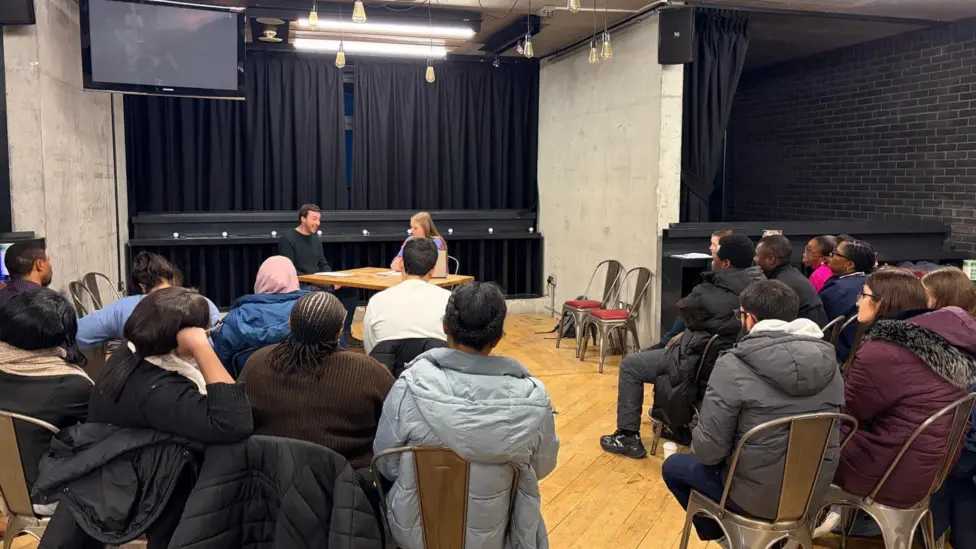
'Hull Truck Theatre has just won the Innovation prize at the Stage Awards for their new training scheme for GPs. Associate Director Tom Saunders and GP Dr Eman Shamsaee discuss why drama classes are helping doctors treat patients.' 

BBC Radio 4 'Front Row' https://www.bbc.co.uk/sounds/play/m002q2jz (15 mins ...)

◇

Holly Phillips, East Yorkshire and Lincolnshire and Ian Youngs, Culture Reporter

Published - 21 January 2026

'A theatre company is using drama training to help doctors deal with challenging patients.

Hull Truck Theatre's classes feature actors performing difficult GP consultations, with GPs giving feedback before taking over the consultation themselves.

The theatre recently won the Innovation Award at the Stage Awards for the programme.

Dr Eman Shamsaee, who has taken part in the training scheme, described it as a "really creative way of doing GP training".'

BBC News:  Drama classes help GPs handle difficult patients

INDIVIDUAL
|
 INTERPERSONAL    :     SCIENCES               
HUMANISTIC --------------------------------------  MECHANISTIC      
SOCIOLOGY  :   POLITICAL 
|
GROUP


The training programme has completed its pilot stage and is now in the delivery phase


A reminder of co-working to deliver STORM training with a Clinical Psychologist colleague. 

See also: 'communication' : 'primary care' : 'GP' : 'drama'