Hodges' Model: Welcome to the QUAD: culture

Hodges' model is a conceptual framework to support reflection and critical thinking. Situated, the model can help integrate all disciplines (academic and professional). Amid news items, are posts that illustrate the scope and application of the model. A bibliography and A4 template are provided in the sidebar. Welcome to the QUAD ...

Showing posts with label culture. Show all posts

Thursday, July 30, 2026

Remembering Dr. Gilberto Cárdenas - Self Help Graphics

 Continued ...


My source:  Self Help Graphics & Art, 1300 East 1st Street, Los Angeles, CA, 90033, United States

Thursday, July 16, 2026

How is your Odyssey (thus far ...)?

THE ODYSSEY

As a tool for lifelong learning Hodges' model must be capable of providing a structure through which a narrative can woven. A person's career, as in work, is another distinct example. And again the 'health career' through health, illness, physical and mental trials and tribulations is perhaps the prime example. As the example, it forms the basis of myth underpinning the world's cultures, pre- and ancient histories.

Tomorrow, is the day of "Two Odysseys". No: this is not 2001, 2010, 2061 or 3001.

One odyssey, heads off to the South West, to a place where the land ends, apparently. Memories to be made, a story to unfold.

The other, is based on a voyage: an incredible tale, an epic journey - the epic (in the west). This ODYSSEY will be found in the cinema (and not on a phone, TV, PC, laptop ...); and vitally also in an amazing book. Recounting, what was originally the oral tale of Odysseus on his fantastical 10-year journey home after the Trojan War.

Hodges' model provides a structure to weave this narrative, the twists and turns of patients, carers, students and personnel - all the narrative forms.

Image: https://www.rottentomatoes.com/m/the_odyssey_2026

See also: The Hero's Journey and Joseph Campbell

Saturday, July 11, 2026

"Train midwives as nurses" - Ockenden

Re. Ockenden Report

Catching up on the newspapers, I noticed in the Times reporting of Ockenden calling for midwives to train as nurses first. Provoking debate about nurse education.

Within maternity services there are problems with continuity of care and skills in dealing with complex cases:

'Maternal Deaths 

60. The Review examined 27 maternal deaths that occurred between 2006-2024. Five cases fell outside of the Terms of Reference of the Review. Of the 22 remaining cases, reviewers identified failures in care that may have or substantially impacted on the outcome in six deaths. 

61. The profile of maternal deaths at NUH over this period broadly aligned with the known demographics and causes as identified by MBRRACE. 11 of the deaths occurred to women living in the most deprived areas of the city and 14 occurred amongst women who were not white British.

62. The common failures reviewers identified that might prevent future maternal deaths included: listening to women and families and acting promptly on concerns; continuity of care particularly for those with additional social/medical complexities; robust clinical governance to ensure timely information sharing across organisations and prompt access to imaging for women presenting with concerning neurological symptoms.' xiv

AI Overview (Ecosia) suggests that although direct entry to midwifery has always been possible(?), the English National Board created the pathway some 39 years ago.

The Ockenden Report describes how in combination health systems, culture, leadership and training can contribute to compassion fatigue (p.313).

When you look at Hodges' model and our languages, a great many challenges for curricula, training and education programmes can be found. The most powerful of what can be progressive, or threats are invariably mechanistic:

  • shorten
  • bypass
  • shortcut
  • cutting corners
  • short-circuit

Nursing must always move forward, continuous professional development is built on this principle. In the late 70s and 1980s post-registered qualifications were held in high esteem. Especially midwifery, paediatrics, health visiting, emergency and intensive care. 

Clearly, decision and policymakers can underestimate the value of basic nurse training. Having an idea since childhood is brilliant, but at interview saying you're compassionate and want to make a difference will soon be tested. Sometimes as a student rather bluntly, as with a first placement in forensic nursing. I wonder how many students have been lost there? I'm sure the majority will cope, manage, enjoy and prosper, but I've seen the student peers who miss these cohort members on subsequent learning experiences. What preparation is employed?

Basic nurse training, is just that. Demonstrating competence in communication, awareness of basic needs and how these are expressed behaviourally. What interpersonal skills and knowledge are needed. As highlighted before, the director of nurse education worried about those of us who worked as nursing assistants risked being trained in poor care. Not recognising 'bad practice', a 'poor attitude', not using observation and most important of all listening: to what is said and unsaid. When I started I remember thinking about not responding - as individually programmed to do so, through a reflex action. That was a worry back then. 

While the news in the Ockenden Report is bleak. The depth of the report (for me) is manifest in identification of not only socioeconomic factors, but sociotechnical too (with five mentions) and the critical interplay of seeing (and hearing!) the individual amid the collective:

'2. Fetal monitoring

Rather than reflecting simple failures of individual interpretation, growing evidence suggests that intrapartum fetal monitoring is best understood as a complex sociotechnical practice, shaped by system design, workload, team dynamics, guideline variability and organisational culture.119 Continuous CTG itself has well-recognised limitations, including poor specificity for predicting long-term neonatal outcomes and substantial inter- and intra-observer variation in interpretation.5 Reviews of intrapartum care are therefore unavoidably influenced by retrospective bias, with greater apparent clarity afforded by knowledge of the outcome than was available to clinicians at the time. 

However, despite this, a sociotechnical understanding does not negate the importance of examining individual cases in which intrapartum monitoring was demonstrably substandard. National inquiries and confidential reviews repeatedly describe cases involving sustained failure to recognise pathological fetal heart-rate patterns, delayed escalation despite repeated triggers, and missed opportunities for timely intervention. 2,3,120,121 These cases cannot be explained solely by the inherent limitations of CTG or by hindsight bias.' p.143.

It is quite shocking to hear this conclusion: the need to train as a nurse first. Counterarguments: where is the evidence(?!) - have followed. But then if you undervalue and miss the fundamentals (see Hodges' model!) then individuals, families, communities, students, practitioners, services and systems suffer.

Previously: 'maternity' : 'report' : 'safety'

Monday, July 06, 2026

Ebola and Mental Health, CDC Response to Ebola in West Africa in 2014-2015: Weds 15 July

Dear Peter, we are thrilled to invite you to our upcoming Webinar: 

Ebola and Mental Health, CDC Response to Ebola in West Africa in 2014-2015 on Wednesday, 15 July at 13:00-14:00 (CEST) 

Register here 

What can the Ebola response in West Africa teach us about mental health, trust, and outbreak preparedness today? We warmly invite you to our upcoming webinar “Ebola and Mental Health: Lessons from the CDC Response in West Africa, 2014–2015on July 15, 13:00–14:00 CEST

Drawing on the 2014–2015 Ebola outbreak in West Africa and its rapid escalation, this webinar will explore why mental health and psychosocial support must be considered an essential part of outbreak response. The session will connect past lessons to current challenges, including the ongoing Ebola outbreak caused by Bundibugyo virus in the Democratic Republic of the Congo and Uganda. We are delighted to welcome Dr. Anna Grigoryan as our keynote speaker. Based on her personal experience and deployment to Sierra Leone in 2015 as part of the CDC Ebola Response Mission, Dr. Grigoryan will share reflections on key response activities, communication challenges, and the intersection of Ebola response and mental health. The webinar will highlight why coordinated, international, and rapidly scaled-up responses are essential to reduce illness, deaths, fear, and psychosocial distress during outbreaks. 

Agenda 
13:00–13:30 Keynote by Dr. Anna Grigoryan 
13:30–13:50 Q&A session 
13:50–14:00 Wrap-up 

About the speaker 

Dr. Anna Grigoryan is a physician–scientist with over 20 years of international experience leading complex public health projects, fostering innovation, and building strategic partnerships. She spearheaded the WHO–CDC Collaborating Center for Global Public Health Informatics, serving as its first Program Manager. During her tenure at the U.S. Centers for Disease Control and Prevention (CDC), she contributed directly to emergency responses to major crises, including the Haiti and China earthquakes, the avian influenza outbreak, and the Fukushima nuclear accident.

In 2015, Dr. Grigoryan supported the Sierra Leone Ministry of Health during the Ebola epidemic as part of the CDC Ebola Response Mission. In her more recent role at the UN/IAEA, she managed a portfolio of projects focused on laboratory strengthening, cancer control, and emergency preparedness, supporting Member States across Africa. She has also mentored emerging leaders and promoted cultures of accountability and inclusion during periods of organizational transition.This webinar is intended for public health and mental health professionals, as well as everyone interested in Ebola response, outbreak control, pandemic preparedness, and mental health and psychosocial support.

Please note: 
The webinar will be recorded. If you do not wish to appear in the recording, you are welcome to keep your camera turned off.

We look forward to your participation and to an engaging discussion on the role of mental health in outbreak response.

Please register even if you cannot attend and we will let you know when the video of the webinar is available. 

For any questions, feel free to contact the Hub Management Team at info AT globalhealthhub.de

Warm regards,
Katrin 
------
Katrin Würfel, Global Health Hub Germany

Previously: 'ebola' : 'Africa' : 'epidemic'

Thursday, April 30, 2026

ii WCCS26: World Conference on Complex Systems 20-22nd April

Day 1

Plenary Talk: Reda Benkirane - Lost in Complexity: Welcome to the Real World

A first slide considered Abraham Maslow's book The Psychology of Science and his thought on the "law of the instrument". Maslow's hierarchy of needs is a key primer for new students to many disciplines, including nursing, and psychology. The purpose of Benikrane's focus on instruments concerns the emergence of civilisation and roles of agriculture, and war in the rise of community at several scales from village, to cities, states and nations. In terms of flow the slides highlighted the next speaker Peter Turchin's END TIMES, and two books by Johann Chapoutot, LES IRRESPONSABLES, and FREE TO OBEY.

In response to the slide with Einstein's -

"We cannot solve our problems with the same thinking we used when we created them":

- may I please class 'health - care' as a world? The thought that the medical, bio-medical, and bio-psycho-social encourages, sees enacted, and sustained a : is this fit for the problems of the 21st century. I like the slide's heading 'Beyond Complexity'. Such is the pace of change, which is labelled 'progress' that each one of us wakes up momentarily stupified and lost in complexity.

Keynote Speaker: Peter Turchin - The Great Holocene
Transformation: What Complexity Science Tells Us About The Evolution of Complex Societies

Turchin's keynote reminded me of Jared Diamond's book Guns, Germs and Steel. Reading GGS I realised there is more to 'axes' than I thought, especially from the individual to collective scales. It appears that whichever label - academia, research or education - you would like to apply, they all need a conceptual framework. Just as, individually, we all need a model of self, others and the world. This was a marvellous journey, through millennia of humanities' evolution, social, and political development, all realised through complexity. While attractors are to the fore, architecture and archaeology are regular distractors for me. Reading Holocene then had me hooked. 

A fellow delegate and speaker I dined with a few times encouraged me to read 'END TIMES'. I will seek it out later this year, (the next Hay-on-Wye visit?). Turchin is seeking to account for how human societies have reached their current state of organisation. The role of self-protection, seeking food, shelter, co-operation are all factors, with the emergence of religions, and agriculture. Several theories to date were covered [including, cultural multilevel selection, see Wilson et al. (2023)], plus a major project on cultural evolution: The Seshat: Global History Databank. For all the current loss and misery, conflict has paid a major role in cultural and political development. The prefix 'macro' features here. There was a social scale (people): FROM 10s - in foraging bands through TO 100,000,000s large nation-states. Mention of levels of scale, took me back to the work of Mario Bunge. The application of the Hertzsprung-Russell 'main sequence' (H-R) diagram is a great idea. I think Olaf Stapleton, author of Star Maker would have approved. 

This itself, for me, is reason enough to read Turchin. There is evolutionary biochemistry too, which is required in terms of a systems account. Is there a reflection of a main sequence construct between the SOCIOLOGICAL and SCIENCES domain of Hodges' model? 

 It is incredible the way new findings are regularly pushing even further the dates of human milestones stepping-stones. Perhaps we should always view progress in this way, and enjoy the 'moment'. There is still the puzzle of ultrasociality, and how to explain it? Turchin is seeking a mathematical history, with a journal Cliodynamics. There is another SF reference here, in Asimov's psychohistory in the Foundation books, but with less emphasis upon maths. This is encouraging for Hodges' model, and the inevitable transdisciplinary approach these questions demand.

More to follow ...

D.S. Wilson, G. Madhavan, M.J. Gelfand, S.C. Hayes, P.W.B. Atkins, & R.R. Colwell, Multilevel cultural evolution: From new theory to practical applications, Proc. Natl. Acad. Sci. U.S.A. 120 (16) e2218222120, https://doi.org/10.1073/pnas.2218222120 (2023).

Sunday, March 29, 2026

Children: FACE the past, future, your social media, Capitalism

INDIVIDUAL
|
    INTERPERSONAL    :     SCIENCES               
HUMANISTIC --------------------------------------  MECHANISTIC      
SOCIOLOGY  :   POLITICAL 
|
GROUP

MENTAL HEALTH and WELLBEING

LIFELONG LEARNING
 
KEY LITERACIES 

PSHE EDUCATION -
 Personal, Social, 
Health and Economic
The Face
'Apps such as TikTok and Instagram are filled with videos of young girls and teenagers advising their peers on elaborate skincare routines, especially through a popular line of content called "Get Ready with Me".

Parents have sounded the alarm over this trend, while recent medical literature has recognised the phenomenon of "cosmeticorexia", also called "dermorexia", defined as a culturally reinforced preoccupation or obsession with achieving "flawless" skin that can lead to "excessive, age-inappropriate or compulsive use of cosmetic products".'

'Italy is investigating a beauty retailer and make-up brand owned by French luxury group LVMH over claims their marketing has fuelled "cosmeticorexia", an unhealthy obsession with skincare among young girls.
The Italian Competition and Market Authority (AGCM) said yesterday it was probing Sephora and Benefit Cosmetics for suspected "unfair commercial practices" with the promotion of skincare products such as face masks, serums and anti-ageing creams to girls as young as 10 years old.
Those marketing campaigns were carried out mainly via social media, the  regulator said, leading young girls to "compulsively" buy such products.'


My sources: Amy Kazmin, LVMH's Sephora probed in Italy over fuelling young girls' skincare obsession, FTWeekend, 28-29 March 2026, p.1. FTWeekend and The Times. Reviews.

See also: Kazmin et al. Beauty industry scrutinised over age-inappropriate teen marketing. FTWeekend. 11-12 April, 2026, p.14. 

London visit February. Waterstones, Foyles, Hatchards & others.

Book image: https://www.amazon.ca/Face-Cultural-Fay-Bound-Alberti/dp/1538766531
 
Previously: 'health' : 'face' : 'child' : 'obsession' : 'social media'

Thursday, March 19, 2026

'Loud' noises and silences - Martin Luther King

INDIVIDUAL
|
    INTERPERSONAL    :     SCIENCES               
HUMANISTIC --------------------------------------  MECHANISTIC      
SOCIOLOGY  :   POLITICAL 
|
GROUP


... We are confronted with the fierce urgency of now. In this unfolding conundrum of life and history, there is such a thing as being too late. Procrastination is still the thief of time. Life often leaves us standing bare, naked, and dejected with a lost opportunity. ... We may cry out desperately for time to pause in her passage, but time is adamant to every plea and rushes on. Over the bleached bones and jumbled residues of numerous civilizations are written the words, "Too late." There is an invisible book of life that faithfully records our vigilance or our neglect. Omar Khayyam is right: "The moving finger writes, and having writ moves on."
    -DR. MARTIN LUTHER KING, J.,
    Beyond Vietnam - A Time to Break Silence


Wednesday, March 18, 2026

Caring with Excellence, Care that Evolves: Filipinos in Care Anniversary Event 2026

Time & Location

17 Apr 2026, 14:00 – 23:00 BST

St Mary Abbots Centre, Vicarage Gate, London, W8 4HN

About the event

This engaging 2-panel session will delve into the inspiring journeys of Filipino nurses and nurse leaders who are making significant contributions in the social care sector. Participants will have the opportunity to hear firsthand accounts of challenges, triumphs, and the unique experiences that shape their careers. The session aims to highlight the vital role that Filipino nurses play in providing compassionate care and leadership in diverse settings.

Panel 1: Personal Journeys and Experiences of Award-Winning Filipinos

The first panel will feature a diverse group of nurses who will share their personal stories. Topics will include:
  • Overcoming cultural and professional challenges
  • Adapting to different healthcare environments
  • Building resilience and community support

Panel 2: Transitioning to Social Care

The second panel will focus on the experiences of Filipino nurses who moved from the NHS to social care. Key discussions will revolve around:
  • Developing skills in a care home setting
  • Key tips for the career move
  • Key learnings from the shift from acute to chronic care

Takeaways: A Practical Toolkit

Attendees will leave the session equipped with a practical toolkit designed to inspire and guide them in their own nursing careers. This toolkit will include:
  • Resources for professional development
  • Strategies for effective leadership in nursing
  • Networking opportunities with fellow nurses and leaders

Join us for this enlightening session to celebrate the contributions of Filipino nurses in social care and to gain valuable insights that can enhance your own journey in the field. Sessions moderated by Filipinos in Care Founder Kier Dungo and Co-Founder Jay Trondillo.

Tickets and website: https://www.filipinosincare.org.uk/event-details/fic-anniversary-event

My source: RCN North West Multicultural Group

Monday, March 09, 2026

Human-Technology Lecture Series – 25 March

Dear Colleagues,

The BCS Sociotechnical Specialist Group and the STEIN-UX Research Group at UWL are launching the online Human-Technology Lecture Series, connecting critical perspectives on digital technologies and design with insights about people, organisations and society.

Our first lecture is:

Thinking Language, Fast and Slow: Speed, Data, and Decolonial Inquiry

📅 25 March 2026
🕛 12:00–13:00 (UK time)
💻 Online
🎟 Free to attend

Speaker: Dr. Lindsey DeWitt Prat, whose work explores how language, culture and technology intersect in the development of AI systems.

Talk Synopsis:

As language increasingly becomes training data for AI, timing begins to shape power. Decisions about datasets are made quickly, while their consequences unfold over much longer horizons. What does it mean to design responsibly with — rather than after — underserved language communities?

Drawing on industry work with African languages and large language models, alongside research examining how AI data is produced globally, the talk reflects on why anthropological, participatory and human-centred approaches need to be integrated early in technological development.

Register here:
https://www.eventbrite.co.uk/e/thinking-language-fast-and-slow-speed-data-and-decolonial-inquiry-tickets-1983958108108?aff=oddtdtcreator

Best wishes,
José

Professor José Abdelnour Nocera
School of Computing and Engineering
Head of Sociotechnical Innovation and User Experience Research Group
University of West London
St Mary’s Road, Ealing – London W5 5RF
... and my source via the SOCIOTECH list.

Friday, March 06, 2026

The land speaks through Bears & Peoples: Together

Figure 2

ABSTRACT

Landscape genetic analyses of wildlife populations can exclude variation in a broad suite of potential spatiotemporal correlates, including consideration of how such variation might have similarly influenced people over time. Grizzly bear (Ursus arctos) populations in what is now known as coastal British Columbia, Canada, provide an opportunity to examine the possible effects of a complex set of landscape and human influences on genetic structure. In this collaboration among the Nuxalk, Haíɫzaqv, Kitasoo/Xai’xais, Gitga’at, and Wuikinuxv First Nations and conservation scientists, we characterized patterns of genetic differentiation in the grizzly bear, a species of high cultural value, by genotyping 22 microsatellite loci from noninvasively collected hair samples over a 23,500 km² area. We identified three well-differentiated groups. Resistance surfaces, which incorporated past and present human use, settlement, and landscape resistant features, could not explain this pattern of genetic variation. Notably, however, we detected spatial alignment between Indigenous language families and grizzly bear genetic groups. Grizzly bears sampled within an area represented by a given language family were significantly similar to those sampled within that language family (P = 0.001) and significantly divergent to those sampled outside the language family (P = 0.001). This spatial co-occurrence suggests that grizzly bear and human groups have been shaped by the landscape in similar ways, creating a convergence of grizzly bear genetic and human linguistic diversity. Additionally, grizzly bear management units designated by the provincial government currently divide an otherwise continuous group and exclude recently colonized island populations that are genetically continuous with adjacent mainland groups. This work provides not only insight into how ecological and geographic conditions can similarly shape the distribution of people and wildlife but also new genetic evidence to support renewed, locally led management of grizzly bears into the future.

INDIVIDUAL
|
    INTERPERSONAL    :     SCIENCES               
HUMANISTIC --------------------------------------  MECHANISTIC      
SOCIOLOGY  :   POLITICAL 
|
GROUP
'This work is dedicated to the late Nuaqawa (Evelyn Windsor), who taught us that people learned their language and way of life from the bears.'

Geographic distance

Spatial overlap

Grizzly bear (Ursus arctos)

Population genetic structure

Landscape genetics


Biocultural diversity

Indigenous language families

Human linguistic diversity

Awareness - Respect


 [What price the future? pj]


Henson, L. H., N. Balkenhol, R. Gustas, M. Adams, J. Walkus, W. G. Housty, A. V. Stronen, J. Moody, C. Service, D. Reece, B. M. vonHoldt, I. McKechnie, B. F. Koop, and C. T. Darimont. 2021. Convergent geographic patterns between grizzly bear population genetic structure and Indigenous language groups in coastal British Columbia, Canada. Ecology and Society 26(3):7.
https://doi.org/10.5751/ES-12443-260307

My source:
Roman Goergen. Grizzly spoken here! Resurgence & Ecologist, July/August2023: 339: pp.10-11.

See also: https://iaac-aeic.gc.ca/050/documents/p21799/85674E.pdf

Previously: 'landscape' : 'ecology'

Wednesday, March 04, 2026

The invention of language

7 After the Fall
'Adam's one task in the Garden had been to invent language, to give each creature and thing its name. In that state of innocence, his tongue had gone straight to the quick of the world. His words had not been merely appended to the things he saw, they had revealed their essences, had literally brought them to life. A thing and its name were interchangeable. After the fall, this was no longer true. Names became detached from things, words devolved into a collection of arbitrary signs; language had been severed fom God. The story of the Garden, therefore, records not only the fall of man, but the fall of language.' 

    Paul Auster

In, Robert C. Stalnaker (2008) Our Knowledge of the Internal World. Oxford, GB: Oxford University Press. hb. p.132.

Auster, P. (1985) The New York Trilogy (New York: Penguin Books). p.52.

Tuesday, February 24, 2026

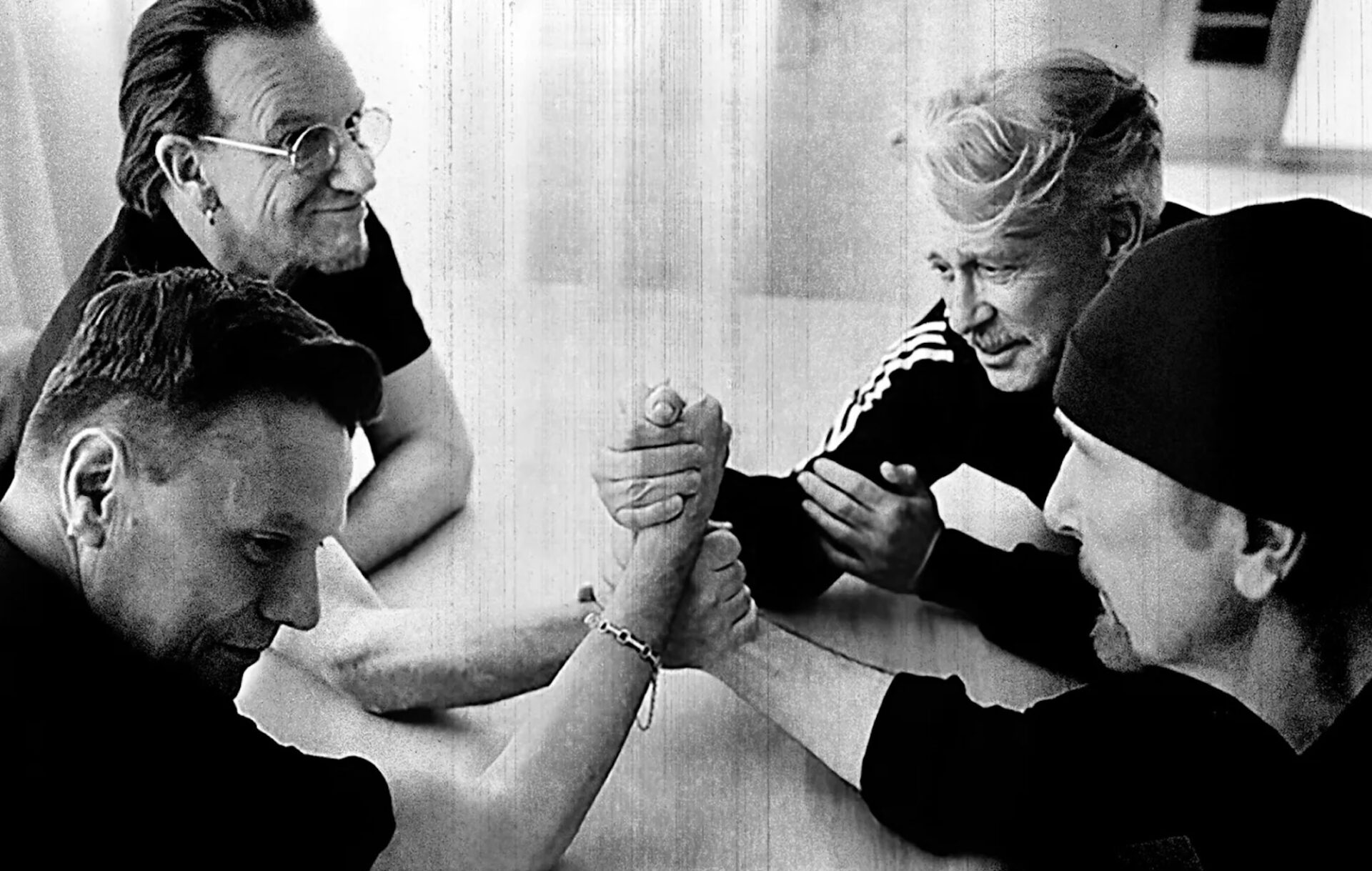
c/o RollingStone UK - "U2 surprise-drop politically charged ‘Days of Ash’ EP with six new songs"

The collection delves into ICE, Israel, the West Bank, Ukraine, Iran — and features a guest vocal by Ed Sheeran

U2 (RollingStone UK - Picture: Anton Corbijn) 

By Andy Greene

'U2 have emerged from a long hiatus with a surprise six-song EP, Days of Ash, available now, in which they address political flashpoints around the world, including ICE raids in the US, the Iranian uprisings, the war in Ukraine, and Israeli settlements in the West Bank.

The six songs — ‘American Obituary’, ‘The Tears of Things’, ‘Song of the Future’, ‘Wildpeace’, ‘One Life at a Time’ and ‘Yours Eternally’ (featuring Ed Sheeran and Taras Topolia) — are all on streaming platforms. They’ve also created lyric videos for each one.' 

Continued ...


Previously: conflict : war : hope : peace

Friday, January 30, 2026

ERCIM News No. 143 Special theme: "AI for Science"

 
Dear ERCIM News reader,

ERCIM News 143 is now online! The articles in this special theme show that AI is no longer a peripheral tool in science, but a central part of research practice across disciplines. AI for Science is reshaping how research is organised, understood, and conducted, while also raising important questions about trust, transparency, energy use, and the evolving role of human expertise.

Read the January 2026 Issue


This issue in PDF


This special theme was coordinated by our guest editors Edina Nemeth (SZTAKI) and Alexandre Termier (University of Rennes – Inria/IRISA).


My source:
Peter Kunz ERCIM https://www.ercim.eu https://ercim-news.ercim.eu

Monday, January 12, 2026

Improving University Teaching - July 2026 Glasgow

Dear Colleagues

A reminder that you are cordially invited to participate in the 52nd International Conference on Improving University Teaching, to be held this year in Glasgow, Scotland. Our conference theme is “Connecting Across Cultures: Collaboration, Compassion, and Creativity,” with a focus on the links that sustain teaching and learning. IUT welcomes proposals in a variety of formats — papers, posters, workshops, and roundtables. More information about theme, subthemes, and presentation formats is available on our website, https://iutconference.com, where you will also find a link for proposal submissions.

This year’s proposal submission deadline is Monday, January 26th.

The dates for IUT 2026 are July 15-17, 2026. Our in-person host is the University of Glasgow in Scotland — the fourth oldest university in the English-speaking world, with a student enrollment of almost 40,000 and a strong tradition of both research and teaching excellence. Once again, this year’s conference will be a hybrid event. We hope many participants will attend the conference in person in Glasgow, but also warmly welcome those who choose to participate remotely.

Whether you prefer to join us online or in person, we hope you will consider a submission. Please contact us at iutconference AT gmail.com with any questions.

With best wishes,

Anne Tierney
President, IUT

Jim Wilkinson
Treasurer, IUT, and President emeritus

Monday, December 22, 2025

Contexto Int. [Newsletter] - Special Issue 47.2 Where is the Sea in Int. Relations?

Dear Colleagues,

We hope this correspondence finds you well.

We are delighted to formally announce the publication of the latest special issue of Contexto Internacional, entitled "Where is the Sea in IR?," which I had the distinct honour of co-editing with Dr Flavia Guerra (Federal University of Rio de Janeiro).

The overarching objective of this Special Issue is to address a central scholarly lacuna within International Relations (IR) scholarship: the historical and theoretical marginalisation of the oceanic domain. In pursuing this fundamental inquiry—why and how does the ocean recede from scholarly and political attention?—the assembled contributions collectively prompt a sustained, rigorous examination of two key analytical challenges:

  1. The specific mechanisms through which IR has historically relegated the oceanic domain to the periphery of its dominant analytical frameworks.
  2. The subsequent broader political and theoretical implications that stem from this systematic exclusion.

The volume is structurally organised around three distinct, yet interconnected, thematic axes, each seeking to contribute to a deeper engagement with the marine sphere:

  1. The Marginalisation of the Ocean in IR: Conceptual and empirical explorations of how the sea is actively rendered absent or subordinate within core theoretical debates.
  2. Complex Entanglements between the Ocean and Ontological Security: Analyses focusing on the relationship between maritime spaces, existential anxieties, and state identity formation.
  3. Ocean Governance as Regulatory Mechanism and Platform for Political Discourse: Critical assessments of regulatory frameworks and their role in structuring political contestation over the maritime commons.

We sincerely hope that you find the contributions within this volume to be a compelling and theoretically relevant read that stimulates further research and critical reflection within the discipline.

Special Issue: Where is the Sea in IR?

Where is the Sea in International Relations?
  Francisco Eduardo Lemos de Matos; Flávia Guerra Cavalcanti

Abstract | Full text

Table of Contents: https://www.scielo.br/j/cint/i/2025.v47n2/

Includes - Addressing 'Maritime Aphasia' in International Relations
  Bruno Sowden-Carvalho; Marcelo M. Valença

Between Nuclear Tests and Rising Sea Levels
  Beatriz Rodrigues Bessa Mattos

Carl Schmitt on the Move: Spatial Politics and the (political) Sacrifice of the Sea
  Francisco Eduardo Lemos de Matos

Thinking Ontological (In)Security with Water: The Place of the Ocean in Boat Migration
  Flávia Guerra Cavalcanti

What is the Place of Mar de Timor in Timorese Geopolitics, Culture and Education?
  Silvia Garcia Nogueira; Betina Lopes; Ângelo Ferreira; Samuel de Souza Freitas

Fluid Boundaries: Reassessing Maritime Spaces and Nomadic Waves in International Relations Theory
  Henrique Campos de Oliveira

The Third Bank of the Sea: Maritime Traces of Constitutive Outside(r)s and International Ontopolitical Lines
  Roberto Vilchez Yamato; Gustavo Alvim de Góes

Ocean Governance, Maritime Security, and International Relations
  Daniele Dionisio da Silva; Gilberto Carvalho Oliveira

Sailing on Waves beyond National Sovereign Land Borders: On the Crossroads between International Ocean Relations and the Blue Economy
  Thauan Santos

Regards,
chico

Francisco Eduardo Lemos de Matos
Doutor em Relações Internacionais pelo IRI/PUC-RIO.
Pesquisador de Pós-Doutorado em Relações Internacionais no IRI/PUC-RIO pela FAPERJ.

Rede IPS Brasil - https://www.ipsbrasil.com/
Lattes: https://lattes.cnpq.br/9338374067089166
Orcid: https://orcid.org/0000-0003-4214-5382

My source: DOINGIPS list - https://www.doingips.org/

Saturday, December 20, 2025

A time for reflection S-N solstice :: equinox

Analemma image: Anthony Ayiomamitis

Ever since we first took note of the passing Seasons, and what is left of them today, we have marvelled and come to recognise the extremes of the calendar in the sky.

For humanity in the North and the South. 

The emergence of culture, societies, and civilization has been  dependent upon the calendar - whether recorded in customs and rites, giant blocks of stone, papyrus, or binary code.

As the solstice fast approaches - Sunday, 21 December 2025 15:03-4 - and the Sun touches its lowest, southernmost point, I think of (former) family and friends 'way down' south, and the distance between the hemispheres, represented in the analemma. Of course then there is the solstitial experience of humanity in the south as the sun crests the highest point in their sky.

It must be amazing to see the nightsky from the far south(?). 

How might we explain this culturally, with the benefit of foresight? This apparent celestial 'opposition' of Earth's path around the Sun, is reflected N-S in who bears the impact of climate change and the need attend to planetary health.

But, then look at the equinox, the north and south are seemingly united? 

Is there a baton passed in March and September?

Perhaps, this can be a celebration of global health, for both hemispheres. With a simultaneous 'nod' to planetary health and the search for social and climate justice.
 

What Complex Threads We Weave

Tuesday, December 16, 2025

Tongues: The Edinburgh Companion to the Global Medical Humanities

Editors: Benjamin Dalton (Lancaster University), Steven Wilson (Queen’s University Belfast), Alex Wragge-Morley (Lancaster) and Stephanie Wright (Lancaster)

NEW Deadline for abstracts: 30 January 2026

The deadline for proposals to participate in a new Edinburgh Companion to the Global Medical Humanities has been extended. Following on from the landmark Edinburgh Companion to the Critical Medical Humanities, this handbook aims to catalyse the emerging field of global, multilingual work in the medical humanities. In its earliest form, the medical humanities sought to recognize the importance of literature and the arts to medical education and communication. In the following decades, scholars have recognized the entanglements that have existed between mind, body and environment – entanglements that call into question still prevalent distinctions between the sciences and the humanities, or between biology and culture (Whitehead et. al., 2016). Now, scholars and practitioners are increasingly bringing global cultures, epistemologies, and languages to bear on the medical humanities. At the same time, new approaches that both challenge and extend the concerns of the medical humanities are emerging in non-Anglophone and non-Western contexts.

This volume will give students and scholars a comprehensive guide to the dynamic and emerging field of global medical humanities – identified as such in recent editorials in Medical Humanities, The Polyphony and The Routledge Handbook of the Medical Humanities. This is a field that engages critically with the notion of global studies, recognizing that some of its iterations simply perpetuate the cultural, epistemic, and cultural hierarchies that have so long dominated the fields of health and the humanities. At once synthesizing and developing the insights of the field, this Edinburgh Companion will deploy the metaphor of the tongue to bring together, without homogenizing, a globally diverse range of contexts and interconnections. The tongue is at once an instrument of speech and a bodily organ that connects people to their cultures and environments. Indeed, through its communicative function and the pleasures and pains of taste, the tongue relates people to the language and foodways frequently taken to define cultures and societies. Moreover, the tongue is an interface for pleasure, intimacy and connection between bodies. And, of course, the tongue quite literally brings the world into the body through acts of taste and eating (Mol, 2021).

On the one hand, therefore, this Companion will deal with language, exploring the manifold ways in which translation between cultural and linguistic contexts can change our understandings and experiences of health. But at the same time, taking its cue from the corporeality of the tongue, it will explore how thought, perception and bodily reality may alter or be altered by movement in and between cultural and linguistic settings. This new handbook will thus serve as a crucial resource for anybody engaging with the trans-cultural and trans-linguistic aspects of health and wellbeing, from scholars and students to medical practitioners and carers.

The handbook will include a foreword by Angela Woods (Durham University), and the editors invite proposals for chapters on any topic relating to the global medical humanities, including but not restricted to:
  • Translating the medical humanities across cultures (broadly conceived)
  • Vernaculars of healthcare
  • Non-verbal languages
  • Global conceptions or expressions of pleasure, sexuality, taste, and/or pain
  • Bodies, senses and environments
  • Failures of language to communicate pain and/or bodily resistance to translation
Abstracts of between 200-300 words should be sent along with a short (50-word max) bio to a.wragge-morley AT lancaster.ac.uk, b.dalton AT lancaster.ac.uk, s.wright9 AT lancaster.ac.uk and steven.wilson AT qub.ac.uk by 30 January 2026. Informal enquiries can be directed the same addresses.

My source: NNMHR list www.jiscmail.ac.uk/NNMHR

Sunday, November 16, 2025

'Realization' in Training and Simulation

'Some time in the late 1800s, the body of a young woman was pulled from the River Seine. Lacking any signs of struggle or foul play, her death was ruled a suicide. She was displayed on a slab of marble in the window of the Paris morgue - standard procedure for corpses awaiting identification. At the time, the morgue was a popular, albeit gruesome, attraction which drew more daily visitors than the Louvre. ... Apparently, the forensic scientist assigned to the drowned girl's cadaver became so captivated by her that he paid a moulder to make a plaster cast of her face.' p.16.
individual
|
INTERPERSONAL : SCIENCES
humanistic -------------------------------------------  mechanistic
SOCIOLOGY : POLITICAL
|
group-population


'The face is important. The face: pleasant, delicate features, all languid curves, a relaxed, even blissful expression. Her long, matted eyelashes stuck, as if still wet, to plump cheeks. Her mouth curved into an enigmatic smile. The face, gone unclaimed, triggered an intense, cultish frenzy across Europe. She was dubbed the L'Inconnue de la Seine (the Unknown Woman of the Seine). 
...

The advent of mechanical reproduction allowed the mask to be copied and sold on a massive scale. ... Widely replicated in plaster, wax and then plastic, L'Inconnue's dead face was used as a model for artists at the Ecole des Beaux-Arts, and apprentices at beautician training schools.' p.16.


'You may have seen her face yourself. In fact, odds are you've kissed it - indeed, 300 million people have. In 1955, tasked with the job of creating a life-size doll for teaching mouth-to-mouth resuscitation, Norwegian toymaker Åsmund Lærdal thought back to a death mask he'd noticed years ago, hung in his wife's family home. Lærdal wanted the face to be inviting, not dead-looking. It had to be female, of course, the kind of face men undergoing CPR training would be inclined to kiss. L`Inconnue was, perhaps, the obvious choice for Resuscì Anne, the doll that is still used in schools and swimming pools across the UK and US. Lærdal's website nods to the mask's origins, writing that "the face of death became the face of life".' p.16.


Ack. Sarah Haque, https://www.sarahhaque.co.uk/ 

The strange allure of L'Inconnue de la Seine, FT Magazine, 1,149, November 1, 2025. p.16-17. https://www.ft.com/content/64c930ac-b2b7-4314-b915-eb93c87a451f

See also: Wikipedia - L'Inconnue de la Seine

Sunday, September 21, 2025

Book: 'Non-Western Approaches in Environmental Humanities'

Individual
|
      INTERPERSONAL    :     SCIENCES               
HUMANISTIC  --------------------------------------  MECHANISTIC      
 SOCIOLOGY  :    POLITICAL 
|
Group

attitude, mindset, approach, perspective, framework, philosophy, world-view, paradigm, method, -ism

'Man'
------------------------------------------
Nature - Biosphere - Planetary Health


distance: local, glocal, global
environment
physical space
urban, rural, remote

posthuman
'Non-Western Approaches in Environmental Humanities'

Policy
Politics
Economics
Priorities
Capital
Power
Postcolonialism
Decolonial
Postcolonial


Gabriela Jarzebowska, Aleksandra Ross, and Krzysztof Skonieczny (eds). (2025) Non-Western Approaches in Environmental Humanities. Göttingen: V&R unipress | Brill Deutschland GmbH.

My source: https://x.com/Plant_Init/status/1964274903504281966

See also: 'humanities' : 'environment'

Wednesday, September 17, 2025

Bill Ross Memorial Workshop – BSP Special Event 2025

A workshop in memory of Bill Ross, and to celebrate the posthumous publication of his book Order and the Virtual: The Philosophy and Science of Deleuzian Cosmology (2024). 
Convened by the British Society for Phenomenology with the family and friends of Bill.

I never met Bill Ross, nor had I learned of his work prior to receiving news of this workshop. I attended today in Manchester; also realising I'd intended to post the details. It was well worth the effort in the (predictable!) rain. The speakers and sessions were as follows:

  • Dan Smith (Purdue University): “Reality is a Problem: Deleuze’s Metaphysics of Manifolds”
  • Michael Epperson (California State University, Sacramento): “Relational Realism and the Ontogenetic Universe: Subject, Object, and Ontological Process in Quantum Mechanics”
  • Vera Bühlmann (Vienna University of Technology): “Cosmic splendour and signal messages, or the choice that will remain unmade”
  • Kemal Tezgin (Virginia Tech): “The Virtuality of Space: A Deleuzian Reading of Quantum Fields”
  • Robin Durie (University of Exeter) & Craig Lundy (London Metropolitan University): “What the imagination already knew: Science & Myth in the Genesis of Desert Islands”
Order and the Virtual (2024)
The sessions were informative and stimulating for studies here (category theory was noted).

With thanks to Carol at Edinburgh University Press, I have a review copy of Bill Ross's text.

Looking at the contents and index there are many fields in common, which I will share over the coming months.

As with the Laws of Form conference last year in Liverpool, here is another group of academics and scholars, welcoming and keen to share their expertise and learn.

So, thanks to Carol again for what looks an exciting book and the organisers and sponsors of this brilliant event acknowledging and commemerating the work of Bill Ross.

I will try to be more timely with news of related events, and developments. More to follow, but to close for now ...

'Bill Ross (1964 – 2022) had interests ranging widely across contemporary philosophy and culture, with a particular interest in the relations between science and philosophy. As managing editor, he was the driving force behind Clinamen Press, which in the early 2000s published new works by contemporary philosophers, and English translation of important works by continental philosophers such as Henri Bergson, Gaston Bachelard and Michel Serres. He completed his PhD in philosophy at Staffordshire University, where he taught on the MA in the Philosophy of Nature, Information, and Technology. Bill had a lifelong passion for the connections between science and philosophy, on which he had published several important articles. Bill was working on a monograph on the philosophy and science of Deleuzian cosmology, which was has been posthumously published by Edinburgh University Press. This event is to celebrate Bill’s book and his life, and to allow his friends, his colleagues, and anyone interested in his work or the topics and issues addressed by his work to continue the conversation that Bill’s work inspires.'
https://www.thebsp.org.uk/bill-ross-memorial-workshop-deleuzian-cosmologies/