Hodges' Model: Welcome to the QUAD: pantology

Hodges' model is a conceptual framework to support reflection and critical thinking. Situated, the model can help integrate all disciplines (academic and professional). Amid news items, are posts that illustrate the scope and application of the model. A bibliography and A4 template are provided in the sidebar. Welcome to the QUAD ...

Showing posts with label pantology. Show all posts

Friday, October 21, 2022

Mathesis Universalis - Caresis Universalis ..?

Frontispiece of Operum Mathematicorum Pars Prima (1657)
by John Wallis, the first volume of Opera Mathematica
including a chapter entitled Mathesis Universalis


"Mathesis universalis (from Greek: μάθησις, mathesis "science or learning", and Latin: universalis "universal") is a hypothetical universal science modelled on mathematics envisaged by Descartes and Leibniz, among a number of other 16th- and 17th-century philosophers and mathematicians. For Leibniz, it would be supported by a calculus ratiocinator. John Wallis invokes the name as title in his Opera Mathematica, a textbook on arithmetic, algebra, and Cartesian geometry"


 INDIVIDUAL
|
 INTERPERSONAL    :     SCIENCES               
HUMANISTIC --------------------------------------  MECHANISTIC      
SOCIOLOGY  :   POLITICAL 
|
GROUP

progress?

progress?

progress?

[PROGRESS?]

Also from: https://en.wikipedia.org/wiki/Mathesis_universalis

René Descartes

In Descartes' corpus the term mathesis universalis appears only in the Rules for the Direction of the Mind.[1] In the discussion of Rule Four, Descartes' provides his clearest description of mathesis universalis:

Rule Four
We need a method if we are to investigate the truth of things.

[...] I began my investigation by inquiring what exactly is generally meant by the term 'mathematics' and why it is that, in addition to arithmetic and geometry, sciences such as astronomy, music, optics, mechanics, among others, are called branches of mathematics. [...] This made me realize that there must be a general science which explains all the points that can be raised concerning order and measure irrespective of the subject-matter, and that this science should be termed mathesis universalis — a venerable term with a well-established meaning — for it covers everything that entitles these other sciences to be called branches of mathematics. [...]

— René Descartes, Rules for the Direction of the Mind; translated by John Cottingham[4]

Wednesday, December 22, 2021

meta - Care

Individual
|

INTERPERSONAL : SCIENCES
humanistic ------------------------------------------ mechanistic
SOCIOLOGY : POLITICAL
|
Group
meta^

care


Care

Meta*

 ^ meta: parity of esteem in care - mental life and well-being

* © 2021 Meta

Hodges' Health Career - Care Domains - Model = 'meta-care'.

Monday, February 07, 2011

h2cm: philosophy of science - analytical AND dialectical Refinetti, R. (1989).

"For centuries, philosophers have discussed whether knowledge progresses analytically or dialectically. In the Cartesian tradition of starting with simple concepts and then building up more complex concepts [4], the idea of science as a gradual accumulation of small pieces of knowledge was put forward by Auguste Comte [5]. This constitutes an analytical view of the progress of knowledge. On the other hand, Hegel proposed that knowledge grows as a whole, so that contradictions between opposing ideas are solved (and disperse pieces of knowledge are integrated) at each stage of the dialectical progress of knowledge [6]. This constitutes a dialectical view of the progress of knowledge.

The partial correctness of both the analytical view of Comte and the dialectical view of Hegel have been acknowledged for many years. Wisdom from both views can be found in the writings of many contemporary philosophers of science." Refinetti, R. (1989) p.583.


.... and can also be found within the structure and potential content of the Health Care Domains Model. Goethe in his own way(s) of seeing recognised the same...


Refinetti, R. (1989). Information processing as a central issue in philosophy of science, Information Processing & Management, 25, 5, 583-584.

Friday, October 01, 2010

Caution! spanning the Theory - Practice Gap


As a new academic year begins and we endeavour to bridge the theory - practice gap we need to be cautious:


While we may not burn our bridges we need to be aware of which bridge spans are redundant and which are still active and serving their purpose.

As ever - standards, inspection, audit and governance are critical.

So in our efforts to bridge the theory - practice gap do we also maintain it?

Friday, September 03, 2010

Interprofessional education, philosophy and conceptual frameworks


I received a copy of the following - Interprofessional Education in Wales: case studies in health and social care - July 2010, Editors: Clare Kell and Marion Helme (Health Sciences and Practice). Published by the HEA.


As per other HEA publications there are many papers here of great interest. One stood out at a first reading as in addition to the quote below Mark Edward's also refers to the need for an holistic approach, and this particular MSc. course providing a critical space.

UK Professionals are trained and educated in their own disciplines, learning their own unique and specialist knowledge for their chosen profession. Therefore, although each profession is well equipped for its singular contribution, they find their 'educational preparation a total mismatch for the complex, interactive world into which they graduate and practice' (Sullivan, 1998: 428). Sullivan's view reinforces the WLGA's concerns, that professional boundaries *demarcate* social professions (and others) from each other and that resistance to collaboration and co-operation on any meaningful level has been compounded by the historical development of the uni-professional training model. We need therefore to agree a uniting philosophy and *conceptual framework* that facilitates a dialogue between these professional disciplines and gives reasons for these discrete services to work together in providing effective inter-professional solutions to shared social problems. p.53. Edwards, M.L. (2010). * -- * My emphasis.
I do not merely want to hang word associations here on the blog line. But, I have wondered about how we demarcate the disciplines. This is a major question. In the (previous) glossary I cite Resnik (2002) - A pragmatic approach to the Demarcation Problem. Wether deemed explicit or not Hodges' model seems to address this issue through the care domains.

On the new site a living (dynamic - as is implicit in internet based tools and resources) glossary is a must - the terms we use often vary from context to context, professional to professional. Clearly (or opaquely) I cannot provide all the answers hence the need for a community and a (Drupal) module.


Mark L. Edwards, Case Study 7: Issues in collaboration between undergraduate professional qualifying programmes of youth work and social work. pp.47-55.

Resnik, D.B. (2002) A pragmatic approach to the Demarcation Problem, Stud. Hist. Phil. Sci., 31:2,249-267.

Monday, October 26, 2009

A pantological links palette

The table below displays the existing link categories for all four care (knowledge) domains of Hodges' model:

The categories included on the links pages are intended to be suggestive rather than definitive of Hodges' model. Advice regards broken links is much appreciated (I am aware that health promotion is listed twice).

Psychology I
Psychology II
Mental Health
Therapies
Anatomy & Physiology
Care Theory & Practice
Evidence Based Practice
Quant.
Research
Philosophy
Creativity Ideas
Communication Studies
Theology / Transdisc
Coding, Classification
Health Informatics
Info Sources
Diagrams
Health Promotion
Study Skills
Education
A.I. Knowledge Man.
Visualization I
Visualization II
MarkupLangs
Ajax & XML
Human-Computer Interface
Accessibility
Creativity
Graphics
Environment
Virtual Reality
Science
Astronomy
Rest & Rec
Maths, Logic
Engineering
Programming
[Toolset]
7 Ages
Health Promotion
Patients & Carers
Practitioners
Development
Poverty
Democracy
Justice
Economics
Policy
Studies
Computer Supported Collab Working
Sociology I
Sociology II
Qual Research
Activism
Citizenry
Employment
Human
Rights
Anthropology
History
Art, Tech &CultureI
Art, Tech & Culture II
Info. Gov
Assurance
Standards
Open Source
Community Informatics

News
Software
Hardware
Search
Organisations
Commercial I - IV

Definitions: pantology

Thursday, June 11, 2009

Colour my quadrants - theme my domains

rgb
Quite a while ago a basic colour scheme emerged for the care domains - quadrants of Hodges' model. It may be useful to explain why these particular colours were adopted.


INTER-INTRAPERSONAL
: [mental health, psychology, psychological therapies, philosophy, creativity, theology ...] It is often said that green is a colour that calms people, it is and must remain a constant in our lives and hence in our world. Green reminds us of nature and who we are. There should always be a place for green wherever and whenever we live, for every individual one of us, whether residing in a metropolis, village or wandering across the land, or with no land. We must hope that green (and the blue) will always be.

SCIENCES: [anatomy, physiology, physics, biochemistry, neurology, systems, process ...] Blue is a mystical and spiritual colour. It suggests the metaphysical. It is our ET-ernal umbrella that points the way to the most external other that which is outside and beyond ourselves and our comprehension. Whether it is day, night or the inbetween with the terminator passing overhead it is there - clear sky or rain. It reminds us if you look, listen and feel our frailty, the true position of our laws, preoccupations and the passage of time that we cannot understand. But still we reach out.

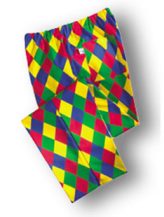
POLITICAL: [policy studies, law, democracy, standards, development, activism, governance, citizenry ...] Black and white was adopted here as politics is often portrayed and practiced as being polarised. It is nice (economical of effort) when decisions are literally cast in black and white terms - true or false, yes or no; however, in politics things are never clear cut (especially when claiming expenses). This is another reason for 'black and white'. Not so much for the colours as the pattern they can pose. As posted previously Michel Serres cast Harlequin as a trope for mischief maker (and more) - something we all see in politics - especially at the moment.

SOCIOLOGY: [sociology, patients & carers, the seven ages, collaborative computing, anthropology, history ...] While a warning in nature and many cultures, red was assumed for its warmth. The gathering around the flame of the community, the flame of the hearth. Vibrant. Full of life. This is red. Love, passion and courage you will find here.
Red still stands. No, runs - as a warning. The flame can become a source of chaos in the hands of the mob, when families, peoples and nations fight each other. Red is the ember that is hatred, but red the creative, innovative spark can and will win through. From darkness : To light ...

In the near future I will write more about the positional relationships between the care (knowledge) domains.

Tuesday, December 11, 2007

To all 'average scholars'...

Michel Serres:

"Intelligence is not about knowing axiomatically how to reason... The French 16th Century philosopher Montaigne already had dismissed the concept of a 'well-stuffed head'. The advent of the printing press made the memorization of Ulysses' travels and of folk tales - the support of knowledge at that time - redundant. Montaigne saw no longer use in memorizing a library that was potentially infinite. But does not the Internet ask for a 'well-endowed head'? Won't the best surfer be a 'Jack of all trades'? The fastest surfer is not going to be your typical Ivy-league super-titled philosopher: That guy's head will be simply too loaded to sort it out on the Net. So, there will be fresh opportunities for those who were viewed by society as laggards. It is a clean start with equal opportunities for all."
Source:
Join-Lambert, L., Klein, P., & Serres, M. (1997). Interview. Superhighways for All: Knowledge’s Redemption. Revue Quart Monde. http://www.nettime.org/Lists-Archives/nettime-l-9810/msg00137.html

Wednesday, December 27, 2006

Serres - Hodges Paper

Amid the festive yuletide I am completing the Michel Serres-Hodges paper for possible publication next year as a book chapter. (The web version is now rather out-of-date, but highlights the direction of travel.) Almost finished @ 6,999 words - although it's scary the things you (still - argh!) keep finding to revise, delete and add, plus some last minute and yet much appreciated comments that highlight the things authors miss completely. So, when is a paper 'finished'?

Well finished this one will be, as the deadline is the 31st December. Plus I must move on... I plan to e-mail the text tomorrow and then fingers x'd! If the paper is accepted it would be a great start to 2007.

My return to clinical practice one day per week has been postponed until March, but more on that another time. Speaking of which - I feel another post coming on as everyone's out buying boxes...

All the best for the Season and the New Year!

Friday, October 13, 2006

Hodges' model - it's all pants really!

It's no use - I have a confession to make.

After all these years of trying to publicise Hodges’ model, in practice, on paper, through the website. I’ve realised it really is a load of pants. Absolutely, definitely, no counter argument it is:

Utter pants.

Let me explain….

On the site you will find Brian’s notes and various additions that state what h2cm is, including a conceptual framework, holistic model, cognitive space and so on…

Beyond this though what is Hodges' model trying to say? Cruising down the centre of a one-way street if it were a street sign what would it stand for? There is this word ‘essence’ and in philosophy like many words it metamorphoses and starts to play trick or treat. So what is the essence of h2cm?

Whether you loosen your belt or tighten it at this point is of course entirely up to you, but here is my two cents worth.

Firstly, h2cm signifies the debate about parts and wholes.

Secondly, it represents pants – well ok - pantology to be specific.

Here's a definition:

Pan`tol´o`gy
n. 1.
A systematic view of all branches of human knowledge; a work of universal information.

Is there another beyond - beyond the beyond? Because the corpus of knowledge is so extensive and growing by the second if measured by published media could it be that h2cm provides a space where several pantologies can exist and co-exist? This must be the case because if pantologists exist then they must produce pantologies? What do you think? Is that what the internet is, or will become - a conglomeration of integrated pantologies?

So you see Hodges' model really is pants. Would you like to be a pantologist? Living in the 21st century and being a life-long learner by default it looks like there is no choice….

Meanwhile if you happen to live in a galaxy far, far away....