Hodges' Model: Welcome to the QUAD: narrative

Hodges' model is a conceptual framework to support reflection and critical thinking. Situated, the model can help integrate all disciplines (academic and professional). Amid news items, are posts that illustrate the scope and application of the model. A bibliography and A4 template are provided in the sidebar. Welcome to the QUAD ...

Showing posts with label narrative. Show all posts

Thursday, July 16, 2026

How is your Odyssey (thus far ...)?

THE ODYSSEY

As a tool for lifelong learning Hodges' model must be capable of providing a structure through which a narrative can woven. A person's career, as in work, is another distinct example. And again the 'health career' through health, illness, physical and mental trials and tribulations is perhaps the prime example. As the example, it forms the basis of myth underpinning the world's cultures, pre- and ancient histories.

Tomorrow, is the day of "Two Odysseys". No: this is not 2001, 2010, 2061 or 3001.

One odyssey, heads off to the South West, to a place where the land ends, apparently. Memories to be made, a story to unfold.

The other, is based on a voyage: an incredible tale, an epic journey - the epic (in the west). This ODYSSEY will be found in the cinema (and not on a phone, TV, PC, laptop ...); and vitally also in an amazing book. Recounting, what was originally the oral tale of Odysseus on his fantastical 10-year journey home after the Trojan War.

Hodges' model provides a structure to weave this narrative, the twists and turns of patients, carers, students and personnel - all the narrative forms.

Image: https://www.rottentomatoes.com/m/the_odyssey_2026

See also: The Hero's Journey and Joseph Campbell

Tuesday, June 30, 2026

'Oh Thomasina!' Such a drama in a diagram

Arcadia

Last evening I really enjoyed a performance of Tom Stoppard's Arcadia at the Duke of York's, or soon to be - The Tom Stoppard Theatre:

Act I, Scene 2  

'Septimus ... You should no more grieve for the rest than for a buckle lost from your first shoe, or for your lesson book which will be lost when you are old. We shed as we pick up, like travellers who must carry everything in their arms, and what we let fall will be picked up by those behind. The procession is very long and life is very short. We die on the march. But there is nothing outside the march so nothing can be lost to it. The missing plays of Sophocles will turn up piece by piece, or be written again in another language. Ancient cures for diseases will reveal themselves once more. Mathematical discoveries glimpsed and lost to view will have their time again. You do not suppose, my lady, that if all of Archimedes had been hiding in the great library of Alexandria, we would be at a loss for a corkscrew? ...'^ p.20.

 Act II, Scene 3

'Lady Croom We are intruding here - this will not do, Mr Hodge. Evidently, nothing is being learned. (To Noakes) Come along, sir! 

Thomasina Mr Noakes - bad news from Paris! 

Noakes Is it the Emperor Napoleon? 

Thomasina No. (She tears the page off her drawing block, with her "diagram" on it) It concerns your heat engine. Improve it as you will, you can never get out of it what you put in. It repays eleven pence in the shilling at most. The penny is for this author's thoughts. 

She gives the diagram to Septimus who looks at it.' p.74
...
Now Septimus retrieves his book from Thomasina. He turns the pages, and also continues to study Thomasina's diagram. ... 

Septimus Why does it mean Mr Noakes's engine pays eleven pence in the shilling? Where does he say it? 

Thomasina Nowhere. I noticed it by the way. I cannot remember now. 

Septimus Nor is he interested by determinism -------

Thomasina Oh... yes. Newton's equations go forwards and backwards, they do not care which way. But the heat equation cares very much, it goes only one way. That is the reason Mr Noakes's engine cannot give the power to drive Mr Noakes's engine. 

Septimus Everybody knows that. 

Thomasina Yes, Septimus, they know it about engines! 

Pause. He looks at his watch 

Septimus A quarter to twelve. For your essay this week, explicate your diagram. 

Thomasina I cannot. I do not know the mathematics. 

Septimus Without mathematics, then.' p.75.

 
Tom Stoppard, (1993) Arcadia (Playscript), Faber & Faber, pb. ISBN 9780571169344.
https://www.faber.co.uk/product/9780571169344-arcadia/

My text source:
https://collegearts.yale.edu/sites/default/files/attachments/arcadia_by_tom_stoppard.pdf 

^ n.b. This was therapeutic, but I still mourn the losses from Alexandria and other libraries ... today.

Thursday, May 07, 2026

Interviews, playwriting, and clinical encounters: pause for breath - Roger Lewin

It can be surprising how you know something. Something that should be obvious to you. It's your 'Bread and Butter' as the saying goes. And yet for a variety of reasons, you persist in not seeing it, or you frame it in a way that ultimately reveals a bias, influence, and may even mask several aspects of truth. It might be the influence of work over four decades plus. Sitting down, or frequently finally getting out for a walk after several weeks of nudging, in a one-to-one therapeutic context. Or, ever since secondary school, that distant performed encounter with the Crucible. And, more recently as 'Ken', a Post Office subpostmaster and his wife (a brief 10-12 mins), and over the years a desire to write dialogue.

Reviews of Roger Lewin's Complexity, vary in their conclusions about the book's quality. No surprise there, but reading the book it was a revelation to see the method: a series of interviews and the resulting dialogues. 

'In this revision of his book originally published in 1992, Roger Lewin explains what the science of complexity is all about through interviews with some of its most important practitioners (and critics) organized around some of the central ideas. As such this is both a fine introduction to the subject and an interesting read. Lewin includes 16 pages of photos of the scientists he interviewed captioned with a significant quote from each. He has added an afterword on the application of complexity science to business, and an appendix about John Holland, whom he dubs, "Mr. Emergence."

"Everything works toward an ecology" is an old dictum of mine. I have the sense that I came up with that myself, but I probably read it somewhere years ago. At any rate, what is being said here is that complex systems work toward a state of equilibrium near a transition phase, near "the edge of chaos." This equilibrium can be an ecology (Darwin's "tangled web"); indeed it can be the entire planet, as in the concept of Gaia in which "the Earth's biological and physical systems are tightly coupled in a giant homeostatic system" (quoting Stuart Kauffman on page 109).'

Source: https://www.goodreads.com/en/book/show/384547.Complexity

There's nothing profound in this post, and yet this melange of interviews, playwriting, and clinical encounters gives me pause for breath.

Previously: 'Our broken sticks' c/o Roger Lewin "Complexity: life at the edge of chaos"

Saturday, September 06, 2025

Scholarship in Arnold Wesker's 'The Friends'

... n'just t'lethee know that's, scholrship up int North ...

'MANFRED. Our trouble, Crispin, us lot, the once-upon-a-time bright lads from up north, is that we've no scholarship. Bits and pieces of information, a charming earthiness intelligence and cheek, but-not scholarship. Look at these books here. (He picks up a pile and throws them round him.) Renan, Taine, Kirkegaarde, Wittgenstein, Spengler, Plato, Jung, Homer, Vico, Adorno, Lukacs, Heine, Bloch-you've not heard of half of them, have you? And half of them, two-thirds, I'll never read. Do you know, new knowledge disrupts me. Because there's no solid rock of learning in this thin, undernourished brain of mine, so each fresh discovery of a fact or an idea doesn't replace, it undermines the last; it's got no measurement by which to judge itself, no perspective by which to evaluate its truth or its worth; it can take no proper place in that lovely long view of history scalloped out by bloody scholarship, because each new concern renders the last one unimportant. No bloody scholarship, us. And when I sometimes get a feeling that two people in love or one man afraid of death might be a supreme consideration, along comes this man with his 'we are moving into phases of creative disorder' and his 'everywhere the lines are blurred' and I've no defence. He sounds so right, I think, and besides-he's got scholarship. What's 'silly loving' and 'banal dying' in all that? Evil? You want me to confess to the knowledge of evil? I confess it. I say it-evil! So? And what  shall I do with that bit of knowledge?' p.18.

 WESKER, Arnold. The Friends. London: Jonathan Cape, (1970). Hardcover. First edition.

Wednesday, September 03, 2025

TEL us a story ... Hard, Soft and being Smart

Sorting papers I'd saved I came across -

David Mossley and Clare Saunders: A revolution in philosophy teaching? from the The Philosophy Magazine. 3rd quarter. 2013. pp. 40-45. 

Checking back, I see I posted and cited this item in 2013:


In the decade-plus since, how things have changed in tech, education and philosophy!

The story is ... that around this time I needed a new website and in the past I practised computer aided learning. Or should I say mCAL, microcomputer aided learning on the ZX81 and BBC Micro (related citations below). In 2013-2014, I started a PhD (as noted elsewhere) thinking I could recover and update some IT skills. Could I recapture the CAL days, by picking up TEL - technology enhanced learning? I stepped outside healthcare, and nursing specifically. I see now this was an error, but of course I still venture off-piste. The latest detour is even more extreme? On a personal - psychological level I'm visiting a subject maths - formal methods that simultaneously fills me with wonder (recognising its power and utility) and yet terrifies me with its complexity, made me feel sick at school, as a pre-teen and after.

My 'research question' was poorly formulated - which I did recognise. Two years were not wasted, far from it. The journey then was also driven by personal circumstances, married with events in 2007, 2010 and then 2015. 
 
Sticking with the current conference theme, I noticed a call for the 7th International Soft Computing and Engineering Applications Conference. Selected themes from track #4 include:


Track 4: Soft Computing for Smart Sustainable World

Smart agriculture and aquaculture
Smart cities
Smart communication
Smart disaster monitoring and management
Smart earth system
Smart education
Smart elderly care
Smart environment and ecosystems
Smart governance
Smart healthcare
Smart homes and buildings
Smart learning
Smart living
Smart machines and robots
Smart materials and fabric
Smart medicine
Smart social services
Smart villages
Smart wearables and implants

Amid all the (understandable) emphasis on 'smart' we need to retain a place for the human. That's the challenge in simultaneously considering the hard and soft of today's and tomorrow's world.

Citations

1982 CAPA: COMPUTER AIDED PATIENT ASSESSMENT, Sinclair ZX81, advertised in Nursing Mirror (see below) provided on audio cassette tape.

1983 THE NURSING PROCESS – Computer Aided Learning program, BBC Micro, published by Open Software Limited (OSL)

1984 HAEM. Blood Groups Computer Aided Learning program, BBC Micro – (OSL).

1989 SHADES OF GREY, Computer Aided Learning program, BBC Micro. Simulation of nuclear weapons, Based on Fanchi, J. Local effects of nuclear weapons, BYTE, Volume 11. Issue 13. Dec., pp. 143–155. Computer Aided Learning program, BBC Micro, published by Open Software Limited..

Jones, P. (1986) Computing in Nursing NEWS. Computerised Patient Assessment. Nursing Times. 85: 5. Sep 3-9;82(36):63-5. PMID: 3532039 (Describes 'CAPA', a BBC microcomputer program for student nurses.)

Jones P. 1988 Thunderbirds are Go? (Impact of technology in society, disasters, macro-engineering). Popular Computing Weekly.

Jones, P. (1989) Computers in Nursing NEWS. Creating a Program. Nursing Times. Feb 1-7;85(5):66-8. PMID: 2648342 (Describes 'HAEM', a BBC microcomputer program for student nurses on blood and blood groups.)

Jones, P. (1989) Information Technology is Good For You! (Effects of information technology) IT in Nursing, BCS-Nurs. Specialist Group. 1,1

Jones, P. (1990) Creating a Community Mental Health IS (Creation of a community mental health resource centre - a multidisciplinary research project). IT in Nursing and Paper at BCS NSG Conference. 2,4.

Jones, P., & Beckingham, D. (1991) The Ins and Outs of a small mental health Information System. Healthcare Computing 91 Conference Paper.

Jones, P. (1992) Nursing: All in the mind and machine? (Models of nursing and computing). British Computer Society -Nursing Specialist Group Conference Paper

Sunday, August 03, 2025

The compact: a knowledge project

Some things don't change . . .

 'Doctor Faustus'

'FAUSTUS discovered in his study.7

     FAUSTUS. Settle thy studies, Faustus, and begin
     To sound the depth of that thou wilt profess:
     Having commenc’d, be a divine in shew,
     Yet level at the end of every art,
     And live and die in Aristotle’s works.
     Sweet Analytics, ’tis thou8 hast ravish’d me!
     Bene disserere est finis logices.
     Is, to dispute well, logic’s chiefest end?
     Affords this art no greater miracle?
     Then read no more; thou hast attain’d that9 end:
     A greater subject fitteth Faustus’ wit:
     Bid Economy10 farewell, and11 Galen come,
     Seeing, Ubi desinit philosophus, ibi incipit medicus:
     Be a physician, Faustus; heap up gold,
     And be eterniz’d for some wondrous cure:
     Summum bonum medicinae sanitas,
     The end of physic is our body’s health.
     Why, Faustus, hast thou not attain’d that end?
     Is not thy common talk found aphorisms?
     Are not thy bills hung up as monuments,
     Whereby whole cities have escap’d the plague,
     And thousand desperate maladies been eas’d?
     Yet art thou still but Faustus, and a man.
        ...'

THE TRAGICAL HISTORY OF DOCTOR FAUSTUS
By Christopher Marlowe
From The Quarto of 1604
Edited by The Rev. Alexander Dyce


'AI' - Humanity's Faustian compact?

#individual #collective #power #safety #governance #ethics #morality

Friday, July 25, 2025

Good luck Suns & Daughters . . .

Individual
|
      INTERPERSONAL    :     SCIENCES               
HUMANISTIC  --------------------------------------  MECHANISTIC      
 SOCIOLOGY  :    POLITICAL 
|
Group

'The sun may be on its lonesome now - its closest neighbour is 4.2 light years away - but that wasn't always the case. Once upon a time it had close family. After their birth in the same cloud of dust and gas that formed our solar system, these solar siblings scattered hundreds of light years apart in the MilkyWay. In May, astronomers reported the first one: a star called HD 162826.

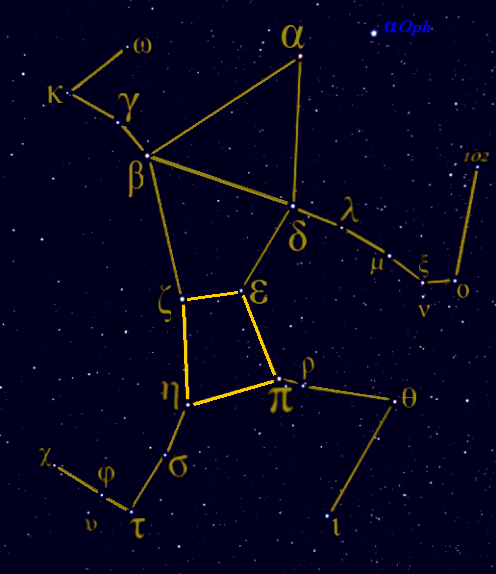
"It looks like the sun, but a little-bit bluer," says Ivan Ramirez at the University of Texas at Austin, who led the study. It's also warmer than the sun and 15 per cent more massive. The star is about 110 light years away, and you can see it with the aid of a pair of binoculars in the left arm of the constellation Hercules.'

Hercules Historical View

'To find its family ties, Ramirez's team combed through galactic archaeology studies, which model the motions of the Milky Way. These predictions laid out where sibling stars would be now if they had formed in the same place as the sun. Though they spread out in different directions, their positions still give away their birthplace, Ramirez says.

He narrowed down the search area to 30 stars, and then looked at them closely to find a family resemblance. Only HD 162826 had a similar chemical make-up to the sun. A separate team led by Eric Mamajek at the University of Rochester in New York also studied the star and found it is the same age
as the sun, as would be expected for two stars born together. Even more tantalising, HD 162826 is already in a catalogue of stars that might harbour planets.'

Science
funding


Rebecca Boyle. Strangest star. New Scientist. 20 September 2014: 223, 2987, pp.38-41.

Image: Sadalsuud, CC BY-SA 3.0, via Wikimedia Commons.

Monday, June 23, 2025

Entry to the Theatre of Nursing & Space

I do understand that reading theatre related texts, joining a theatre group, my writing a play is still pi in the sky. It's the journey, that's all. In Hodges' model I've differentiated between structure and content. This is the center of the stage about which Hodges' model turns. In the guided discovery by which students and audiences can discover the model,  these are the bases to touch in turn.


Sir Alan's focus on construction in writing: is narrative, time, location, characters (p.12). The overall message for me is, the frequently uttered - less is more. I must take heed and listen. During Ayckbourn's career, he has encountered the full retinue of writers and directors young and 'experienced'. Reading this, it is nice to be both 'new old-er' -
'Then there is the new old playwright. Far more difficult to deal with. They have probably nursed this script for twenty-five years and they're damned if you're going to mess it up for them when they've waited so long. Especially someone your age who wasn't even born when their harrowing play about World War Two was still raging, dammit.' p.110. (My emphasis in bold.)
Thinking about 1959 and the start of Sir Alan's career, his reference to WWII, made me recall nursing assistant and student nurse studies and placements at Winwick Hospital in 1977. On the geriatric wards for entertainment it was WWI songs were often sung, or records played. Long players, indeed.

In health we are usually accustomed to stopping before the 'true' end, with the exception of palliative care, although even then the ending should be 'better' than what it would otherwise have been.

If I am nursing Hodges' model, I've been doing so ever since 1987-88. As Sir Alan also observes of writers, while passionate about the utility of the model - my project - not my model; I am filled with self-doubt. Is this an over-valued idea - in my hands (and mind!)?

In other reading - Stagecraft. The Complete Guide To Theatrical Practice, by Griffiths Trevor R. 1982, I came across the word 'proscenium'.

'Incidentally, when we came to stage [the play in question is 'Woman in Mind' PJ] the London proscenium version this was far more difficult to achieve. Proscenium theatres generally make scenic statements whether they want to or not; the round makes none unless called upon to do so.' p.32. 

There are many insights into sets, design, and the various pros and cons. In May and earlier this month, with three other cast members I performed a role 8-9mins in a Living Newspaper (40-50 mins in total). It was fascinating to watch the various aspects developing from the initial reading in January. With Hodges' model an idea, the question of set design is not straight forward. But as with over-valued ideas, I am probably over-thinking (as usual) making things more complicated than necessary.

One golden nugget of advice, is if you are the writer and write well, well you don't have to think the set design. That is a problem for someone else to solve. Hopefully you will be impressed by the interpretation and realisation (often in film credits) of your work.

That is, unless you're unlucky and find yourself on the receiving end of Obvious Rule No. 13:

Beware of competitive set designers, particularly those with a 'concept'.

The name Ayckbourn is synonomous with The Stephen Joseph Theatre, which is in the round:

'The Round provides a truly unique experience as the audience is seated all around the stage. Not only does the audience see the performance from every angle, it also brings the actor into the same space as the audience.'

"Let’s have the actors in the same room as the audience, let’s have four front rows, let’s get really excited about this acting business!"

Stephen Joseph, 1959 - https://sjt.uk.com/about-us

From the mid-1980s and 90s I used to visit Bolton's Octagon quite regularly. Performances were frequently in the round. Last month, Abigail's Party was too (the last night).

Whatever, the staging, set, I'd be interested to see the 'concept'. On directing:

'As regards interpretation. you may need to tread more warily. As I said earlier, many playwrights are not naturally theatre creatures - certainly they are rarely visual theatre creatures, I have seen them sit there and watch their play physically anfold with a look of total amazement. pordering sometimes on delight, sometimes on dismay. What was in their head has been made three-dimensional flesh.' p.111.

Space has been and remains fundamental to my thinking about Hodges' model. Even pushing the envelope to topology, this is well beyond my ken. But not other gifted researchers. Hodges' model provides inter- multi- transdisciplinary bridges: we need to Before the time of schools becoming fenced and patrolled sites, we used to play cricket, tennis and football. There was a large wall at front of a former school, great for tennis, but not return of serve. Now a projection shared in the round - so everyone sees the same thing (yes, another rule!) might hold potential. There's acknowledgement that technology moves on too (p.123). And room for comedy, Ayckbourn's starting point. 

'Designers, it has been said, even the best of them, sometimes get hold of the wrong end of the stick. ... Always get to look at drawings, ground plans and, most helpfully, scale models of what they intend.' p.120.

The Crafty Art of Playmaking by Alan Ayckbourn. Faber, 2004, softcover, ISBN 0571215106.

https://www.concordtheatricals.co.uk/s/45898/the-crafty-art-of-playmaking

Tuesday, May 27, 2025

‘Nursing Narratives: Racism and the Pandemic’

This film was made as part of ‘Nursing Narratives: Racism and the Pandemic’. A research project funded by the Arts and Humanities Research Council under the UKRI Covid-19 Urgent Response Call.


'Exposed is a groundbreaking documentary that combines the stories of 19 Black, brown and migrant nurses and midwives to speak about their powerful experiences of racism before, during and after the pandemic. If you want to organise a screening of the film please send us the details of date, time and location so we can let people know about opportunities for people to watch, share and discuss the issues that have come out of the film, as well as what action can be taken.'  
https://www.shu.ac.uk/centre-culture-media-society/projects/nursing-narratives

RCN North West Region - North West Multicultural Group


What does 'exposed' mean . . ?

individual
|
INTERPERSONAL : SCIENCES
humanistic ------------------------------- mechanistic
SOCIOLOGY : POLITICAL
|
group
exposed

exposed

Exposed

EXPOSED

Friday, February 14, 2025

Curtains ...

'I'm not sure many rational designers would set out to emulate, or even to echo the interiors in David Lynch's films. These are rooms that haunt us: the chevron carpets, the red velvet curtains, the peeling wallpaper suggesting that our environment is somehow theatrical, temporary, a dream - an expression of our subconscious. ...

"I don't know where it came from, but I love curtains," Lynch - famously reluctant to explain his work - said in 2014. "There is something so incredibly cosmically magical about curtains opening and revealing a new world. It resonates on a deep level with people."'


INDIVIDUAL
|
      INTERPERSONAL    :     SCIENCES               
HUMANISTIC  --------------------------------------  MECHANISTIC      
 SOCIOLOGY  :    POLITICAL 
|
GROUP

IMAGINE a curtain:
What colour is it?
Imagine opening the curtain -

<<== CURTAIN
                      [a room: LxDxH]
- is the wallpaper peeling? ...


Edwin Heathcote, Head spaces, Interiors, House&Home, FTWeekend, 1-2 February 2025. p.4.

Previously:

Tuesday, December 31, 2024

Call for Abstracts (for Publication): "Visual Narratives, Aesthetics, and Decoloniality: Imagery and the Construction of the Other"

Mappæmundi is pleased to announce a call for papers for a collective publication on 

"Visual Narratives, Aesthetics, and Decoloniality: Imagery and the Construction of the Other"

Please find all the details below.

We invite contribution proposals for the edited volume Visual Narratives, Aesthetics, and Decoloniality: Imagery and the Construction of the Other. The book aims to critically examine the persistent influence of colonialism in shaping modern subjectivities, tracing its historical roots in the formation of Western modernity and interrogating its continued implications in contemporary contexts. It positions media and visual narratives as central discursive spaces where colonial legacies are both perpetuated and, potentially, contested. This volume conceptualizes and critically interrogates aesthetics as a foundational condition that establishes a visual lexicon integral to Western modernity. The aesthetic framework not only shapes the development of visual narratives but also plays a crucial role in the construction and perpetuation of varied subjectivities.

In particular, we focus on the critical analysis of the role of visual narratives within the framework of epistemological colonialism. Visual narratives have been central in defining, reinforcing, and legitimizing colonial ideologies by shaping perceptions and controlling representations of colonized peoples and cultures. These visual narratives have played a fundamental role in constructing colonial time and space, which were systematically controlled by Western epistemologies. This volume positions itself as a counterpoint to this colonial legacy, offering critical perspectives that challenge and re/deconstruct the visual lexicon of Western modernity. Through this lens, the book seeks to uncover pathways for alternative visual expressions that resist colonial frameworks and promote inclusive, decolonized understandings of identity and, more broadly, cultural production.

The arts, the media, and communication are powerful forces that can either perpetuate or challenge colonial legacies. Addressing and dismantling these legacies is essential for the creation of just, inclusive, and equitable societies - i.e., societies that value, embrace and benefit from the diversity of reason. From a decolonial lens, the book seeks not only to question the validity of established forms of knowledge but also to question the very criteria by which knowledge is defined. The objective is to contribute to critical discourses on potential pathways forward by amplifying cultural voices marginalized within the colonial matrix of power.  To this aim, we invite contributions that engage with scholarship in diaspora studies, subaltern and postcolonial studies, critical race studies, decolonial aesthetics, visual culture, and visual practices, with a particular emphasis on non-hegemonic epistemologies.

When bringing together these critical issues and perspectives, the book shall offer a comprehensive and interconnected framework for understanding postcolonial experiences in the 21st century. It will explore the role of aesthetics in shaping modern subjectivities, tracing the roots of domination in multiple paths toward modernity. This book intends to serve as an essential resource for scholars, researchers, activists, and the general public, encouraging deeper engagement with colonial histories that continue to shape contemporary life.

We especially encourage contributions from scholars, artists, and practitioners from the Global South that:

  • Engage in theoretical discussions on aesthetics and visual narratives from a decolonial perspective.
  • Combine theoretical frameworks with analyses that directly engage with visual arts, such as photography and other forms of artistic expression.
  • Discuss case studies that examine individual works of art, archives, photojournalistic projects, or other forms of visual narratives.
  • Explore media as a space for resisting and challenging colonial legacies.
  • Offer comprehensive analyses of how media and art contribute to the perpetuation or disruption of colonial ideologies.
  • Provide practical strategies and share lived experiences that contest colonial-rooted narratives.
  • Critique prevailing ideologies within the discursive spaces of media and art production and consumption.

Submission Details

The volume Visual Narratives, Aesthetics, and Decoloniality: Imagery and the Construction of the Other will be part of the Mappæmundi series published by Ventura Edizioni. It will be edited by Dr. Tomás Cajueiro (Universitat Autònoma de Barcelona) and Dr. Estevão Bosco (American College of the Mediterranean and the Latin American Social Science Faculty). The final publication will be exclusively in English. However, abstracts may be submitted in Portuguese, English, Spanish, or Italian. Once a proposal is accepted, authors will be responsible for translating their final chapters into English. Chapters should range from 20,000 to 40,000 characters, including spaces, and must incorporate visual materials to support the analysis of visual works. 

Proposals must be submitted to tomaskju AT gmail.com by April 4, 2025.

Theoretical and Textual Articles

Chapters may integrate theoretical insights with practical interventions or focus solely on theoretical exploration. Contributions can draw on real experiences from individuals, communities, and organizations. Potential research methods include literature reviews, case studies, comparative analyses, discourse analyses, and analyses of photographs and visual works. Abstracts should have a maximum of 5,000 characters, including references. Chapters should fall between 35,000 and 40,000 characters.

Visual narratives

For contributions focusing on the analysis of visual content, the textual component must range from 10,000 to 15,000 characters. The abstract, while limited to a maximum of 5.000 words, should also include an overview of the visual material being analyzed.

Important Dates 

Abstract Submission Deadline: April 4, 2025
Notification of Proposal Acceptance: May 11, 2025
Full Chapter Submission Deadline: September 11, 2025 
For more info: tomaskju AT gmail.com
--
Departamento de Filosofia, Comunicação e Informação
Faculdade de Letras da Universidade de Coimbra
3004-530 Coimbra, Portugal ... (and my source).

Friday, November 15, 2024

'Emperor' - Aphasia

individual
|
INTERPERSONAL : SCIENCES              
humanistic ------------------------------- mechanistic
SOCIOLOGY : POLITICAL   
|
group
'Physical
Reality'

Social Reality

'Political
Reality'?!

See also:
Mammary Mountain

Impulse

Faber, T. Lessons in empathy, Life&Arts, FT Weekend, October 5-6, 2024, p.13.

Monday, November 11, 2024

ii "Nye" | Full Show [now ended] | National Theatre at Home

Watching yesterday on YouTube, I enjoyed NYE and was challenged by it personally and as a grandfather, son, nurse and tax-payer.

It wasn't all sweetness and light regards Aneurin "Nye" Bevin's character. Politically, he clearly pushed boundaries in response to the values he carried on his sleeve. As the family's of many health care professionals may recognise, needs outside the family can be prioritised at the family's cost. The theory-practice gap is expressed in so many ways. 

Whether by intent, or accident, the play points to the timeless challenge of social care and women's role in delivery of this care. This strikes home in the drama not just as care of the elderly, but being confronted (alone) with the slow, painful dying of a loved-one; and the reality of occupational diseases - 'black lung'. Women are exploited as carers, their hearts and feet may as well be bound; in the same way the mine owners exploited the workers. There was a stark reminder for me, of how continuity of care is often lacking today.

Nye becomes personal, as even up to 1970s working class parents would have worried, did worry about the prospect of their (invariably male - with some exceptions?) offspring going down the pit, especially in Lancashire and Yorkshire. Watching and listening to this you can appreciate how education was seen a passport to alternative white-collar work. My paternal grandfather worked in a slate quarry. I recall many invites to punch him in the 'stomach': a slate wall. He walked quite a few miles to work and wasn't that old when he died; although he (soon) followed grandma J.

For quite a while I've been drawn to the theatre. Aged 15 I was Francis Nurse - yes, the irony - in the school play, Arthur Miller's, The Crucible. It was Miss Smith, a drama teacher who first brought my attention to the idea of 'social awareness'. I recall Miss Clayton too who was a student teacher. On visits to London I've been struck by the relevance of Ibsen today. 

If there were to be a play in me, perhaps 'Axes and Crosses' must be-up-there as a working title? For  my father the 11+ exam was the icon to ward off the evil that was work down a mine; or lying under a an excavator / crane at 0400 to get the machine fixed for the shift due to start. The 11+ and need to pass this has provided its own anxiety, burden, and it must be said - motivation not just for me, but many more senior adults. I can see this now. So thank you Tim Price, National Theatre and Nye (2025!) for many further insights into stagecraft. 

See also:
https://www.bohs.org/media-resources/press-releases/detail/deadly-lung-disease-in-uk-kitchen-worktop-workers-is-avoidable/

September 2024: 'The Lightest Element'
https://www.hampsteadtheatre.com/whats-on/2024/the-lightest-element/

Previously:
What wright to care?

drama (theatre), arts

Saturday, November 09, 2024

Nye | Full Show | Free (until 11th Nov) | National Theatre @home

Further to a post earlier this year regarding a play - 

Dramatherapy iii - A Specification for Care: Nye

- the play Nye is available to watch for free UNTIL 11th NOV 

on the National Theatre's YouTube channel (with Michael Sheen as Nye Bevan)

https://youtu.be/hpN--d5bXSY?si=yHiiXn1ZhN2_NDnP


My source: Politics of Health Group Mail List Messages

Visit the PoHG website for lots of interesting links and publications: http://www.pohg.org.uk/

Visit PoHG on Facebook: https://www.facebook.com/282761111845400

Follow us on Twitter: @pohguk

I walked by the NT this afternoon on the way to Bankside Gallery.

Friday, August 16, 2024

Health & Care results in mountains of data: c/o Burke & Cao 2024

"When medical schools train medical students, they teach them to treat patients as collections of various data points. They are laboratory tests and results, each measured to a standard number of significant figures. Notes students write hack down the richness of patients' identities and experiences: unemployment increases suicide risk while having a religion diminishes it. Each positive result that an interview or physical exam reveals adds another data point to the growing mountain, while a negative result erases a branch of possibilities in a treatment algorithm. It is a familiar process for every doctor, almost second nature, and yet it creates a chasm between patients and providers. Learning about a patient and their life becomes a process of deleting what's seen as irrelevant, and a patient's humanity gets lost in the chaos of data. ..."

"How would Nan Shepherd treat a mountain without her vision being mangled by medical training? She would probe it, palpate its surface, and listen to it rather than trying to comprehend it by reading reams of surveyor data. She would build a portrait of it in her mind beyond solely that which was intended to slot into the criteria of the IC-10. Perhaps she'd write a sensuous physical exam: ..."  

individual
|
INTERPERSONAL : SCIENCES
humanistic ------------------------------- mechanistic
SOCIOLOGY : POLITICAL
|
group


"CONSTITUTIONAL:
a granite mountain range, millions of years old, overall stable and solid, teeming with living, breathing organisms
CARDIOVASCULAR:
its rivers are patent, low and high turbulence at turns, its veins crisscross the surface
RESPIRATORY:
the wind carves through it in mighty exhales
MUSCULOSKELETAL:
its stone carries a range of lives, and the wind, the snow, the sun slowly bend the range of its form
GI/GU:
it slowly digests, grows, evacuates, and seethes as its wastes give rise to new life
NEUROLOGICAL:
the mountain is awake but dreaming with you"

The Living Mountain


Burke, R., Cao, E. To Care for a Mountain - What medical practitioners can learn from Nan ShepherdOxford Review of Books, Summer 2024, Volume 8, Issue 2. p.14. In association with Stanford. Ack. length of quotations in relation to length of author's article.

Nan Shepherd 1893 - 1981:  Scottish Poetry Library 2024.
https://www.scottishpoetrylibrary.org.uk/poet/nan-shepherd/

Cover image: Allen and Unwin

Friday, March 22, 2024

Chairs and Beds: The Theatre of the Absurd [balance!]

Hodges' model: Stages of Care/Despair

Individual

|
      INTERPERSONAL    :     SCIENCES               
HUMANISTIC  --------------------------------------  MECHANISTIC      
 SOCIOLOGY  :    POLITICAL 
|
Group

Beds needed for 'treatment' mental illness and physical, preparedness for public health events.

Reduced beds for 'modern medicine', sustainable health care, reflecting health education, preventive approaches and improved health literacy (. . .?).

NHS hospital beds data analysis

We look at NHS bed data in England compared to other countries, bed stocks over time, the impact of COVID-19, safety breaches and intensive care capacity.


"The Theatre of the Absurd, on the other hand, tends toward a radical devaluation of language, toward a poetry that is to emerge from the concrete and objectified images of the stage itself. The element of language still plays an important part in this conception, but what happens on the stage transcends, and often contradicts, the words spoken by the characters. In Ionesco's The Chairs, for example, the poetic content of a powerfully poetic play doe not lie in the banal words that are uttered but in the fact that they are spoken to an ever-growing number of empty chairs." p.26.


"Bums on seats"
(Lecture theatres)


Esslin, Martin. The theatre of the absurd. London: Pelican, 1982. (3rd Ed.).

Friday, September 08, 2023

All That She Carried: The Journey of Ashley's Sack, a Black Family Keepsake - Book

INDIVIDUAL
|
     INTERPERSONAL    :     SCIENCES               
HUMANISTIC --------------------------------------  MECHANISTIC      
SOCIOLOGY  :   POLITICAL 
|
GROUP


Shameran81, CC BY-SA 4.0 <https://creativecommons.org/licenses/by-sa/4.0>, via Wikimedia Commons

"My great grandmother Rose
mother of Ashley gave her this sack when
she was sold at age 9 in South Carolina
it held a tattered dress 3 handfulls of 
pecans a braid of Roses hair. Told her 
It be filled with my Love always
she never saw her again
Ashley is my grandmother
Ruth Middleton
1921"


Miles, T. (2023) All That She Carried: The Journey of Ashley's Sack, a Black Family Keepsake. London: Profile Books.
https://profilebooks.com/work/all-that-she-carried/


Scholes, L. (2023) Stitches in time, FT Weekend, Life&Arts, Books, 5-6 August, p.8.

Monday, July 31, 2023

Books: NHS 75

INDIVIDUAL
|
     INTERPERSONAL    :     SCIENCES               
HUMANISTIC --------------------------------------  MECHANISTIC      
SOCIOLOGY  :   POLITICAL 
|
GROUP


Our Stories: 75 Years of the NHS from the People Who Built It, Lived It and Love It

Fighting for Life - The Twelve Battles that Made Our NHS, and the Struggle for Its Future


Our Stories: 75 Years of the NHS from the People Who Built It, Lived It and Love It
https://www.england.nhs.uk/nhsbirthday/events-and-news/new-book-celebrates-nhs-staff-at-75/

Fighting for Life - The Twelve Battles that Made Our NHS, and the Struggle for Its Future
https://www.penguin.co.uk/books/321469/fighting-for-life-by-hardman-isabel/9780241504345

Saturday, June 17, 2023

'Process-based art' in Hodges' model

Process-based art appears to confirm my association of 'process' with the sciences care (knowledge) domain in Hodges' model. Hopefully, we all have the opportunity to confirm this as small children #PaintOnTheHandsFeet 

INDIVIDUAL
|
INTERPERSONAL    :     SCIENCES              
HUMANISTIC --------------------------------------  MECHANISTIC
SOCIOLOGY :   POLITICAL
|
GROUP


“I layer the lidocaine [the numbing agent used by dentists before uncomfortable procedures] onto the white,” explains Estep, “which has been painted around the edges with black paint.” At this point he takes the canvas off of the stretcher and, in a nod to his former work as an art technician, restretches it, but this time disturbing the still-wet borders and creating smudgy mistakes as he loses all feeling in his hands. This audacious dulling of the senses raises questions of authorship, randomness and the very idea of painting – while also creating beautiful works.

The materials and methods sit mostly within the canon of manual labour,” Estep explains, hinting at the discrepancy between the physical work that goes into his paintings and their eventual impracticality. Asked about the safety of the procedure, Estep, a robust and charismatic 33-year-old, shrugs his lack of concern. More worryingly, he then laughingly recalls one time when he got the measurements wrong and lay completely immobilised on his studio floor for several hours."


Art
Culture


Artists mentioned include:

Oscar Tuazon: https://www.luhringaugustine.com/artists/oscar-tuazon#tab:thumbnails

Ryan Estep: https://www.artnet.com/artists/ryan-estep/

Analia Saban: https://analiasabanstudio.com/

Holmes, Pernilla, A piece of the action, FT Weekend, HTSI, Nov-Dec 2014? pp.14-18.
(I did not record the date on the pages.)

See: https://www.arthistorynews.com/articles/3143_Guffwatch__Processbased_art