Hodges' Model: Welcome to the QUAD: Search results for poetry

Hodges' model is a conceptual framework to support reflection and critical thinking. Situated, the model can help integrate all disciplines (academic and professional). Amid news items, are posts that illustrate the scope and application of the model. A bibliography and A4 template are provided in the sidebar. Welcome to the QUAD ...

Showing posts sorted by relevance for query poetry. Sort by date Show all posts

Monday, January 27, 2014

'Intellectual brutalisation' and the saving grace and power of poetry

BBC Radio 4 Today: An eminent cardiologist has organised and funded a poetry competition for his medical students to stop them becoming, in his words, intellectually brutalised.
Gabrielle Gascoigne, pictured, is a previous winner.
The BBC’s Jane Dreaper discovers more.

[no longer available] Listen to ‘Poetry competition for 'intellectually brutalised' medics’ on Audioboo

PBS: For these medical students, poetry nurtures the soul

Here's (source: http://www.bbc.co.uk/programmes/b03s6mdp/live ) the full version of Mastectomy - For His Wife, by Gabrielle Ruth Gascoigne:

It will be an honour
to bathe the scars.
Don’t think my tears imply
an ounce of sorrow -
only joy
could fill my eyes.

It will be a pleasure
to hold you close.
Know this – your precious flesh
calls the bluff on gold
and silver -
makes me a king.

It will be a delight
to talk with you
into the night we thought
stolen, clean away -
until day
renews our hope.

It would be too heartless
if all this love,
these sinner’s prayers and more
should fall to nothing
more than rain
on empty streets.

INTERPERSONAL : SCIENCES
humanistic ------------------------------------------- mechanistic
SOCIOLOGY : POLITICAL

individual
subjectivity
insight, rapport, empathy
emotional control, detachment, engagement
risk of burnout
objectivity
anatomy, physiology         
physicality, processes, mechanistic
intellectual brutalisation
humanistic
communication, relationships
(medic) poetry

funding, crowded curricula
hidden curriculum
group - population

Friday, August 07, 2020

Poetry Health Service c/o HOME

individual
|
INTERPERSONAL : SCIENCES
humanistic ----------------------------------------------- mechanistic
SOCIOLOGY : POLITICAL
|
group - population
Poetry Health Service

The Poetry Health Service is now open!

The PHS is a brand new, free, creative service offering contemporary poetry as a tool for connection and healing.

Fill in a colour based flow chart and receive your own complimentary poem.


My source: HOME, Manchester

Saturday, February 18, 2023

"163 Days"

 INDIVIDUAL
|
 INTERPERSONAL    :     SCIENCES               
HUMANISTIC --------------------------------------  MECHANISTIC   
SOCIOLOGY  :   POLITICAL 
|
GROUP

163 Days - Hannah Hodgson
Poetry in [not in] motion


“Hannah Hodgson takes us to the paradoxical heart of poetry itself: to be held inside a pain both intensified and soothed by the sheer brilliant presence of the poet’s mind.” – Caroline Bird

Hannah Hodgon is an award-winning poet and a palliative care patient. In her compelling debut collection 163 Days, she uses a panoply of medical, legal, and personal vocabularies to explore what illness, death and dying does to a person as both patient and witness.  

163 Days is the length of Hannah’s longest period of hospitalisation to date. In this long poem, she probes various truths, personal and medical; truths which clash like a tray of dropped instruments in a silent operating theatre.

The speaker is a teenager on the cusp of adulthood. Doctors struggle to diagnose her complex conditions. Through daily, diary-like poems we see the children’s ward through Hannah’s eyes. It is decked out in primary colours. Volunteer clowns visit. At seventeen she is ‘too old’ to be here, ‘too young’ to move to the adult ward.

The mundanity of hospital life is marbled by a changing landscape of mood, hope and loss. Her symptoms are painful. She has numerous tests and procedures to keep her alive long enough to figure out what’s wrong. A gap yawns between the person she is, and the person in her medical notes.

In ‘Aftercare’, Hannah navigates the worlds of both nightclubs and hospice care as she embarks on a new version of her life as a disabled adult. 163 Days is an important collection, in which Hodgson’s true voice takes poetry into difficult places.

Listen to the BBC radio play adaptation of 163 Days on the New Creatives website here.

163 Days by Hannah Hodgson, Seren Books ISBN-13: 9781781726471
Publication Date: Monday, March 28, 2022

My source:
Hannah's book in Kirkby Lonsdale, The Book Lounge 17th February 2023.

Wednesday, October 06, 2021

Call for Poems: Sexual and Reproductive Health Matters (SRHM) - Special Collection

Sexual and Reproductive Health Matters (SRHM) is calling for poems for a special collection to be published on our website. An event will also be held on Human Rights Day (December 10) where selected poets will be invited to talk about gender, sexual and reproductive health and rights through their poetry.

We believe that poetry is an accessible and powerful means of expression. It can serve as a bridge between personal or societal experiences and political activism and advocacy.

PARTICIPATION GUIDELINES
    
    * Poems must speak of gender, sexual and reproductive health and rights
    
    * Submissions are open internationally
    
    * All poems must have a title
    
    * All poems must be original, unpublished work
    
    * All poems must be written in English or be accompanied by an English translation
    
    * Poems of up to 80 lines in length are preferred
    
    * Maximum 1 poem per submission, per person

Poems will be reviewed anonymously by an international selection committee of supporters of SRHM. Selected poems will be announced just before Human Rights Day.

HOW TO SUBMIT
    
    * Submit your poem at info@srhm.org by 31 October 2021
    
    * Send your poem as an attachment (pdf or doc). The title of your document should be the title of your poem (not your name)
    
    * Include a short biography (up to 150 words) in the body of your email
    
    * Please indicate if you do not want SRHM to publish your name with your poem

http://www.srhm.org/how-we-work/journal/call-for-poetry-sexual-and-reproductive-justice/

My source: c/o Alexane Bremshey.

https://ibpnetwork.org/  

Sunday, November 08, 2009

The art and science of nursing: the poetry of caring

http://alikaragoz.net/index.php?showimage=234
Another quote:

... The best translators seem to have an extra ear, indeed, have to have an extra ear, for the literary dimensions and possibilities of their own language. Translation can draw the poet out of someone who may not have realised the poet in himself. The response to poetry is in us all but it takes an extra talent to turn response to invention, to hear and speak echo in a fresh voice. ...


George Szirtes, The Times, Words with a fresh voice, 7 November 2009, p.8.


Original image source with thanks: Alikaragoz.net

Wednesday, July 08, 2020

Book Review: iv Mathematics and Art: A Cultural History

Mathematics + Art
Mathematics + Art

As a reader fascinated by the connections between knowledge and the disciplines in which it is placed, it was encouraging to note reference to "Psychophysics" (p.136) the title of a book by Fechner. This is discussed under Suprematism with the development of tools for experimental psychology and evolving consciousness. The early 1900s was a time a search for higher consciousness and not just invention but new invention, made-up words for poetry, as art strove to shed light on the mind reaching for a "transrational" level of reasoning. It seems little has changed as many artists still seek the spiritual and Absolute in their work.

Reading of psychophysics is reinforcement for me of the many disciplinary bridges of which the book presents one. In Hodges' model you often find yourself traversing psychosocial, socioeconomic, physicopolitical, psychopolitical, psychosomatic and other bridges. This book demonstrates how in the four domains (plus spiritual) of Hodges' model, art and mathematics are interchangeable with respect to mind - body (reality), the objective and subjective. There are bound to be many writings that might follow on Malevich's Black Square, his icon to the secular age. I have wondered about Hodges' model as a culturally neutral, inert space, if there can ever be such a thing. Free will and probability provides a bridge of even greater span (for me 'here') in social physics (p.145). Using mathematics to understand human behaviour. What would Quetelet make of big data today and the often 'lively' debates between psychology and psychiatry?

Chapter 4 Formalism includes a definition:
"Today we use the word "formalism" to name both the mathematical and the artistic impulse to isolate form (abstract structure), but the term has a different origin in the two fields." (p.153).
Flatland is a marvellous book (plate 4-2, p.157) as is Gamwell's outline of the perception of space: Helmholtz's learned geometry. (p.156). Key mathematicians and their work feature here; Peano, Frege, Cantor and how consistency entails existence (p.161). Language introduces noise as much as when spoken it needs air as a medium. The focus on language, meaning and poetry with resort to made up words and pictograms to analyse rhythmic patterns is fascinating. There is this too:
"The task of artists who work with paint is to provide graphic symbols for the units of our mental processes. . . . The artist's task would be to provide a special sign for each type of space. Each sign must be simple and clearly distinguishable from all the rest. It might be possible to resort to the use of color, and to designate M with dark blue, B with green." (p.171). Khlebnikov.
The book prompts you to read further: Bohm and the interpretation of Hilbert's thought, "meaning-free" and "meaningless" begs further study.

In mathematics humanity has sought to understand not just the discipline but our place in the Cosmos. In chapter 5 (pp.196-223) we learn of Leibniz's project to invent the first artificial language.

More to follow ...

individual
|
INTERPERSONAL : SCIENCES
humanistic ----------------------------------------------- mechanistic
SOCIOLOGY : POLITICAL
|
group - population


Continuous phenomena:

24 hr air temperature


Discontinuous phenomena:

Bank deposit (p.134)


Lynn Gamwell (2016) Mathematics and Art: A Cultural History. Princeton, New Jersey: Princeton University Press. ISBN: 9780691165288. p.283.

(Thanks to PUP and John Wiley for the review copy.)

Sunday, November 02, 2025

The poetry of presence c/o Kenner's 'Mechanic Muse'

'... Eliot's poetry responds to yet another of the new century's pervasive experiences, that of being talked to by people we cannot see. This happens whenever we pick up a telephone, a thing we do so many times a day we quite overlook the strangeness of what lappens next. A character in The Cocktail Party remarks that you can't tell the truth on the telephone, meaning probably that you lose three quarters of your communicative power when you cannot be seen and your breathing body is absent, and you must fabricate mere semantic sequences. Your words are only a fraction of what you say, and the telephone throws you back on nothing but words. It is in Sweeney Agonistes, the play that gives the telephone bell a wholly metrical speaking part, that we hear the famous phrase, "I gotta use words vhen I talk to you."
    When the phone rings in that play - 
    Ting a ling ling 
    Ting a ling ling

Dusty snatches it up and says,

Hello Hello are you there?' 


Kenner, H. (1987) The Mechanic Muse, Oxford: OUP. pp.34-35.

Wednesday, September 24, 2025

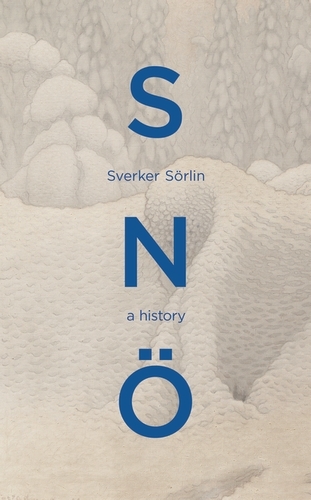
Book: SNÖ

'Snow. A single word, for an infinite variety of water formulations, frozen in air. The study of snow is physics, chemistry, meteorology, anthropology, geography, poetry and art. It is hope – annually renewed. And it is history, too.

Earth saw its first snowfall 2.4 billion years ago. The world's oldest skis, made by hand five thousand four hundred years old, pre-date the pyramids of ancient Egypt. To humanity, snow has variously been an ally and an adversary; an inspiration to countless artists and a place of breathtaking tragedy and survival. But it’s always been there. And now it is melting. 
In 1927, the snow was already more than nine metres deep on Japan's Mount Ibuki when a remarkable 230cm fell in 24 hours, bringing about the greatest depth of snow - 11.82m - ever recorded. Yet it is a fact today that, ironically not only has this mountain's resort been forced to close due to lack of snow, most people in the world have never been near snow: never felt the soft crunch of snow underfoot, never held snow to see it melt in their hands, let alone stood on a pair of skis.'  continued ...
Individual
|
      INTERPERSONAL    :     SCIENCES               
HUMANISTIC  --------------------------------------  MECHANISTIC      
 SOCIOLOGY  :    POLITICAL 
|
Group


compass defined

compass unified

mental expanse

beauty

memory

lived experience

signature of change

sadness

signifier
SNÖ by Sverker Sörlin

culture

poetry - arts

social history

shared loss

recreation - leisure

Two kids.
Uncles! In car, drenching
us driving through slush in the gutter 😎


Sverker Sörlin, Elizabeth DeNoma (Translator) (2025). SNÖ - A History. London: Doubleday.
https://www.penguin.co.uk/books/467833/sno-by-sorlin-sverker/9781529947878


My source: Clark, P. A gear shift to adapt to a warming world. Books. Genre Round-Up, Environment.  Life&Arts. FT Weekend. 23/24 August 2025. p.10.

John Denver - Season Suite (Full) The Suite is in this order:
  1. Summer
  2. Fall
  3. Winter
  4. Late Winter, Early Spring (When Everybody Goes to Mexico)
  5. Spring

Sunday, January 02, 2022

PHI MAGAZINE (Φ) - Liminal Issue [i]

 Submissions are OFFICIALLY open for our Liminal Issue.

PHI Magazine cover by Taudalpoi
The word ‘Liminal’ encompasses the quality of ambiguity or disorientation that occurs in the transitional stage of a process, boundary, or threshold. It comes from the Latin word līmen, relating to participants of rites of passage who no longer hold their pre-ritual status but have not yet begun the transition to the status they will hold when the rite is complete. During a rite's liminal stage, participants stand at the threshold. In many ways, this is where the world stands today.

We take all kinds of submissions: prose, photography, poetry, painting, opinion pieces, film or music—you make it, we want to publish it!

Submit to us before 14/02/2022 to be considered for our Liminal Issue.

For enquiries: submissions.phimag AT gmail.com

+++

WHAT IS PHI MAGAZINE (Φ)?

Φ Magazine is a quarterly publication aimed at showcasing the creative talents of Philosophy students across the globe outside the academic realm. Be it photography, painting, poetry, prose, or anything in between then it can find a place in the pages of Φ.

My source: 

Philos-L "The Liverpool List" https://www.liverpool.ac.uk/philosophy/philos-l/

@PhilosL @LiverpoolPhilos 

Thanks to Chiara at PHI Magazine for the cover image by Taudalpoi.

n.b. I will add a further post to relate the above call to threshold concepts and Hodges' model.

Tuesday, May 13, 2008

Where the heck am I (and where are you on Hodges' model)?

A combination of nursing experience and informatics knowledge and skills have meant that for a long time I have been able to sit on the fence and listen appreciatively to two sides of an ongoing saga. I am sure the ending will be a happy one, if not for the reason that there is no such thing as a 'finished' (nursing) information system. There is however a need for targets, deadlines, plans for a series of software releases and all the activities that accompany 'IT' projects. In short - project management. There is then a constant need for people to sit on the fence.

While the ability to sit on the fence may be something of an advantageous position, there are times when it becomes a source of anxiety and dissonance. Off the fence as a nurse without an informatics role (without i-portfolio), you feel left out of things. Literally chomping at the bit to contribute to the developments taking place - elsewhere.

Also off the fence, but alternately wearing the informatics shoes you have a sense that those soft, fuzzy caring, psychobabble skills are slowly yet inexorably melting away. How credible can you be if you have not 'nursed', that is - seen a client, managed your case load for 1, 2 or 3 years? Whatever your field, you can lose your touch.

Reading Michel Serres and his use of Harlequin as a trope really caught my imagination and breath (as lots of things do). Here's some background to Harlequin (and Hermes):

Two figures, then, inform Serres's oeuvre: Hermes and the Harlequin. Hermes the traveller and the medium allows for the movement in and between diverse regions of social life. The Harlequin is a multicolored clown standing in the place of the chaos of life. Two regions of particular interest to the voyager in knowledge are those of the natural sciences and the humanities. Should science really be opened up to poetry and art, or is this simply an idiosyncrasy on Serres's part? Is this his gimmick? The answer is that Serres firmly believes that the very viability and vitality of science depends on the degree to which it is open to its poetical other. Science only moves on if it receives an infusion of something out of the blue, something unpredictable and miraculous. The poetic impulse is the life-blood of natural science, not its nemesis. Poetry is the way of the voyager open to the unexpected and always prepared to make unexpected links between places and things. The form that these links take is of course influenced by technological developments; information technology transforms the senses, for example. Source: Dr.Vicente Forés López
This short quote hopefully illustrates the attraction of Serres to me as I study Hodges' model and informatics. Discovering Serres really creased me up. I say creased because that is where I am, trapped between two worlds. Stuck in that line between HUMANISTIC and MECHANISTIC realms. If I run the gauntlet there, the only other avenue open to me is that afforded by the INDIVIDUAL and GROUP axis.

Now I'm clearly not the only one able to sit on the fence and take in the views and perspectives of two frequently disparate worlds. On informatics secondment and at events such as HC2008 (HC2009) as a nurse - informatician (?) you have to see lost opportunities looking at the speaker line-up and number of nurses present and enabled to take the messages home.

As a fact of life change will happen.

How much better though is change borne of
dialogue and engagement?

Like Harlequin those of us with clinical AND informatics insights must mix things up. There is a need to constantly enquire, challenge, influence and direct at times. A need also to pass the baton and let others experience the dual perspectives from the fence (and the splinters too).
Image sources: http://commons.wikimedia.org/wiki/User:Malene
and http://www.qosmiq.com/cdiadrone/ghis/pfolio/characters/index.htm


Thursday, June 12, 2025

Rain, Library, and a Poem on a Neon Line

'It is raining in the library,
and leaking between theory and practice.'

Rain by Faroese poet and novelist Carl Jóhan Jensen


My source: BBC Radio 4 The Verb. Poetry and performance with Ian McMillan.

8th June 2025. 1710-1750. https://www.bbc.co.uk/sounds/play/m002d88g

Previously: 'theory' : 'practice' : 'library' : 'poetry'

Monday, February 20, 2023

C/o Medha Cherabuddi & Intima: "Each quadrant houses its own diversity, ..."

... and these seem to converge in the middle beautifully." *

 INDIVIDUAL
|
 INTERPERSONAL    :     SCIENCES               
HUMANISTIC --------------------------------------  MECHANISTIC   
SOCIOLOGY  :   POLITICAL 
|
GROUP
© The Common Thread by Medha Cherabuddi. Acrylic


Poetry
and much more
invited ...


Image: © The Common Thread by Medha Cherabuddi. Acrylic.

"Each quadrant houses its own diversity, and these seem to converge in the middle beautifully. This piece honors women's myriad of roles in medicine and their common thread. The constant throughout my life is art, especially when I find meaning in it.

Medha Cherabuddi was born and brought up in San Jose, California, and moved to Hyderabad, India, with her family at 9. After growing up with the best of both worlds, she completed medical school in India and moved to Detroit, Michigan, during the peak of the pandemic to begin her Internal Medicine residency at Henry Ford Hospital."


*Yes they do! No endorsement implied.

Wednesday, September 04, 2024

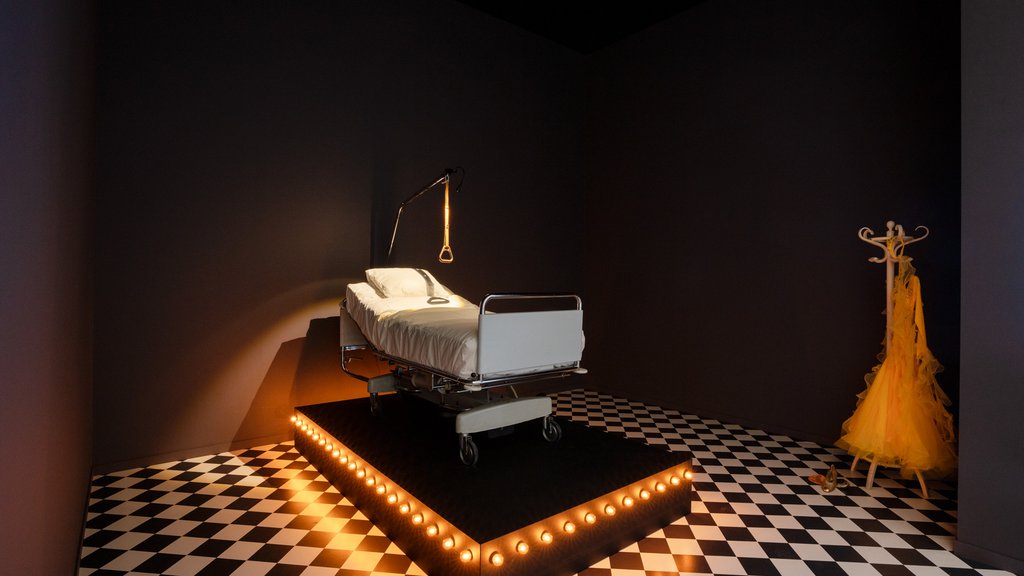
Laughter and Medicine Conference

Manon, Laughing Gas, 2019, installation, Kunsthaus Zürich
photographer: Franca Candrian, 2022.

British Academy/Wellcome Trust Conferences bring together scholars and specialists from around the world to explore themes related to health and wellbeing.

'Connecting knowledge across the disciplines, this conference will put practicing doctors in direct dialogue with researchers in the humanities – especially scholars of literature, cinema and cultural history. Together, they will seek to understand the social, diagnostic, therapeutic and physiological implications of laughter, inside and outside the clinic. Laughter is not always the 'best medicine', nor is it linked only to comedy and enjoyment. 'Healing laughter' differs markedly from pathological laughter, hysterical laughter, forced or bitter laughter, laughter aimed at mitigating awkwardness in unsuccessful communication, laughter intended to deceive, or laughter signifying fear, discomfort or aggression. Irony and other double-coded signifiers that abound in comic and parodic representations of medical practitioners and their patients often reveal medicine’s paradoxical place in various cultural imaginaries and in individual and collective experience.

This conference will study the diverse forms of laughter occurring around medicine in particular eras and cultural environments alongside comparative analysis of patterns and problematics over the long history of Western medicine and its representations.'

         https://www.thebritishacademy.ac.uk/events/british-academy-conferences/laughter-and-medicine/

individual
|
INTERPERSONAL : SCIENCES
humanistic ------------------------------- mechanistic
SOCIOLOGY : POLITICAL
|
group

I don't find this funny!


 I laughed so much it hurt! 


"All the world's a stage"

Politics is a running joke - that's never funny.

The human epic of triumph and tragedy.

Previously (with overlap):

arts :: drama :: poetry :: literature :: narrative

Wednesday, September 02, 2026

Celebrating Black History Month with the RCN NW Multicultural Group

From Allyship to Action: Building an Inclusive, Anti-Racist Future for Nursing


22 Oct 2026, 10:00 - 16:00
6 Mount Street, , Manchester, M2 5NS

Free

Book onto our celebration for Black History Month.

Join us for a full day at the Friend's Meeting House in Manchester to celebrate Black History Month!

North west members are invite to join us in celebration alongside the RCN President, who is making a special trip to Manchester to join us for part of the day.  This year we will be exploring the theme: From Allyship to Action: Building an Inclusive, Anti-Racist Future for Nursing.

The event, organised by the member-led North West Multicultural Group, will hear from speakers including:

Estephanie Dunn: Non-Executive Director of the Caribbean and African Health Network (CAHN)

Estephanie will discuss exceptionalism and how intentional and unintentional actions can negatively impact equity, inclusion and belonging in healthcare. Her session will encourage reflection on bias, challenge inequitable practices, and promote more inclusive workplaces for all.

Temitope Babajide: General Practice Nurse

Creator of both the General Practice Nurse Starter Manual and a separate nursing-themed colouring book, will share her inspiring journey in primary care. Her session will recognise and celebrate the historic and ongoing contributions of Black nurses, while showcasing the achievements, leadership and influence of Black nursing professionals in the North West and beyond.

Patricia Hughes: Associate Director RCN : Nursing Practice Nursing

Patricia will focus on equality, leadership and career progression, encouraging greater representation of Black nurses in senior and decision-making roles.

Bejoy Sebastian: RCN President

The President, will discuss the importance of allyship and the role nursing professionals play in creating anti-racist, inclusive workplaces. He will recognise and celebrate the significant contributions of Black nurses to the NHS and wider health and social care sector. The session will explore how inclusive leadership, workforce equality standards and fair career progression can help create a culture of belonging. Attendees will be encouraged to take practical action to challenge discrimination, support equality and inspire the next generation of nursing leaders.

Anandi Ramamurthy: Professor of Media and Culture, Sheffield Hallam University; Principal Investigator, Nursing Narratives: Racism and the Pandemic; Co-Editor, Anti-Racist Nursing and Midwifery: A Resource for Students, Practitioners and Activists.

The Anti-Racist Nursing and Midwifery book, the Nursing Narratives research project, and the film 'Exposed'.

There will also be a panel discussion and a poetry workshop and 'Allyship in Action' challenge workshop in the afternoon. 

Book now to avoid missing out. This event will take place in person and is open to all North West members. A sandwich lunch is provided. 

For further information regarding the aims and objectives of the NW Multicultural Group, please visit our webpage. 

Olanike Babalola

Olanike.Babalola AT reps.rcn.org.uk

Saturday, January 31, 2015

Nursing Rubens


6Cs

Care

Compassion

Competence

Communication

Courage

Commitment


Rubens Tour - themes

Poetry

Elegance

Power

Compassion

Violence

Lust


Health as Art and Science?

"The triumph of Ruben's nudes is his magnificent evocation of the texture of human skin, represented in such a way it feels almost palpable. We see blood coursing through the veins of voluptuous flesh. The delicate mother-of-pearl complexions of the female bodies radiate with light. ..." 
(Lust, Royal Academy of Arts, Gallery Guide)


B(e) nurse

Friday, October 11, 2019

Book: "Poems from the Edge of Extinction"

 individual
|
INTERPERSONAL : SCIENCES
humanistic ----------------------------------------------- mechanistic
SOCIOLOGY : POLITICAL
|
group - population


"One language is falling silent every two weeks. Half of the 7,000 languages spoken in the world today will be lost by the end of this century".

Poems from the Edge of Extinction


Chris McCabe

My source:
Crawford, M. (2019) Poetry, Books, FT Weekend Life&Arts, 21-22 Sepember, p.11.

Friday, November 06, 2020

Intima - Creativity in a Time of Crisis: Rethinking Vulnerability in Response to Care and Social Justice

individual
|
INTERPERSONAL : SCIENCES
humanistic ----------------------------------------------- mechanistic
SOCIOLOGY : POLITICAL
|
group - population


Welcome to the Fall 2020

Intima: A Journal of Narrative Medicine

We invite you to explore the issue.


In much the same way narrative medicine practitioners invite their patients to become storytellers, vulnerably disclosing their illnesses, we invited contributors to engage in their own acts of vulnerability to submit their poetry, art, media, fiction, nonfiction, Field Note, and academic pieces to the Fall 2020 issue of Intima: A Journal of Narrative Medicine.

More specifically, we invited submissions around the theme: Creativity in a Time of Crisis: Rethinking Vulnerability in Response to Care and Social Justice. Pen to paper, brushes to canvas, and strokes to the keyboard produced a wealth of submissions, many of which hearkened the specialized theme, to narrate the challenging public health and racial unrest that marred 2020. Whether the invitation arrived with much anticipation or as a surprise, we were heartened at the warm response we received and the quality of work we accepted for publication.


The pieces comprising the Fall 2020 issue are varied yet many evoke the images of 2020 as you read stanzas in a poem, gaze onto art, or pour over lines of narrated personal experience. Go to theintima.org to dip into the Fall journal today.


My source: Intima - mail list.

Friday, August 16, 2024

Health & Care results in mountains of data: c/o Burke & Cao 2024

"When medical schools train medical students, they teach them to treat patients as collections of various data points. They are laboratory tests and results, each measured to a standard number of significant figures. Notes students write hack down the richness of patients' identities and experiences: unemployment increases suicide risk while having a religion diminishes it. Each positive result that an interview or physical exam reveals adds another data point to the growing mountain, while a negative result erases a branch of possibilities in a treatment algorithm. It is a familiar process for every doctor, almost second nature, and yet it creates a chasm between patients and providers. Learning about a patient and their life becomes a process of deleting what's seen as irrelevant, and a patient's humanity gets lost in the chaos of data. ..."

"How would Nan Shepherd treat a mountain without her vision being mangled by medical training? She would probe it, palpate its surface, and listen to it rather than trying to comprehend it by reading reams of surveyor data. She would build a portrait of it in her mind beyond solely that which was intended to slot into the criteria of the IC-10. Perhaps she'd write a sensuous physical exam: ..."  

individual
|
INTERPERSONAL : SCIENCES
humanistic ------------------------------- mechanistic
SOCIOLOGY : POLITICAL
|
group


"CONSTITUTIONAL:
a granite mountain range, millions of years old, overall stable and solid, teeming with living, breathing organisms
CARDIOVASCULAR:
its rivers are patent, low and high turbulence at turns, its veins crisscross the surface
RESPIRATORY:
the wind carves through it in mighty exhales
MUSCULOSKELETAL:
its stone carries a range of lives, and the wind, the snow, the sun slowly bend the range of its form
GI/GU:
it slowly digests, grows, evacuates, and seethes as its wastes give rise to new life
NEUROLOGICAL:
the mountain is awake but dreaming with you"

The Living Mountain


Burke, R., Cao, E. To Care for a Mountain - What medical practitioners can learn from Nan Shepherd. Oxford Review of Books, Summer 2024, Volume 8, Issue 2. p.14. In association with Stanford. Ack. length of quotations in relation to length of author's article.

Nan Shepherd 1893 - 1981:  Scottish Poetry Library 2024.
https://www.scottishpoetrylibrary.org.uk/poet/nan-shepherd/

Cover image: Allen and Unwin

Wednesday, February 28, 2018

Book: Poetry Pharmacy

individual
|
INTERPERSONAL : SCIENCES
humanistic --------------------------------------- mechanistic
SOCIOLOGY : POLITICAL
|
group