"Readers! Where exactly does this go?"

Individual
|
INTERPERSONAL : SCIENCES
HUMANISTIC -------------------------------------- MECHANISTIC
SOCIOLOGY : POLITICAL
|
Group
? | ? |
| ? | ? |
? | ? |
| ? | ? |
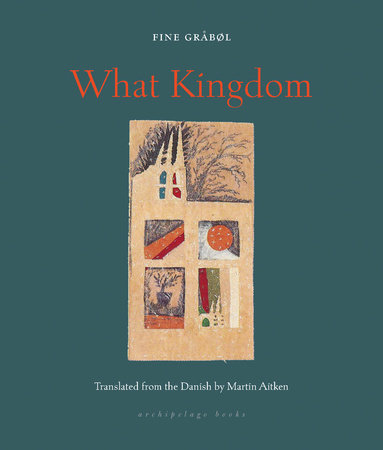
| 'Gråbøl was lucky. Eventually she started seeing a new psychiatrist, who looked at that record "and was like, "Wow, you receive So much more medicine than all the other people who live there. Why is that?'" She didn't know. Gradually, though, she was able to come off the drugs; and two doctors decided that she didn't, in fact, have borderline personality and bipolar disorders, removing the diagnoses that had shaped her sense of her self. In time, she left the unit and rebuilt her life. She's no longer on medication today, but the ghosts of her past diagnoses haunt her. She wonders whether the conditions are merely in hibernation and she'll wake up one day and enter another depressive episode. She doesn't wish she'd never been diagnosed, but does feel that her doctors underestimated the effect those labels would have on her development. At 17, she points out - the age she was diagnosed as bipolar - most teenagers don't yet know who they are. "You want to find a box or language to define yourself, so that you can close yourself in. And one way of getting that sense is getting into the psychiatric system." Since returning to "normal" life, she has also struggled with survivor's guilt: the feeling that while she made it out of the system, others did not. | ||
'Above all, she wishes that the emphasis would shift away from the suffering individual and onto their broader context. We need to become better, as a society, at making room for people who aren't fully functional citizens. Gråbøl's narrator phrases it as a question: "Could we not imagine treatments that are instead externally directed involving the outside world gearing itself towards a wider and more comprehensive emotional spectrum?" Gråbøl's answer, though, is the same as my own: "I don't know."' | the system citizens? |
My source:
Leaf Arbuthnot, Interview. We need to make room for the mentally ill. Review, The Daily Telegraph, 21 September 2024, pp.8-9.
Image:
https://images3.penguinrandomhouse.com/cover/9781953861849
My source: BBC Radio 4 - Archive on 4
|
HERO? | HERO? | ||
|
HERO? |
|
In much the same way narrative medicine practitioners invite their patients to become storytellers, vulnerably disclosing their illnesses, we invited contributors to engage in their own acts of vulnerability to submit their poetry, art, media, fiction, nonfiction, Field Note, and academic pieces to the Fall 2020 issue of Intima: A Journal of Narrative Medicine.
More specifically, we invited submissions around the theme: Creativity in a Time of Crisis: Rethinking Vulnerability in Response to Care and Social Justice. Pen to paper, brushes to canvas, and strokes to the keyboard produced a wealth of submissions, many of which hearkened the specialized theme, to narrate the challenging public health and racial unrest that marred 2020. Whether the invitation arrived with much anticipation or as a surprise, we were heartened at the warm response we received and the quality of work we accepted for publication.
The pieces comprising the Fall 2020 issue are varied yet many evoke the images of 2020 as you read stanzas in a poem, gaze onto art, or pour over lines of narrated personal experience. Go to theintima.org to dip into the Fall journal today.
My source: Intima - mail list.
Lucy |  |
Barton
 |
'Paradise' Vulnerability Fiction - Non-Fiction? Subjectivity | Non-Fiction? Objectivity | ||
|
Utopia(s)
Power
|
 |
Dutch Bestseller, 'The Secret Diary of Hendrik Groen' |
"Flaubert called himself a human pen; I would say that I am a human ear." "I am drawn to that small space called a human being . . . a single individual." | |
"It always troubled me that the truth doesn't fit into one heart, into one mind, that truth is somehow splintered. There's a lot of it, it is varied, and it is strewn about the world." |
"Derv soon discovers that he has an extraordinary sense of direction: he is also acutely uncomfortable unless he is able to "unwind" before going to bed each night the number of times he has turned during the day. Some of all this he understands when he learns how he had been born - weightless - in space. But it is not until a friendly teacher gains the family's confidence and takes him to a group of scientists that he begins to fathom the true explanation of his unique capabilities." (sleeve notes, 1967).
| space medicine, birth in space, radiation sources, DNA-RNA, safety, low Earth orbit, high Earth orbit, weightlessness, microgravity, birth, conception, speculation, sex in space: apogee-perigee? Why? Love? Newton's Laws of Motion? Einstein: Line of Sight? "Where there's a will...." minerals, growth - development, bones, diet, mobility, space-Earth: 'Home'? Species - Homo ? | ||
| human rights, unborn child, guardianship, non-nationality: Citizen of the World, parenthood, friendship freedom choice Law: Individual:Group Earth challenges: Space & Antarctica Treaties... 'top and tail' - Arctic |
|
| |||
|
People of a certain age may be tied to the TV at 5pm today, in the UK at least as a CGI animated reboot of Thunderbirds hits our screens. Since the original series I've experienced the joys of Tracey Island as a toy and the increasing influence of 'nostalgia'.
While not spoken of with the same frequency in healthcare, there is still the need for a philosophy of care. Apparently this new series is trying to remain true to the values and messages of Gerry Anderson's original. Together with Star Trek, series like this can (surely) also contribute to children's having critical, empathic skills, an open attitude and a global perspective.
Since the 1960s and the data transmissions that John in Thunderbird 5 was listening for (yes, I know...), we are now in the realm of Big Data, the internet no less! I wonder if they will reference space junk and how this is reflected in the World's oceans? A great opportunity, but then this is a children's show.
As Thunderbird 5 monitors World communications for humanitarian reasons, I'm still seeking Little Data. If you are a nurse lecturer, UK or from the global nursing community I'd really appreciate your help:
...
Many thanks (especially for completed surveys thus far) and if you watch the new series - enjoy.
See also:
Thanks Gerry for pulling some strings
the premiers
the presidents forgot not so much themselves, but the peoples, the respective histories they represented and carried, the weight of history - the threats, the acts of terror. there they were: two psyches - one hand shake. the wait of history re-purposed, refactored, re-minded |
the young girl was late for her interview,
she didn't notice the metal bench, the glass door, she ran through them and took flight... |
the marriage guidance counsellors were totally perplexed as couples seemingly ripped up their years-long, decade-long 'scripts' there were no scraps to be waved either and pointed @youthis! @youthat! the room for an argument disappeared. the dialogue and the future was suddenly bright a weapon of mass construction |
within all governments long term planning 10, 20, 30... years took hold - the effects, no! the impacts: were local, global and glocal and this was just the beginning... tax was paid by all, whether individual or corporate entity, the only loops were off-world...
|
Prior to the New Dynamics in Ageing Showcase this Monday (a great event) I travelled down to London on Sunday morning. I wasn't 100% that morning, nothing specific.
I arrived at noon dropped the bags at the B&B and then took the nine stops from Kings Cross to South Kensington. A few minutes walk brought me to the Victoria and Albert Museum. I was early to collect my timed ticket for the Sky Arts Ignition: Memory Palace exhibition.
After queuing for ten minutes (we Brits eh!) at the proper sign to be told I just had to approach the entrance at the allotted time. I went to check the cafe. This was very nice, on the pricey side and rather busy. It's not easy to find a seat, do self-service and be secure. Anyway it was time for a walk, find somewhere else. Before doing so I went to shop and bought the exhibition book, not a huge tome and quite interesting.
Not far away around the corner I found the Brompton cafe. There were seats here. I ordered a cappucinno. There was a large communal table so I sat there. I was ok for about twenty minutes and then came over all hot and increasingly dizzy. I realised I had to move and quickly so took my jumper off and walked around to the right where there was a bookshop.
 It was empty and there was sofa with 'LOVE' emblazoned on it - three times - if I registered this correctly. I could hear the cafe and just see one table through the passage way. At that moment I'd had enough of the individual-group axis and the humanistic-mechanistic took over as I went semi-horizontal.
After a couple of minutes I recovered myself and was able to get up - yes the gyro functions - and carry on my way. I am really grateful for that little space and rest. I was still determined to visit the exhibition and attend the showcase. This was fortunate timing with Sunday the 20th the last day of the exhibition and I wanted to keep it that way.
In the post-apocalyptic world of British author Hari Kunzru’s specially commissioned 10,000 word novella, London has been ravaged by a magnetic storm; all memory, art, writing, and recording has been banned. As one man attempts to remember, alone in his cell, the narrative unfolds.
Zoe Pilger, The Independent - Art review.
“Once there were great palaces called Hospitals.” In contrast to a dystopian future when the NHS and indeed all medical knowledge has been erased, the idea of basic public services appears miraculous. “It was a time of great wonder,” he writes, referring to the present. This fragment of text is accompanied by a fabulous sculpture of a “misremembered” ambulance by London-based illustration collective Le Gun. A ghoulish figure brandishes a whip and pulls a cart filled with potions that promise ad-hoc, alchemical healing.
“misremembered” ambulance by London-based illustration collective Le Gun
Zoe Pilger, The Independent - Art review and image
See page 18-19 of Kunzru’s book.I started in a memory palace, a book shop. I left to visit another, carrying my own memory palace in my mind.

 |
| http://www.welovethisbook.com/reviews/daughters-mars |
In the circumstances, he could be forgiven for turning out the odd finely wrought novella. Instead, the last six years have seen seven new Keneally books – his most recent novel weighed in at 520 pages and has a serious claim to be the best he’s ever written. The Daughters of Mars, about Australian nurses in the First World War, once again pulls off the miraculous Keneally trick of being both epic and intimate. It’s also packed with great phrase-making – an aspect of his work too often overlooked.Hay Festival
 |
| Lost Luggage, (Cover, goodreads) |
 |
| http://www.bbc.co.uk/news/entertainment-arts-20847151 |
 |
| http://gerryanderson.wikia.com/wiki/Thunderbirds_Are_Go |


 |
| Brian E. Hodges - c/o Brian's family. |
Born in Liverpool, NW England, UK.
Community Mental Health Nurse NHS, Part-time Lecturer,
Researcher Nursing & Technology Enhanced Learning
Registered Nurse - Mental Health & General
Community Psychiatric Nursing (Cert.) MMU
PG Cert. Ed.
BA(Joint Hons.) Computing and Philosophy - BIHE - Bolton
PG(Dip.) Collaboration on Psychosocial Education [COPE] Univ. Man.
MRES. e-Research and Technology Enhanced Learning, Lancaster Univ.
Live and work in NW England - seeking a global perspective.
The views expressed on W2tQ are entirely my own, unless stated otherwise.
Comments are disabled.
If you would like to get in touch please e-mail me at
h2cmng AT yahoo.co.uk
 orcid.org/0000-0002-0192-8965