Hodges' Model: Welcome to the QUAD: fact

Hodges' model is a conceptual framework to support reflection and critical thinking. Situated, the model can help integrate all disciplines (academic and professional). Amid news items, are posts that illustrate the scope and application of the model. A bibliography and A4 template are provided in the sidebar. Welcome to the QUAD ...

Showing posts with label fact. Show all posts

Tuesday, April 28, 2026

Book: "Beyond Belief - How Evidence Shows What Really Works"
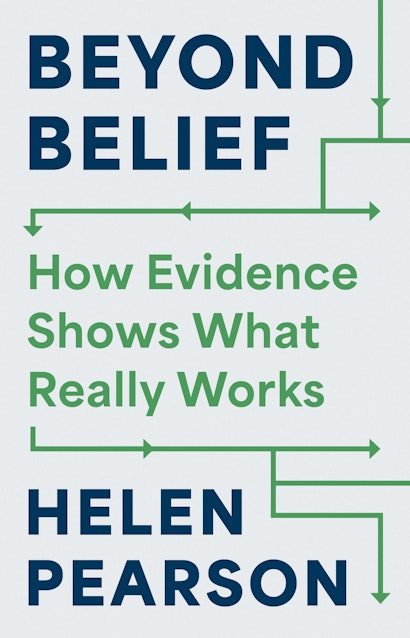
Beyond Belief: How Evidence Shows What Really Works – out April 2026
Beyond Belief

INDIVIDUAL
|
     INTERPERSONAL    :     SCIENCES               
HUMANISTIC --------------------------------------  MECHANISTIC      
SOCIOLOGY  :   POLITICAL 
|
GROUP
BEYOND BELIEF

How Evidence Shows
What Really Works


Beyond Belief: How Evidence Shows What Really Works is a book by science journalist Helen Pearson, published by Princeton University Press.
 
My source: 
Pearson, H. Trials that quietly changed our lives, Life&Arts, FTWeekend, 18-19 April, 2026. p.2 
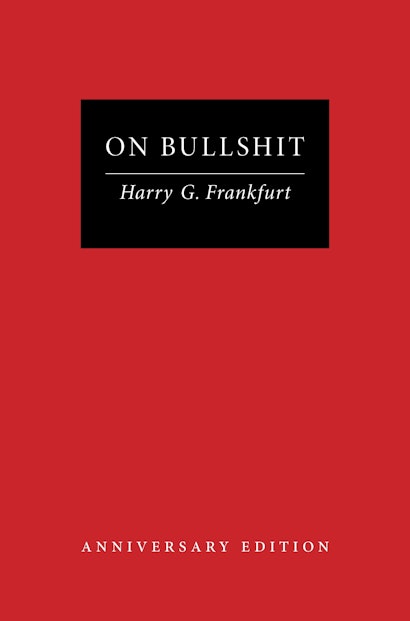
Previously: 'belief' : 'evidence' : 'information disorder' 

Sunday, August 10, 2025

"Readers! Where exactly does this go?"


Individual
|
      INTERPERSONAL    :     SCIENCES               
HUMANISTIC  --------------------------------------  MECHANISTIC      
 SOCIOLOGY  :    POLITICAL 
|
Group
?

?

?
?


Frankfurt, H. G. (2025). On bullshit. Anniversary Edition. Princeton University Press. https://press.princeton.edu/books/hardcover/9780691276786/on-bullshit

Tuesday, July 25, 2023

'Sophisticated cultural relativism: Bernard Williams' c/o Bond (1996)

INDIVIDUAL
|
     INTERPERSONAL    :     SCIENCES               
HUMANISTIC --------------------------------------  MECHANISTIC      
SOCIOLOGY  :   POLITICAL 
|
GROUP

"Transcendental standpoint

The perspective of the person who evaluates or questions or reflects upon a moral issue by consciously examining the issue from an objective perspective

Uses "thin" concepts such as "good" or "ought" in the process 
Take the question
"Is it really true that I ought not to tell lies?" In order to answer this question some moral authority or standard must be referred to. No answer can be found because there is no universal moral standard to appeal to.

SUBJECTIVE


OBJECTIVE

A culture

Moral truths exist                These are:


1. Non-objectivist truths (belong to and are valid within this particular culture)
2. Non-reflective (use the "thick" concepts of the culture, e.g. "liar", "bully." These carry within them their moral meaning. For this reason, no conscious reflection is needed in identifying a truth)" p.28.
"The evaluative perspective

The perspective of the person living in the culture who is stating and thinking about moral truths."


Based on Figure 2.1 Sophisticated cultural relativism: Bernard Williams. In
Bond, E.J. (1996). Ethics and Human Well-Being: An Introduction to Moral Philosophy. Cambridge, Mass.: Wiley-Blackwell. p.28.
