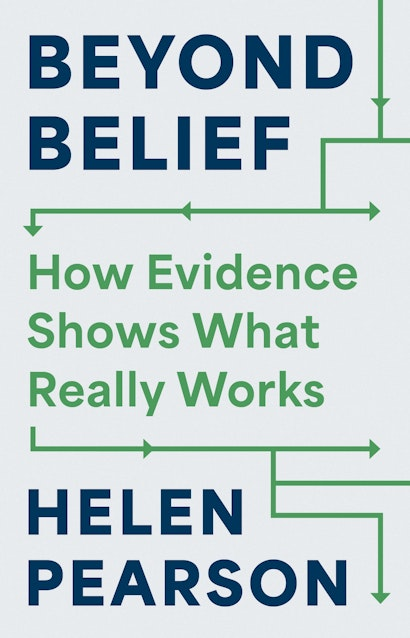
Book: "Beyond Belief - How Evidence Shows What Really Works"
![]() |
| Beyond Belief |
| BEYOND BELIEF | How Evidence Shows What Really Works |
Pearson, H. Trials that quietly changed our lives, Life&Arts, FTWeekend, 18-19 April, 2026. p.2
Hodges' model is a conceptual framework to support reflection and critical thinking. Situated, the model can help integrate all disciplines (academic and professional). Amid news items, are posts that illustrate the scope and application of the model. A bibliography and A4 template are provided in the sidebar. Welcome to the QUAD ...
![]() |
| Beyond Belief |
| BEYOND BELIEF | How Evidence Shows What Really Works |
Posted by Peter Jones at 8:35 pm | PERMALINK
Labels: belief , book , crime , decision-making , evidence , fact , falsehood , global , health , information , information disorder , misinformation , opinion , poverty , practice , research , revolution , science , truth , wisdom
![]() |
| Analemma image: Anthony Ayiomamitis |
Ever since we first took note of the passing Seasons, and what is left of them today, we have marvelled and come to recognise the extremes of the calendar in the sky.
For humanity in the North and the South.
The emergence of culture, societies, and civilization has been dependent upon the calendar - whether recorded in customs and rites, giant blocks of stone, papyrus, or binary code.
As the solstice fast approaches - Sunday, 21 December 2025 15:03-4 - and the Sun touches its lowest, southernmost point, I think of (former) family and friends 'way down' south, and the distance between the hemispheres, represented in the analemma. Of course then there is the solstitial experience of humanity in the south as the sun crests the highest point in their sky.
It must be amazing to see the nightsky from the far south(?).
How might we explain this culturally, with the benefit of foresight? This apparent celestial 'opposition' of Earth's path around the Sun, is reflected N-S in who bears the impact of climate change and the need attend to planetary health.
But, then look at the equinox, the north and south are seemingly united?
Is there a baton passed in March and September?
Perhaps, this can be a celebration of global health, for both hemispheres. With a simultaneous 'nod' to planetary health and the search for social and climate justice.
Posted by Peter Jones at 10:10 pm | PERMALINK
Labels: analemma , astronomy , baton , belief , celebration , culture , customs , Earth , experience , global health , justice , knowledge , North , patterns , planetary health , prehistory , ritual , seasons , South
Steven Pinker's latest book When Everyone Knows That Everyone Knows...:
is subtitled: Common Knowledge and the Mysteries of Money, Power, and Everyday Life.
It is 'common knowledge' that caught my attention. In health care we seek common knowledge on several levels:
person (patient, client) 🠜🠞 healthcare practitioner (whatever their training)
carer - guardian 🠜🠞 healthcare practitioner
person / carer 🠜🠞 team
If we think about the referral processes, interfaces, gateways that people have to negotiate on their way to the above, you see how hard-won common knowledge is.
Critically, the knowledge may be 'common' but how accurate is it?
For the team common knowledge is essential to ensure safety, understanding and continually assessing risk.
In healthcare (and education) for person-centredness we take note of what data is available, but simultaneously begin with a blank sheet. ...
| 'Sometimes, though, private knowledge can no longer be contained even if it is desirable; sometimes something is so evident that it does not even need words to express it. The presidential debate brings to mind a joke Pinker tells about a man in the Soviet Union arrested by the KGB for handing out leaflets, which turn out to be blank sheets of paper. "What is the meaning of this?" they demand. The man replies, "What is there to write? It's so obvious!"' Kelly, p.9. |
Posted by Peter Jones at 6:34 pm | PERMALINK
Labels: belief , blank , book , common , communication , conspiracy theories , control , data , dystopia , group , human nature , I , information , intution , knowledge , leadership , politics , power , private , relationships
Posted by Peter Jones at 11:54 pm | PERMALINK
Labels: approach , arts , belief , book , culture , environment , global , history , humanities , love , nature , open access , plants , pollution , practice , protection , society , trees , UN , water
"The quadrangle is the token of a new humanity. The square is to us what the cross was to the early Christians".
Tate Liverpool visit 13th June 2008.
'FAUSTUS discovered in his study.7 FAUSTUS. Settle thy studies, Faustus, and begin To sound the depth of that thou wilt profess: Having commenc’d, be a divine in shew, Yet level at the end of every art, And live and die in Aristotle’s works. Sweet Analytics, ’tis thou8 hast ravish’d me! Bene disserere est finis logices. Is, to dispute well, logic’s chiefest end? Affords this art no greater miracle? Then read no more; thou hast attain’d that9 end: A greater subject fitteth Faustus’ wit: Bid Economy10 farewell, and11 Galen come, Seeing, Ubi desinit philosophus, ibi incipit medicus: Be a physician, Faustus; heap up gold, And be eterniz’d for some wondrous cure: Summum bonum medicinae sanitas, The end of physic is our body’s health. Why, Faustus, hast thou not attain’d that end? Is not thy common talk found aphorisms? Are not thy bills hung up as monuments, Whereby whole cities have escap’d the plague, And thousand desperate maladies been eas’d? Yet art thou still but Faustus, and a man.
...'
the human - the machine - | - can become machine - can become human |
socio- | -political |
There is depth of discussion too: in AI and Power; a Christian response to AI ethics. This handbook is not just for quick reference. There is indeed redemption (p.43) to be found:
'It is easier to cover a blemish than examine why it resulted in the first place: genetics, diet, stress, or lack of self-care.'
I argue for Hodges' model as a tool to identify, (re)present, and relate the determinants of health: all of them. The points and paragraphs on theology, mind, body and self are well worth revisiting.
'... offer unique perspectives on the methods commonly employed and to understand and mitigate the risks and dangers of AI.' (p.62).
Posted by Peter Jones at 6:20 pm | PERMALINK
Labels: 4e-cognition , AI , artificial intelligence , belief , constructivism , culture , enactivism , ethics , humanity , justice , law , machine , morality , philosophy , race , safety , society , technology , values
"The hypothesis that thinking is founded in valuation requires for its development what philosophers call "axiology," the philosophic study of values. Of course, values are not phenomena that float into view, stimulating a "philosophy of values" to study them. Rather, it will be argued that values should be conceived of as the universal character of everything. Axiology, therefore, is the study of things with regard to their value dimension. An axiology of thinking is a study of the various roles of value in thinking." p.12.
"An image is the horizon in terms of which our definitions of its contents makes sense. It is like a mental picture of the rough outlines of the world: it handles information by giving each datum a position relative to the rough outlines." p.36. | "A concept is a way of mentally grouping various components whose combination is valuable because of a normative measure. The "real" identity of things comes from the normative measure of which their de facto harmony is an approximation." p.84.
|
| |||
#Politics #Power #Propaganda |
Source: Twi/X
Posted by Peter Jones at 11:47 pm | PERMALINK
Labels: Africa , belief , book , digital , disinformation , election , geopolitical , history , informatics , information , information disorder , knowledge , mal-information , media literacy , misinformation , open access , policy , terror
Dear colleagues,
My source:
Politics of Health Group Mail List Messages
Visit the PoHG website for lots of interesting links and publications: http://www.pohg.org.uk/
Visit PoHG on Facebook: https://www.facebook.com/282761111845400
Follow us on Twitter: @pohguk
Posted by Peter Jones at 4:09 pm | PERMALINK
Labels: belief , climate change , conflict , culture , education , geopolitical , geopsychiatry , health , insecurity , Middle East , nations , peace , policy , politics , pollution , research , resources , violence , war , water
'Lagoonscapes' made me think of the periplus, used by ancient explorers - sailors to 'map' coastlines and their features. I also realised that people living with:
The first explorers did likewise by analogy? | |
Is a lagoon - a resting place/space - an offering of respite (care)? In 2018 the Oceania exhibition at the Royal Academy of Arts https://www.royalacademy.org.uk/exhibition/oceania - highlighted knowledge of the peoples who could read the currents, winds - perhaps in as differentiated manner similar to the Inuit and their environment and cultural beliefs? |
Posted by Peter Jones at 10:23 pm | PERMALINK
Labels: balance , belief , coast , culture , dementia , environment , exploration , furniture , harbour , Hodges' model , Inuit , mobility , Oceania , peoples , periplus , prehistory , respite care , safety , sociology , stroke
"Beckett's first play, Eleutheria (written in French shortly after the war, but so far unpublished and unperformed), is also concerned with a young man's efforts to cut himself loose from his family and social obligations. Eleutheria is in three acts. The stage is divided in the middle. ..."
"On the right the hero lies in his bed, apathetic and passive." | |
"On the left his family and friends discuss his case without ever directly addressing him." |
"Gradually the action shifts from left to right, and eventually the hero summons up the energy to free himself from his chackles and cut himself loose from society." p.35.
"We have seen that our beliefs are tightly coupled to the structure of language and to the apparent structure of the world. Our "freedom of belief," if it exists at all, is minimal. Is a person really to free to believe a proposition for which he has no evidence? No. Evidence (whether sensory or logical) is the only thing that suggests that a given belief is really about the world in the first place. We have names for people who have many beliefs for which there is no rational justification. When their beliefs are extremely common we call them "religious"; otherwise, they are likely to be called "mad," "psychotic," or "delusional." pp.71-72.
my freedom of belief senses - logic my belief - beliefs belief hygiene my mental health state continuum model - of mental health-illness | freedom of movement senses logic physical reality personal hygiene |
culture organised religions our beliefs | theocracy secular states Mental health law |

inherent philosophy in Hodges' model the mind - my mind Personal identity epistemology ontology - being - identity my - beliefs - (yours) abstraction logic - mathematics concept of opposition^ opposition of concepts^ representation of -isms ethics - moral reasoning values - value unconditional positive regard | physicality - materialism the brain - my brain - body Organic identity implicit binary structure superimposed relations vectors coding and classification language corpora reality as orientation: (e.g., what three things do we need to know?) personalised medicine ('up here') professional scope - curricula silos of knowledge scientific method/methodologies |
language - semantics - meaning dialectics 'other minds' practical reasoning applied philosophy individual-collective debate: utilitarian principles social philosophy socialisation of learners (professions) conformance - group think | health in politics politics in health human rights the unborn - future humans protected human characteristics diametrical oppositions in Hodges' model (e.g., 1. my mental state - mental health law; 2. public understanding - of science; 3. my freedom - the law. 4. culture - (techno-culture!) - science...) power - freedom political philosophy |
Posted by Peter Jones at 9:02 pm | PERMALINK
Labels: argument , belief , concepts , content , critical thinking , dialectics , dialogue , ethics , Hodges' model , ideas , logic , magazine , meaning , opposition , philosophy , reasoning , relations , structure , values
![]() |
| Fabrice Monteiro, a garbage spirit, from his series The Prophecy (2017) |
--
Professur, Jüdische Religions- und Geistesgeschichte
Institut für Jüdische Theologie
Universität Potsdam
jschorsch AT uni-potsdam.de
+49 (0)331 977 1744
Founder and Director
Jewish Activism Summer School
www.jassberlin.org
Founder and Director
The Green Sabbath Project
www.greensabbathproject.net
My source:Posted by Peter Jones at 12:44 pm | PERMALINK
Labels: alienation , arts , belief , biosphere , conference , culture , ecology , environment , Gaia , Indigenous , modality , myth , pedagogy , philosophy , religion , ritual , science , spiritual , theology , transdisciplinary
"Perhaps it was merely an oversight of this historian that he failed to mention another religious practice, hepatoscopy. For this, the Romans down to imperial times relied on Etruscans. Divination from the liver of sacrificed animals was a most complicated business. | To get the interpretation right required a sound knowledge not only of astronomy but also of anatomy and pathology. In 1877 at Piacenza a bronze model of a liver was found. It was evidently a model used in a priests' school for teaching the art of haruspicy, and of a fairly late period. On the upper surface are marked sixteen divisions in which are inscribed the names of some thirty gods, some more than once. Each of the sixteen divisions corresponded to a section of the heavens, for the Etruscans regarded the liver as an image of the cosmos, as a microcosm of the universe. The liver, it was believed, exactly reproduced the heavenly firmament with its sacred laws and controlling divinities and its division, first into four, by the intersecting axes and then into sixteen subdivisions." p.87. |
"Censuses for purposes of taxation and military service still exist. But not many know that it was an Etruscan king who first legally established such a registration in Rome, from whence, with the rise of the Roman empire, it spread throughout Europe." "What this measure was is stated by Livy thus: 'The population was divided into classes and 'centuries' according to a scale based on the census, and suitable for both peace and war." p.146. |
Posted by Peter Jones at 3:09 pm | PERMALINK
Labels: belief , book , census , citizens , cultures , customs , hepatoscopy , history , liver , measures , peace , political rights , politics , population , power , prediction , religions , ritual , war
Faced as we are with climate change, mass extinctions of species, global pandemics, there is probably no more pressing theme today than that of nature. It is, however, not at all clear what we mean by ‘nature’, and whether discourse about nature is even meaningful today. Many speak of the ‘death of nature’ while at another extreme we find the exhortation toward a ‘re-enchantment’ of [by] nature. What the conference aims to explore is the place of religious experience within this our current situation.
Nature philosophy, including environmental ethics, but also the revival in Schellingian themes and the rediscovery within Phenomenology of the question of nature (Merleau-Ponty, Heidegger, Husserl), questions any unidirectional subject/object relation to nature. Nature is that in which we find ourselves as human beings and despite our molding of our environments, according to such a view, the human engagement with the world itself embodies nature. The emphasis on embodiment shows not alone the limits of dualisms, but also the commonality of the human with the natural world in which we are and breathe. The inter-subjective experience of such being in nature and the inter-corporeal being with animals and plants around us is reflected in the sacramentality of religious observance from totemic rituals to the Christian Eucharist.
Inspired by the overcoming of dualisms of body and mind and nature and freedom deriving from the Phenomenology and Schelling, we can re-examine the religious sense of nature as containing sacredness. This religious sense can be understood metaphysically as an intuition of reality appearing as unapproachable. Phenomenologically, the question as to the source of this sense of the inapproachable and sacred can be understood in terms of feelings of awe (e.g., Otto). Not alone can nature be a source or locus of religious experience, but it may also be the case that religious affectivity gives us access to nature beyond the objectifying and instrumentalizing tendencies of Modernity. In this respect, we can think of the phenomenologies of life (Bergson, Tymieniecka, Henry), which explore modes of appearance of nature beyond the dualities of mechanism and vitalism. These accounts draw on – explicitly or implicitly – religious motifs such Christian notion of life as Christ, Vedantic life as Sat (Truth of Being, identical with self-consciousness and fullness), or Islamic God as truth or reality (al-Haqq), as well as other concepts across many traditions which are connecting life and nature. These motifs can be understood as compatible with the growing movement of panpsychism in the philosophy of mind (Strawson, Goff, Chalmers, Nagel) and the philosophy of life in biology (Varela, Maturana, Wilson).
Living through a pandemic it is important to hear [here?] attend to the core meaning of the word – pan demos, concerning all the people. Just as nature is everywhere, so any discourse about dwelling in nature (eco-logy) must be seen to concern the totality of human experience, in the sense of the full richness of its diversity. One manner in which such diverse experience can be understood is the way in which nature is experienced as a temporal phenomenon. This is clear already in the experience of the cyclicality of the seasons. It is also manifest in the current sense of ecological crisis which draws on a religious sensibility that has remained present in different guises through Modernity, namely the eschatological. In attempting to think nature with respect to religious experience, we are thinking within the intersection of temporal strands: mortal time, conscious time, cyclical, indefinite time, eternal, creative ‘time’. Understood eschatologically or messianically this relation is one in which ending is woven into the fabric of time: time as ending, transforming of past in the present and the opening up of a new future, time of forgiveness, repentance, grace and judgement (kairos)."
Posted by Peter Jones at 9:17 pm | PERMALINK
Labels: belief , climate change , crises , death , diversity , duality , ecology , environment , experience , extinction , life , nature , phenomenology , presentation , reality , relations , religion , time , wonder
| |||
|
When you look at Hodges' model, how would you assign the achievements of these particular Nobel Prize winners to the domains of Hodges' model?
My source:
McAfee, A. "They shall be heard", Life&Arts, FTWeekend, 25-26 February, 2023, p.9. And Twitter.
Posted by Peter Jones at 9:13 pm | PERMALINK
Labels: activism , aspiration , belief , change , composition , dreams , equality , equity , future , girls , history , Hodges' model , humanity , music , Nobel prize , peace , political , sciences , society , women
FEAR | WANT |
WORSHIP |
SPEECH |
Are fear and worship interchangeable?
Can I follow my faith / beliefs?
Many communities and groups live in fear.
Do the freedoms begin (and end!) with speech?
The ability to meet basic needs 'wants' - relies upon socioeconomic means; but basic needs are material in the first instance, through shelter, water, and food. All these depend upon security (locally, nationally, globally) as reflected in the Sustainable Development Goals (SDGs):
BBC Radio 4 The Reith Lectures
See also:
Jones P, Wirnitzer K. Hodges’ model: the Sustainable Development Goals
and public health – universal health coverage demands a universal
framework. BMJ Nutrition, Prevention & Health 2022;0:e000254.
doi:10.1136/bmjnph-2021-000254
Posted by Peter Jones at 10:12 pm | PERMALINK
Labels: BBC , belief , equity , events , fear , freedom , history , Hodges' model , human rights , lectures , media , radio , reflection , SDGs , socioeconomic , speech , UK , USA , want , worship
INDIVIDUAL
|
Ack. Wangari Mathenge (and sources for a means to illustrate the 'self' and 'other' in h2cm)
My source and image: @tanita_tikaram
https://twitter.com/tanita_tikaram/status/1364293961184075781?s=20&t=Zn0-jlIRF_n_yyUVkW-f-g
Caption: "'Supplication In Alabaster' - detail, 2019 Oil on canvas 52” x 72.5” All works have been copyright protected, Wangari Mathenge © 2019"
Posted by Peter Jones at 10:05 am | PERMALINK
Labels: Africa , arts , belief , Black American , culture , governance , group , history , Hodges' model , identity , individual , Kenya , meaning , other , painting , power , reality , self , USA , vision
Born in Liverpool, UK.
Community Mental Health Nurse NHS, Part-time Lecturer,
Researcher Nursing & Technology Enhanced Learning
Registered Nurse - Mental Health & General
Community Psychiatric Nursing (Cert.) MMU
PG Cert. Ed.
BA(Joint Hons.) Computing and Philosophy - BIHE - Bolton
PG(Dip.) Collaboration on Psychosocial Education [COPE] Univ. Man.
MRES. e-Research and Technology Enhanced Learning, Lancaster Univ.
Live and work in NW England - seeking a global perspective.
The views expressed on W2tQ are entirely my own, unless stated otherwise.
Comments are disabled.
If you would like to get in touch please e-mail me at
h2cmng AT yahoo.co.uk
orcid.org/0000-0002-0192-8965-=<>=-