Hodges' Model: Welcome to the QUAD: relations

Hodges' model is a conceptual framework to support reflection and critical thinking. Situated, the model can help integrate all disciplines (academic and professional). Amid news items, are posts that illustrate the scope and application of the model. A bibliography and A4 template are provided in the sidebar. Welcome to the QUAD ...

Showing posts with label relations. Show all posts

Monday, April 06, 2026

What! Nursing reduced to objects! Do you realise what you're saying?

Wittgenstein to the rescue?

Revisting a theme, and while it is not new - as in use of objected oriented approaches in health informatics; as a nurse, to suggest there's a need to view the elements of care systems as a series of objects surely runs counter to nursing's theory, practice, professional standing and values.

Or, does Wittgenstein come to the rescue in his 'Tractatus Logico-Philosophicus'?

'2.01231 In order to know an object, I must know not its external but all its internal qualities'.

[My emphasis - and as ever high degree of selectivity.] 

In reading 'internal qualities' I can equate internal with a person; and qualities with subjectivism, what is inherently seen as humanistic, a set of characteristics, and properties. Can it be argued that in the context of healthcare and person-centredness we can also take 'internal' as potentially referring to what happens in the mind, an individual's mental life, for example? This can be applied physically too. To bodily properties, which ultimately are internal genetically, and influenced by - expressed in-part - by the external environment.

While I sort books, creating space, there is the small matter that Wittgenstein walked away from philosophy after the Tractatus was published. Then, realising he had not answered the questions concerning human language and reality, he returned to Cambridge and his studies, with Philosophical Investigations published after his death.

Does this invalidate the thoughts above?

Another post to follow drawing from the Tractatus. 

Previous posts:

Reflection: programming and caring II

Abstract [working] Hodges’ model as a mathematical object, a lens for social care and inclusion: category theory or category mistake?

Person to object: Surely you're joking* ...!
Tuesday, January 06, 2026

KU Leuven - LCHH2 Health Humanities Lecture Series 2025-2026

Dear all,

The Leuven Centre for Health Humanities organises a yearly lecture series and we would love to invite you!

This year’s lecture series explores the entangled relations between nature and health. Bringing together perspectives from medical history, psychology, disability studies, colonial studies, and environmental humanities, the talks examine how ideas of nature have shaped — and have been shaped by — practices of care, control, and coexistence. Topics range from the rise of disposable medical technologies and their environmental costs, to colonial disease management at the cattle frontier, and from the ambivalent role of “nature” in the lives of people with disabilities to contemporary debates on the restorative effects of natural environments. The series also turns to the microbial world, challenging human exceptionalism and rethinking health as multispecies interdependence rather than biological mastery. Together, these lectures invite critical reflection on sustainability, vulnerability, and care, and offer new ways of imagining health in a world where human and nonhuman lives are profoundly interconnected.

Join us online and on campus, at KU Leuven, for a series of inspiring health humanities talks.

You can find more information about the lectures and how to register here:

Health Humanities Lecture Series 2025-2026 — 
Leuven Centre for Health Humanities (LCH²)

Best wishes,

Lore Delahaye (she/her)
Administrative Support

KU Leuven
Doctoral School for Humanities and Social Sciences
Blijde Inkomstraat 5, box 3000
3000 Leuven


https://ghum.kuleuven.be/phd

Wednesday, November 12, 2025

The INDIVIDUAL ↔ GROUP axis

Looking at the axes of Hodges' model, specifically the INDIVIDUAL ↔ GROUP axis, I realise (as ever) there's more than meets the eye. 

The labels for the axes are placeholders. To a certain degree they are open, flexible. In the template (link and figure in the sidebar), the what should now be familiar labels are provided for guidance, and convenience.

The care, knowledge domains can be viewed as giant - compound placeholders, even as an opportunity to abstract away a lot of detail. In care delivery, as we concentrate on patient care, , clinical interactions, procedures ... we tend to do this in political terms. Until that is, we are jolted to the wider situation and the true realities of policy, law, and practice.

While the HUMANISTIC ↔ MECHANISTIC labels are fixed, I've often shown how the I ↔ G is itself situated, so you could variously have (titles & names to follow...):

person, self, I, individual, client, patient,
carer, student, nurse x, dr y, allied health z ..

|

nurse .., husband, wife, partner, kin, couple, guardian, friend, family, team, group, community, region, nation, populations, Planet

Usually, what we have is a ONE-TO-MANY relationship, that is 1:N.

In Hodges' model can we also say that the team is the 'individual' and the organisation the group?

Another thought regarding self-care. ... Some times this state might be concurrent with being a patient.

Part of the journey in a patient's recovery. But at some point the person does not need a professional and is indepedently self-caring. Care episodes are not what they used to be. Although when 'true' self-care is achieved, it might appear One-to-None, but this is not correct. Not correct, that is, if we can credit society acting as a safety net. Usually, it would be One-to-Family; if there is no family, then the One-to-Community should (must) be the placeholder of choice.

On self-care, and the vertical axis of Hodges' model, is this also a way to define sustainable health and social care?

See also: https://hodges-model.blogspot.com/2025/10/l-shaped-model.html

Sunday, July 20, 2025

Infracare - Hodges' Health Career - Care Domains - Model

Trying to sort papers again, I'd saved the article by Floridi (below) the title having caught my attention.

If Hodges' model has a meta-function, there is also a role in the infrastructure of care.

There is an opportunity for me to do the proverbial '360' exercise, visit each of the care domains in turn and literally throw in the kitchen sink:

Individual
|
      INTERPERSONAL    :     SCIENCES               
HUMANISTIC  --------------------------------------  MECHANISTIC      
 SOCIOLOGY  :    POLITICAL 
|
Group

I see you! Who you are.

 person-centred  care 

IDENTITY (identities)

A model of care -

A theory of (health) communication

Information theoretic, information disorder 
 and relational studies


 person-centred care 

I see you! Who you are.

identity - (IDENTITIES)

- addressing Parity of Esteem in -

- Practice & Research

Information theoretic, information disorder 
 and relational studies

NHS and Social  Care

Community Care as a resource

Self care education and health promotion built in to education system

Value Social Capital
Law and Justice to
protect and secure Peoples & Populations

Policy - National & Global
that supports health and health promotion

Declared integrated care
care philosophy

Adopted generic model for self, national and global and planetary health


Infraethics, Luciano Floridi. January 2013. The Philosophers Magazine. DOI: 10.5840/tpm20136010

Saturday, June 14, 2025

Call for Papers: Compassionate Futures for Collective Well-Being

Despite an academic affiliation, without any (part-time) tutoring hours this past year, it may be difficult to avoid article processing fees (APCs). A shame as I believe that Hodges' model can address this call (below) in a somewhat novel manner. 
If anyone is interested in exploring a writing project framed around Hodges' model and employing a relational - diagrammatic approach please let me know.
The exercise would be greatly enhanced by:
  1. Engaging with one of more academics, adept in formal methods (maths, logic..?) and keen to apply their talents within the social sciences - humanities.
  2. And, exploring the possibility of working with early career researchers, including from developing nations, independent and 'late career'(!) scholars would also be very welcome.

Previously:

Jones, P. (2004) Viewpoint: Can informatics and holistic multidisciplinary care be harmonised? British Journal of Healthcare Computing & Information Management, 21, 6, 17-18.

Jones, P. (2004) The Four Care Domains: Situations Worthy of Research. Conference: Building & Bridging Community Networks: Knowledge, Innovation & Diversity through Communication, Brighton, UK.

Jones, P. (2008) Exploring Serres’ Atlas, Hodges’ Knowledge Domains and the Fusion of Informatics and Cultural Horizons, IN Kidd, T., Chen, I. (Eds.) Social Information Technology Connecting Society and Cultural Issues, Idea Group Publishing, Inc. Chap. 7, pp. 96-109.

Jones, P. (2009) Socio-Technical Structures, the Scope of Informatics and Hodges’ model, IN, Staudinger, R., Ostermann, H., Bettina Staudinger, B. (Eds.), Handbook of Research in Nursing Informatics and Socio-Technical Structures, Idea Group Publishing, Inc. Chap. 11, pp. 160-174.

Compassionate Futures for Collective Well-Being

Academic Editors: Karin Hannes (KU Leuven) and Natalia Martini (KU Leuven)

Deadline for Abstracts: 15 September 2025
Deadline for Articles: 30 January 2026

Social Inclusion, peer-reviewed journal indexed in the Social Sciences Citation Index (Web of Science; Impact Factor: 1.4) and Scopus (CiteScore: 3.5), welcomes new and exciting research papers for its upcoming issue "Compassionate Futures for Collective Well-Being," edited by Karin Hannes (KU Leuven) and Natalia Martini (KU Leuven).

In an increasingly unequal world, the concept of “compassionate futures” offers a new paradigm to address the pressing challenges of social inclusion. Compassionate futures recognize vulnerability, interdependency, and mutual responsibility as fundamental features of social relations, and emphasize care and empathy as fundamental principles in designing socio-cultural, economic, and political systems where the collective well-being of diverse actors, human and other-than-human, can flourish.

We encourage contributions that engage in an interdisciplinary dialogue among scholars, practitioners, and policymakers about what it means to create a caring society in the face of persistent inequalities. In addition, we welcome papers that demonstrate where and how humans take up the responsibility to conceptualize compassionate futures from a multi-species perspective, as well as those that focus on what hinders or supports the idea and the project of compassionate futures. We accept theoretical papers presenting frameworks on compassionate futures, prospective policy analyses, cases featuring the use of futures studies and co-creative approaches that promote compassion and care as central principles in re-imagining the future, and reflection papers focusing on global cooperation for fostering compassionate futures. Authors should connect to the general idea of how humans could or should relate to other agents with whom they share the planet or illustrate how the new narratives they developed support collective well-being.

Authors interested in submitting a paper to this issue are encouraged to read the full call for papers here:

https://www.cogitatiopress.com/socialinclusion/pages/view/nextissues#CompassionateFutures

Abstracts welcome until 15 September 2025.

Kindest regards,

Mariana
Mariana Pires
Social Inclusion
Cogitatio Press
1070-129 Lisbon 
Portugal
New issues (open access):
Public Participation Amidst Hostility: When the Uninvited Shape Matters of Collective Concern
https://www.cogitatiopress.com/socialinclusion/issue/view/419

Violence, Hate Speech, and Gender Bias: Challenges to an Inclusive Digital Environment
https://www.cogitatiopress.com/socialinclusion/issue/view/415

My source: https://www.jiscmail.ac.uk/cgi-bin/webadmin?A0=COMPLEXITY-PRIMARY-CARE

Thursday, March 27, 2025

Vectors of the Biopolitical - (Chap. 2) c/o Bull

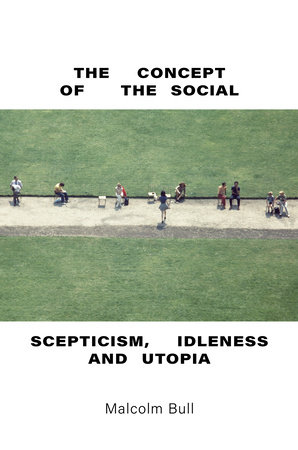
The Concept of the Social
'From one sentence in Aristotle derive two arresting theoret- ical discourses of the twenty-first century: Michel Foucault's biopolitics, provocatively reformulated by Giorgio Agamben in terms of the relationship between sovereignty and the body, and the capabilities approach developed by Amartya Sen and Martha Nussbaum as a means of evaluating and promoting development, justice and freedom. Both are characterized by deep reflection on the sources of Western political thought, and by urgent engagement with contemporary social and legal problems. Both are in some sense biopolitical in that they are shaped by the interplay of the same Aristotelian categories the human and the animal, politics and nature. But they are on opposite sides of the divide that has opened up in the human sciences since the 1960s, and there currently seems no optic through which they might simultaneously be viewed, no way of integrating or comparing their insights.
 
In part, this reflects a situation in which political debate appears to have fragmented into a multiplicity of single issues. The ancient 'Who will rule?' and the modern 'Who shall have what?' have been supplemented by an array of questions that deal with matters once exclusively cultural, personal or natural. For previous eras, the relative integrity and unmalleability of cultures, bodies and environments rendered such questions redundant. Now they frequently appear unanswerable from within established political traditions, and incommensurable in relation to each other. Within this expanded field, biopolitics and the capabilities approach have unusual salience and potential, for both bundle together issues otherwise assumed to be distinct. If they, in turn, could be coordinated, perhaps we could begin to map the new territory.' p.68.

individual
|
INTERPERSONAL : SCIENCES
humanistic ------------------------------- mechanistic
SOCIOLOGY : POLITICAL
|
group
'Who shall have what?'

nature

human - animal

bio-
culturepolitical

'Who will rule?'


Bull, M. (2021) The Concept of the Social, London: Verso.

Tuesday, February 25, 2025

So, I can proceed, fall flat on my face - [ concepts-maths iii/iii ]

- and utilise the inevitable!

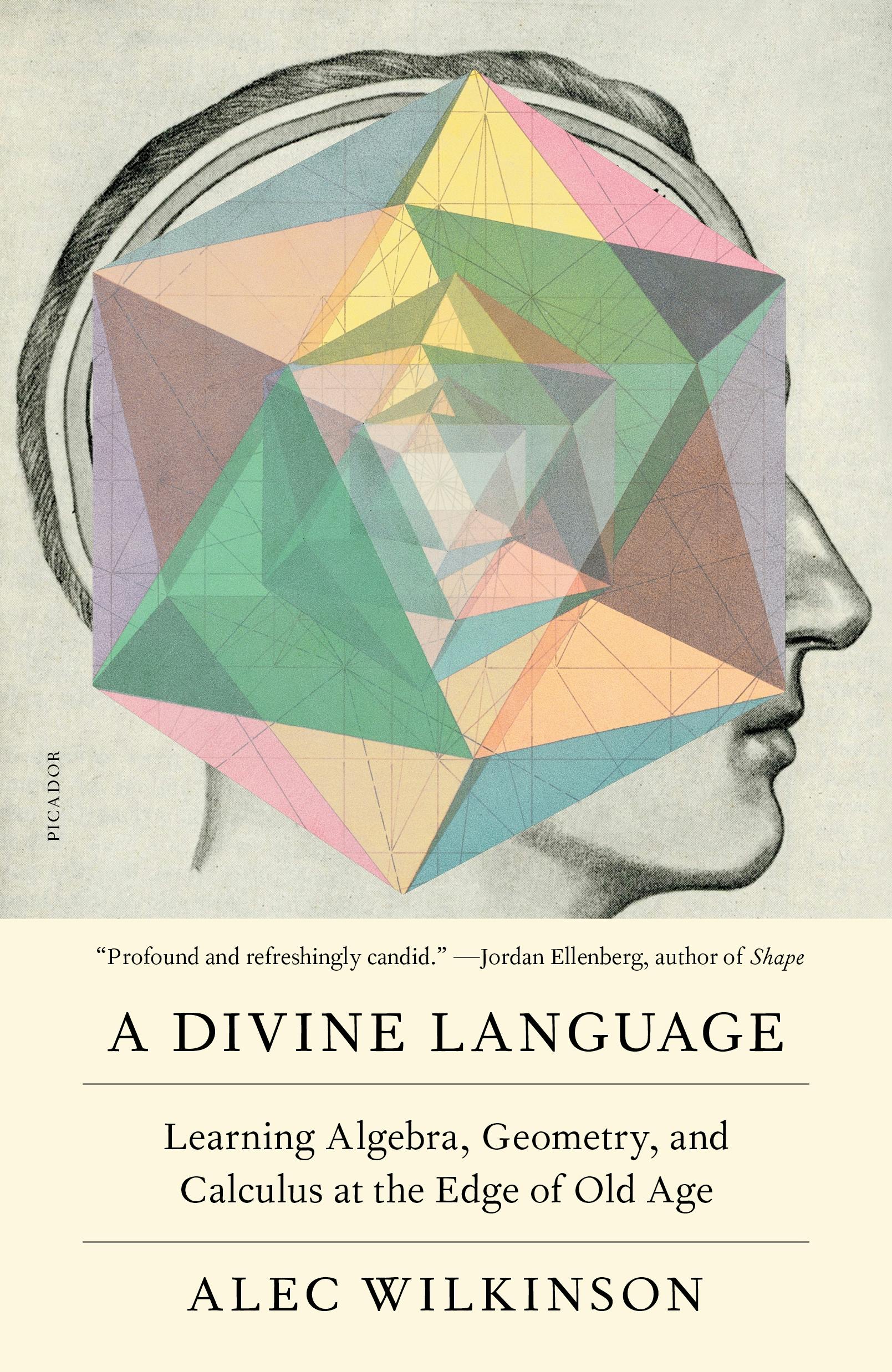
'Decades after struggling to understand math as a boy, Alec Wilkinson decides to embark on a journey to learn it as a middle-aged man. What begins as a personal challenge—and it's challenging—soon transforms into something greater than a belabored effort to learn math. Despite his incompetence, Wilkinson encounters a universe of unexpected mysteries in his pursuit of mathematical knowledge and quickly becomes fascinated; soon, his exercise in personal growth (and torture) morphs into an intellectually expansive exploration.' 
https://us.macmillan.com/books/9781250168580/adivinelanguage/


A Divine Language

As observed many times in the literature and here on W2tQ writing about Hodges' model, healthcare - medicine and nursing are both a science and art. Hodges' model is an invitation to the arts in liberal form, with an emphasis on practice: social sciences, humanities, physical sciences and even mathematics. 

There is now quite a bank of posts on W2tQ tagged art/arts and more specifically prints. I still plan to attend a workshop on printing. As ever, in my head, my mind's eye - I've an amazing, brilliant .. (!?) arts project, just waiting to be released. A true collage of the care concepts.

If Hodges' model is 'simple' in its basic form, then it is clearly possible for other people to create their own artistic impressions, interpretation of Hodges' model. My effort would of course be unique, as would theirs. There could be a competition and I end-up missing out. Not even short-listed for a prize; a victm of familiarity perhaps? 

Quite 'naturally' in a way, or at least by way of childhood experiences, a need for therapy and validation; I have also arrived at a belief that there is a mathematical project here (Oh, for goodness sake! Is there no end to this?). 

As posted before, like Alec Wilkinson I am no mathematician. Embarrased, shamed to a husk at school on many occasions, I encountered math teachers who must have empathised. Well, that's one way to explain the appreciation of maths I have always felt. Or more accurately, a love of knowledge; of which maths and logic are a part? Since I can hardly understand, I am more in love with the idea of maths, than mathematics itself. I have always been in awe of maths and people who 'get it', even if that is only  mastery of the high school mathematics curriculum.

Convinced that there is more to Hodges' model than meets the eye, I have thought of following Wilkinson - who tries to be systematic - to underpin a book - back into the nightmare lands of my youth. Should I retake GCSE maths? 'There be dragons', without a doubt. The heat can be recalled, like it was yesterday. This isn't just a dragon, it is a chimera. At times it wants to be a friend, providing familiar terms, domain, set, and group. Wilkinson's quest is structured and seeks a reasoned and disciplined approach. Why am I bothering? I have a choice surely? Nursing, health, global health can all collectively furnish many items of epistemological fruit. No need for calculative flagellation. Through Hodges' model you can productively span the disciplinary bridges once again: call in - sociology, economics, policy and more. How many Königsberg bridges do you need?

While the artist in me, might waste time. In pointing to Hodges' model as a potential mathematical object, this little seed might fall on fertile and (much) more capable ground(?), as Wilkinson describes:

'Mathematics might be the only creative pursuit in which inevitability figures. Other artists might be defeated by a task beyond their capabilities, but they do not live with knowing that sooner or later, if their work is consequential, someone will do what they haven't been able to do. Mathematicians work within a discipline in which, so long as their suppositions are correct, there is always a precise and irrefutable answer, even if they can't find it.' p.135.

I can hope for this at least.

Alec Wilkinson. (2022) A Divine Language. Learning Algebra, Geometry, and Calculus at the Edge of Old Age. New York: Farrar, Straus and Giroux. https://us.macmillan.com/books/9781250168580/adivinelanguage/

Previously: How 'divine' is the language of care?

n.b. At some point I will go though all the posts and unpublish/delete items that add little to the core.

Saturday, July 20, 2024

Frayn - on maths

"Pure arithmetic is not about particular things but about particular relations between things. Algebra preserves an even loftier detachment from the world. It is not about relations between things - it about relations between relations. Numbers are variables that can be quantified in the physical world. Algebraic terms are variables that can be quantified in the world of numbers." pp.154-155.


Frayn, Michael (2006). The human touch: our part in the creation of a universe. 'Fingerhold', Chapter 5. London: Faber & Faber. pp.139-170.

individual
|
INTERPERSONAL : SCIENCES
humanistic ------------------------------- mechanistic
SOCIOLOGY : POLITICAL
|
group

human


TOUCH


... human human  human  human human ...


Don't you dare!
Yes, please do!


Wednesday, June 19, 2024

IO Magazine #41 Being = Space x Action


"The Parmenides poem in fact opens a rather impressively large range of philosophical issues which remain unresolved to this day: the questions of the unity of knowledge, the unity of being, the unity of knowledge and being, the nature of proof, the nature of thought itself, the nature of justice, the relations between thought, proof, knowledge and justice, the possibility of rational cosmology and the relationships between logic and cosmology, the existence and nature of abstract entities, the privileged status of philosophical knowledge - all these questions became explicitly formulatable questions immediately following the production of Parmenides poem, none of them are definitely resolved today, and the future of science, culture and the human spirit all depend to a far from trivial degree on how these questions come to be reflected upon." pp.3-4.


IO Magazine. Reveal Digital, 01-01-1988
Contributed by: Charles Stein; Don Byrd; A.S. Yessenin-Volpin; Christer Hennix; Henry Flynt; Henry Flynt; George Quasha; Charles Stein; Christer Hennix; Luitzen Egbertus Jan Brouwer; L.E.J. Brouwer; L.E.J. Brouwer; Charles Stein. Stable URL: https://www.jstor.org/stable/community.28038534

The poem: http://philoctetes.free.fr/parmenidesunicode.htm

Wednesday, May 15, 2024

Yves Klein 'Anthropométrie sans titre'

Individual
|
      INTERPERSONAL    :     SCIENCES               
HUMANISTIC  --------------------------------------  MECHANISTIC      
 SOCIOLOGY  :    POLITICAL 
|
Group


Anthropométrie sans titre (ANT 43),
c1960 © Courtesy of Lévy Gorvy Dayan


My source: Rotraut to Baya Simons. My husband, Yves Klein, FT Weekend, HTSI, 11 May 2024. pp.23-24.

Yves Klein and the Tangible World is at Lévy Gorvy Dayan until 25 May, levygorvydayan.com

Thursday, April 04, 2024

Can a whole discipline act as an interface?

Abstract

"In this article, we consider how certain types of contemporary biosocial psychiatric research conceptualise and explicate biology-social relations. We compare the historic biopsychosocial model to recent examples of social defeat research on schizophrenia and cultural neuroscience work on affective disorders. This comparison reveals how the contemporary turn towards the ‘biosocial’ within psychiatric research relies upon ideas of the psychological as an interface. This is problematic because psychological notions of ‘experience’ are used as the central mechanics of biosocial processes, but lack any meaningful engagement with considerable debates within psychology and cognitive science about what the mind, and indeed the psychological, actually is, its relationship to social life, and how we should study it. The psychological interface is therefore vital to these biosocial hypotheses but is remarkably underdeveloped in comparison to its biological and sociological components. We argue that biosocial psychiatric research could gain a great deal from engaging with contemporary theorisations of experience and being more critical of vague appeals to psychological phenomena." p.317. [my emphasis]

Fletcher, J. R., & Birk, R. H. (2022). The conundrum of the psychological interface: On the problems of bridging the biological and the social. History of the Human Sciences, 35(3-4), 317-339. https://doi.org/10.1177/09526951211070503 

Individual
|
      INTERPERSONAL    :     SCIENCES               
HUMANISTIC  --------------------------------------  MECHANISTIC      
 SOCIOLOGY  :    POLITICAL 
|
Group

PSYCHOLOGY
- as interface?

Intrapersonal - Interpersonal
Individual psychology
BIOLOGICAL
Group psychology

SOCIAL


Does each of the disciplines in Hodges' model act as an interface in certain contexts/situations?

If there is a primary discipline (domain), that determines the context, is this also the interface (interstitial)? Discuss.

If care is integrated, holistic, with parity of esteem demonstrably assured should each discipline have its turn as interface?

My source/prompt:
Preparation for a conference video: 5 ppt slides, Samsung Notes drawing of Hodges' model, 7 slides.
If I can't put this together, it is still worth the effort.

Thursday, January 25, 2024

James's 'terrible algebra'

“You are right in your consciousness that we are all echoes and reverberations of the same, and you are noble when your interest and pity as to everything that surrounds you appears to have a sustaining and harmonizing power. Only don’t, I beseech you, generalize too much in these sympathies and tendernesses — remember that every life is a special problem which is not yours but another’s, and content yourself with the terrible algebra of your own. Don’t melt too much into the universe, but be as solid and dense and fixed as you can." 
Henry James.

Source - and in full: 
https://www.goodreads.com/quotes/1242340-you-are-right-in-your-consciousness-that-we-are-all

My source: Berwick, I. Over the limit, Life&Arts, FTWeekend, 20-21 January, 2024, p.10. (Review of "How We Break").

Why not a 'care algebra' - across the five domains?


 Individual
   |
      INTERPERSONAL    :     SCIENCES               
HUMANISTIC  --------------------------------------  MECHANISTIC      
 SOCIOLOGY  :   POLITICAL 
|
Group
reasoning

thought

James's ...

'terrible algebra'

THEORY
<gap>
PRACTICE

mathematics & logic

abstraction

algebra


PRACTICE
<gap>
THEORY

Applied Mathematics
in the Social Sciences


Equity, Equality,
Efficiency, Effectiveness, Efficacy
Difference, Comparison
Inclusion, Exclusion


My emphasis.

Friday, December 08, 2023

The Digital Collective (DC) a Symposium: Digitalisation, Subjectivities, and Care

Dear colleagues, 

We recognise that many people who wanted to join our symposium on Digitalisation, subjectivities, and care were unable to join in person. For this and other reasons we have moved our symposium to be fully online. Our intention is for the symposium to be accessible to all of our colleagues including those who are outside the NL. 

If this is you, we hope you will now consider submitting an abstract, and as such we have extended the deadline to 31 January 2024.

Decisions will be made by 14 February 2024.

Please find the amended call below.

CFP: Digitalisation, subjectivities, and care
7 March 2024, 9.30am – 6pm, online
Deadline abstract submission: 27 November

The Digital Collective (DC) at the University of Twente in the Netherlands is planning a symposium on digitalisation in care. More information below. Please consider submitting an abstract for a talk or poster presentation, deadline: 31 January 2024. 

Any questions to: dc-bms AT utwente.nl 

Introduction

Digitalisation is more than a technological phenomenon. It concerns an ever shifting relation between digital technologies and societal developments. Digital tools are increasingly common in care contexts, reshaping practices, institutions, relations, and social structures. Understanding digitalisation of care therefore requires a multidisciplinary approach to distinct yet related issues that cover the scale of technology innovation, societal impacts (benefits and drawbacks), as well as the pace of development and its ubiquitous nature. In this interdisciplinary symposium we will therefore explore the relation between digital tools and those who use them, willingly or otherwise. 

Topics of interest:

Possible topics related to digitalisation include, but are not limited to: 

  • Digital users and digital tools
  • Care institutions
  • Data development / use in digital care contexts
  • Epistemic injustice in digital care contexts 
  • Perspectives on ‘users’ of digital care content
  • Realities and subjectivities of ‘digital users’ 
  • (Multi-)methodological approaches to digital care
  • Care labour economies
  • Global justice perspectives on care
  • Human-technology relations
  • Health economics 
  • Health Technology Assessment of digital health technologies

The DC is a multidisciplinary platform and we welcome submissions from a broad range of disciplinary and interdisciplinary perspectives, including from outside academia.

Overview of the symposium:

Schedule and further information about the day to follow.

Submission deadlines:

  • Extended abstract submission: Wednesday, 31 January 2024
  • Notification of decisions: Wednesday, 14 February 2024

Please note:

  • Extended abstracts should be between 500 and 1000 words. 
  • Submissions should be sent by email to dc-bms AT utwente.nl 
  • Poster proposals should be sent to the same email, and clearly labelled as such. 
  • If you want your work to be considered for both a presentation and a poster, please make this clear in your submission. Abstracts not accepted for presentation may be invited to present a poster instead.
  • Each submission will receive at least two reviews. 

Additional information:

The Digital Collective (DC) is an interdisciplinary research platform on digitalisation at the University of Twente in the Netherlands. DC consists of social scientists and philosophers specialised in digitalisation and with domain expertise in health, higher education, artificial intelligence, and related technologies. 

After the symposium the DC intends to build a consortium with a view to developing collaborative work, including for a Horizon Europe funding proposal.


Event and venue information:


The event will be free for all participants. It will be fully online. Further details to follow.


Symposium organisers and programme Committee:

Please send questions to: dc-bms AT utwente.nl 

Dr Y. J. Erden

Associate Professor in Philosophy
University of Twente
AISB Vice Chair 

My source:

Philos-L "The Liverpool List" is run by the Department of Philosophy, University of Liverpool https://www.liverpool.ac.uk/philosophy/philos-l/ 

Follow the list on Twitter @PhilosL. Follow the Department of Philosophy @LiverpoolPhilos 

n.b. With the event now including provision for online presentations I am submitting an abstract.

Wednesday, November 29, 2023

Mathematical 'objects' c/o TPM

INDIVIDUAL
|
     INTERPERSONAL    :     SCIENCES               
HUMANISTIC --------------------------------------  MECHANISTIC      
SOCIOLOGY  :   POLITICAL 
|
GROUP

"Fine's position is called 'procedural postulationism'. When we postulate, when we do a certain sort of reflection on mathematical objects, our acts in a sense bring those objects into existence. But what's going on is not quite like an author imagining a character. It's more like intellectually bumping into something, where the bumping and the something result in a new grip on mathematical objects. But he suggests that the objects, once we have them, in a  sense have always been there. I ask him how he makes sense of the idea." p.23.

"The right picture isn't one in which we just create the objects the way you might create a statue, bring into existence something that didn't exist before. What you're doing when you postulate is extending the domain of quantification, you're extending the objects about which you're talking. It's not that you're bringing them into existence. You're targeting the domain of quantification, a domain of discourse which hadn't been previously targeted. These objects are themselves mathematical objects that don't exist in time, in fact, if they exist they necessarily exist. So it's not that they previously didn't exist, it's just that you now managed to target a new domain of eternal, necessary existence." p.23.


"Logical and philosophical investigations into parts and wholes have been dominated by a certain tradition that goes under the name 'mereology'. ... I hold the view according to which there are many different ways in which parts can form wholes, and many of those ways are not mere sums. I think it's unfortunate for philosophy that philosophers focus so much on mereology as traditionally conceived."
"But how can a thing be more than the sum of its parts? Where does the more come from? Fine explains, 'If you take a tower of blocks that a child might make, that's composed of the blocks, but it's not a mere sum of the blocks. The blocks have to be in a certain order, one has to be on top of the other. I'm inclined to think of that tower as the blocks in a certain arrangement. So when you think of it in that way it's not a mere sum of the blocks. If you want to actually understand mereological structure as it's presented to us, it's very rare that we're going to be talking about mere sums. We're going to be talking about objects structured in a certain way to constitute a whole.'" p.25.


Garvey, J., with Fine, K. The silence of the lambdas, The Philosopher's Magazine, 4th Quarter 2011. 55: pp.19-27.

Thursday, November 23, 2023

Hodges' model - as 'a' philosophy c/o TPM

As much as I might like, or aspire to write, this is not a treatise on Hodges' model as a philosophy. Anyway: why limit ourselves to one 'philosophy', when several might apply, or at least be found?

Other TPM articles within the 50 new ideas issue point to Hodges' model (of course 😉).

Philosophy itself may benefit. Philosophy is "the love of wisdom". While there are dangers in siloed kowledge and the thought that put it there, what is classed as wise across the domains of Hodges' model in a given context? Contexts change, but how can philosophical reasoning help us 'keep our options open'? Or is the situation and context 'closed'? 

Again much as I might like, in response to Benatar's Forsaking wisdom (pp.23-24) I'm not trying to clever - even my sense of humour does not extend that far. We do want to apply Hodges' model  practically. Maybe disciplines exist in a perennial state of self-doubt? Peter Boghossian discusses Philosophy that matters (pp.29-30). Nursing is no exception being challenged still regards its professional and academic identity. In mental health nursing there are concerns about the field as a specialty being genericised. The nursing discipline for which identity and meaning is key finds its own identity challenged. Helen De Cruz writes of The Philosopher's rut (pp.41-42). A contributing factor is the tendency in philosophical debates to be dominated by two-well-outlined opposing positions. This framing can stifle exploration, and yet in Hodges' model with oppositions built-in the model as a whole provides conceptual escape; a series of conceptual spaces to explore. 

Hodges' model can help postpone what De Cruz refers to as cognitive closure, another reason for the philosopher's rut. We tend, psychologically to draw quick conclusions such that we are averse to ambiguity. This may be innate to a degree, as seen in 'black and white' thinking. Ironically, for me with Hodges' model is the counterposition of reflection as navel-gazing, resulting in too many options, and no decision at all.  

With the self, I, individual appearing to take a prime position in Hodges' model, Michael Cholbi reminds us of the philosophical significance and history of self-knowledge (pp.35-36). Student nurses need to acquire sufficient substantial self-knowledge to be safe, effective, competent, satisfied and lifelong learning practitioners. In another issue 98 4th Quarter 2022, Jonathan Matheson asks Why Think for Yourself (pp. 26-32), is there a rationale in intellectual autonomy and love of truth? You can exercise your intellectual autonomy and make it collaborative, by deciding on the port of entry to Hodges' model. This is a determinant in terms of the context, the situation that prompts you reach for the model in the first place. 

me - you INDIVIDUAL - the few
  |
     INTERPERSONAL    :     SCIENCES               
HUMANISTIC --------------------------------------  MECHANISTIC      
SOCIOLOGY  :   POLITICAL 
|
others - GROUP - many
inherent philosophy in Hodges' model

the mind - my mind
Personal identity
epistemology
ontology - being - identity
my - beliefs - (yours)

abstraction
logic - mathematics

concept of opposition^
opposition of concepts^

representation of -isms

ethics - moral reasoning

values - value

unconditional positive regard


physicality - materialism

the brain - my brain - body
Organic identity
implicit binary structure

superimposed relations
vectors

coding and classification

language corpora

reality as orientation:
(e.g., what three things do we need to know?)

personalised medicine ('up here')

professional scope - curricula
silos of knowledge

scientific method/methodologies

language - semantics - meaning
dialectics
'other minds'
practical reasoning

applied philosophy

individual-collective debate:
utilitarian principles

social philosophy

socialisation of learners (professions)

conformance - group think


health in politics
politics in health
human rights

the unborn - future humans

protected human characteristics

diametrical oppositions in Hodges' model
(e.g., 1. my mental state - mental health law; 2. public understanding - of science; 3. my freedom - the law. 4. culture - (techno-culture!) - science...)

power - freedom

political philosophy


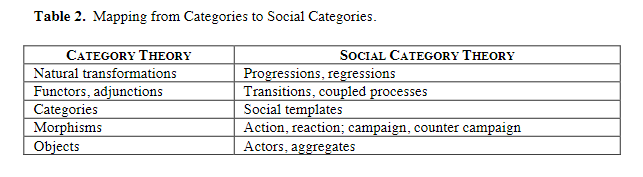
In John Corvino's Applied philosophy out of the closet (pp.39-40), I'm not sure if it was Martha Nussbaum who stressed the need for philosophy to be practical. Is this the same as applied? I note her work on capabilities. Hodges' model seeks to reduce the gap between the learning involved in (between - hence bridging) theory and practice - to achieve competencies. For the future of (Brian) Hodges' model this matters, as I understand that efforts are ongoing to apply category theory to the social sciences. It is a pragmatic conceptual structure. To return to identity, A M Ferner tackles (literally?) Organic identity (pp.49-50); while Kerrie Grain takes on what is next-door in Hodges' model - Personal identity (pp. 51-52). As I continue to sort papers, journals and books there is more to follow. 


The Philosopher's Magazine, "50 New Ideas", 1st Quarter 2016. Issue 72. pp.20-120.

TPM #72 cover image: https://ericthomasweber.org/correcting-political-correctness/

^Ack.
Needham, R. (1987). Counterpoints. Berkeley: University of California Press.
(Looking f/w - I think - to chapters 7-8. With specific post(s) to follow.)

Monday, November 13, 2023

Empathy - Relating, Knowing, Objects, Patterns ...

INDIVIDUAL
|
     INTERPERSONAL    :     SCIENCES               
HUMANISTIC --------------------------------------  MECHANISTIC      
SOCIOLOGY  :   POLITICAL 
|
GROUP

"Logos is our capacity to separate ourselves from the surrounding world, making it into objects in order to recognize it objectively, reflect about it. Any fully developed human relationship needs both principles, the relating and the knowing. Knowing in this sense means the possibility of discriminating between the common ground and the difference of I and Thou. Without knowing, there is fusion or identity but not relationship between a separate I and a separate Thou." p.64.


"Recently a woman training to be an analyst came for supervision and brought with her for the first time a tape of an analytic session she had had with a woman patient of hers. To our amazement, in listening to this tape, we both had at certain times quite some difficulty in distinguishing her own voice from the voice of the patient. This happened mostly when the patient was talking very softly and obviously fighting to overcome feelings of shame. The candidate felt rather shocked at first and asked me whether she might have identified with the patient in an unhealthy way. I heard her interventions on the tape as being genuinely in tune to the atmosphere and situation of the patient at those moments, so I told her that to my mind she was responding in an empathetic way to her patient. It was apparent that the patient needed this kind of response, for later in the tape one could hear that the patient became more confident in exploring her feelings. I think the candidate reacted to the needs of her patient with a concordant countertransference reaction." p.38.


Jacoby, M. (1984) The Analytic Encounter: Transference and Human Relationship. Toronto: INNER CITY BOOKS.

In this text and other reading I can see a possible means as to how the concept of identity can be used between the Individual - Group (other).

To follow soon:

Book review iii. General Psychotherapy: Principles and Common Theoretical Aspects - Rediscovering Humanity

Thursday, October 05, 2023

"Diagrammatic Immanence"


Diagrammatic Immanence


"There is thus a naturally 'pragmatic' epistemology intrinsic to categories: from the standpoint of category theory objects are investigated and known only via their interactions with other objects, not 'in themselves''. The space of possible maps from one object to another determines what can be known of those objects as such. Over the past several decades, category theory has proven extraordinarily successful in unifying diverse fields of mathematics and providing a less arbitrary and more productive foundation for mathematics than set theory. Because of its intrinsic orientation towards relations, it connects more readily and with fewer idealist assumptions than set theory to the real world and its component structures." p.10. 


"A meaning of whatever sort is necessarily determined by its position in a space of various intersecting structures, each with its own rich tangle of relations. Each of the 'single' topics being discussed opens up internally into a complex arrangement of mappings between, words, sentences, semantics, phonemes - all the systematic orders of differential relations that structuralism has taught us to recognise. And these orders are themselves embedded in actual material and historical processes.

The seemingly intractable complexity of actual language (parole and not only langue) is one of the reasons linguistic semantics have tended to resist mathematical and logical formalisation so stubbornly. Meaning is enacted in singular events and in this way resists abstract treatment. Yet at the same time, meaning presupposes translatability.  All the singular grain of the interlocking systems of some actual conversational exchange connects potentially to the systems of innumerable others. Any adequate categorical representation of linguistic events and, more generally, semiotic processes must be both rigorous and and flexible enough to track the logical and structural underpinnings of meaning and at the same time facilitate the blurring and affordances of translation." p.141.

Gangle, R. (2016). Diagrammatic Immanence: Category Theory and Philosophy. Edinburgh University Press. http://www.jstor.org/stable/10.3366/j.ctt1bgzc38

Wednesday, August 30, 2023

Paper - Categorical Social Science: Theory, Methodology and Design by Sallach (2012)

This conference paper from 2012 - cited at length here - is very encouraging as I try to work on category theory within Hodges' model. This is timely too, as a new (northern) academic year begins - post to follow ...

Sallach, D.L. Categorical Social Science: Theory, Methodology and Design. In: Conference Paper - 4th World Congress on Social Simulation. Taipei, Taiwan (September 2012). https://www.researchgate.net/publication/275584554

"The prospect of representing social processes at multiple scales, at an arbitrary level of detail, is likely to produce rich, interwoven models with the potential to provide a more effective map of historical and policy-oriented dynamics. However, this potential will also raise significant challenges in validating such a model [15].

One approach to managing the complexity (both conceptual and computational) of social models is to move them toward a higher level of abstraction."

"Category theory requires specification of a type of mathematical object in terms of identity, composition, and a group of morphisms that preserves their structure. This definition of objects and morphisms, in conjunction with two standard axioms (associativity & identity), defines a framework that is simple enough to be broadly applicable."

Conclusion:

"The present analysis introduces more analytical potential than can currently be demonstrated. Nonetheless, it makes a case for the relevance of category theory for the representation of social applications, and illustrates a variety of ways in which these conclusions are, or ultimately can become, compelling.

Category theory provides a rigorous yet expressive formalism for representing and integrating challenging modeling domains. It is also a formalism that can support extensive theoretical and modeling syntheses, while still maintaining appropriate levels of exactness. These strengths make CT particularly appropriate for providing a mathematical foundation for computational social science.

Ultimately, it is important to return to the issue of the validation of social models. The practical use of historical and/or policy-oriented models is highly dependent upon their credibility. Category theory provides a formalism that can be precise when applied to theory, explicit during the design stage, and definitive at the assessment stage, while also attending to the consistency of intermediate stages. It deserves serious exploration and investigation."

Saturday, August 19, 2023

Evidence-based care: The original Gordian Knot

or - Choose your audience carefully.

Within health and social care (and other - safety-critical - academic and professional fields) evidence-based care is pivotal as proof of safety, reproducibility, effectiveness, efficacy, professionalism, and benefits for the subjects of care and public. How best then to prove the scope, scale, relevance and safety of Hodges' model? How to demonstrate in theory and practice the utility and increasing relevance of Hodges' model? There are times I have to temper my belief, passion and enthusiasm for h2cm; am I too ardent, and at risk of coming across as preaching? There is a further tension. The one that is constant: language.

As a nurse, attention to language and terminology is vital to effective communication, establishing and sustaining rapport and empathy. This concern applies across situations, contexts and encounters; with patients, patient and carer (family), and colleagues. We are encouraged to avoid jargon, abbreviations  and technical terms. I use Hodges' model implicitly (aide-mémoire, assess, plan, evaluation, prioritise) and explicitly - sharing the model on some occasions but not all.

In the role of researcher / author, the audience, especially - editors, reviewers, and readers have expectations in how concepts, ideas, theories are expressed and explained. To a degree, the very title of a publication, preempts the language to follow. As I present, or write, sources must be declared and  referenced. Again, resort to jargon is discouraged. Clarity and brevity are strengths. And yet how likely is it that at least 1/3 reviewers will demand more technical rigour and explanation? If terms are used from other disciplines, the expectation follows that their cross-disciplinary application is explained and argued for, and meanings differentiated.

With potential theoretical underpinnings for Hodges' model to be found in Gärdenfors's Conceptual Spaces, and Meyer & Lands's Threshold Concepts and others (nursing and healthcare no-less); John D. Cook provides additional pause for thought - as I look even further afield:

"When I was in college, I sat in on a communication workshop for Latin American preachers. ...

Another lesson from that workshop, the one I want to focus on here, is that you don’t always need to convey how you arrived at an idea. Specifically, the leader of the workshop said that if you discover something interesting from reading the New Testament in Greek, you can usually present your point persuasively using the text in your audience’s language without appealing to Greek. This isn’t always possible—you may need to explore the meaning of a Greek word or two—but you can use Greek for your personal study without necessarily sharing it publicly. The point isn’t to hide anything, only to consider your audience. In a room full of Greek scholars, bring out the Greek.

This story came up in a recent conversation with Brent Yorgey about category theory. You might discover something via category theory but then share it without discussing category theory. If your audience is well velrsed in category theory, then go ahead and bring out your categories. But otherwise your audience might be bored or intimidated, as many people would be listening to an argument based on the finer points of Koine Greek grammar. ...

Some things may sound profound when expressed in esoteric language, such as category theory or Koine Greek, that don’t seem so profound in more down-to-earth language. Expressing yourself in a different language helps filter out pedantry from useful ideas. (On the other hand, some things that looked like pure pedantry have turned out to be very useful. Some hairs are worth splitting.) 

Sometimes you have to introduce a new terms because there isn’t a colloquial counterpart." ...

 Category theory and Koine Greek: John D. Cook. 

Category theory and Koine Greek: John D. Cook. 
https://www.johndcook.com/blog/2016/06/27/category-theory-and-homiletics/

See also: Applied category theory: John D. Cook

https://www.johndcook.com/blog/applied-category-theory/