Hodges' Model: Welcome to the QUAD: actors

Hodges' model is a conceptual framework to support reflection and critical thinking. Situated, the model can help integrate all disciplines (academic and professional). Amid news items, are posts that illustrate the scope and application of the model. A bibliography and A4 template are provided in the sidebar. Welcome to the QUAD ...

Showing posts with label actors. Show all posts

Tuesday, December 09, 2025

In search of socio-political logics

'The logic of appropriateness refers to actions which members of an institution take to conform to its norms. For example, a head of state will perform ceremonial duties because it is an official obligation. By contrast, the logic of consequences denotes behaviour directed at achieving an individual goal such as promotion or re-election.' p.87.

individual
|
INTERPERSONAL : SCIENCES
humanistic -------------------------------------------  mechanistic
SOCIOLOGY : POLITICAL
|
group-population


'Institutions are far more than the theatre within which the political drama unfolds; they also shape the script (Peters, 1999). This emphasis within the institutional framework on the symbolic or ritual aspect of political behaviour contrasts with the view of politicians and bureaucrats as rational, instrumental actors who define their own goals independently of the organization they represent.' p.87.


'Further, institutions bring forth activity which takes place simply because it is expected, not because it has any deeper political motive. When a legislative committee holds hearings on a topic, it may be more concerned to be seen to be doing its job than to probe the topic itself. Much political action is best understood by reference to this 
logic of appropriateness rather than a logic of consequences. For instance, when a president visits an area devastated by floods, he is not necessarily seeking to direct relief operations or to achieve any purpose other than to be seen to be performing his duty of showing concern. In itself, the tour achieves the goal of meeting expectations arising from the actor's institutional position. "Don't just do something, stand there", said Ronald Reagan, a president with a fine grasp of the logic of appropriateness.' pp.86-87.


See also: 'drama' : 'bridges'

Hague, R., & Harrop, M. (2007). Comparative Government and Politics (7th ed.). New York, NY: Palgrave Macmillan.
Peters, B. Guy. (1999). Institutional theory in political science: the new institutionalism. London: Pinter.

Friday, June 20, 2025

Theatre in TI:ME

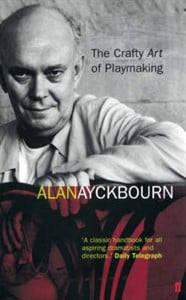
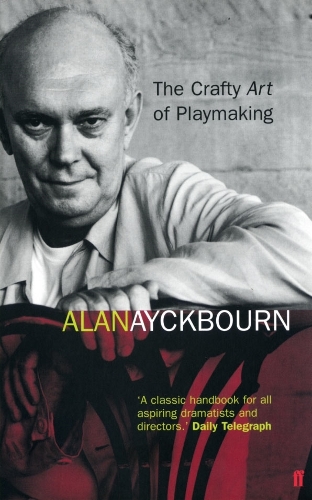
The Crafty Art of Playmaking
In health we're dealing with time in all its forms: cardinal; birth and death and all that happens in-between. Aka, 'life', illness, and palliative care. And, even if not recognised, chronological and pathological time, which policymakers should pay more attention to. The art of theatre, has its time (p.20): stage time, and real (theatre foyer) time. 

'At its most successful, theatre views things from a human standabout.' (p.9). 

I'd second that, especially allied with the notions (ideas!) of health career, and life chances

Since the publication of TCAoP in 2004 people seem to quite ready to dispense, disregard, downplay, demote the humanistic with the rise of AI and assisted dying for the terminally ill (of course).

Time recurs - as a frame. (p.25) with a touch of elective surgery. 'Think of your story as a piece of thread. Where you cut in is the point at which the lights come on in Act One. Where you cut out will be your final curtain. (There may be a knot or two in the middle to denote the intervals, too.)' p.25.

In the first post re. TCAoP I stressed the complexity, plethora of ideas that Hodges' model can create. Sir Alan provides a potential 'get of jail free card' (or as near as?) in his original rule no. 9. 

'If a play can be too simple, it can also be too complicated. If one element is particularly complicated, keep the rest of it simple.' (p.25).

Very useful advice! But achieving it when having and applying an idea is another matter.

What's this though? Step back to original rule no. 6:

'There is no hard and fast rule as to which constructional element comes first.' (p.20).

Butrint National Park Albania   

In the guided discovery exercise in students (audiences..) creating the model, there are two constructional elements, that also contribute to the one big idea.

It gets better! Original rule no. 14:

At least fifty per cent of your play is going to be visual. (p.33).

I must make sure I don't confuse concept/ual with visual/imagery.

More to follow.

The Crafty Art of Playmaking by Alan Ayckbourn. Faber, 2004, softcover, ISBN 0571215106.

https://www.concordtheatricals.co.uk/s/45898/the-crafty-art-of-playmaking

Tuesday, June 17, 2025

Theatre - which one?

The Crafty Art of Playmaking
Summer reading includes Ayckbourne's The Crafty Art of Playmaking published in 2004. Already half way through, writing has been covered, directing follows.

Looking at what I can learn in contrasting health and theatre, there is more than both laying claim to having a 'theatre'. Perhaps health got there first in a very primitive, existential, and fundamental sense. The 'theatre of war' covering battle, and the fight for food and survival. Even as civilisation emerged, on the battle field, triage was practised in a more deliberate way with skills that were built on emerging knowledge handed down orally - to become art.

So, no doubt there was a concurrency going on. Heroics in so many guises, shared around the fire. Plus, our individual dreams and nightmares that are framed collectively.

Ayckbourn offer pithy lessons learned over his career that began in 1959. There's an acting maxim:

'When playing a miser, stress his generosity.'

So can we restate the acting maxim as:

'When playing a patient, stress their strengths'?

Or. 'When playing a patient, stress their personhood'? . . .

If that is a challenge to the healthcare sector (even if unintended), then it is one that is actually long-standing. There are the three R's: rehabilitation, reablement and recovery.

Ayckbourn explains how the darker the subject the more a writer needs to find the light. And vice-versa. This suits me fine, and medicine is recognised as a great source of humour across several cultures.

The book lists a series of  'Obvious Rules' all numbered. 

Of No. 1: Born in Liverpool, I never would look down on comedy; and never as a poor cousin of drama.

After reading his obvious Rule No. 2, 'Never start a play without an idea'; I put my pants back on.

Do I have an idea? Oh my! Well Brian's at least.

In a way it's the other way around. The shout goes up - "Eratosthenes! Please pass me a sieve."

On having an idea, Ayckbourn writes: 'They assume, I think, that if they start the journey, maybe an idea will occur on the way. Perhaps a map of where they're going will blow in through the car window. In my experience this never happens.' p.6.

This is good advice, with the additional complication of having many maps, and yes, none: c/o Hodges' model. I need a theme, a situation and a thread. I'm writing a few ideas down. And helpfully Sir Alan advises not to throw ideas away. He describes, from experience how disparate things can come together.

Today (19th), I finished TCAoP here in Corfu. A great help for me, that is, the writing section pp.3-96; as I will try to explain in further posts. Sooner than expcted, I've started a book that will be a 'review'. 

A visit to Albania tomorrow - early start pick-up 0710.

The Crafty Art of Playmaking by Alan Ayckbourn. Faber, 2004, softcover, ISBN 0571215106.
https://www.concordtheatricals.co.uk/s/45898/the-crafty-art-of-playmaking

Friday, May 16, 2025

Theatre - the best way to learn ...

Pardon me, while I stay local - in Liverpool . . . 

I've always been interested in drama since school days (aged 13-14) and playing Francis Nurse in Arthur Miller's Crucible. Recent reading (inc. Theatre of the Absurd, The Shifting Point), see 'drama' - with more to follow) encouraged me to find out more. As a community mental health nurse on a visit, I've sometimes thought of this script being written as we engage with each other. Framed within  interpersonal skills and the society 'outside', there's a sense in which a screenplay is also writ large. 

The fact of whether the session is therapeutic, progressive, person-centred, structured, ethical, purposeful, has tea and custard creams ... is the drama of course.

In a way the creators of formal psychotherapies are playwrights - directors:

After all, they keep producing 'original' therapy manuals, don't they?


In the new year I noticed a community message about a theatre group Valley Theatre Group, planning a 'Living Newspaper' for a drama festival that took place last month. There is another performance next month in Liverpool, as per the edited message below:

People have been asking what’s going on and when for our Hope Street performances June 6-8th. So here’s the details.

W
e start each evening with the play about a 1930s Socialist Theatre group, “Unity”. (Cast: Peter Merrill, Ted Grant, Steve Donegan, Meggan Pye, Day Sheehan and Donna Lauder)

Then, on Friday 6 June, in the second half, we have our first Living Newspaper. This is the one that has most of the sketches submitted by outside writers and developed at the workshops. Then on Saturday 7th, second half, we have the Leverhulme group (The one that won the award at the festival) with their Living Newspaper. Finally, on Sunday 8th, in the second half, we have the last of the Living Newspapers, the one with slightly longer pieces like Scouse Man. This final one also has an original sketch from a 1930s Living Newspaper, the Munich Pact.

Tickets are on sale at the Hope Street Theatre website (link below) and from Ticket Quarter. Please come along and try to get other people along as well.  It'll be a good night's theatre! 

Thanks for all your support. The WTM team

Ticket link:  www.hopestreettheatre.com

Phone: 0344 561 0622

Friday, February 09, 2024

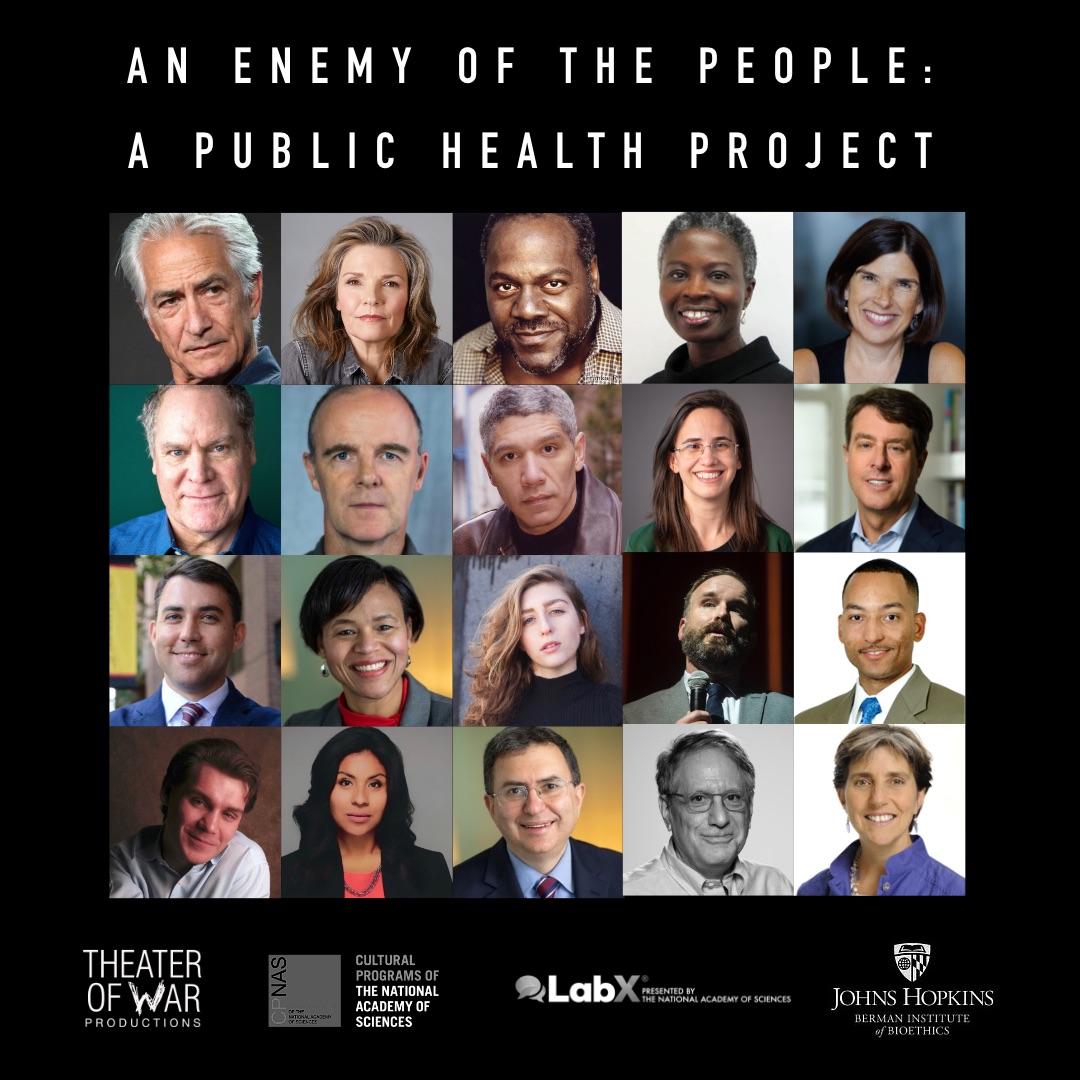
Theater of War Productions - An Enemy of The People Feb 22 + 24

Cast Update! 

We are thrilled to announce that Kathryn ErbeFrankie Faison, and Peter Francis James have joined the cast of An Enemy of the People on February 22 and 24, alongside David Strathairn, Francis Collins, Vivian Pinn, Victor Dzau, Brían F. O’Byrne, Jay O. Sanders, Keshia Pollack Porter, Gloria Addo-Ayensu, and many more! The project will present live dramatic readings of scenes from Henrik Ibsen’s 1882 play An Enemy of the People to frame powerful audience discussions about the challenges to public in our culture today. Register below to attend in person or online! Check individual listings for confirmed cast members each night, as casts will vary and are subject to change.

An Enemy of the People: A Public Health Project
Thursday, February 22, 2024
7:00 pm - 9:30pm EST

Johns Hopkins University Bloomberg Center
555 Pennsylvania Avenue NW
Washington, DC 20001

Featuring performances by David Strathairn (Nomadland), Frankie Faison (The Wire), Kathryn Erbe (Law & Order: Criminal Intent), Peter Francis James (Oz), Jay O. Sanders (True Detective), Brían F. O'Byrne (The Wonder), Marjolaine Goldsmith (Company Manager of Theater of War Productions), Monica Feit (Executive Director, Health and Medicine Division, National Academies of Sciences, Engineering, and Medicine), Jeffrey Kahn (Director, Johns Hopkins Berman Institute of Bioethics), Keshia Pollack Porter (Chair, Department of Health Policy and Management, Johns Hopkins Bloomberg School of Public Health), Tshaka Cunningham (Chief Scientific Officer, Polaris Genomics), Gloria Addo-Ayensu (Director of Health, Fairfax County Health Department), Emily Packard Dawson (Program Officer, National Academies of Sciences, Engineering, and Medicine), Nancy Kass (Deputy Director for Public Health, Berman Institute of Bioethics), Graham Sack (Filmmaker, Dracopoulos-Bloomberg iDeas Lab Fellow), Grelia Steele (Global Continuity and Crisis Manager, Guidehouse), Peter Marks (Former Chief Theater Critic, The Washington Post), Matthew Frieman (Viral Pathogen Research Professor of Microbiology & Immunology, University of Maryland School of Medicine), and Joshua M. Sharfstein (Vice Dean for Public Health Practice and Community Engagement at the Johns Hopkins Bloomberg School of Public Health).

Register to attend in person or online

An Enemy of the People: A Public Health Project
Saturday, February 24, 2024
7:00 pm - 9:30pm EST

National Academy of Sciences 
2101 Constitution Ave, NW
Washington, DC 20418

Featuring performances by David Strathairn (Nomadland), Frankie Faison (The Wire), Kathryn Erbe (Law & Order: Criminal Intent), Peter Francis James (Oz)Jay O. Sanders (True Detective), Brían F. O'Byrne (The Wonder), Francis Collins (Former Director, National Institutes of Health), Monica Feit (Executive Director, Health and Medicine Division, National Academies of Sciences, Engineering, and Medicine), Jeffrey Kahn (Director, Johns Hopkins Berman Institute of Bioethics), Keshia Pollack Porter (Chair, Department of Health Policy and Management, Johns Hopkins Bloomberg School of Public Health), Victor Dzau (President, National Academy of Medicine), Vivian Pinn (Senior Scientist Emerita at the NIH Fogarty International Center), Ruth Faden (Berman Institute Founder; Philip Franklin Wagley Professor of Biomedical Ethics), Grelia Steele (Global Continuity and Crisis Manager, Guidehouse), Peter Marks (former chief theater critic, The Washington Post), Gloria Addo-Ayensu (Director of Health, Fairfax County Health Department), Graham Sack (Filmmaker, Dracopoulos-Bloomberg iDeas Lab Fellow), Nancy Kass (Deputy Director for Public Health, Berman Institute of Bioethics), Joshua M. Sharfstein (Vice Dean for Public Health Practice and Community Engagement at the Johns Hopkins Bloomberg School of Public Health), Marjolaine Goldsmith (Company Manager, Theater of War Productions), and Emily Packard Dawson (Program Officer, National Academies of Sciences, Engineering, and Medicine).


Register to attend online


I will register have registered (online). There is a production of An Enemy of the People in London, but it is expensive from NW England.

This afternoon I enjoyed a delayed appointment with DUNE 2021 Part 1 IMAX, a brilliant cinematic experience that includes a performance by Oscar Isaac as Duke Leto Atreides.

See also: Ibsen , theatre ...

Wednesday, August 30, 2023

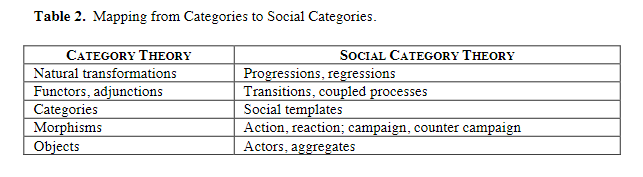
Paper - Categorical Social Science: Theory, Methodology and Design by Sallach (2012)

This conference paper from 2012 - cited at length here - is very encouraging as I try to work on category theory within Hodges' model. This is timely too, as a new (northern) academic year begins - post to follow ...

Sallach, D.L. Categorical Social Science: Theory, Methodology and Design. In: Conference Paper - 4th World Congress on Social Simulation. Taipei, Taiwan (September 2012). https://www.researchgate.net/publication/275584554

"The prospect of representing social processes at multiple scales, at an arbitrary level of detail, is likely to produce rich, interwoven models with the potential to provide a more effective map of historical and policy-oriented dynamics. However, this potential will also raise significant challenges in validating such a model [15].

One approach to managing the complexity (both conceptual and computational) of social models is to move them toward a higher level of abstraction."

"Category theory requires specification of a type of mathematical object in terms of identity, composition, and a group of morphisms that preserves their structure. This definition of objects and morphisms, in conjunction with two standard axioms (associativity & identity), defines a framework that is simple enough to be broadly applicable."

Conclusion:

"The present analysis introduces more analytical potential than can currently be demonstrated. Nonetheless, it makes a case for the relevance of category theory for the representation of social applications, and illustrates a variety of ways in which these conclusions are, or ultimately can become, compelling.

Category theory provides a rigorous yet expressive formalism for representing and integrating challenging modeling domains. It is also a formalism that can support extensive theoretical and modeling syntheses, while still maintaining appropriate levels of exactness. These strengths make CT particularly appropriate for providing a mathematical foundation for computational social science.

Ultimately, it is important to return to the issue of the validation of social models. The practical use of historical and/or policy-oriented models is highly dependent upon their credibility. Category theory provides a formalism that can be precise when applied to theory, explicit during the design stage, and definitive at the assessment stage, while also attending to the consistency of intermediate stages. It deserves serious exploration and investigation."

Tuesday, October 15, 2019

Book: "The Empty Space"

The Empty Space, Peter Brook

 In July I caught up with Mr Brian Hodges who created Hodges' model. Having met previously in November 2013 we agreed not to leave it as long next time and so I returned on 7th October.

One question I had was whether in addition to Hughes there were any other influences that led Brian to the model overall?

Brian could not recall a specific reference, but mentioned the theatre being an influence. I, in turn had picked up a second-hand book on one of several recent trips to London, but the title evaded me. Once home I checked and the book is "The Empty Space" by Peter Brook. A Gower Street bargain at £4.99. Brian also checked and emailed to confirm this is the book on his shelf too.

While in London (and elsewhere) I try to visit the theatre and  now look for performances of Ibsen's plays. Whatever I do see, A Doll's House this month, before the performance starts the set design is always intriguing. I've posted on this before, Hodges' model providing a 'stage set', one that should the play require can include the operating theatre.

As a mental health nurse the themes of Ibsen's plays still resonate today. From the performances I have attended the public finds ongoing relevance in: The Master Builder, Ghosts, The Lady from the Sea, Rosmersholm, Hedda Gabler and An Enemy of the People. This is true of the work by others. The drama of life and death that Hodges' model can also stage.

Brian emailed me about a situation that stood out for him in the book, so I will revisit this. What caught my eye is the cover of Brook's book (and yes, the graphic first). Without even opening the book, the 'scene' is (possibly?) set on the book's cover "A Book About the Theatre: Deadly, Holy, Rough, Immediate" ...


 individual
|
INTERPERSONAL : SCIENCES
humanistic ----------------------------------------------- mechanistic
SOCIOLOGY : POLITICAL
|
group - population

Holy


Immediate

Rough

Deadly


Hughes, E. (1958) Men and their work. New York: Free Press. (Hughes was used by Brian to define ‘health career’ the idea of life chances.)

Tuesday, June 17, 2014

Book: The Empathy Exams & Michel Serres Institute

individual
INTERPERSONAL : SCIENCES
humanistic ------------------------------------------- mechanistic
SOCIOLOGY : POLITICAL
group
The Empathy Exams
Interpersonal Skills

The Natural Sciences
Local, Society & Socio-

-Economics
Law


As recent posts reveal I'm overwhelmed with reading at present. Material that is essential for the TEL course and reading more tangential and yet potentially enjoyable titles. It will be a busy summer as all this is brought together(!?). Especially as I've a literature search in mind as a module submission - progress permitting.

The publication of Jamison's book this (N) spring sits well after the findings last year about the benefits of reading fiction in increasing empathy.

Since 2008-2009 I've lost touch with the work of Michel Serres:

Jones, Peter, Exploring Serres’ Atlas, Hodges’ Knowledge Domains and the Fusion of Informatics and Cultural Horizons (Aug 15, 2007). SOCIAL INFORMATION TECHNOLOGY CONNECTING SOCIETY AND CULTURAL ISSUES. Available at SSRN: http://ssrn.com/abstract=1842504 or http://dx.doi.org/10.2139/ssrn.1842504

I only scratched the surface of Serres' oeuvre in the above paper and when time permits will revisit this work having just learnt of the Institute:

The resource-systems approach

"Reframing the conceptual and operational field of natural resources requires deep interdisciplinarity across fields encompassing legal and socio-economic studies, and life-sciences. And, it goes without saying, philosophy. The priorities at present are the aid to decision-making and a participative, pro-active civil society acting to (1) manage human activities while meeting the specific territorial potential and resource capacities and (2) ensure a fair re-allocation of such resources according to vital human needs and coherent public goods policies. Who are the members, what are the missions and the activities of the (...)."

Book cover image: c/o Author.

My source: The Empathy Exams
FT Weekend, June 7-8, 2014.