Hodges' Model: Welcome to the QUAD: capacity

Hodges' model is a conceptual framework to support reflection and critical thinking. Situated, the model can help integrate all disciplines (academic and professional). Amid news items, are posts that illustrate the scope and application of the model. A bibliography and A4 template are provided in the sidebar. Welcome to the QUAD ...

Showing posts with label capacity. Show all posts

Wednesday, July 16, 2025

'Proper domain' c/o Machery 2017

On a visit to London 4-7th, in Foyles on Charing Cross Road amongst many desirable titles I came across:

Machery, Edouard, Philosophy Within Its Proper Bounds (Oxford, 2017; online edn, Oxford Academic, 24 Aug. 2017), https://doi.org/10.1093/oso/9780198807520.001.0001, accessed 24 June 2025.


Philosophy and knowledge are in constant play: hide and seek. So the title's 'proper bounds' piqued my interest. I found a previous paper by Machery, also cited in the book:

MACHERY, E. (2011). THOUGHT EXPERIMENTS AND PHILOSOPHICAL KNOWLEDGE. Metaphilosophy, 42(3), 191–214. http://www.jstor.org/stable/24439937

The paper is technical (as 'metaphilosophy' suggests) with discussion of thought experiments, parity defence, but there is utility here:
'If we have reason to suspect that a physical skill or a psychological capacity is applied outside its proper domain, our confidence in the success of this application should decrease. If we have no further information about the circumstances in which the skill or capacity is applied or about how these circumstances impact its reliability, then, for all we know, the reliability of the skill or capacity in this particular application might be almost as high as it is in its proper domain, or it might be very low: that is, we have a reason to believe that its reliability is lower than in its proper domain, but we do not know how low it is. In these conditions, we should be reluctant to express much confidence in the success of the application of the skill or capacity'. p.201.

I'm hoping for an e-copy of the book, which avoiding even more screen-time, I won't read through (review - as I call it...) but I will search, read selectively and post again.

Thursday, April 10, 2025

'Best Interests' - Audio Drama by Sasha Hails


by Sasha Hails


Peter Polycarpou (Read by), Gerard McDermott (Read by), Jonathan Forbes (Read by), James Lailey (Read by), Alex Tregear (Read by), Susie Riddell (Read by), Elaine Caxton (Read by)


A BBC Radio 4 dramatisation


'Two new dramas which get inside the emotional realities of dealing with ethical dilemmas. When a confused young man with no I.D. and a Doctor Who fixation is brought into hospital, the staff have clear rules about how decisions can be made on his behalf. But when he starts to make his own wishes clear, are they right to listen?

Starring Gunnar Cauthery, Clare Perkins, Simon Bubb, and Carl Prekopp. With Peter Polycarpou, Gerard McDermott, Jonathan Forbes, James Lailey, Alex Tregear, Susie Riddell and Elaine Claxton. Script Consultant: Jim Blair, St George's Healthcare NHS Trust. Produced and directed by Jonquil Panting.'


My source: 

Jim Blair @jimgblair - https://x.com/jimgblair/status/1906993515038429252

Tuesday, February 11, 2025

Project: Partners against Stigma and Mortality in Epilepsy (PASME) Cameroon

Boyo Association for Rural Development (BARUDEV - Cameroon) has launched a project on epilepsy called Partners against Stigma and Mortality in Epilepsy (PASME).

We are calling for partnerships and support for our project on epilepsy which will focus on mental health and psychosocial support, treatment, knowledge and skills exchange,raising awareness, rights protection amongst patients affected and or bereaved by epilepsy, health care providers. Also reduce seizures and consequences particularly in children and adolescents living with epilepsy and HIV/AIDS. 
  • ADVOCACY AND AWARENESS. Promoting awareness and supporting initiatives that prevent epilepsy. Prioritize epilepsy at national and international levels, while lobbying and advocating support for partners and governments to prioritize epilepsy into their health programs and policies.
  • TREATMENT AND SUPPORT. Provide access to treatment and support initiatives that improve access to effective treatment including medications and their therapies. 
  • PROVIDE BEST-PRACTICE MODELS. Develop and share models for effective management of epilepsy in diverse settings including conflicts and disasters where people are forced to displace.
  • BUILD CAPACITIES THROUGH TRAINING. Advance training and information sharing for healthcare givers, CHWs and family care givers involved in epilepsy care. 
  • PROMOTE HUMAN RIGHTS AND DIGNITY. Advocate for the accessibility of services, protection of human rights and preservation of dignity for all with epilepsy including children and adolescents living with epilepsy and HIV/AIDS. 
  • EMPOWERMENT AND RIGHTS: Lobby and advocate for the rights of people with epilepsy through their associations and to enable them participate in decision making processes. 
  • RESEARCH AND COLLABORATION: Foster research through encouragement and support in epilepsy including causes, prevention, treatment and social impact. Strengthen their associations, develop and support them through mental health and psychosocial support projects and ensuring and protecting their well-being and their families.
BARUDEV is currently building a website (which I will add upon news - PJ).
Please contact me if you need further information

HIFA (my source) profile: Chiabi Bernard Ful is Director of Boyo Association for Rural Development (BARUDEV--Cameroon). This is a local NGO found in Boyo district of North Western Cameroon. Our activities are to empower women, protect the sexual and reproductive health for women and girls, and protect the rights of children. We have been training community health workers to follow up patients, pregnant women, sick children and refer them to the hospital.
barudev AT yahoo.co.uk

Wednesday, February 28, 2024

HIFA Discussion: Alcohol Use Disorders - Do people understand the harms of alcohol?

Dear All (with further editing since posting)

The discussion, points, angles, questions ... are coming thick and fast it is difficult to keep up.

Many thanks for the summaries; and of course the discussion which archived also acts as a resource - repository:

https://www.hifa.org/news/hifa-announces-deep-dive-discussion-alcohol-use-disorders-starts-5-february-2024

I wonder whether the question: 
"Do people understand the harms of alcohol?" must always be placed in context?
It is radically different when asked of the tee-total, dry, safe drinker; and someone (still) actually in their alcohol drinking?

It occurs to me that alcohol, even more so than 'other' substance misuse (heroin...) represents what must be *the* contradiction, paradox in healthcare - except the tragic loss that is suicide.

Contrast substance misuse inc. alcohol, with 'help-seeking' and 'The Sick role'

https://www.england.nhs.uk/blog/ed-mitchell-2/

Plus, the (medical) sociology of the decision to consult/refer, and how in mental health (UK), the mental capacity act is apparently being misapplied ('policy-drift'?**):

https://www.lawsociety.org.uk/topics/blogs/are-mental-health-and-capacity-laws-at-risk-of-being-toxic

https://www.communitycare.co.uk/2017/08/23/flawed-use-mental-capacity-act-key-theme-safeguarding-adults-reviews-report-finds/

Individual

   |
      INTERPERSONAL    :     SCIENCES               
HUMANISTIC  --------------------------------------  MECHANISTIC      
 SOCIOLOGY  :   POLITICAL 
|
Group

continental drift

policy drift?


Previously, I highlighted how as a Community Psychiatric Nurse 1985-1995 (adult) .. if a patient/client was not working to control/reduce their alcohol consumption they may be 'counselled' re a pending discharge and referral back to their GP - family physician. In supervision with the team's manager they would want to know what is 'happening'. It being important not to create (social) dependency, or worse support someone in their alcohol misuse.

There was a sense, still is(?) that in substance misuse (across forms) - the individual has to reach 'rock-bottom', literally the 'gutter' that is the point they decide (really?)** to live, or carry on to suffer irreversible brain damage, or premature death. Regards the 'brain damage' it was a struggle for 45-60 minutes given the impact upon short-term memory, what time, .... is it indeed? When the patient was not living alone, how did the relative, family cope?

Is having to reach the gutter, the bottom, a trope/myth? In psychosis rather than assume the patient is beyond being reached prior to being medicated there are psycho-social interventions that can be commenced: being available / with. Here though this is usually 'first episode'. There is no analogue here, unless first admission to an in-patient unit is taken as a golden opportunity? But this also depends on its nature (funding, staffing - expertise), a general adult mental health ward, or specialist unit.

https://www.imdb.com/title/tt0048347/

What is the current strategy?

In terms of 'HIFA' - and the person that counts**, not only do they not have the 'information'; they do not have the EXISTENTIAL INFORMATION as it relates to them: 'Health Information for YOU'!

Again in Hodges' model we can contrast the dichotomy/polarisation of INDIVIDUAL :: GROUP.

The model's being situated; and able to encompass data, information, knowledge (facts, for example, and their delivery) - wisdom (Multi-contextual / transdisciplinary..).

I admire people who work in these services (learning disability and palliative care); as they must be severely tested as they retain an ability - the humanity - to 'see' the person whatever the patient's situation with their lack of awareness (capacity..?) and its critical salience.

Peter Jones
Community Mental Health Nurse and Researcher 

Location: It was just a cappuccino.

**Which points to the relevance of the POLITICAL care/knowledge domain in Hodges' model.

Wednesday, November 17, 2021

c/o WHO: Opportunity for recent graduates for LDCs

Appealing to the librarian network to share this great WHO opportunity for recent graduates for LDCs

Dear Colleagues,

This may seem like an odd request but I am counting on you as the global health community who sometimes are the world’s best knowledge connectors. As many of you work with recent graduates who come from varied backgrounds, I would like to make you aware of the WHO’s young professionals (YPs) programme for young professionals (YPs) from Least Developed Countries (LDCs) https://www.un.org/development/desa/dpad/wp-content/uploads/sites/45/publication/ldc_list.pdf which aims to engage them in WHO’s work and build their capacity in key public health areas of particular relevance for their countries.

The vacancies of the first cohort are currently open for application until 6 December 2021. The vacancies can be found here:

https://careers.who.int/careersection/ex/jobsearch.ftl (please type “YPP” in the key word search to take you directly to the vacancies)

If you know someone who is 35 years old or younger and comes from a Least Developed Country, please ask them to check out WHO’s Young Professionals Programme! During your career, you may have come across some exceptional students from LDC locations who you feel worthy of an opportunity to make a big impact in the global health arena. If you know of anyone, please share this opportunity with them.

I have done this in the past and my colleagues in WHO HR saw star candidates results from the public health networking that got this message out to ideal candidates and they would like to see that success again. For some of you I know this will be a golden opportunity.

If you have any concerns about this posting, please let me know. For potential candidates, please direct them to visit the WHO website above.

Many Many Thanks to you all.

Tomas ALLEN
Professional email allent AT who.int
WHO Library
https://www.who.int/library

WHO COVID Database
https://search.bvsalud.org/global-literature-on-novel-coronavirus-2019-ncov/

HIFA profile: Tomas Allen is a librarian for the World Health Organization. 

Professional interests: Public Health. tomas.allen.who AT gmail.com

My source: HIFA

Friday, March 19, 2021

Healthcare Systems & Services: Yes, attend to the battlements ...

 Yes, attend to the battlements, but 

don't neglect your 'Towers of Observation'?

Illustration by Luca D'Urbino: https://www.durbodesign.com/
 
individual
|
INTERPERSONAL : SCIENCES
humanistic ----------------------------------------------- mechanistic
SOCIOLOGY : POLITICAL
|
group


"More than 27,000 tests have been carried out, with 459 positive results and eight deaths." p.20.


"A report last year estimated that there were some 100,000 vacancies across the health service." p.21.

My source:

Britain. The NHS and covid19. Is it ready? Britain’s NHS is well suited to dealing with crises. But it is overstretched and faces an enormous task. The politics of pandemics, The Economist. Mar 14th 2020, pp.20-21. https://www.economist.com/weeklyedition/2020-03-14

Illustration by Luca D'Urbino: https://www.durbodesign.com/

Thursday, June 14, 2018

Wellcome Collection: Handle with Care


Health care is complex
because
care delivery
involves the
handling
of a variety of forms of
knowledge, information and data. 


individual
|
INTERPERSONAL : SCIENCES
humanistic ---------------- ...WHAT IT MEANS ... ------------------ mechanistic
SOCIOLOGY : POLITICAL
|
group

to be cared for


to be caring


to care


to be a carer


The handling becomes specialised 
because of those
be's
the 'patient', the 'nurse', the 'carer'...
identities
loved, lost, earned and learned ...
The integration of all this 
can be summarised as so many forms of 'why'
often described as the spiritual -
Let us handle the Planet With Care.


Tuesday, August 16, 2016

"Making legal advice a clinical department" Dept of Clinical Law

individual
|
INTERPERSONAL : SCIENCES
humanistic -------------------------------------------  mechanistic
SOCIOLOGY : POLITICAL
|
group-population


Definitions: Child in England and Wales
< 18 years of age


"Changing views in society have pushed...

"Making legal advice a clinical department" 

'child' : 'adult'
mental capacity, deprivation of liberty,
candidness and forethought,
end of life decisions,
treating physical illness in the mental ill,
consent, confidentiality and treatment refusals (p.20)


... legal considerations of patient rights to 
the front of clinician's agendas"


Wheeler, R., & Marsh, M. (2016). Making legal advice a clinical department. Health Service Journal, April 13, 126: 6482, 20-21.

Thursday, February 04, 2016

"Values in Advanced Directives" mapped to Hodges' model

Hechter, et al. (1999) consider values in respect of advanced directives and medical treatment. The authors discuss an old debate in social science that still divides objectivists and subjectivists. Below, with my emphasis the four designated values are mapped to Hodge' model:

individual
|
INTERPERSONAL : SCIENCES
humanistic ---------------------------------------  mechanistic
SOCIOLOGY : POLITICAL
|
group

(ii) self-concept values involving feelings of dignity, self-control, and/or physical capacity (designated as function);


(i) hedonic values about pain, aversive physical states, chances for recovery to some minimally satisfactory level, and so forth (designated hereafter as pain);


(iii) allocentric values referring to concerns with creating an emotional burden for family and/or loved ones (designated as burden)

(iv) financial considerations (designated as cost) (p.409). 


Since 1999 and considering the above I have added the following additions to reflect elements of change and a more generic view:


identity, self-expression (of needs), consistency in expressed wishes, intentionality, mood, alternative-adaptive forms of communication, time - active listening


distance, logistics (family, friends), what telecare might offer in terms of communication, evidence-based interventions, measures, assessment


independent advocacy, standards of social care, 'appropriate' placement for ongoing care, social - life history;

legislation - mental capacity, advocacy, evidence-based care - policy, pension, safeguarding;


While the focus of Hechter, et al. is specific these values also apply in a more generic sense. As students and lifelong learners engage with patients, carers and public they must learn to have due regard for the totality of values that might be encountered.


Hechter, M., Ranger-Moore, J., Jasso, G., & Horne, C. (1999). Do Values Matter? An Analysis of Advance Directives for Medical Treatment. European Sociological Review, 15(4), 405-430. 
 

Sunday, June 28, 2015

Non-Cartesian points, opposing corners and capital redux

individual
|
INTERPERSONAL : SCIENCES
humanistic --------------------------------------- mechanistic
SOCIOLOGY : POLITICAL
|
group
"I felt


capital Patient?


Patient capital?

like
 the
 mad
man
 in the corner,"


a senior NHS figure said of recent top level meetings discussing the financial travails and sliding performance of the provider sector. ... The delineation between these two camps is becoming clearer. ... p.3 


Source: McLellan, A. (2015) Leader: Modernisers must cut the deficit to keep their side of the deal. Health Service Journal, 3 June. 125;6449:p.3.

See also:
Capital 'p': Patient, Person, Person-centred, Personhood

Tuesday, April 01, 2014

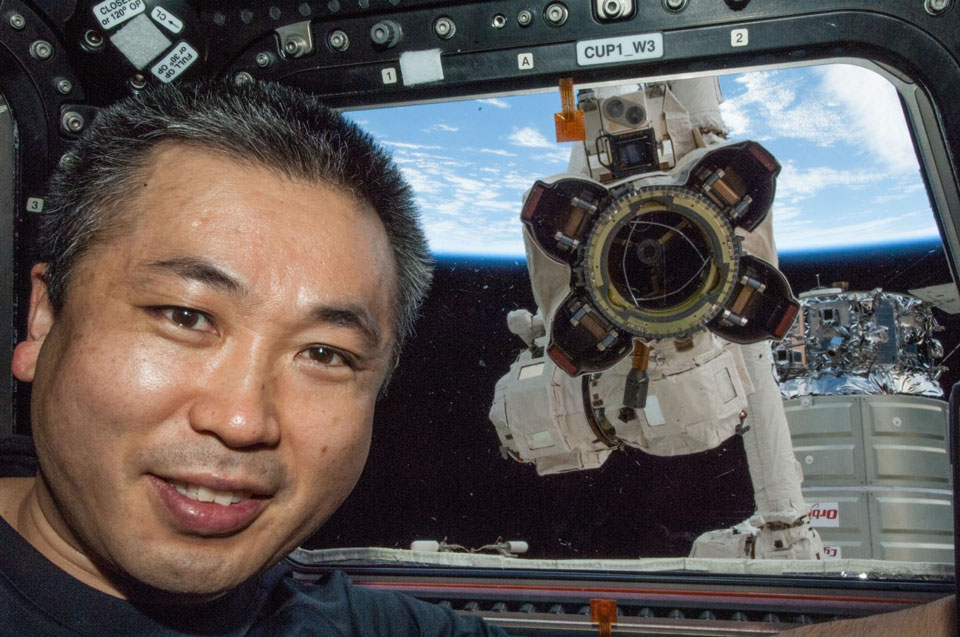
Space Station Robot Forgets Key Again

individual
INTERPERSONAL : SCIENCES
humanistic ------------------------------------------- mechanistic
SOCIOLOGY : POLITICAL
group

Memory: artificial (jokes aside) and real

Just-be?

Making sense of the
activities of daily living

Chunking

Space Station Robot Forgets Key Again


Making sense of someone
else's sense of the
 activities of daily living


Funding for research
(competition!)
group - population

Additional link: The Economist - Rise of the robots 29.3.14
Image source: APOD

Sunday, January 06, 2008

DOE’s SciDAC Visualization and Analytics Center for Enabling Technologies -

Even though the datasets involved are way beyond my day-to-day (clinical) work in mental health and an understanding of the techniques involved, I'm a sucker for the images and knowledge that scientific visualisation opens up.

At Cyberinfrastructure Technology Watch the article -

DOE’s SciDAC Visualization and Analytics Center for Enabling Technologies - Strategy for Petascale Visual Data Analysis Success

- includes on page 2 discussion of survival of the data tsunami and refers to following figure:

c/o VACET

For quite a while I've been thinking about individual health and social care and the point at which things become complex. You come to realise the role scalability plays in these things. And when you do - complexity is never far away. Just how far away are these esoteric datasets?

At VACET the body behind this work it speaks volumes that 'visualisation' is not alone. It's not just about (and never was I'm sure!) pretty pictures: ANALYSIS figures large too (great to see enabling in there too!). [See https://sdm.lbl.gov/sdav/ ].