Hodges' Model: Welcome to the QUAD: orientation

Hodges' model is a conceptual framework to support reflection and critical thinking. Situated, the model can help integrate all disciplines (academic and professional). Amid news items, are posts that illustrate the scope and application of the model. A bibliography and A4 template are provided in the sidebar. Welcome to the QUAD ...

Showing posts with label orientation. Show all posts

Monday, September 08, 2025

ii Editorial: Persistent Positive Change in Challenging Times ...

To Howden's editorial it's worth highlighting that Hodges' model is situated. So, whether the 'challenge' that is faced is individual, or collective Hodges' model can help to identify the issues, problems, strengths, opportunities, threats, where we are, where we would like to be and more. Surely, reflection, critical thinking is about confiming, or regaining our perspective, correcting our orientation or improving alignment and synchronisation with others? The time this entails, whether exercised on paper, or cognitively (yes, humans thinking is still an option) this is equivalent to a time-out even if momentary. This can be critical in clinical encounters, were emotions are raised, or there is risk of escalation.

So whether the challenge is personal, lived experience, bullying, finance, physical, or mental health, simulation (fidelity, testing), ethical ...; or collective (a team) - service and organisational change, major incident, policy, clinical or management supervision, whistleblowing, public / patient engagement, complaints and challenging relationships; Hodges' model is a tool (one of many) to call upon.

It could be the context causes you to focus on one or two care (knowledge) domains. Or, there is a need to step back in order to 'see' the big picture (integrated care, risk assessment, holistic care, psychosocial view ...) - the spiritual too.

While Hodges' model is simple, please consider this: there aren't many tools that can facilitate articulation and dissemination of the 'big picture' in a form that is (imho) readily transferable and translatable.

Howden, S. (2025). Editorial: Persistent Positive Change in Challenging Times. International Journal of Practice-based Learning in Health and Social Care, 13(1), ii-iii.

Thursday, June 26, 2025

You say Hodges' model is a map. What's the scale?

"That's another thing we've learned from your Nation," said Mein Herr, "map-making. But we've carried it much further than you. What do you consider the largest map that would be really useful?"

"About six inches to the mile."

""Only six inches!"exclaimed Mein Herr. "We very soon got to six yards to the mile. Then we tried a hundred yards to the mile. And then came the grandest idea of all! We actually made a map of the country, on the scale of a mile to the mile!"

"Have you used it much?" I enquired.

"It has never been spread out, yet," said Mein Herr: "the farmers objected: they said it would cover the whole country, and shut out the sunlight! So we now use the country itself, as its own map, and I assure you it does nearly as well."
        Lewis Carroll - The Complete Illustrated Works. Gramercy Books, New York (1982). Page 727.


My source
Text: https://people.duke.edu/~ng46/topics/lewis-carroll.htm

Plus a letter in FTWeekend: by Prof. R.T. Harrison. 'Country as its own map served as well' https://www.ft.com/content/2ad8ea16-d27d-11e1-abe7-00144feabdc0 1 Sept. 2012.

Tuesday, April 01, 2025

c/o A.Word.A.Day: Hodges' model - Walk the (dual!) chalk line

A.Word.A.Day

with Anu Garg

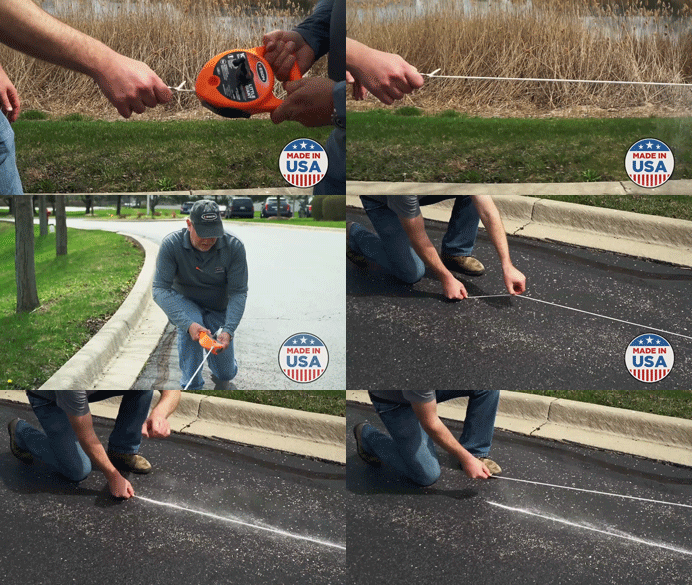
'Having a tool is like having a superpower in your pocket. With the right gadget, you can do much more than what arms and legs alone allow -- build a magnificent pyramid, lift water from deep below, or even predict whether you’ll need an umbrella tomorrow.


And not all tools need wires, batteries, or instruction manuals. Sometimes, a simple device can save labor -- a lever, a pulley, a piece of string dusted with chalk -- can save hours of sweat and toil.'

chalk line


Monday, December 16, 2024

Fragile: This way up - Frozen goods!

Apollo 17 'Blue Marble' Photograph
 
Apollo 17 1972 NASA Original Blue Marble Photograph

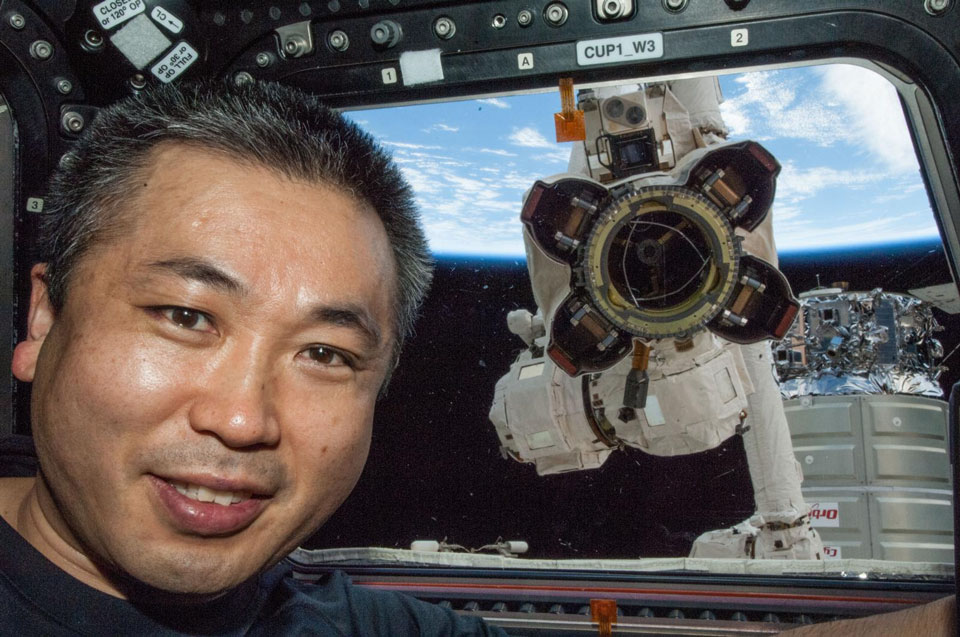
Or, some water 'heading your way' ...
'NASA’s archival designation for it is AS17-148-22727, and the original image was taken upside down with the South Pole at the top. In its myriad reproductions, it’s flipped up to match what we would normally expect to see.'

Text: https://www.thephoblographer.com/2013/12/09/behind-blue-marble/


Does the model still 'work' -

Group
|
 POLITICAL        :     SOCIOLOGY  
MECHANISTIC --------------------------------------  HUMANISTIC
            SCIENCES       :    INTERPERSONAL
|
Individual
POLITICAL

SOCIOLOGY

SCIENCES

INTERPERSONAL


- this way ...?

Image source: https://www.forum-conquete-spatiale.fr/t15428-apollo-17-1972

Prompt for 'Blue Marble' - Plate 1 in Brotton, J. (2024) The Four Points of the Compass: The Unexpected History of Direction, London: Allen Lane.

Previously: 'compass'

A planet is not just for Christmas.

Sunday, December 15, 2024

Does the model still work - this way?


Does the model still 'work' -

Group
 |
 POLITICAL       :     SOCIOLOGY  
MECHANISTIC --------------------------------------  HUMANISTIC
          SCIENCES    :    INTERPERSONAL
Individual
POLITICAL

SOCIOLOGY

SCIENCES

INTERPERSONAL


- this way ...?

Wednesday, October 11, 2023

'System 1 and 2 Modes of Thinking' in Hodges' model

 System 1 - 

"operates automatically and quickly,
with little or no effort and no sense of voluntary control. 

 System 2 - 

allocates attention to the effortful mental activities that demand it, including complex computations. The operations of System 2 are often associated with the subjective experience of agency, choice, and concentration." pp. 20-21.

"When we think of ourselves, we identify with System 2, the conscious, reasoning self that has beliefs, makes choices, and decides what to think about and what to do. Although System 2 believes itself to be where the action is, the automatic System 1 is the hero of the book. I describe System 1 as effortlessly originating impressions and feelings that are the main sources of the explicit beliefs and deliberate choices of System 2. The automatic operations of System 1 generate surprisingly complex patterns of ideas, but only the slower System 2 can construct thoughts in an orderly series of steps. I also describe circumstances in which System 2 takes over, overruling the freewheeling impulses and associations of System 1. You will be invited to think of the two systems as agents with their individual abilities, limitations and functions." p.21.


INDIVIDUAL
|
     INTERPERSONAL    :     SCIENCES               
HUMANISTIC --------------------------------------  MECHANISTIC      
SOCIOLOGY  :   POLITICAL 
|
GROUP

System 2:
  • Brace for the starter gun in a race.
  • Focus attention on the clowns in the circus.
  • Focus on the voice of a particular person in a crowded and noisy room.
  • Look for a woman with white hair.
  • Search memory to identify a surprising sound.
  • Maintain a faster walking speed than is natural for you.
  • Monitor the appropriateness of your behavior in a social situation.
  • Count the occurrences of the letter a in a page of text.
  • Tell someone your phone number.
  • Park in a narrow space (for most people except garage attendants).
  • Compare two washing machines for overall value.
  • Fill out a tax form.
  • Check the validity of a complex logical argument. p.22.

System 1:
  • Detect that one object is more distant than another.
  • Orientate to the source of a sudden sound.
  • Complete the phrase "bread and . . .".
  • Make a "disgust face" when shown a horrible picture.
  • Detect hostility in a voice.
  • Answer to 2 + 2 = ?
  • Read words on large billboards.
  • Drive a car on an empty road.
  • Find a strong move in chess (if you are a chess master).
  • Understand simple sentences.
  • Recognize that a "meek and tidy soul with a passion for detail" resembles an occupational stereotype. p.21.


Kahneman, D. (2011). Thinking, fast and slow. London: Penguin Books.

See also:
https://thedecisionlab.com/reference-guide/philosophy/system-1-and-system-2-thinking

Wednesday, November 02, 2022

Three Norths <----> Souths too...?

Map norths converge on Dorset village in historic first (BBC News)

Ordnance Survey said the historic triple alignment made landfall in Langton Matravers near Swanage on Wednesday

"A small village has made map reading history and become the first place where true, magnetic and grid north have met at a single point.

According to the Ordnance Survey (OS) the historic triple alignment made landfall in Langton Matravers, near Swanage in Dorset, on Wednesday.

It will stay converged for three and a half years as it travels through the UK.

OS spokesman Mark Greaves said it was not related to climate change.

Records held by the OS, Britain's national mapping service, date back to the 1930s but Mr Greaves said this was the 'first time ever in British mapping history' the three norths had aligned.

'Magnetic north has a habit of wandering around, but this is unusual, it's not been in this orientation for hundreds of years,' he added" 

Continued...

Map image: http://www.itraveluk.co.uk/maps/england/4876/dorset/langton-matravers.html 

Previously: 'compass' & 'SOUTH'

Sunday, January 02, 2022

PHI MAGAZINE (Φ) - Liminal Issue [i]

 Submissions are OFFICIALLY open for our Liminal Issue.

PHI Magazine cover by Taudalpoi
The word ‘Liminal’ encompasses the quality of ambiguity or disorientation that occurs in the transitional stage of a process, boundary, or threshold. It comes from the Latin word līmen, relating to participants of rites of passage who no longer hold their pre-ritual status but have not yet begun the transition to the status they will hold when the rite is complete. During a rite's liminal stage, participants stand at the threshold. In many ways, this is where the world stands today.

We take all kinds of submissions: prose, photography, poetry, painting, opinion pieces, film or music—you make it, we want to publish it!

Submit to us before 14/02/2022 to be considered for our Liminal Issue.

For enquiries: submissions.phimag AT gmail.com

+++

WHAT IS PHI MAGAZINE (Φ)?

Φ Magazine is a quarterly publication aimed at showcasing the creative talents of Philosophy students across the globe outside the academic realm. Be it photography, painting, poetry, prose, or anything in between then it can find a place in the pages of Φ.

My source: 

Philos-L "The Liverpool List" https://www.liverpool.ac.uk/philosophy/philos-l/

@PhilosL @LiverpoolPhilos 

Thanks to Chiara at PHI Magazine for the cover image by Taudalpoi.

n.b. I will add a further post to relate the above call to threshold concepts and Hodges' model.

Wednesday, July 08, 2020

Book Review: iv Mathematics and Art: A Cultural History

Mathematics + Art
Mathematics + Art

As a reader fascinated by the connections between knowledge and the disciplines in which it is placed, it was encouraging to note reference to "Psychophysics" (p.136) the title of a book by Fechner. This is discussed under Suprematism with the development of tools for experimental psychology and evolving consciousness. The early 1900s was a time a search for higher consciousness and not just invention but new invention, made-up words for poetry, as art strove to shed light on the mind reaching for a "transrational" level of reasoning. It seems little has changed as many artists still seek the spiritual and Absolute in their work.

Reading of psychophysics is reinforcement for me of the many disciplinary bridges of which the book presents one. In Hodges' model you often find yourself traversing psychosocial, socioeconomic, physicopolitical, psychopolitical, psychosomatic and other bridges. This book demonstrates how in the four domains (plus spiritual) of Hodges' model, art and mathematics are interchangeable with respect to mind - body (reality), the objective and subjective. There are bound to be many writings that might follow on Malevich's Black Square, his icon to the secular age. I have wondered about Hodges' model as a culturally neutral, inert space, if there can ever be such a thing. Free will and probability provides a bridge of even greater span (for me 'here') in social physics (p.145). Using mathematics to understand human behaviour. What would Quetelet make of big data today and the often 'lively' debates between psychology and psychiatry?

Chapter 4 Formalism includes a definition:
"Today we use the word "formalism" to name both the mathematical and the artistic impulse to isolate form (abstract structure), but the term has a different origin in the two fields." (p.153).
Flatland is a marvellous book (plate 4-2, p.157) as is Gamwell's outline of the perception of space: Helmholtz's learned geometry. (p.156). Key mathematicians and their work feature here; Peano, Frege, Cantor and how consistency entails existence (p.161). Language introduces noise as much as when spoken it needs air as a medium. The focus on language, meaning and poetry with resort to made up words and pictograms to analyse rhythmic patterns is fascinating. There is this too:
"The task of artists who work with paint is to provide graphic symbols for the units of our mental processes. . . . The artist's task would be to provide a special sign for each type of space. Each sign must be simple and clearly distinguishable from all the rest. It might be possible to resort to the use of color, and to designate M with dark blue, B with green." (p.171). Khlebnikov.
The book prompts you to read further: Bohm and the interpretation of Hilbert's thought, "meaning-free" and "meaningless" begs further study.

In mathematics humanity has sought to understand not just the discipline but our place in the Cosmos. In chapter 5 (pp.196-223) we learn of Leibniz's project to invent the first artificial language.

More to follow ...

individual
|
INTERPERSONAL : SCIENCES
humanistic ----------------------------------------------- mechanistic
SOCIOLOGY : POLITICAL
|
group - population


Continuous phenomena:

24 hr air temperature


Discontinuous phenomena:

Bank deposit (p.134)


Lynn Gamwell (2016) Mathematics and Art: A Cultural History. Princeton, New Jersey: Princeton University Press. ISBN: 9780691165288. p.283.

(Thanks to PUP and John Wiley for the review copy.)

Thursday, June 25, 2020

Any one for CSA - care situational awareness?


individual
|
INTERPERSONAL : SCIENCES
humanistic ----------------------------------------------- mechanistic
SOCIOLOGY : POLITICAL
|
group - population


SSA
Space
Situational
Awareness*


*(knowing what everyone else is up to in orbit)


My source:
de Quetteville, H. China joins the 'great game' in sky with GPS rival Beidou, Business, The Daily Telegraph, 25 June 2020, p.4.

Sunday, June 14, 2020

Book Review: iii Mathematics and Art: A Cultural History

Mathematics + Art
Mathematics + Art


Chapters 2 and 3 on proportion and infinity and chapter 7 on symmetry concern foundational topics in mathematics and also the arts. From antiquity through to modern day the ideas are interwoven within and across personalities, history and the development of thought and a never ending quest for knowledge and meaning.

The diagrams in chapter 2 work very well illustrating the literal transformation of the representation of 3D space on a 2D plane. Linear perspective then presented it own challenge for artists, the human figure correctly proportioned against architecture that can dominate space, as intended, but on a canvas?

I have long laboured the point that in Hodges' model, it takes physical and emotional labour to put the patient (person, carer, student, ...) at the center of the model. In art, Alberti suggested putting the vanishing point in the center of a painting to achieve an overall symmetry (p.81). We realise of course that comprehensive, non-judgemental, person-centredness also relies on political labour too.

In chapter 3 on infinity, the 'frightening' aspect of the concept is highlighted from the outset in the work of Cantor, even before discussing rational and irrational numbers. As much as we clearly seek to reduce phenomena, it is fascinating; the human drive to unify, synthesize and discern some higher Absolute order. The existence of free will was subject to question (C. 19th) and is still debated today, with probability calculations and quantum mechanical additions. Although we might understand a concept in a certain disciplinary context, the conjunction of disciplines (art and mathematics) and the meaning of terms abstract and objective (and hence subjective) are instantly and usefully perturbed. That's what I enjoyed about reading this.

In the first post on Gamwell's book I suggested the (oh so real!) mystery of mathematics for me. The book could have been a challenge in terms of explaining complex mathematics, but this 'tome' rewards rather than confounds the reader. In chapter 3 you will find 'set theory' and Cantor's Actual infinity. At the risk of contradicting myself, aleph-zero, aleph-null et al. are worth (require) re-reading. Gamwell provides the titles of other key texts, some dating to the earliest writings and with some background. Gamwell refers to friar Giodano Bruno and the plurality of worlds, another very early reference to SETI. A reminder of a book to pick up again, with Leopardi Giacomo in the Zibaldone: infinity, (other) beings and nihilism too?

Like you perhaps, I have seen this engraving many times:

Camille Flammarion:
L'atmosphère météorologie populaire.
Paris 1888

As if often the case, there is more to this than meets the eye.

Thanks to Gamwell (p.126) I can see Hodges' model not only as "the place where four roads meet" but:
"In this nineteenth-century popular science on meteorology, an anonymous engraver depicted a medieval cleric who, like Bruno, imagined that beyond the fixed stars on the dome of the heaven were other suns, other worlds, and, according to a vision of the Hebrew prophet Ezekiel, a spirit-filled chariot with "a wheel intersecting a wheel" (shown in the upper left-hand corner) that could magically roll in four directions...".

individual
|
INTERPERSONAL : SCIENCES
humanistic ----------------------------------------------- mechanistic
SOCIOLOGY : POLITICAL
|
group - population


Cantor's real number axis, he called "the continuum", it is dense. p.123.

statistics


STATISTICUS
(Latin: 'of the state') p.120.


More to follow ...


Lynn Gamwell (2016) Mathematics and Art: A Cultural History. Princeton, New Jersey: Princeton University Press. ISBN: 9780691165288. p.283.

(Thank you to PUP and I must add John Wiley for the review copy - more to follow.)

Source image:
Camille Flammarion: L'atmosphère météorologie populaire. Paris 1888.
https://www.researchgate.net/publication/267625072_Feasibility_of_Parallaxes_with_CoRoT
Wednesday, April 01, 2020

Contextual and other forms of Collapse ...

individual
|
INTERPERSONAL : SCIENCES
humanistic ----------------------------------------------- mechanistic
SOCIOLOGY : POLITICAL
|
group - population

"I will get through this."

what is invisible


"Nowadays, digital technology is transforming our lives at an accelerating pace. This sometimes feels wildly liberating. But it is often terrifying too, because cyberspace is so disorientating. More specifically, in the cyberworld there is a constant problem of what anthropologists call "context collapse": it is hard to discern the contours of social interactions because the factors that used to frame our cultural lives are only half-present".


"We will get through this together."
my emphasis


At times such as this - the COVID19 pandemic - we are all trying to maintain the semblance of  "I will get through this." and "We will get through this together"; trying to self-care and in-so-doing care for friends, family, community and the population.

At times when our cultural and personal lives are not even 'half-present', there is an increased need for sense-making, for balance and orientation. While the tool we seek is a vaccine and preparedness for the next one, there are tools to reduce the impact of the several forms of collapse we are presently  experiencing.


Please see also initial post:

https://hodges-model.blogspot.com/2019/10/liminality-in-how-ancient-rituals-help.html

- sourced from and acknowledged Gillian Tett:

Tett, Gillian. 2019, How ancient rituals help us adapt to the digital age. FT Weekend, Magazine, June 29-30, p.46.

Sunday, June 10, 2018

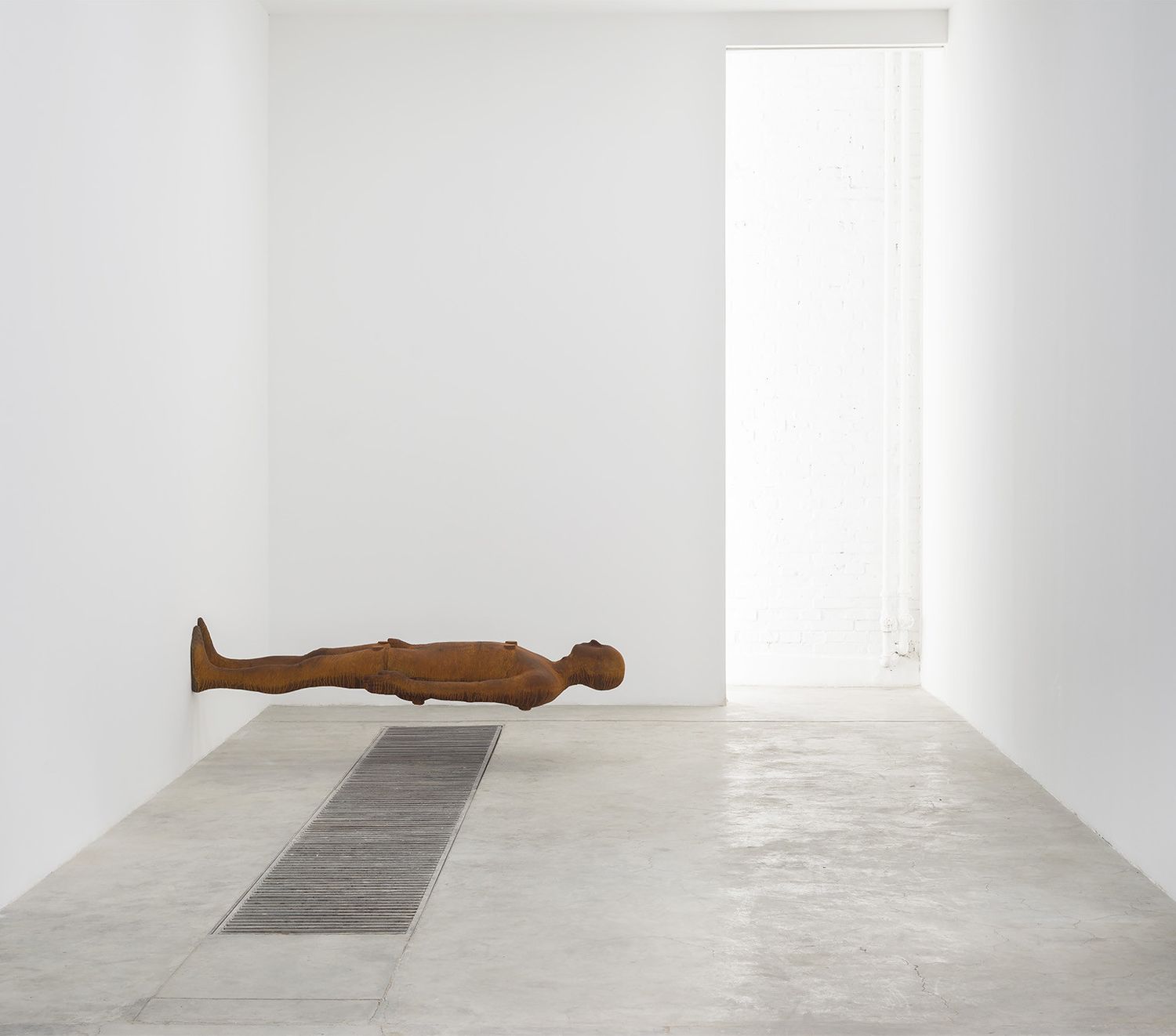
Edges, Walls, Boundaries, Faces, Corners, Frames... c/o Antony Gormley

individual
|
INTERPERSONAL : SCIENCES
humanistic ----------------------------------- mechanistic
SOCIOLOGY : POLITICAL
|
group


Antony Gormley

Image: from Art Rabbit, Antony Gormley Edge III

My source: The Times, FT


Friday, February 17, 2017

Author's latest work: The list keeping dementia at bay

individual
|
INTERPERSONAL : SCIENCES
humanistic -------------------------------------------  mechanistic
SOCIOLOGY : POLITICAL
|
group-population
Raymond Briggs
Image: Jenny Goodall/Daily Mail


Photo and story: https://www.pressreader.com/uk/daily-mail/20170117/281715499314709

My source: Whipple, T. (2017) Author reveals his latest work: the list keeping dementia at bay, The Times, January 18, p.11.


Tuesday, April 01, 2014

Space Station Robot Forgets Key Again

individual
INTERPERSONAL : SCIENCES
humanistic ------------------------------------------- mechanistic
SOCIOLOGY : POLITICAL
group

Memory: artificial (jokes aside) and real

Just-be?

Making sense of the
activities of daily living

Chunking

Space Station Robot Forgets Key Again


Making sense of someone
else's sense of the
 activities of daily living


Funding for research
(competition!)
group - population

Additional link: The Economist - Rise of the robots 29.3.14
Image source: APOD

Monday, January 06, 2014

Wednesday, April 24, 2013

2013 Year of Piri Reis & Navigating the world of nursing care - in Jordan

The conference in Jordan is over it has been an intense and excellent two days, with a free day tomorrow. It has been a brilliant opportunity to share and learn not just about nursing, but travel, culture and some of the people that make up the global nursing community.

I am truly grateful to the Jordanian Nursing Council for accepting my abstract. The welcome and hospitality has been truly amazing.

In the flight magazine on the way here there was an article about Piri Reis, which reminded me of Paul Cunliffe's book about Pytheas.

From the UNESCO website:

The United Nations Educational, Scientific and Cultural Organization (UNESCO) has agreed to declare 2013 the year of Piri Reis on the occasion of the 500th anniversary of a map he drew up that included seven continents, reported the Anatolia news agency. 
“This map marks a significant event in the history of the country and has enabled its collective knowledge to be transmitted through generations. As a rare world map from the 15th and 16th centuries, Piri Reis World Map is an invaluable piece of the world's documentary heritage as it provides insight on the history of its time. It is therefore part of the Memory of the World and should be made better known,” stated UNESCO.

The world-renowned Ottoman captain and cartographer Reis is best known for world maps and charts collected in his “Kitab-ı Bahriye” (Book of Navigation).
Source: http://www.todayszaman.com/newsDetail_getNewsById.action?newsId=294065

Source: http://en.wikipedia.org/wiki/Piri_Reis_map


I have written before about Hodges' model as a map -

a cognitive periplus 

- for navigation through the complex world(s) of health and social care.

Would a new mariner take to the sea without a clear sky, a compass, map, or satnav? What then of our students?


Additional link: Please see the entry for Iran -

http://www.unesco.org/new/en/unesco/events/prizes-and-celebrations/celebrations/anniversaries-celebrated-by-member-states/2013/

Saturday, November 03, 2007

Elderly Care: "Follow me please" along the gangway

It goes with the job, seeing people in residential care and nursing homes. The past few weeks walking through several care facilities - corridor-lounge-corridor - you pass a series of open doors, an invite to gaze that way. (People do ask to have their doors left open and visitors should not be able to walk past open doors if privacy and dignity are at risk?) Walking along - a smile, nod of the head, wave of the hand it's like a gangway.

The ThinkerRecently, though it was a case of 1, 2, 3 and counting: residents sat in their rooms; chair, wheel chair, special chair bound.

A gallery of still-life studies. So many heads bowed, cast as life and world-weary statues. So many aged variations of The Thinker.

The homes and their staff do the best they can, some employ people dedicated to 'activities'. Despite this, it's not easy for many new carers to appreciate the value in engaging people who are disoriented for TI:ME, PLACE and PERSON in chit-chat or a group activity when five minutes later they have forgotten all about it. People are referred to mental health services because they have a mental health 'problem' and yet in many cases their bags are packed and they are ready to take you on a journey: if you care to listen.

We seem to focus on the cognitive value of the things we do, but is this a variation of task orientation that delivers a concrete output (PROCESS vs PURPOSE again)? What about the emotional value of the things we do and the possible benefits, whether visible or intangible? ALL work and the effort it requires carries a price and despite the forgetting, the emotional engagement and safe social contact can still make a real positive difference to people. The price paid by residents in being engaged in conversation, can reduce any sense of alienation, loneliness and the aggression and agitation that can follow.

What do I mean 'safe' social contact? Many people in care are disinhibited; they say things to their fellows and staff that are very personal and upsetting. Cognitive decline is a fact of life, but even for people diagnosed with dementia, the damage done varies from person to person. For many they are profoundly impaired and yet their personality flickers through and with it sensitivity to things said by their peers. Remember those anxious moments in the play ground? Social mores are deeply ingrained in us. Maybe this is why for youngsters the current spate of e-bullying is having such a impact. Bodies may be battered and worn, but INTRA - interPERSONAL and SOCIAL exercise mediated by carers (and relatives!) can pay longer term dividends.

In between care needs that also demand quiet, rest and sleep and our need to be realistic and objective; personal and group engagement can I'm sure make a real difference. It depends on the resources + the right attitudes to make it happen. To see the person not the statue.

Even if only for a few moments
bringing statues back to life is real magic.
Walking the gangway is one thing,
but residential care should not be the gangplank
as it is so often portrayed for residents or staff.
Converse-2-conserve.

Rodin image original source: http://users.ox.ac.uk/~ball0888/oxfordopen/Rodin.htm