Hodges' Model: Welcome to the QUAD: journey

Hodges' model is a conceptual framework to support reflection and critical thinking. Situated, the model can help integrate all disciplines (academic and professional). Amid news items, are posts that illustrate the scope and application of the model. A bibliography and A4 template are provided in the sidebar. Welcome to the QUAD ...

Showing posts with label journey. Show all posts

Wednesday, July 30, 2025

Book: 'Health and Health Care Inequities' iv

Fittingly, chapter 4 brings us to Political Power and Policy Advocacy. In Hodges' model you can both have your cake; and gratefully receive the cake you're given. This is the health in politics and the health in politics (as, for example, revealed in the health status of political leaders).


As a framework structure, the axes of Hodges' model initially give rise to four symmetric domains (spaces). There is an invitation to begin where you choose. Chapter four reveals some truths, as the 'nexus' - center of the model is mobile (unlike many citizens!) as the 2x2 rendition below suggests, if not illustrates. Borras takes us through health politics, political participation and representation, unequal power and politics, and policy change approaches with illustrative cases.

In an institution (like the NHS), bureaucracy, aka an organisation, the workforce are often acutely aware of policy and procedure. It is like the Force. It permeates everything - the meetings - and yet is remote. Borras seek to shed light on unequal resources and policy influence. Again Borras's literature informed discussion and argument, includes some historical gems, such as Lasswell (1958).

Individual
|
      INTERPERSONAL    :     SCIENCES               
HUMANISTIC  --------------------------------------  MECHANISTIC      
 SOCIOLOGY  :    POLITICAL 
|
Group


Political Power and
Policy Advocacy


In chapter 5 on evidence and ideas, discussion of Katherine Smith's 'under 'Six Travelling Ideas' is an excellent resource, with several references including:

Smith, Katherine E (2013) Institutional filters : the translation and re-circulation of ideas about health inequalities within policy. Policy and Politics, 41 (1). pp. 81-100. ISSN 0305-5736 (https://doi.org/10.1332/030557312X655413).

I love the image of ideas as and on a journey, some successful, others fractured, weak, re-contextualised, even non-journeys (falling - 'dead from the press'I suppose?). At least the journey of Hodges' model is ongoing. A baton for our times. As I wrote in post i, chapter 5 tackles 'evidence' (there's a post or two). It does so in relation to information, ideology, and interests:

If you've read many posts on W2tQ, you may see: I've a chip on my shoulder. Evidence for the safety, benefits, theoretical underpinning ... of Hodges' model is still to be realised. To the satisfaction, that is: of course to the powers that be. Speaking of which: the axial (for me) subtitles arise again in chapter 6; capitalism-imperialism-colonialism-racism nexus (p.87).

To demonstrate the utility of Hodges' model, this is significant.

Please feel free to search for these terms - capitalism-imperialism-colonialism-racism in the search bar above.

I've been interested in drama since playing the part of Francis Nurse in Miller's The Crucible. It took some 50 years to go from armchair to treading the boards again. I played Ken, supported by his wife, trying to run a post office, amid a chaotic and injurious IT system. An 8-9 minute sketch which was part of a Living Newspaper. Interested in writing - as previous posts may reveal, I also keep trying get to the theatre. With the themes of chapter 6, Liberation was thought provoking.

Mind-Body, Private-Public, Socialist-Conservative, Borras adds the global health North-South schism. A prompt for suggesting a brief glossary is expropriation and exploitation^ (p.88). Four stages of capitalism too. This chapter - A critical political economy approach is essential reading for me (and you!?) - a path to a critical care economy (self-care to planetary health).

^There is a note #3 about these on page 99.

See also: Post i : Post ii : Post iii : Post v (to follow)

Merelman, R. M. (1981). Harold D. Lasswell’s Political World: Weak Tea for Hard Times. British Journal of Political Science, 11(4), 471–497. http://www.jstor.org/stable/193766

Arnel M. Borras. (2025) Health and Health Care Inequities - A Critical Political Economy Perspective. Fernwood Publishing.

Liberation image: The Agency
https://theagency.co.uk/news/cast-announced-for-ntombizodwa-nyonis-liberation-at-royal-exchange/
Friday, July 25, 2025

Good luck Suns & Daughters . . .

Individual
|
      INTERPERSONAL    :     SCIENCES               
HUMANISTIC  --------------------------------------  MECHANISTIC      
 SOCIOLOGY  :    POLITICAL 
|
Group

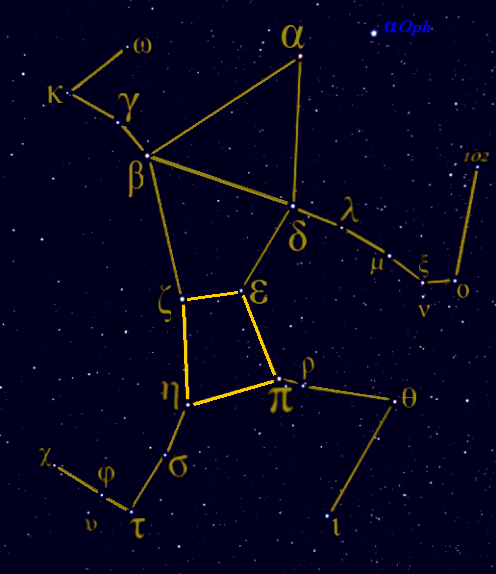
'The sun may be on its lonesome now - its closest neighbour is 4.2 light years away - but that wasn't always the case. Once upon a time it had close family. After their birth in the same cloud of dust and gas that formed our solar system, these solar siblings scattered hundreds of light years apart in the MilkyWay. In May, astronomers reported the first one: a star called HD 162826.

"It looks like the sun, but a little-bit bluer," says Ivan Ramirez at the University of Texas at Austin, who led the study. It's also warmer than the sun and 15 per cent more massive. The star is about 110 light years away, and you can see it with the aid of a pair of binoculars in the left arm of the constellation Hercules.'

Hercules Historical View

'To find its family ties, Ramirez's team combed through galactic archaeology studies, which model the motions of the Milky Way. These predictions laid out where sibling stars would be now if they had formed in the same place as the sun. Though they spread out in different directions, their positions still give away their birthplace, Ramirez says.

He narrowed down the search area to 30 stars, and then looked at them closely to find a family resemblance. Only HD 162826 had a similar chemical make-up to the sun. A separate team led by Eric Mamajek at the University of Rochester in New York also studied the star and found it is the same age
as the sun, as would be expected for two stars born together. Even more tantalising, HD 162826 is already in a catalogue of stars that might harbour planets.'

Science
funding


Rebecca Boyle. Strangest star. New Scientist. 20 September 2014: 223, 2987, pp.38-41.

Image: Sadalsuud, CC BY-SA 3.0, via Wikimedia Commons.

Monday, April 15, 2024

Dramatherapy ii - from Sociometry, Sociogram to Sociatry

Individual
|
      INTERPERSONAL    :     SCIENCES               
HUMANISTIC  --------------------------------------  MECHANISTIC      
 SOCIOLOGY  :    POLITICAL 
|
Group

A personal journey


"... Moreno soon began to seek ways of measuring the form and structure of relationships in groups. The techniques of sociometry which he invented have since been widely and successfully adopted by his successors, becoming an accepted field of social research in their own right. At its simplest, this approach relies on asking of the social grouping under investigation to indicate their relationship to each other so that, for example, a pattern of dominance (vertical structure) or affinity (horizontal structure) can be discerned. These measures may be committed to paper in diagram form (a sociogram) or expressed by the individuals arranging themselves in positions symbolising their relationships (an action sociogram)". p.106.


"More complicated interconnections and patterns can be demonstrated and the group asked to explore alternatives in order to recognise sources of conflict and misunderstanding and to modify them. Moreno foresaw a new discipline for which he coined the name 'sociatry' in which the social organisation rather than the individual is the object of the healer's endeavours, a truly 'group' psychotherapy". p.106.


Anticipating future theory-practice policy and education change.

Could the reduction in the options for student mental health nursing placements be compensated in-part by addressing the concurrent change in the range of therapeutic (modalities) interventions available?


Davies, M.H. Dramatherapy and Psychodrama, Chap. 5. pp.104-123. In Jennings, S. (Ed.), (1987) Dramatherapy. Theory and Practice for Teachers and Clinicians. Routledge, London. p.106.

Previously: theatre , space , diagram

Sunday, April 14, 2024

Dramatherapy i - thresholds, liminality and wounded healers

Individual
|
      INTERPERSONAL    :     SCIENCES               
HUMANISTIC  --------------------------------------  MECHANISTIC      
 SOCIOLOGY  :    POLITICAL 
|
Group

A personal journey

The 'wounded healer' - Halifax (1982)

".. it is the experience of our own wounding that will enable us to engage with our clients in a healing process". p.15.

"Therefore we can begin to understand that rather than the drama being the chaos, the drama is both the container of the chaos and the means of exploring it. Accompanying our groups through such dangerous territory may seem too frightening for the dramatherapist to contemplate, let alone the client". p.15.

"The attributes of liminality or of liminal personae (threshold people) are necessarily ambiguous, since this condition and these people elude or slip through the network of classifications that normally locate places and position in cultural space. Liminal entities are neither here nor there: they are betwixt and between the positions assigned and arrayed by law, custom, convention and ceremonial. As such their ambiguous and indeterminate attributes are expressed by a rich variety of symbols in the many societies that ritualise social and cultural transitions. This liminality is likened frequently to - death, being in the womb, to invisibility, to darkness, to bisexuality, to the wilderness and to an eclipse of the sun or the moon". p.14.

"The 'illness/treatment' model has by its nature to emphasise what the patient cannot do rather than what he might be able to do; to emphasise that what requires to be done is carried out by others rather than what the patient might do for him/herself". p.262.


Power as exercised (degrees of freedom?) through the therapeutic turn: the history of therapies; social, industrial, occupational, physical, drama, psychotherapy et al. ...


Turner, V. (1969) The Ritual Process. Structure and Anti-Structure. Routledge, London. cited in Jennings, S. (1987) Dramatherapy and Groups, Chap. 1. pp.1-18. In Jennings, S. (Ed.), (1987) Dramatherapy. Theory and Practice for Teachers and Clinicians. Routledge, London. p.14.

Mitchell, R. (1987) Dramatherapy in In-patient Psychiatric Settings, Chap. 12. pp.257-276. In Jennings, S. (Ed.), (1987) Dramatherapy. Theory and Practice for Teachers and Clinicians. Routledge, London. p.14.

In theoretical terms, Mitchell also describes the creative model, the learning model and the therapeutic model (p.265).

Halifax, J. (1982) Shaman: the wounded healer. Thames and Hudson, London [England].

Previously: theatre , threshold , liminal

Thursday, December 01, 2022

Travelling to the Spiritual ... Liminal ...

"I am on a lonely road and I am ...


 INDIVIDUAL
|

 INTERPERSONAL    :     SCIENCES               
HUMANISTIC --------------------------------------  MECHANISTIC      
SOCIOLOGY  :   POLITICAL 
|
GROUP
blue


traveling,
traveling,


traveling,


traveling


.. Looking for something, what can it be? ..."

Joni Mitchell


BLUE cover image: https://en.wikipedia.org/wiki/Blue_(Joni_Mitchell_album)

@jonimitchell

Source: Blue CD track 1
"All I Want" – 3:34 in the car travelling from Hay-on-Wye back to the NW England.

Still looking - listening: 'Both Sides' ...

Threshold Concepts 2023: "Roads Less Travelled"

Call for Papers 2023

Date 4-6th July 2023

Location: Charles Sturt University, Port Macquarie Campus, NSW, Australia (google map link)

Theme: Threshold Concepts: Roads Less Travelled

The 2023 Threshold Concepts Biannual International Conference is a special one. It marks twenty years since the original 2003 Threshold Concepts paper by Eric Meyer and Ray Land. In the intervening time, Threshold Concepts have become an accessible way of conceptualising learning, and the barriers to mastery that learners encounter. We are taking inspiration from Julie Timmerman’s (2023) provocative question, “Do thresholds always propel us outward, forward, and towards an identified threshold, or might they reveal alternative and unanticipated landscapes for transformation?” 

We propose an exploration of movement “outward, forward, and towards” threshold concepts, and the journeys we undertake as learners and researchers. These pathways may be known or unknown, familiar or alien, hidden or exposed. We have identified a number of subthemes, which you may interpret according to your context.

  • Inter(tidal)disciplinary Zones
  • Learning Spaces and Places 
  • Cultures of Engagement and Connectivity
  • UnOthering 
  • Liminality 

We invite you to submit proposals under one of the subthemes and we look forward to seeing you in Port Macquarie in July 2023 to celebrate twenty years of Threshold Concepts. #9BiTCC2023

.... https://thresholdconcepts.home.blog/

Tuesday, August 16, 2022

Liminal spaces I & II c/o Nan Mulder

 INDIVIDUAL
|
 INTERPERSONAL    :     SCIENCES               
HUMANISTIC --------------------------------------  MECHANISTIC      
SOCIOLOGY  :   POLITICAL 
|
GROUP
'A Liminal Space II'
21×48 cm mezzotint 2022
'A Liminal Space I'
21.5×48 cm mezzotint 2022


Learning, starting a course of study at whatever stage in life is often likened to a 'journey'. The term liminality is applied to this experience, with its spiritual and transformative connotations, an education rite-of-passage; also specifically in reference to threshold concepts:

https://www.ee.ucl.ac.uk/~mflanaga/popupLiminality.html

Images with thanks to Nan Mulder:

https://www.nanmulder.com/

See also: 'periplus'.

My source: Printmaking Today Summer 2022, 31:122, p.7.
https://www.cellopress.co.uk/page/printmaking-today

(Thanks also to Cello Press - looking f/w to 2023 issues.) 
 

Wednesday, January 05, 2022

PHI MAGAZINE (Φ) - Liminal Issue [ii]


Individual
|

INTERPERSONAL : SCIENCES
humanistic ------------------------------------------ mechanistic
SOCIOLOGY : POLITICAL
|
Group

mental disorientation
study - philosophy - ideas
liminal - liminality
ethical practice
creativity reflection
threshold concepts
uncertainty - meaning - ambiguity


physical disorientation
time, place, 'person'
process
theory
transition - threshold - doorway
media


art - arts
practice
socialisation (orientation)
rites of passage
status
meanings

-isms
political orientation
power - boundaries
professionalism
posture?
status


Previously on W2tQ:

'threshold concepts' 

Q. Do we, must we, always 'stand' when presented with a 'threshold'? Discuss ...


Sunday, January 02, 2022

PHI MAGAZINE (Φ) - Liminal Issue [i]

 Submissions are OFFICIALLY open for our Liminal Issue.

PHI Magazine cover by Taudalpoi
The word ‘Liminal’ encompasses the quality of ambiguity or disorientation that occurs in the transitional stage of a process, boundary, or threshold. It comes from the Latin word līmen, relating to participants of rites of passage who no longer hold their pre-ritual status but have not yet begun the transition to the status they will hold when the rite is complete. During a rite's liminal stage, participants stand at the threshold. In many ways, this is where the world stands today.

We take all kinds of submissions: prose, photography, poetry, painting, opinion pieces, film or music—you make it, we want to publish it!

Submit to us before 14/02/2022 to be considered for our Liminal Issue.

For enquiries: submissions.phimag AT gmail.com

+++

WHAT IS PHI MAGAZINE (Φ)?

Φ Magazine is a quarterly publication aimed at showcasing the creative talents of Philosophy students across the globe outside the academic realm. Be it photography, painting, poetry, prose, or anything in between then it can find a place in the pages of Φ.

My source: 

Philos-L "The Liverpool List" https://www.liverpool.ac.uk/philosophy/philos-l/

@PhilosL @LiverpoolPhilos 

Thanks to Chiara at PHI Magazine for the cover image by Taudalpoi.

n.b. I will add a further post to relate the above call to threshold concepts and Hodges' model.

Sunday, July 26, 2020

Book: Refuge in a Moving World [open access]

Tracing refugee and migrant journeys across disciplines


individual
|
INTERPERSONAL : SCIENCES
humanistic ----------------------------------------------- mechanistic
SOCIOLOGY : POLITICAL
|
group - population


Refuge in a Moving World Tracing refugee and migrant journeys across disciplines
Refuge in a Moving World
Tracing refugee and migrant journeys across disciplines

My source:
https://twitter.com/HealthSyria/status/1286761841373466626?s=20

Friday, October 25, 2019

Liminality in "How ancient rituals help us adapt to the digital age" c/o G. Tett

How ancient rituals help us adapt to the digital age

Ceremonies and symbols matter more than ever in a disorienting world

Context: "This week I made a pilgrimage to the east coast of Scotland to participate in that classic ritual of modern middle-class life: a university graduation".
"However, heritage marketing is not the only factor, given that such rituals also occur in places that do not have 600 years of history behind them. Another way to frame the issue is to ponder a concept first developed by the ethnographer and folklorist Arnold van Gennep, and later elaborated by the anthropologist Victor Turner and the psychologist Carl Jung – “liminality”.

This word comes from the Latin limen – doorway or threshold – and refers to the idea that whenever societies or people make a transition, they typically use rituals and symbols to mark this. 

These usually contain three parts: a ritual to show the end of the old life; a ritual to mark the entry into the new one; and a “liminal” stage between the two, when the transformation occurs. Moreover, in that liminal state the normal rules of life tend to break down. Liminality is the cultural equivalent of the pupation that insects undergo: patterns become untethered and fluid, to be remoulded".

Tett, Gillian. 2019, How ancient rituals help us adapt to the digital age. FT Weekend, Magazine, June 29-30, p.46.

Saturday, September 28, 2019

"Sea Things" (and Care Concepts) c/o V&A

individual
|
INTERPERSONAL : SCIENCES
humanistic ----------------------------------------------- mechanistic
SOCIOLOGY : POLITICAL
|
group - population


Photo:
https://www.dezeen.com/2019/09/16/sam-jacob-sea-things-installation-london-design-festival/

My source:
The Times, Saturday, 14 September, 2019. p.10.

Monday, May 06, 2019

The adjacent possible

"The adjacent possible is a kind of shadow future, hovering on the edges of the present state of things, a map of all the ways in which the present can reinvent itself." p.31.

SELF - individual
|
INTERPERSONAL : SCIENCES
humanistic ----------------------------------------------- mechanistic
SOCIOLOGY : POLITICAL
|
group - POPULATION


"The strange and beautiful truth about the adjacent possible is that its boundaries grow as you explore those boundaries. Each new combination ushers new combinations into the adjacent possible. Think of it as a house that magically expands with each door you open. You begin in a room with four doors, each leading to a new room that you haven't visited yet. Those four rooms are the adjacent possible. But once you open one of those doors and stroll into that room, three new doors appear, each leading to a brand-new room that you couldn't have reached from your original starting point. Keep opening the doors and eventually you'll have built a palace." p.31.

Johnson, Steven (2010) Where Good Ideas Come From, London: Allen Lane.

Friday, October 12, 2018

'Dead End Tunnel Folded Into Four Arms With Common Walls' by Bruce Nauman


‘Dead End Tunnel Folded Into Four Arms With Common Walls’ (1980), by Bruce Nauman
Photo: Hauser & Wirth

My source: FT Weekend, Collecting, 28-29 April 2018, p.3.

Saturday, October 21, 2017

The Farthest - run

individual
|
INTERPERSONAL : SCIENCES
humanistic --------------------------------------- mechanistic
SOCIOLOGY : POLITICAL
|
group
In 1976 a lower sixth student new to the grammar school competes in the annual cross country. The previous victor had won every year. Listening to his friends, another win was a given. Not in 1976.
The new student never won at Secondary School, but he was on the team. Out most dinner times, training from Ashton around Garswood. The day after, the  form teacher said something in the vein of  -"Oh there'll be  presentations!" The student listened and still listens. There never was a presentation, not a whisper; but the journey, the run - continues... and the student is grateful for that ...


Friday, September 15, 2017

iWish 2059 ....?

individual
|
INTERPERSONAL : SCIENCES
humanistic --------------------------------------- mechanistic
SOCIOLOGY : POLITICAL
|
group

My source: Sylph Editions

Thursday, December 22, 2016

Book: Cure - A journey into the science of mind over body

individual
|
INTERPERSONAL : SCIENCES
humanistic -------------------------------------------  mechanistic
SOCIOLOGY : POLITICAL
|
group-population

Tuesday, May 17, 2016

C E L L

individual
|
INTERPERSONAL : SCIENCES
humanistic ---------------------------------------  mechanistic
SOCIOLOGY : POLITICAL
|
group

CELL-SHOW

Sunday, May 01, 2016

"I'm Spartacus!"

individual
|
INTERPERSONAL : SCIENCES
humanistic ---------------------------------------  mechanistic
SOCIOLOGY : POLITICAL
|
group


My source: The Beryl Institute
